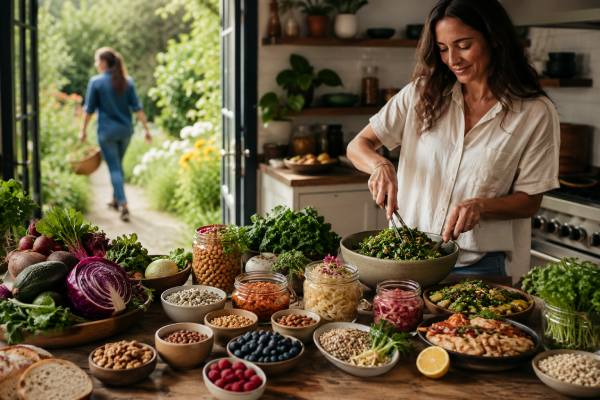
Your gut microbiome is not a single organism or a simple “good bacteria” score. It is a crowded ecosystem shaped by what you eat, how you sleep, whether you have taken antibiotics recently, and how much variety your body sees over time. When that ecosystem is more diverse, it often has a broader metabolic toolkit: more ways to break down fiber, produce helpful compounds, support the gut lining, and communicate with the immune system. That does not mean diversity is the only marker of gut health, or that more is always better in every context. But for many adults, low dietary variety, repeated antibiotics, heavy reliance on ultra-processed food, and chronic stress can narrow the microbiome in ways that may reduce resilience. The good news is that microbiome diversity is not fixed. This article explains why it matters for immunity, which foods and habits help most, what can shrink it, and how to build diversity without turning your diet into a full-time project.
Key Insights
- A more diverse microbiome is generally linked with better fiber fermentation, stronger barrier support, and more balanced immune signaling.
- Plant variety, fiber intake, and regular exposure to different whole foods tend to matter more than any single probiotic or “gut superfood.”
- Fermented foods can help some people, but they are not mandatory and may need to be introduced gradually if you have GI sensitivity.
- Repeated antibiotics, very low-fiber diets, and heavy intake of ultra-processed foods can reduce diversity or blunt recovery.
- A practical place to start is aiming for more unique plant foods each week while increasing fiber slowly enough to avoid bloating.
Table of Contents
- Why Diversity Matters for Immunity
- What Diversity Actually Means
- Foods That Reliably Help
- Habits Beyond Food
- What Shrinks Diversity
- Supplements, Testing, and a Practical Plan
Why Diversity Matters for Immunity
Microbiome diversity matters because the immune system is not working alone. It develops, calibrates, and communicates in constant contact with microbes and the compounds they produce. A more diverse microbial community usually has a wider range of metabolic functions. That can mean better breakdown of different fibers, more production of short-chain fatty acids such as butyrate, broader support for the gut lining, and more balanced signaling between the intestine and immune cells.
This link is easiest to understand at the barrier level. The gut lining is not just a digestive tube. It is a selectively permeable surface where immune cells, mucus, epithelial cells, and microbes all interact. When the microbiome has enough functional breadth, it can help reinforce mucus production, nourish colon cells, and reduce the chance that inflammation stays switched on unnecessarily. That is one reason the microbiome fits naturally into the broader picture of gut health and immunity and also into the idea of barrier health more generally.
Immune effects are not limited to the gut. Microbial metabolites influence regulatory T cells, inflammatory tone, oral tolerance, and communication with distant tissues. That does not mean a “diverse microbiome” automatically prevents infections. The immune system depends on sleep, vaccination, nutrition, exercise, and underlying health as well. But a narrow, low-function microbiome may leave the gut-immune interface with fewer tools to adapt.
There is an important nuance here. Diversity is not the same thing as perfection. A person can have decent diversity and still have symptoms. Another can have modest diversity and still be quite healthy. The goal is not to chase a single number. It is to support an ecosystem that is flexible, metabolically capable, and less vulnerable to disruption. In practice, that usually means focusing on dietary variety, consistent fiber exposure, and habits that reduce repeated shocks to the system.
This is also why the language of “boosting” can be misleading. You are not trying to force the microbiome into a high-performance state overnight. You are trying to make it more adaptable. A diverse microbial community is often better able to handle dietary changes, recover after stressors, and produce compounds that support immune balance rather than constant inflammatory noise.
A helpful mental model is to think of the gut microbiome as a rainforest rather than a houseplant. A rainforest stays resilient because it contains many different species doing different jobs. Remove too much variety, and the whole system becomes easier to destabilize. That is why diversity matters. It does not make the immune system invincible, but it gives it a healthier environment to work from.
What Diversity Actually Means
When people say they want to “increase microbiome diversity,” they often imagine adding more probiotics or eating yogurt every day. That is a narrow view. In research, diversity usually refers to how many different microbial species are present and how evenly they are represented. But in real life, what matters is not just a higher count. It is whether the ecosystem can perform a wide range of useful functions without becoming dominated by a few organisms that thrive on a repetitive, low-fiber diet.
This is why random supplementation is usually not the best first step. You cannot build a stable, varied microbiome with one capsule while continuing to eat the same five low-fiber foods every week. Diversity grows when the microbes in your gut are repeatedly offered different substrates to ferment. In practical terms, that means a wider range of plant fibers, resistant starches, polyphenols, and food structures over time.
It also means not overreading trendy targets. The popular “30 plants a week” idea is useful because it encourages variety, but it should be treated as a practical benchmark, not a magic threshold. If you eat 10 to 12 unique plant foods now, moving to 18 or 20 is already meaningful progress. If you are already eating broadly, the marginal gain from obsessively counting herbs and seeds may be smaller than marketers imply. The point is direction, not perfection. If you want a more detailed version of that benchmark, 30 plants a week is best understood as a variety tool rather than a strict rule.
Another misconception is that more diversity must come from exotic foods. It does not. Diversity can increase with ordinary foods used more broadly: oats, lentils, beans, berries, carrots, onions, yogurt, brown rice, chickpeas, leafy greens, nuts, seeds, and potatoes cooked in different ways. Small changes matter because microbes respond to repeated patterns more than heroic single meals.
The same caution applies to fiber. Higher fiber intake is generally helpful, but more is not always better if the increase is too fast. A person who jumps from 12 grams a day to 40 grams overnight may feel bloated and decide the whole idea failed. Often the problem is pace, not the concept. Microbiome changes need time, and the gut often tolerates gradual increases much better.
The most useful definition, then, is this: a more diverse microbiome is one fed by many different whole-food inputs and less dependent on repetitive, low-residue eating. That is why fiber and immune health belong at the center of this topic. Diversity is not built by novelty for its own sake. It is built by repeated exposure to different kinds of plant matter that microbes can actually use.
In practice, diversity is a pattern. It shows up when your weekly food list gets wider, not when your supplement shelf gets taller.
Foods That Reliably Help
If you want to increase microbiome diversity, food is the most reliable place to start. The strongest pattern in the research is not one miracle ingredient, but a repeated theme: more plant variety and more fermentable material tend to support a more capable microbial ecosystem.
The most useful food categories are:
- Legumes such as lentils, chickpeas, black beans, and split peas
- Whole grains such as oats, barley, brown rice, rye, and quinoa
- Nuts and seeds including walnuts, almonds, pumpkin seeds, chia, and flax
- Vegetables across different families, especially onions, leeks, garlic, crucifers, leafy greens, carrots, squash, and artichokes
- Fruits with fiber and polyphenols such as berries, kiwi, apples, pears, pomegranate, and citrus
- Resistant starch sources such as cooled potatoes, cooled rice, oats, beans, and greenish bananas
- Fermented foods such as yogurt, kefir, kimchi, sauerkraut, and tempeh, when tolerated
Legumes are especially valuable because they deliver fiber, resistant starch, and a food matrix that tends to promote fermentation in the colon. Whole grains add different fibers than legumes do. Nuts and seeds bring structure, fats, and polyphenols. Fruits and vegetables widen the menu further, which matters because different microbes prefer different compounds.
Resistant starch deserves extra attention. Unlike ordinary starch that is digested earlier, resistant starch reaches the colon and becomes food for microbes there. That makes it one of the more practical ways to widen microbial activity, especially when paired with other fibers. For a closer look at the mechanism, resistant starch and butyrate production are tightly connected.
Fermented foods are useful but should be handled with nuance. They do not replace fiber, and not everyone needs them. Some people tolerate yogurt or kefir easily, while others react to stronger fermented foods or need a slower ramp-up. The goal is not to prove commitment by eating kimchi every day. It is to add live or fermentation-altered foods in a way your gut can handle. If you are starting from zero, beginning fermented foods gradually is usually smarter than taking an all-or-nothing approach.
A realistic weekly strategy is to build meals around “variety anchors” rather than one microbiome food. For example:
- Add two different plant foods to breakfast, such as oats and berries.
- Build lunch around a bean, grain, and vegetable combination.
- Rotate side vegetables at dinner instead of repeating the same two every night.
- Use herbs, seeds, nuts, and fruit as small diversity add-ons rather than garnish afterthoughts.
This works because the microbiome responds to patterns. One salad will not transform it. But 20 to 30 different plant exposures across a week can start changing the terrain in a meaningful, sustainable way.
Habits Beyond Food
Diet is the strongest lever for microbiome diversity, but it is not the only one. The gut ecosystem also responds to movement, sleep, circadian regularity, stress load, and environment. These are not interchangeable with food, yet they help determine whether the microbes supported by diet can stay stable and useful.
Regular physical activity is one of the clearest non-diet habits linked to a healthier microbiome pattern. Moderate, repeated movement appears to support short-chain fatty acid production, gut transit, and a less inflammatory internal environment. That does not mean you need extreme training. In fact, overtraining can backfire, especially if calories and recovery are poor. The most reliable approach is steady activity: walking, cycling, strength work, and aerobic exercise done often enough to become part of your weekly rhythm. This fits well with what is known about exercise and immunity more broadly.
Sleep matters too. The microbiome follows rhythms, and your gut is not separate from your schedule. Irregular sleep, short sleep, and circadian disruption can affect appetite, inflammation, stress hormones, and digestive function. Over time, that can shape the microbial environment in less helpful ways. The same pattern helps explain why poor sleep makes immune resilience worse. A diverse microbiome does not come only from what you eat, but from whether your body has a predictable enough routine to process it well.
Stress is harder to measure, but it is still relevant. Chronic psychological stress can change gut motility, digestive secretions, appetite, and inflammatory tone. Those shifts can alter the terrain in which microbes live. This does not mean meditation directly “increases diversity” in a simple dose-dependent way. It means lower physiologic chaos often supports better digestive function, which makes food-based microbiome building more effective.
Environmental variety may play a role too, though claims here are often overstated. Time outdoors, contact with different natural settings, and reduced over-sanitization of ordinary life may support healthier microbial exposures, but that does not mean deliberately seeking dirt or abandoning hygiene. The goal is balance: normal contact with varied environments, not reckless exposure.
Practical non-food habits that support diversity include:
- Regular exercise most days of the week
- A consistent sleep-wake schedule
- Eating meals at fairly stable times
- Managing stress enough to avoid chronic GI disruption
- Spending time outdoors and in varied environments
- Avoiding unnecessary antimicrobial overuse in daily life
These habits matter because the microbiome is responsive, not static. Food gives the microbes raw material, but the rest of your lifestyle determines how steady the habitat is. If your diet improves but your sleep stays chaotic and recovery stays poor, the microbiome may not adapt as well as you hope.
In other words, diversity grows best in a body that is fed, moved, and rested with some regularity.
What Shrinks Diversity
It is often easier to build microbiome diversity when you also stop doing the things that keep narrowing it. In practice, that usually means looking at antibiotics, low-fiber repetition, heavy intake of ultra-processed food, alcohol excess, and cycles of aggressive dieting.
Antibiotics are sometimes necessary and lifesaving, but they can temporarily or, in some cases, more persistently reduce microbial richness and change the balance of species in the gut. Recovery often happens, but not always on a quick timeline, especially if a person follows treatment with a low-variety diet. This is why microbiome recovery after antibiotics is less about panic and more about what you do next: reintroducing fiber, eating broadly, and giving the system time.
Ultra-processed foods can also work against diversity, not because they are morally bad, but because many of them crowd out the foods microbes use best. Diets built around refined grains, added sugars, emulsified snack foods, low-fiber convenience meals, and repeated fast-food patterns tend to reduce the range of fermentable substrates reaching the colon. Over time, that can favor a narrower microbial environment. The same pattern connects with what is seen in ultra-processed diets and inflammation.
Alcohol is another common disruptor. Moderate tolerance varies, but regular heavy intake can affect gut permeability, microbial composition, sleep, and inflammation all at once. It also tends to travel with poorer food choices and worse recovery. That makes alcohol a double hit rather than a single exposure issue.
Another diversity trap is eating too narrowly in the name of health. Elimination diets, repetitive meal-prep plans, and very restrictive “clean eating” routines can look disciplined on paper while steadily shrinking the microbiome’s menu. This is especially true when someone rotates the same oats, chicken, rice, broccoli, and protein bars for months. Even an otherwise healthy diet can be too repetitive to support a broad microbial ecosystem.
Short-term gut symptoms can also mislead people into cutting more and more foods. Sometimes a temporary reduction in fermentable foods is reasonable, but it should not automatically become permanent. The microbiome needs challenge and variety over time. A long-term plan that never expands is usually working against the goal.
The main diversity reducers are:
- Repeated or recent antibiotic exposure
- A chronically low-fiber diet
- Heavy reliance on ultra-processed foods
- Regular excess alcohol
- Highly repetitive or overly restrictive eating patterns
- Chronic sleep disruption and poor recovery
Removing these pressures does not create diversity instantly. But it gives your food and lifestyle changes a chance to work. Many people focus only on what to add and miss the fact that their microbiome is still being pushed in the opposite direction every day. Growth is easier when the ecosystem is not constantly being reset by habits that strip out its variety.
Supplements, Testing, and a Practical Plan
Most people do not need a microbiome stool test to start improving diversity. These tests can be interesting, but they are not very good at turning one person’s report into a precise food prescription. They may show broad patterns, but they do not reliably tell you which species matter most, which changes will be durable, or how your immune function will improve. If you are considering one, it helps to understand what stool testing can and cannot do before you spend money on it.
Probiotics are similar. They can be useful in selected situations, but they are not the first or strongest tool for diversity in most healthy adults. A single or dual-strain probiotic may support a specific symptom or help after antibiotics, yet that is different from broad ecosystem rebuilding. If supplements enter the plan at all, they usually work best after the food foundation is already improving. That is why discussions of probiotics for immune support should stay specific rather than generic.
A practical plan for increasing diversity looks more like habit design than biohacking:
- Count your current weekly plant variety for one week without changing anything.
- Add five new or neglected plant foods the next week, not 20 all at once.
- Increase fiber gradually, especially if you are below about 20 grams per day now.
- Include legumes three to five times per week in tolerable portions.
- Add one resistant starch source several times per week.
- Trial one fermented food in small amounts if tolerated.
- Protect sleep and keep exercise regular enough to support gut function.
- Stay consistent for four to six weeks before judging whether it is “working.”
This slower approach matters because the gut often needs time to adapt. Early bloating does not always mean the plan is wrong. It may mean the ramp-up is too fast, the portions are too large, or you need more fluid and gentler pacing. On the other hand, if symptoms are severe, highly restrictive diets have already failed, or GI issues are persistent, do not force yourself through a self-directed experiment.
Medical or dietitian support is worth seeking if you have chronic diarrhea, major bloating, suspected celiac disease, inflammatory bowel disease, recent antibiotic complications, unexplained weight loss, or a history that suggests a more complex gut disorder. The same is true if every attempt to increase fiber makes you significantly worse.
The goal is not to create the most “optimized” microbiome. It is to create a more resilient one with ordinary habits you can sustain. For most people, that means fewer supplements, fewer extremes, more plants, more repetition of good basics, and enough patience to let the ecosystem respond.
References
- The interplay between diet and the gut microbiome: implications for health and disease 2024 (Review)
- Short-term dietary fiber interventions produce consistent gut microbiome responses across studies 2024 (Meta-analysis)
- Microbiota-mediated mechanisms of mucosal immunity across the lifespan 2025 (Review)
- Fermented Foods as Functional Systems: Microbial Communities and Metabolites Influencing Gut Health and Systemic Outcomes 2025 (Review)
- High-Diversity Plant-Based Diet and Gut Microbiome, Plasma Metabolome, and Symptoms in Adults with CKD 2025 (RCT)
Disclaimer
This article is for educational purposes only and is not a substitute for medical advice, diagnosis, or treatment. Gut microbiome diversity is influenced by diet, medications, sleep, exercise, illness, and underlying gastrointestinal conditions, and no single food or supplement can guarantee a specific outcome. If you have persistent digestive symptoms, unexplained weight loss, severe bloating, chronic diarrhea, suspected food intolerance, or a history of bowel disease, seek guidance from a qualified clinician or registered dietitian before making major diet changes.
If you found this article useful, please share it on Facebook, X, or your preferred platform.