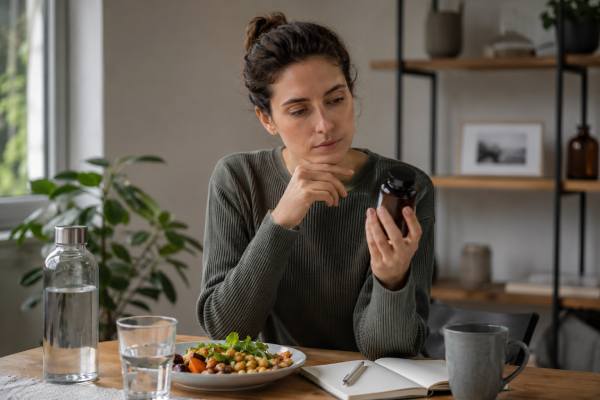
“Boost your immune system” is one of the most successful phrases in wellness marketing because it sounds simple, urgent, and scientifically respectable. It also happens to be misleading. Most people do not need an immune system that is stronger in a vague, all-purpose sense. They need one that is well regulated, well nourished, and not constantly strained by poor sleep, stress, nutrient gaps, or chronic inflammation.
That distinction matters. An underperforming immune system can leave you more vulnerable to infection, but an overactive or misdirected one can contribute to allergies, autoimmune disease, and inflammatory damage. Health does not sit at one extreme. It depends on balance, timing, and resilience.
So can you “boost” your immune system? Not in the simplistic way most products imply. But you can support immune function in meaningful ways. Some habits are reliably helpful. Some supplements may be useful in specific circumstances. And a surprising number of popular immune claims are mostly branding with very little practical value behind them.
Core Points
- The healthiest immune system is balanced and responsive, not permanently turned up.
- Sleep, nutrition, movement, and recovery usually matter more than most “immune-boosting” products.
- Megadoses, stacked supplements, and vague detox claims can waste money and sometimes create new risks.
- Use a deficiency-first approach: correct likely gaps, improve daily habits, and judge any supplement by a specific goal over a defined period.
Table of Contents
- Why “Boost” Is the Wrong Word
- What Actually Supports Immunity
- Where Marketing Goes Off Track
- When Supplements Make Sense
- Red Flags and Common Mistakes
- A Better Way to Think
Why “Boost” Is the Wrong Word
The phrase “boost your immune system” sounds positive because most people hear the immune system as a single strength meter: low is bad, high is good, and higher must be better. Real immune biology does not work that way. The immune system is a coordinated network of barriers, signaling molecules, white blood cells, tissues, and learned responses that must do several jobs at once. It has to detect threats, respond quickly enough to contain them, remember certain pathogens for the future, and then shut down the response before the response itself causes harm.
That is why “more immune activity” is not always an upgrade. An underpowered immune response can increase infection risk. But an excessive, misdirected, or poorly controlled response can worsen symptoms, drive chronic inflammation, or target harmless substances and the body’s own tissues. Allergies and autoimmune disease are both reminders that an immune system can be highly active and still unhealthy. The goal is not permanent acceleration. It is skilled regulation.
This matters because many products are sold as though immunity were like caffeine for your defenses. Drink this tea, take this gummy, add this powder, and your immune system will somehow rise above baseline across every challenge. That is not how the system behaves. Immune function is context-dependent. The body’s needs change when you are sleeping, recovering from exercise, fighting a virus, healing a wound, or living through chronic stress. A helpful intervention in one situation may do little in another.
Another problem with the word “boost” is that it distracts from basics. People often buy immune products when what they actually need is more sleep, better food quality, less alcohol, treatment for iron deficiency, correction of low vitamin D, or a plan for repeated exposures at home or work. In those cases, the system may not need boosting at all. It may need fewer obstacles. That is a very different task.
This is why the concept of immune resilience is more useful than the idea of immune boosting. Resilience asks whether the system can respond appropriately, recover efficiently, and stay balanced under stress. That is closer to what most people mean when they say they want a “stronger” immune system.
A better mental model is this: you are not trying to turn your immune system into a constantly firing alarm. You are trying to keep it well built, well supplied, and better regulated. Once you make that shift, many wellness claims become easier to judge. Products that promise a dramatic immune surge start to look less scientific and more like what they often are: simplified marketing built on a distorted metaphor.
What Actually Supports Immunity
If “boosting” is the wrong frame, what actually helps? The answer is less glamorous than most advertising, but far more reliable. Immune function depends on a handful of inputs that repeatedly show up across research and real life: adequate nutrition, sufficient sleep, regular movement, manageable stress load, and the absence of major suppressors such as smoking, heavy alcohol use, and severe overtraining.
Nutrition matters first because immune cells are metabolically active. They need energy, amino acids, and a steady supply of micronutrients to divide, signal, repair, and defend barrier tissues. That does not mean there is one perfect immune food. It means a pattern with enough protein, enough total calories, and a broad mix of plant foods usually does more than an expensive jar of pills. A practical place to start is a diet built around whole foods, adequate protein, and enough variety to reduce obvious gaps. That is why immune-supportive foods and an anti-inflammatory eating pattern often outperform trend-driven supplement stacks.
Sleep is the second major pillar. Many people underestimate how tightly sleep and immunity are linked. Sleep loss does not merely make you feel tired; it changes inflammatory signaling, immune cell behavior, and recovery from infection. Chronic short sleep is one of the clearest ways to drag immune resilience downward without noticing it at first. It is common to see people searching for pills when the larger issue is a week-after-week sleep deficit.
Movement helps too, but dose matters. Moderate, regular exercise generally supports immune health, improves inflammatory balance, and helps maintain metabolic function. Long periods of inactivity work against that. At the same time, very intense and poorly recovered training can temporarily raise infection risk and suppress certain aspects of immune defense. The useful lesson is not “exercise more at any cost.” It is that regular training helps when recovery is sufficient. That is why the right approach often looks like consistent movement without overtraining, not maximal effort every day.
Stress deserves equal billing. Persistent psychological stress can alter cortisol patterns, sleep, appetite, inflammatory signaling, and infection susceptibility. The immune system is not separate from the rest of life. It responds to work strain, caregiving burden, conflict, loneliness, and burnout. This is where stress and immunity connect in a very practical way.
In short, what actually supports immunity is not one trick. It is a small set of unglamorous conditions that allow the system to do its job well. That is less exciting than an “immune shot” or detox powder, but it is also where most of the real leverage lives. If those pillars are unstable, very few products can compensate.
Where Marketing Goes Off Track
Immune marketing tends to follow a predictable pattern. First, it uses a fuzzy but appealing promise: boost, fortify, defend, strengthen, shield. Then it points to one real biological fact, such as “vitamin C supports immune cells” or “elderberry contains polyphenols.” From there, it quietly makes a much larger leap: if an ingredient participates in immune biology, taking more of it must improve real-world health in a broad, noticeable way. That leap is where the trouble starts.
One common trick is the mechanism trap. A product highlights a laboratory finding, such as a change in cytokines, antioxidant activity, or white blood cell behavior, and presents it as proof of meaningful clinical benefit. But clinical benefit means something more concrete: fewer infections, shorter illness, reduced severity, or measurable improvement in a defined group. Mechanisms matter, but they are not the same as outcomes.
Another tactic is the pile-on formula. Many “immune” products combine vitamins, minerals, mushrooms, herbs, probiotics, and flavoring agents into one oversized blend. This makes the label look impressive, but it often makes the product harder to evaluate. If you feel better, you do not know what helped. If you feel worse, you do not know what caused it. And because people often take these products alongside multivitamins or cold remedies, it becomes easy to double up on ingredients such as zinc or vitamin C without realizing it.
There is also the urgency problem. Marketing often implies that everyone should be on constant immune defense, as though ordinary life were a permanent state of vulnerability. That framing sells subscriptions, but it encourages unnecessary supplementation in people whose main needs are rest, hydration, fresh food, and sensible exposure control. A product can feel protective because it is active, visible, and easy to buy. That does not mean it meaningfully changes your outcomes.
The phrase “clinically proven” also needs skepticism. Sometimes it refers to a small study on one ingredient, not the final product in your hand. Sometimes it refers to marker changes rather than illness outcomes. Sometimes it means the product contains an ingredient that has been studied in a completely different dose or form. Those are not meaningless details; they are the difference between evidence and atmosphere.
This is why articles such as immune myths and misleading claims and broader reviews of what helps, what is hype, and what is risky are so useful. They shift the question from “Does this sound scientific?” to “What exactly was studied, in whom, at what dose, and did it change an outcome I actually care about?”
Good health information narrows claims. Marketing expands them. The fastest way to spot the difference is to notice whether the message is specific or vague. Vague claims sell emotion. Specific claims invite scrutiny. Immune marketing usually prefers the first one.
When Supplements Make Sense
Rejecting the “boost” myth does not mean supplements are useless. It means they work best when used for a concrete reason. The most defensible use cases are not “I want super-immunity.” They are more targeted: I am likely low in a nutrient, I have a limited diet, I am at higher risk for deficiency, or I want a short-term tool with a realistic benefit profile.
The clearest example is vitamin D. If someone has limited sun exposure, known low blood levels, darker skin at northern latitudes, older age, or other risk factors for low status, vitamin D may matter. In that case, supplementation is less about boosting and more about correcting a plausible shortfall. The same logic applies to zinc or vitamin C in people with restricted diets, certain absorption issues, or other reasons for inadequate intake. That is why vitamin D, vitamin C, and zinc deserve attention, but only when the conversation stays grounded in need, dose, and safety.
There are also some short-term symptom-based use cases. Zinc lozenges, started early, may modestly shorten common cold duration in some settings. Vitamin C may modestly reduce cold duration or severity for some people, particularly under heavy physical stress. These are not dramatic effects, and they do not justify turning every nutrient into a year-round mega-dose habit. But they are real enough to be worth knowing.
A helpful way to decide whether a supplement makes sense is to ask four questions:
- What problem am I trying to solve?
“Better immune health” is too vague. “Low vitamin D,” “repeated winter low intake,” or “a short-term cold support tool” is better. - Is there a plausible reason I need this?
Risk factors, diet pattern, symptoms, or lab findings matter more than general wellness anxiety. - What is the expected benefit?
Correcting a deficiency, modest symptom reduction, or nutritional insurance are realistic. Preventing every infection is not. - What is the stop point?
If you cannot define when you will reassess, you are drifting into ritual rather than strategy.
This is also where food should stay in the picture. Supplements can help fill a gap, but they rarely replace a broad eating pattern that supports immune barriers, metabolic health, and recovery. The best candidates for supplements are usually people who have already addressed the obvious basics and want a targeted addition, not people hoping a capsule will overrule sleep loss, work stress, or a nutrient-poor diet.
Used this way, supplements can be reasonable tools. Used as vague insurance against every possible illness, they become expensive reassurance.
Red Flags and Common Mistakes
The biggest immune-support mistake is not choosing the “wrong” trendy product. It is treating all immune supplements as harmless because they sound natural or familiar. Some are low risk, but low risk is not the same as risk free, especially when products are stacked, doses drift upward, or medications enter the picture.
One common error is megadosing. More is not automatically better, and in some cases it is clearly worse. Long-term high-dose zinc can interfere with copper balance. High-dose vitamin D can cause harm if used carelessly over time. Very large vitamin C intakes can cause digestive problems and may be unhelpful for people prone to kidney stones. The problem is often not one dramatic overdose; it is the quiet accumulation from a multivitamin, an immune gummy, a drink mix, and a “cold defense” formula all taken together. That is why too many supplements is more than a theoretical issue.
A second mistake is ignoring interactions. Botanicals, minerals, and concentrated extracts can affect medications, absorption, bleeding risk, or immune signaling. This matters most for people who are pregnant, breastfeeding, immunocompromised, managing autoimmune disease, taking blood thinners, or using prescription drugs for chronic conditions. In these cases, the relevant question is not whether a product is sold over the counter. It is whether it fits the person. That is where checking interactions becomes essential.
A third mistake is assuming frequent illness automatically means weak immunity. Sometimes it does not. Repeated viral exposure from children, poor sleep, untreated allergies, chronic stress, under-eating, nasal issues, low iron, or simply high-contact work can all make someone feel as though their immune system is “bad.” In those cases, supplementing the immune system may miss the real driver. This is especially important when symptoms are persistent, changing, or severe.
Here are practical red flags that argue against casual self-treatment:
- recurrent fevers or night sweats
- unexplained weight loss
- frequent serious infections, not just mild colds
- swollen lymph nodes that persist
- ongoing diarrhea or malabsorption symptoms
- repeated need for antibiotics
- worsening fatigue with no clear reason
Those patterns deserve medical evaluation, not a stronger supplement stack. They may point toward allergy, asthma, chronic infection, anemia, endocrine issues, medication effects, or true immune dysfunction. If the concern is real weakness rather than marketing anxiety, reading about signs of a weak immune system or when immune testing may be appropriate is often more useful than guessing.
The safest rule is simple: use the least intervention that fits the actual problem. Immune support goes wrong when people let fear, vague claims, and layered products replace specificity.
A Better Way to Think
If the phrase “boost your immune system” is mostly marketing, what should replace it? A better model is immune readiness or immune resilience. Both ideas focus on whether your body is prepared to respond appropriately, recover efficiently, and maintain balance under everyday stress. That shift changes what counts as useful.
Under the boosting model, success looks like buying stronger products. Under the resilience model, success looks like fewer avoidable deficits and fewer habits that quietly wear the system down. It means sleeping enough often enough to recover, eating well enough to avoid common nutrient gaps, moving in a way that supports health rather than exhausts it, and noticing when repeated illness may reflect something deeper than bad luck.
This way of thinking is less dramatic, but it has major advantages. It works across life stages. It explains why a healthy person can still get sick sometimes without having a “weak” immune system. It also explains why two people taking the same supplement can get different results. One has corrected a real gap. The other was already adequate and expected a visible upgrade that biology had no reason to provide.
A resilience approach also handles prevention more honestly. You cannot reduce infection risk to zero. But you can lower unnecessary vulnerability. That may mean improving sleep before travel, eating enough protein during a demanding work stretch, scaling back training when you are depleted, staying current with vaccines, correcting a deficiency, or protecting your airway environment. Practical prevention habits such as simple illness-avoidance behaviors and evidence-based immune habits often have more real-world impact than another “wellness shot.”
The most grounded immune routine is usually small and repeatable:
- Cover obvious basics first.
Sleep, food quality, hydration, movement, and recovery do more than they get credit for. - Correct likely deficiencies.
Choose targeted supplements when you have a clear reason, not because a label sounds persuasive. - Avoid chronic excess.
More ingredients and higher doses do not equal stronger immunity. - Reassess rather than accumulate.
If a product is not clearly helping, indefinite use is rarely justified. - Know when to stop self-managing.
Persistent or unusual symptoms call for evaluation, not more marketing.
That is the honest answer to the original question. You probably cannot “boost” your immune system in the way ads suggest. But you can support it intelligently. And intelligent support turns out to be less about chasing a higher setting and more about giving the system what it actually needs.
References
- Dietary Supplements for Immune Function and Infectious Diseases – Health Professional Fact Sheet 2025 (Official NIH resource)
- Interactions between sleep, inflammation, immunity and infections: A narrative review 2024 (Narrative Review)
- Exercise workload: a key determinant of immune health – a narrative review 2025 (Narrative Review)
- Nutrition 2026 (Official WHO resource)
- Zinc – Health Professional Fact Sheet 2026 (Official NIH resource)
Disclaimer
This article is for educational purposes only and does not replace medical advice, diagnosis, or treatment. Supplements, vitamins, and herbs can interact with medications, be inappropriate for certain medical conditions, and cause harm when used in excessive amounts. If you have frequent infections, unexplained fatigue, autoimmune disease, pregnancy, ongoing inflammatory symptoms, or concerns about immune deficiency, speak with a qualified clinician before starting or combining immune-support products.
If this article helped clarify the difference between real immune support and marketing, please share it on Facebook, X, or any other platform where it may help someone make a better decision.