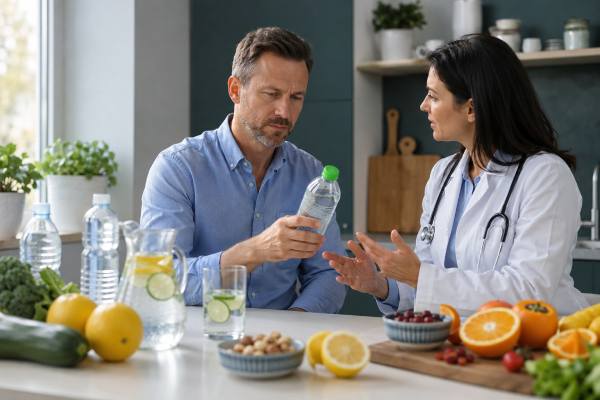
Sparkling water is usually safe for people worried about kidney stones when it is plain, unsweetened, and low in sodium. The bubbles themselves do not create stones. The bigger issue is what comes with the bubbles: sugar, phosphoric acid, high sodium, large amounts of certain minerals, or using fizzy drinks as a replacement for enough total fluid.
That distinction matters because “carbonated drink” is a broad label. Plain seltzer, sparkling mineral water, club soda, tonic water, diet soda, and cola are not the same drink from a kidney stone prevention standpoint. One might be a useful way to drink more fluid. Another might add sugar, sodium, or acids that work against your goals.
For stone prevention, the main hydration target is simple: keep urine diluted often enough that minerals have less chance to concentrate, crystallize, and grow. Sparkling water counts toward that goal when it helps you drink more fluid without adding the wrong ingredients.
Table of Contents
- Is Sparkling Water Safe for Kidney Stones?
- Why Hydration Matters More Than Carbonation
- Sparkling Water vs Soda, Club Soda, and Tonic
- Label Details That Change the Risk
- How Much Sparkling Water to Drink
- Who Should Be More Careful?
- A Practical Stone-Friendly Drink Plan
- When to Get Testing or Medical Advice
Is Sparkling Water Safe for Kidney Stones?
Plain sparkling water is not considered a kidney stone trigger. Carbonation means carbon dioxide gas has been dissolved into water. That creates bubbles and a sharp taste, but it does not load the urine with calcium, oxalate, uric acid, or cystine, which are the substances that form common stones.
The most useful way to think about sparkling water is this: if the drink is essentially water plus bubbles, it belongs in the hydration category. If it is water plus bubbles plus sugar, phosphoric acid, sodium, or heavy flavor additives, it needs a closer look.
Kidney stones form when urine becomes too concentrated with stone-forming substances. Low urine volume is one of the most important and fixable risk factors. A person who drinks two cans of plain seltzer instead of skipping fluids all afternoon is usually improving their stone prevention routine, not harming it.
The confusion comes from grouping all fizzy drinks together. Cola, lemon-lime soda, sparkling mineral water, club soda, and unsweetened seltzer all fizz, but their ingredient lists differ. The carbonation is not the problem. The drink formula is the part that matters.
For most stone-prone adults, the safest fizzy choices are:
- plain seltzer with no sweetener
- unsweetened sparkling water
- low-sodium sparkling mineral water
- sparkling water flavored only with a small amount of natural flavor and no sugar
- homemade sparkling water with lemon or lime
A less ideal choice is a fizzy drink that tastes like soda because it is close to soda: sweetened, heavily flavored, high in sodium, or built around acids that do not support stone prevention. A daily cola habit belongs in a different risk category than plain sparkling water. The more specific comparison is covered in soda and stone risk.
The bottom line is practical: plain sparkling water is a reasonable hydration tool. It becomes a concern only when the label turns it into something closer to soda, a salty mixer, or a sweetened beverage.
Why Hydration Matters More Than Carbonation
The strongest drink-related protection against kidney stones is urine dilution. When urine volume is low, calcium, oxalate, uric acid, and other minerals sit in a more concentrated solution. That raises the chance that tiny crystals form and stick together.
Good hydration works like rinsing a sink before residue dries on the surface. The minerals are still there, but they are less concentrated and move through the urinary tract more easily. This is why stone prevention advice often focuses less on a magic drink and more on drinking enough throughout the day.
For people with a history of kidney stones, clinicians often aim for enough fluid intake to produce about 2.5 liters of urine per day. That does not mean exactly 2.5 liters of drinks for everyone. Sweat, body size, climate, exercise, sodium intake, and medical conditions change how much fluid a person needs to reach that urine output.
Sparkling water counts because the body uses the water portion the same way it uses still water. The bubbles might make the drink more enjoyable, which matters in real life. A perfect hydration plan that someone hates will not last. A cold can of plain seltzer with lunch, a bottle of sparkling water during work, or a glass with dinner helps when it replaces dry hours or sugary drinks.
Urine color gives a rough daily clue. Very dark yellow urine often means concentration is high. Pale yellow usually suggests better dilution. Clear urine all day is not necessary, and forcing excessive water is unsafe. A practical goal is steady intake that keeps urine from becoming dark and sparse, especially during hot weather, workouts, travel, or long work shifts.
Hydration timing matters too. Drinking a large bottle at night after barely drinking all day is less useful than spreading fluids across waking hours. Stones form in urine, and urine concentration changes hour by hour. A simple pattern works well: drink early, drink with meals, drink between meals, and add more after sweating.
People who want a deeper beverage strategy can compare water, citrus drinks, and drinks to limit in drinks that help prevent stones. Sparkling water fits into that plan as a water option, not as a special treatment.
Sparkling Water vs Soda, Club Soda, and Tonic
A fizzy drink earns its place in a kidney stone prevention plan by what is on the label. The name on the front of the can is less important than the ingredient list and nutrition facts.
| Drink type | Typical ingredients | Stone prevention takeaway |
|---|---|---|
| Plain seltzer | Carbonated water | Usually a good hydration choice. |
| Unsweetened flavored sparkling water | Carbonated water, natural flavors | Usually fine if there is no sugar and little or no sodium. |
| Sparkling mineral water | Carbonated water with naturally occurring minerals | Often fine, but sodium, calcium, magnesium, and bicarbonate vary by brand. |
| Club soda | Carbonated water with added minerals or salts | Check sodium. Some brands are low; others add enough sodium to matter with frequent use. |
| Tonic water | Carbonated water, quinine, sweetener or sugar substitute | Not the same as plain sparkling water. Regular tonic often contains added sugar. |
| Regular soda | Carbonated water, sugar or high-fructose corn syrup, acids, flavors | Poor daily choice for stone prevention, especially when it replaces water. |
| Cola | Carbonated water, sweetener, phosphoric acid, caffeine, flavorings | Best limited, especially for recurrent stone formers. |
Plain seltzer and sparkling water
Plain seltzer is the simplest option. It is carbonated water without meaningful minerals, sugar, calories, or sodium. Unsweetened flavored sparkling water is similar when the label shows zero sugar and zero or very low sodium.
The phrase “natural flavor” does not automatically make a drink harmful or helpful. It usually appears in tiny amounts and does not tell you whether the drink supplies enough citrate to matter. If you want citrate from citrus, add real lemon or lime juice rather than relying on a vague flavor label.
Sparkling mineral water
Sparkling mineral water is more variable. Some brands contain very little sodium. Others contain enough sodium that several bottles per day add up. Some contain calcium, magnesium, or bicarbonate. Those minerals are not automatically bad. Magnesium and bicarbonate often look favorable from a stone-risk standpoint, while high sodium is the bigger label concern.
Calcium deserves a careful explanation. People often assume calcium in water must feed calcium stones. In everyday prevention advice, that is too simplistic. Normal dietary calcium, especially with meals, helps bind oxalate in the gut before it reaches the urine. People with calcium oxalate stones are usually told not to cut calcium too low unless their clinician gives a specific reason.
Club soda, tonic, and soda
Club soda often contains added sodium bicarbonate, sodium chloride, potassium sulfate, or other mineral salts. A glass here and there is usually not a major issue, but a person drinking several cans daily should check sodium per serving. Sodium is one of the clearest diet-related drivers of higher urine calcium, and high urine calcium raises the risk of calcium-containing stones.
Tonic water is a mixer, not a plain water substitute. Regular tonic often contains sugar. Diet tonic avoids sugar but still does not offer an advantage over plain sparkling water.
Regular soda is the problem drink in this group. Sugar-sweetened beverages add a metabolic burden and often displace water. Cola adds phosphoric acid, which is different from the mild carbonic acid that creates bubbles in sparkling water. For stone prevention, plain sparkling water and cola should not be treated as close relatives.
Label Details That Change the Risk
A stone-friendly sparkling water label is short: carbonated water, maybe natural flavor, and little else. The more the ingredient list looks like a soft drink, the less it belongs in a prevention routine.
Start with sugar. Added sugar, cane sugar, high-fructose corn syrup, fruit juice concentrate, and syrup all move the drink away from water. Sweetened fizzy drinks are easy to overconsume because they do not feel as filling as food. One can at lunch, another in the afternoon, and one with dinner quickly turns hydration into a steady sugar source.
Fructose matters because higher sugar intake is linked with stone risk and with metabolic problems that often travel with stones, including obesity, insulin resistance, and gout. Sugary drinks also tend to replace the plain fluids that would dilute urine.
Next, check sodium. A single serving with 10 or 20 milligrams of sodium is not a meaningful problem for most people. A drink with 150 milligrams or more per serving becomes more relevant when it is used several times daily. Sodium raises urine calcium in many people, which is why stone prevention diets often emphasize salt reduction. This is especially important for people already working on high sodium and urine calcium.
Then look for phosphoric acid. It is common in colas and gives them their sharp flavor. Phosphoric acid is not the same as carbonation. Sparkling water gets its fizz from dissolved carbon dioxide, which forms a weak carbonic acid. Cola is a sweetened, flavored, acidified soft drink. Treating those as the same because both are bubbly leads to bad advice.
Citric acid and citrate need a separate note. Citric acid is often used for tartness in flavored drinks. Citrate in urine helps reduce calcium stone formation by binding calcium and interfering with crystal growth. The two words look similar, but a flavored sparkling water with “citric acid” on the label is not automatically a meaningful citrate therapy. Real citrus juice, especially lemon or lime, is a more direct food-based option, though medical potassium citrate is stronger and more predictable when prescribed. The practical differences are explained in lemon water and citrate.
Artificial sweeteners are less clear for stones than sugar. A zero-sugar soda is generally better than a regular soda for sugar reduction, but it still is not better than plain sparkling water as a daily hydration base. If a diet soda helps someone transition away from regular soda, that can be a useful step. The long-term goal should still be mostly water, plain sparkling water, and other low-risk drinks.
For flavored sparkling waters, the dental issue is separate from kidney stones. Acidic drinks can affect tooth enamel with frequent sipping. A simple fix is to drink fizzy flavored water with meals, avoid holding it in the mouth, and use plain water between long sipping sessions.
How Much Sparkling Water to Drink
Sparkling water can make up a large share of daily fluid intake if it is plain, unsweetened, and low in sodium. There is no special kidney stone rule that says sparkling water must be limited to one glass. The limit comes from comfort, label quality, dental habits, and any medical fluid restriction.
A reasonable routine for a stone-prone adult might include one or two sparkling waters per day as part of a broader fluid plan. Someone who dislikes still water might drink more than that, as long as the drink is not sugary or salty. The goal is not to prove sparkling water is superior. The goal is to use it in a way that keeps urine volume steady.
For a person aiming for high urine output, daily fluid often needs to be spread across the day. A practical pattern looks like this:
- Drink water or sparkling water after waking.
- Drink with breakfast, lunch, and dinner.
- Keep a bottle or can available during the longest dry stretch of the day.
- Add extra fluid after exercise, sauna use, hot weather, or long outdoor work.
- Drink a modest amount in the evening if overnight urine tends to be dark, while balancing sleep disruption.
Sparkling water is less helpful when it causes bloating that makes a person drink less overall. Some people feel full after carbonated drinks and then skip other fluids. In that case, use smaller servings, pour it over ice, alternate with still water, or save sparkling water for meals.
It also should not crowd out useful meal choices. For calcium oxalate stone prevention, drinking plain sparkling water with a balanced meal is fine. Skipping food calcium because of fear, then drinking only water, is not automatically better. Normal calcium intake with meals often helps reduce oxalate absorption.
For uric acid stones, the issue is usually urine acidity, not carbonation. Uric acid stones form more readily when urine pH is too low. Plain sparkling water still helps with dilution, but people with uric acid stones often need a plan that raises urine pH in a controlled way. That belongs in medical guidance, not guesswork with alkaline drinks or random supplements. A focused explanation is available in uric acid stone prevention.
A useful self-check is simple: is sparkling water helping you drink enough, or is it replacing better habits with expensive cans and flavored drinks? If it helps you avoid soda and keeps your urine lighter, it is doing its job.
Who Should Be More Careful?
Most healthy adults and many kidney stone formers can use plain sparkling water safely. Some situations deserve more attention because the drink label or the person’s medical condition changes the risk.
People with recurrent calcium stones should be strict about sodium. Club soda and mineral waters with higher sodium are not ideal as all-day drinks. Sodium reduction is one of the more practical diet steps because it lowers urine calcium for many stone formers. A low-sodium sparkling water is a better fit.
People with calcium phosphate stones should avoid trying to alkalinize urine without medical guidance. Calcium phosphate stones tend to form more easily in higher-pH urine. That does not make sparkling water dangerous, but it does mean a person should be cautious with alkaline waters, bicarbonate-heavy routines, or citrate supplements unless testing supports that plan.
People with uric acid stones often need the opposite problem solved: urine that is too acidic. Hydration is still important, but urine pH becomes a major treatment target. They should track recommendations from a clinician instead of assuming any fizzy or alkaline drink fixes the issue. Understanding acidic and alkaline urine helps make those instructions less confusing.
People with chronic kidney disease, heart failure, advanced liver disease, or a prescribed fluid restriction should not increase fluids freely. In those cases, the question is not whether sparkling water causes stones. The question is how much total fluid and sodium is safe. Low-sodium sparkling water might still fit, but the daily amount should match the medical plan.
People with frequent reflux, gas, bloating, or irritable bowel symptoms might find carbonation uncomfortable. That is a digestive tolerance issue, not a kidney stone warning. Switching to still water, smaller servings, or drinking fizzy water with meals usually solves it.
People using sparkling water to stop a soda habit should check whether the replacement is truly unsweetened. Some drinks sit in the sparkling water aisle but contain sugar, juice, caffeine, or sweeteners. The front label might say “sparkling,” “refreshing,” or “naturally flavored,” while the nutrition label shows calories and added sugar.
Children and teenagers with stones need individualized guidance. Pediatric stones deserve proper evaluation, especially when stones recur, there is a family history, or symptoms appear with infection. Sparkling water is not usually the core issue; the child’s total fluid intake, diet, urine chemistry, and stone type matter more.
A Practical Stone-Friendly Drink Plan
A good drink plan does not need to be complicated. It needs to be repeatable on ordinary days, not just during a burst of motivation after a painful stone.
Start with a default drink list. Keep still water and plain sparkling water as the base. Add lemon or lime when you like the taste. Use coffee or tea moderately if they fit your health needs. Save sugary drinks for rare occasions rather than daily hydration.
Then set a replacement rule. If you currently drink regular soda, do not try to fix everything at once. Replace the easiest soda first, usually the one you drink out of habit rather than enjoyment. For example, swap the afternoon soda for a cold sparkling water with lime. Keep that change for two weeks, then replace another serving. This works better than declaring all soda forbidden and then returning to the old routine after a stressful week.
Use the label test before buying a full case. A strong sparkling water choice has:
- zero added sugar
- zero or very low sodium
- no phosphoric acid
- no syrup or fruit juice concentrate
- no “tonic” unless you specifically want tonic
- a taste you will actually drink
Make hydration visible. A person who works at a desk might place two drinks within reach: one still water and one sparkling water. A driver might keep a refillable bottle plus one can of seltzer for meals. A person who forgets to drink until dinner might pair fluids with existing routines: after brushing teeth, with morning medication, at each meal, and after walking the dog.
Do not rely only on thirst. Thirst often lags behind fluid need, especially during busy work, travel, heat, or exercise. Kidney stone prevention works better with planned drinking than with waiting until the mouth feels dry.
Balance fluid with salt. Drinking more while eating very salty meals is not a full solution. High sodium pushes more calcium into urine, so a salty diet can work against the benefit of better hydration. The strongest routine combines enough fluid with lower-sodium meals most of the time.
Think about overnight urine too. Some stone formers produce very concentrated urine overnight. Chugging water before bed can ruin sleep, so use a gentler approach: drink steadily through the afternoon, have fluid with dinner, and consider a small glass later in the evening. People with nocturia, heart failure, or swelling need individualized advice.
A sample stone-friendly drink day could look like this:
- Morning: still water after waking, coffee or tea with breakfast.
- Midday: plain sparkling water with lunch.
- Afternoon: water bottle at work, refill once.
- Dinner: sparkling water with lemon or lime instead of soda.
- Evening: small glass of water if urine tends to be dark at night.
This plan is flexible. The exact drinks matter less than the pattern: steady fluids, low sugar, low sodium, and fewer soft drinks.
When to Get Testing or Medical Advice
Sparkling water is a small piece of the kidney stone prevention picture. A person who has had one stone, especially a small first stone, often starts with hydration, lower sodium, normal dietary calcium, and fewer sugary drinks. A person with repeated stones needs more detail.
The most useful test for prevention is often a 24-hour urine collection. It measures urine volume and stone-related factors such as calcium, oxalate, citrate, uric acid, sodium, and pH. Those results show whether the main problem is low urine volume, high calcium, low citrate, acidic urine, high oxalate, or another pattern. That matters because the right drink advice changes by pattern. Learn what the test shows in a 24-hour urine test guide.
For example, a person with low urine volume needs a stronger hydration plan. A person with high urine sodium needs salt reduction, not just more drinks. A person with low citrate might need more fruits and vegetables, citrus strategies, or prescribed citrate. A person with uric acid stones often needs urine alkalinization. A person with calcium phosphate stones needs care with anything that raises urine pH too much.
Stone analysis is also important. Guessing the stone type from symptoms does not work. Calcium oxalate, calcium phosphate, uric acid, struvite, and cystine stones have different prevention priorities. If you pass a stone, saving it for analysis gives better information than trying to identify it by appearance.
Seek prompt care for kidney stone symptoms that suggest obstruction or infection. Red flags include fever, chills, severe flank pain, vomiting that prevents fluids, blood in urine with worsening pain, pain with a single kidney, pregnancy, or inability to urinate. Infection behind a blocked ureter is urgent.
Medical advice is also important before using supplements or high-dose mineral waters as a “stone cure.” Potassium citrate, magnesium, calcium, vitamin C, and alkaline products all have specific uses and risks. More is not automatically better. High-dose vitamin C, for instance, raises oxalate concerns in some people. Potassium-containing products are unsafe for certain people with kidney disease or medications that raise potassium.
The practical conclusion stays the same: plain sparkling water is not a hidden kidney stone trigger. It is a useful option when it helps you maintain urine volume and replace sugary carbonated drinks. The best choice is low-sodium, unsweetened, and used as part of a wider prevention plan that matches your stone type and urine results.
References
- Kidney stone disease: risk factors, pathophysiology and management 2025 (Review)
- Sweetened beverage intake and risk of incident kidney stone: results from the UK Biobank 2026 (Prospective Cohort Study)
- Hydration for Adult Patients with Nephrolithiasis: Specificities and Current Recommendations 2023 (Review)
- UPDATE – Canadian Urological Association guideline: Evaluation and medical management of kidney stones 2022 (Guideline)
- Both absolute and relative sugar-sweetened beverage intake are associated with kidney stones in U.S. middle-aged and young adults 2025 (Cross-Sectional Study)
- Variations in the mineral content of bottled ‘carbonated or sparkling’ water across Europe: a comparison of 126 brands across 10 countries 2021 (Comparative Study)
Disclaimer
This article is for education and does not diagnose kidney stones or replace care from a clinician. People with recurrent stones, kidney disease, heart failure, pregnancy, severe pain, fever, vomiting, or a prescribed fluid restriction should get personalized medical advice before changing fluid intake. Stone prevention works best when it is based on stone analysis, urine testing, and the person’s full medical history.