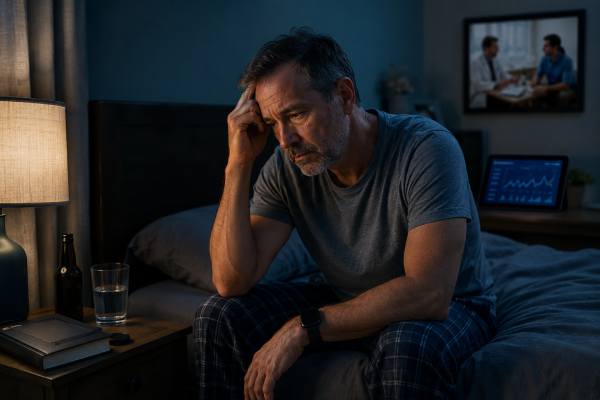
Insomnia is not just “having a bad night.” For many men, it shows up as lying awake with a racing mind, waking at 3 a.m. and not getting back to sleep, or feeling unrefreshed even after enough time in bed. Stress is often part of the story, but it is not the only cause. Alcohol, caffeine, late workouts, medications, low mood, weight gain, low testosterone, and sleep apnea can all keep sleep broken.
The pattern matters. A man who cannot fall asleep after work stress may need a different approach than a man who wakes gasping, snores loudly, and feels exhausted all day. The best fix usually starts with identifying the sleep pattern, removing common triggers, and treating medical causes instead of relying on stronger and stronger sleep aids.
Table of Contents
- When Poor Sleep Becomes Insomnia
- Why Men Often Miss the Real Cause
- Stress, Anxiety, and a Wired Brain at Night
- Alcohol, Caffeine, and Evening Habits That Break Sleep
- Sleep Apnea and Snoring That Look Like Insomnia
- Hormones, Testosterone, and Metabolic Health
- What Helps First
- Medications, Supplements, and When to Get Care
When Poor Sleep Becomes Insomnia
Insomnia means trouble falling asleep, staying asleep, waking too early, or sleeping poorly despite having enough chance to sleep. It becomes a disorder when it causes daytime problems such as fatigue, poor focus, irritability, low motivation, headaches, or mistakes at work.
A few bad nights after travel, illness, or a stressful week are common. Chronic insomnia is different. It usually means sleep trouble at least three nights per week for several months. Many men wait until the problem affects work performance, sex drive, mood, blood pressure, or relationships before they take it seriously.
The timing of the problem gives useful clues:
| Sleep pattern | Common clues | Possible causes to consider |
|---|---|---|
| Takes more than 30–60 minutes to fall asleep | Mind racing, body tense, clock-watching | Stress, anxiety, caffeine, irregular schedule, too much time in bed |
| Wakes often during the night | Snoring, bathroom trips, reflux, pain, sweating | Sleep apnea, alcohol, enlarged prostate symptoms, medications, pain |
| Wakes too early | Awake before alarm, low mood, early morning worry | Depression, stress hormones, alcohol rebound, circadian rhythm changes |
| Sleeps enough hours but feels unrefreshed | Morning headache, dry mouth, daytime sleepiness | Sleep apnea, restless sleep, sedating alcohol or medications |
A sleep diary can make this clearer within one to two weeks. Write down bedtime, wake time, estimated time to fall asleep, night awakenings, naps, caffeine, alcohol, workouts, and medications. The goal is not perfect tracking. The goal is to see patterns that are easy to miss when every night feels frustrating.
Insomnia is also not the same as short sleep by choice. A man who sleeps five hours because he stays up watching videos or answering emails may be sleep deprived, but not necessarily insomniac. A man who goes to bed at 10:30, lies awake until 1:00, and dreads bedtime may have insomnia even if he spends eight hours in bed.
Why Men Often Miss the Real Cause
Many men explain insomnia as “just stress” and stop looking there. Stress may be real, but poor sleep often has several layers. A demanding job, two drinks at night, weight gain, loud snoring, and late caffeine can combine into one sleep problem.
Men are also more likely to normalize daytime symptoms. Instead of saying “I’m exhausted,” they may say they are less patient, less sharp, less interested in sex, or more dependent on energy drinks. Sleep loss can show up as anger, risk-taking, overeating, or pushing harder at the gym when the body actually needs recovery.
Common reasons men miss the cause include:
- They focus only on hours slept. Sleep quality matters too. Eight hours of fragmented sleep may still leave a man drained.
- They use alcohol as a sleep aid. Alcohol may make falling asleep easier, then worsens the second half of the night.
- They ignore snoring. Loud snoring, choking, and morning headaches are not just annoyances.
- They treat fatigue with more caffeine. Caffeine can keep the cycle going, especially when used after lunch.
- They blame age too quickly. Sleep changes with age, but severe insomnia is not something men should simply accept.
Mood symptoms are another reason the cause gets missed. Men with depression may not always describe sadness. They may report early waking, low drive, anger, body aches, or feeling detached. Men with anxiety may notice chest tightness, stomach upset, jaw tension, or a sense that their body will not power down. Sleep trouble that comes with panic, irritability, or dread deserves a wider look at mental health, not just another supplement. Related symptoms are discussed in more detail in anxiety in men and depression in men.
A partner can be helpful here. Many men do not know they stop breathing, kick, grind their teeth, or sit up gasping. If someone says your sleep looks restless or your snoring is intense, take that seriously.
Stress, Anxiety, and a Wired Brain at Night
Stress-related insomnia often feels like being tired but alert. The body is ready for sleep, but the brain keeps scanning problems: bills, work conflict, health worries, relationship tension, or tomorrow’s schedule.
This happens because the nervous system is still in threat mode. Heart rate may be slightly higher. Muscles stay tight. Thoughts repeat. The bed becomes linked with problem-solving instead of sleep. After enough nights, the fear of not sleeping becomes its own trigger.
A common pattern looks like this:
- A stressful event causes a few bad nights.
- The man starts going to bed earlier to “catch up.”
- He lies awake longer because he is not sleepy enough yet.
- He checks the clock and calculates how little sleep is left.
- The bed starts to feel like a place where failure happens.
The fix is not to “try harder” to sleep. Trying harder usually makes insomnia worse. Sleep comes more easily when the body is trained to connect bed with sleep again.
Helpful steps include:
- Set a worry time earlier in the evening. Spend 10–15 minutes writing worries, next actions, and anything that can wait. This gives the brain a place to park unfinished business.
- Use a wind-down routine that is boring and repeatable. Dim lights, shower, stretch lightly, read something calm, or listen to quiet audio.
- Get out of bed if you are wide awake. If you are alert for roughly 20–30 minutes, move to a dim room and do something quiet. Return when sleepy.
- Stop using the bed as an office. Work emails, arguments, news, and scrolling train the brain to stay alert in bed.
- Keep wake time steady. A consistent morning wake time is one of the strongest signals for the body clock.
Breathing exercises can help some men, but they work best when treated as a downshift, not as a forced sleep button. Slow breathing, progressive muscle relaxation, or guided relaxation can reduce body tension. They do not need to be perfect.
Stress from fatherhood, caregiving, job loss, divorce, or financial pressure may need more than sleep tips. Therapy, stress coaching, changes at work, or treatment for anxiety can improve sleep because they address the engine behind the insomnia. Chronic burnout can also cause fatigue, irritability, and poor recovery; stress and burnout in men can overlap strongly with insomnia.
Alcohol, Caffeine, and Evening Habits That Break Sleep
Alcohol is one of the most common sleep traps for men. It can make you drowsy, but sedation is not the same as healthy sleep. After the body starts clearing alcohol, sleep becomes lighter and more broken. REM sleep, the stage linked with dreaming and emotional processing, is often reduced or delayed.
A “nightcap” can cause:
- More waking in the second half of the night
- Worse snoring or breathing pauses
- Night sweats or feeling hot
- More bathroom trips
- Dry mouth and morning headache
- More anxiety the next day
The effect is stronger with higher amounts, but even moderate evening drinking can disrupt sleep in some men. The risk is higher when alcohol is combined with sleep apnea, reflux, sedating medications, or late meals. Men who use alcohol to manage stress may notice a cycle: drink to fall asleep, wake at 3 a.m., feel tired and anxious, use more caffeine, then drink again at night. Broader health effects are covered in alcohol and men’s health.
Caffeine is another major factor. Its effects can last long enough that a 3 p.m. coffee still matters at bedtime. Some men metabolize caffeine slowly and need to stop by late morning. Energy drinks and pre-workout powders can be even more disruptive because they may combine caffeine with other stimulants. If anxiety, palpitations, or high blood pressure are also present, stimulant-heavy products deserve extra caution.
Evening habits that often backfire include:
- Heavy meals close to bed, especially with reflux
- Nicotine in the evening
- Intense late workouts that leave the body wired
- Bright screens in bed
- Long naps after work
- Sleeping in on weekends to recover from weekday sleep loss
Not every man needs a strict routine. The first step is usually to change the highest-impact habit for two weeks. For example, stop alcohol within three to four hours of bed, move caffeine before noon, and keep wake time steady. If sleep improves, you have useful information. If it does not, keep looking for medical or psychological causes.
Sleep Apnea and Snoring That Look Like Insomnia
Sleep apnea can feel like insomnia because it repeatedly wakes the brain, even when the person does not remember waking. A man may say, “I wake up all night,” “I never feel rested,” or “I sleep eight hours and still need caffeine.” The real issue may be breathing interruptions.
Obstructive sleep apnea happens when the upper airway narrows or collapses during sleep. Oxygen can drop, the brain briefly wakes the body, and breathing restarts. This can happen many times per hour.
Warning signs include:
- Loud, frequent snoring
- Pauses in breathing noticed by a partner
- Gasping, choking, or snorting awake
- Morning headaches
- Dry mouth on waking
- Daytime sleepiness or dozing off unintentionally
- High blood pressure, especially if hard to control
- Larger neck size or weight gain around the belly
- Waking to urinate several times at night
Men can have both insomnia and sleep apnea. This combination is common enough that treating only one part may not fully solve the problem. A man with apnea may struggle with CPAP at first if he also has untreated insomnia. A man with insomnia may not improve with sleep therapy alone if breathing keeps interrupting sleep.
A sleep study is the usual way to diagnose sleep apnea. Some men can use a home sleep apnea test. Others need an in-lab study, especially if symptoms are complex, oxygen levels are a concern, or another sleep disorder is possible. More details on symptoms and testing are covered in sleep apnea in men and snoring with daytime fatigue.
Treatment depends on severity and anatomy. Options may include positive airway pressure therapy, a mandibular advancement device from a qualified dental sleep provider, weight loss when relevant, avoiding alcohol near bedtime, side-sleeping strategies, or surgery in selected cases. The best treatment is the one that controls breathing and that the man can actually use.
Sleep apnea is not just a sleep problem. Untreated apnea can affect blood pressure, heart rhythm, blood sugar, mood, concentration, and sexual function. Men with erectile dysfunction, low energy, or morning headaches should not assume testosterone is the first answer if apnea symptoms are present.
Hormones, Testosterone, and Metabolic Health
Poor sleep and hormones affect each other. Testosterone is produced in a daily rhythm, and sleep disruption can interfere with that rhythm. Low testosterone can also overlap with fatigue, low libido, depressed mood, increased belly fat, and lower motivation, which can make sleep habits harder to maintain.
This does not mean every man with insomnia has low testosterone. It also does not mean testosterone treatment is the solution for poor sleep. In many men, sleep apnea, weight gain, alcohol, stress, diabetes risk, or depression explains more of the problem than testosterone alone.
Signs that hormone or metabolic testing may be worth discussing include:
- Low libido or fewer morning erections
- Ongoing fatigue despite enough sleep opportunity
- Loss of muscle or strength without clear reason
- Increased belly fat
- Depressed mood or low motivation
- Infertility concerns
- Hot flashes or night sweats
- Symptoms that started after opioid use, anabolic steroid use, or certain medications
Testing testosterone should usually be done in the morning, and low results often need confirmation with repeat labs. A single afternoon test is easy to misread. If testosterone is low, doctors often check related labs to see whether the issue is in the testes, the brain’s hormone signaling, medications, body weight, or another condition.
Sleep is also tied to blood sugar and weight. Men with insulin resistance or type 2 diabetes may wake to urinate, feel thirsty, have nerve pain, or experience night sweats. Belly fat raises the risk of sleep apnea, and sleep apnea can worsen metabolic health. The overlap between poor sleep and hormones is discussed further in low testosterone and sleep.
Be careful with testosterone replacement if sleep apnea is suspected or untreated. Testosterone therapy can worsen breathing during sleep in some men, especially when doses are too high or apnea is already present. Men considering treatment should talk with a clinician about snoring, witnessed apneas, oxygen levels, and daytime sleepiness. This is especially important for men reading about TRT and sleep apnea.
Other medical causes can also mimic insomnia or make it worse. Thyroid disease, chronic pain, reflux, asthma, restless legs, enlarged prostate symptoms, and some heart or lung conditions can all fragment sleep. If insomnia comes with major daytime fatigue, shortness of breath, chest discomfort, unexplained weight loss, blood in urine, severe pain, or new neurologic symptoms, it needs medical evaluation rather than another sleep hack.
What Helps First
The first plan should be simple enough to follow for two weeks. Trying ten changes at once makes it hard to know what helped. Start with sleep timing, light, alcohol, caffeine, and the bed-sleep connection.
A strong two-week reset looks like this:
- Pick one wake time and keep it steady. Use the same wake time on workdays and weekends, or keep weekend changes within about an hour.
- Get morning light. Outdoor light soon after waking helps anchor the body clock.
- Stop caffeine earlier. For many men, noon is a good cutoff. Some need 10 a.m.
- Avoid alcohol close to bed. If sleep is badly broken, try two alcohol-free weeks and compare.
- Use the bed only for sleep and sex. This retrains the brain to stop treating bed as a thinking zone.
- Do not lie in bed awake for long stretches. Get up briefly if fully alert, then return when sleepy.
- Keep naps short or skip them. A long evening nap can steal sleep pressure from the night.
- Write down sleep data. Track patterns, not perfection.
The most effective non-drug treatment for chronic insomnia is cognitive behavioral therapy for insomnia, often called CBT-I. It is not general talk therapy. It is a structured sleep treatment that targets the habits and thought patterns that keep insomnia going.
CBT-I may include:
- Sleep restriction or sleep compression: limiting time in bed at first so sleep becomes deeper and more efficient, then slowly expanding the sleep window.
- Stimulus control: rebuilding the bed as a cue for sleep, not frustration.
- Cognitive work: changing fear-based thoughts such as “I’ll be useless tomorrow if I don’t sleep.”
- Relaxation training: lowering body tension before bed.
- Sleep scheduling: aligning bedtime and wake time with the body clock.
Sleep restriction should be done carefully, especially for men who drive long distances, operate machinery, have bipolar disorder, seizure risk, severe sleep apnea, or major daytime sleepiness. A trained clinician can adjust the plan safely.
Exercise helps sleep, but timing and intensity matter. Strength training, walking, cycling, swimming, and sports can all improve sleep pressure and mood. Very hard workouts late at night may keep some men alert. A good compromise is to train earlier when possible and use light stretching or an easy walk at night.
Food timing can matter too. Going to bed very hungry can wake some men, while a heavy late meal can worsen reflux and apnea. A small protein-containing snack may help some people, but large meals, spicy foods, and high-fat meals close to bed often backfire.
Medications, Supplements, and When to Get Care
Sleep medication can help in selected cases, but it should not be the only plan when insomnia is chronic. Pills may reduce symptoms while CBT-I, stress treatment, alcohol reduction, apnea treatment, or medical evaluation addresses the cause.
Common medication issues include:
- Over-the-counter antihistamines such as diphenhydramine or doxylamine can cause next-day grogginess, dry mouth, constipation, urinary trouble, and confusion in some people.
- Melatonin may help more with body-clock timing than with chronic stress insomnia. Higher doses are not always better.
- Prescription sleep medicines can cause next-day impairment, falls, sleepwalking-like behaviors, tolerance, or dangerous effects when mixed with alcohol or other sedatives.
- Benzodiazepines can be risky when used long term or combined with alcohol, opioids, or untreated sleep apnea.
- Supplements may interact with medications or vary in quality. “Natural” does not always mean safe.
A medication review is often useful. Decongestants, stimulants, some antidepressants, corticosteroids, thyroid medication taken too late, asthma medicines, diuretics, nicotine products, and high-caffeine supplements can all affect sleep. Do not stop prescribed medicine suddenly without medical guidance, but do ask whether timing or alternatives could help.
Get medical care sooner if insomnia comes with:
- Loud snoring, choking, or witnessed breathing pauses
- Severe daytime sleepiness, drowsy driving, or falling asleep unintentionally
- Chest pain, fainting, or shortness of breath
- New severe headaches or neurologic symptoms
- Manic symptoms such as no need for sleep, impulsive behavior, or racing thoughts
- Heavy alcohol use or withdrawal symptoms
- Suicidal thoughts or feeling unsafe
- Night sweats, fever, unexplained weight loss, or persistent pain
- New insomnia after starting a medication
Men who have fatigue, low libido, erectile changes, weight gain, depressed mood, and poor sleep may need a broader checkup rather than a single sleep prescription. Lab work may include blood count, thyroid testing, metabolic labs, testosterone testing when symptoms fit, and other tests based on the exam. A fuller look at causes is covered in fatigue in men.
The right clinician depends on the pattern. A primary care clinician can start the workup, review medications, screen for depression or anxiety, and order basic labs. A sleep specialist can test for apnea, restless legs, circadian rhythm disorders, or complex insomnia. A behavioral sleep medicine provider can deliver CBT-I. A urologist, endocrinologist, cardiologist, or mental health professional may be needed when symptoms point in that direction.
Insomnia usually improves fastest when the cause is treated directly. Stress insomnia needs nervous system retraining and better boundaries. Alcohol-related insomnia needs less evening alcohol. Sleep apnea needs breathing treatment. Hormonal symptoms need careful testing, not guesswork. When the pattern is clear, the plan becomes much easier to follow.
References
- VA/DOD Clinical Practice Guideline for the Management of Chronic Insomnia Disorder and Obstructive Sleep Apnea 2025 (Guideline)
- The European Insomnia Guideline: An update on the diagnosis and treatment of insomnia 2023 2023 (Guideline)
- 2023 Guidelines on the Diagnosis and Treatment of Insomnia in Adults – Brazilian Sleep Association 2023 (Guideline)
- 2024 Position Statement on the Use of Different Diagnostic Methods for Sleep Disorders in Adults – Brazilian Sleep Association 2024 (Position Statement)
- The effect of alcohol on subsequent sleep in healthy adults: A systematic review and meta-analysis 2025 (Systematic Review)
- Association between obstructive sleep apnea and male reproductive function: a cross-sectional study with stratified analysis 2025 (Study)
Disclaimer
This article is educational and does not replace care from a qualified health professional. Men with persistent insomnia, loud snoring, breathing pauses, severe daytime sleepiness, mood changes, alcohol withdrawal symptoms, or suspected hormone problems should seek medical evaluation. Do not start, stop, or combine sleep medicines, supplements, or testosterone treatment without professional guidance.