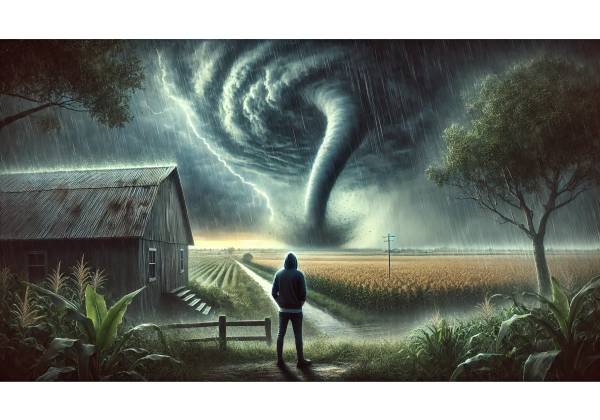
Lilapsophobia is an intense fear of tornadoes, hurricanes, thunderstorms, or other severe weather. For some people, the fear goes far beyond healthy caution. It can shape decisions about sleep, work, travel, school, and family life. A person may check radar over and over, avoid certain places, or feel panicked at the first dark cloud or weather alert.
The term is common in everyday language, but clinicians usually understand it within the broader diagnosis of specific phobia rather than as a separate formal disorder. That matters because it points toward treatments that are already well studied, especially exposure-based cognitive behavioral therapy. The goal is not to make someone careless about storms. It is to help them respond to real weather risk in a calm, clear, and proportionate way, without being ruled by fear.
Table of Contents
- What lilapsophobia is
- Symptoms and signs
- Causes and risk factors
- How diagnosis works
- Daily life and complications
- Treatment options
- Coping and management
What lilapsophobia is
Lilapsophobia is a strong and persistent fear of severe weather, especially tornadoes, hurricanes, thunderstorms, lightning, high winds, or the idea of being trapped in a dangerous storm. In clinical practice, this fear usually fits under the broader category of specific phobia, which means a fear centered on a particular object or situation. The important point is that it is not simply a dislike of storms or a sensible respect for danger. It is a level of fear that feels overwhelming, leads to avoidance or intense distress, and becomes hard to control.
That distinction matters because fear of dangerous weather is often reasonable. Severe storms can cause injury, death, and major property damage, and good preparation can save lives. The problem begins when the emotional response is clearly out of proportion to the actual risk or stays extreme long after the danger has passed. A person may panic over a routine rain forecast, spend hours monitoring weather on calm days, or refuse work, travel, or sleep unless they remain close to a basement or storm shelter.
People with lilapsophobia often know that their fear is excessive, yet that insight does not switch it off. The body may still react as if disaster is about to happen. That is one reason phobias feel so frustrating. The logical part of the mind may say that the situation is probably safe, while the nervous system says to escape immediately. In weather-related phobia, the trigger may be direct, such as thunder or lightning, or indirect, such as forecast maps, warning sirens, storm documentaries, social media videos, or memories of past weather damage.
Lilapsophobia can affect children, teens, and adults. It may occur on its own or alongside generalized anxiety, panic symptoms, trauma-related symptoms, or depression. Some people have feared storms since childhood. Others develop the fear after living through a tornado, hurricane, destructive thunderstorm, or evacuation. Whether it begins gradually or suddenly, the pattern is often the same: the brain learns to connect weather cues with extreme danger, and avoidance begins to shrink daily life.
Symptoms and signs
The symptoms of lilapsophobia often appear in three layers: physical, emotional, and behavioral. Physical symptoms can include a racing heart, shaking, sweating, chest tightness, stomach upset, dizziness, or a sudden rush of adrenaline when storms are mentioned or expected. Some people feel tense for hours before forecasted bad weather and cannot settle down even indoors. Others have panic attacks when they hear thunder, see dark clouds, or receive a severe weather notification.
Emotionally, the fear is usually immediate and intense. A person may feel dread, helplessness, impending doom, fear of death, fear that loved ones will be harmed, or fear of being trapped with no escape. The reaction may be much stronger than the situation justifies. For example, a person may become highly distressed by a distant thunderstorm or a forecast that only suggests a small chance of severe weather. Children may cry, cling to caregivers, hide, refuse to sleep alone, or ask the same fearful questions again and again. Adults may feel embarrassed by the intensity of their reactions, which can create shame on top of fear.
Behavioral signs are often the clearest clue that the problem has crossed from understandable caution into a phobia. Common patterns include:
- checking weather apps, radar, or news far more often than needed
- avoiding travel, outdoor plans, work shifts, or school when storms are only a possibility
- refusing to stay in buildings or regions felt to be unsafe because of weather
- sleeping in clothes or shoes during storm season
- repeatedly rehearsing escape plans without feeling reassured
- staying close to a basement or interior room even when there is little actual risk
- asking family members for repeated reassurance
- stockpiling supplies far beyond reasonable preparedness needs
Anticipation is another major feature. Many people with lilapsophobia feel worst before a storm arrives. The waiting, uncertainty, and constant scanning can feel harder than the weather itself. Over time, this creates a cycle in which fear is reinforced by vigilance. Every round of checking may bring a few moments of relief, but it also teaches the brain that constant monitoring is necessary for safety. That cycle can keep the phobia active for years if it is not addressed.
Causes and risk factors
Lilapsophobia rarely has one single cause. It usually develops through a mix of temperament, learning, personal experience, and stress. One common pathway is direct experience. A person who has lived through a tornado, major hurricane, lightning strike nearby, roof damage, flash flooding, evacuation, or frightening emergency alerts may start connecting any weather cue with danger. Even when later forecasts are less serious, the nervous system may react as if the earlier event is happening all over again. This is more likely when the original experience involved helplessness, injury, property loss, or intense fear for family members.
Another pathway is indirect learning. Children and adults can absorb fear from parents, caregivers, media coverage, community stories, or repeated disaster footage online. If severe weather is always discussed in catastrophic terms, or if a child sees adults panic during storms, the brain may learn that weather signals require an extreme response. Modern alert systems are useful and often lifesaving, but for vulnerable people they can become part of the trigger pattern. Sirens, push notifications, radar colors, and breaking-news graphics may start to evoke fear even when they are functioning as intended.
Specific phobias more broadly are linked to risk factors such as family patterns of fear, an anxious temperament, behavioral inhibition, and certain ways of thinking, including catastrophizing and rumination. Some people are more likely to imagine the worst outcome immediately and struggle to tolerate uncertainty. In lilapsophobia, that may sound like, “If a storm is possible, disaster is likely,” or, “If I stop checking the weather, something terrible will happen and I will be unprepared.”
Not everyone who lives through a dangerous storm develops a phobia. The difference often depends on what happens afterward. Did the person regain a sense of safety, or did the fear stay emotionally unfinished? Did they return to normal routines, or did avoidance grow? Were they given accurate information and support, or left alone with vivid fear and repeated alarm? These questions matter because phobias are not maintained by fear alone. They are also maintained by the ways people try to escape fear. Avoidance brings short-term relief, but it prevents the brain from learning that many storm-related cues can be tolerated safely.
How diagnosis works
Diagnosis begins with a careful clinical history rather than a lab test or scan. A doctor, psychologist, psychiatrist, or other qualified mental health professional will ask what the person fears, when the fear started, how often it happens, what triggers it, and how much it interferes with everyday life. The goal is to separate normal caution about severe weather from a persistent phobic pattern. Clinicians look for fear that is strong, hard to control, out of proportion to the real level of danger, and linked to avoidance or significant distress.
A good evaluation also considers whether another condition explains the symptoms better. Panic disorder, for example, involves recurrent panic attacks that are not always tied to one specific trigger. Post-traumatic stress disorder may be more likely if the storm fear is part of a broader trauma pattern that includes intrusive memories, nightmares, startle responses, and trauma-related avoidance. Generalized anxiety disorder tends to involve worry across many areas of life rather than mainly around severe weather. In some people, more than one diagnosis may apply.
The assessment often covers:
- the exact weather triggers, such as thunder, tornado warnings, radar maps, or hurricane season
- how fast symptoms rise and how long they last
- what the person avoids or endures with intense distress
- sleep problems, school or work disruption, and family impact
- any history of storm trauma, evacuation, or major loss
- use of alcohol, sedatives, or compulsive checking to cope
- depression, trauma symptoms, or other anxiety disorders
Children may need a more developmentally sensitive evaluation. Some fear of storms can be normal, especially after a frightening weather event or during certain stages of childhood. The diagnosis becomes more likely when the fear is persistent, very intense, clearly interfering with daily life, and not in line with the child’s age or the true level of danger. Adults often recognize that their fear is excessive, but that insight is not enough to stop the symptoms. What matters most is the ongoing pattern of fear, avoidance, and impairment.
Diagnosis is not about labeling someone as irrational. It is about understanding how the fear works, how much it has narrowed life, and what kind of treatment can help restore a more balanced response to weather risk.
Daily life and complications
Lilapsophobia can quietly reshape daily life. At first, the changes may seem practical or even responsible. A person may start following forecasts more closely or prefer to stay home when storms are possible. Over time, however, the pattern can grow. Social plans get canceled. Driving routes become limited. Vacations are chosen around climate rather than enjoyment. Children may miss school during storm season. Adults may avoid certain jobs, refuse evening activities, or feel unable to travel far from a shelter.
The emotional burden can be just as serious as the practical one. Living in a state of constant alert can wear the mind and body down. Sleep may become lighter or fragmented. Concentration can drop. Productivity may fall. Relationships can become strained if loved ones feel pulled into repeated reassurance, emergency drills, or arguments about whether the danger is real. Parents with severe storm fear may unintentionally pass that fear to their children. Partners may feel helpless, frustrated, or afraid to bring up weather at all.
One of the most important complications is avoidance. Avoidance feels protective, but it narrows life and teaches the brain that the feared situation is too dangerous to face. That strengthens the phobia over time. It can also interfere with normal preparedness. Someone who is highly panicked may actually be less able to follow a real weather safety plan calmly and effectively during an actual emergency. In that way, the phobia can undermine the very goal that drives it: staying safe.
Lilapsophobia may also occur alongside depression, panic symptoms, trauma-related symptoms, or substance use meant to dull anxiety. When the fear becomes severe, people may feel isolated, ashamed, or hopeless about whether they can ever function normally during storm season. The condition can reduce quality of life, strain family routines, and limit educational or career opportunities.
When weather fear starts deciding where a person lives, how they sleep, whether they work, or how the family functions, it is no longer just “being nervous about storms.” It becomes a mental health problem with real consequences, and it deserves thoughtful treatment before the pattern becomes even more entrenched.
Treatment options
The main treatment for lilapsophobia is cognitive behavioral therapy, especially exposure-based CBT. This approach helps the brain relearn the difference between real weather danger and overlearned fear. Exposure does not mean placing someone in unsafe conditions. It means building a gradual, planned, and controlled process of facing feared cues while learning new responses. For one person, that might start with saying the word “tornado.” For another, it may involve looking at weather maps, hearing recorded thunder, or sitting with a forecast without compulsive checking.
A therapist often helps the person create a fear ladder, beginning with less distressing triggers and moving upward step by step. The process may include breathing skills, grounding, and attention strategies, but the deeper goal is not just to relax. It is to learn that fear can rise and fall without constant escape or reassurance. Cognitive work may also help the person challenge predictions such as, “If there is any storm watch, catastrophe is certain,” or, “I cannot handle this feeling unless I keep checking.”
Over time, treatment focuses on tolerating uncertainty, reducing ritualized behavior, and responding to real weather information in a more proportionate way. This is especially important in weather-related phobia because the goal is not to ignore risk. It is to respond to actual warnings sensibly without treating every forecast as an emergency.
In some cases, virtual reality or technology-assisted exposure may be useful, especially when real-life triggers are difficult to reproduce on demand. These tools can help simulate storm-related cues in a controlled setting. Medication is usually not the first treatment for a specific phobia, but it may play a role in selected cases, particularly when the person also has severe anxiety, panic symptoms, or depression that makes therapy harder to engage in. Even then, medication alone often does not change the underlying phobic learning as effectively as exposure-based treatment.
Treatment works best when it respects real safety. Good therapy for lilapsophobia includes practical preparedness, such as understanding local alerts, knowing shelter options, and keeping a reasonable emergency kit, while also reducing the exaggerated fear response that takes over daily life.
Coping and management
Daily management begins with one useful principle: prepare once, then live. People with lilapsophobia often blur the line between healthy preparedness and exhausting hypervigilance, but the two are not the same. Preparedness is practical, specific, and limited. Hypervigilance is repetitive, draining, and rarely reassuring for long. A healthier approach is to make a clear weather plan ahead of time and then use it only when conditions truly call for it.
Helpful self-management steps include:
- Make a realistic storm safety plan. Know where you would go during a warning, who you would contact, and what supplies you reasonably need.
- Limit checking. Choose set times to review a reliable forecast instead of monitoring radar all day.
- Notice avoidance habits. Keep track of what you cancel, postpone, or over-control because of storm fear.
- Use grounding rather than reassurance loops. Slow breathing, naming objects in the room, and placing both feet firmly on the floor can help during a surge of fear.
- Reduce doom-scrolling. Repeated disaster videos and alarm-heavy social media can keep the threat system switched on.
- Practice with mild triggers. Reading a forecast without checking again for a set period can be one small step.
- Get professional help early if fear is expanding.
It can also help to learn the actual meaning of weather language. Many people with storm phobia react to all weather terms as if they mean immediate danger. Understanding the difference between a routine forecast, a watch, a warning, and an emergency can reduce unnecessary fear while keeping safety intact.
When to seek help
Seek professional help if storm fear has lasted for months, causes panic, disrupts sleep, leads to repeated cancellations, creates conflict at home, or makes you feel trapped by checking and avoidance. Seek urgent mental health help right away if anxiety is accompanied by hopelessness, thoughts of self-harm, heavy substance use, or inability to care for yourself or your child during distress. Specific phobias are treatable, and early treatment can keep fear from taking over more of your life.
References
- Specific Phobia – StatPearls – NCBI Bookshelf 2024
- Virtual Reality Exposure Treatment in Phobias: a Systematic Review 2021 (Systematic Review)
- Key factors behind various specific phobia subtypes 2023
- Taxonomy of anxiety disorders—a comparison of ICD-10 and ICD-11 2025
- Severe weather phobia: an exploratory study 1996
Disclaimer
This article is for educational purposes only and is not a diagnosis or a substitute for medical or mental health care. Fear of severe weather can overlap with specific phobia, panic disorder, trauma-related conditions, and other anxiety disorders, so an accurate evaluation matters. If symptoms are persistent, worsening, or interfering with safety, sleep, work, school, or relationships, seek advice from a licensed clinician.
If you found this article useful, please share it on Facebook, X, or any platform you prefer so it can reach someone else who may need it.