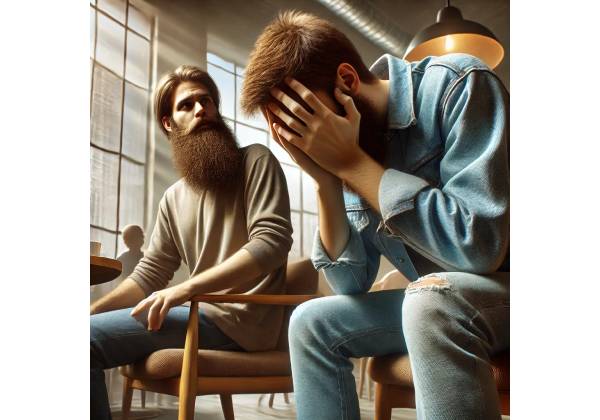
Pogonophobia is an intense fear of beards or facial hair. At first, that may sound like an unusual dislike rather than a serious condition, but for the person living with it, the reaction can be immediate, overwhelming, and hard to control. A beard on a stranger in a queue, a colleague on a video call, a doctor with stubble, or even a photograph can trigger marked anxiety. Because facial hair is common in daily life, the fear can interfere with work, dating, travel, shopping, medical care, and ordinary social contact.
A mild preference against beards is not the same as a phobia. Pogonophobia involves persistent fear, avoidance, and distress that feel out of proportion to the actual threat. The good news is that it can be treated. Understanding how the fear develops, what keeps it going, and which therapies work best is the first step toward making life feel broader and more manageable again.
Table of Contents
- What Pogonophobia Really Means
- Signs and Symptoms
- Causes and Risk Factors
- How Diagnosis Usually Works
- Daily Life and Complications
- Treatment and Therapy Options
- Coping and Self-Management
- When to Seek Help and Outlook
What Pogonophobia Really Means
Pogonophobia is a specific phobia in which the trigger is beards, stubble, or other forms of facial hair. The fear may focus on thick full beards, rough stubble, mustaches, or facial hair that changes the way a face looks. In some people the reaction is narrow, such as fear only of long or unkempt beards. In others it is broader and includes almost any visible facial hair.
That distinction matters because the problem is not simply appearance. A specific phobia involves a strong fear response that is out of proportion to the actual risk and difficult to control even when the person understands that the situation is safe. Someone with pogonophobia may know that a bearded coworker, cashier, or neighbor is not dangerous, yet still feel a surge of panic when they come close or start a conversation.
For some people, the beard itself is the main trigger. For others, the fear is tied to what the beard seems to represent. Facial hair can change how a face is read. It may make someone feel harder to interpret, less familiar, older, rougher, less clean, or more threatening. In that sense, the phobia is often about the meaning attached to the beard as much as the beard itself.
Common trigger situations may include:
- seeing a bearded stranger in a shop or on public transport
- meeting a bearded colleague or interviewer
- being treated by a clinician with facial hair
- watching films or videos with heavily bearded characters
- looking at photographs, social media posts, or advertisements
- being near stubble during close conversation
It is important to separate pogonophobia from ordinary preference, social bias, or simple discomfort. A person may dislike beards and still function normally. A phobia is different because it leads to strong physical anxiety, avoidance, and impairment. The person may reroute their day, refuse appointments, avoid entire places, or feel trapped in settings where bearded people may appear.
Pogonophobia is not usually treated as a separate disorder with its own lab test or scan. In clinical practice, it is generally understood within the broader category of specific phobia. That means diagnosis and treatment follow the same evidence-based principles used for other focused fears.
The unusual nature of the trigger can make people hesitate to talk about it. They may fear sounding superficial, prejudiced, or irrational. In reality, a phobia is not a moral statement. It is a learned fear response that has become too powerful. Once that is recognized, the problem becomes more understandable and much more treatable.
Signs and Symptoms
The symptoms of pogonophobia usually appear on three levels: emotional symptoms, physical symptoms, and behavioral changes. Some people experience a quick jolt of fear and recover. Others develop a much stronger reaction that affects how they move through daily life. The fear may occur only in close contact, or it may start the moment facial hair is seen, imagined, or expected.
Emotional symptoms often include:
- immediate dread on seeing a beard
- strong discomfort during close conversation with a bearded person
- embarrassment about the reaction
- intrusive thoughts that the person looks unsafe, dirty, hidden, or hard to read
- anticipatory anxiety before social events, appointments, or travel
- fear of losing control or panicking in public
Physical symptoms may resemble a panic response. They can begin in seconds and may be especially intense when the person feels unable to leave. Common examples include:
- racing heart
- sweating
- dry mouth
- shaking
- nausea
- dizziness
- chest tightness
- shortness of breath
- muscle tension
- a sense of danger or unreality
Behavioral symptoms are often what make the condition most disruptive. A person with pogonophobia may:
- avoid speaking closely with bearded people
- switch queues, seats, or routes to create distance
- cancel appointments if a staff member has facial hair
- avoid restaurants, bars, concerts, or other crowded settings
- reject dates, interviews, or work meetings because of anticipated contact
- ask family or friends to screen social situations first
Children may show the fear more directly than adults. They may cry, cling, freeze, hide behind a parent, or refuse to enter a room if someone with facial hair is present. Adults are often better at concealing the reaction, but the internal strain can be just as severe. They may smile through a conversation while mentally planning an escape.
The fear can also widen over time. A person may begin by feeling anxious only around long beards, then become distressed by short beards, then by stubble, and later by images or imagined encounters. This pattern is common in phobias because avoidance prevents the nervous system from learning that the trigger is safe.
One practical marker is functional impact. The symptoms become more clinically important when they change normal behavior. Missing medical care because a clinician has a beard, declining a job opportunity because a manager has facial hair, or avoiding public places where beards are common are signs that the fear is no longer minor.
The basic cycle is familiar across phobias: trigger, alarm, escape, relief, and then stronger fear next time. Pogonophobia may have an uncommon focus, but the symptom pattern is one clinicians recognize well.
Causes and Risk Factors
Pogonophobia does not usually come from one single cause. In most cases, it develops through a mix of personal experience, learned associations, temperament, and broader vulnerability to anxiety. The central question is not why a beard should be frightening in theory. It is what taught this particular brain to treat facial hair as a warning signal.
A direct negative experience is one possible pathway. A person may have been frightened, threatened, bullied, harmed, or otherwise distressed by someone with a beard. Even if the event happened years earlier, the brain can preserve a strong visual link between facial hair and danger. In that case, the beard becomes a cue that activates fear before the person has time to think it through.
Another pathway is indirect learning. Children especially can absorb fear by watching how adults react. If a caregiver shows strong discomfort around bearded people, warns that certain appearances are unsafe, or treats facial hair as suspicious, that message can become deeply ingrained. Media can also play a role when facial hair is repeatedly linked with threatening, unstable, or untrustworthy characters.
Other contributing factors may include:
- an anxious or behaviorally inhibited temperament
- family history of anxiety disorders or phobias
- previous panic attacks
- a strong need for predictability
- difficulty reading facial expressions
- contamination fears
- trauma history
- chronic stress or sleep deprivation, which lowers resilience
For some people, the issue is less about danger and more about ambiguity. Facial hair changes the outline of the face and can partly hide familiar cues such as the jawline or the exact shape of the mouth. If someone is already sensitive to uncertainty, that visual change can feel unsettling. In others, the fear may carry elements of disgust, such as worries that beards are unhygienic or full of germs. When disgust and fear combine, the phobia can feel especially intense.
It is also possible for pogonophobia to overlap with other concerns. Someone with contamination anxiety may focus on cleanliness. Someone with trauma may react to a beard as a reminder of a specific person. Someone with a general fear of unfamiliar people may find facial hair makes strangers feel more unpredictable. These patterns can look similar from the outside but matter during treatment.
What does not explain pogonophobia well is weakness, vanity, or deliberate intolerance. Most people with phobias would prefer not to have them. They often hide symptoms because they know others may not understand. The problem is not a lack of intelligence. It is that the threat system has become overprotective.
Once avoidance becomes the main coping strategy, the fear tends to deepen. Every escape teaches the brain that the danger was real and that distancing from beards prevented something bad. That is how a narrow fear can become persistent and increasingly disruptive over time.
How Diagnosis Usually Works
Diagnosis starts with a careful clinical conversation rather than a blood test, scan, or checklist used on its own. A mental health professional will want to understand exactly what the trigger is, how quickly symptoms appear, how much avoidance is happening, and how much the fear interferes with daily life. The goal is not merely to confirm that the person dislikes beards. It is to find out whether the pattern fits a specific phobia or another condition that looks similar.
A clinician will often explore questions such as:
- What types of facial hair trigger fear: full beards, stubble, mustaches, or all facial hair?
- Does the reaction happen only in person, or also with photos, video calls, and media?
- How intense are the physical symptoms?
- Is the problem mainly fear, disgust, uncertainty, or a trauma reminder?
- What situations are being avoided because of the fear?
- How long has the pattern been present?
- Has it affected work, school, dating, travel, or health care?
In practice, pogonophobia is usually evaluated within the diagnosis of specific phobia. The pattern generally includes marked fear or anxiety about a specific trigger, immediate or near-immediate distress on exposure, active avoidance or endurance with intense discomfort, persistence over time, and meaningful impairment in functioning.
Functional impact matters. A person may strongly dislike facial hair and still not meet criteria for a phobia. Diagnosis becomes more likely when the fear shapes behavior in a lasting and restrictive way. That might include refusing certain workplaces, declining social events, avoiding public transport, or being unable to complete ordinary appointments.
The clinician will also think through related conditions. These may include:
- Panic disorder, if panic attacks occur unexpectedly and not mainly in response to beards
- Obsessive-compulsive disorder, if contamination fears or intrusive thoughts are the main driver
- Post-traumatic stress disorder, if facial hair is strongly linked to a trauma memory
- Social anxiety disorder, if the core fear is embarrassment or scrutiny rather than beards themselves
- Broader anxiety or sensory patterns, if the beard is only one part of a larger difficulty
Medical context can matter too. Palpitations, dizziness, chest tightness, and breathlessness may be part of anxiety, but if symptoms are new, severe, or unclear, a physical evaluation can be appropriate. Good diagnosis is careful rather than rushed.
A thoughtful assessment also looks at meaning. For one person, a beard may signify hidden intentions. For another, it may signal dirt, threat, authority, or a remembered event. These differences shape treatment. Two people may both say, “I am afraid of beards,” yet need slightly different therapeutic approaches.
A good diagnosis should feel clarifying, not shaming. It helps turn a strange-seeming fear into a recognizable clinical pattern that can be addressed with practical, evidence-based care.
Daily Life and Complications
Pogonophobia can have a surprisingly broad impact because facial hair is common and hard to predict in public life. Unlike a fear tied to a rare object or place, this one can appear in shops, workplaces, medical settings, schools, airports, restaurants, and family gatherings. That constant possibility of exposure can create a background level of tension that is hard to switch off.
In everyday life, the fear may affect:
- commuting and public transport
- shopping in crowded places
- attending classes or office meetings
- going on dates or networking events
- keeping medical, dental, or therapy appointments
- traveling to unfamiliar places where encounters feel less controllable
A person may begin making quiet adjustments that others barely notice. They might choose off-peak travel times, sit near exits, prefer self-checkout, avoid events with large crowds, or leave a room early if someone with facial hair arrives. Over time those adjustments can become exhausting because they require constant scanning and planning.
Relationship strain is common. Friends or relatives may interpret the behavior as superficial, rude, or judgmental. The person with pogonophobia may then stop explaining and carry the burden alone. Shame can become part of the problem, especially when the person understands that the fear does not make sense logically but still cannot control the reaction.
The most common complications include:
- increasing avoidance
- reduced confidence in public settings
- social isolation
- limited career or academic choices
- distress during needed health care
- family conflict
- depressed mood
- unhealthy coping through alcohol, sedatives, or repeated reassurance seeking
One underappreciated complication is hypervigilance. Even when the feared person is not present, the mind may keep scanning for signs of facial hair. This constant threat monitoring can make ordinary errands feel draining and keep the nervous system activated for longer than the actual encounter.
The fear can also generalize. It may start with long beards, then spread to shorter beards, mustaches, and stubble, and finally to photos, avatars, costumes, or even the idea that someone could appear with facial hair. That widening circle is typical of untreated phobias.
Because facial hair is tied to identity, style, culture, and self-expression, pogonophobia can also create moral confusion for the person who has it. They may worry that their fear says something negative about them as a person. In clinical terms, though, the core problem is not attitude. It is the anxiety pattern itself.
Avoidance gives quick relief, which is why it becomes so powerful. But relief after escape teaches the brain, “Good thing I got away.” That lesson keeps the phobia in place. In the long run, the cost is not only anxiety in the moment. It is the gradual shrinking of choice, ease, and freedom in social life.
Treatment and Therapy Options
The main evidence-based treatment for pogonophobia is cognitive behavioral therapy with exposure-based work. In simple terms, that means learning how the fear cycle operates and then gradually facing beard-related triggers in a structured, safe, and manageable way. The treatment is not about forcing someone into the most difficult situation immediately. It is about retraining the fear system so it no longer reacts to facial hair as if it were an emergency.
A therapist will often help the patient build a fear ladder. The early steps are easier and the later steps are harder. For pogonophobia, a ladder might include:
- saying or writing the word “beard”
- looking at simple illustrations
- viewing photographs of mild stubble
- watching short videos of bearded people speaking
- sitting near a bearded person in a controlled setting
- having a brief conversation at a comfortable distance
- increasing the length or closeness of the interaction
- practicing in more natural real-world situations
The exact ladder depends on the person. Someone whose fear centers on contamination beliefs may need exposures that address germs and reassurance seeking. Someone whose fear is trauma-linked may need additional therapeutic work around the original event. Someone distressed mainly by ambiguity in faces may focus more on tolerating visual discomfort and uncertainty.
Treatment may include:
- psychoeducation about fear, panic, and avoidance
- gradual exposure
- cognitive work to challenge exaggerated danger beliefs
- response prevention to reduce safety behaviors
- breathing and grounding skills to steady the body
- virtual reality or imaginal exposure when real-life practice is limited
Medication is not usually the first-line treatment for a specific phobia. It may be considered when anxiety is severe, when panic symptoms are frequent, or when another condition such as depression is also present. Medication can lower symptom intensity, but it generally does not replace the need to reduce avoidance directly.
One-session treatment may help some people with specific phobias, especially when the fear is circumscribed and the person is motivated. This approach compresses exposure-focused treatment into a shorter format while keeping the same core principles. It is not right for every case, but it shows that meaningful progress can happen efficiently.
Progress is often uneven. A person may improve quickly with photos and videos but struggle more with live social exposure. That is normal. The harder stage often arrives when treatment shifts from controlled practice to real-world encounters where the situation feels less predictable.
The aim of treatment is not to make beards appealing or to erase every flicker of discomfort. It is to restore flexibility. Success means being able to attend appointments, move through public places, work with colleagues, and handle social contact without fear dictating every choice.
Coping and Self-Management
Self-management can play an important role in recovery, especially when it supports therapy rather than replacing it. The most helpful strategies reduce avoidance gradually and teach the nervous system that discomfort can be tolerated safely. The least helpful strategies provide short-term relief but keep the fear central.
A practical first step is to map the pattern. For one or two weeks, write down:
- the trigger
- whether it was in person, on screen, or imagined
- how intense the anxiety felt from 0 to 10
- what you predicted would happen
- what you did next
- how long it took to settle
This brief record often reveals useful details. You may notice that the fear is strongest when facial hair is close to you, when conversation is required, or when the beard seems to hide facial expression. That insight can make exposure practice more specific and more effective.
Helpful coping strategies include:
- breaking exposure into small repeatable steps
- staying with manageable discomfort long enough for it to soften
- reducing safety behaviors such as switching seats automatically or checking faces from a distance
- using steady breathing to slow the body without trying to escape mentally
- practicing statements such as “this is uncomfortable, not dangerous”
- protecting sleep, exercise, and regular meals to lower general stress
For many people, the biggest habit to work on is reassurance seeking. Constantly asking who will be at an event, whether a clinician has a beard, or whether a room is “safe” can strengthen the idea that danger is real. Helpful planning is not the same as compulsive reassurance. The difference is whether the question helps you function or keeps the fear in charge.
Support from others matters too. A trusted person can help by practicing exposure with you, staying calm during anxious moments, and encouraging effort instead of rescue. Support is most useful when it sounds like, “You can stay with this for another minute,” rather than, “Let’s leave so you do not have to feel this.”
What usually backfires is building a life around avoidance. Choosing only remote services, limiting social contact, or refusing routine appointments may reduce anxiety for the day but strengthen the phobia in the long run. The comfort zone becomes smaller, and the world starts to feel harder to navigate.
Self-help should remain safe and realistic. The goal is not to force intimate contact or overwhelm yourself. It is to create repeated experiences of manageable contact that allow the fear to rise, level off, and pass without escape.
Small wins matter. Making it through a short conversation, staying in a waiting room, or watching a video without muting or looking away can all be meaningful steps. Recovery is usually built through repetition. The more often the brain learns, “I can do this and nothing terrible happens,” the less power the phobia tends to hold.
When to Seek Help and Outlook
It is time to seek help when fear of facial hair starts controlling choices that should belong to you. The problem does not have to look dramatic to deserve treatment. If you are turning down opportunities, avoiding places, delaying medical care, or arranging daily life around the possibility of encountering beards, the fear is already important enough to address.
Consider professional help if:
- the fear has lasted six months or longer
- symptoms are intense or panic-like
- avoidance is expanding to more settings
- work, study, dating, or travel are being limited
- you feel ashamed or secretive about the problem
- family members are restructuring plans around your fear
- you rely on alcohol, sedatives, or repeated reassurance to cope
Children and adolescents deserve attention early if the fear causes crying, clinging, school distress, refusal to attend activities, or marked difficulty with routine social contact. Early support can prevent a narrow fear from becoming a long-term pattern of avoidance.
Urgent help is important if anxiety occurs with thoughts of self-harm, severe depression, fainting, chest pain, or breathing difficulty that might have a medical cause. Not every frightening physical symptom is “just anxiety,” and it is safer to evaluate severe symptoms properly.
The outlook for pogonophobia is generally favorable when treatment is matched to the problem. Specific phobias often respond well to exposure-based cognitive behavioral therapy, including brief focused formats in some cases. Improvement may appear as less anticipatory dread, fewer panic symptoms, more tolerance during social contact, easier access to appointments, or simply the ability to stay present around a bearded person without feeling compelled to escape.
Recovery does not require becoming comfortable with every beard or enjoying close contact with facial hair. A realistic goal is freedom rather than perfect calm. Many people still notice some discomfort in difficult situations, but the fear no longer dominates their choices. That is meaningful progress.
One of the most helpful ways to judge recovery is by looking at behavior. Are you avoiding less? Are you choosing based on values instead of fear? Can you stay in situations that used to send you running? These changes matter more than whether anxiety disappears completely.
Pogonophobia can feel isolating because the trigger seems unusual and highly visible. But the underlying pattern is a familiar one in mental health care, and it is treatable. When the fear is understood clearly and approached systematically, the world often becomes larger, simpler, and far less exhausting than it once felt.
References
- Pogonophobia (Fear of Beards): Symptoms & Treatment 2022
- Specific Phobia – StatPearls – NCBI Bookshelf 2024
- The relative efficacy and efficiency of single- and multi-session exposure therapies for specific phobia: A meta-analysis – PubMed 2022 (Systematic Review and Meta-Analysis)
- Virtual Reality Exposure Treatment in Phobias: a Systematic Review – PubMed 2021 (Systematic Review)
- One session treatment (OST) is equivalent to multi-session cognitive behavioral therapy (CBT) in children with specific phobias (ASPECT): results from a national non-inferiority randomized controlled trial – PubMed 2023 (RCT)
Disclaimer
This article is for educational purposes only and is not a substitute for diagnosis, therapy, or medical advice. Pogonophobia can overlap with panic disorder, trauma-related conditions, obsessive-compulsive symptoms, and other anxiety disorders. A licensed clinician can assess symptoms in context and recommend the safest and most effective treatment plan. Seek urgent medical or emergency help if anxiety occurs with chest pain, fainting, severe breathing difficulty, or thoughts of self-harm.
If you found this article useful, please share it on Facebook, X, or another platform you prefer.