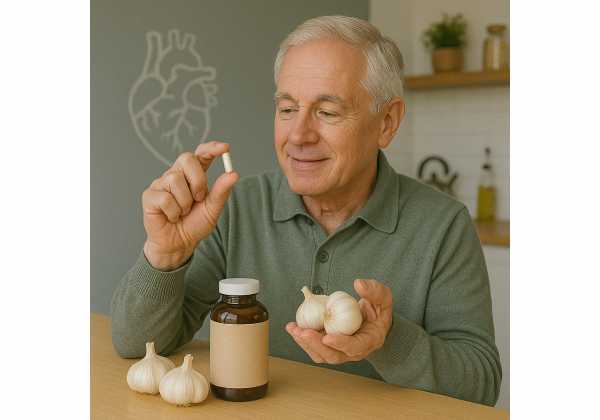
Aged garlic extract is one of the better-studied garlic supplements for healthy aging because it targets two systems that shape healthspan: blood vessels and immune resilience. Unlike raw garlic or standard garlic powder, aged garlic extract is processed over time to create a milder, more stable preparation rich in water-soluble sulfur compounds such as S-allyl cysteine. Human studies link it most consistently with modest improvements in blood pressure, vascular function, inflammatory signaling, and immune cell activity.
Aged garlic extract is not a stand-alone treatment for high blood pressure, high cholesterol, heart disease, or infections. Its best role is as a supportive supplement for adults already building the basics: blood pressure control, lipid management, regular movement, enough protein, sleep, and a nutrient-dense diet. The evidence is strongest for cardiovascular support, promising for immune support, and still incomplete for direct longevity outcomes.
Table of Contents
- What Aged Garlic Extract Is
- Cardiovascular Support: Blood Pressure, Arteries, and Lipids
- Immune and Inflammatory Support
- Who Is Most Likely to Benefit
- Dosage, Timing, and Product Quality
- Safety, Interactions, and When to Avoid It
- How to Track Results Without Guesswork
- How It Fits With a Longevity Plan
What Aged Garlic Extract Is
Aged garlic extract is garlic that has been processed for months in a controlled liquid extraction and aging process. This changes the chemical profile of garlic. Raw garlic contains unstable, sharp-smelling sulfur compounds that form when garlic is crushed. Aged garlic extract contains more stable water-soluble compounds, including S-allyl cysteine, often shortened to SAC.
That difference matters. Raw garlic, garlic oil, garlic powder, black garlic, and aged garlic extract are not interchangeable in research or in everyday use. They come from the same plant, but they deliver different compounds in different amounts.
Aged garlic extract stands out for four practical reasons:
- It is better tolerated than raw garlic for many adults, with less odor and less digestive burn.
- It has a more consistent research profile than many garlic preparations.
- It provides stable sulfur compounds that are easier to standardize on supplement labels.
- It fits long-term use better than high amounts of raw garlic, which often causes reflux, stomach upset, or social issues from odor.
The “aged” part does not mean the supplement is stronger in every way. It means the garlic has been transformed into a gentler preparation with a different mix of active compounds. For longevity use, that is usually the point: a supplement taken daily for months needs to be tolerable, consistent, and easy to combine with medical care.
Aged garlic extract is usually sold in capsules or tablets. Common daily amounts range from 600 mg to 2,400 mg, although study doses vary by product and purpose. Some immune studies used higher intakes, such as 2.56 g daily. Many cardiovascular studies use 1,200 mg daily or more.
Aged garlic extract should be viewed as a cardiometabolic support tool, not as a medication replacement. It works in the same broad neighborhood as dietary nitrates from leafy greens, omega-3 intake, soluble fiber, exercise, and better sleep: small effects add up when the whole plan points in the same direction.
Cardiovascular Support: Blood Pressure, Arteries, and Lipids
The strongest case for aged garlic extract is cardiovascular support. Blood pressure, arterial stiffness, endothelial function, inflammation, and blood lipids all influence long-term vascular aging. Aged garlic extract has been studied across several of these areas.
Blood pressure support
Aged garlic extract has the most consistent signal in adults with elevated blood pressure, especially when used for at least 8 to 12 weeks. The average effect across studies is usually modest, but even small blood pressure changes matter at the population level and for long-term risk.
The effect appears stronger when baseline blood pressure is high. A person with normal blood pressure should not expect a dramatic drop. Someone with treated but still elevated blood pressure has a more plausible use case, provided their clinician agrees and medications are not changed without supervision.
A practical example: an adult with repeated home readings near 138/84 mmHg despite improving diet and exercise might add aged garlic extract as one supportive step while continuing to track readings. A person with 165/98 mmHg needs medical evaluation and active treatment, not a supplement-first approach.
Good blood pressure data also require good measurement. Aged garlic extract should be judged against accurate home readings, not occasional readings taken after coffee, stress, or rushing into a clinic. For better technique, review proper home blood pressure measurement before deciding whether a supplement is working.
Endothelial function and arterial stiffness
The endothelium is the thin inner lining of blood vessels. It helps blood vessels relax, regulates clotting signals, and communicates with immune cells. Endothelial dysfunction is an early feature of vascular aging, especially in people with hypertension, diabetes, smoking history, chronic inflammation, or high LDL particle burden.
Aged garlic extract appears to support endothelial function partly through nitric oxide-related pathways and oxidative stress signaling. Nitric oxide helps blood vessels relax. Oxidative stress, when excessive, reduces nitric oxide availability and makes vessels stiffer.
Some studies have looked at central blood pressure, pulse wave velocity, and flow-mediated dilation. These are not routine consumer metrics, but they matter because they reflect arterial behavior more directly than a single arm-cuff reading. A lower blood pressure number is useful; a more flexible artery is also useful.
This does not mean aged garlic extract reverses vascular aging. It means it has a plausible role in supporting healthier vascular function when paired with the proven levers: lower sodium when needed, higher potassium from food, aerobic training, resistance training, weight management, smoking avoidance, and evidence-based medication when indicated.
Lipids and ApoB-related risk
Garlic supplements have shown modest improvements in total cholesterol and LDL cholesterol in some analyses. Aged garlic extract studies also suggest small lipid effects, although results are not as strong or predictable as blood pressure findings.
For longevity, LDL cholesterol alone is not the most complete marker. ApoB and non-HDL cholesterol better reflect the number of atherogenic particles that enter the artery wall. Aged garlic extract should never be used as a substitute for proper lipid assessment or prescribed lipid-lowering therapy in people at moderate to high cardiovascular risk. Use it as an add-on conversation, not as an escape from measurement.
A useful comparison:
| Target | What aged garlic extract offers | What still does most of the work |
|---|---|---|
| Blood pressure | Modest support, strongest signal in hypertension | Weight loss when needed, sodium/potassium balance, exercise, medication when prescribed |
| Endothelial function | Support for vessel relaxation and oxidative stress balance | Aerobic fitness, smoking avoidance, glucose control, sleep apnea treatment |
| LDL and ApoB-related risk | Small lipid changes in some studies | Diet pattern, soluble fiber, statins or other therapies when risk is high |
| Inflammatory signaling | Possible reduction in selected inflammatory markers | Fat loss when needed, periodontal care, sleep, exercise, anti-inflammatory dietary pattern |
Adults using aged garlic extract for heart health should also understand their lipid markers. For a longevity-focused approach to particle-related risk, ApoB and non-HDL cholesterol give more actionable information than a supplement response alone.
Immune and Inflammatory Support
Aged garlic extract supports immune function best when described as immune modulation, not immune “boosting.” The immune system does not simply need to be stronger. It needs to respond clearly to threats, calm down after the threat passes, and avoid chronic low-grade inflammation that damages tissues over time.
Human studies on aged garlic extract and immune function have looked at natural killer cells, gamma delta T cells, inflammatory cytokines, and cold or flu symptom patterns. Natural killer cells help detect infected or abnormal cells. Gamma delta T cells sit at the border between innate and adaptive immunity and help coordinate early defense.
One randomized trial in healthy adults found that aged garlic extract improved measures of natural killer cell and gamma delta T cell function. The same study did not show a clear drop in the number of colds and flu episodes, but it did show fewer symptoms, fewer days of reduced function, and fewer missed work or school days among those taking aged garlic extract.
That distinction is important. Aged garlic extract should not be framed as an infection shield. The more accurate claim is that it appears to support immune cell function and illness resilience in some settings.
Another trial in adults with obesity found changes in immune and inflammatory markers after aged garlic extract supplementation. This is relevant because excess visceral fat, insulin resistance, and low-grade inflammation often move together. In that context, aged garlic extract sits at the intersection of metabolic health and immune tone.
Chronic inflammation is one of the bridges between cardiometabolic aging and immune aging. Elevated inflammatory signaling contributes to endothelial dysfunction, insulin resistance, joint symptoms, brain aging risk, and slower recovery. Aged garlic extract is not an anti-inflammatory drug, but it has enough human evidence to be considered alongside other inflammation-aware habits.
Better food quality still matters more. A supplement will not overcome a low-fiber, low-protein, ultra-processed diet. For immune support from food first, emphasize vitamin C-rich produce, zinc-containing foods, vitamin D status when low, fermented foods when tolerated, and enough protein. This pairs well with an immune-supporting nutrition pattern rather than replacing it.
Who Is Most Likely to Benefit
Aged garlic extract is most reasonable for adults with mild to moderate cardiovascular risk markers who want an evidence-informed supplement with a generally tolerable profile. It is less compelling for young, low-risk adults with excellent blood pressure, optimal lipids, strong fitness, and no immune concerns.
The best candidates usually fall into one or more of these groups:
- Adults with mildly elevated blood pressure or treated hypertension that still needs lifestyle support
- Adults with cardiometabolic risk patterns, such as insulin resistance, abdominal fat gain, or elevated triglycerides
- Adults with modestly elevated LDL cholesterol or non-HDL cholesterol who are already addressing diet and clinician-guided lipid care
- Adults with low-grade inflammation linked to excess weight, poor sleep, periodontal disease, or sedentary habits
- Adults who want immune resilience support during high-exposure seasons, travel, or periods of heavy stress
Aged garlic extract is less useful when the main issue sits elsewhere. Severe hypertension needs medical treatment. Chest pain needs urgent evaluation. Very high LDL cholesterol, high ApoB, or high lipoprotein(a) needs structured risk management. Frequent infections need a clinical workup, not a rotating shelf of immune supplements.
A supplement also makes less sense when the basics are absent. Someone sleeping five hours per night, skipping resistance training, eating little fiber, and drinking heavily will get more benefit from fixing those levers than from adding garlic capsules.
Aged garlic extract is worth considering when the foundation is already moving in the right direction and the person wants a low-drama add-on with human data. It is especially attractive for people who dislike raw garlic, get reflux from it, or want a standardized preparation rather than guessing how much garlic is in a meal.
It also fits adults who track results. Longevity-minded supplementation works best when each product has a job, a dose, a timeframe, and a stop rule. Aged garlic extract has clear possible targets: blood pressure, selected lipids, inflammatory markers, and illness severity patterns.
Dosage, Timing, and Product Quality
Most adults start aged garlic extract at 600 mg daily with a meal for one week, then increase to 600 mg twice daily if tolerated. That gives a total of 1,200 mg daily, a common cardiovascular target. Some trials and clinical use patterns go higher, often 2,400 mg daily, but higher dosing deserves more caution around bleeding risk, low blood pressure symptoms, and medication interactions.
For immune support, some studies used around 2.56 g daily. That does not mean every adult should use that dose. Immune studies often use specific products and controlled protocols. For everyday use, the cardiovascular dosing range is the more practical starting point.
A simple dosing framework
| Purpose | Typical daily range | Trial period | How to judge response |
|---|---|---|---|
| General cardiovascular support | 600–1,200 mg | 8–12 weeks | Home blood pressure trend, tolerance, medication review |
| Elevated blood pressure support | 1,200–2,400 mg | 12 weeks | Average home readings, dizziness, clinician feedback |
| Immune resilience support | 1,200–2,560 mg | 8–12 weeks | Illness severity, recovery time, digestive tolerance |
| Sensitive digestion or reflux history | 300–600 mg to start | 2–4 weeks before increasing | Heartburn, nausea, burping, stool changes |
Take aged garlic extract with meals. Splitting the dose reduces digestive complaints and keeps the habit easier. Morning and evening meals work well for most people. If reflux appears, avoid taking it near bedtime.
Look for labels that clearly state “aged garlic extract,” not just “garlic,” “garlic bulb,” or “garlic oil.” A product that lists SAC standardization gives more confidence, although labels vary. Choose brands that use third-party testing or publish quality standards. Garlic concentrates are plant products, so contamination testing matters.
Avoid judging aged garlic extract after a week. Blood pressure, endothelial function, and immune markers do not shift overnight. A fair trial usually lasts 8 to 12 weeks, with a decision point at the end.
A clear personal protocol looks like this:
- Record baseline home blood pressure for 7 days.
- Start 600 mg daily with a meal.
- Increase to 600 mg twice daily after one week if tolerated.
- Keep lifestyle and medications stable unless a clinician changes them.
- Review average blood pressure and side effects after 8 to 12 weeks.
Aged garlic extract should not be stacked blindly with many vascular supplements at once. Beetroot, high-dose omega-3, nattokinase, ginkgo, curcumin, and high-dose vitamin E all raise separate safety or interaction questions in some users. One change at a time makes it easier to see benefit and avoid problems.
Safety, Interactions, and When to Avoid It
Aged garlic extract is generally well tolerated in studies, but “natural” does not mean risk-free. Garlic compounds influence blood vessels, platelets, digestion, and possibly glucose handling. Those are useful pathways in the right person and risky pathways in the wrong situation.
Common side effects include:
- Garlic odor or aftertaste, usually less than raw garlic
- Burping, nausea, stomach discomfort, or reflux
- Loose stool in some users
- Headache or skin rash, less commonly
- Dizziness when combined with blood pressure-lowering medication or dehydration
The biggest caution involves bleeding risk. Garlic preparations have antiplatelet activity, meaning they influence how platelets clump. Aged garlic extract has been studied in some people taking warfarin under monitoring, but that does not make unsupervised use safe for everyone on anticoagulants.
Talk with a qualified clinician before using aged garlic extract if you take:
- Warfarin
- Apixaban, rivaroxaban, dabigatran, or edoxaban
- Clopidogrel, prasugrel, or ticagrelor
- Daily aspirin for cardiovascular prevention
- Multiple supplements with blood-thinning effects
- Blood pressure medication, especially if readings already run low
- Diabetes medication that increases hypoglycemia risk
Pause decisions before surgery, dental procedures, colonoscopy polyp removal, or injections should come from the clinician performing the procedure. Many clinicians ask patients to stop garlic supplements 1 to 2 weeks before procedures because bleeding risk matters most when tissue is cut or biopsied.
Aged garlic extract is also a poor fit for people with garlic allergy, active stomach ulcers, severe reflux triggered by garlic, unexplained bruising, low platelet counts, or a history of bleeding disorders. Pregnant or breastfeeding people should use garlic as food unless their clinician specifically approves supplement dosing.
People with low blood pressure need extra caution. Aged garlic extract that nudges blood pressure down is helpful for one person and unpleasant for another. Lightheadedness when standing, fatigue, unusual dizziness after exercise, or home readings below the person’s usual range are reasons to pause and reassess.
Safety also includes opportunity cost. Someone with high cardiovascular risk who chooses aged garlic extract instead of proven therapies loses time. Supplements should reduce friction around healthy aging, not delay diagnosis or treatment.
How to Track Results Without Guesswork
Aged garlic extract works best as a measured experiment. The goal is not to “feel healthier” in a vague way. The goal is to see whether a defined dose improves a defined marker without causing side effects or complicating medical care.
Start with the marker most relevant to your reason for taking it.
For blood pressure, use a validated upper-arm cuff. Measure after five minutes of sitting, feet flat, back supported, no talking, and no caffeine or exercise within the prior 30 minutes. Take two readings one minute apart and record the average. Do this morning and evening for seven days before starting, then repeat during weeks 8 to 12.
For lipids, use labs rather than symptoms. Total cholesterol and LDL cholesterol are useful, but ApoB or non-HDL cholesterol provides a better view of particle-related risk. Test at baseline and after about 12 weeks only if the supplement is part of a broader lipid plan. A small LDL change should not distract from risk category, family history, coronary calcium, or clinician guidance.
For inflammation, hs-CRP is the most common general marker, but it is noisy. Infection, hard exercise, dental inflammation, injury, and poor sleep can all raise it. If hs-CRP is high, repeat it when you are well. For broader interpretation, hs-CRP and other inflammation markers should be viewed in context rather than treated as a supplement scorecard.
For immune resilience, track practical outcomes:
- Number of respiratory infections during a season
- Number of days symptoms interfere with work, training, or sleep
- Time to full recovery
- Fever days
- Need for medical visits or antibiotics
- Digestive tolerance during supplementation
This kind of tracking helps prevent supplement drift. Without tracking, a person often keeps taking a product because it feels familiar, not because it is helping.
A simple decision rule after 12 weeks:
| Result after 8–12 weeks | Reasonable next step |
|---|---|
| Blood pressure improves and side effects are absent | Continue and review during routine care |
| No clear marker improvement | Stop and focus effort elsewhere |
| Digestive symptoms, reflux, bruising, or dizziness appear | Pause and reassess dose, interactions, and need |
| Medication changes occur during the trial | Do not credit the supplement; restart tracking only after the plan stabilizes |
Tracking also protects against over-supplementation. If five supplements begin at once, none of them gets a fair trial. Aged garlic extract has enough evidence to deserve a clean test, not a place in a crowded guessing game.
How It Fits With a Longevity Plan
Aged garlic extract belongs in the “supportive, evidence-informed, moderate upside” category. It is not a breakthrough longevity therapy. It does not replace exercise, sleep, blood pressure care, lipid management, vaccines, dental care, or metabolic health. Its value comes from nudging vascular and immune biology in a favorable direction while the larger plan does the heavy lifting.
A strong longevity plan starts with risk. A person with uncontrolled hypertension should prioritize diagnosis, medication when needed, sleep apnea assessment, sodium reduction, and weight management if relevant. A person with high ApoB should prioritize proven lipid-lowering steps. A person with poor glucose control should focus on insulin sensitivity, muscle, food quality, and appropriate medical care.
Aged garlic extract fits after those priorities are clear. It pairs especially well with:
- Mediterranean-style eating rich in plants, legumes, fish, nuts, and olive oil
- Resistance training to preserve muscle and glucose disposal
- Zone 2 cardio and intervals matched to fitness level
- Sleep apnea screening when snoring, fatigue, or resistant hypertension are present
- Dental care, because gum inflammation contributes to systemic inflammatory load
- Home blood pressure tracking
- Periodic lipid and metabolic labs
It also pairs well with food-based vascular supports. Beets, arugula, spinach, citrus, berries, cocoa flavanols, soluble fiber, and extra-virgin olive oil all work through complementary pathways. Aged garlic extract should not crowd those out.
For adults building a broader supplement plan, avoid chasing every promising mechanism. The most useful longevity supplements solve a specific problem: low vitamin D, low omega-3 index, inadequate magnesium intake, poor sleep timing, high triglycerides, or low creatine intake in a person who benefits from it. Aged garlic extract is most justified when blood pressure, vascular support, or immune resilience is the specific target.
It also deserves a realistic standard. A 3 mmHg drop in systolic blood pressure will not feel dramatic, but it is biologically meaningful. Fewer days of feeling wiped out during a respiratory illness matters, even if infection frequency does not change. Small shifts are still worth having when safety is good, the product is affordable, and the plan remains grounded.
The best use of aged garlic extract is disciplined and boring: choose a reputable product, use a reasonable dose, track the right marker, watch for interactions, and keep the rest of the longevity plan centered on proven habits and medical care.
References
- The Effect of Aged Garlic Supplementation on Blood Pressure and Lipid Profile: A Dose–Response Grade-Assessed Systematic Review and Meta-Analysis of Randomized Controlled Trials 2025 (Systematic Review)
- Meta-analysis on the safety and efficacy of long-term garlic supplementation 2025 (Systematic Review)
- Effects of Aged Garlic Extract on blood pressure in hypertensive patients: A systematic review and meta-analysis of randomized controlled trials 2024 (Systematic Review)
- Garlic and Hypertension: Efficacy, Mechanism of Action, and Clinical Implications 2024 (Review)
- Aged garlic extract supplementation modifies inflammation and immunity of adults with obesity: A randomized, double-blind, placebo-controlled clinical trial 2018 (RCT)
- Supplementation with aged garlic extract improves both NK and γδ-T cell function and reduces the severity of cold and flu symptoms: a randomized, double-blind, placebo-controlled nutrition intervention 2012 (RCT)
Disclaimer
This article is educational and does not replace care from a qualified health professional. Aged garlic extract can interact with anticoagulants, antiplatelet drugs, blood pressure medication, diabetes medication, and surgical planning. Seek medical guidance before using it if you have cardiovascular disease, a bleeding risk, planned procedures, pregnancy, breastfeeding, or complex medication use.