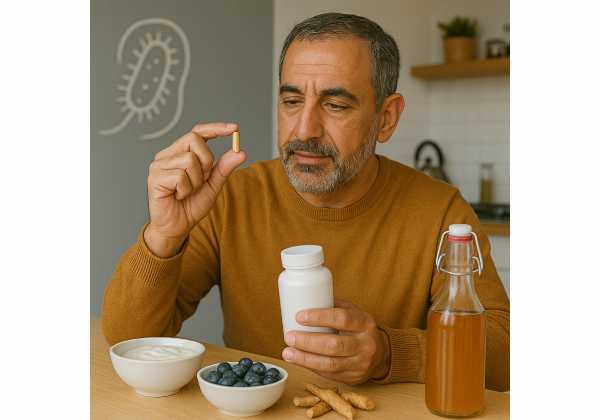
Akkermansia muciniphila has moved from a little-known gut bacterium to one of the most discussed “next-generation probiotics.” Interest is high because higher levels of this microbe often appear in people with healthier metabolic profiles, and early studies link it with gut barrier function, insulin sensitivity, body-weight regulation, inflammation control, and muscle function. Those systems matter during aging, but the evidence is still young.
An Akkermansia supplement is best viewed as a targeted metabolic and gut-barrier tool, not an anti-aging shortcut. Human trials suggest benefits in selected groups, especially adults with overweight, obesity, insulin resistance, or weight regain after dieting. The strongest products use pasteurized A. muciniphila, which means the cells are heat-treated rather than alive. That detail matters for safety, stability, and mechanism. The limits also matter: supplementation has not been proven to extend human lifespan, reverse biological aging, prevent dementia, or replace diet, exercise, sleep, and medical care.
Table of Contents
- What Akkermansia Does in the Gut
- Why Aging Research Is Interested
- What Human Studies Show So Far
- What Akkermansia Supplements Cannot Do
- Forms, Doses, Labels, and Product Quality
- Who Should Consider It and Who Should Avoid It
- How to Support Akkermansia Naturally
- How to Track Response Without Overreading the Data
What Akkermansia Does in the Gut
Akkermansia muciniphila is a mucus-associated bacterium that lives close to the intestinal lining. Its name gives away its main talent: “muciniphila” means mucus-loving. Mucin is a gel-like substance that helps form the protective mucus layer between gut contents and the intestinal wall.
That mucus layer is not just a passive coating. It helps separate gut microbes from immune cells, supports barrier function, and creates a specialized habitat for microbes that interact closely with the host. A. muciniphila breaks down mucin and uses it as fuel. That sounds harmful at first, but in a balanced gut it appears to take part in mucus turnover. The body produces mucus, certain microbes use parts of it, and the system renews itself.
Akkermansia also sits at an important biological border: close enough to the intestinal lining to influence immune and metabolic signaling, but normally kept in check by the mucus layer and immune tolerance. Researchers focus on it because low levels often appear in patterns linked with obesity, type 2 diabetes, metabolic syndrome, fatty liver, inflammatory bowel disease, and frailty-related changes. Those links do not prove that low Akkermansia causes those conditions. They do show that this microbe tracks with several systems that change with age.
The most discussed functions include:
- Gut barrier support: Akkermansia is linked with tighter intestinal barrier control and lower movement of inflammatory bacterial fragments into the bloodstream.
- Metabolic signaling: Studies connect it with insulin sensitivity, glucose handling, lipid metabolism, and weight regulation.
- Immune tone: Akkermansia interacts with immune pathways involved in inflammation and mucosal defense.
- Cross-feeding: When it breaks down mucin, it releases compounds that other gut microbes use to produce short-chain fatty acids such as acetate, propionate, and butyrate.
These mechanisms explain why Akkermansia attracts attention in longevity circles. Aging is not only about years lived; it also involves slower repair, rising inflammatory tone, less resilient metabolism, declining muscle quality, and weaker gut barrier control. A microbe that interacts with those systems deserves careful study.
Still, Akkermansia is not automatically “good” in every setting. Gut health depends on context. A higher amount of one microbe does not guarantee a healthier microbiome, and low levels do not automatically mean a person needs a supplement. Microbes work in communities, and the same organism that looks helpful in one metabolic setting might behave differently during active gut inflammation, severe illness, or major immune disruption. That is why microbiome testing for longevity should be interpreted cautiously instead of used as a simple “raise this one bacterium” scorecard.
Why Aging Research Is Interested
Akkermansia became interesting for aging because it touches several hallmarks of healthspan at once. It is not an aging therapy in the strict sense. It is a gut microbe with metabolic, immune, and barrier-related effects that overlap with age-related vulnerability.
Metabolic resilience
Insulin resistance becomes more common with age, especially when visceral fat rises and muscle mass falls. Insulin resistance does more than raise glucose. It often travels with higher triglycerides, fatty liver risk, higher blood pressure, and chronic low-grade inflammation.
Akkermansia research repeatedly points toward metabolic regulation. In the first human supplementation trial, pasteurized A. muciniphila improved insulin sensitivity and reduced fasting insulin in adults with overweight or obesity and insulin resistance. Later work in weight-maintenance settings suggests that pasteurized Akkermansia supports better weight stability after weight loss. Those findings matter because weight cycling and regain often worsen cardiometabolic risk in midlife and later life.
People tracking metabolic aging often focus on A1c, fasting glucose, fasting insulin, triglycerides, waist size, and body composition. Akkermansia sits upstream of some of those markers because the gut barrier, bile acid signaling, immune tone, and appetite regulation all feed into metabolic control. For a practical metabolic baseline, A1c, fasting glucose, and fasting insulin usually give clearer information than a stool test alone.
Inflammation and gut barrier function
“Inflammaging” describes the gradual rise in low-grade inflammatory signaling that often appears with age. The gut is one possible contributor. When gut barrier function weakens, bacterial products from the intestine enter circulation more easily and provoke immune activation.
Akkermansia is linked with mucus-layer maintenance and lower metabolic endotoxemia in experimental studies. In plain language, that means it appears to help keep irritating bacterial fragments from leaking across the gut wall in excess. Human evidence is much thinner than animal evidence, but the direction is biologically plausible.
This does not mean Akkermansia replaces evaluation of inflammatory conditions. Persistent high hs-CRP, unexplained weight loss, anemia, blood in stool, severe abdominal pain, or ongoing diarrhea deserves medical evaluation. For broader longevity tracking, hs-CRP and other inflammation markers offer a more actionable readout than guessing from symptoms.
Muscle and physical function
Aging research has recently expanded from glucose and weight to muscle. That is important because muscle is a metabolic organ. It stores glucose, supports insulin sensitivity, protects bones and joints, and predicts independence in older adults.
A 12-week randomized trial of pasteurized A. muciniphila HB05 reported improvements in muscle strength and function. This does not prove that Akkermansia builds muscle like resistance training or protein. It suggests a gut-muscle connection worth watching. Possible explanations include lower inflammatory tone, improved metabolic signaling, altered amino acid handling, or changes in microbial metabolites.
For now, Akkermansia belongs below the basics: progressive strength training, enough protein, vitamin D sufficiency when needed, sleep, and enough calories during muscle-building phases. The strongest muscle plan still starts with training and nutrition, while supplements play a supporting role.
What Human Studies Show So Far
Human evidence for Akkermansia supplementation is promising but limited. The strongest data come from small or moderate-sized randomized trials, mostly in adults with excess weight or metabolic risk. There are not yet large, long-term trials showing fewer heart attacks, fewer diabetes diagnoses, longer lifespan, lower dementia risk, or delayed biological aging.
The first major human trial enrolled adults with overweight or obesity and insulin resistance. Participants took live A. muciniphila, pasteurized A. muciniphila, or placebo for three months. Pasteurized Akkermansia showed the clearest signal: better insulin sensitivity, lower fasting insulin, lower total cholesterol, and favorable changes in some markers of liver dysfunction and inflammation. The trial was small, with 40 enrolled and 32 completing it, so it should be read as proof of concept rather than final evidence.
A newer randomized trial studied weight-loss maintenance. Adults with overweight or obesity first completed a low-energy diet phase and then took pasteurized A. muciniphila MucT or placebo during a 24-week maintenance period. The supplement group regained less weight than placebo and showed a greater net weight loss from baseline. No serious treatment-related adverse events were reported. This is highly relevant for aging because preventing regain after intentional weight loss often protects glucose control, blood pressure, mobility, and joint comfort.
Another trial used pasteurized A. muciniphila HB05 for 12 weeks and reported improvements in muscle strength and physical function. This trial adds a different healthspan angle, though it does not yet prove long-term protection against sarcopenia or frailty.
| Outcome area | Current signal | How to interpret it |
|---|---|---|
| Safety and tolerance | Generally favorable in short-term adult trials using studied strains and doses | Encouraging, but not the same as lifetime safety or safety for every medical condition |
| Insulin sensitivity | Improved in a small proof-of-concept trial with pasteurized Akkermansia | Most relevant for adults with insulin resistance or metabolic syndrome features |
| Weight maintenance | Less regain after diet-induced weight loss in a randomized trial | Potentially useful after weight loss, especially when paired with sustainable eating and activity |
| Cholesterol and liver markers | Some favorable changes in early human work | Promising, but not a substitute for lipid management or fatty liver care |
| Muscle function | Positive signal in one 12-week trial of a pasteurized strain | Interesting for healthspan, but resistance training remains the foundation |
| Lifespan and biological age | No direct human proof | Claims about life extension are premature |
The pattern is important: Akkermansia supplementation looks most plausible when the target is measurable and near-term, such as fasting insulin, waist size, weight regain, or functional strength tests. It looks much weaker when claims jump to broad anti-aging language.
This is a common issue in longevity supplements. A compound or microbe can improve a surrogate marker without proving that it changes long-term outcomes. A better way to read the evidence is to separate biomarkers from outcomes. A useful framework is the distinction between surrogate markers and real-world health outcomes. Akkermansia currently sits mostly in the surrogate-marker and early clinical-outcome zone.
What Akkermansia Supplements Cannot Do
Akkermansia supplements do not reverse aging. They do not rebuild a poor diet, cancel sedentary behavior, or erase the effects of poor sleep. They do not replace diabetes care, lipid-lowering therapy when indicated, blood pressure treatment, or evaluation for gut disease.
The most common overstatements fall into a few categories.
They cannot prove you have a “young microbiome”
Akkermansia is sometimes described as a marker of healthy aging because it appears in studies of metabolically healthy people and some long-lived populations. That does not turn it into a youth score. A healthy microbiome is diverse, resilient, and well matched to a person’s diet, immune system, medications, and environment.
A stool test showing low Akkermansia also does not prove deficiency. Stool sampling has noise: collection method, recent diet, bowel transit time, antibiotics, illness, alcohol intake, and lab method all change results. Many tests report relative abundance, meaning the percentage of a microbe compared with other microbes. A percentage can fall because another group rose, not because the absolute amount disappeared.
They cannot guarantee better digestion
Akkermansia is not a general digestive enzyme. It is not the first supplement to choose for bloating, reflux, constipation, diarrhea, or food intolerance unless the broader pattern supports it. Some people tolerate it well. Others notice gas, stool changes, or no digestive difference at all.
General probiotic claims often blur strains together, but strain identity matters. A Lactobacillus product, a Bifidobacterium product, and a pasteurized Akkermansia product are different tools. For broader strain-based thinking, probiotics for healthy aging require matching the strain and dose to the desired outcome.
They cannot replace weight-loss maintenance habits
The weight-maintenance data are encouraging because regain is difficult. Still, the supplement worked in the context of a structured trial, not in isolation. Weight maintenance after loss still requires protein adequacy, fiber-rich meals, physical activity, sleep consistency, and an environment that reduces constant overeating cues.
Akkermansia is better framed as a possible support during a maintenance phase. It does not remove the need for a realistic calorie intake, strength training, and daily movement.
They cannot be assumed safe for every gut condition
Because Akkermansia interacts with the mucus layer, caution is reasonable in people with active inflammatory bowel disease, severe gut barrier disorders, recent gastrointestinal surgery, severe immune suppression, or unexplained gastrointestinal symptoms. Some research links Akkermansia to benefits in gut inflammation models, while other contexts raise caution. Biology is rarely one-directional.
Anyone with active inflammatory bowel disease, ongoing bleeding, severe diarrhea, unintended weight loss, fever, or significant abdominal pain should seek clinical evaluation before experimenting with a mucus-associated microbe.
Forms, Doses, Labels, and Product Quality
Akkermansia supplements differ from traditional probiotics in an important way: the best-studied commercial form is pasteurized. Pasteurization heat-treats the bacteria so the cells are no longer alive, while preserving structures on the bacterial surface that appear to drive some benefits.
That surprises people who equate “probiotic” with live organisms. For Akkermansia, pasteurized cells have several advantages. They are more stable, easier to standardize, and less likely to raise safety concerns than live anaerobic bacteria. In early human research, pasteurized Akkermansia often performed as well as or better than live Akkermansia for metabolic markers.
Live vs pasteurized vs postbiotic
A live Akkermansia product contains viable bacteria. This is technically challenging because A. muciniphila is anaerobic, meaning it grows without oxygen. A pasteurized product contains heat-treated cells. A postbiotic refers to inactivated microbes, cell components, or microbial metabolites that provide a health effect.
Most consumers are likely to encounter pasteurized Akkermansia rather than truly live Akkermansia. That is not a weakness. For this microbe, the inactivated form is part of the scientific story.
Dose ranges used in research and regulation
Human studies have used cell counts rather than colony-forming units because pasteurized cells are not alive. One early trial used 10^10 cells per day for three months. European safety assessment for pasteurized A. muciniphila supports adult use under specified conditions at levels up to 3.4 × 10^10 cells per day, excluding pregnant and lactating women. Product labels often present dose as “cells,” not CFU.
Practical label checks include:
- Strain identity: Look for a named strain, such as MucT or another clearly identified strain used in research.
- Cell count: Pasteurized products should list cells per serving, not only a proprietary blend weight.
- Form: The label should clearly state live, pasteurized, heat-treated, or postbiotic.
- Testing: Prefer brands that disclose third-party testing, contaminant testing, and shelf-stability data.
- Storage: Follow the label. Pasteurized forms are usually more stable than live anaerobic products, but heat, moisture, and time still degrade quality.
- Claims: Be cautious with promises about lifespan, “reverse aging,” detoxification, or guaranteed fat loss.
A supplement label that hides the strain, dose, and form gives you little basis for judging value. Akkermansia is too specific for vague “gut health complex” wording.
How long to trial it
Most human supplementation windows have lasted 8 to 24 weeks. A reasonable self-trial for an otherwise healthy adult is 8 to 12 weeks, long enough to notice changes in fasting insulin, waist, digestion, or body weight trend without drifting into indefinite use.
Use one change at a time when possible. Starting Akkermansia, increasing fiber, changing calories, adding berberine, and beginning interval training in the same week makes it impossible to interpret results. For a structured approach, safe self-experimentation means defining the goal, tracking a few markers, and stopping when side effects or unclear benefits appear.
Who Should Consider It and Who Should Avoid It
Akkermansia supplementation makes the most sense for adults with a clear metabolic or gut-barrier reason to try it. It makes less sense for healthy people chasing a vague anti-aging edge without a measurable target.
Potentially reasonable candidates include adults who:
- regained weight after intentional weight loss and want support during maintenance;
- have insulin resistance, high fasting insulin, or early metabolic syndrome features;
- carry excess visceral fat or have a high waist-to-height ratio;
- have mildly abnormal triglycerides, HDL, or liver enzymes tied to metabolic risk;
- want to test a targeted gut-metabolic supplement after diet, movement, and sleep are already in place.
These are not automatic indications. They are situations where current human evidence lines up with plausible goals.
People who should avoid Akkermansia or use it only with clinician guidance include:
- pregnant or breastfeeding women;
- children, unless specifically advised by a qualified pediatric clinician;
- people with active inflammatory bowel disease or severe unexplained gut symptoms;
- people with recent gastrointestinal surgery;
- people who are significantly immunocompromised;
- people with fever, blood in stool, unintended weight loss, or persistent diarrhea;
- people taking complex immune-modulating therapy.
Medication interactions are not well mapped. Akkermansia is not known for classic drug interactions in the way St. John’s wort is, but metabolic changes still matter. A person using glucose-lowering medication who improves insulin sensitivity could need closer glucose monitoring. A person on weight-loss drugs, after bariatric surgery, or in a medically supervised diet phase should coordinate supplement use with the treating team.
Akkermansia also should not distract from higher-priority risks. High ApoB, uncontrolled blood pressure, sleep apnea, smoking, heavy alcohol intake, low muscle mass, and poor glucose control have far stronger evidence behind intervention. Supplements belong after those issues are being addressed.
How to Support Akkermansia Naturally
Food and lifestyle patterns shape Akkermansia levels. The aim is not to force one microbe upward at all costs. The aim is to create a gut environment where mucus turnover, microbial diversity, and metabolic signaling improve together.
Akkermansia often responds to dietary patterns rich in fiber and polyphenols. Polyphenols are plant compounds found in berries, cocoa, coffee, tea, pomegranate, grapes, olives, herbs, and colorful vegetables. Prebiotic fibers feed beneficial gut microbes and support short-chain fatty acid production. Inulin, galacto-oligosaccharides, resistant starch, pectin, and mixed plant fibers all influence the gut ecosystem, though people vary in tolerance.
Useful food habits include:
- Eat 25 to 38 g of fiber daily, increasing gradually if your current intake is low.
- Include legumes several times per week, such as lentils, chickpeas, black beans, or white beans.
- Use polyphenol-rich foods daily, such as berries, cocoa, coffee, green tea, extra virgin olive oil, herbs, and deeply colored produce.
- Add resistant starch, such as cooled potatoes, cooled rice, oats, beans, or green banana flour if tolerated.
- Choose fermented foods for diversity, such as yogurt, kefir, kimchi, sauerkraut, miso, or tempeh.
- Avoid ultra-processed patterns that displace fiber, especially refined snacks, sugary drinks, and low-protein convenience meals.
A Mediterranean-style pattern fits this well: vegetables, legumes, fruit, nuts, extra virgin olive oil, fish, yogurt or fermented dairy if tolerated, whole grains, herbs, and moderate portions. It supports cardiometabolic aging through many routes, not only Akkermansia.
For readers who want a food-first gut plan, gut-friendly nutrition for longevity pairs naturally with Akkermansia goals. For people starting from a low-fiber diet, a gradual fiber target reduces gas and improves adherence.
Lifestyle also matters. Regular exercise, sleep consistency, and weight stability influence gut ecology. Exercise appears to support microbial diversity and short-chain fatty acid production, while poor sleep and circadian disruption push metabolism in the wrong direction. Heavy alcohol intake, repeated unnecessary antibiotics, and chronic stress can disturb the gut environment.
Fermented foods deserve a clear distinction. Most fermented foods do not contain Akkermansia. They still support gut health through different organisms, acids, peptides, and food-matrix effects. A serving of kefir or kimchi is not an Akkermansia dose, but it can fit a broader microbial resilience plan. See fermented foods and healthy aging for a more food-based approach.
How to Track Response Without Overreading the Data
Akkermansia supplementation should be judged by outcomes that matter, not by wishful thinking. The best markers are simple, repeatable, and tied to the reason for using it.
Choose one main goal before starting. For metabolic support, track fasting glucose, fasting insulin, A1c if the trial is long enough, triglycerides, HDL, waist circumference, weight trend, and blood pressure. For weight maintenance, track weekly average body weight and waist rather than daily noise. For muscle-related goals, use grip strength, chair-stand time, walking pace, training performance, and perceived recovery.
A practical 12-week tracking plan looks like this:
- Set a baseline. Record weight, waist, blood pressure, current supplements, medications, diet pattern, stool pattern, and the main lab markers relevant to your goal.
- Start one product at the labeled dose. Avoid changing several supplements at the same time.
- Keep diet and training steady for the first month. Stability makes the result easier to interpret.
- Watch tolerance weekly. Note bloating, stool changes, abdominal pain, appetite changes, sleep, and energy.
- Recheck markers after 8 to 12 weeks. Compare averages, not isolated days.
- Decide whether to continue. Continue only if the benefit is measurable, tolerance is good, and the cost makes sense.
Do not use a stool test as the only scorecard. Stool Akkermansia levels can shift without a meaningful change in health, and health can improve without a dramatic rise in stool Akkermansia. The gut lining is where this organism does much of its work, while stool is only an indirect sample.
Also avoid chasing tiny lab changes. A fasting insulin drop from 16 to 10 µIU/mL, a waist reduction of 4 cm, or less weight regain after dieting is meaningful. A one-point change in a microbiome app score is not. Better healthspan decisions come from combining symptoms, function, and standard biomarkers.
Akkermansia supplements are most defensible when they help a defined problem: insulin resistance, weight regain, or perhaps muscle-function support in a broader plan. They are least defensible when used as a vague longevity badge. The strongest anti-aging strategy still comes from boring, repeatable fundamentals: adequate protein, high-fiber plants, resistance training, aerobic fitness, sleep regularity, blood pressure control, glucose control, and avoiding tobacco. Akkermansia fits beside those habits, not above them.
References
- Pasteurized Akkermansia muciniphila MucT for weight loss maintenance in people with overweight and obesity: a controlled randomized trial 2026 (RCT)
- Pasteurized Akkermansia muciniphila HB05 (HB05P) Improves Muscle Strength and Function: A 12-Week, Randomized, Double-Blind, Placebo-Controlled Clinical Trial 2024 (RCT)
- Potential Effects of Akkermansia Muciniphila in Aging and Aging-Related Diseases: Current Evidence and Perspectives 2023 (Review)
- A Critical Perspective on the Supplementation of Akkermansia muciniphila: Benefits and Harms 2023 (Review)
- Safety of pasteurised Akkermansia muciniphila as a novel food pursuant to Regulation (EU) 2015/2283 2021 (Scientific Opinion)
- Supplementation with Akkermansia muciniphila in overweight and obese human volunteers: a proof-of-concept exploratory study 2019 (RCT)
Disclaimer
This article is educational and does not replace care from a qualified clinician. Akkermansia supplements are not appropriate for everyone, especially during pregnancy, breastfeeding, active gastrointestinal disease, severe immune suppression, or complex medical treatment. Discuss supplement use with a healthcare professional if you take glucose-lowering medication, have inflammatory bowel disease, or have unexplained digestive symptoms.