A longer, healthier life depends heavily on keeping arteries open, flexible, and well supplied. Blood lipids matter because atherosclerosis builds quietly for decades before it shows up as chest pain, stroke, kidney disease, erectile dysfunction, poor exercise tolerance, or a high coronary calcium score. LDL cholesterol still matters, but it does not always show the full burden of artery-damaging particles.
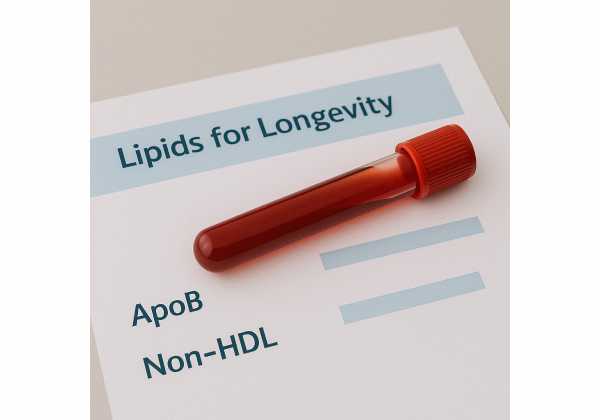
ApoB and non-HDL cholesterol give a clearer view of that burden. ApoB counts the number of atherogenic particles. Non-HDL cholesterol captures the cholesterol carried inside all major atherogenic particles. Together, they help explain why someone with “normal LDL” still has risk, especially with high triglycerides, insulin resistance, diabetes, abdominal fat, fatty liver, or a strong family history. These markers turn a basic cholesterol panel into a more practical tool for long-term prevention.
Table of Contents
- Why ApoB and Non-HDL Deserve Priority
- What ApoB and Non-HDL Measure
- How to Test and Read the Results
- When LDL Cholesterol Misses Risk
- Reasonable Targets by Risk Level
- How to Lower ApoB and Non-HDL
- How to Track Progress Over Time
- Common Mistakes and Better Questions
Why ApoB and Non-HDL Deserve Priority
Atherosclerosis starts when artery-damaging particles enter the artery wall and remain there. The immune system reacts, inflammation follows, and plaque develops over time. Cholesterol is part of that process, but the number of particles delivering cholesterol into artery walls is often the sharper signal.
ApoB and non-HDL cholesterol deserve priority because they describe the full atherogenic lipoprotein burden, not just LDL cholesterol. LDL-C measures cholesterol inside LDL particles. ApoB and non-HDL include a wider set of particles involved in plaque growth.
The practical difference becomes clear in everyday lab patterns. Two people both have LDL-C of 100 mg/dL. One has larger, cholesterol-rich LDL particles and normal triglycerides. The other has many smaller particles, higher triglycerides, low HDL-C, and early insulin resistance. Their LDL-C value looks similar, but their particle burden does not. ApoB usually shows the difference more clearly.
Non-HDL cholesterol also improves the basic lipid panel because it includes LDL, VLDL, IDL, remnants, and lipoprotein(a). It is easy to calculate:
Non-HDL cholesterol = total cholesterol − HDL cholesterol
If total cholesterol is 210 mg/dL and HDL-C is 50 mg/dL, non-HDL-C is 160 mg/dL. That number reflects the cholesterol in all non-HDL particles, not just LDL.
For longevity, the main goal is not to win a single lab test. The goal is to reduce lifelong exposure to atherogenic particles. Arteries respond to cumulative exposure: level multiplied by time. A slightly high ApoB for 30 years often matters more than a very high value discovered late.
That is why lipid tracking fits best with a lifespan view. A person in their 40s with mild plaque risk has time to change the curve. A person in their 60s with coronary calcium, diabetes, or chronic kidney disease needs a more aggressive plan. The same marker helps both people, but the target and urgency differ.
What ApoB and Non-HDL Measure
ApoB, short for apolipoprotein B, is a structural protein found on the main atherogenic lipoprotein particles. Each LDL, VLDL, IDL, remnant particle, and lipoprotein(a) particle carries one ApoB molecule. Because of that one-particle-to-one-ApoB relationship, ApoB acts as a particle count.
Non-HDL cholesterol measures the cholesterol mass inside all particles that are not HDL. HDL is removed from the calculation because HDL particles play different roles in lipid transport and do not behave like LDL or remnant particles in plaque formation.
| Marker | What it reflects | Main strength | Main limitation |
|---|---|---|---|
| ApoB | Number of atherogenic particles | Best single marker of particle burden | Usually requires an added lab order |
| Non-HDL-C | Cholesterol inside all non-HDL particles | Free calculation from a standard lipid panel | Measures cholesterol mass, not particle number |
| LDL-C | Cholesterol inside LDL particles | Familiar and strongly treatment-linked | Misses remnant burden and particle discordance |
LDL-C remains useful. It has decades of treatment evidence behind it, and most clinical guidelines still use it. The problem is not that LDL-C is useless. The problem is that LDL-C becomes less complete when the number of particles and the amount of cholesterol per particle do not match.
ApoB improves clarity because plaque risk depends heavily on the number of particles that contact, enter, and become trapped in the artery wall. More particles mean more chances for retention, oxidation, inflammation, and plaque growth.
Non-HDL-C improves clarity because it includes cholesterol from triglyceride-rich particles and remnants. These particles rise in insulin resistance, metabolic syndrome, type 2 diabetes, fatty liver, and abdominal obesity. In those settings, LDL-C alone often looks better than the true risk pattern.
Lipoprotein(a), or Lp(a), also contains ApoB. A high Lp(a) level adds genetically driven risk that standard cholesterol testing often misses. Measuring Lp(a) at least once is useful because lifestyle changes have limited effect on it, while the result changes how aggressively other risk factors should be managed.
How to Test and Read the Results
Non-HDL-C comes from the standard lipid panel. No extra test is needed. Ask for total cholesterol, HDL-C, triglycerides, and LDL-C, then calculate non-HDL-C by subtracting HDL-C from total cholesterol. Many labs already report it.
ApoB is a separate blood test. It is widely available, relatively inexpensive in many health systems, and usually does not require fasting. ApoB is reported in mg/dL in the United States and in g/L in some countries. The conversion is simple: 100 mg/dL equals 1.0 g/L.
A fasting lipid panel is not always required. Non-fasting testing works well for routine screening because most people spend much of daily life in a fed state. Fasting is still helpful when triglycerides are very high, when a previous non-fasting test looked unusual, or when a clinician needs a cleaner comparison after treatment.
A useful lipid review includes:
- Total cholesterol
- LDL-C, preferably calculated with a modern equation or directly measured when needed
- HDL-C
- Triglycerides
- Non-HDL-C
- ApoB
- Lp(a), at least once in adulthood
- A1c, fasting glucose, and fasting insulin when metabolic risk is suspected
The metabolic context matters. A person with ApoB of 95 mg/dL, triglycerides of 80 mg/dL, normal blood pressure, no family history, and no coronary calcium does not carry the same risk as a person with ApoB of 95 mg/dL, triglycerides of 220 mg/dL, high waist circumference, prediabetes, and sleep apnea. Lipids sit inside a whole risk profile.
That is why glucose and insulin markers belong next to lipid markers. Insulin resistance often raises VLDL production, triglycerides, remnant particles, and ApoB particle burden before fasting glucose becomes clearly abnormal. A careful look at A1c, fasting glucose, and fasting insulin often explains why non-HDL-C and ApoB are higher than expected.
Reading the pattern, not just the flag
Lab reference ranges often mark only extreme values. Longevity-focused prevention uses a stricter lens because risk rises across a continuum. “Normal” does not always mean optimal for a person with decades of exposure ahead.
A simple first pass:
- ApoB below 80 mg/dL is generally favorable for many adults without known cardiovascular disease.
- ApoB around 80–99 mg/dL deserves context: age, blood pressure, glucose status, family history, CAC score, and triglycerides.
- ApoB at or above 100 mg/dL often signals a meaningful atherogenic particle burden.
- ApoB at or above 130 mg/dL is a high-risk signal and should prompt clinical review.
For non-HDL-C:
- Below 130 mg/dL is a common general prevention goal.
- Below 100 mg/dL is often used for higher-risk prevention.
- Below 85 mg/dL fits very high-risk contexts in some target frameworks.
These are not personal treatment orders. They are orientation points. A clinician should set targets using age, sex, risk enhancers, existing plaque, medication tolerance, pregnancy plans, kidney function, diabetes status, and personal priorities.
When LDL Cholesterol Misses Risk
LDL-C misses risk when cholesterol mass and particle number become discordant. Discordance means one marker looks acceptable while another shows higher burden. The most common concerning pattern is LDL-C that looks moderate or “fine” while ApoB is elevated.
This pattern appears often with:
- High triglycerides, especially above 150 mg/dL
- Type 2 diabetes or prediabetes
- Insulin resistance
- Metabolic syndrome
- Fatty liver
- Abdominal obesity
- Low HDL-C
- Chronic kidney disease
- Very low LDL-C after treatment, with remaining remnant particles
- Strong family history of early heart disease
Triglycerides help explain the mismatch. When the liver exports more triglyceride-rich VLDL particles, the body often produces more ApoB-containing particles. LDL-C does not always rise in proportion because each particle may carry less cholesterol. ApoB rises because the number of particles rises.
That is why the triglyceride-to-HDL pattern gives useful background. A high TG:HDL ratio is not a replacement for ApoB, but it often points toward insulin resistance and remnant burden. A deeper look at the triglycerides-to-HDL ratio helps connect lipid results with metabolic health.
LDL-C also misses risk when Lp(a) is high. Standard LDL-C includes cholesterol carried by Lp(a), but it does not identify the Lp(a) particle itself. A person with high Lp(a) often needs more intensive LDL/ApoB lowering because Lp(a)-specific therapies are still limited in routine practice.
Coronary artery calcium testing adds another layer. Lipid markers estimate exposure and risk. CAC shows calcified plaque already present in coronary arteries. A zero score lowers near-term risk for many adults, while a high score proves that plaque biology has already been active. A coronary artery calcium score is especially useful when lipid numbers and treatment decisions are uncertain.
The “lean but high ApoB” pattern
Not everyone with elevated ApoB has visible metabolic disease. Lean people, active people, and people with normal triglycerides still develop high ApoB through genetics, diet response, thyroid status, menopause transition, kidney changes, or inherited lipid disorders.
This pattern matters because reassurance based only on body size delays prevention. A lean waist and good fitness do not cancel high lifetime exposure to ApoB particles. Fitness lowers risk in many ways, but it does not make plaque-forming particles harmless.
The “healthy diet but high ApoB” pattern
A diet built around whole foods still raises ApoB in some people when saturated fat intake is high. Large amounts of butter, coconut oil, cheese, cream, fatty processed meats, and very high saturated-fat low-carb diets often raise LDL-C and ApoB. The response is individual, but the lab result is the arbiter.
This does not mean everyone needs a low-fat diet. It means a lipid-sensitive person should test, adjust, and retest instead of assuming that a diet is heart-protective because it is unprocessed or low in sugar.
Reasonable Targets by Risk Level
ApoB and non-HDL targets should match the person’s total risk. Lower targets make more sense when risk is higher, plaque is present, or prior cardiovascular disease has occurred. Higher targets are less concerning in a younger person with low short-term risk, no family history, normal blood pressure, normal glucose metabolism, and no evidence of plaque.
| Risk context | ApoB orientation point | Non-HDL-C orientation point | Examples |
|---|---|---|---|
| Lower risk | Below 90 mg/dL | Below 130 mg/dL | No ASCVD, normal blood pressure, normal glucose, no strong family history |
| Moderate risk or risk enhancers | Below 80–90 mg/dL | Below 100–130 mg/dL | Family history, metabolic syndrome, high Lp(a), inflammatory disease |
| High risk | Below 70 mg/dL | Below 100 mg/dL | Diabetes, significant CAC, chronic kidney disease, multiple risk factors |
| Very high risk | Below 55–65 mg/dL | Below 85 mg/dL | Established ASCVD, recurrent events, very high CAC, complex cardiometabolic disease |
These ranges are intentionally practical rather than absolute. Different guidelines use different cut points, and treatment decisions should account for the whole person. Still, the direction is consistent: higher-risk people benefit from lower long-term exposure to atherogenic particles.
Risk enhancers shift the conversation. A person with ApoB of 90 mg/dL and no risk enhancers might focus first on diet, activity, weight, sleep, and follow-up. A person with ApoB of 90 mg/dL plus high Lp(a), high blood pressure, and a strong family history deserves a more serious prevention discussion.
Blood pressure deserves special attention because it multiplies lipid risk. High ApoB loads the artery wall with particles; high blood pressure adds mechanical stress. Home readings and ambulatory readings often reveal patterns missed in clinic. When office values and home values disagree, proper home blood pressure measurement adds useful context.
Inflammation also changes the meaning of lipid exposure. ApoB particles drive plaque formation, but inflammatory activity affects plaque growth and instability. Markers such as hs-CRP do not replace lipids, but inflammation testing sometimes helps explain why risk looks higher than lipids alone suggest.
How to Lower ApoB and Non-HDL
Lowering ApoB and non-HDL means reducing the number and cholesterol content of atherogenic particles. The right plan depends on the starting pattern. High LDL-C with normal triglycerides needs a different emphasis than high triglycerides, fatty liver, and insulin resistance.
Food changes with the strongest lipid signal
The highest-yield nutrition move is replacing saturated fat with unsaturated fat and high-fiber whole foods. Saturated fat raises LDL receptor demand and raises ApoB in many people. Unsaturated fats from extra-virgin olive oil, nuts, seeds, avocado, and fish usually improve the pattern.
Soluble fiber helps lower LDL-C and ApoB by binding bile acids and increasing cholesterol clearance. Useful sources include oats, barley, beans, lentils, chickpeas, psyllium, chia, flax, apples, and vegetables. A practical target is 25–40 g of total fiber daily, with 5–10 g from soluble fiber when tolerated.
Protein quality matters too. Replacing processed meats and high-saturated-fat dairy with fish, poultry, legumes, tofu, tempeh, Greek yogurt, or leaner animal proteins often improves non-HDL-C without reducing protein intake. A more detailed food strategy fits well with nutrition changes that improve blood lipids.
A lipid-friendly plate usually includes:
- A protein source
- A high-fiber carbohydrate or legumes
- Two or more colorful plant foods
- Unsaturated fat instead of butter, cream, or coconut oil
- Minimal refined starches and added sugars when triglycerides are high
Alcohol deserves a direct mention. Even moderate alcohol raises triglycerides in some people and worsens sleep, blood pressure, appetite control, and fatty liver risk. When triglycerides or non-HDL-C are high, a 4–8 week alcohol reduction trial often gives a clear answer.
Body composition and insulin sensitivity
When ApoB and non-HDL rise alongside high triglycerides, waist gain, fatty liver, or prediabetes, improving insulin sensitivity becomes central. Visceral fat drives liver overproduction of VLDL particles. Those particles add ApoB and raise non-HDL-C.
A 5–10% reduction in body weight often improves triglycerides, glucose, liver fat, blood pressure, and non-HDL-C in people with excess visceral fat. The goal is not cosmetic thinness. The goal is lower liver fat, better muscle glucose uptake, and fewer atherogenic particles.
Strength training and aerobic training work together. Resistance training protects muscle, improves glucose disposal, and supports weight maintenance. Zone 2 aerobic work improves mitochondrial function and fat oxidation. For people with insulin resistance, Zone 2 training for insulin sensitivity is a useful companion to lipid tracking.
Medication is prevention, not failure
Lifestyle is foundational, but genetics and plaque burden often require medication. Statins lower ApoB-containing particles by increasing LDL receptor activity and reducing LDL-C. Ezetimibe reduces cholesterol absorption. PCSK9 inhibitors and inclisiran increase LDL receptor recycling or reduce PCSK9 activity. Bempedoic acid reduces cholesterol synthesis upstream of the statin pathway.
The medication decision should be based on absolute risk, plaque evidence, ApoB/non-HDL levels, LDL-C, Lp(a), family history, age, pregnancy plans, side effects, and personal preferences. Needing medication does not mean lifestyle failed. It means the desired risk reduction exceeds what lifestyle alone achieved.
How to Track Progress Over Time
Lipid tracking works best when it follows a clear timeline. After a major diet, weight, medication, or exercise change, retest in 8–12 weeks. That window gives the lipid system enough time to settle and keeps the feedback loop short enough to guide decisions.
If results are stable and favorable, testing once or twice per year is often enough. Higher-risk people, medication changes, major weight changes, thyroid changes, menopause transition, kidney disease, or very high baseline values justify closer follow-up.
A practical tracking set includes:
- ApoB
- Standard lipid panel with non-HDL-C
- Triglycerides
- Lp(a), once unless a clinician repeats it for a specific reason
- A1c and fasting glucose
- Blood pressure readings
- Waist circumference or waist-to-height ratio
- Liver enzymes when fatty liver is suspected
- eGFR and urine albumin-to-creatinine ratio for kidney risk
Kidney health deserves attention because chronic kidney disease raises cardiovascular risk even when lipid values look only moderately abnormal. Adding eGFR and albumin-to-creatinine ratio helps identify people who need more careful prevention.
Do not overreact to one lab draw. Hydration, recent illness, weight loss, alcohol intake, thyroid shifts, medication adherence, and lab variation all affect results. The trend matters more than a single decimal point.
A useful retest plan
For an adult starting with ApoB of 112 mg/dL and non-HDL-C of 165 mg/dL, a practical plan might look like this:
- Repeat or confirm the full lipid panel with ApoB, Lp(a), A1c, fasting glucose, blood pressure, and waist measurement.
- Change the highest-yield drivers for 8–12 weeks: saturated fat, soluble fiber, alcohol, weight trend, and activity.
- Retest ApoB and the lipid panel.
- If ApoB remains high for the person’s risk level, discuss medication or intensification.
- Track every 3–6 months during active changes, then every 6–12 months once stable.
This sequence avoids two common errors: waiting years to act and changing five variables without measuring the result.
Common Mistakes and Better Questions
The most common lipid mistake is focusing on LDL-C alone. LDL-C is important, but it does not fully describe atherogenic particle burden. ApoB and non-HDL-C reduce blind spots, especially in metabolic risk patterns.
Another mistake is treating HDL-C as a shield. High HDL-C does not cancel high ApoB. HDL-C is a cholesterol concentration, not a guarantee of HDL function. Raising HDL-C with a supplement, food, or medication does not automatically lower risk.
A third mistake is chasing triglycerides while ignoring ApoB. Very high triglycerides require specific attention, especially at levels that raise pancreatitis risk. But for atherosclerosis, the remnant and ApoB burden matters more than triglycerides alone. A person with triglycerides of 180 mg/dL and ApoB of 125 mg/dL has a particle problem, not just a triglyceride problem.
A fourth mistake is assuming plant-based, keto, paleo, Mediterranean, or low-fat labels predict the result. The lab result tells the truth. Any diet pattern that lowers ApoB, supports muscle, improves glucose control, keeps blood pressure healthy, and is sustainable has practical value. Any diet pattern that raises ApoB sharply needs adjustment, even when it improves weight or glucose.
Better questions include:
- Is my ApoB appropriate for my age, risk factors, and plaque status?
- Is my non-HDL-C aligned with my ApoB, or do the markers disagree?
- Are my triglycerides pointing toward insulin resistance or fatty liver?
- Have I measured Lp(a) at least once?
- Do I have evidence of existing plaque, such as CAC?
- What target should I use for the next 10 years, not just this year?
- What change will I make, and when will I retest?
ApoB and non-HDL-C are not exotic longevity markers. They are practical, measurable, and directly tied to the biology of atherosclerosis. Use them to lower lifetime exposure to artery-damaging particles, then combine that lipid strategy with blood pressure control, glucose control, fitness, sleep, non-smoking, and a sustainable diet. That combination gives arteries the best chance to stay quiet for decades.
References
- 2026 ACC/AHA/AACVPR/ABC/ACPM/ADA/AGS/APhA/ASPC/NLA/PCNA Guideline on the Management of Dyslipidemia: A Report of the American College of Cardiology/American Heart Association Joint Committee on Clinical Practice Guidelines 2026 (Guideline)
- Role of apolipoprotein B in the Clinical Management of Cardiovascular Risk in Adults: An Expert Clinical Consensus from the National Lipid Association 2024 (Position Statement)
- ApoB, LDL-C, and non-HDL-C as markers of cardiovascular risk 2025 (Systematic Review)
- Individual Variation in the Distribution of Apolipoprotein B Levels Across the Spectrum of LDL-C or Non–HDL-C Levels 2024 (Cross-Sectional Study)
- Standardization of Apolipoprotein B, LDL-Cholesterol, and Non-HDL-Cholesterol 2023 (Review)
- Guidelines for the Management of Dyslipidemia 2026 (Review)
Disclaimer
This article is educational and does not replace care from a qualified clinician. Lipid testing, cardiovascular risk assessment, and medication decisions should be personalized, especially for people with heart disease, diabetes, kidney disease, pregnancy plans, very high triglycerides, inherited lipid disorders, or medication side effects.