Continuous glucose monitoring gives a moving picture of how your body handles food, exercise, sleep, stress, and daily routines. Instead of a single fasting glucose or A1c result, a CGM shows the rise, peak, and return toward baseline after meals and overnight. That detail is useful for longevity because glucose control sits close to insulin sensitivity, body composition, vascular health, liver fat, sleep quality, and long-term cardiometabolic risk.
A CGM is not a diagnosis machine, a moral scorecard, or a reason to fear every carbohydrate. It is a short-term learning tool. Used well, it helps you spot repeatable patterns: which breakfasts keep you steady, whether a walk after dinner helps, how poor sleep changes morning glucose, and when a lab test deserves follow-up. The value comes from turning patterns into better habits, not from chasing perfectly flat lines.
Table of Contents
- Where CGM Fits in a Longevity Plan
- How CGM Works and What It Measures
- Setup for Clean Data
- Accuracy, Lag, and False Alarms
- Metrics to Track Without Overreacting
- Best Use Cases for Food, Exercise, Sleep, and Stress
- Turning CGM Data Into Actions
- Who Should Use CGM and Who Should Skip It
Where CGM Fits in a Longevity Plan
A CGM adds context that standard blood tests miss. A1c estimates average glucose over roughly 2–3 months. Fasting glucose captures one point in the morning. Fasting insulin gives a clue about how hard the body works to keep glucose controlled. These tests remain important, and CGM does not replace them. Instead, CGM helps explain the daily habits behind the numbers.
For longevity, glucose data is most useful when it helps reduce metabolic strain over years. Repeated high glucose exposure often travels with insulin resistance, higher triglycerides, fatty liver risk, visceral fat gain, and blood pressure problems. Short glucose spikes after meals are normal. The concern is a pattern of large, long-lasting spikes, especially when paired with rising A1c, high fasting insulin, elevated waist circumference, high triglycerides, low HDL, or liver enzyme changes.
CGM belongs in the same toolkit as A1c, fasting glucose, and fasting insulin testing. Lab results show whether your glucose metabolism looks healthy on paper. CGM shows how your real life creates those results.
A helpful way to frame CGM use is:
- Use labs for diagnosis and risk tracking.
- Use CGM for pattern recognition.
- Use behavior changes to improve both.
CGM is especially useful when your lab results sit in a gray zone. For example, someone with normal fasting glucose but high fasting insulin might use CGM to see which meals require a large glucose response. Someone with an A1c near the prediabetes range might use CGM for two weeks to test breakfast, dinner timing, and post-meal walking. Someone with suspected reactive lows might compare symptoms with sensor readings, then confirm concerning patterns with a clinician.
CGM also helps with self-experimentation. Instead of guessing whether oats, rice, sourdough, fruit, lentils, or a late dinner affect you differently, you get a direct readout. That does not mean the lowest glucose meal is always the healthiest meal. A meal with beans, fruit, or whole grains might raise glucose more than a low-carb processed snack while still supporting fiber intake, gut health, and heart health. CGM answers one question: “What happened to glucose?” It does not answer every nutrition question.
How CGM Works and What It Measures
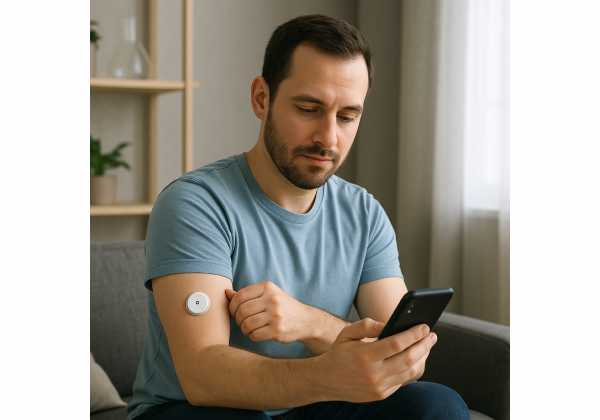
A continuous glucose monitor uses a small sensor inserted just under the skin, usually on the back of the upper arm or abdomen depending on the device. The sensor measures glucose in interstitial fluid, the fluid around cells. It then sends readings to a phone app, receiver, or reader every few minutes.
That detail matters: CGM does not directly measure blood glucose. It estimates glucose in the fluid outside the bloodstream. During stable periods, sensor glucose and blood glucose often track closely. During rapid change, such as after a high-carbohydrate meal, during hard exercise, or after a correction for low glucose, sensor readings trail blood glucose by several minutes.
Most CGM systems show three kinds of information:
- Current glucose: the latest reading, usually in mg/dL.
- Trend direction: whether glucose is rising, falling, or stable.
- History: a graph showing patterns across meals, sleep, exercise, and days.
For most adults, common reference points are:
| Glucose value | How to interpret it |
|---|---|
| 70–99 mg/dL fasting | Typical fasting laboratory range in adults without diabetes |
| 70–140 mg/dL | Often used as a tighter everyday range for adults without diabetes, though brief post-meal rises above 140 mg/dL happen |
| 70–180 mg/dL | Standard CGM time-in-range target used for many adults with diabetes |
| Above 180 mg/dL | A level worth noticing when it happens often, lasts long, or appears after ordinary meals |
| Below 70 mg/dL | Low-glucose range; symptoms, medications, and fingerstick confirmation matter |
For people without diabetes, the 70–180 mg/dL range is usually too wide to be very informative because many healthy people spend nearly all day inside it. A tighter range, such as 70–140 mg/dL, often reveals more about meal response. Even then, a single value above 140 mg/dL after a carbohydrate-rich meal is not a crisis. Duration, frequency, context, and return to baseline matter more.
CGM data also includes the overnight period, which is one of its strongest advantages. Nighttime readings show whether glucose stays steady during sleep, rises before waking, or drops because of compression, alcohol, missed meals, medication, or prolonged exercise. Morning glucose often reflects sleep quality, stress hormones, late eating, alcohol, illness, and insulin sensitivity.
Setup for Clean Data
Clean CGM data starts before the sensor goes on. A rushed setup leads to confusing readings, missing meal notes, and overinterpretation. Treat the first sensor as a structured 10–14 day experiment.
Choose a normal stretch of life when possible. Avoid starting during travel, acute illness, a major holiday, or a week with unusual training unless that situation is exactly what you want to study. Keep your usual foods for the first few days so the data reflects your baseline. After that, test changes one at a time.
Before applying the sensor, read the device instructions. Wash and dry the site. Avoid lotion, oil, and sunscreen in the area. Place the sensor where clothing will not rub it loose. Some people use an overpatch for sweaty training, swimming, or long wear periods.
A simple setup checklist:
- Pick a 10–14 day window.
- Record your current weight, waist measurement, usual sleep schedule, and recent lab values if available.
- Choose 3–5 questions you want the sensor to answer.
- Keep meal timing and training normal for the first 2–3 days.
- Add notes for meals, exercise, sleep, alcohol, illness, stress, and medication changes.
- Do not change everything at once.
Good questions produce better data. “How do I keep glucose perfect?” creates anxiety. Better questions include:
- Which breakfast keeps glucose steadier and hunger lower until lunch?
- Does a 10–20 minute walk after dinner reduce the peak or shorten the spike?
- Do late meals raise overnight glucose?
- Does poor sleep raise fasting glucose the next morning?
- Do resistance training days improve the glucose response to dinner?
- Does eating protein and vegetables before starch change the curve?
For people who enjoy structured experiments, use the same meal twice under different conditions. For example, eat the same lunch once while sitting afterward and once followed by a 15-minute walk. Or compare rice alone with rice plus salmon, vegetables, and olive oil. This style of testing fits well with N of 1 experiments for longevity because it focuses on repeated, personal patterns rather than one-off readings.
Avoid making major dietary cuts during the first few days. Many people see a large spike from a familiar food and immediately remove it. A better next step is to test portion size, meal order, added protein, added fiber, walking, or timing around exercise. CGM is most useful when it expands your options.
Accuracy, Lag, and False Alarms
CGM accuracy is good enough for pattern recognition, but it is not perfect. Modern systems often perform well in the normal and high glucose ranges, yet errors still happen. Readings are less reliable during rapid glucose changes, during the first day of a new sensor, at very low glucose levels, and when pressure is applied to the sensor during sleep.
The most common accuracy issue for wellness users is the “compression low.” This happens when you lie on the sensor and reduce local fluid flow. The graph drops sharply during sleep, sometimes below 70 mg/dL, then rebounds after you roll over. A true overnight low usually fits the broader context: symptoms, medication risk, alcohol, missed food, intense exercise, or repeated episodes across nights. A single sudden dip while sleeping on the sensor is often a sensor artifact.
Fingerstick confirmation is still important in several situations:
- The reading does not match how you feel.
- The sensor shows a low value, especially below 70 mg/dL.
- Glucose is changing quickly.
- You are making a medical decision.
- You use insulin or glucose-lowering medication.
- A new sensor gives surprising readings during the first 12–24 hours.
CGM readings also lag behind blood glucose. After a meal, blood glucose rises first; interstitial glucose follows. During exercise or a glucose drop, the sensor might show a higher value than blood for several minutes. This lag explains why trend arrows matter more than single readings. A glucose value of 135 mg/dL with a steep upward arrow means something different from 135 mg/dL with a flat or downward arrow.
Hydration, temperature, sensor placement, inflammation at the site, acetaminophen interference in some systems, device age, and manufacturing differences also influence readings. The app often smooths data, so the graph is not a laboratory trace.
A practical rule: trust repeated patterns more than isolated numbers. If the same meal causes a similar long spike three times, that is useful. If one sensor gives a strange reading once, confirm before reacting.
CGM also has psychological limits. Some people become overly strict, avoid healthy carbohydrate foods, or check the graph dozens of times per day. That defeats the purpose. Glucose is one health signal. Muscle mass, blood pressure, lipids, sleep, fitness, fiber intake, mood, and social life still matter.
Metrics to Track Without Overreacting
CGM apps produce many numbers. Most adults using CGM for longevity need only a few. Focus on patterns that connect to actions.
Average glucose
Average glucose shows the mean across the wear period. It often tracks with A1c, but it is not identical. A1c depends on red blood cell lifespan, iron status, kidney function, ethnicity, and other factors. CGM average glucose reflects the sensor period only. A stressful week, illness, travel, or a major diet change shifts it.
Use average glucose as a broad signal, not a standalone target. A lower average is not always better if it comes from skipped meals, under-fueling, excessive restriction, or frequent lows.
Time in range
Time in range means the percentage of time glucose stays within a chosen range. For many adults with diabetes, 70–180 mg/dL is the standard range. For people without diabetes, a tighter range such as 70–140 mg/dL often gives more useful feedback.
A healthy adult without diabetes often spends most of the day between 70 and 140 mg/dL, but there is individual variation. The main pattern to watch is time spent above 140 mg/dL after ordinary meals and how quickly glucose returns toward baseline.
Peak and duration after meals
The peak matters less than the full curve. A meal that briefly reaches 150 mg/dL and returns near baseline within 90 minutes is different from a meal that reaches 170 mg/dL and stays elevated for three hours.
Review meals using three questions:
- How high did glucose rise?
- How long did it stay elevated?
- Did it return close to baseline before the next meal?
This method helps you compare mixed meals fairly. A higher-fiber meal might rise more slowly but stay mildly elevated longer. A sweet drink might spike fast and crash. A high-fat meal might delay the glucose rise for several hours. Context matters.
Glucose variability
Glucose variability describes swings up and down. One common metric is coefficient of variation, often abbreviated CV. In diabetes care, a CV under 36% is often used as a marker of lower variability. People without diabetes usually have lower variability than that.
For longevity users, the practical version is simple: fewer large swings, fewer long peaks, and fewer reactive dips. Stable glucose often follows from meals with enough protein, fiber, healthy fats, and reasonable carbohydrate portions.
Overnight glucose
Overnight glucose gives clues about late meals, alcohol, sleep disruption, illness, and stress hormones. A late heavy dinner often keeps glucose higher during early sleep. Alcohol sometimes lowers glucose overnight after raising it earlier through mixed drinks or late eating. Poor sleep often raises morning glucose.
Sleep wearables and CGM pair well when used carefully. A sleep score alone does not prove anything, and a glucose rise alone does not prove poor sleep. Together, repeated patterns show whether late eating, alcohol, stress, or short sleep affects recovery. For broader tracking, compare CGM findings with sleep and wearable signals rather than treating either device as the final answer.
Best Use Cases for Food, Exercise, Sleep, and Stress
CGM shines when it answers practical questions. The best use cases are ordinary decisions repeated hundreds of times per year.
Breakfast design
Breakfast often reveals insulin sensitivity. Many people see larger glucose rises in the morning because of the dawn phenomenon, when cortisol and other hormones help prepare the body to wake. A breakfast of cereal, juice, toast, or sweet coffee might produce a sharp rise even when the same carbohydrate amount later in the day looks milder.
Useful breakfast tests include:
- Greek yogurt, berries, nuts, and chia seeds
- Eggs with vegetables and a slice of whole-grain toast
- Oats with added protein, nuts, and berries
- Lentil or bean-based savory breakfast
- Protein smoothie without added sugar
The lesson is not “never eat carbs at breakfast.” It is to find the amount and structure that keeps energy steady. Protein, fiber, and fat usually flatten the curve.
Carbohydrate quality and portion size
CGM shows that carbohydrate response is personal. Rice, potatoes, pasta, oats, bread, fruit, lentils, and beans do not behave the same way in every person. Food form matters too. Whole fruit usually behaves differently from juice. Intact grains often differ from flour-based foods. Cooled potatoes or rice sometimes produce a smaller response than freshly cooked versions because of resistant starch.
Portion size remains powerful. A food that works at one serving might create a long spike at two or three servings. This is useful because it keeps the food available while adjusting the dose.
For nutrition changes, connect CGM data with broader principles such as fiber, protein, and meal composition. A meal that supports blood sugar and fullness often looks like the “protein plus plants plus healthy fat” pattern used in constellation meals for longevity.
Meal order and mixed meals
Eating protein, vegetables, and fat before starch often reduces the glucose peak. The effect is not magic. It slows stomach emptying and changes how quickly glucose enters the bloodstream. A practical order is salad or vegetables first, then protein, then starch or fruit.
Mixed meals also matter. White rice alone usually raises glucose faster than rice eaten with fish, tofu, lentils, vegetables, and olive oil. Bread alone differs from bread with eggs and avocado. Dessert after a full meal often behaves differently from dessert on an empty stomach.
Post-meal walking
A 10–20 minute walk after a meal is one of the simplest CGM experiments. Working muscles pull glucose from the bloodstream, even at low intensity. The effect is often visible within the same meal window. The walk does not need to be athletic; easy movement after lunch or dinner is enough for many people.
This habit is especially useful after higher-carbohydrate meals, restaurant meals, or late dinners. It also supports digestion and daily step count. For a broader metabolic routine, pair CGM testing with post-meal walking and everyday movement.
Exercise timing
Different exercise types create different glucose curves. Zone 2 cardio often lowers glucose during or after the session. Resistance training sometimes raises glucose temporarily because stress hormones mobilize fuel, then improves insulin sensitivity later. High-intensity intervals often raise glucose during the workout, especially in the morning, then improve glucose handling later in the day.
Do not judge exercise by the immediate spike alone. A short glucose rise during hard training is not the same as a long post-dessert spike. Look at the next meal, overnight glucose, and the following morning.
Late meals, alcohol, and sleep
Late eating often raises overnight glucose and resting heart rate. Alcohol creates mixed patterns. Beer, sweet cocktails, and late snacks raise glucose first. Later, alcohol may suppress liver glucose output, increasing low-glucose risk in susceptible people, especially those using insulin or certain diabetes medications.
CGM helps identify a personal cutoff. Some people do well with dinner three hours before bed. Others need four. Some tolerate a small protein-rich evening snack; others see a higher overnight trace. The useful question is whether sleep, morning glucose, and next-day hunger improve when dinner is earlier and lighter.
Stress, illness, and recovery
Stress hormones raise glucose by making stored fuel available. Poor sleep, infection, pain, intense deadlines, and overtraining all show up in CGM data for some people. A higher fasting glucose after a bad night does not mean failure. It means the body is under load.
This is where CGM prevents false blame. A person might think dinner caused high morning glucose when the real pattern is short sleep, late work, or illness. Pair the graph with notes.
Turning CGM Data Into Actions
CGM becomes useful when it leads to a small number of repeatable changes. A good review takes 20–30 minutes at the end of the sensor period. Export the report if your app allows it, then look for patterns by meal, time, and context.
Use this simple review method:
- Choose your top three highest post-meal peaks.
- Choose your top three longest elevated periods.
- Review the notes for those meals.
- Identify one food pattern, one timing pattern, and one movement pattern.
- Test one change for the next week.
A useful action plan often looks like this:
| Pattern | Likely contributors | Action to test |
|---|---|---|
| Sharp breakfast spike | Low protein, refined starch, sweet drink, morning insulin resistance | Add 25–40 g protein, choose intact carbs, remove juice, walk after eating |
| Long dinner elevation | Large meal, late timing, high fat plus high carb, alcohol | Move dinner earlier, reduce starch portion, add vegetables, walk 10–20 minutes |
| High overnight glucose | Late meal, poor sleep, alcohol, illness, stress | Set a dinner cutoff, reduce alcohol, improve sleep routine, retest when well |
| Repeated dips below 70 mg/dL | Medication, prolonged exercise, alcohol, missed meals, sensor pressure | Confirm with fingerstick, review symptoms, discuss with a clinician if repeated |
| Exercise spike | High intensity, morning training, stress hormones | Check later meal response and recovery before changing training |
Avoid chasing a flat line at the expense of health. Removing legumes, fruit, oats, potatoes, or whole grains solely because they raise glucose slightly often backfires if it lowers fiber, potassium, polyphenols, training fuel, or diet enjoyment. A better response is to adjust the meal structure.
A strong CGM-based nutrition change usually includes at least one of these:
- Add protein to the meal.
- Add high-fiber plants.
- Reduce liquid sugar.
- Reduce the refined starch portion.
- Eat starch after protein and vegetables.
- Move a large carbohydrate meal closer to exercise.
- Walk after the meal.
- Eat dinner earlier.
- Improve sleep before judging morning glucose.
CGM also helps decide when further testing makes sense. If your sensor repeatedly shows high fasting glucose, prolonged post-meal elevations, or a mismatch with A1c, discuss follow-up labs. Options include fasting glucose, fasting insulin, A1c, lipids, liver enzymes, and sometimes an oral glucose tolerance test or mixed-meal test. When the question is how your body handles a formal glucose challenge, compare the strengths of an OGTT versus a mixed-meal test with your clinician.
Use CGM in cycles rather than nonstop unless there is a medical reason. Many wellness users learn enough from 10–14 days, then repeat after a major change: new training block, weight loss, menopause transition, medication change, sleep improvement, or a new nutrition plan.
Who Should Use CGM and Who Should Skip It
CGM has the clearest medical value for people with diabetes, especially those using insulin, those at risk for hypoglycemia, and those adjusting therapy. Clinical guidance for diabetes continues to expand CGM use because real-time glucose data helps improve time in range, reduce hypoglycemia, and guide treatment.
For adults without diabetes, CGM is optional. It is most useful when there is a specific reason to learn from glucose patterns.
Good candidates include people with:
- A1c, fasting glucose, or fasting insulin near concerning ranges
- Prediabetes or a strong family history of type 2 diabetes
- Central weight gain or rising waist-to-height ratio
- High triglycerides, low HDL, fatty liver risk, or metabolic syndrome features
- Large energy crashes after meals
- A desire to test meal timing, exercise timing, or post-meal walking
- A structured self-experimentation mindset
People who should use CGM only with clinical guidance include those using insulin, sulfonylureas, or other medications that increase hypoglycemia risk; pregnant people with glucose concerns; people with a history of eating disorders; and anyone with repeated low readings or symptoms.
People who might skip CGM include those with normal labs, stable energy, low cardiometabolic risk, and a tendency to become anxious around health data. In that case, the money and attention might be better spent on basics: strength training, daily walking, sleep, protein, fiber, blood pressure, and standard labs.
Cost and access also matter. Over-the-counter CGM availability has expanded in the United States for adults who do not use insulin, but local rules, product features, alerts, and insurance coverage vary. Some OTC systems do not include urgent low-glucose alerts and are not designed for people with problematic hypoglycemia. Medical-grade CGM for diabetes management requires the right device, education, and clinical plan.
The best CGM experience is calm and time-limited. Wear the sensor, gather normal-life data, test a few changes, write down the lessons, and move on. The result should be a shorter list of habits you trust, not a longer list of foods you fear.
References
- 7. Diabetes Technology: Standards of Care in Diabetes-2026 2026 (Guideline)
- Clinical Targets for Continuous Glucose Monitoring Data Interpretation: Recommendations From the International Consensus on Time in Range 2019 (Consensus Report)
- The efficacy of using continuous glucose monitoring as a behaviour change tool in populations with and without diabetes: a systematic review and meta-analysis of randomised controlled trials 2024 (Systematic Review)
- Defining Continuous Glucose Monitor Time in Range in a Healthy Adult Population 2025 (Cohort Study)
- Performance of Three Continuous Glucose Monitoring Systems in Adults With Type 1 Diabetes 2025 (Clinical Study)
- FDA Clears First Over-the-Counter Continuous Glucose Monitor 2024 (Official Page)
Disclaimer
This article is educational and does not replace care from a qualified health professional. CGM readings should not be used alone to diagnose diabetes, change medication, or treat suspected hypoglycemia. If you use insulin or glucose-lowering medication, have repeated low readings, or see persistent high glucose patterns, review the data with your clinician.