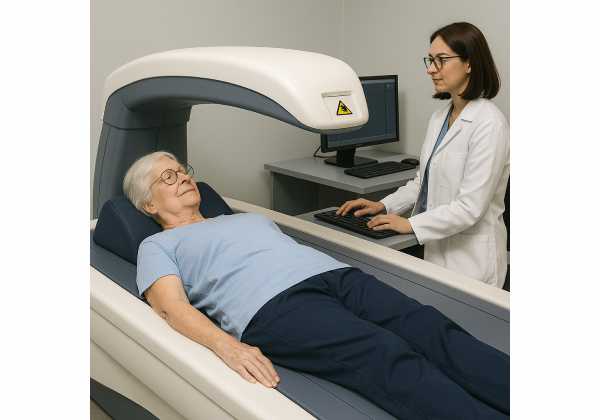
A DEXA scan gives a clear, low-radiation look at bone mineral density, usually at the hip and spine. In a longevity plan, that matters because strong bones protect mobility, independence, and confidence with movement as the decades pass. Bone loss is often silent until a wrist, hip, or spine fracture changes daily life. A scan turns that hidden risk into numbers you and your clinician can act on.
DEXA stands for dual-energy X-ray absorptiometry, though many reports use the shorter spelling DXA. The test is painless, quick, and useful when it answers a specific question: are your bones strong enough for your age, sex, training habits, medical history, and fracture risk? The result is not a full measure of “bone quality,” and it does not replace balance, strength, vision, medication review, or fall prevention. It is best used as one part of a practical bone-health strategy.
Table of Contents
- What a DEXA Scan Measures
- Who Should Get Tested
- How to Read T-Scores, Z-Scores, and Fracture Risk
- How to Prepare for the Scan
- Turning Results Into Action
- How Often to Repeat Testing
- Limitations and Common Mistakes
What a DEXA Scan Measures
A DEXA scan measures bone mineral density, or BMD. BMD estimates how much mineral content sits inside a measured area of bone, reported in grams per square centimeter. The usual medical scan focuses on the lumbar spine and hip because fractures in those areas carry major consequences for pain, disability, and independence.
Most standard scans include:
- Lumbar spine, usually L1–L4
- Total hip
- Femoral neck, the narrow part near the top of the thigh bone
- Forearm in selected cases, such as hyperparathyroidism, severe obesity, or when the hip or spine cannot be interpreted well
A central DEXA scan of the hip and spine is the main test used to diagnose osteoporosis in adults. Heel ultrasound, peripheral wrist devices, and other screening tools have uses in some settings, but they do not replace a diagnostic central DEXA when clinical decisions depend on the result.
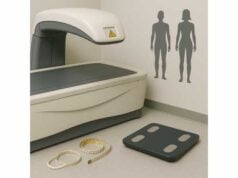
DEXA uses two low-dose X-ray beams. Bone, fat, and lean tissue absorb those beams differently, allowing the machine to estimate density. The radiation dose is very low, usually far below a standard CT scan and often described as comparable to a small fraction of everyday background radiation. Pregnancy remains an important reason to avoid or delay the test unless a clinician decides otherwise.
A DEXA report usually includes more than one number. The absolute BMD value matters most for tracking change over time. The T-score and Z-score help classify the result. The images help the interpreting clinician decide whether arthritis, prior fractures, surgical hardware, or positioning problems affected the measurement.
Some centers also offer whole-body DEXA for body composition. That scan estimates total fat mass, lean mass, appendicular lean mass, and sometimes visceral fat. It is useful for tracking muscle and fat distribution, but it is a different question from osteoporosis diagnosis. For a deeper comparison of body composition methods, see DEXA vs BIA vs tape measurements.
Bone density is not the same as bone strength. Bone strength also depends on bone size, shape, microarchitecture, remodeling, mineralization, collagen, muscle strength, balance, medications, and fall risk. A person with only mildly low bone density still has a high fracture risk after a prior low-trauma fracture. A person with low BMD but excellent strength, balance, and no major risk factors has a different risk profile.
Bone density and healthspan
Bone density matters for longevity because fractures change life trajectories. Hip fractures often lead to surgery, loss of mobility, long rehabilitation, and higher risk of losing independence. Vertebral compression fractures cause height loss, back pain, breathing restriction, and fear of movement. Wrist fractures limit daily tasks and often signal higher future fracture risk.
Bone is active tissue. It responds to hormones, loading, nutrition, inflammation, medications, and illness. Peak bone mass usually develops by early adulthood, then bone remodeling continues throughout life. After menopause, the drop in estrogen speeds bone loss. In men, bone loss often occurs more gradually, though low testosterone, medications, alcohol use, chronic illness, and low body weight raise risk.
A scan gives the most value when paired with a plan: reduce fracture risk, build or preserve muscle, improve balance, review medications that increase falls, and correct nutritional or medical contributors.
Who Should Get Tested
DEXA testing is most useful when the result changes decisions. Age alone qualifies many people, but earlier testing makes sense when risk factors appear before the usual screening age.
Women age 65 and older are commonly advised to get screened. Postmenopausal women younger than 65 should be considered for testing when fracture risk factors are present. Many clinical groups also recommend testing men age 70 and older, and men age 50–69 when risk factors suggest low bone mass. Guidance for routine screening in men varies by organization, so men benefit from a risk-based discussion rather than waiting until a fracture happens.
Risk factors that often justify earlier testing include:
- A fracture after age 50 from a fall from standing height or less
- A parent with a hip fracture
- Low body weight or unintentional weight loss
- Current smoking
- Heavy alcohol intake, often defined as 3 or more drinks per day
- Long-term oral glucocorticoid use, such as prednisone
- Rheumatoid arthritis
- Hyperthyroidism, hyperparathyroidism, Cushing syndrome, or untreated hypogonadism
- Celiac disease, inflammatory bowel disease, bariatric surgery, or other malabsorption risks
- Chronic kidney disease, chronic liver disease, or organ transplant history
- Aromatase inhibitors for breast cancer or androgen deprivation therapy for prostate cancer
- Early menopause, prolonged absence of menstrual periods, or eating disorder history
- Recurrent falls, poor balance, frailty, or major mobility limits
A low-trauma fracture deserves special attention. A wrist, spine, shoulder, pelvis, or hip fracture after a simple fall often signals skeletal fragility even before a scan confirms osteoporosis. In that setting, DEXA helps stage risk and monitor response, but a normal or mildly low result does not erase the clinical warning.
Height loss also deserves attention. Losing about 4 cm, or 1.5 inches, from peak adult height, losing about 2 cm, or 0.8 inches, between medical visits, or developing new kyphosis raises concern for vertebral compression fractures. Some DEXA centers perform vertebral fracture assessment, or VFA, during the same visit. VFA uses low-dose imaging to look for spine fractures that often go unnoticed.
People who train seriously sometimes ask whether they need DEXA because they lift weights. Strength training helps bones, but it does not cancel every risk. A lean endurance athlete with low energy availability, irregular periods, low vitamin D, prior stress fractures, or restrictive eating patterns deserves a different evaluation from a recreational lifter with stable weight and no fractures.
Testing also helps before making medication decisions. If a clinician is considering osteoporosis treatment, a baseline DEXA provides a reference point. It also helps decide whether to include the forearm, check for vertebral fractures, or investigate secondary causes with lab work.
How to Read T-Scores, Z-Scores, and Fracture Risk
DEXA results are easy to misread because one report contains several types of numbers. The T-score is the most familiar, but fracture risk depends on more than the T-score.
A T-score compares your BMD with the average BMD of a healthy young adult reference population. It is expressed in standard deviations. In postmenopausal women and men age 50 and older, the T-score helps classify bone density.
| Result | T-score range | Plain-language meaning |
|---|---|---|
| Normal bone density | -1.0 or higher | Bone density is not in the low range by DEXA criteria. |
| Low bone mass | Between -1.0 and -2.5 | Often called osteopenia; fracture risk depends strongly on age, prior fractures, falls, and other risk factors. |
| Osteoporosis | -2.5 or lower | Bone density is low enough to meet the densitometric definition of osteoporosis. |
The lowest valid T-score at the lumbar spine, total hip, or femoral neck usually drives the diagnosis. The forearm, especially the 33% radius, is used in selected situations. Ward’s area and some other hip subregions should not drive diagnosis.
A Z-score compares your BMD with people of the same age and sex. Z-scores matter most in premenopausal women, men younger than 50, and children. In younger adults, a Z-score of -2.0 or lower is usually described as “below the expected range for age.” That wording is important because osteoporosis should not be diagnosed in younger men based on BMD alone. Younger adults with low Z-scores need a search for causes: endocrine problems, malabsorption, low energy intake, medications, inflammatory disease, kidney disease, or genetic bone disorders.
Why “osteopenia” is not a complete risk label
Low bone mass is not automatically mild risk. Many fractures happen in people whose T-scores fall in the osteopenia range because that group is large and because age, falls, and prior fractures strongly affect risk. A 52-year-old with a T-score of -1.8 and no risk factors is not in the same situation as a 78-year-old with the same T-score, recurrent falls, and a parent who broke a hip.
FRAX, the Fracture Risk Assessment Tool, estimates 10-year risk of hip fracture and major osteoporotic fracture. It uses age, sex, height, weight, prior fracture, parental hip fracture, smoking, glucocorticoid use, rheumatoid arthritis, secondary osteoporosis, alcohol intake, and femoral neck BMD when available. In the United States, many clinicians consider treatment in people with low bone mass when FRAX estimates at least 3% 10-year hip fracture risk or at least 20% 10-year major osteoporotic fracture risk, though decisions should include individual circumstances.
FRAX has limits. It treats many inputs as yes-or-no, so it does not fully capture steroid dose, fall frequency, frailty, diabetes, recent fractures, spine BMD, or the number and severity of prior fractures. A clinician may adjust interpretation when those factors are present.
When spine and hip results disagree
The spine and hip do not always match. The lumbar spine may look better than it truly is when osteoarthritis, bone spurs, aortic calcification, compression fractures, or surgical changes inflate the reading. The hip often gives a steadier long-term risk signal in older adults. In younger postmenopausal women, the spine sometimes declines earlier.
Large differences between sites deserve explanation rather than panic. The interpreting clinician should note whether any vertebrae were excluded and why. A technically good report should describe limitations, not only print numbers.
Some reports include trabecular bone score, or TBS. TBS uses the lumbar spine image to estimate texture related to trabecular microarchitecture. It does not replace BMD and does not diagnose osteoporosis by itself. It sometimes helps refine risk, especially when BMD looks only mildly low but clinical risk seems higher.
How to Prepare for the Scan
A DEXA scan is simple, but preparation improves accuracy. The appointment often takes 10–30 minutes, with the scan itself taking only a short part of that time.
Wear comfortable clothing without metal near the waist, hips, or spine. Zippers, metal buttons, underwire bras, heavy jewelry, and belt buckles interfere with imaging. Many centers provide a gown if needed.
Tell the imaging center before the test if any of the following apply:
- Pregnancy or possible pregnancy
- Recent barium study, CT contrast, nuclear medicine scan, or radiopharmaceutical exposure
- Hip or spine surgery, hardware, vertebral fractures, or joint replacements
- Severe scoliosis or trouble lying flat
- Body weight near the scanner table limit
- Calcium supplements taken shortly before the appointment, if the center asks you to pause them
Many centers ask patients to avoid calcium supplements for 24 hours before the scan because tablets in the gut interfere with images. Food usually does not matter. Usual medications often continue unless the ordering clinician says otherwise.
Good positioning matters. For the spine scan, the technologist positions the legs to flatten the lower back. For the hip scan, the leg is gently rotated inward to standardize the femoral neck measurement. Small positioning differences change results, which is one reason repeat scans are best done at the same facility on the same machine when possible.
Bring or request access to prior DEXA reports. The most useful comparison includes the prior images, machine type, BMD in g/cm², and the facility’s least significant change. T-score changes alone are not enough for precise monitoring.
What a good report should include
A useful DEXA report should identify the machine, measured sites, BMD values, T-scores or Z-scores as appropriate, diagnostic category, technical limitations, and comparison with prior scans when available. It should state whether any vertebrae were excluded and why. It should avoid over-interpreting tiny changes that fall within measurement error.
Ask for the full report, not only a summary sentence. The full report helps you track long-term patterns and prevents confusion if you move, change clinicians, or scan at another facility.
Turning Results Into Action
The scan only helps when it leads to a clear plan. A useful bone plan addresses four areas: loading, nutrition, medical causes, and fall risk.
Resistance training and impact loading are the most direct lifestyle signals to bone. Bones adapt to force, especially force that is higher than usual and repeated consistently. Walking supports general health, but walking alone rarely gives the spine and hip enough stimulus to rebuild low bone density. A stronger plan includes progressive resistance training, safe impact if appropriate, and balance work.
For many adults, bone-focused training includes:
- Squats, hinges, step-ups, lunges, presses, rows, and loaded carries
- Gradual jumps, hops, or stomps when joints, balance, and fracture risk allow
- Heavier resistance over time, guided by technique and tolerance
- Back extensor strengthening for posture and spine support
- Balance drills to reduce fall risk
- Recovery days so joints, tendons, and bones adapt
People with osteoporosis, vertebral fractures, or high fall risk should avoid sudden aggressive plyometrics, loaded spinal flexion, and twisting under load until a trained clinician or coach has assessed them. A safer starting point often includes hip hinges, supported squats, step-ups, carries, rows, and controlled balance drills. For a training-focused companion, see resistance and impact training for bone density.
Nutrition supports the remodeling process. Adults generally need enough protein, enough calcium from food and supplements combined, and adequate vitamin D status. Many guidelines use total calcium targets around 1,000–1,200 mg per day for adults in midlife and older age, depending on sex and age. More is not automatically better; very high supplemental calcium intake causes side effects and should be individualized.
Vitamin D helps calcium absorption and muscle function, but blood levels vary by sun exposure, skin pigmentation, season, body size, liver and kidney function, and supplement use. Testing 25-hydroxyvitamin D is more informative than guessing. For interpretation details, see vitamin D testing for healthy aging.
Protein deserves special attention in older adults. Low protein intake weakens muscle and bone together. A bone plan that ignores muscle misses the main protective system around the skeleton. Strong legs, hips, trunk, and grip reduce fall impact and support faster recovery. Many adults benefit from spreading protein across meals rather than saving most of it for dinner.
A clinician should look for secondary contributors when DEXA shows osteoporosis, unexpectedly low Z-scores, rapid bone loss, fractures, or poor response to treatment. Common lab considerations include calcium, kidney function, liver function, alkaline phosphatase, blood count, thyroid-stimulating hormone, 25-hydroxyvitamin D, parathyroid hormone, phosphate, celiac screening, testosterone in men when indicated, and urine calcium in selected cases.
Medications reduce fracture risk for people at high enough risk. Common options include oral or IV bisphosphonates, denosumab, selective estrogen receptor modulators in selected patients, menopausal hormone therapy in specific contexts, and anabolic or bone-forming agents for very high-risk osteoporosis. Choice depends on fracture history, kidney function, age, dental issues, gastrointestinal tolerance, pregnancy potential, cancer history, and future sequencing. Stopping some medications, especially denosumab, needs a planned transition to avoid rebound bone loss.
Fall prevention is not optional. Review sedating medications, alcohol, vision, footwear, home hazards, blood pressure drops on standing, neuropathy, and vestibular problems. Simple functional checks such as gait speed, chair stands, grip strength, and balance tests help show whether the skeleton is protected by capable movement. For home-friendly performance measures, see functional longevity tests.
How Often to Repeat Testing
Repeat DEXA testing should match the decision you are trying to make. Annual scans are not automatically useful, because bone density changes slowly and every machine has measurement error.
A common pattern is to repeat testing after 1–2 years when someone starts or changes osteoporosis medication, has high fracture risk, uses long-term glucocorticoids, or has a condition likely to cause rapid loss. Longer intervals, often several years, make sense when the first scan is normal or only mildly low and risk factors are stable.
Repeat testing is more informative when performed on the same machine at the same facility. Different machines and software versions produce different values. Even on the same machine, small changes might reflect normal measurement variation rather than real bone change. The facility’s least significant change, often called LSC, tells whether the difference is large enough to count as real.
Focus on absolute BMD change in g/cm² and whether it exceeds the LSC. T-scores are useful for classification, but they are less precise for tracking. A report that says “3% decrease” is incomplete unless it states whether that decrease exceeds the machine’s precision threshold.
Repeat scans also need context. A stable hip BMD after starting treatment is often a good result, especially if fracture risk was high. Bone medications aim to prevent fractures; large BMD increases are not the only sign of benefit. Some drugs produce modest density changes but meaningful fracture-risk reduction. Anabolic therapies often produce larger spine gains, but sequencing afterward matters.
Testing too often creates false alarms. Tiny changes lead to anxiety, unnecessary medication switches, or overconfidence when a small increase is within error. Testing too rarely also causes problems when someone is losing bone quickly due to steroids, cancer therapy, untreated endocrine disease, or major weight loss.
A practical follow-up schedule usually considers:
- Baseline T-score and fracture history
- Age and sex
- Menopause timing
- Steroid exposure or other high-risk medications
- New fractures or height loss
- Treatment start date and expected response
- Whether the prior result was close to a treatment threshold
- Whether the result will change management
A repeat scan should answer a direct question: Is the current plan working? Has risk changed enough to treat? Is bone loss faster than expected? Has a new fracture or medication changed the risk category?
Limitations and Common Mistakes
DEXA is valuable, but overconfidence in one number leads to poor decisions. The most common mistake is treating the T-score as the entire story.
A low T-score means bone density is low, but fracture risk also includes age, falls, previous fractures, medications, vision, reaction time, muscle, and home environment. A normal T-score lowers concern but does not cancel fracture risk after a significant low-trauma fracture or repeated falls.
Another mistake is ignoring vertebral fractures. Many spine fractures occur without dramatic pain. Height loss, new curvature, or unexplained back pain deserves evaluation. A vertebral fracture often changes diagnosis and treatment intensity even when BMD is not severely low.
A third mistake is comparing scans from different facilities as if they are interchangeable. Different machines, software, regions of interest, and positioning choices distort trend interpretation. When a new facility is unavoidable, keep the old report and ask the clinician to interpret trends carefully.
Spine artifacts are another source of confusion. Arthritis and calcification often make lumbar spine BMD look falsely reassuring in older adults. If the spine improves dramatically while the hip worsens, the pattern may reflect artifact rather than stronger vertebrae. The report should explain excluded vertebrae and technical limitations.
Whole-body DEXA body composition results also require restraint. Lean mass is not the same as muscle strength. Visceral fat estimates are not the same as MRI. Hydration, food intake, glycogen, recent exercise, and machine differences affect results. Use body composition trends alongside waist measurements, strength, performance, and metabolic markers rather than treating one scan as a verdict.
Do not use DEXA to justify reckless training. A person with low bone density needs loading, but the dose must match current capacity. Sudden high-impact work, deep loaded spinal flexion, and aggressive twisting can increase risk when bones, balance, or technique are not ready. Progression matters more than bravado.
Do not rely on supplements alone. Calcium and vitamin D help when intake or status is low, but they do not replace resistance training, fall prevention, medication when risk is high, or evaluation for secondary causes. A bone plan built only on pills is incomplete.
Do not delay medical treatment when fracture risk is high. Lifestyle measures are powerful, but someone with a hip fracture, vertebral fracture, very low T-score, or high FRAX risk often needs medication-level fracture protection. The best plan combines medical treatment with strength, nutrition, balance, and risk-factor control.
Finally, do not treat bone density as separate from the rest of healthspan. Bone, muscle, metabolism, hormones, vision, nervous system function, and environment work together. The strongest longevity use of DEXA is not simply finding osteoporosis. It is finding the right next move before a preventable fracture changes daily life.
References
- Osteoporosis to Prevent Fractures: Screening 2025 (Recommendation Statement)
- Official Adult Positions 2023 (Position Statement)
- DXA Reporting Updates: 2023 Official Positions of the International Society for Clinical Densitometry 2024 (Review)
- Follow-up Bone Mineral Density Testing: 2023 Official Positions of the International Society for Clinical Densitometry 2024 (Review)
- The clinician’s guide to prevention and treatment of osteoporosis 2022 (Guideline)
- An overview of the use of the fracture risk assessment tool (FRAX) in osteoporosis 2023 (Review)
Disclaimer
This article is educational and does not replace care from a qualified clinician. Bone density results need interpretation in the context of age, sex, fracture history, medications, lab findings, fall risk, and personal medical history. Anyone with a fragility fracture, very low T-score, rapid bone loss, or possible secondary osteoporosis should seek individualized medical guidance.