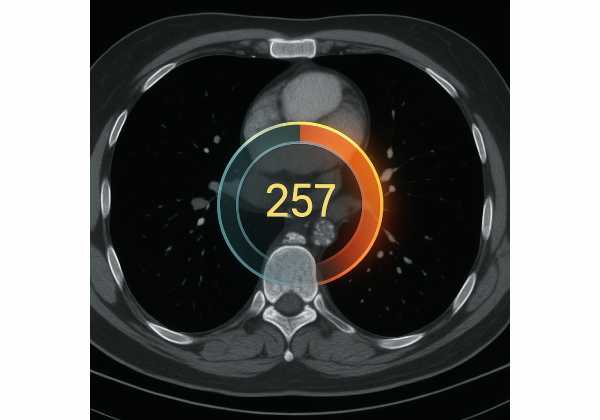
Coronary artery calcium testing gives a direct look at calcified plaque in the arteries that feed the heart. That makes it different from standard blood tests, which estimate risk from clues such as cholesterol, blood pressure, smoking, diabetes, and age. A calcium score does not prove that a heart attack will happen, and a score of zero does not make someone immune. It does show whether coronary atherosclerosis has already left a measurable footprint.
For longevity planning, CAC is most useful when the next step is unclear. A person with borderline or intermediate risk, a strong family history, high lipoprotein(a), or mixed cholesterol results often needs better risk sorting before committing to long-term medication intensity. CAC helps turn an abstract risk estimate into a more personal prevention plan. The result should guide action on LDL cholesterol, ApoB, blood pressure, glucose control, smoking, sleep, fitness, and follow-up—not create anxiety or score-chasing.
Table of Contents
- What a Coronary Artery Calcium Score Measures
- CAC Score Ranges and What They Usually Mean
- Who Should Consider CAC Testing
- How CAC Changes Prevention Decisions
- Follow-Up After Each CAC Result
- Limitations, False Reassurance, and Common Mistakes
- A Practical Longevity Plan After CAC Testing
What a Coronary Artery Calcium Score Measures
A coronary artery calcium score measures calcified atherosclerotic plaque in the coronary arteries. The test uses a non-contrast CT scan, usually ECG-gated so the images line up with the heartbeat. No dye is injected. The scan takes only a few minutes, and the result is reported as an Agatston score.
Atherosclerosis starts when cholesterol-rich particles enter the artery wall and trigger inflammation, immune activity, repair, and scarring. Over time, some plaque becomes calcified. The calcium score captures that calcified portion. It does not show every plaque type, but it gives a strong signal of total lifetime plaque burden.
The number is not a “calcium in the blood” measurement. It is not caused by eating calcium-rich foods. It is also not the same as a bone density scan. CAC is an imaging marker of coronary atherosclerosis.
The scan usually reports:
- Agatston score: the main number used for risk decisions.
- Percentile: how the score compares with people of the same age and sex, and sometimes race or ethnicity.
- Artery distribution: whether calcium appears in one artery or several.
- Incidental findings: non-heart findings sometimes seen on the CT field.
A score of 150 in a 45-year-old and a score of 150 in a 75-year-old do not carry the same meaning. The absolute score matters because higher plaque burden predicts higher event risk. The percentile matters because early plaque for age signals accelerated atherosclerosis.
CAC fits best with other risk markers. ApoB and non-HDL cholesterol show the concentration of atherogenic particles. Blood pressure shows artery stress. A1c, fasting glucose, and fasting insulin show metabolic pressure; a deeper look at glucose and insulin markers helps explain why plaque risk rises in insulin resistance. CAC shows whether those exposures have already produced visible coronary plaque.
The radiation dose from modern CAC testing is low, commonly around 1 mSv, although it varies by scanner, body size, and protocol. That is far lower than many diagnostic CT scans, but it is still radiation. The test should answer a real clinical question rather than serve as a routine curiosity.
CAC Score Ranges and What They Usually Mean
CAC scores run from 0 to thousands. Risk rises in a graded way, not as a simple yes-or-no result. A score of 3 is not the same as a score of 300, and a score of 900 is not just “positive.” The amount of plaque changes the intensity of prevention.
| CAC score | Typical meaning | Prevention signal |
|---|---|---|
| 0 | No calcified coronary plaque detected | Lower short-term risk, but not zero risk |
| 1–99 | Mild calcified plaque | Risk is present; age and percentile strongly affect interpretation |
| 100–299 | Moderate plaque burden | Stronger case for medication-based LDL lowering and risk-factor control |
| 300–399 | High plaque burden | High-risk prevention approach is usually appropriate |
| 400+ | Very high plaque burden | Aggressive prevention and clinician-led evaluation are warranted |
| 1000+ | Extensive coronary calcification | Risk may approach secondary-prevention intensity even without a prior event |
A score of zero often lowers near-term estimated risk. In a middle-aged adult without diabetes, smoking, severe LDL elevation, chronic kidney disease, or strong premature family history, CAC 0 often supports a less aggressive medication plan while lifestyle work continues. That “warranty” is time-limited. New plaque still develops, especially with age, diabetes, smoking, high ApoB, high Lp(a), hypertension, or chronic inflammatory disease.
A score of 1–99 proves that coronary plaque exists. In older adults, a small score may reflect modest age-related plaque burden. In a younger adult, even a low score deserves attention because calcified plaque has appeared early. A percentile above the 75th percentile for age and sex usually strengthens the case for more intensive prevention.
A score of 100 or higher often changes the conversation. At that level, many guidelines and expert statements support statin therapy or more intensive LDL-lowering discussions, assuming the person is not already treated. A score above 300 or 400 usually indicates a high plaque burden that deserves tighter control of LDL-C or ApoB, blood pressure, metabolic health, and lifestyle risks.
The score should never be interpreted alone. Two people with CAC 120 may need different plans if one is 42 with high Lp(a) and a parent who had a heart attack at 49, while the other is 76 with excellent blood pressure, no diabetes, no smoking history, and already low ApoB. The scan adds information; it does not replace clinical judgment.
Who Should Consider CAC Testing
CAC testing is most useful for adults who are old enough for coronary plaque risk to be plausible and whose prevention plan is uncertain. The 2026 ACC/AHA dyslipidemia guidance supports selective CAC use for men age 40 and older and women age 45 and older with borderline or intermediate 10-year risk when the result would help decide whether to start or intensify lipid-lowering therapy.
Good candidates often include adults with:
- Borderline or intermediate estimated 10-year ASCVD risk.
- A strong family history of premature heart disease.
- Elevated LDL-C, non-HDL-C, or ApoB with uncertainty about medication.
- Elevated lipoprotein(a), especially with family history.
- Metabolic syndrome, prediabetes, or type 2 diabetes where risk intensity is unclear.
- Chronic inflammatory conditions such as rheumatoid arthritis, lupus, psoriasis, or HIV.
- South Asian ancestry or other ancestry-linked risk not fully captured by older calculators.
- Early menopause, preeclampsia, gestational diabetes, or other reproductive risk markers.
CAC is usually less useful when the treatment decision is already clear. A person with prior heart attack, stroke, coronary stent, bypass surgery, or known clinical ASCVD does not need CAC to prove risk. Someone with LDL-C at or above 190 mg/dL often needs intensive lipid management regardless of CAC because lifelong exposure is high. Many adults with diabetes, chronic kidney disease, or very high calculated risk also need treatment even if CAC is zero.
CAC is not the right test for new chest pain, chest pressure, unexplained shortness of breath with exertion, fainting, or symptoms that suggest unstable heart disease. Symptoms require medical evaluation, and urgent symptoms require emergency care. CAC does not show whether a specific artery has a dangerous narrowing. Coronary CT angiography, stress imaging, or other testing may be needed when symptoms are present.
Younger adults need more careful selection. A 32-year-old with no major risk factors usually gains little from CAC. A 35-year-old with familial hypercholesterolemia, very high Lp(a), type 1 diabetes of long duration, or a parent with a heart attack in their 40s is different. In younger adults, a CAC score above zero carries extra weight because calcified plaque has appeared earlier than expected.
Before ordering CAC, the best preparation is a complete risk snapshot: blood pressure, smoking status, family history, lipid panel, ApoB or non-HDL-C, Lp(a), A1c, kidney markers, medication list, and inflammatory conditions. For people focused on lipid risk, ApoB and non-HDL cholesterol often explain why LDL-C alone misses part of the picture. CAC then helps decide how urgently and how intensively to act.
How CAC Changes Prevention Decisions
CAC changes prevention by making hidden artery disease visible. That matters because many people have risk factors but no clear sense of how much damage has already occurred. The scan often shifts the decision from “Should I treat this number?” to “How much plaque risk do I already carry?”
The most common medication decision involves LDL-lowering therapy. Statins remain the foundation because they lower LDL-C and ApoB-containing particles and reduce cardiovascular events. Depending on risk level and response, clinicians may add ezetimibe, bempedoic acid, or PCSK9-targeting therapy. CAC does not choose the drug by itself, but it helps set the intensity of LDL-C or ApoB reduction.
The 2026 dyslipidemia guideline framework restores LDL-C goals alongside percentage reductions. For primary prevention, borderline or intermediate-risk adults commonly use an LDL-C goal below 100 mg/dL, while high-risk adults often use a goal below 70 mg/dL. Subclinical atherosclerosis changes the target: any CAC supports an LDL-C goal below 100 mg/dL, and higher CAC generally supports lower goals. ApoB is often more useful when triglycerides are high, diabetes is present, or LDL-C and non-HDL-C look controlled but residual particle risk remains.
CAC also sharpens blood pressure decisions. A person with CAC 0 and mildly elevated home readings still needs good blood pressure habits, but the urgency differs from a person with CAC 350 and the same readings. Accurate home measurement matters; poor technique produces misleading numbers. A structured approach to home blood pressure tracking helps turn CAC results into safer daily management.
Aspirin is more selective. Low-dose aspirin is not a routine longevity supplement, because bleeding risk can offset cardiovascular benefit. CAC above 100, especially above 300, may identify adults who are more likely to benefit, but only when bleeding risk is low and a clinician agrees. Older age, prior ulcers, blood thinners, uncontrolled hypertension, kidney disease, and bleeding history all change the equation.
CAC also improves commitment. People often underestimate silent plaque risk when they feel fit, have normal weight, or exercise often. A visible score can make LDL lowering, smoking cessation, blood pressure control, and diet changes feel less abstract. The reverse is also true: a score of zero may reduce fear and prevent overtreatment when overall risk is otherwise low.
The result should not be used to ignore lifestyle. Even with medication, daily habits affect plaque progression, thrombosis risk, blood pressure, insulin resistance, inflammation, sleep quality, body composition, and fitness. CAC identifies a risk state; prevention lowers the forces that turn plaque into events.
Follow-Up After Each CAC Result
Follow-up begins with one question: will another test or action change the plan? Repeating CAC too often adds radiation and anxiety without proving that treatment is working. A better follow-up plan tracks risk factors that respond to intervention: ApoB or LDL-C, non-HDL-C, blood pressure, A1c or glucose markers, waist measures, fitness, smoking status, sleep, and medication tolerance.
| Result | Immediate follow-up | Repeat CAC timing |
|---|---|---|
| CAC 0 | Continue lifestyle prevention; review risk enhancers | Often 5–10 years; 3–5 years for higher-risk profiles |
| CAC 1–99 | Discuss LDL/ApoB lowering, BP control, and percentile | Usually only if it would change treatment; often 3–5 years when uncertain |
| CAC 100–299 | Start or intensify prevention; check lipid response in 6–12 weeks after medication changes | Not routinely needed if treatment plan is clear |
| CAC 300–399 | High-intensity prevention discussion; assess symptoms carefully | Usually not used to monitor therapy |
| CAC 400+ | Clinician-led high-risk prevention; consider cardiology input, especially with symptoms or poor exercise tolerance | Repeat scanning rarely adds value unless the clinical question changes |
For CAC 0, the repeat interval depends on risk. A low-risk adult may not need another scan for 5–10 years. A smoker, a person with diabetes, a strong family history, or high Lp(a) may deserve earlier reassessment, often around 3–5 years. During that interval, risk factors still need attention. CAC 0 does not cancel high LDL-C from familial hypercholesterolemia or erase the vascular effects of smoking.
For CAC 1–99, the follow-up depends on age, percentile, and treatment decision. If the score confirms mild plaque and the person starts a prevention plan, repeating the scan soon rarely helps. If the person remains uncertain about medication, a repeat scan after several years may help, but it should not replace lipid and blood pressure monitoring.
For CAC 100 or higher, action usually matters more than rescanning. Check lipids 6–12 weeks after starting or changing therapy. Adjust the plan until LDL-C, non-HDL-C, or ApoB reaches the agreed target. Check blood pressure with home readings, not one rushed office measurement. Revisit A1c, fasting glucose, fasting insulin, or other metabolic markers when insulin resistance is part of the pattern.
For CAC 400 or higher, follow-up should include a careful symptom review. No chest pain does not mean no risk, but symptoms change the testing pathway. Exertional chest pressure, unusual shortness of breath, reduced exercise tolerance, jaw or arm discomfort with exertion, or unexplained fatigue should prompt medical evaluation. CAC alone does not define blockage severity.
A common trap is using CAC progression as the main success metric. Statins can increase plaque calcification or density while reducing events, likely by stabilizing plaque. A rising Agatston score during statin therapy does not automatically mean failure. Prevention success is better judged by lower ApoB or LDL-C, controlled blood pressure, improved metabolic health, no smoking, better fitness, and absence of symptoms or events.
Limitations, False Reassurance, and Common Mistakes
CAC is powerful because it measures real coronary plaque, but it has blind spots. It detects calcified plaque, not soft non-calcified plaque. Younger adults and some high-risk groups can have non-calcified plaque before calcification appears. That is one reason CAC 0 lowers risk but does not eliminate it.
CAC also does not show whether a plaque is about to rupture. Heart attacks often come from plaques that were not causing severe narrowing before the event. The score estimates overall burden and risk, not the behavior of one specific plaque.
The most common mistakes are straightforward:
- Treating CAC 0 as a lifetime pass. A zero score has a time window, and risk factors still matter.
- Ignoring a low positive score in a young adult. CAC 12 at age 42 deserves more attention than CAC 12 at age 78.
- Using CAC to avoid treatment when risk is already high. Severe LDL elevation, diabetes with multiple risk factors, or known ASCVD usually requires action regardless of CAC.
- Repeating scans too often. Serial imaging is rarely the best way to judge treatment response.
- Panicking over a high score without symptoms. High CAC needs serious prevention, not fear-driven testing cascades.
- Using supplements instead of proven risk reduction. Plaque risk responds best to evidence-based LDL/ApoB lowering, blood pressure control, smoking cessation, metabolic improvement, fitness, and sleep.
CAC results also need careful interpretation in endurance athletes. Some long-term endurance athletes have higher CAC, often with denser calcified plaque. Fitness is still strongly protective, but a high score still deserves medical review and risk-factor control. Athletic performance does not guarantee clean arteries.
Sex differences also matter. Women often develop coronary calcification later than men, but a positive score in midlife can be meaningful. Pregnancy-related history such as preeclampsia, gestational diabetes, preterm birth, and early menopause should shape the risk discussion. A woman with “normal” LDL-C but high Lp(a), inflammatory disease, or early menopause may still be a strong candidate for deeper assessment.
CAC should also be placed in the wider biomarker picture. Lp(a) is genetically driven and often missed in standard lipid panels; one-time Lp(a) testing helps identify inherited risk that CAC may not yet reveal. Inflammation markers such as hs-CRP sometimes add context, especially when autoimmune disease, obesity, poor sleep, or metabolic syndrome is present; hs-CRP and related inflammation markers are best used as risk clues, not as stand-alone verdicts.
The scan is not ideal during pregnancy, and it should be avoided unless a clinician sees a compelling reason. People with prior stents or bypass surgery need individualized interpretation because calcification and metal can complicate scoring. Very obese patients may receive higher radiation doses or lower image quality.
The healthiest mindset is simple: CAC is a decision tool. It should reduce uncertainty, focus prevention, and improve follow-through.
A Practical Longevity Plan After CAC Testing
A useful CAC plan turns the score into specific actions. The plan should be written down, checked at set intervals, and adjusted based on measurable response.
Start with the result and risk category. Record the total Agatston score, percentile, arteries involved, and the date of the scan. Then list the risk enhancers that change interpretation: family history, Lp(a), ApoB, diabetes, smoking, blood pressure, chronic kidney disease, inflammatory disease, menopause history, and medication history.
Next, set lipid targets with a clinician. For CAC 0 and low overall risk, lifestyle with periodic monitoring may be enough. For any positive CAC, LDL-C below 100 mg/dL is often a reasonable minimum target. For CAC 100 or higher, CAC at or above the 75th percentile, or multiple risk enhancers, many clinicians aim below 70 mg/dL. ApoB targets often run in parallel, especially when triglycerides are elevated or insulin resistance is present.
Blood pressure needs the same precision. Use a validated cuff, sit quietly for 5 minutes, keep feet on the floor, support the arm, and average repeated readings. CAC-positive adults benefit from avoiding years of untreated systolic pressure in the 130s or 140s. Small pressure reductions maintained for decades matter.
Metabolic health deserves close attention because insulin resistance accelerates vascular aging. A1c alone can miss early problems. Fasting insulin, triglycerides, waist-to-height ratio, and post-meal glucose patterns add context. People who use CGM should focus on patterns they can change, not single spikes; continuous glucose monitoring is most useful when it leads to better meals, walking after meals, strength training, and sleep routines.
Exercise should include both aerobic and strength work. Zone 2 training supports blood pressure, insulin sensitivity, mitochondrial function, and endurance. Intervals improve cardiorespiratory fitness when appropriate. Strength training preserves muscle, glucose disposal, balance, and independence. People with high CAC who are new to vigorous exercise should get clinician guidance before sudden high-intensity training.
Nutrition should lower ApoB pressure, blood pressure, and insulin resistance. A Mediterranean-style pattern works well for many adults: high-fiber plants, legumes, vegetables, fruit, nuts, seeds, extra-virgin olive oil, fish, yogurt or other fermented foods if tolerated, and fewer refined starches, processed meats, and deep-fried foods. Protein matters for aging muscle, but the overall pattern should support vascular health.
Sleep and stress belong in the plan because poor sleep worsens blood pressure, appetite, glucose control, inflammation, and recovery. Screening for sleep apnea is important when snoring, witnessed pauses, morning headaches, resistant hypertension, or daytime sleepiness are present.
A simple follow-up rhythm works well:
- Within 2–4 weeks: review the CAC report with a clinician and confirm the prevention plan.
- At 6–12 weeks after medication changes: recheck LDL-C, non-HDL-C, ApoB if used, liver enzymes if clinically indicated, and side effects.
- Every 3–6 months at first: review blood pressure, weight or waist, glucose markers, exercise consistency, sleep, and smoking status.
- Yearly: reassess global risk, medication fit, family history updates, kidney markers, and whether new symptoms have appeared.
- Repeat CAC only when it changes decisions: avoid automatic annual scanning.
The best outcome is not a perfect score. It is fewer heart attacks, strokes, procedures, disabilities, and years lost to preventable vascular disease. CAC helps identify who needs stronger prevention now. Longevity improves when the result leads to steady control of the risks that built the plaque in the first place.
References
- ACC/American Heart Association Issue Updated Guideline for Managing Lipids, Cholesterol 2026 (Guideline News Release)
- The National Lipid Association scientific statement on coronary artery calcium scoring to guide preventive strategies for ASCVD risk reduction 2021 (Scientific Statement)
- Warranty Period of a Calcium Score of Zero 2021 (Cohort Study)
- Coronary Artery Calcium Staging to Guide Preventive Interventions: A Proposal and Call to Action 2024 (Review)
- Aspirin for Primary Prevention in Patients With Elevated Coronary Artery Calcium Score: A Systematic Review of Current Evidences 2024 (Systematic Review)
- Coronary artery calcium scoring in primary care 2025 (Review)
Disclaimer
This article is educational and does not replace care from a qualified clinician. Coronary artery calcium results should be interpreted with medical history, symptoms, medications, blood pressure, lipid markers, glucose status, and personal risk factors. Seek urgent medical care for chest pain, chest pressure, sudden shortness of breath, fainting, or symptoms suggestive of a heart attack or stroke.