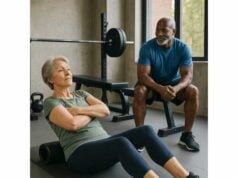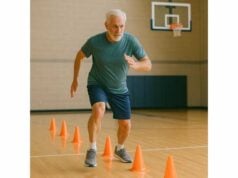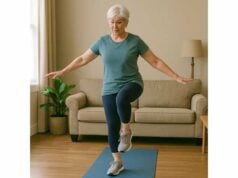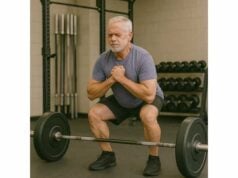
Bone density is one of the quiet foundations of long-term independence. Strong bones reduce fracture risk, but they also support confident movement, heavier strength training, better balance reactions, and the ability to keep doing demanding activities later in life. Bone is living tissue. It responds to the forces placed on it, especially forces that are heavier, faster, or less predictable than daily walking.
Resistance training and impact training are the two exercise tools that speak most directly to bone. Walking, cycling, and swimming support health in many ways, but they rarely create enough strain to build bone where adults lose it most: the hips, spine, and wrist. A smart bone-focused plan combines progressive lifting, safe impact, balance work, recovery, and nutrition. The aim is not punishment or extreme training. It is repeated, well-dosed mechanical signal strong enough to tell bone, muscle, and connective tissue to stay ready for life.
Table of Contents
- Why Bone Density Shapes Longevity
- How Bone Responds to Loading
- Resistance Training That Builds Bone
- Impact Training Without Recklessness
- Programming a Bone-Focused Week
- Safety for Osteopenia, Osteoporosis, and Joint Pain
- Tracking Progress and Supporting Recovery
- Common Mistakes and Smarter Swaps
Why Bone Density Shapes Longevity
Bone density matters because fractures change lives. A wrist fracture can limit self-care and training. A vertebral fracture can cause pain, height loss, fear of movement, and reduced breathing mechanics. A hip fracture is especially serious because it often leads to surgery, hospitalization, loss of mobility, and a long recovery.
Bone strength is more than a scan number. Bone mineral density, usually measured by DEXA, tells part of the story. Bone size, shape, microarchitecture, fall risk, muscle strength, reaction time, vision, medications, and previous fractures also matter. Still, low bone density is a useful warning signal because it shows that the skeleton has less mineral reserve than expected.
Adults often think about bone health too late. Peak bone mass is usually reached in young adulthood, then bone is maintained or gradually lost. Loss speeds up around menopause because estrogen helps regulate bone remodeling. Men also lose bone with age, especially with low testosterone, low body weight, smoking, heavy alcohol use, certain medications, and low activity. The earlier training begins, the better, but bone responds at every age when the stimulus is appropriate.
The longevity connection is direct: strong bones help preserve options. They let you lift groceries, hike uneven trails, climb stairs, play with grandchildren, recover from trips and slips, and train hard enough to protect muscle. Bone health also overlaps with strength, power, and balance, which are central to healthy aging. A DEXA scan helps quantify risk and track changes; DEXA scans for bone density are especially useful when personal risk factors, age, medication history, or fracture history raise concern.
Exercise does not replace medical treatment when fracture risk is high. It does something medicine cannot fully do: it trains the body to handle real-world forces. Bone-focused training improves the tissue, the muscles that protect it, and the movement skill that reduces falls.
How Bone Responds to Loading
Bone adapts to strain. When muscle pulls hard on bone or the ground sends a firm force through the skeleton, bone cells detect that mechanical signal. The body then adjusts remodeling, the ongoing process where old bone is removed and new bone is formed.
Small, familiar loads maintain less bone than large or novel loads. That is why walking is not enough for many adults. Walking is excellent for cardiovascular health, glucose control, mood, and daily movement volume, but the skeleton quickly becomes used to it. Bone usually needs higher strain, faster strain, or loading from varied directions to receive a stronger signal.
Three features make exercise more osteogenic, meaning more likely to stimulate bone:
- Magnitude: heavier force, such as squats, deadlifts, loaded carries, and step-ups.
- Rate: faster force, such as jumps, hops, quick stair climbs, and power-focused lifts.
- Novel direction: force from angles the body does not get all day, such as lateral bounds, multidirectional stepping, and uneven terrain.
Bone also responds locally. Squats and hinges load the hip and spine more than the wrist. Push-ups and loaded carries give the upper body more reason to adapt. Calf raises and jumps load the ankle and lower leg. A complete plan uses several movement patterns because one exercise cannot train every important site.
Bone adapts slowly. Muscle strength often improves within weeks because the nervous system learns the skill. Tendons and bone take longer. Meaningful bone density changes usually require many months of consistent training, often 6 to 12 months before clear scan changes appear. That slow timeline is not a reason to delay. It is a reason to start with a plan that is repeatable.
The body also needs recovery between strong signals. More impact is not always better. Bone cells respond well to short bouts of loading, then become less responsive during the same session. A few sets of high-quality impact often beat long sessions full of tired landings. The same idea applies to heavy lifting: precise, progressive work beats random exhaustion.
Mechanical loading also fits the cellular side of longevity. Bone, muscle, tendon, and cartilage all receive information from force. This is why mechanical signals from load and impact are more than gym concepts; they are biological messages that help tissues stay organized, strong, and repair-ready.
Resistance Training That Builds Bone
Resistance training is the backbone of a bone-density plan. It loads the hips, spine, wrists, shoulders, and ribs through muscle pull and compression. It also builds the strength needed to prevent falls and catch yourself when balance fails.
The most useful exercises are compound movements that use large muscles and allow progressive loading. Machines, dumbbells, barbells, kettlebells, bands, and body weight all have a place. The tool matters less than the quality of the stimulus.
Good bone-focused resistance training includes these movement patterns:
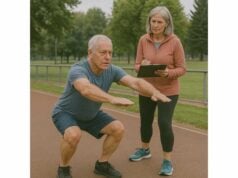
- Squat pattern: squat, goblet squat, leg press, sit-to-stand, split squat.
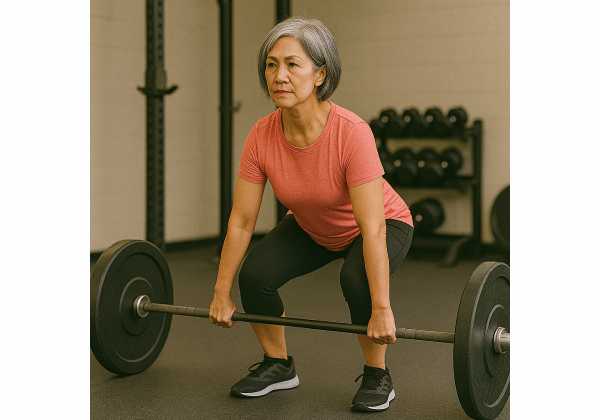
- Hip hinge: deadlift variation, Romanian deadlift, hip thrust, cable pull-through.
- Step pattern: step-up, lateral step-up, reverse lunge, supported lunge.
- Push: push-up, chest press, overhead press when appropriate.
- Pull: row, pulldown, assisted pull-up, cable row.
- Carry: farmer carry, suitcase carry, rack carry.
- Trunk control: anti-rotation press, dead bug, side plank, loaded carry.
For bone, intensity matters. Very light weights improve circulation and confidence, but they rarely provide enough skeletal signal once the person is accustomed to them. Most healthy adults should gradually work toward loads that feel moderately hard to hard while still allowing clean form. A useful target is an effort level of about 7 to 9 out of 10 on the final reps of a work set, leaving 1 to 3 good reps in reserve.
Rep ranges can vary. Sets of 5 to 8 reps work well for heavier lower-body lifts. Sets of 8 to 12 suit many accessory lifts. Sets of 10 to 15 work well for beginners, older adults building tolerance, or exercises where joint comfort limits heavier loading. A practical weekly structure uses 2 to 4 sets per exercise, 2 to 3 strength sessions per week, and gradual load increases when all reps are controlled.
Technique comes first because bone-focused training rewards consistency. A rushed deadlift with a rounded spine and poor bracing is not a better bone stimulus than a well-loaded hinge done with control. Adults new to lifting benefit from learning the main movement patterns before pushing intensity. The article on squat, hinge, push, and pull technique gives a useful foundation for safe progression.
Heavy does not mean reckless
Heavy training means the load challenges the body today. For one person, that might be a 20 kg goblet squat. For another, it might be a 100 kg trap-bar deadlift. The right load produces effort without pain, panic, or form collapse.
Beginners often start with slower tempo, higher reps, and supported positions. Examples include box squats, leg press, supported split squats, incline push-ups, cable rows, and suitcase carries. As skill improves, the program adds range of motion, load, and eventually speed.
A strong bone program also trains the upper body. Hip fractures get attention, but wrist and shoulder injuries often happen when a person reaches out during a fall. Push-ups, rows, carries, and presses strengthen the arms and trunk so the upper body can absorb force better.
Impact Training Without Recklessness
Impact training gives bone a signal that slow lifting cannot fully provide. The quick ground force from landing, hopping, skipping, or bounding creates a fast strain rate. That fast signal is one reason impact exercise appears especially useful for the hip and femoral neck.
Impact does not need to start with high jumps. In fact, most adults should earn impact gradually. Tendons, feet, knees, hips, pelvic floor, and balance reactions need time to adapt. The safest plan starts with low-amplitude contacts and progresses only when landings stay quiet, aligned, and pain-free.
A practical progression looks like this:
| Level | Examples | Best for | Progress when |
|---|---|---|---|
| Low impact | Brisk walking hills, stair climbing, marching, heel drops | Beginners, joint-sensitive adults, return to training | No joint pain during or the next day |
| Intro impact | Pogo prep, small line hops, low step-offs, jump rope without rope | Adults with basic strength and balance | Landings are quiet and controlled |
| Moderate impact | Low box jumps, skipping, lateral bounds, small hops | Trained adults without high fracture risk | Volume feels easy to recover from |
| Higher impact | Drop jumps, repeated hops, faster bounds, sport drills | Experienced adults with good strength and bone status | Coach or clinician agrees risk is appropriate |
A good starting dose is small: 10 to 30 total contacts, 2 or 3 days per week. That might mean 2 sets of 10 low pogo jumps after a warm-up. It might mean 5 step-offs per side from a low step. The session should end before fatigue changes landing mechanics.
Impact quality matters. Land softly through the midfoot, keep knees tracking over toes, avoid collapsing inward, and keep the trunk tall. Rest between sets so each contact is crisp. A bone signal does not require breathless conditioning. Tired jumping often becomes sloppy jumping.
Adults who dislike jumping still have options. Stairs, hill walking, loaded step-ups, dancing, low-level skipping, and multidirectional agility drills all add more skeletal variety than flat walking. Those who want structured progressions can use low-impact plyometric progressions before moving toward higher-force power drills.
Impact training is not suitable for everyone at every stage. People with recent fractures, severe osteoporosis, unexplained bone pain, active joint flare-ups, poor balance, or certain spine conditions need medical or specialist guidance. The goal is not to prove toughness. It is to create a dose the body can adapt to.
Programming a Bone-Focused Week
A bone-focused week combines strength, impact, balance, aerobic movement, and recovery. The plan should fit the person’s current capacity. Consistency beats an impressive plan that causes soreness, fear, or skipped sessions.
Most adults do well with 2 to 3 resistance sessions per week. Two sessions maintain a simpler schedule and still produce meaningful progress. Three sessions allow more practice and better distribution of work. Impact can be added in short doses before strength training or on separate days after a warm-up.
A simple weekly template:
| Day | Main work | Bone-focused emphasis |
|---|---|---|
| Monday | Lower-body strength plus carries | Squat, hinge, hip loading, trunk stiffness |
| Tuesday | Walk, hills, balance drills | Daily loading, fall prevention |
| Wednesday | Upper-body strength plus intro impact | Wrist, shoulder, rib, spine support |
| Thursday | Zone 2 cardio or easy ruck | General health and work capacity |
| Friday | Full-body strength plus step-ups | Hip, spine, single-leg strength |
| Weekend | Outdoor movement, mobility, rest | Terrain variety and recovery |
The strength sessions should cover the major patterns without turning every workout into a marathon. A sample full-body session might include:
- Goblet squat or leg press: 3 sets of 6 to 10 reps.
- Romanian deadlift or trap-bar deadlift: 3 sets of 5 to 8 reps.
- Step-up or split squat: 2 sets of 8 reps per side.
- Chest press or incline push-up: 2 to 3 sets of 8 to 12 reps.
- Row or pulldown: 2 to 3 sets of 8 to 12 reps.
- Farmer carry: 3 carries of 20 to 40 meters.
- Balance drill: 2 to 4 short sets.
Progression should be boring in the best way. Add 1 or 2 reps, a small amount of weight, a little range of motion, or one extra set. Do not change everything at once. When a lift reaches the top of its rep range with clean form for all sets, increase load slightly and return to the lower end of the range.
Effort also needs planned variation. Train hard enough to adapt, then back off before joints and motivation suffer. A deload every 4 to 8 weeks works well for many adults, especially when life stress, travel, poor sleep, or soreness builds. More detailed loading choices fit naturally with sets, reps, tempo, and RPE planning.
A bone program should not ignore power. Power is strength expressed quickly, and it declines faster than basic strength with age. Medicine balls, quick step-ups, faster sit-to-stands, controlled kettlebell swings, and low jumps can all train power when the person is ready. Power training also supports fall recovery because a stumble demands fast force, not slow force.
Safety for Osteopenia, Osteoporosis, and Joint Pain
Bone training must match fracture risk. Osteopenia means bone density is lower than normal but not as low as osteoporosis. Osteoporosis means the skeleton is more fragile, and fracture history raises risk even further. Someone with a low-risk DEXA result and no fractures can usually progress more freely than someone with vertebral fractures or very low hip density.
The safest starting point is a risk review. Important questions include:
- Have you had a fragility fracture after a minor fall?
- Do you have known vertebral compression fractures?
- Are you taking glucocorticoids, aromatase inhibitors, androgen deprivation therapy, or other bone-affecting medications?
- Do you have dizziness, neuropathy, poor vision, or frequent falls?
- Do you have new bone pain, unexplained weight loss, or cancer history?
- Has a clinician recommended medication for osteoporosis?
High-risk adults should not avoid training. They should train with better supervision, clearer boundaries, and slower progressions. A physical therapist, clinical exercise physiologist, or qualified strength coach with osteoporosis experience can help choose safe variations.
For spine-sensitive osteoporosis, avoid loaded end-range spinal flexion and twisting, especially under speed or fatigue. That means caution with heavy rounded-back deadlifts, sit-ups, toe-touch stretches, aggressive twisting machines, and fast flexion-based drills. Safer choices include hip hinges with a neutral spine, supported squats, step-ups, carries, anti-rotation work, and extension strength.
Joint pain requires adjustment, not surrender. Knees often tolerate box squats, split squats with support, leg press with a comfortable depth, and step-ups better than deep unsupported lunges. Hips often prefer a slightly wider stance, controlled range, and gradual hinge loading. Shoulders may prefer incline push-ups, landmine presses, rows, and neutral-grip dumbbell work. The guide to knee- and hip-friendly training modifications is useful when bone goals collide with cranky joints.
Balance belongs in the safety plan. Strong bones help if you fall, but fewer falls are better. Balance drills should include static control, stepping reactions, head turns, turns in place, and dual-task practice when appropriate. Simple drills such as tandem stance, single-leg support near a wall, heel-to-toe walking, loaded carries, and controlled step-downs improve confidence. For a dedicated routine, use daily fall-prevention balance drills alongside strength work.
Pain rules should be clear. Mild muscle effort is fine. Sharp joint pain, bone pain, nerve symptoms, chest pain, faintness, or pain that worsens over 24 to 48 hours is not a training win. Reduce load, change the exercise, or get professional evaluation.
Tracking Progress and Supporting Recovery
Bone progress is slow, so tracking should include more than a scan. DEXA changes often take a year or more to show clearly, and small differences can reflect machine variation. Use the same facility and machine when possible, and compare hip, femoral neck, and lumbar spine results over time with a clinician who understands the context.
Daily training markers show progress sooner:
- More weight lifted with the same form.
- More controlled reps at the same load.
- Better step-up height or carry distance.
- Quieter landings during low-level impact.
- Faster sit-to-stand performance.
- Better balance confidence on uneven ground.
- Less fear during stairs, curbs, and outdoor walks.
Functional tests matter because fracture prevention is not only about density. Grip strength, gait speed, sit-to-stand performance, and balance tell you how well the body can protect the skeleton in real life. A structured set of functional longevity tests helps connect gym progress to daily capacity.
Recovery is part of the bone signal. Bone remodeling needs protein, minerals, hormones, sleep, and enough energy. Chronic dieting, very low protein intake, poor sleep, and overtraining all work against adaptation. Adults trying to lose fat should avoid combining aggressive calorie cuts with a sudden jump in impact or heavy lifting.
Protein supports the muscle that loads bone. Many active adults do well around 1.2 to 1.6 g of protein per kg of body weight per day, spread across meals. Older adults often benefit from 25 to 40 g protein per meal, depending on body size and total intake. Calcium, vitamin D, magnesium, vitamin K, and overall dietary quality also matter. Food-first strategies are covered well in bone-friendly eating for longevity, especially for people who want practical meal patterns rather than supplement guessing.
Sleep supports training adaptation and hormone regulation. A bone plan that repeatedly steals sleep is a weak plan. Aim for regular sleep timing, enough total sleep, and sensible training placement. Heavy lower-body lifting late at night works for some people but disrupts sleep for others.
Recovery also means spacing impact. If the ankles, knees, hips, or back feel worse the day after jumps, reduce contacts or return to a lower level. Bone training should make the body more capable over months, not irritated every week.
Common Mistakes and Smarter Swaps
The most common mistake is relying only on walking. Walking is valuable, but it is not a complete bone-density program. Keep walking, then add strength and carefully dosed impact.
A second mistake is using weights that never get heavier. The body adapts to familiar loads. If the same 2 kg dumbbells feel easy for months, they have become movement practice, not strength training. Progress can be small, but it must exist.
A third mistake is jumping before earning the landing. Adults who skip strength, foot conditioning, and balance work often irritate the knees, Achilles tendons, plantar fascia, or low back. Start low, land well, and add contacts slowly.
A fourth mistake is avoiding all flexion, rotation, and challenge. People with osteoporosis need caution around loaded spinal flexion and twisting, but life includes bending, reaching, turning, and carrying. Training should teach safer hip hinging, bracing, stepping, and object handling rather than creating fear of normal movement.
A fifth mistake is separating bone from the rest of health. Bone density improves best when muscle, balance, protein intake, sleep, and medical risk factors are handled together. A person with low vitamin D, poor protein intake, untreated hyperthyroidism, heavy alcohol use, or medication-related bone loss needs more than exercise enthusiasm.
| Mistake | Why it falls short | Smarter swap |
|---|---|---|
| Only walking for bone density | Too familiar and low-force for many skeletal sites | Add 2 to 3 strength sessions and short impact progressions |
| Endless light reps | Muscles and bones stop receiving a strong signal | Use moderate-to-heavy sets with clean form |
| Random high-impact classes | Fatigue can ruin landing quality | Use small planned doses before conditioning work |
| Ignoring upper body | Falls often involve the hands, wrists, shoulders, and trunk | Train presses, rows, carries, and grip |
| Training through sharp pain | Pain changes mechanics and raises injury risk | Modify range, load, exercise choice, or seek assessment |
A strong beginner plan does not need to be complicated. Start with two full-body strength sessions per week, one or two short impact exposures if appropriate, and balance practice most days. Add load gradually. Retest simple functional markers every 8 to 12 weeks. Repeat long enough for the skeleton to notice.
Bone density training also becomes more engaging when it connects to real life. A trap-bar deadlift supports lifting luggage. Step-ups support hiking. Carries support groceries and grip. Lateral bounds support quick direction changes. Balance drills support icy sidewalks, curbs, pets, and crowded spaces. The gym is not separate from longevity; it is rehearsal for the physical demands that keep life wide open.
References
- Position Statement: Exercise Guidelines for Osteoporosis Management and Fall Prevention in Osteoporosis Patients 2023 (Position Statement)
- The Effect of Resistance Training on Bone Mineral Density in Older Adults: A Systematic Review and Meta-Analysis 2022 (Systematic Review)
- The effects of high velocity resistance training on bone mineral density in older adults: A systematic review 2024 (Systematic Review)
- Exercise training and bone mineral density in postmenopausal women: an updated systematic review and meta-analysis of intervention studies with emphasis on potential moderators 2023 (Systematic Review)
- Optimal resistance training parameters for improving bone mineral density in postmenopausal women: a systematic review and meta-analysis 2025 (Systematic Review)
- Exercise Prescription to Support the Management of Osteoporosis 2024 (Guideline)
Disclaimer
This article is educational and does not replace care from a qualified clinician, physical therapist, or exercise professional. People with osteoporosis, prior fragility fractures, unexplained bone pain, frequent falls, or major medical conditions should get individualized guidance before starting heavy resistance or impact training. Stop any exercise that causes sharp pain, neurological symptoms, chest pain, faintness, or worsening pain after training.