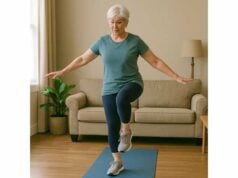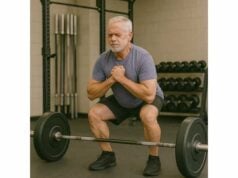
A good strength session for healthspan trains muscle, bone, tendon, balance, coordination, and confidence without draining the rest of the week. Sets and reps matter, but they work best when they match the exercise, the person, and the purpose of the day. A heavy hinge does not need the same structure as a band row, a split squat, or a loaded carry. Tempo controls how the lift feels and where the tension goes. RPE, or rating of perceived exertion, helps you adjust effort without guessing at exact percentages every workout.
The best session design is simple enough to repeat and flexible enough to survive real life. It gives each movement a clear job, keeps technique sharp, and leaves enough recovery for walking, aerobic work, sleep, and daily activity. For long-term training, the win is not one heroic session. It is the steady accumulation of useful work that your joints tolerate and your body adapts to.
Table of Contents
- Healthspan Session Design Starts with the Job of Each Exercise
- Sets and Weekly Volume: How Much Work Is Enough?
- Rep Ranges and Loads: Match the Range to the Movement
- Tempo and Control: Move with Purpose, Not Slowness for Its Own Sake
- RPE and Reps in Reserve: The Effort Gauge That Keeps Training Honest
- Rest Periods and Exercise Order: Protect the Quality of the Work
- Sample Session Templates for Different Training Needs
- Progression and Adjustments: How to Keep Improving Without Burning Out
Healthspan Session Design Starts with the Job of Each Exercise
A healthspan strength session should train useful capacity: getting up from the floor, carrying groceries, climbing stairs, protecting the spine, keeping shoulders strong, and preserving muscle as the decades pass. The session works best when every exercise has a clear role.
Most adults need five basic patterns across the week:
- Squat or knee-dominant work, such as goblet squats, step-ups, split squats, or leg presses.
- Hinge work, such as Romanian deadlifts, hip thrusts, cable pull-throughs, or trap-bar deadlifts.
- Push work, such as push-ups, dumbbell presses, landmine presses, or machine presses.
- Pull work, such as rows, pulldowns, assisted pull-ups, and face pulls.
- Carries, core, balance, or power work that builds real-world control.
A single session does not need every pattern, but the week should cover them. A two-day plan usually uses full-body sessions. A three-day plan can rotate full-body days or use a lower-body, upper-body, and mixed day structure. A four-day plan gives more room for shorter sessions, technique practice, and joint-friendly exercise choices.
The first design mistake is treating all exercises as equally important. They are not. A heavy squat, hinge, press, or row creates the main strength signal. Accessory exercises fill gaps, add muscle, support joints, and train areas that large lifts miss. Carries and core work teach stiffness, breathing, and transfer to daily tasks. Power exercises teach speed, but they need low fatigue and clean technique.
A strong session often follows this order:
- Warm-up and movement preparation.
- Power or balance work, if included.
- Main strength lift.
- Secondary strength lift.
- Accessories for muscle, joints, or weak links.
- Carries, core, or conditioning finisher.
This order keeps the highest-skill work early, before fatigue distorts movement. A short warm-up also helps the first working set feel better. A deeper guide to joint prep and activation fits well before heavier lifting days, especially for hips, shoulders, ankles, and the upper back.
Healthspan training also needs respect for orthopedic history. A person with cranky knees, sensitive shoulders, or a long break from lifting does not need “easy” training. They need the right loading path. That might mean a box squat instead of a deep back squat, a landmine press instead of a strict overhead press, or a chest-supported row instead of a bent-over row. Exercise selection is not a downgrade when it keeps the training effect high and the joint cost low.
For most sessions, pick one main lower-body lift, one main upper-body lift, and two to four supporting movements. That gives enough work to progress without turning each workout into a two-hour project.
Sets and Weekly Volume: How Much Work Is Enough?
Sets are the main unit of strength-training volume. One hard set means a working set performed with enough effort to create adaptation, usually within about 0–4 reps of the point where technique would break or the next clean rep would fail.
For healthspan, most adults do well with 2–4 hard sets per exercise and about 6–12 hard sets per major muscle group per week. Beginners often progress with less. Experienced lifters often need more, but more only helps when recovery, technique, and consistency stay intact.
| Training level | Useful weekly target per major muscle group | Good starting point | When to add more |
|---|---|---|---|
| New or returning | 4–8 hard sets | 2 sessions weekly, 1–3 sets per movement | When soreness is mild and loads feel stable for 2–3 weeks |
| Consistent intermediate | 6–12 hard sets | 2–3 sessions weekly, 2–4 sets per movement | When progress stalls but recovery, sleep, and technique are good |
| Advanced or highly adapted | 10–16+ hard sets | 3–4 sessions weekly with planned variation | Only when added sets improve performance without joint irritation |
A “major muscle group” does not require perfect accounting. Squats train quads and glutes. Hinges train glutes, hamstrings, and spinal erectors. Rows train the upper back, lats, and biceps. Pressing trains chest, shoulders, and triceps. Count the obvious work, then watch the body’s response.
More volume is not automatically better. Sets become less valuable when the later sets are rushed, sloppy, or performed in a tired state that changes the movement. A clean set of eight split squats at RPE 8 gives a better signal than a wobbly set of twelve performed after balance is gone.
A useful rule: add sets only after you have earned them. You have earned more volume when:
- You complete all planned sets with stable technique.
- The target muscles feel trained, not beaten up.
- Soreness fades within 24–48 hours.
- Joint discomfort does not increase week to week.
- Performance is steady or improving.
- Your aerobic work, sleep, and daily energy are not getting worse.
A two-day weekly lifting plan can maintain and build strength when the sets are focused. A three-day plan gives more room for balanced development. A four-day plan works well when sessions stay shorter and each day has a narrow purpose.
A simple two-day weekly structure might use 3 sets each of squat, hinge, press, row, carry, and core work across the week. A three-day plan might use two full-body sessions and one lighter technique or accessory session. A broader weekly strength plan helps organize those choices when strength training sits beside Zone 2 cardio, intervals, mobility, and sport.
Volume should also change with life stress. During poor sleep, travel, illness recovery, or high work strain, keep the exercises but reduce total sets by 25–40%. This preserves the habit and keeps movement patterns fresh without forcing adaptation from a tired system.
Rep Ranges and Loads: Match the Range to the Movement
Rep ranges are tools, not tribes. Low reps build high force. Moderate reps build strength and muscle efficiently. Higher reps train muscle, tendon tolerance, local endurance, and control. All rep ranges build useful capacity when the sets are hard enough and the exercise fits the range.
For long-term health, most working sets belong between 5 and 15 reps. This range gives a strong training effect without requiring constant maximal loading. Some exercises fit lower reps, some fit higher reps.
| Exercise type | Best working range | Why it fits | Examples |
|---|---|---|---|
| Main strength lifts | 3–8 reps | Builds force with less burning fatigue | Trap-bar deadlift, squat, bench press, weighted row |
| Secondary compound lifts | 6–12 reps | Balances strength, muscle, and technique practice | Split squat, dumbbell press, Romanian deadlift, pulldown |
| Accessories | 10–20 reps | Trains tissue and muscle with lower joint load | Lateral raise, hamstring curl, calf raise, cable row |
| Core and carries | Time, distance, or 6–15 controlled reps | Builds position, breathing, and trunk stiffness | Farmer carry, dead bug, side plank, Pallof press |
| Power work | 2–5 crisp reps | Keeps speed high and fatigue low | Medicine ball throw, low box jump, kettlebell swing |
Heavy sets of 3–5 reps are useful, but they demand skill and recovery. They work best for exercises that the person performs with consistent technique. For many adults, heavy trap-bar deadlifts, machine presses, or supported rows are safer and easier to repeat than heavy barbell lifts that require more mobility and bracing skill.
Moderate sets of 6–12 reps are the workhorse range. They build strength and muscle while giving enough reps to practice the movement. A set of eight goblet squats, ten dumbbell presses, or twelve rows gives clear feedback on control, range of motion, and effort.
Higher sets of 12–20 reps suit exercises with low setup cost and lower injury risk. They work well for shoulders, calves, hamstrings, upper back, and single-joint movements. They also help people build confidence when heavier loading feels intimidating. Higher reps should still look controlled. A set of twenty sloppy reps is not endurance; it is noise.
Load selection starts with the rep target. If the plan says 3 sets of 8–10 reps at RPE 7–8, choose a weight that lets you complete the first set with about 2–3 good reps left. If you get 10, 10, and 9 reps with clean form, the load fits. If you get 10, 7, and 5, the load is too heavy or the rest is too short. If you get 10, 10, and 10 with five reps still in reserve, the load is too light for that purpose.
Rep ranges should also respect the joint. A person with knee pain might use 8–12 reps on a controlled box squat rather than heavy triples. A person with shoulder irritation might use higher-rep landmine presses or incline push-ups while rebuilding tolerance. Joint-friendly training is still progressive when load, range, control, or volume improves over time. For lower-body modifications, knee- and hip-friendly training options help keep the pattern alive while symptoms settle.
Tempo and Control: Move with Purpose, Not Slowness for Its Own Sake
Tempo means the speed of each part of a repetition. A common four-number tempo describes lowering, pause at the bottom, lifting, and pause at the top. For example, 3-1-1-0 means lower for three seconds, pause for one second, lift in one second, and start the next rep without a long top pause.
Tempo changes the training effect. Slower lowering increases time under tension and improves control. Pauses reduce bouncing and expose weak positions. A faster lifting intent trains force and power, even when the weight moves slowly because it is heavy.
For healthspan, tempo should solve a problem. Use it to improve positions, protect joints, or make lighter loads more useful. Do not make every rep painfully slow. Very slow lifting can reduce the load so much that strength development suffers, and it can turn every set into a fatigue test.
A practical default for most strength work is:
- Lower under control for about 2–3 seconds.
- Pause briefly when needed to own the position.
- Lift with smooth, strong intent.
- Reset breathing and posture before the next rep.
This looks different across exercises. In a Romanian deadlift, a slower lowering phase teaches hip control and hamstring tension. In a push-up, a brief pause near the bottom prevents collapsing through the shoulders. In a squat, a controlled descent helps the knees, hips, and trunk stay organized. In a row, a short squeeze at the top helps the upper back do the work instead of momentum.
Power exercises need a different rule: move fast and stop before speed drops. Low box jumps, medicine ball throws, and light kettlebell swings lose their purpose when they become grinders. Keep reps low, rest enough, and make each rep crisp. Healthspan power training supports fall prevention, stair climbing, and quick reactions, but only when the movement stays sharp. A dedicated guide to safe jumps, throws, and sprints can help place power work without overloading the joints.
Tempo also helps beginners learn where their body is in space. A slow eccentric, or lowering phase, gives time to feel the foot, hip, rib cage, shoulder blade, or grip. Once technique becomes reliable, the tempo can become more natural. The aim is not robotic counting forever. The aim is repeatable control.
Avoid these tempo mistakes:
- Lowering so slowly that every set becomes exhausting before the target muscles receive enough load.
- Dropping quickly into the bottom position and relying on a bounce.
- Turning rows, curls, presses, and squats into swinging motions.
- Pausing so long that breathing and bracing fall apart.
- Moving fast on exercises that still lack basic control.
Tempo should make the rep cleaner. When it makes the rep awkward, distracting, or weaker for no reason, simplify it.
RPE and Reps in Reserve: The Effort Gauge That Keeps Training Honest
RPE means rating of perceived exertion. In strength training, it usually describes how hard a set felt based on how many good reps remained. Reps in reserve, or RIR, is the simpler version: “How many more clean reps could I have done?”
A set at RPE 10 means no good reps left. RPE 9 means about one rep left. RPE 8 means about two reps left. RPE 7 means about three reps left. This system works well because strength changes day to day. Sleep, stress, soreness, food, hydration, and time of day all affect performance.
| RPE | Reps in reserve | How it feels | Best use |
|---|---|---|---|
| 6 | 4 reps left | Easy, fast, very controlled | Warm-up sets, technique work, return after illness |
| 7 | 3 reps left | Working, but comfortable | Beginners, practice sets, lighter weeks |
| 8 | 2 reps left | Challenging and repeatable | Main healthspan training zone |
| 9 | 1 rep left | Very hard but still clean | Occasional top sets for experienced lifters |
| 10 | 0 reps left | Maximal effort or failure | Rare testing, usually not needed for healthspan |
Most healthspan training should live around RPE 7–8. This gives a strong signal while preserving technique and recovery. RPE 9 has a place, but not on every lift and not every week. RPE 10 is rarely necessary. Training to failure creates fatigue and can raise technique risk, especially on squats, hinges, overhead work, and complex free-weight lifts.
The best use of RPE is adjusting the day’s load. Suppose the plan says 3 sets of 6 at RPE 8 on a trap-bar deadlift. Last week you used 80 kg. Today the warm-ups feel slow and your back feels stiff. Use 75 kg and hit clean sets. That is not a failed session. It is good autoregulation. On another day, 80 kg may feel like RPE 6, and 85 kg may fit the target.
Beginners often misjudge RPE because they have not felt true proximity to failure. They may stop too early because the set burns, or push too far because they cannot tell when technique is breaking. The fix is practice, not ego. Use safe exercises such as machine rows, leg presses, push-ups, or cable exercises to learn effort. Ask, “Could I do two more clean reps with the same range and speed?” The word clean matters.
RPE should never override technique. A set that ends because the back rounds, the knee caves, the shoulder pinches, or the range shortens is done, even if the muscles could keep pushing. For lifts that require bracing, a refresher on diaphragm and pressure control can make RPE ratings more accurate because the limiting factor stops being poor setup.
A simple weekly effort pattern works well:
- Most working sets: RPE 7–8.
- Last set of a safe accessory: RPE 8–9.
- Power work: stop around RPE 6–7, before speed fades.
- Deload week: RPE 6–7 with fewer total sets.
- Testing week: occasional RPE 9, with no forced grinders.
RPE also supports long-term confidence. Instead of fearing heavy days, you learn to match effort to readiness. That skill keeps training alive through busy years, aging joints, travel, and unpredictable sleep.
Rest Periods and Exercise Order: Protect the Quality of the Work
Rest periods decide whether the next set is a strength set or a fatigue set. Short rest makes the workout feel harder, but it often reduces load, reps, speed, and technique quality. Longer rest allows better force production and cleaner movement.
For main strength lifts, rest 2–4 minutes between hard sets. For secondary lifts, rest 90 seconds to 3 minutes. For accessories, rest 45–90 seconds. For power work, rest long enough for speed to return, often 60–120 seconds for low-level drills and longer for more demanding efforts.
Short rests work well when the exercise is low risk and the purpose includes local endurance or time efficiency. They work poorly when the movement is heavy, technical, or limited by breathing rather than the target muscles. A set of heavy split squats already challenges balance and trunk control. Cutting rest too aggressively often turns it into a breathless wobble.
Exercise order should support the main purpose of the session. Put the most important, most technical, or heaviest work early. Place accessories later. Put loaded carries near the end unless grip fatigue would harm the next day’s plan.
A clean full-body order looks like this:
- Low-level power or balance drill.
- Main lower-body strength movement.
- Main upper-body strength movement.
- Secondary lower or upper movement.
- Accessory pull, hip, shoulder, or core work.
- Carry, trunk finisher, or easy conditioning.
Supersets save time when paired wisely. A row can pair with a squat because it does not heavily compete with the legs. A press can pair with a hip thrust. A calf raise can pair with a mobility drill. Avoid pairing two exercises that both demand high bracing, grip, or spinal loading when the goal is strength quality.
Good pairings include:
- Goblet squat with chest-supported row.
- Dumbbell bench press with dead bug.
- Romanian deadlift with shoulder mobility.
- Split squat with Pallof press.
- Calf raise with face pull.
- Farmer carry with easy breathing recovery.
Poor pairings include:
- Heavy deadlift with heavy bent-over row.
- Heavy squat with high-rep walking lunges.
- Max-effort overhead press with loaded carries before pressing.
- Power jumps after exhausting leg work.
- Grip-heavy rows before heavy carries or deadlifts.
Rest also includes the spacing between sessions. Most adults need at least 48 hours before repeating hard work for the same muscle groups, especially when sets are close to failure. Light movement, walking, mobility, and easy aerobic work often help recovery. Hard intervals, heavy leg training, and long rucks stacked together can overload the same tissues even when they look like different categories on paper.
When soreness lasts more than two days, reduce the next session by cutting sets first. Keep the movement. Lower the dose. That preserves skill and rhythm while recovery catches up.
Sample Session Templates for Different Training Needs
Templates keep training simple. They reduce decision fatigue and make progress easier to track. The best template is not fancy. It fits your schedule, equipment, recovery, and current movement ability.
Full-body strength session for two or three days per week
This template works well for busy adults, beginners, and anyone who wants strength training to support a wider healthspan plan.
| Block | Exercise example | Sets and reps | Effort |
|---|---|---|---|
| Power or prep | Medicine ball chest pass or low step jump | 3 x 3–5 | Fast, easy, crisp |
| Main lower | Goblet squat or trap-bar deadlift | 3 x 5–8 | RPE 7–8 |
| Main upper | Dumbbell press or machine press | 3 x 6–10 | RPE 7–8 |
| Pull | Seated row or pulldown | 3 x 8–12 | RPE 8 |
| Single-leg or hip | Split squat, step-up, or hip thrust | 2–3 x 8–12 | RPE 7–8 |
| Core and carry | Side plank plus farmer carry | 2–3 rounds | Controlled |
For a two-day plan, use different exercises on Day A and Day B. For example, Day A uses squat, press, row, hip thrust, and carry. Day B uses hinge, incline push-up, pulldown, step-up, and anti-rotation core.
Joint-friendly muscle session
This template suits people returning after a break, managing mild joint irritation, or building work capacity before heavier training.
- Leg press or box squat: 3 x 8–12 at RPE 7.
- Chest-supported row: 3 x 10–15 at RPE 8.
- Landmine press or incline push-up: 3 x 8–12 at RPE 7–8.
- Hip thrust or cable pull-through: 3 x 10–15 at RPE 8.
- Hamstring curl: 2 x 12–20 at RPE 8.
- Pallof press and suitcase carry: 2–3 controlled rounds.
This session keeps spinal loading moderate and uses stable positions. It still trains legs, hips, back, pressing strength, and trunk control.
Short home session with minimal equipment
A home gym does not need to be elaborate. Adjustable dumbbells, bands, a sturdy bench, and a pull-up or suspension option cover a lot of ground. A minimal home gym for longevity can support years of consistent training when the movements are chosen well.
Try this 35–45 minute session:
- Dumbbell Romanian deadlift: 3 x 8–10 at RPE 8.
- Push-up or dumbbell floor press: 3 x 8–15 at RPE 7–8.
- Rear-foot-elevated split squat or step-up: 3 x 6–10 each side at RPE 8.
- One-arm dumbbell row: 3 x 10–15 each side at RPE 8.
- Band face pull: 2 x 15–20.
- Farmer carry or suitcase carry: 3 x 30–60 seconds.
Use a controlled tempo and add reps before adding load. Home training often has lighter weights, so effort and range of motion become especially important.
Technique-focused session for older or returning adults
This template builds confidence and movement quality.
- Sit-to-stand from box: 2–3 x 6–10 at RPE 6–7.
- Supported split squat or step-up: 2 x 6–8 each side.
- Cable or band row: 2–3 x 10–12.
- Incline push-up: 2–3 x 6–12.
- Hip hinge drill with dowel, then light Romanian deadlift: 2 x 8.
- Carry: 3 short walks with tall posture.
- Balance drill near support: 2 minutes total.
This structure leaves room for coaching, breathing, and learning. Progress comes from smoother reps, greater range, slightly more load, or better balance before hard effort becomes the focus.
Progression and Adjustments: How to Keep Improving Without Burning Out
Progression means the training signal increases over time. It does not always mean adding weight. You can progress by adding reps, adding a set, improving range of motion, slowing the lowering phase, reducing assistance, improving balance, or using the same load with lower RPE.
The most reliable method is double progression. Pick a rep range, such as 8–10 reps. Use the same weight until you can complete all sets at the top of the range with the target RPE. Then increase the load slightly and return to the lower end of the range.
Example:
- Week 1: 20 kg dumbbells, 3 x 8 at RPE 8.
- Week 2: 20 kg, 3 x 9 at RPE 8.
- Week 3: 20 kg, 10, 10, 9.
- Week 4: 20 kg, 3 x 10 at RPE 8.
- Week 5: 22 kg, 3 x 8 at RPE 8.
This works for most dumbbell, machine, cable, and bodyweight exercises. For heavier barbell or trap-bar lifts, smaller jumps and fewer reps may work better.
Progression should slow down as training age increases. A beginner may improve weekly. An intermediate lifter may improve every few weeks. An older experienced lifter may hold steady for stretches, then improve after a recovery block. Maintenance is not failure when life stress is high or the training supports other goals.
Use deloads before the body forces them. A deload is a planned easier week. It often uses 30–50% fewer sets and RPE 6–7. Keep movement quality high. Do not turn the deload into a test. People who train hard, sleep poorly, travel often, or combine lifting with intervals need deloads more often. A practical guide to active recovery and deloads can help decide when to pull back.
Track only what you will use. A simple log should include:
- Exercise.
- Load.
- Sets and reps.
- RPE or reps in reserve.
- Notes on pain, energy, or technique.
This small record makes decisions easier. If reps rise at the same RPE, you are improving. If RPE rises while reps fall, recovery or load selection needs attention. If one joint complains every time a specific lift appears, modify the lift instead of arguing with the joint.
Testing also belongs in the plan, but it should match healthspan needs. A one-rep max is not required for most adults. Better tests include a safe 5-rep or 8-rep best, timed carries, push-up quality, sit-to-stand performance, grip strength, gait speed, and loaded step-up control. Broader field tests for longevity can show whether training is improving daily function, not just gym numbers.
Watch for signs that the session design is too aggressive:
- Warm-ups feel heavy for several sessions in a row.
- Sleep worsens after training days.
- Joint pain climbs from mild to persistent.
- Motivation drops sharply despite normal life stress.
- Reps fall across multiple exercises.
- Soreness lasts more than 72 hours.
- Aerobic sessions feel unusually hard.
When these signs appear, reduce volume before reducing frequency. Keep the habit. Cut one set from each main movement, remove finishers, or keep only the first two working sets. If pain is the issue, change the exercise angle, range, grip, stance, or equipment.
A healthspan session should leave you feeling trained, not punished. The right dose builds muscle and strength while preserving enough energy to walk, climb, play, sleep, work, and recover. Sets, reps, tempo, and RPE are not separate details. Together, they form the dose. When that dose is clear, repeatable, and adjustable, strength training becomes one of the most dependable tools for staying capable with age.
References
- American College of Sports Medicine Position Stand. Resistance Training Prescription for Muscle Function, Hypertrophy, and Physical Performance in Healthy Adults: An Overview of Reviews 2026 (Position Statement)
- Resistance training prescription for muscle strength and hypertrophy in healthy adults: a systematic review and Bayesian network meta-analysis 2023 (Systematic Review)
- Effects of resistance training performed to repetition failure or non-failure on muscular strength and hypertrophy: A systematic review and meta-analysis 2022 (Systematic Review)
- The Influence of Movement Tempo During Resistance Training on Muscular Strength and Hypertrophy Responses: A Review 2021 (Review)
- Accuracy in Predicting Repetitions to Task Failure in Resistance Exercise: A Scoping Review and Exploratory Meta-analysis 2022 (Scoping Review)
- Influence of Resistance Training Proximity-to-Failure on Skeletal Muscle Hypertrophy: A Systematic Review with Meta-analysis 2023 (Systematic Review)
Disclaimer
This article is educational and does not replace care from a qualified health, fitness, or rehabilitation professional. People with chest pain, unexplained shortness of breath, dizziness, uncontrolled blood pressure, recent surgery, major joint pain, or known heart, bone, or neurological conditions should get individualized guidance before starting or changing resistance training. Stop any exercise that causes sharp pain, numbness, loss of control, or symptoms that feel unsafe.