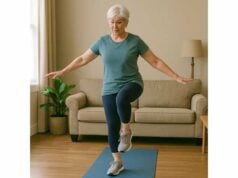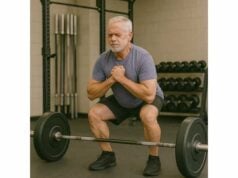
Strength training preserves the physical reserve that makes aging easier: stronger legs for stairs, stronger hips for balance, stronger hands for carrying, and stronger trunk muscles for protecting the spine during daily life. Muscle is not just “fitness tissue.” It supports glucose control, bone loading, joint stability, metabolic health, and the ability to recover after illness or inactivity.
A longevity-focused strength plan does not need extreme workouts, constant soreness, or complicated equipment. It needs repeatable sessions, clear progression, safe technique, and enough recovery to keep training for decades. Most adults do well with two to four strength sessions per week, built around simple movement patterns: squat, hinge, push, pull, carry, core control, and power. The plan below gives you a weekly structure, exercise choices, progression rules, and adjustment points so strength training becomes a durable part of healthy aging rather than a short burst of motivation.
Table of Contents
- Why Strength Training Supports Longevity
- Weekly Strength Plan
- Movement Patterns and Exercise Choices
- Sets, Reps, Load, and Effort
- Twelve-Week Progression
- Technique, Safety, and Modifications
- Recovery, Deloads, and Cardio Balance
- Tracking Results and Adjusting the Plan
Why Strength Training Supports Longevity
Strength training protects independence because it raises the ceiling above everyday demands. Climbing stairs, rising from the floor, lifting luggage, carrying groceries, gardening, and catching yourself during a stumble all require force. Aging lowers muscle mass, strength, and power unless the body receives a regular loading signal. Strength training gives that signal.
Muscle strength also acts as a buffer during setbacks. A person who enters a hospital stay, respiratory infection, joint flare, or stressful month with more muscle and strength has more reserve to lose before daily function suffers. This is why strength training belongs beside walking, aerobic conditioning, sleep, and nutrition in a long-term health plan.
The most useful longevity outcomes are not limited to how much weight you lift. Useful outcomes include:
- getting up from a chair without using the hands
- carrying 10–20 kg of groceries or luggage with control
- walking stairs without fear or excessive breathlessness
- keeping grip strong enough for jars, bags, tools, and railings
- maintaining bone-loading habits through the hips and spine
- preserving balance when the ground, light, or attention changes
Strength also overlaps with metabolic health. Contracting muscle helps clear glucose from the blood, improves insulin sensitivity over time, and supports healthier body composition. Larger and stronger muscles do not guarantee metabolic health, but they improve the body’s ability to store and use fuel.
Track function, not just appearance. Simple checks such as chair stands, gait speed, and grip strength give a clearer picture of real-world capacity than body weight alone. A quarterly set of functional longevity tests fits well with a strength plan because it shows whether training transfers into daily movement.
Power deserves special attention after midlife. Power means producing force quickly. It declines faster than maximal strength and matters during quick tasks such as stepping over a curb, reacting to a trip, or rising from a chair with speed. A longevity program should include small doses of safe power work after technique is reliable.
Weekly Strength Plan
Two to four weekly sessions build and maintain meaningful strength when the plan uses the same movement patterns consistently. The best weekly plan is the one you repeat without joint irritation, schedule chaos, or recovery debt. Beginners and busy adults should start with two sessions. Three sessions suit most people. Four sessions work well when sessions are shorter or when strength training is already a stable habit.
A good session usually lasts 35–60 minutes. Each workout should include a short warm-up, two to four main lifts, one to three smaller accessory movements, and one core or carry exercise. Longer sessions are not automatically better. After the useful work is done, extra sets often add fatigue faster than fitness.
| Schedule | Best for | Structure | Weekly target |
|---|---|---|---|
| 2 days/week | Beginners, busy adults, return after illness | Full body on both days | 8–12 hard sets for legs, 6–10 for upper body |
| 3 days/week | Most adults | Full body or lower/upper/full body | 10–16 hard sets for large muscle groups |
| 4 days/week | Experienced lifters, shorter sessions | Two lower-body and two upper-body sessions | 12–20 hard sets, adjusted by recovery |
For most adults, the three-day plan gives the best mix of practice, stimulus, and recovery.
Day 1: Lower-body strength plus push and pull
- Squat pattern: goblet squat, box squat, leg press, or split squat
- Push: push-up, dumbbell bench press, machine chest press
- Pull: cable row, dumbbell row, supported row
- Carry: farmer carry or suitcase carry
- Optional: calf raise or hip abduction
Day 2: Hinge strength plus upper-body balance
- Hinge: Romanian deadlift, trap-bar deadlift, hip thrust, or cable pull-through
- Vertical pull: pulldown or assisted pull-up
- Vertical push: landmine press, dumbbell shoulder press, or incline press
- Core: dead bug, side plank, Pallof press
- Optional: hamstring curl or back extension
Day 3: Function, power, and whole-body strength
- Power: medicine-ball throw, fast sit-to-stand, light kettlebell deadlift with speed, or step-up with intent
- Single-leg pattern: step-up, reverse lunge, split squat, or sled push
- Push or pull variation from earlier in the week
- Loaded carry or sled drag
- Mobility finisher for hips, shoulders, or ankles
Begin each session with 5–10 minutes of preparation. A brisk walk, cycling, marching, light sled push, or joint-specific drills raises temperature and reduces stiffness. A structured warm-up for longevity training should make the first work set feel smoother, not exhaust you before lifting.
Cardio and strength belong in the same week. Put harder intervals and heavy lower-body lifting on separate days when possible. Easy walking, Zone 2 cycling, and relaxed mobility fit well after strength or on rest days. When time is limited, lift first if strength is the priority for that day.
Movement Patterns and Exercise Choices
A longevity strength plan works best when it trains movements, not random muscles. The body needs many types of force: pushing, pulling, bending, squatting, rotating, resisting rotation, carrying, and moving one leg at a time. Exercise selection should match your joints, equipment, training history, and confidence.
The movement patterns below cover the major needs for daily function.
| Pattern | Why it matters | Beginner options | Progressions |
|---|---|---|---|
| Squat | Stairs, chairs, lifting from low positions | Box squat, goblet squat, leg press | Front squat, split squat, loaded step-up |
| Hinge | Hip strength, posterior chain, spine-sparing lifting | Hip thrust, cable pull-through, dowel hinge | Romanian deadlift, trap-bar deadlift |
| Push | Getting up from the floor, pushing doors, upper-body strength | Wall push-up, incline push-up, machine press | Dumbbell press, push-up, landmine press |
| Pull | Posture, shoulder balance, carrying support | Band row, cable row, pulldown | Chest-supported row, assisted pull-up |
| Carry | Grip, trunk control, gait under load | Farmer carry, suitcase carry | Heavier carries, uneven carries, longer distance |
| Core control | Spine control during limb movement | Dead bug, side plank, bird dog | Pallof press, loaded carry, anti-rotation press |
| Power | Fast force for balance reactions and daily speed | Fast sit-to-stand, wall push-off | Medicine-ball throw, low jump, light swing |
Machines, free weights, cables, bands, and bodyweight exercises all work. Machines help people train hard with less balance demand. Dumbbells and kettlebells train coordination and side-to-side differences. Bands travel well but become hardest near the end of the movement, so they suit rows, presses, and accessory work better than heavy lower-body strength for stronger lifters.
Choose exercises that let you train the target muscle without pain or fear. A leg press is not inferior to a squat when the aim is leg strength and the squat causes joint irritation. A trap-bar deadlift often feels better than a straight-bar deadlift because the load stays closer to the body. A landmine press often feels better than a strict overhead press for shoulders that dislike overhead positions.
For bone and connective tissue, include progressive loading through the hips, legs, and trunk. Squats, step-ups, carries, deadlift variations, and carefully chosen impact work all provide signals that walking alone does not. People focused on skeletal resilience should pair strength work with a broader bone-density training strategy, especially after menopause or after a low bone density result.
Grip deserves its own mention because it links directly to daily function. Rows, deadlifts, carries, and hangs strengthen the hands without needing a separate grip day. If grip limits an exercise before the target muscles work, use straps for that lift and train grip strength separately with carries, grippers, towel holds, or plate pinches.
Sets, Reps, Load, and Effort
Strength improves when the body receives work that is hard enough to adapt to and repeatable enough to recover from. The most practical tools are sets, reps, load, rest, and effort.
A “set” is one group of repetitions. A “rep” is one complete movement. “Load” is the weight or resistance. “Effort” describes how close the set comes to failure. Failure means you cannot complete another clean rep. Repetitions in reserve, or RIR, tells you how many good reps you had left. An RIR of 2 means you stopped when you likely had two clean reps left.
Most longevity training should stop with 1–3 reps in reserve. This provides a strong signal while reducing form breakdown and joint stress. Beginners should often stop with 3–4 reps in reserve during the first month because skill develops before intensity.
| Purpose | Reps | Sets | Effort | Rest |
|---|---|---|---|---|
| Strength | 3–6 | 2–5 | 1–3 reps in reserve | 2–4 minutes |
| Muscle | 6–12 | 2–4 | 0–3 reps in reserve | 1–3 minutes |
| Joint-friendly muscle endurance | 12–20 | 1–3 | 1–4 reps in reserve | 60–120 seconds |
| Power | 2–5 | 2–4 | Fast, never grinding | 1–3 minutes |
The most useful default for adults training for longevity is 2–3 working sets of 6–10 reps on major lifts. This range builds strength and muscle with manageable joint stress. For smaller exercises, 10–15 reps often feels better. For carries, use distance or time: 20–40 meters or 20–45 seconds per set.
Rest long enough to repeat good work. Heavy squats, hinges, presses, and rows deserve two or more minutes when the next set would otherwise drop sharply. Short rests are fine for calf raises, curls, band pulls, and light core work. Constantly rushing heavy sets turns strength training into conditioning and reduces the quality of the main work.
Tempo should stay controlled. Lower the weight with control, pause briefly when needed, then lift with intent. Power exercises are different: the lifting phase should move fast, but the load should be light enough to stay crisp. Stop power work when speed drops or coordination changes.
A full plan for sets, reps, tempo, and perceived effort belongs in a training log. A deeper session design framework helps when you want to build different days for strength, muscle, power, and joint-friendly work.
Twelve-Week Progression
Progression turns exercise into training. Without progression, the body adapts to the current workload and then maintains. With too much progression, joints and connective tissue lag behind enthusiasm. A 12-week plan gives enough time to build skill, increase work, and then consolidate.
Weeks 1–4: Build the base
The first month teaches movement quality and establishes starting loads. Use 2 sets per main lift and 1–2 sets for accessories. Choose weights that feel like a 6–7 out of 10 effort, or about 3–4 reps in reserve. Leave the gym feeling better than when you arrived.
Main targets:
- practice each movement pattern at least twice per week
- learn setup, breathing, and range of motion
- avoid grinding reps
- add reps before adding weight
- record loads, reps, and how each set felt
A simple progression works well: choose a rep range, such as 6–10 reps. Start with a weight you lift for 6–8 clean reps. Each week, add one rep per set until you reach the top of the range. Then increase the load by 2–5% and return to the lower end of the range.
Weeks 5–8: Add productive work
The second month adds more stimulus. Most main lifts move to 3 working sets. Accessories stay at 2–3 sets. Effort rises to about 1–3 reps in reserve on the final set of each main exercise. This phase should feel challenging but still controlled.
Main targets:
- progress one variable at a time
- add a third set to major lifts if recovery is good
- use slightly heavier loads on 4–8 rep strength work
- keep 6–12 rep work for muscle and joint-friendly volume
- include one or two low-risk power drills each week
Do not add weight, sets, and harder effort all at once. Choose one. For example, if you add a third set to split squats, keep the load the same for that week. If you increase deadlift load, keep sets and reps stable. This rule protects knees, hips, shoulders, and tendons.
Weeks 9–11: Strengthen the signal
The third phase sharpens strength. Main lifts stay at 3–4 sets. Some exercises use 4–6 reps with heavier loads, while accessories stay in the 8–15 rep range. The final set of a main lift can reach 1–2 reps in reserve when technique is stable.
Main targets:
- use heavier but clean reps on one or two lifts per session
- keep power work fast and low volume
- reduce accessory volume if joints feel crowded
- keep at least one full rest or easy day after hard lower-body work
- stop any set where form changes suddenly
This is also the phase where ego creates the most trouble. A rep that requires twisting, bouncing, collapsing, or holding the breath until pressure spikes is not a useful longevity rep. Strength should make movement more reliable, not more chaotic.
Week 12: Deload and test
A deload week reduces fatigue so the next cycle starts stronger. Cut total sets by about 30–50%, keep movement patterns, and use moderate loads. Do not test one-rep maximums unless you have experience and supervision. Longevity testing should favor repeatable measures.
Good tests include:
- 5-rep or 8-rep best with clean form on a familiar lift
- 30-second sit-to-stand count
- farmer carry distance with a fixed load
- push-ups or incline push-ups with consistent depth
- single-leg balance time
- walking speed over a measured distance
After week 12, repeat the cycle with small changes. Keep the main patterns and rotate only the exercises that bother joints, feel stale, or no longer match your equipment.
Technique, Safety, and Modifications
Safe strength training starts with repeatable positions. The body does not need perfect textbook form, but it needs control, awareness, and a stable range of motion. Every lift should have a clear start, a smooth middle, and a controlled finish.
Use these technique checkpoints:
- Feet stay grounded and balanced.
- Knees track in the same direction as the toes.
- Hips and ribs stay controlled instead of flaring or collapsing.
- The working muscles feel loaded, not the joints alone.
- The weight moves through a range you control.
- Pain does not increase during the set or linger afterward.
Pain changes the plan. Mild muscle effort, warmth, and fatigue are normal. Sharp pain, joint catching, numbness, tingling, sudden weakness, chest pain, unusual shortness of breath, or dizziness are not training signals to push through. Stop the exercise and choose a safer option. Seek medical guidance for symptoms that suggest cardiovascular, neurological, or serious joint problems.
Technique improves faster when exercises are scaled. A box squat teaches depth and control. An incline push-up builds pressing strength before floor push-ups. A raised-handle deadlift teaches hinging before pulling from the floor. A chest-supported row reduces low-back fatigue. Good modifications keep the training effect while removing unnecessary barriers.
For deeper practice, technique fundamentals for squat, hinge, push, and pull help lifters understand what each movement should feel like. Breathing also matters. Holding air and bracing the trunk helps with heavier lifting, but aggressive breath-holding is not ideal for everyone, especially people with uncontrolled blood pressure or a history of cardiovascular events. Learning bracing and breathing for lifting helps you create stability without turning every set into a strain contest.
Joint-friendly substitutions keep the weekly plan moving:
| If this bothers you | Try this instead | Why it helps |
|---|---|---|
| Back squat | Goblet squat, box squat, leg press | Less spinal loading and easier depth control |
| Conventional deadlift | Trap-bar deadlift, Romanian deadlift, hip thrust | Better leverage and less setup demand |
| Overhead press | Landmine press, incline dumbbell press | More shoulder-friendly pressing angle |
| Lunges | Step-ups, split squats with support, sled push | More control and less balance threat |
| Floor push-up | Incline push-up, machine press | Adjustable load and cleaner positions |
Older adults, beginners, and people returning after injury should earn intensity through consistency. The first win is not lifting heavy. The first win is showing up, training the right patterns, recovering well, and returning next week ready to build.
Recovery, Deloads, and Cardio Balance
Muscle grows and strength improves between sessions, not during the hardest set. Training provides the signal; recovery turns that signal into adaptation. A longevity plan should avoid the boom-and-bust pattern where a person trains hard for three weeks, flares a joint, stops for a month, then starts over.
Use soreness as information, not proof. Mild soreness for 24–48 hours is common after new movements or higher volume. Severe soreness, reduced range of motion, or pain that changes your walking pattern means the jump was too large. The next session should use fewer sets, shorter range, lighter load, or a different exercise.
Sleep, protein, hydration, and daily movement support strength adaptation. Adults who lift should distribute protein across the day, especially at breakfast and after training. A practical target often starts around 25–40 g of protein per meal, adjusted for body size, appetite, kidney status, and clinician guidance when relevant. A detailed protein target plan for longevity pairs well with strength training because older muscle often needs a stronger protein signal.
Deloads keep the plan sustainable. Use a deload every fourth to eighth week, or sooner when fatigue builds. Signs that a deload is due include declining performance for two sessions in a row, poor sleep, irritability, heavy legs during warm-ups, nagging tendon discomfort, or loss of motivation that feels physical rather than emotional.
A deload does not mean doing nothing. It means cutting the stress while keeping the habit. Reduce sets by 30–50%, keep lighter versions of the main lifts, and leave several reps in reserve. More guidance on active recovery and deloads helps when you need a lighter week without losing momentum.
Cardio supports the same longevity picture from a different angle. Easy aerobic work improves cardiovascular capacity, recovery, and metabolic health. Strength training preserves force and tissue. Combine them with intention:
- Put heavy lower-body lifting and hard intervals on different days.
- Keep easy walking on most days.
- Use Zone 2 sessions after upper-body lifting or on separate days.
- Lift before cardio when both happen in one session and strength is the priority.
- Reduce lower-body accessory volume during weeks with more hills, rucking, or intervals.
A simple weekly rhythm for three strength days looks like this: lift Monday, Zone 2 Tuesday, lift Wednesday, walk or mobility Thursday, lift Friday, outdoor activity Saturday, rest or easy walk Sunday. The details change, but the rhythm stays clear: hard days are followed by easier days, and strength receives enough attention to progress.
Tracking Results and Adjusting the Plan
A strength plan improves when you track enough to make decisions. You do not need a complicated app. A notebook, spreadsheet, or notes file works. Record the exercise, weight, reps, sets, effort, and any joint comments. This creates a feedback loop.
Track these items each session:
- exercise variation
- load used
- reps completed
- number of working sets
- reps in reserve or effort rating
- pain or stiffness during and after
- sleep or energy when it clearly affects performance
Use the log to apply simple rules. If you hit the top of the rep range on all sets with clean form, add a small amount of weight next time. If you miss the target by one rep but form is solid, repeat the same load. If form breaks, reduce the load or reps. If pain appears, change the exercise or range of motion.
Progress comes in more forms than heavier weight. Better depth, smoother tempo, steadier balance, stronger grip, less pain, faster chair rises, and more confidence under load all count. In longevity training, the most valuable progress often shows up in daily life first.
Review the plan every four weeks:
- Are the main lifts moving up slowly?
- Are joints calmer, the same, or more irritated?
- Is sleep holding steady?
- Are cardio sessions suffering because strength volume is too high?
- Are you training power at least once or twice per week?
- Are you doing enough pulling and carrying to balance pressing?
- Are you still willing to repeat the plan next month?
Adjust one variable at a time. Add a set before adding many new exercises. Change one painful movement instead of rewriting the whole week. Increase load by the smallest available jump. Most adults make better long-term progress through small, steady increases than through dramatic program changes.
Plateaus are normal. After the first months, strength does not rise every week. When progress stalls for three to four weeks, check recovery first. Then check whether the exercise has enough volume, whether the load is too light, whether effort is too far from failure, or whether technique limits output. Often the fix is simple: add one set to a weak pattern, rest longer between hard sets, or use a variation that feels more stable.
The plan should also change across life stages. During stressful work periods, travel, caregiving, or poor sleep, two full-body sessions maintain progress better than quitting. During stable months, three or four sessions build. After illness, restart at 50–70% of the previous workload for the first week, then rebuild gradually. Longevity training is not a single perfect program. It is the repeated practice of loading the body, recovering, and returning with enough patience to keep going.
References
- Muscle-strengthening activities are associated with lower risk and mortality in major non-communicable diseases: a systematic review and meta-analysis of cohort studies 2022 (Systematic Review)
- American College of Sports Medicine Position Stand. Progression Models in Resistance Training for Healthy Adults 2026 (Position Statement)
- Resistance training prescription for muscle strength and hypertrophy in healthy adults: a systematic review and Bayesian network meta-analysis 2023 (Systematic Review)
- Global consensus on optimal exercise recommendations for enhancing healthy longevity in older adults (ICFSR) 2025 (Consensus Review)
- Comparison of Power Training vs Traditional Strength Training on Physical Function in Older Adults: A Systematic Review and Meta-analysis 2022 (Systematic Review)
- Exploring the dose-response relationship between estimated resistance training proximity to failure, strength gain, and muscle hypertrophy: a series of meta-regressions 2024 (Meta-analysis)
Disclaimer
This article is educational and does not replace guidance from a qualified clinician, physical therapist, or certified exercise professional. Get medical clearance before starting or intensifying strength training if you have uncontrolled blood pressure, chest pain, fainting, severe osteoporosis, recent surgery, major balance problems, or a complex medical condition. Stop training and seek appropriate care for severe pain, neurological symptoms, chest symptoms, or unusual shortness of breath.