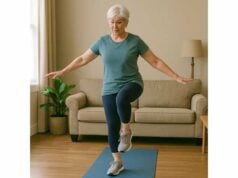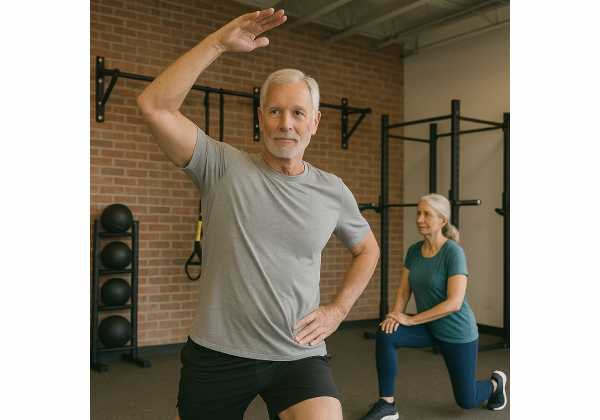
A good warm-up makes the first working set, hill repeat, brisk walk, or balance drill feel smoother and safer. It raises temperature, increases blood flow, prepares joints for the angles they will use, and gives the nervous system a clear preview of the work ahead. For longevity training, the warm-up also serves a second purpose: it checks how your body feels today. Ankles, hips, shoulders, spine, breathing, and balance often give useful signals before intensity begins.
Warm-ups do not need to be long or complicated. Most adults do well with 8 to 12 minutes before general strength or cardio sessions, and a little longer before sprints, jumps, heavy lifting, or cold-weather outdoor work. The best warm-up matches the session. It moves from easy whole-body activity to joint preparation, then to activation and practice reps that look like the workout.
Table of Contents
- Why Warm-Ups Matter for Longevity Training
- The 8-to-12-Minute Warm-Up Formula
- Joint Prep From the Ground Up
- Activation That Matches the Workout
- Warm-Ups for Different Session Types
- Adjusting for Age, Stiffness, and Pain
- Common Warm-Up Mistakes
- Sample Warm-Ups You Can Use Today
Why Warm-Ups Matter for Longevity Training
A useful warm-up prepares tissues, joints, and attention before the session asks for speed, load, balance, or stamina. The effect is partly physical and partly neurological. Muscles contract more efficiently when they are warm. Tendons and connective tissues tolerate movement better after gradual loading. Joints often move more freely after repeated, low-force motion through a comfortable range. The brain also gets a cleaner map of the task: where the feet are, how the hips are moving, how the trunk is bracing, and how hard the next effort should feel.
Longevity training usually combines several qualities across the week: aerobic capacity, strength, balance, mobility, power, and everyday movement. A warm-up links these qualities. It makes a strength session feel less abrupt after a workday at a desk. It turns a walk into better gait practice. It prepares the Achilles tendon and calves before hills. It helps shoulders find a stronger position before pushing, pulling, or carrying.
The warm-up also protects the long game. Healthy aging training rewards consistency more than heroic single sessions. A person who skips the warm-up and irritates a knee, back, or shoulder loses training days that would have built capacity. A person who uses the warm-up to notice stiffness, fatigue, dizziness, or poor coordination can adjust early and still train well.
This does not mean every session needs a performance-style routine. A gentle walk after lunch needs only a few easy minutes. A heavy squat, fast interval, loaded carry, jump progression, or new movement pattern deserves more preparation. The more intense, technical, cold, explosive, or unfamiliar the session, the more specific the warm-up should be.
Static stretching has a place, especially for flexibility work, relaxation, and cooldowns. Before training, most people do better when long passive holds are not the main event. Brief static stretching for a tight area is fine when followed by active movement, but the core of a training warm-up should be dynamic: moving joints, gradually raising effort, and rehearsing the patterns ahead. If flexibility is a major limit, combine dedicated mobility sessions with smart training rather than trying to solve everything in the five minutes before lifting.
A good warm-up leaves you feeling more ready, not tired. Breathing should rise, joints should feel easier, and the first working set should feel familiar. Sweat is optional. Exhaustion is a warning sign.
The 8-to-12-Minute Warm-Up Formula
Most general sessions work well with four layers: raise, mobilize, activate, and rehearse. The order matters because each layer builds on the last. Start broad and easy, then become more specific.
| Layer | Time | Purpose | Examples |
|---|---|---|---|
| Raise | 2–4 minutes | Increase temperature, breathing, and blood flow | Easy bike, brisk walk, marching, step-ups, light rowing |
| Mobilize | 2–4 minutes | Move the joints through useful ranges | Ankle rocks, hip circles, thoracic rotations, shoulder circles |
| Activate | 2–3 minutes | Wake up muscles that stabilize and guide movement | Glute bridges, band rows, dead bugs, calf raises, side steps |
| Rehearse | 2–5 minutes | Practice the session’s main pattern at low intensity | Ramp-up sets, easy strides, bodyweight squats, unloaded hinges |
The “raise” layer should feel almost too easy at first. Use a pace that lets you breathe through your nose or speak in full sentences. This layer matters most when you train early in the morning, after sitting for hours, in a cold room, or before outdoor work. A few minutes of walking, cycling, or step-ups often changes the whole session.
The “mobilize” layer is not random stretching. Choose joints that will matter for the session. Squats and stairs need ankles, knees, hips, and trunk control. Overhead pressing needs shoulder blades, upper back rotation, ribs, and neck comfort. Rucking needs feet, calves, hips, and posture. A longer hips, shoulders, and ankles routine belongs on days when mobility itself is the training focus; the warm-up version should stay brief and targeted.
The “activate” layer connects muscles to positions. Activation does not mean exhausting a muscle until it burns. It means creating enough sensation and control that the body uses the right areas during the workout. Two sets of 6 to 10 controlled reps usually beat long mini-band marathons.
The “rehearse” layer is the most overlooked. Before a strength lift, use ramp-up sets. Before intervals, include short, easy accelerations. Before balance work, practice the stance with support nearby. Before loaded carries, do a lighter carry and check posture, grip, breathing, and foot pressure. Rehearsal tells the body, “This is the task.”
For very short workouts, use a condensed version. A 15-minute home session might include 60 seconds of marching, 5 ankle rocks per side, 5 hip hinges, 5 wall slides, 8 glute bridges, and one easy round of the first exercise. For a demanding session, expand the rehearsal layer rather than adding unrelated drills. Heavy strength training, sprint intervals, and power work need gradual exposure to the exact forces they will use.
Joint Prep From the Ground Up
Joint prep works best when it follows the body’s chain of movement. Feet influence knees. Ankles influence squats and walking stride. Hips influence the low back. The rib cage and upper back influence shoulder motion. Preparing one area often reduces strain in another.
Start with the feet and ankles when the session includes walking, running, rucking, squats, lunges, step-ups, jumps, or balance. The foot should feel awake, not clenched. Try 10 slow toe raises, 10 calf raises, then 5 ankle rocks per side with the heel down. During ankle rocks, move the knee over the second or third toe without letting the arch collapse. This teaches the ankle to bend while the foot stays useful.
Knees usually need rhythm and alignment more than special drills. Marching, slow step-ups, sit-to-stands, and shallow split squats prepare the knee by warming the quadriceps, hamstrings, calves, and hips together. If knees feel stiff, begin with a smaller range and build gradually. For more specific training modifications, a knee- and hip-friendly training plan helps keep lower-body work productive without turning every session into rehab.
Hips need both motion and control. Hip circles, leg swings, bodyweight hinges, glute bridges, and lateral steps all prepare the pelvis to move without dumping stress into the low back. Think of the hip as a ball-and-socket joint that needs options: bend, extend, rotate, and move side to side. Older adults and desk workers often need extra hip extension work because long sitting keeps the front of the hip shortened for hours.
The spine needs preparation, but it does not need aggressive twisting or deep bending before loaded work. Use gentle cat-cow motions, open-book rotations, wall rotations, or quadruped reach-throughs. The aim is to restore comfortable movement, especially through the upper back, while keeping the low back calm. Before lifting, add bracing practice with dead bugs, bird dogs, or slow exhalations. A strong trunk is not rigid all day; it can create stiffness when the task requires it and relax when the task ends.
Shoulders need the shoulder blade, rib cage, and upper back to cooperate. Arm circles alone rarely solve shoulder readiness. Better options include wall slides, band pull-aparts, scapular push-ups, light rows, and controlled overhead reaches. If overhead work pinches, warm up with landmine presses, incline pressing, or loaded carries before forcing a vertical position. A dedicated shoulder health routine is useful when pressing, swimming, racket sports, or overhead storage tasks repeatedly irritate the area.
Neck prep should stay gentle. Slow turns, chin nods, and posture resets work better than pulling hard on the head. If neck tension shows up during pressing or carries, check rib position, grip tension, breathing, and shoulder elevation. Many people “warm up” the neck by stretching it, then immediately shrug through every upper-body exercise. Better shoulder blade control often solves more than extra neck stretching.
Joint prep should create smoother motion within two to four minutes. If one area needs 15 minutes before every workout, the issue deserves a separate mobility, strength, or clinical plan.
Activation That Matches the Workout
Activation prepares muscles to contribute at the right time. It should match the movement pattern, load, and stability demand of the session. Random activation wastes energy. Targeted activation makes the first working efforts feel cleaner.
For lower-body strength, prioritize glutes, hamstrings, trunk, feet, and calves. Glute bridges help people feel hip extension before squats, deadlifts, and step-ups. Bodyweight hinges teach the hips to move back without rounding the spine. Calf raises prepare the ankle and Achilles tendon. Side steps with a light band can help the hip control knee position, but they should stay crisp. Stop before the hips burn and technique breaks.
For upper-body strength, activate the upper back, shoulder blades, rotator cuff, trunk, and grip. Band rows, face pulls, wall slides, incline push-ups, and light carries work well. Before push-ups or bench press, pulling drills often improve shoulder position. Before rows and pull-downs, scapular depression and light grip work help the movement feel stronger. Activation should support the pressing and pulling patterns in your weekly strength training plan, not become a separate workout.
For cardio, activation should prepare rhythm and elasticity. A cyclist might use easy pedaling, high-cadence spin-ups, and a few controlled standing efforts. A runner might use brisk walking, ankle pops, marching, leg swings, and short strides. A walker or rucker might use calf raises, step-ups, hip hinges, and posture drills. If you are training Zone 2 endurance, activation can stay mild. If you are doing fast intervals, it needs to become more specific.
For balance and agility, activation should wake up the feet, hips, eyes, and reaction system. Use heel-to-toe walking, lateral steps, supported single-leg stance, gentle direction changes, and light catching or reaching drills. Balance is not only a “leg” skill. Vision, vestibular input, foot sensation, hip strength, and attention all contribute. That is why warm-ups for balance should include slow control before quicker changes. For more dedicated practice, daily balance and fall-prevention drills build the base that a short warm-up maintains.
For power training, activation must be sharp but low volume. Power declines with fatigue, so avoid turning the warm-up into conditioning. Use low-level jumps, med-ball chest passes, fast step-ups, light kettlebell swings, or short accelerations only after the joints feel prepared. Start with small amplitude and increase gradually. A 55-year-old doing low-impact jumps needs more ramp-up than a 25-year-old athlete, but the principle is the same: crisp efforts, full control, no grinding.
The best activation drill gives immediate feedback. After glute bridges, squats should feel more balanced. After band rows, pressing should feel more stable. After ankle rocks and calf raises, walking should feel springier. If a drill does nothing for the session, replace it.
Warm-Ups for Different Session Types
A warm-up should match the day’s demand. The body prepares differently for lifting, intervals, walking, balance work, and mobility training.
For strength sessions, ramp-up sets matter more than elaborate floor drills. Start with easy whole-body movement, prepare the joints needed for the lift, activate the main stabilizers, then perform lighter versions of the first exercise. For example, before goblet squats, do easy step-ups, ankle rocks, hip hinges, glute bridges, and two lighter squat sets. Before deadlifts, use hinges, hamstring sweeps, bird dogs, and several gradual warm-up sets. Before pressing, use rows, wall slides, scapular push-ups, and lighter presses.
Ramp-up sets should climb without fatigue. A lifter planning 3 working sets of 5 reps might do 8 reps with a very light load, 5 reps with a moderate load, and 2 to 3 reps close to working weight. The exact numbers are flexible. The purpose is to practice the path, feel the load, and prepare the nervous system.
For VO₂max intervals, the warm-up needs a longer aerobic rise and several short previews of faster work. Start with 5 to 8 minutes easy, then add mobility for ankles, hips, and trunk. Finish with 2 to 4 short accelerations of 10 to 30 seconds, separated by easy movement. These accelerations should feel fast but controlled. They are not the first interval. When training from a VO₂max interval playbook, the warm-up protects the quality of the hard repeats.
For Zone 2 sessions, keep the warm-up relaxed. Begin below target intensity and let heart rate rise over the first 5 to 10 minutes. People often start too fast, then spend the rest of the session chasing a heart rate that jumped early. A gentle start improves pacing and makes the session feel sustainable.
For walking, hiking, and rucking, prepare feet, calves, hips, and posture. Use toe raises, calf raises, ankle rocks, hip hinges, marching, and a few short posture resets. Add load gradually. If the pack feels awkward in the first minute, adjust it before the walk becomes long. For longer loaded walking, gait and rucking progressions help match distance, terrain, and load.
For mobility sessions, the warm-up can be the session. Start with breathing and easy movement, then spend time in controlled ranges. Mobility training should not rely only on passive holds. Add active control near the end range: lift-offs, slow transitions, and light loaded positions. This turns flexibility into usable movement.
For power, agility, and reaction work, progress in layers. Begin with low-impact rhythm: marching, skipping in place, side steps, or gentle pogo motions. Add coordination: ladder steps, cone touches, or easy direction changes. Then use a few low-volume power efforts. A session focused on agility and reaction time should feel alert, not drained, before the main drills begin.
For recovery sessions, the warm-up should be almost invisible. Easy cycling, walking, joint circles, and breathing drills work well. The purpose is circulation and comfort, not performance. On tired days, a gentle active recovery session often gives more value than forcing intensity.
Adjusting for Age, Stiffness, and Pain
Older adults often need a slower ramp, especially in the morning or after long sitting. This does not mean fragile training. It means respecting tissue temperature, joint lubrication, balance, medication effects, and recovery state. A 60-year-old can train hard, but the first few minutes should not pretend the body has already been moving all day.
Morning stiffness usually improves with heat and repetition. Add 2 to 5 extra minutes of easy movement before mobility drills. Use a stationary bike, treadmill walk, marching, or light household movement. Then work through ankles, hips, thoracic spine, and shoulders. Avoid judging the whole session by the first minute. Many joints feel different after the first warm-up layer.
Cold weather requires more gradual exposure. Muscles, tendons, and fingers feel less responsive when cold. For outdoor intervals, hills, or rucking, warm up indoors for a few minutes before stepping outside. Wear layers that keep the first 10 minutes comfortable. Start slower than usual, especially on uneven ground.
Joint pain needs a traffic-light approach. Green means mild stiffness that eases as you warm up. Yellow means discomfort that stays present but does not worsen, change your mechanics, or linger after the session. Red means sharp pain, increasing pain, swelling, giving way, numbness, chest symptoms, unusual shortness of breath, or dizziness. Red signals call for stopping and getting appropriate guidance.
Pain-free range matters more than textbook range. A squat warm-up does not require deep squats if the knees or hips are irritated. Use box squats, assisted squats, step-ups, or split-stance work. A shoulder warm-up does not require overhead motion if the joint pinches. Use landmine angles, incline pressing, rows, or carries. Warm-ups should open doors, not force them.
Fatigue changes coordination. On days with poor sleep, high stress, illness recovery, or heavy soreness, extend the easy part of the warm-up and reduce the intensity jump. If coordination still feels off after 10 to 15 minutes, make the session lighter. Technique practice, easy cardio, mobility, or lower-load strength can preserve consistency without gambling on a poor-readiness day.
After illness or injury, warm-ups become a screening tool. Check breathing, heart rate response, balance, pain, and energy before increasing effort. A structured return-to-training ramp-up reduces the urge to “test” the body too soon. The first successful sessions should feel almost underwhelming.
Medication and health conditions also influence warm-up needs. Blood pressure medications, diabetes medications, vestibular issues, neuropathy, arthritis, and previous joint replacements can all change how quickly the body feels ready. People with known medical conditions should follow clinician guidance about intensity, warning signs, and safe progression.
Aging does not remove the need for power, strength, or aerobic challenge. It increases the value of preparation. The warm-up is where you earn the right to train with more speed, load, and confidence.
Common Warm-Up Mistakes
The most common mistake is doing nothing until the first working set. This often happens when time is short. A short warm-up beats no warm-up. Even three minutes of brisk walking, joint rocks, and easy practice reps can improve readiness.
Another mistake is stretching passively for several minutes, then jumping straight into heavy or fast work. Long static holds can reduce the sense of stiffness, but they do not fully prepare the body for force production, balance, or speed. If a static stretch helps a tight area, keep it brief, then follow it with active movement and rehearsal. For flexibility work itself, dedicated dynamic, static, and PNF stretching sessions make more sense.
Many people overdo activation. They perform so many band walks, bridges, planks, and corrective drills that the workout starts with fatigue. Activation should sharpen movement. If the glutes, shoulders, or core are already tired before the main lift, the warm-up has become the workout.
Another problem is copying athletic warm-ups without matching the person or session. A field-sport warm-up with skips, bounds, cuts, and sprints does not fit a beginner’s first gym session. A powerlifter’s long barbell ramp-up does not fit a gentle cardio day. Use the principle, not the costume: raise, mobilize, activate, rehearse.
Skipping rehearsal is also common. People do general mobility, then load the bar or start intervals abruptly. Rehearsal is the bridge. Bodyweight squats before loaded squats, easy strides before intervals, light carries before heavy carries, and wall push-ups before floor push-ups all reduce surprise.
Warm-ups also fail when they ignore the day’s signals. If the left ankle feels stiff, the warm-up should address it. If breathing feels unusually hard, intensity should wait. If balance feels poor, start with supported drills. A fixed routine is useful, but it should not make you blind to the body in front of you.
Finally, some warm-ups are too long for the person’s training capacity. A 25-minute warm-up before a 20-minute workout rarely makes sense unless rehab or mobility is the main task. For general longevity training, the warm-up should support the session, not consume it.
Sample Warm-Ups You Can Use Today
These routines work as starting points. Keep the order, adjust the exercises, and match the intensity to your body and session.
General strength warm-up: 10 minutes
Start with 3 minutes of easy cycling, rowing, treadmill walking, or marching. Then do 5 ankle rocks per side, 5 hip hinges, 5 bodyweight squats to a comfortable depth, 6 wall slides, and 6 thoracic rotations per side. Add 8 glute bridges and 8 band rows. Finish with two ramp-up sets of your first lift.
This warm-up fits full-body strength sessions, especially when the first exercise is a squat, hinge, push, or pull. Before more technical lifts, spend extra time rehearsing. Strong technique starts before the first working set, and squat, hinge, push, and pull fundamentals become easier when the warm-up uses the same patterns.
Zone 2 cardio warm-up: 8 minutes
Begin with 5 minutes below target pace. Let breathing rise slowly. Then add 10 calf raises, 10 toe raises, 5 hip circles per side, and 5 posture resets with a slow exhale. Return to the cardio movement and increase gradually until you reach the intended effort.
This works for cycling, walking, rowing, elliptical training, and easy jogging. The first minutes should feel restrained. If heart rate rises too quickly, slow down and lengthen the warm-up.
VO₂max or hill interval warm-up: 15 minutes
Start with 6 to 8 minutes easy. Add ankle rocks, calf raises, marching, leg swings, hip hinges, and gentle skips or fast steps if appropriate. Then perform 3 short accelerations of 15 to 20 seconds, each followed by 60 to 90 seconds easy. Begin the first true interval only after the accelerations feel smooth.
For steep hills, add a few short uphill walks or light jogs before the first hard repeat. For bikes, add 2 to 3 high-cadence spin-ups. For rowing, add a few short technique bursts at a higher stroke rate.
Balance and fall-prevention warm-up: 8 minutes
Start with 2 minutes of walking or marching. Do 10 toe raises, 10 calf raises, 5 sit-to-stands, and 5 side steps each way. Then practice supported single-leg stance for 10 to 20 seconds per side. Finish with heel-to-toe walking near a wall or counter.
This routine prepares the feet, hips, and attention. Keep support close. Balance training improves when the challenge is real but recoverable.
Shoulder-friendly upper-body warm-up: 10 minutes
Start with 2 to 3 minutes of easy cardio or marching with arm swing. Do 6 wall slides, 8 band pull-aparts, 8 light rows, 6 scapular push-ups, and 5 slow overhead reaches only if comfortable. Add one light carry or light pressing set before working sets.
If pressing pinches, change the angle. Incline push-ups, dumbbell floor presses, landmine presses, and carries often train the upper body with less irritation than forced overhead work.
Travel or small-space warm-up: 6 minutes
March in place for 60 seconds. Do 10 calf raises, 10 toe raises, 5 hip hinges, 5 sit-to-stands, 6 wall slides, 6 dead bugs per side, and 20 seconds of easy shadow stepping. Then begin the first circuit at a slower pace than planned.
This warm-up fits hotel rooms, parks, and busy days. It pairs well with short bodyweight circuits and keeps the habit alive when equipment is limited.
A warm-up succeeds when the session starts smoothly, movement improves, and confidence rises. Keep it short enough to repeat, specific enough to matter, and flexible enough to match the day.
References
- Revisiting the ‘Whys’ and ‘Hows’ of the Warm-Up 2023 (Review)
- Dynamic Warm-ups Play Pivotal Role in Athletic Performance and Injury Prevention 2024 (Review)
- Potential Effects of Dynamic Stretching on Injury Incidence of Athletes: A Narrative Review of Risk Factors 2023 (Review)
- Resistance Training Induces Improvements in Range of Motion: A Systematic Review and Meta-Analysis 2023 (Systematic Review)
- RECOMMENDATIONS – WHO Guidelines on Physical Activity and Sedentary Behaviour 2020 (Guideline)
- American College of Sports Medicine Position Stand. Resistance Training Prescription for Muscle Function, Hypertrophy, and Physical Performance in Healthy Adults: An Overview of Reviews 2026 (Position Statement)
Disclaimer
This article is educational and does not replace care from a qualified clinician, physical therapist, or certified exercise professional. Stop exercise and seek medical guidance for chest pain, faintness, unusual shortness of breath, new neurological symptoms, sharp or worsening joint pain, or symptoms after illness or injury that do not improve with a gentler session.