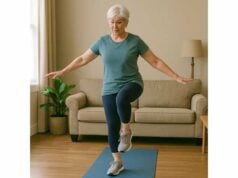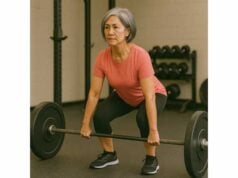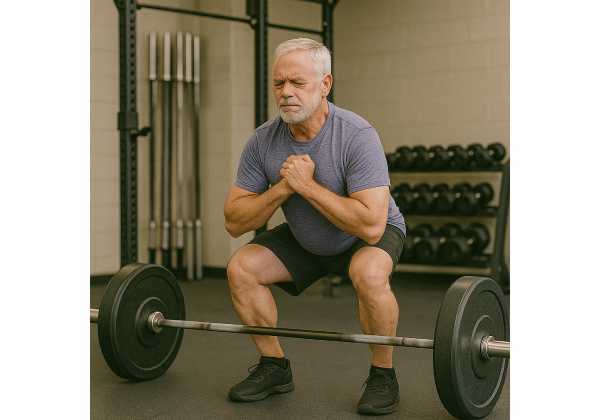
A strong brace turns lifting from a loose collection of moving parts into one coordinated body effort. During squats, deadlifts, carries, presses, rows, and everyday tasks such as picking up a child or moving furniture, the diaphragm, abdominal wall, pelvic floor, ribs, and back muscles work together to create trunk stiffness. That stiffness helps the hips and shoulders produce force without asking the spine to wobble through every rep.
Breathing still matters. Holding the breath too hard, too long, or at the wrong time raises pressure and strain without adding useful control. Breathing too loosely removes the support that heavy or awkward loads need. Longevity lifting sits between those extremes: enough pressure to protect position, enough breathing skill to stay calm, repeatable, and safe. The best brace is not a dramatic “suck in” or a maximal bear-down. It is a controlled expansion and firm wrap around the trunk that matches the lift.
Table of Contents
- How Bracing Protects Lifting
- Diaphragm, Pressure, and the Core Canister
- Brace Types and When to Use Them
- Breathing Strategies for Common Lifts
- Pressure Risks and Smart Modifications
- How to Practice Bracing
- Common Mistakes and Fixes
- Putting It Into Longevity Training
How Bracing Protects Lifting
Bracing protects lifting by making the trunk stiff enough to transfer force. Your legs and hips drive the floor away, your arms hold or guide the load, and your torso acts as the bridge between them. When that bridge stays firm, force moves through the body cleanly. When it collapses, the body leaks energy and joints compensate.
A useful brace does three jobs at once. It limits unwanted spinal motion, gives the hips and shoulders a stable base, and helps you manage pressure during effort. This matters more with age because strength training should build capacity without adding unnecessary irritation to the back, hips, pelvic floor, neck, or blood pressure response.
The spine does not need to stay rigid in every activity. Walking, reaching, gardening, and floor work require motion. Lifting, especially under load, benefits from controlled stiffness during the hardest part of the rep. That stiffness is temporary. You create it, use it, release it, and breathe again.
Good bracing also improves consistency. A squat rep feels safer when the ribs and pelvis stay stacked. A deadlift feels cleaner when the abdomen expands before the bar leaves the floor. A farmer’s carry feels smoother when each step happens under a quiet, firm torso. These small improvements add up over years because longevity training rewards repeatable reps more than occasional heroic efforts.
The brace should match the task. A light goblet squat does not need the same pressure as a heavy barbell deadlift. A slow step-up needs enough trunk control to keep the pelvis steady, not a maximal breath hold. A kettlebell suitcase carry needs anti-tilt pressure on one side without turning the face red. For broader lifting technique, squat, hinge, push, and pull fundamentals work best when breathing and bracing support the position instead of fighting it.
A simple rule works well: the heavier, faster, or more unstable the load, the more deliberate the brace. The lighter and more rhythmic the movement, the more the breath should keep flowing.
Diaphragm, Pressure, and the Core Canister
The diaphragm is both a breathing muscle and a pressure muscle. During relaxed breathing, it descends as you inhale and rises as you exhale. During lifting, it also helps regulate intra-abdominal pressure, which is pressure inside the trunk. That pressure works with the abdominal wall, deep back muscles, pelvic floor, and rib cage to stiffen the torso.
Think of the trunk as a flexible canister:
- The diaphragm forms the top.
- The pelvic floor forms the base.
- The abdominal wall wraps the front and sides.
- The spinal muscles support the back.
- The ribs and pelvis shape the container.
A strong brace expands this canister in a controlled way. The abdomen, sides, and low back gently press outward. The ribs stay down enough to avoid excessive arching. The pelvis stays under the rib cage instead of tipping forward or tucking hard. The spine holds a neutral range rather than a forced, military-straight posture.
This is different from sucking the belly in. Pulling the navel toward the spine narrows the canister and often reduces useful pressure for heavier lifts. That strategy has a place in some rehab or low-load motor-control drills, but it is not the same as lifting bracing. Heavy and moderate lifting usually needs outward expansion, not hollowing.
It is also different from pushing the belly forward only. A belly-only brace often lets the ribs flare, the low back overarch, and the pelvis dump forward. A better brace expands 360 degrees: front, sides, and back. You should feel the beltline fill, not just the stomach bulge.
Why pressure helps the spine
Intra-abdominal pressure does not magically “save” the spine. It helps because it increases trunk stiffness and improves force transfer. When the abdominal wall, diaphragm, pelvic floor, and back muscles coordinate, the spine has less need to rely on small passive structures during demanding reps.
This is especially useful during hinges, squats, carries, and overhead work. These lifts challenge the trunk from different directions. A deadlift asks the torso to resist bending forward. A front squat asks it to resist rounding and collapsing. A suitcase carry asks it to resist side bending. An overhead press asks it to resist rib flare and low-back arching. Bracing gives each lift a pressure strategy.
Why breathing still has to continue
A brace that blocks all breathing is too much for most longevity training. Breath holding increases intrathoracic pressure, which is pressure in the chest. That pressure response rises with heavy loads, high effort, long sets, and straining near failure.
Short, controlled breath holds have a role in heavy lifting. Long, panicked breath holds turn a useful pressure tool into a stress multiplier. For most adults training for healthspan, the skill is not “never hold your breath.” The skill is using the smallest breath hold that protects the rep, then releasing and resetting.
You should be able to return to calm breathing quickly after a set. If every set ends with dizziness, head pressure, pounding in the ears, or a desperate gasp, the pressure dose is too high for that lift, load, or day.
Brace Types and When to Use Them
Different lifts need different levels of brace. Using the same maximal brace for everything wastes energy and teaches unnecessary tension. Using no brace for challenging lifts leaves the trunk underprepared.
| Brace style | Best use | Breathing pattern | Common cue |
|---|---|---|---|
| Soft brace | Warm-ups, light machines, easy carries, mobility strength work | Normal nasal or relaxed mouth breathing | “Stay tall and lightly firm.” |
| Moderate 360 brace | Most working sets, goblet squats, rows, lunges, Romanian deadlifts | Inhale before effort, exhale through or after the hard phase | “Fill the beltline all around.” |
| Hard brace | Heavy squats, deadlifts, loaded carries, low-rep barbell sets | Short breath hold through the sticking point, then controlled exhale | “Brace like you are about to be bumped.” |
| Flow brace | Higher-rep sets, circuits, sled work, step-ups, light kettlebells | Continuous breathing with a firm trunk | “Keep pressure, keep breathing.” |
The moderate 360 brace should cover most lifting. It gives enough stiffness for productive training without turning every rep into a maximal strain. The hard brace belongs to heavier efforts, usually lower reps, where the torso truly needs extra support. The flow brace matters for conditioning-style strength work because breath holding across many reps quickly becomes the limiting factor.
A lifting belt changes the feel of bracing but does not replace the skill. A belt gives the abdominal wall something to press against. It helps some lifters create more trunk stiffness, especially under heavy loads. It should not be used to hide poor position, pain, or loads that exceed current control. Beltless practice still matters because daily life does not come with a belt.
For core development outside main lifts, anti-extension and anti-rotation training teaches the same pressure control with lower joint stress. Dead bugs, Pallof presses, side planks, carries, and controlled rollouts all build the ability to keep the ribs and pelvis organized while the limbs move.
Breathing Strategies for Common Lifts
The right breathing strategy depends on the lift, load, rep range, and health context. Heavy compound lifts need more pressure. Lighter accessory lifts need rhythm. Carries need quiet breathing under tension.
Squats
For a squat, inhale before the descent, expand the trunk 360 degrees, and keep the brace through the bottom and early ascent. Exhale after you pass the hardest point or once you stand tall. Then reset before the next rep.
For lighter squats, a gentle exhale during the ascent works well. For heavier squats, a short breath hold through the bottom protects position better. Avoid turning the breath hold into a long grind. If the rep slows dramatically and the face, neck, or head pressure spikes, the load is too high or the set has gone too close to failure.
Front squats and goblet squats often teach better rib position because the load in front punishes collapse. Back squats tolerate more load but require stronger control of rib flare and pelvic position. Anyone building squat skill should pair bracing work with spine-smart hinge and squat patterns so pressure supports the movement rather than masking poor mechanics.
Deadlifts and hinges
Deadlifts demand a firm brace before the load moves. Stand over the bar, set the feet, inhale into the abdomen and sides, lock in the brace, then push the floor away while keeping the bar close. Exhale near the top or after the rep finishes. For repeated reps, reset the breath at the top or on the floor.
Romanian deadlifts need a slightly different rhythm. Inhale and brace before lowering, keep the trunk firm as the hips move back, then exhale gently as you return to standing. The spine should feel quiet while the hips do the work.
The common mistake is inhaling only into the chest before a hinge. This lifts the ribs, arches the low back, and reduces abdominal support. A better inhale expands the lower ribs, waist, and back pockets. The torso should feel wide, not lifted.
Presses and pulls
During overhead pressing, brace before the press and exhale as the weight passes the hardest point. Keep the ribs from flaring upward. If the low back arches to finish the rep, reduce the load or use a half-kneeling, landmine, or incline press variation. Shoulder-friendly training often starts with positions that let the rib cage stay controlled; scapular control and overhead options help match the press to the body in front of you.
Rows usually need less pressure than squats or deadlifts, but bent-over rows still require a strong hinge brace. Chest-supported rows lower the bracing demand and work well when the back is tired or the session already includes heavy lower-body work.
Push-ups and bench presses need a moderate brace. Inhale before lowering, keep the ribs down, and exhale as you press. On harder reps, a brief hold through the bottom and early press helps. Avoid shrugging the neck or clenching the jaw as a substitute for trunk tension.
Carries, step-ups, and single-leg work
Carries train bracing better than almost any accessory lift because they combine load, posture, and breathing. During farmer’s carries, breathe behind a firm trunk. During suitcase carries, resist leaning away from the weight. During front rack carries, keep the ribs stacked and take shorter breaths if the load compresses the chest.
Step-ups, split squats, and lunges require enough brace to keep the pelvis steady. Use a moderate inhale before the rep, then exhale through the hardest part. If balance suffers, lower the load before adding more pressure. Bracing should make single-leg work smoother, not stiffer and more awkward.
Pressure Risks and Smart Modifications
Pressure is useful, but more pressure is not always better. Heavy lifting, breath holding, high effort, and long sets raise cardiovascular and trunk pressure demands. Most healthy adults tolerate resistance training well when they progress gradually, use sound technique, and avoid unnecessary maximal straining. Some people need extra caution.
Pressure management deserves attention if you have uncontrolled high blood pressure, known cardiovascular disease, aneurysm history, glaucoma or retinal problems, hernia concerns, pelvic floor symptoms, pregnancy or early postpartum status, recent abdominal surgery, or dizziness with exertion. Medical clearance matters when symptoms or diagnoses raise the stakes.
For blood pressure, the main issue is not ordinary strength training. The larger concern is repeated hard straining with breath holding, especially near maximal loads or failure. Heavy lower-body exercises create larger pressure responses than many upper-body or machine-based movements. That does not make squats and deadlifts “bad.” It means they need the right dose, progression, and breathing strategy.
Smart modifications keep the benefits while lowering unnecessary strain:
- Use moderate loads for clean sets of 5–10 reps instead of grinding 1–3 rep max attempts.
- Stop most sets with 1–3 reps in reserve rather than training to failure.
- Choose goblet squats, trap-bar deadlifts, split squats, leg presses, or supported rows when they fit the body better.
- Extend rest periods to 2–3 minutes after demanding sets.
- Exhale through the sticking point on moderate loads instead of holding the breath across the full rep.
- Avoid long breath holds during high-rep sets.
- Use machines or chest support when fatigue makes spinal position hard to maintain.
The reps-in-reserve approach fits longevity training well. A set that ends with two good reps left still builds strength and muscle while lowering form breakdown and pressure spikes. Training to failure has a place for selected accessory lifts, but it is rarely necessary on heavy squats, deadlifts, or overhead presses for adults lifting for long-term function.
People who track blood pressure at home should learn proper measurement habits before drawing conclusions from random readings. Resting readings matter more than a single post-workout number. If blood pressure runs high, proper home blood pressure measurement gives better information for clinician conversations and training decisions.
Pelvic floor symptoms need the same practical respect. Leaking, heaviness, pressure, or bulging during lifts signals that the pressure strategy needs adjustment. The answer is not always “stop lifting.” More often it is to reduce load, improve exhale timing, widen stance or change depth, avoid grinding, and work with a pelvic health professional when symptoms persist.
How to Practice Bracing
Bracing improves fastest when practiced away from maximal lifting. The body learns pressure better in quiet positions first, then carries it into more complex lifts.
Step 1: Find 360-degree expansion
Lie on your back with knees bent. Place one hand on the lower abdomen and one hand on the side ribs. Inhale through the nose and let the abdomen, sides, and low back expand gently. Do not shrug the shoulders. Do not force the belly up. Exhale slowly and feel the ribs soften down.
After a few breaths, place your fingers around the waist like a loose belt. Inhale into your fingers in all directions. The expansion should feel broad and quiet. This is the shape you want before a lift.
Step 2: Add a light brace
In the same position, inhale into the beltline, then tighten as if someone is about to poke your sides. Keep breathing lightly behind that tension. The abdomen should feel firm, not sucked in. The ribs should stay relaxed, not jammed down hard.
Hold for 5–8 seconds, then release. Repeat 4–6 times. This teaches the difference between tension and panic.
Step 3: Practice in standing
Stand tall with feet under hips. Inhale into the waist and low ribs. Create the same firm wrap around the trunk. Keep the glutes lightly active and the ribs over the pelvis. Take two small breaths without losing the brace.
This standing version exposes common faults. If the chest rises, reset. If the low back arches, soften the ribs. If the belly pushes forward without side expansion, place the hands on the side waist and breathe wider.
Step 4: Add unloaded patterns
Use bodyweight squats, hip hinges, wall presses, and carries with light dumbbells. Brace before the movement, move slowly, and breathe without losing position. Warm-ups are ideal for this work because the loads are low and attention is high. A structured joint prep and activation warm-up gives enough repetition to build the skill before working sets begin.
Step 5: Bring it into working sets
For each lift, use the same sequence:
- Set your stance and grip.
- Inhale into the beltline and side ribs.
- Brace around that air without shrugging or clenching the jaw.
- Perform the hardest part of the rep.
- Exhale, reset, and repeat.
At first, this feels slower than normal lifting. That is fine. After practice, the sequence becomes automatic. The lifter no longer thinks, “Where should I breathe?” The breath happens as part of the setup.
Common Mistakes and Fixes
Bracing mistakes usually come from trying too hard in one direction. The body overuses the neck, chest, belly, low back, or pelvic floor instead of sharing pressure across the whole trunk.
| Mistake | What it feels like | Better fix |
|---|---|---|
| Chest-only inhale | Shoulders rise, neck tightens, low ribs flare | Inhale into the waist, side ribs, and low back before the rep |
| Belly-only push | Stomach bulges forward, low back arches | Expand 360 degrees and keep ribs stacked over pelvis |
| Sucking in | Waist narrows, trunk feels tense but weak | Brace outward like filling a belt |
| Over-bracing light work | Every rep feels like a max attempt | Use soft or flow bracing for warm-ups and accessories |
| Long breath holds | Dizziness, head pressure, pounding pulse | Use shorter holds and exhale after the sticking point |
| Losing brace between reps | First rep looks good, later reps collapse | Reset breath before each demanding rep |
Jaw clenching is another overlooked mistake. The jaw often tightens when the trunk fails to create enough pressure. Before heavy sets, place the tongue lightly on the roof of the mouth, keep the face calm, and let the brace happen below the ribs. A calm face does not mean an easy set. It means the right muscles are doing the work.
Another mistake is chasing a perfect neutral spine so aggressively that movement becomes stiff and fearful. Neutral is a range, not a single fragile position. The goal during lifting is controlled alignment under load. The spine should not whip, sag, or round unexpectedly, but the body also should not feel locked like concrete during every task.
Fatigue changes bracing. A load that feels crisp for six reps might create sloppy pressure by rep nine. This is one reason session design matters. Heavy compound lifts fit best earlier in the session, before fatigue blunts coordination. Higher-rep accessories belong later, with lighter loads and more continuous breathing. For planning sets, reps, tempo, and effort, RPE-based session design keeps pressure and fatigue in a manageable range.
Putting It Into Longevity Training
Longevity lifting needs enough intensity to preserve muscle, strength, bone, balance, and independence. It also needs enough restraint to keep joints, blood pressure response, recovery, and confidence moving in the right direction. Bracing and breathing sit at the center of that balance.
Most adults do well with two to four strength sessions per week. Each session should include a squat or knee-dominant pattern, a hinge or hip-dominant pattern, a push, a pull, and a carry or core drill. Bracing practice does not need its own long block. It should be built into warm-ups, first working sets, carries, and technique resets.
A simple weekly structure looks like this:
| Day | Main work | Bracing focus | Pressure note |
|---|---|---|---|
| Day 1 | Squat, row, Romanian deadlift, carry | 360 brace before each squat and hinge rep | Stop heavy sets with 1–3 reps in reserve |
| Day 2 | Step-up, press, pulldown, side plank | Flow breathing during single-leg work | Avoid breath holding on higher-rep accessories |
| Day 3 | Trap-bar deadlift, split squat, push-up, farmer’s carry | Short hard brace for deadlift, quiet breathing during carries | Use longer rest after deadlifts and carries |
Progress the brace the same way you progress the lift. Start with low-load skill. Add load only when the breath and position stay controlled. Increase range of motion, tempo, or complexity after the basic pattern is stable. This is especially important after illness, injury, surgery, or a long training break.
A good working set has a clear rhythm. Set up, inhale, brace, lift, exhale, reset. The lifter finishes with effort but not chaos. The back feels worked but not threatened. The heart rate rises but recovers. The next session remains possible.
For long-term progress, combine bracing with measured strength programming instead of treating it as a separate trick. A well-built weekly strength plan gives enough exposure to practice pressure under load while still allowing recovery. Strength, skill, and breathing improve together.
The most useful sign is transfer outside the gym. Picking up groceries feels cleaner. Getting off the floor feels more organized. Carrying a suitcase no longer pulls the body sideways. Yard work creates less back tightness. These are the wins that make bracing worth learning.
Bracing is not about fear of movement. It is about owning pressure when pressure helps. Inhale wide, wrap the trunk, lift with control, and breathe again. That simple sequence supports stronger training today and a more capable body years from now.
References
- Global consensus on optimal exercise recommendations for enhancing healthy longevity in older adults (ICFSR) 2025 (Review)
- The effect of abdominal bracing on respiration during a lifting task: a cross-sectional study 2023 (Cross-Sectional Study)
- Changes of abdominal wall tension across various resistance exercises during maximal and submaximal loads in healthy adults: a cross-sectional study 2025 (Cross-Sectional Study)
- Blood pressure changes during different methods of resistance training in normotensive and stage 1 hypertensive individuals: a repeated measures cross-sectional study 2025 (Cross-Sectional Study)
- Effect of Acute Resistance Exercise and Resistance Exercise Training on Central Pulsatile Hemodynamics and Large Artery Stiffness: Part I 2025 (Review)
- Systematic review of intra-abdominal and intrathoracic pressures initiated by the Valsalva manoeuvre during high-intensity resistance exercises 2019 (Systematic Review)
Disclaimer
This article is educational and does not replace guidance from a qualified clinician, physical therapist, or certified exercise professional. People with uncontrolled high blood pressure, cardiovascular disease, hernia concerns, pelvic floor symptoms, eye pressure conditions, pregnancy, recent surgery, or dizziness during lifting should get individualized advice before using heavy bracing or breath-holding strategies.