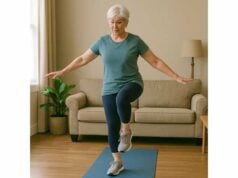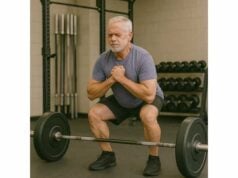
Shoulders stay healthy when they can move freely, create stable positions, and tolerate the work you ask them to do. Longevity training adds one extra requirement: the plan has to keep working for years. That means the shoulder program should support strength, posture, bone loading, daily reaching, carrying, pushing, pulling, and safe overhead movement without turning every workout into rehab.
The shoulder is mobile by design. The upper arm, shoulder blade, collarbone, ribs, spine, and rotator cuff all share the job. When one part stops contributing, another part usually compensates. A stiff upper back can make overhead pressing feel pinchy. Weak pulling strength can make push-ups feel cranky. Poor scapular control can turn a simple lateral raise into neck tension.
Healthy shoulder training is not complicated, but it does need structure: move well, build control, strengthen the cuff and shoulder blade muscles, choose smart overhead options, and progress gradually.
Table of Contents
- Why Shoulder Health Matters for Longevity
- How the Shoulder and Scapula Work Together
- Shoulder Self-Checks Before Overhead Training
- Scapular Control Skills That Protect the Shoulder
- Overhead Options From Easiest to Hardest
- Strength Exercises for Durable Shoulders
- Weekly Shoulder Plan for Longevity Training
- Pain Rules and Common Mistakes
Why Shoulder Health Matters for Longevity
Shoulder health affects more than gym performance. It shapes how easily you reach high shelves, get dressed, carry bags, rise from the floor, hold a grandchild, garden, swim, play tennis, and catch yourself during a stumble. Strong shoulders also support the upper back and neck, which matters for people who spend long hours sitting, driving, or using screens.
A good longevity program trains the shoulder in several roles:
- Reaching: lifting the arm forward, sideways, and overhead.
- Pushing: push-ups, pressing, getting up from a chair or floor.
- Pulling: rows, pull-downs, carrying, climbing, and grip-based tasks.
- Carrying: farmer carries, suitcase carries, shopping bags, luggage.
- Catching and bracing: reacting to slips, bumps, or unexpected loads.
- Rotating: throwing, swimming, racket sports, and daily twisting tasks.
The shoulder has a large movement range, so it relies on coordination. The hip gets stability from a deep socket. The shoulder socket is shallow, which gives the arm freedom but demands muscular control. The rotator cuff keeps the ball of the upper arm centered while bigger muscles move the arm. The shoulder blade gives the arm a moving platform. The ribs and upper spine help position that platform.
This is why shoulder training for healthy aging should include more than pressing. Pressing builds useful strength, but it does not cover the whole job. Rows, carries, external rotation work, slow reaching drills, and upper-back mobility all help the shoulder handle real life.
The shoulder also responds well to frequent, moderate practice. Many people do better with 5–10 minutes of shoulder work several days per week than with one long “prehab” session they rarely repeat. Small doses fit easily into a joint prep warm-up, between strength sets, or after walking.
How the Shoulder and Scapula Work Together
The scapula, or shoulder blade, is the base for most arm motion. It glides over the rib cage and changes position as the arm moves. During a healthy overhead reach, the scapula usually rotates upward, tilts slightly backward, and moves around the ribs. This creates room for the upper arm and helps the rotator cuff work efficiently.
Think of the arm and shoulder blade as a crane mounted on a moving platform. If the platform tilts, shrugs, or sticks, the crane loses power and control. That does not mean every shoulder blade must look perfectly symmetrical. Human movement always has variation. The useful question is whether the scapula supports pain-free strength through the ranges you need.
The main scapular motions
The scapula performs several movements during training:
- Upward rotation: the bottom tip of the shoulder blade turns outward and upward as the arm lifts.
- Downward rotation: the shoulder blade returns as the arm lowers.
- Protraction: the shoulder blade moves around the ribs, as in the top of a push-up.
- Retraction: the shoulder blade moves toward the spine, as in a row.
- Posterior tilt: the top of the shoulder blade tips backward, creating space during overhead reach.
- Elevation and depression: the shoulder blade moves up and down.
Most people only learn “pinch your shoulder blades back and down.” That cue helps in some lifts, but it causes problems when overused. You need retraction during many rows, but you need upward rotation and protraction when reaching overhead. A shoulder blade locked “back and down” cannot move naturally during an overhead press.
For overhead training, a better cue is: reach tall without shrugging hard, let the shoulder blade rotate, and keep the ribs stacked over the pelvis. The arm should feel supported, not jammed.
The rotator cuff’s job
The rotator cuff is a group of four muscles that guide the upper arm bone during motion. These muscles are small compared with the deltoids, pecs, lats, and traps, but they do precision work. They keep the shoulder centered during pressing, pulling, throwing, and carrying.
Rotator cuff training does not require heavy loads. In many cases, slow reps with a light band or cable build better control than heavy, sloppy rotations. For longevity training, the cuff needs endurance, strength at different angles, and the ability to work while the rest of the body moves.
Common cuff-friendly exercises include side-lying external rotations, cable external rotations, band pull-aparts, face pulls, prone Y raises, and controlled carries. These fit well alongside weekly strength training because they support bigger lifts without draining recovery.
Shoulder Self-Checks Before Overhead Training
Self-checks help you choose the right overhead option before pain appears. They are not medical tests and do not diagnose injuries. They simply show whether your current shoulder range, control, and comfort match the movement you plan to train.
Use these checks before overhead pressing, pull-ups, snatches, handstands, swimming volume, or racket-sport blocks.
1. Wall reach check
Stand with your back near a wall, feet 10–20 cm away, ribs down, and low back gently neutral. Raise both arms overhead with thumbs pointing back. You pass if you reach near the wall without flaring the ribs, arching the low back, bending the elbows, or feeling a pinch.
If you cannot reach overhead without compensation, start with landmine presses, incline presses, wall slides, and upper-back mobility work before heavy vertical pressing.
2. Shoulder rotation check
Place your elbow at your side, bent to 90 degrees. Rotate your forearm outward, then inward, without twisting your torso. Compare sides. Mild differences are common. A large difference, pain, or a hard blocked feeling means you should use a gentler range and prioritize controlled rotation work.
For people who play tennis, baseball, volleyball, or swim, rotation differences often reflect sport demands. That does not automatically mean injury. It means your training should respect those side-to-side differences.
3. Scapular wall slide check
Stand facing a wall with forearms on the wall. Slide the forearms upward while gently reaching through the elbows. The shoulder blades should rotate upward without the neck taking over. You pass if the motion feels smooth and the shoulders do not pinch.
This check reveals whether you can combine upward rotation, core control, and overhead reach. If it feels rough, use wall slides, serratus reaches, and incline pressing as your starting point.
4. Loaded carry check
Hold a moderate dumbbell or kettlebell at your side for 30–45 seconds. Your shoulder should feel packed but not rigid, your neck should stay relaxed, and your trunk should stay tall. Then try a light front-rack carry or bottoms-up carry if appropriate.
Carries reveal shoulder endurance. They also train the shoulder with the whole body, which carries over well to daily life.
| Finding | Best Training Choice | What to Avoid for Now |
|---|---|---|
| Pain-free full overhead reach | Dumbbell press, cable press, pull-downs, carries | Sudden jumps in volume or load |
| Rib flare or low-back arch during reach | Half-kneeling landmine press, incline press, wall slides | Heavy vertical barbell pressing |
| Pinch near the top of the range | Press below painful range, rows, cuff work, mobility | Forcing end-range overhead reps |
| Neck tension during shoulder work | Serratus drills, lighter loads, slower tempo | Shrug-heavy pressing and high-volume raises |
| Large side-to-side strength difference | Single-arm cable and dumbbell work | Only bilateral barbell pressing |
Medical review is sensible when shoulder pain follows a fall, causes marked weakness, disrupts sleep, includes numbness or tingling, or fails to improve after several weeks of adjusted training. A sudden inability to raise the arm deserves prompt assessment.
Scapular Control Skills That Protect the Shoulder
Scapular control means you can move the shoulder blade where the task requires it. It does not mean holding one perfect position. A resilient shoulder blade can glide, rotate, stabilize, and relax.
Three muscles deserve special attention: the serratus anterior, lower trapezius, and rotator cuff. The serratus helps the scapula wrap around the ribs and rotate upward. The lower trapezius helps upward rotation and posterior tilt without excessive shrugging. The rotator cuff centers the shoulder during motion.
Serratus anterior: the reaching muscle
The serratus anterior sits along the side of the ribs and helps the shoulder blade move smoothly around the rib cage. When it works well, reaching feels strong and spacious. When it underperforms, the shoulder may feel unstable, winged, or neck-dominant.
Useful serratus exercises:
- Wall slide with reach: slide forearms up a wall and gently reach through the elbows at the top.
- Push-up plus: perform a push-up position from wall, bench, knees, or floor, then reach the upper back slightly toward the ceiling at the top.
- Bear hover hold: hold knees just off the floor while pushing the ground away.
- Serratus cable punch: press a cable forward while letting the shoulder blade glide around the ribs.
Start with 2–3 sets of 8–12 slow reps or 20–30 second holds. The movement should feel like a broad reach, not a neck shrug.
Lower trapezius: the quiet stabilizer
The lower trapezius helps position the scapula during overhead work. It often pairs well with the serratus. The goal is not to crush the shoulder blades together. The goal is smooth upward rotation with the neck relaxed.
Useful lower-trap exercises:
- Prone Y raise: lie face down and lift the arms in a Y shape with thumbs up.
- Incline bench Y raise: use a bench to reduce low-back compensation.
- Wall lift-off: slide the arms up the wall, then lift slightly away while keeping ribs controlled.
- Cable Y raise: use a light cable and move slowly.
Use light resistance. A set of 8 good reps beats 20 reps with neck tension.
Controlled retraction: useful but not everything
Rows, pull-aparts, and face pulls train retraction. Retraction supports posture, pulling strength, and shoulder balance. But shoulder health does not come from squeezing the shoulder blades together all day. The scapula also needs to protract during pushing and upwardly rotate during overhead reach.
A balanced program includes both:
- Retraction work: rows, face pulls, chest-supported rows.
- Protraction work: push-up plus, cable punches, plank reaches.
- Upward rotation work: wall slides, Y raises, landmine presses.
This approach pairs well with posture and core training, especially for people whose shoulder symptoms show up with rib flare, forward-head posture, or poor trunk control.
Overhead Options From Easiest to Hardest
Overhead training is valuable when the shoulder is ready for it. It builds strength for reaching, lifting, carrying, and fall resilience. It also helps maintain confidence in a range many adults gradually lose. The right option depends on your current mobility, symptoms, training age, and recovery.
You do not need to barbell press overhead to have strong shoulders. Dumbbells, cables, landmines, kettlebells, and bodyweight options all count.
Level 1: Elevated and angled pressing
Start here if full overhead motion feels stiff, pinchy, or unstable.
Good options:
- Incline push-up
- Incline dumbbell press
- Half-kneeling landmine press
- Cable press at chest-to-eye level
- Wall slide with light band
- High-incline neutral-grip dumbbell press
The landmine press is especially useful. The bar travels on an arc, so the shoulder does not need full vertical range. The half-kneeling position also teaches rib control and reduces low-back arching.
Use 2–4 sets of 6–12 reps. Keep 2–4 reps in reserve. Stop the set when the shoulder loses smoothness or the ribs flare.
Level 2: Neutral-grip overhead work
A neutral grip means the palms face each other. This position often feels better than a wide barbell grip because it allows a more natural arm path.
Good options:
- Single-arm dumbbell overhead press
- Seated neutral-grip dumbbell press
- Tall-kneeling dumbbell press
- Cable overhead press
- Bottoms-up kettlebell hold
- Waiter carry
Single-arm work gives each shoulder its own path. It also trains the trunk to resist side bending. Start with the non-dominant or less comfortable side, then match the reps on the stronger side.
A useful cue: press up and slightly in, then finish tall without leaning back. The shoulder blade should rotate, the elbow should straighten, and the neck should stay calm.
Level 3: Vertical pulling and hanging
Pull-ups and hanging can support shoulder health when introduced gradually. They build grip, lats, upper back, and trunk strength. They also expose the shoulder to overhead load, so dosage matters.
Start with:
- Assisted pull-down
- Neutral-grip pull-down
- Scapular pull-up from partial support
- Active hang with feet on the floor
- Short dead hang, 5–15 seconds
- Assisted pull-up with controlled lowering
Hanging is not automatically therapeutic. Some shoulders love it; others get irritated by aggressive end-range traction. Use short holds, relaxed breathing, and no sharp pain. People with a history of instability should get individual guidance before using long passive hangs.
Level 4: Advanced overhead loading
Advanced options require full range, good trunk control, and strong recovery habits.
Examples include:
- Standing barbell overhead press
- Turkish get-up
- Kettlebell snatch
- Handstand holds
- Overhead squat
- Heavy overhead carries
- High-volume swimming or throwing blocks
These movements are not mandatory for longevity. They are tools. Use them when they fit your body, skill level, and interests. A person who trains rows, push-ups, landmine presses, carries, and mobility consistently has a strong shoulder plan even without advanced overhead lifts.
Progress advanced overhead work slowly. Add one variable at a time: load, range, speed, instability, or volume. Do not increase all of them in the same week.
Strength Exercises for Durable Shoulders
Durable shoulders need pulling strength, pressing strength, cuff endurance, trunk control, and loaded carries. A complete shoulder plan looks less like a bodybuilding shoulder day and more like a balanced upper-body system.
Pull twice as often as you press when rebuilding
Many adults benefit from extra pulling volume, especially if they sit often, press frequently, or have a history of cranky shoulders. This does not require a strict lifetime ratio, but a rebuilding phase often works well with about 2 pulling exercises for every 1 pressing exercise.
Strong choices include:
- Chest-supported row
- One-arm cable row
- Lat pull-down
- Neutral-grip pull-down
- Face pull
- Rear-delt row
- Farmer carry
- Suitcase carry
Rows should train the back, not the neck. Keep the ribs controlled, pull the elbow toward the hip or lower ribs, and pause briefly without yanking.
Press with joint-friendly variety
Pressing remains important. The shoulder should handle pushing in several angles, not only one favorite lift.
Useful pressing patterns:
- Horizontal press: push-up, dumbbell bench press, cable press.
- Angled press: incline press, landmine press.
- Vertical press: dumbbell overhead press, cable overhead press.
- Support press: getting up from the floor, dip support hold, tall plank.
For many adults, push-ups are one of the best shoulder longevity exercises because they train the chest, triceps, serratus, trunk, and shoulder blade movement together. Elevate the hands on a bench if floor push-ups cause strain. Progress by lowering the bench, slowing the tempo, or adding a pause.
Train external rotation without turning it into a circus
External rotation exercises strengthen the back side of the rotator cuff. They work best when the load is modest and the movement is clean.
Good options:
- Side-lying dumbbell external rotation
- Cable external rotation with elbow at side
- Band external rotation
- External rotation at 90 degrees, only when comfortable
- Face pull to external rotation, light and controlled
Use 2–3 sets of 8–15 reps. Keep the wrist neutral. Rotate from the shoulder, not the spine. The exercise should feel local and controlled, not like a full-body effort.
Use carries for real-world shoulder strength
Carries teach the shoulder to stabilize while the body moves. They also train grip, posture, trunk strength, and breathing.
Good options:
- Farmer carry: weights in both hands.
- Suitcase carry: one weight on one side.
- Front-rack carry: weight held near the shoulder.
- Waiter carry: weight held overhead.
- Bottoms-up carry: kettlebell held upside down, light load.
Start with 2–4 carries of 20–40 meters or 20–45 seconds. Choose a load you can control without leaning, shrugging, or rushing. Carries fit well with grip strength work because the hand, wrist, elbow, and shoulder share the load.
Weekly Shoulder Plan for Longevity Training
Shoulder work should support the full training week, not compete with it. The best plan depends on your current strength sessions, sport practice, desk time, sleep, and recovery. Still, most adults do well with three layers: brief mobility, focused control, and progressive strength.
Daily minimum: 5 minutes
Use this on most days, especially before upper-body training or after long sitting.
- Thoracic extension over chair or foam roller: 5–8 slow breaths.
- Wall slides with reach: 8–10 reps.
- Band pull-aparts or cable rows: 10–15 reps.
- Push-up plus from wall or bench: 8–12 reps.
- Light external rotation: 10 reps per side.
This sequence opens the upper back, wakes up the scapular muscles, and gives the cuff low-stress work. It should leave the shoulders feeling warmer and smoother, not tired.
Two-day strength template
This template fits a general longevity program with two upper-body strength exposures per week.
| Day | Main Work | Support Work | Finisher |
|---|---|---|---|
| Day 1 | Incline push-up or dumbbell press, 3 sets of 6–10 | Chest-supported row, 3 sets of 8–12 | Farmer carry, 3 rounds of 30–45 seconds |
| Day 2 | Half-kneeling landmine press, 3 sets of 6–10 per side | Neutral-grip pull-down, 3 sets of 8–12 | External rotation plus wall slide, 2 rounds |
Use a controlled tempo. A simple rhythm works well: lift in 1–2 seconds, lower in 2–3 seconds, and pause briefly where control is hardest. Most sets should finish with 1–3 good reps left in reserve. Training to failure often adds shoulder irritation without adding much value for long-term progress.
For a broader weekly structure, place this shoulder work inside a balanced session design that also includes lower-body strength, aerobic training, power, mobility, and recovery.
Progression rules
Progress shoulders patiently. Tendons and joint tissues often need more time than muscles to adapt.
Use these rules:
- Add reps before load. Move from 3 sets of 8 to 3 sets of 12 before increasing weight.
- Increase load by the smallest available jump.
- Keep pain during training at 0–3 out of 10 and back to baseline by the next day.
- Add overhead range before adding overhead intensity.
- Keep high-speed throwing, swimming sprints, and heavy pressing away from each other when returning from irritation.
- Deload for one week after 4–8 harder weeks, or sooner if sleep, soreness, or joint comfort worsens.
A deload does not mean stopping. It means reducing total work by about 30–50%, keeping easy movement, and letting the shoulder regain snap. This pairs well with planned active recovery rather than waiting until pain forces rest.
Pain Rules and Common Mistakes
Shoulder pain deserves attention, but it does not always mean damage. Training loads, sleep, stress, recent yard work, desk posture, and sudden sport volume can all change symptoms. The useful response is to adjust the plan early.
Use the 24-hour response
The shoulder’s response after training matters as much as the pain during training. A mild 1–3 out of 10 discomfort during exercise is often acceptable when it stays stable and fades quickly. Pain that sharpens, changes your movement, or rises set after set is a stop signal.
The next day gives the clearest feedback:
- Green light: no increase in pain or stiffness the next day.
- Yellow light: mild soreness that fades during warm-up.
- Red light: worse night pain, reduced range, weakness, or symptoms that last more than 24–48 hours.
For yellow-light symptoms, reduce range, load, or volume by 20–50% for the next session. For red-light symptoms, stop provoking movements and choose pain-free alternatives until the shoulder settles.
Common mistake: forcing vertical pressing too soon
Many shoulder problems come from insisting on a lift before the body owns the position. If standing overhead pressing causes rib flare, low-back arching, or pinching, the shoulder is not getting stronger in the way you want. It is practicing compensation.
Use angled options first. Landmine presses, incline presses, and high-incline dumbbell presses build useful strength while mobility and control improve.
Common mistake: only stretching the front of the shoulder
A tight-feeling shoulder is not always short tissue. It may be protective tension from weakness, poor control, or irritated tendons. Stretching the front of the shoulder hard every day can aggravate some people, especially if they already have excessive joint mobility.
Combine gentle mobility with strength:
- Upper-back extension
- Pec minor soft stretch, mild and brief
- Serratus wall slides
- Rows
- External rotations
- Carries
Mobility should improve movement quality. It should not create lingering soreness or a feeling of looseness without control.
Common mistake: neglecting the lower body and trunk
Shoulder function changes when the trunk cannot support the arm. A heavy overhead press with poor bracing often turns into a low-back extension exercise. A tennis serve with poor hip rotation pushes more stress into the shoulder. A carry with weak trunk control becomes a shoulder and neck struggle.
Train the trunk with anti-extension and anti-rotation work: dead bugs, side planks, Pallof presses, suitcase carries, and controlled crawling patterns. Build hip and spine mechanics through hinging, squatting, and rotation drills. The shoulder performs better when the rest of the body shares the work.
Common mistake: doing rehab exercises forever without loading
Light band work helps, but it is not the final destination. A shoulder built for life needs progressive loading. Once symptoms settle and movement improves, strengthen the patterns that matter: rows, presses, carries, pull-downs, push-ups, and sport-specific drills.
The path is simple:
- Calm symptoms.
- Restore comfortable range.
- Build scapular and cuff control.
- Add slow strength.
- Add heavier strength.
- Add speed, impact, or sport volume last.
This same logic applies to broader return-to-training decisions after illness, injury, or a long break.
When to get professional help
Get assessed by a qualified clinician when shoulder pain includes trauma, sudden weakness, visible deformity, numbness, fever, unexplained swelling, or pain that wakes you repeatedly at night. Also seek help when a well-adjusted plan fails to improve symptoms after 4–6 weeks.
A good clinician should check more than the painful spot. Useful assessment often includes neck screen, shoulder range, strength, scapular motion, sport or work demands, sleep position, training history, and the movements that matter most to you.
References
- Rotator Cuff Tendinopathy Diagnosis, Nonsurgical Medical Care, and Rehabilitation: A Clinical Practice Guideline 2025 (Guideline)
- The Efficacy of Exercise Therapy for Rotator Cuff-Related Shoulder Pain: A Systematic Review With Meta-analysis 2024 (Systematic Review)
- Effectiveness of specific scapular therapeutic exercises in patients with shoulder pain: a systematic review with meta-analysis 2024 (Systematic Review)
- Effect of scapular stabilization exercises on subacromial pain syndrome: a systematic review and meta-analysis 2024 (Systematic Review)
- Diagnosis, prevention and treatment of common shoulder injuries in sport: grading the evidence – a statement paper commissioned by the Danish Society of Sports Physical Therapy (DSSF) 2023 (Position Statement)
- Evaluation and Management of Scapular Dyskinesis in Overhead Athletes 2019 (Review)
Disclaimer
This article is educational and does not replace evaluation or treatment from a qualified health professional. Shoulder pain after trauma, sudden weakness, numbness, major loss of motion, or pain that repeatedly disrupts sleep should be assessed by a clinician. Adjust exercises to your current ability and stop movements that cause sharp, worsening, or lingering symptoms.