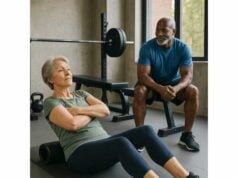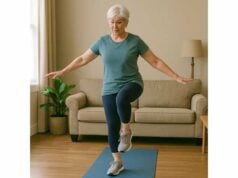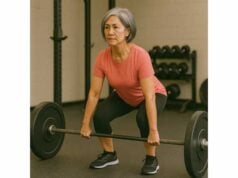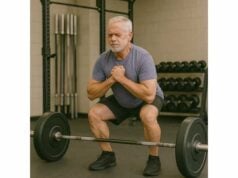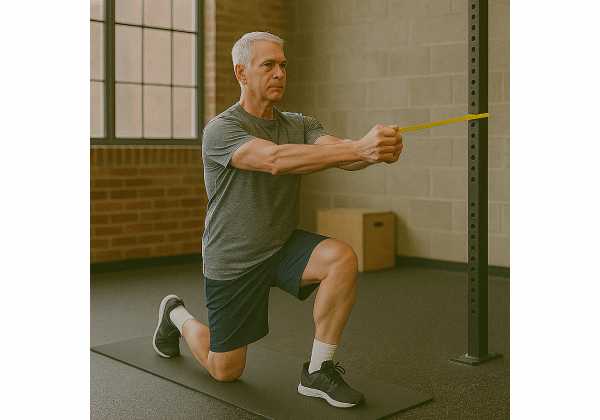
A strong core is less about visible abs and more about how well the trunk controls force. Every time you walk downhill, carry groceries, lift a suitcase, climb stairs, garden, swing a racket, or catch yourself after a stumble, your ribs, pelvis, spine, hips, and shoulders must coordinate quickly. Anti-extension and anti-rotation training builds that control without relying on endless crunches or high-risk twisting.
Anti-extension means resisting unwanted arching through the lower back. Anti-rotation means resisting unwanted turning through the trunk. Together, they teach the body to transfer force through a stable middle while the arms and legs move. That skill supports posture, lifting technique, balance, breathing, and long-term joint comfort. The best results come from simple drills done with clean form, steady breathing, and gradual progress, not from maximal strain.
Table of Contents
- Why Core Control Matters for Healthspan
- Anti-Extension and Anti-Rotation Explained
- Posture Is a Moving Skill
- Best Anti-Extension Exercises
- Best Anti-Rotation Exercises
- How to Build a Weekly Core Plan
- Breathing, Bracing, and Form Cues
- Common Mistakes and Safer Modifications
Why Core Control Matters for Healthspan
Core training supports healthspan because the trunk links nearly every useful movement. Legs create force against the ground. Arms reach, pull, push, carry, and catch. The spine and pelvis sit between them. When the middle leaks force, the body often compensates with excessive lower-back arching, rib flare, shoulder tension, hip tightness, or awkward twisting.
The core is not one muscle. It includes the diaphragm, pelvic floor, abdominal wall, spinal extensors, deep stabilizers around the vertebrae, lats, glutes, hip flexors, and even the muscles between the ribs. These tissues do not work as a rigid corset all day. They change pressure, stiffness, and timing based on the task.
In daily life, the trunk rarely works in isolation. It stabilizes while the limbs move. That is why anti-extension and anti-rotation drills fit longevity training so well. They resemble real tasks more closely than repeated spinal flexion on the floor.
Strong trunk control helps with:
- Carrying bags without leaning or twisting.
- Lifting objects while keeping the ribs and pelvis organized.
- Walking and running with less wasted motion.
- Reaching overhead without dumping motion into the lower back.
- Turning the hips and shoulders without yanking the spine.
- Recovering balance when the body is pulled off center.
Core endurance also matters. A person does not need a one-rep-max plank. A better sign is the ability to maintain good trunk position through repeated low-to-moderate demands: a 30-minute walk, a set of squats, a suitcase carry, or yard work. This is where healthspan differs from performance showmanship. The trunk needs enough strength to handle surprise, enough endurance to resist fatigue, and enough coordination to relax when tension is no longer needed.
Core training also pairs well with broader strength and mobility work. A person who learns to brace and breathe during dead bugs and carries usually moves better during squats, hinges, presses, and rows. For a broader strength framework, weekly strength training for longevity builds the foundation that core drills support.
Anti-Extension and Anti-Rotation Explained
Anti-extension exercises train the trunk to resist being pulled into an excessive arch. Anti-rotation exercises train the trunk to resist being pulled into a twist. Both are about control, not stiffness for its own sake.
Anti-extension: resisting the arch
Anti-extension work becomes important when the lower ribs flare upward, the pelvis tips forward, and the lower back takes over. This pattern shows up during push-ups, overhead presses, planks, hanging leg raises, backbends, running, and even standing with the belly relaxed and the rib cage lifted.
A clean anti-extension position usually feels like this: ribs gently down, pelvis level, abs engaged, glutes lightly active, and breath still moving. The spine does not need to flatten aggressively. The aim is a controlled neutral position where the lower back is not forced to do the job of the abdominal wall and hips.
Common anti-extension drills include:
- Dead bug variations.
- Forearm planks.
- Body saws.
- Stability ball rollouts.
- Ab wheel rollouts.
- Hollow holds.
- Bear planks.
- Overhead carries.
The easiest versions happen close to the floor with short lever arms. The harder versions extend the arms or legs farther away from the trunk, increase time under tension, or add load.
Anti-rotation: resisting the twist
Anti-rotation work trains the trunk to stay organized when force tries to turn it. This is the skill used when carrying one heavy bag, opening a stiff door, walking a dog that pulls on the leash, moving furniture, or stepping onto uneven ground.
The trunk should not be frozen. The hips and upper back need room to rotate during walking, throwing, swinging, and reaching. Anti-rotation training teaches the body to choose when to rotate and when to resist rotation. That distinction protects movement quality.
Common anti-rotation drills include:
- Pallof presses.
- Half-kneeling band holds.
- Cable chops with controlled range.
- Suitcase carries.
- Offset farmer carries.
- Bird dogs.
- Renegade row holds.
- Single-arm plank variations.
Anti-rotation often exposes left-to-right differences. One side may hold steadier, breathe easier, or resist hip shifting better. Those differences matter more than the amount of weight used.
| Training type | Main challenge | Daily-life example | Good starter exercise | Common compensation |
|---|---|---|---|---|
| Anti-extension | Resist lower-back arching | Reaching overhead or pushing a stroller uphill | Dead bug | Rib flare and low-back pressure |
| Anti-rotation | Resist unwanted trunk turning | Carrying one grocery bag or suitcase | Pallof press | Hip shift and shoulder shrugging |
These two patterns belong in the same program because real movement blends them. A suitcase carry resists side-bending and rotation. A push-up resists extension and rotation. A split-stance cable press challenges the ribs, pelvis, hips, and shoulders at once.
Posture Is a Moving Skill
Posture is not a single perfect position. It is the ability to find useful positions, leave them when needed, and return to control under load. A person who sits straight but cannot hinge, reach, rotate, or breathe under effort does not have durable posture. A person who moves well has options.
The common “stand tall” cue often backfires. People lift the chest, pull the shoulders back, tighten the neck, and arch the lower back. That may look upright for a moment, but it creates stiffness. A better posture cue is “stack the ribs over the pelvis.” This brings the trunk into a position where the diaphragm, abdominal wall, hips, and spine share work.
Good posture during movement includes three qualities.
First, the rib cage and pelvis stay connected. They do not need to be locked, but they should not drift far apart during basic tasks. Second, the head sits over the torso instead of reaching forward. Third, the shoulders move on a stable rib cage instead of forcing the lower back to compensate.
Core training improves posture when it teaches the body to hold these relationships during movement. A dead bug teaches the ribs and pelvis to stay organized while the limbs move. A Pallof press teaches the trunk to resist a sideways pull. A carry teaches posture under load while walking. These drills create posture that transfers.
Static stretching alone rarely fixes posture because posture is also strength, endurance, perception, and habit. Mobility work helps when joints lack options, especially the hips, shoulders, and ankles. Strength work helps when the body cannot control those options. For people who feel locked up before core training, a simple hips, shoulders, and ankles mobility routine pairs well with anti-extension and anti-rotation work.
Everyday movement matters too. A person who trains the core twice a week but sits for long blocks in one shape still needs movement breaks. Small doses help: stand up every 30–60 minutes, take a short walk after meals, change sitting positions, and practice a few easy reaches or hip hinges during the day. Posture improves when the nervous system experiences many low-threat positions, not one forced pose.
Best Anti-Extension Exercises
Anti-extension exercises should create abdominal effort without lower-back strain. The right drill feels challenging through the front and sides of the trunk. The wrong version feels like pinching, compression, or gripping in the lumbar spine.
Dead bug
The dead bug is the best starting point for many adults because it teaches rib-pelvis control with low joint stress. Lie on your back with hips and knees bent to 90 degrees, arms reaching toward the ceiling. Exhale gently, bring the ribs down, and keep the lower back comfortable against the floor. Slowly lower one heel or extend one leg while the opposite arm reaches back. Return with control and switch sides.
Start with 2 sets of 6–8 slow reps per side. Each rep should take about 3–5 seconds. Stop the set when the ribs pop up, the lower back arches, or breathing becomes strained.
Progressions include longer reaches, holding a light dumbbell, pressing the hands into a wall, or using a resistance band. Regressions include heel taps, arms-only reaches, or keeping the arms relaxed by the sides.
Forearm plank
A plank trains the trunk to resist gravity pulling the body into extension. The common mistake is holding too long with sagging hips and a clenched neck. A high-quality 15-second plank beats a sloppy 90-second hold.
Set the elbows under the shoulders, step the feet back, squeeze the glutes lightly, and pull the ribs toward the pelvis. Imagine dragging the elbows toward the toes without actually moving them. Breathe behind the brace. Use 3–5 breaths per hold or 10–25 seconds.
Make the plank easier by elevating the elbows on a bench. Make it harder by moving from forearms to a body saw, lifting one foot briefly, or adding a slow reach.
Bear plank
The bear plank builds anti-extension strength with the knees hovering just above the floor. Start on hands and knees. Place hands under shoulders and knees under hips. Tuck the toes, gently brace, and lift the knees 2–5 cm off the floor. Hold for 10–20 seconds while breathing quietly.
This drill teaches control without needing long lever arms. It also prepares the body for crawling patterns, mountain climbers, and push-ups. If wrists feel uncomfortable, use fists, push-up handles, or an elevated surface.
Rollout progressions
Rollouts are advanced anti-extension drills. They create a long lever from the knees or feet to the hands. Start with a stability ball rollout before using an ab wheel. Kneel with forearms on the ball. Keep the ribs down and slowly roll forward only as far as you can control. Pull back using the lats and abs, not a lower-back snap.
Use 2–3 sets of 5–8 reps. Rollouts do not need deep range. A short controlled rollout trains the pattern better than a long uncontrolled one.
People with active back pain, hernia concerns, recent abdominal surgery, or pelvic floor symptoms should treat rollouts as optional, not required. Dead bugs, elevated planks, and carries provide plenty of benefit with less strain.
Best Anti-Rotation Exercises
Anti-rotation exercises build the ability to keep the trunk steady while force pulls from one side. They also teach the hips, feet, and shoulders to support the spine.
Pallof press
The Pallof press is a clean entry point. Attach a resistance band at chest height. Stand sideways to the anchor, hold the band at the chest, and step away until it pulls you toward the anchor. Set the feet about hip-width apart. Press the hands straight out and resist rotation. Bring the hands back with control.
Use 2–3 sets of 6–10 reps per side, or hold the arms extended for 10–20 seconds. Keep the shoulders low, ribs stacked, and pelvis level. If the band twists you, reduce tension or widen the stance.
Progress with a narrower stance, half-kneeling position, split stance, slow tempo, or a cable machine. The drill should feel like a steady trunk challenge, not a wrestling match.
Suitcase carry
The suitcase carry is one of the most useful core exercises because it looks like real life. Hold one dumbbell, kettlebell, or loaded bag at your side. Walk slowly without leaning, hiking one hip, or letting the weight bang against the leg.
Start with 3–4 walks of 20–40 meters per side. Choose a load that challenges posture but allows quiet breathing. A useful starting point is about 10–20% of body weight in one hand for trained adults, lower for beginners or anyone returning from pain.
Suitcase carries train anti-rotation, anti-lateral flexion, grip, gait, and shoulder packing at the same time. They also expose asymmetry fast. If one side feels unstable, train that side with the same load and distance, then let it catch up over several weeks. For people who want more loaded walking options, walking and rucking for healthy aging builds this idea into conditioning.
Bird dog
The bird dog teaches cross-body control. Start on hands and knees. Reach one arm forward and the opposite leg back without shifting the hips or arching the lower back. Pause for 2–3 seconds, return, and switch sides.
Use 2 sets of 6–8 reps per side. Move slowly enough that a glass of water could sit on your lower back without spilling. If that is too hard, slide one foot back while keeping both hands down, then progress to lifting the leg. Later, add a resistance band or draw the elbow and knee together under control.
Renegade row hold
A full renegade row is demanding. The anti-rotation benefit comes from resisting trunk movement while one hand supports the body and the other rows. Start with hands on an elevated bench and feet wide. Hold a plank position, lift one hand briefly, then place it down without shifting the hips.
Progress to a light dumbbell row from the elevated position. Keep the hips square. Use 2–3 sets of 5–8 reps per side. This drill should not be rushed. The body learns more from a slow, quiet rep than from a fast row with rocking hips.
How to Build a Weekly Core Plan
A good core plan fits inside normal training. It does not need its own long workout. Most adults do well with 8–15 minutes of focused trunk work, 2–4 times per week. The best time is after the warm-up or near the end of a strength session, depending on the goal.
Place low-fatigue activation drills before strength work. Dead bugs, bear planks, and light Pallof presses prepare the trunk for lifting. Put harder planks, rollouts, and carries later so they do not reduce performance on squats, hinges, presses, or rows.
A simple weekly structure looks like this:
| Day | Exercise 1 | Exercise 2 | Dose | Focus |
|---|---|---|---|---|
| Strength Day 1 | Dead bug | Pallof press | 2–3 sets each | Control and breathing |
| Strength Day 2 | Forearm plank | Suitcase carry | 3 sets each | Endurance under load |
| Optional short day | Bear plank | Bird dog | 2 easy sets each | Low-stress practice |
Progress slowly. Increase only one variable at a time: longer holds, more reps, harder leverage, more band tension, heavier carries, or more total sets. A useful rule is to add difficulty only when every rep looks controlled and breathing stays smooth.
For most people, core sets should feel like a 6–8 out of 10 effort. Maximum bracing has a place during heavy lifting, but healthspan core training should not feel like a breath-holding contest. The trunk needs repeatable control.
Good progression examples include:
- Dead bug heel tap → dead bug leg reach → banded dead bug.
- Elevated plank → floor plank → body saw.
- Tall-kneeling Pallof press → standing Pallof press → split-stance Pallof press.
- Light suitcase carry → heavier carry → longer carry → uneven terrain.
- Bird dog leg-only → full bird dog → banded bird dog.
Retest every 4–6 weeks. Look for better control, not only harder exercises. A meaningful improvement is holding a plank with easier breathing, carrying the same load without leaning, or pressing a band without the hips shifting. Functional tests also help track whether training carries over to daily performance. Simple measures like gait speed, sit-to-stand, and grip fit well alongside functional longevity tests.
Core work should support the full program. It should not crowd out strength, aerobic capacity, balance, mobility, or recovery. When training time is limited, choose drills that give multiple benefits: carries, bear planks, Pallof presses, and loaded marches.
Breathing, Bracing, and Form Cues
Breathing and bracing decide whether core training builds usable control or just tension. Bracing means creating enough trunk stiffness for the task. It does not mean sucking in the belly, clenching the jaw, or holding the breath through every rep.
A useful brace starts with a quiet exhale. The ribs soften downward. The abdominal wall firms around the whole waist, including the sides and back. The pelvis stays level. Then the breath continues in small controlled cycles. During harder lifts, a brief breath hold with pressure has a role, but most core drills should allow breathing.
Think of the trunk like a dimmer switch. A dead bug may need 30–40% tension. A heavy suitcase carry may need 60–70%. A near-max deadlift needs more. Constant 100% tension teaches stiffness, not skill.
Good cues include:
- “Ribs over pelvis.”
- “Exhale, then hold the shape.”
- “Brace around the waist, not just the front.”
- “Move the arms and legs without moving the trunk.”
- “Stay tall without lifting the ribs.”
- “Breathe behind the brace.”
Poor cues include “flatten your back as hard as possible,” “suck your stomach in,” and “never let your spine move.” These cues oversimplify. The spine is designed to move. Core training teaches control across positions.
The diaphragm matters because it is both a breathing muscle and part of trunk pressure control. When someone flares the ribs and breathes only into the upper chest, the abdominal wall often loses leverage. When they can breathe into the lower ribs and back while maintaining posture, trunk control improves.
Bracing also changes with position. In a dead bug, the floor gives feedback. In a Pallof press, the band pulls sideways. In a carry, each step changes the load. This is why a complete core plan uses several positions: supine, quadruped, kneeling, standing, and walking.
Core control also improves lifting technique. Before squats, hinges, and overhead presses, use one or two light drills to remind the body how to stack the ribs and pelvis. This carries into better bar path, steadier shoulders, and less wasted motion. For more detail on pressure and lifting mechanics, bracing and breathing for longevity lifting expands this skill.
Common Mistakes and Safer Modifications
The most common mistake is choosing a drill that is too hard to control. Core training should challenge the position, not destroy it. When the lower back arches, hips twist, shoulders shrug, or breath locks up, the nervous system practices compensation.
Another mistake is doing only crunches and sit-ups. Spinal flexion is not automatically bad, and many healthy people tolerate it well. The issue is imbalance. Daily life and lifting require the trunk to resist extension, rotation, side-bending, and shear. A core plan built only around bending the spine misses those demands.
Long planks also get overused. Once a person can hold a clean plank for 45–60 seconds, more time gives diminishing returns. It is usually better to progress to harder leverage, carries, body saws, or loaded anti-rotation work.
Pain needs clear rules. Mild muscular effort is normal. Sharp pain, nerve symptoms, increasing back pain, pelvic pressure, dizziness, or symptoms that worsen after training are not training goals. Reduce range, load, duration, or complexity. If symptoms persist, get assessed by a qualified clinician.
| Problem | What it looks like | Better option |
|---|---|---|
| Too much lower-back arch | Ribs flare during dead bugs, planks, or rollouts | Shorten the lever and exhale before each rep |
| Breath holding on easy drills | Face tightens and reps feel frantic | Use shorter holds with 2–4 calm breaths |
| Hip shifting during anti-rotation | Pelvis slides away from the band or cable | Widen stance or reduce resistance |
| Shoulder dominance | Neck and traps work harder than trunk | Lower shoulders and use lighter load |
| Chasing fatigue | Sets continue after form breaks | Stop with 1–2 clean reps in reserve |
Modifications keep training productive. For sensitive wrists, use forearms, fists, handles, or elevated surfaces. For knees, place padding under the kneeling leg during half-kneeling Pallof presses. For shoulder irritation, keep presses lower, shorten the range, or use carries instead of overhead variations. For balance concerns, start anti-rotation drills near a wall or stable support.
Older adults and beginners should start with floor-based and supported drills before advanced rollouts or unstable surfaces. Instability tools are not required. A stable floor, light band, and one dumbbell or kettlebell cover most needs. Balance work belongs in a longevity program, but it should be trained with clear intent. For targeted standing practice, balance and fall-prevention drills complement core training without turning every exercise into a circus trick.
The most useful core program is boring in the best way. It repeats clean patterns, adds small progressions, and supports better movement outside the gym. Anti-extension and anti-rotation drills teach the trunk to manage force while life happens around it. That is the kind of core strength that still matters decades from now.
References
- A Systematic Review of the Effectiveness of Core Stability Exercises in Patients with Non-Specific Low Back Pain 2022 (Systematic Review)
- Effects of core stabilization exercise and strengthening exercise on proprioception, balance, muscle thickness and pain related outcomes in patients with subacute nonspecific low back pain: a randomized controlled trial 2021 (RCT)
- Effects of core training on dynamic balance stability: A systematic review and meta-analysis 2022 (Systematic Review)
- International Exercise Recommendations in Older Adults (ICFSR): Expert Consensus Guidelines 2021 (Guideline)
- Physical Activity in Older Adults: What Every Internist Needs to Know 2024 (Review)
- World Health Organization 2020 guidelines on physical activity and sedentary behaviour 2020 (Guideline)
Disclaimer
This article is educational and does not replace personal medical advice, physical therapy, or coaching from a qualified professional. People with current back pain, recent surgery, hernia concerns, pelvic floor symptoms, osteoporosis-related fracture risk, balance problems, or neurological symptoms should get individualized guidance before progressing core exercises.