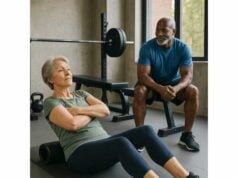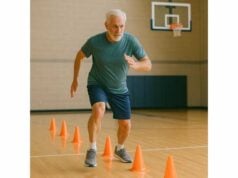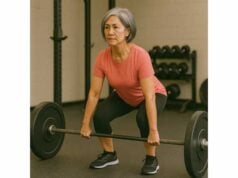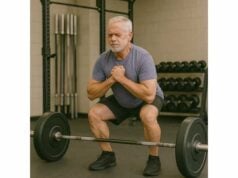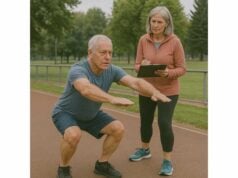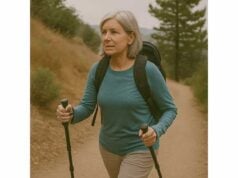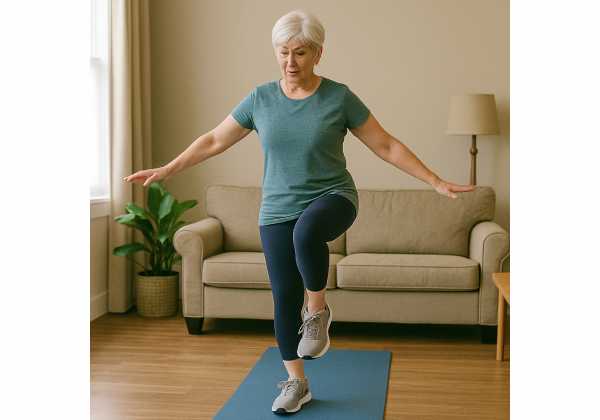
Balance protects the freedom to walk outside, climb stairs, carry groceries, play with grandchildren, travel, and train without fear. It is also trainable. The body keeps you upright through a fast conversation between vision, inner-ear signals, foot and joint feedback, muscle strength, reaction speed, and attention. Aging, inactivity, medications, poor sleep, pain, low strength, and vision changes all disturb that conversation, but the system improves when it gets regular, specific practice.
The most useful balance drills look like real life: standing from a chair, turning, stepping over obstacles, reaching, walking on uneven ground, and recovering when weight shifts unexpectedly. A few minutes a day builds steadier feet, stronger hips, quicker reactions, and more confidence. The best plan starts safely, progresses gradually, and combines balance work with strength, mobility, power, walking, and smart home setup.
Table of Contents
- Why Balance Training Belongs in a Longevity Routine
- How Balance Works in Real Life
- The Rules That Make Daily Drills Work
- Daily Balance Drills: Simple, Safe, and Effective
- Strength, Power, and Mobility That Protect Against Falls
- Walking, Terrain, and Real-Life Practice
- Fall-Proof Your Environment Without Shrinking Your Life
- Progressions, Tests, and Warning Signs
Why Balance Training Belongs in a Longevity Routine
Balance training protects independence because falls often start with ordinary moments: stepping off a curb, turning in a narrow hallway, reaching into a cabinet, getting up at night, catching a toe on a rug, or carrying something heavy while distracted. The fall itself happens fast, but the risk builds slowly through weaker legs, slower reactions, stiffer ankles, poorer vision, dizziness, and less practice moving in varied situations.
A strong longevity routine already includes aerobic fitness, resistance training, mobility, and enough daily movement. Balance connects all of them. A person with good strength but poor balance still hesitates on stairs. A person with good walking endurance but weak hips still struggles on uneven ground. A person with good flexibility but slow reaction time still has trouble recovering from a trip.
Falls also change behavior. After one scary fall or near-fall, people often walk less, avoid stairs, stop outdoor activities, and lose conditioning. That creates a loop: less movement leads to less strength and poorer balance, which raises fear even more. Daily drills interrupt that loop.
Balance training is not just standing on one leg. Useful training includes:
- Holding steady positions with good posture.
- Shifting weight smoothly from one foot to the other.
- Stepping in different directions.
- Turning without rushing.
- Reaching outside the base of support.
- Recovering after a small loss of balance.
- Walking while carrying, scanning, talking, or thinking.
These skills show up in daily life. They also complement simple functional tests such as gait speed, chair stands, and single-leg balance, which give a quick picture of how well strength, coordination, and confidence work together.
The earlier someone starts, the easier it is to maintain. Middle age is a good time to build the reserve needed later. Older adulthood is still a good time to improve. Balance responds to practice at every adult age when the drills match current ability and progress in small steps.
How Balance Works in Real Life
The body balances by combining information from several systems at once. When one system weakens, the others need more support. Good drills train the whole network instead of treating balance as a single skill.
Vision tells the body where it is
Vision helps you judge distance, surface changes, edges, obstacles, speed, and depth. Dim light, bifocals, cataracts, glare, low contrast, and cluttered rooms all raise fall risk because the brain receives less useful information.
That is why balance often feels worse in the dark or when looking up. It is also why home lighting matters. Training should sometimes include head turns and visual scanning, but early drills should happen in good light with a stable support nearby.
The inner ear senses motion and head position
The vestibular system in the inner ear helps the brain detect head movement, acceleration, and orientation. When it works well, you turn your head while walking and stay steady. When it is irritated or weakened, quick turns, looking up, bending over, or rolling in bed can trigger dizziness or unsteadiness.
People with frequent dizziness, vertigo, nausea with head movement, or a sense that the room spins need assessment. Vestibular problems often improve with specific therapy, and general balance drills alone are not always enough. A deeper look at vestibular health and balance is worthwhile when dizziness is part of the pattern.
Feet, ankles, hips, and joints provide position sense
Proprioception is the body’s sense of joint position and pressure. The feet report where weight is landing. The ankles detect sway. The hips adjust the trunk. The spine and neck help orient the head.
This system gets weaker with inactivity, neuropathy, joint pain, swelling, poor footwear, and always walking on flat predictable surfaces. Barefoot or thin-soled practice on a safe floor often improves foot awareness, while outdoor walking on grass, gravel, and gentle slopes teaches the body to adapt.
Muscle strength gives balance a backup plan
Balance fails when the body detects a problem but lacks the strength to correct it. Strong calves, thighs, glutes, trunk muscles, and upper back muscles help you stop a stumble, climb stairs, get up from the floor, and control downhill walking.
Strength also widens the safety margin. If standing from a chair takes near-maximal effort, a small slip becomes dangerous. If the same movement feels easy, the body has reserve. This is where balance training and weekly strength training belong together.
Attention and reaction speed matter more than people expect
Falls rarely happen during perfect concentration in an empty room. They happen while carrying laundry, answering a question, looking for keys, stepping around a pet, or checking traffic. That is why dual-task practice matters.
Dual-tasking means combining movement with a mental task. Examples include walking while naming animals, stepping while counting backward, or carrying a light object while turning. This trains the brain to keep posture organized when attention is shared. It pairs well with thinking-and-moving drills for cognitive longevity.
The Rules That Make Daily Drills Work
Daily balance work succeeds when it is frequent, specific, and challenging without being reckless. The best drills create mild wobble, not panic. They should feel focused, controlled, and repeatable.
Use these rules before choosing exercises:
| Training rule | How to apply it | Why it works |
|---|---|---|
| Train near support | Stand beside a counter, sturdy chair, wall, or rail. | Safety lets you practice challenging positions without fear. |
| Start with short sets | Use 10–30 second holds or 4–8 controlled steps. | Quality stays high and fatigue does not ruin form. |
| Progress one variable at a time | Change stance, surface, head movement, speed, or task load, not all at once. | The nervous system learns faster when the challenge is clear. |
| Use real-life patterns | Practice turns, reaches, step-ups, carries, and obstacle steps. | Balance is task-specific, so drills should resemble daily movement. |
| Stop before sloppy reps | End the set when feet slap, posture collapses, or grabbing replaces light touch. | Balance training rewards precision, not exhaustion. |
A daily dose of 5–10 minutes works well for most healthy adults. People with high fall risk often need supervised sessions plus home practice. Longer programs also work, but consistency beats occasional heroic workouts.
A useful week includes four types of balance exposure:
- Static control: holding steady positions.
- Dynamic control: stepping, turning, reaching, and changing direction.
- Reactive control: practicing safe recovery from small shifts.
- Dual-task control: moving while thinking, looking, talking, or carrying.
Do not turn every drill into a test. The body learns through repeated successful practice. Use a support lightly. Keep breathing. Relax the jaw and hands. Let the toes spread instead of clawing the floor.
Footwear matters. For indoor drills, use bare feet or stable flat shoes if safe. Avoid loose slippers, thick soft soles, and shoes that slide. For outdoor practice, choose shoes with secure heel fit, enough room for the toes, and a sole that grips without catching.
Pain changes balance. Sharp joint pain, new swelling, numbness, or back pain that travels down the leg should change the plan. Use smaller ranges, more support, or professional guidance. For people with arthritis or joint sensitivity, knee- and hip-friendly training choices help maintain progress without turning balance work into a pain trigger.
Daily Balance Drills: Simple, Safe, and Effective
The following drills need little space and no special equipment. Use a counter or wall within reach. Pick 4–6 drills per day rather than doing everything at once. The body improves faster when practice feels crisp.
1. Tall stance with foot pressure control
Stand with feet hip-width apart. Spread weight evenly between the heel, big-toe base, and little-toe base of each foot. Imagine the crown of the head rising upward while the ribs stay stacked over the pelvis.
Hold for 30 seconds. Breathe slowly. Then shift weight slightly forward, back, left, and right without lifting the feet. Keep the movement small. The ankles should respond before the hips or shoulders lurch.
Progress by narrowing the stance, turning the head slowly, or closing the eyes for 3–5 seconds at a time while holding support. Do not close the eyes if dizziness, neuropathy, or high fall risk is present unless supervised.
2. Semi-tandem and tandem stance
Place one foot slightly ahead of the other, as if standing on two sides of a narrow path. This is semi-tandem. Hold for 20–30 seconds, then switch sides.
To progress, move the front heel closer to the back toes. Full tandem means heel-to-toe alignment, like standing on a line. Keep the hips level and avoid gripping the floor with the toes.
Use this drill to train narrow-base control. It prepares the body for crowded spaces, curbs, and moments when feet land close together.
3. Single-leg balance with toe support
Stand tall and shift weight onto one foot. Let the other toes stay lightly on the floor like a kickstand. Hold for 15–30 seconds. Switch sides.
Progress by floating the toes one inch off the floor, then by adding slow head turns or a small reach with the free hand. The standing knee should stay soft, not locked. The hip should stay level instead of hiking upward.
Single-leg control supports stairs, walking, stepping over obstacles, and putting on pants. It also reveals side-to-side differences. Train the weaker side first and give it one extra set if needed.
4. Sit-to-stand with a quiet finish
Sit near the front of a sturdy chair. Place feet under knees. Stand up without pushing off if possible. At the top, pause for two seconds and become completely still. Sit back down with control.
Do 5–10 reps. The pause matters. Many people stand up and immediately wobble, step, or rush forward. The quiet finish teaches the body to regain control before walking.
Progress by slowing the lowering phase to three seconds, holding a light object, or using a slightly lower chair. This drill also builds leg strength and pairs well with broader squat and hinge fundamentals.
5. Clock taps
Stand on the left leg with the right toes lightly touching the floor. Imagine a clock around you. Tap the right toes to 12 o’clock, 3 o’clock, 6 o’clock, and back to center. Do 2–4 rounds, then switch sides.
Keep the standing knee aligned over the middle toes. The pelvis should stay mostly level. Use light fingertip support as needed.
Clock taps train hip control, ankle strategy, reaching, and weight shifting. They also expose weak directions. Many people struggle most with backward and diagonal taps because those positions require more hip stability and foot awareness.
6. Side steps and backward steps
Step sideways for 4–8 steps, then return. Keep toes pointing forward and knees soft. Then practice 4–8 small backward steps near a counter or hallway wall.
Backward stepping is important because real-life balance recovery often requires a quick step behind the body. Start small. Do not rush. Look forward rather than down the whole time.
Progress by adding a light resistance band above the knees for side steps, or by placing low tape lines on the floor as visual targets. Avoid clutter and raised objects during early backward practice.
7. Turn-and-pause drill
Walk three steps, turn 90 degrees, pause, and regain stillness. Repeat in both directions. Then practice 180-degree turns in four small steps.
Many falls happen during turns because the head, eyes, trunk, hips, and feet move at different times. Clean turns use several small steps instead of one fast pivot. Keep the feet moving under the body. Avoid twisting on a planted foot.
Progress by turning while carrying a light bag, naming words in a category, or scanning for an object across the room. This overlaps with agility and reaction-time training, but the balance version stays slower and more controlled.
8. Safe reach practice
Stand near a counter. Reach one hand forward, sideways, and slightly upward while keeping both feet planted. Return to tall posture after each reach. Do 5 reaches per direction.
This trains the edge of the base of support. In daily life, people reach into cabinets, across tables, into the car, and toward shelves. Good reach practice teaches weight shift without overcommitting.
Progress by using a light object, reaching diagonally, or standing in semi-tandem. Stop if the reach turns into a lunge or grab.
Strength, Power, and Mobility That Protect Against Falls
Balance drills sharpen control, but strength and power provide the physical reserve to recover. The strongest fall-prevention routines include lower-body strength, trunk control, ankle mobility, and low-risk power training.
Build the muscles that stop a fall
Prioritize these movements two or three times per week:
- Sit-to-stand or squat: trains thighs, hips, and rising from chairs.
- Hip hinge or deadlift pattern: trains glutes, hamstrings, and lifting mechanics.
- Step-up: trains stairs, curbs, and single-leg support.
- Calf raise: trains push-off, ankle stiffness, and balance corrections.
- Row or carry: trains posture, grip, and trunk control.
- Split squat or supported lunge: trains stride control and deceleration.
Use a range of 2–4 sets of 5–12 reps for most strength moves. Stop with 1–3 good reps left in reserve. The last reps should require effort but not strain or breath-holding.
Grip also matters. Strong hands help with railings, carries, floor transfers, and catching support when needed. Heavy carries, farmer’s walks, and dead hangs build useful hand strength when they match current capacity.
Train power without reckless impact
Power is the ability to produce force quickly. It declines faster than strength with age, and it matters when you trip because recovery requires speed. Power training does not have to mean high jumps.
Start with low-risk options:
- Fast sit-to-stand: rise quickly, sit down slowly.
- Step-up with a brisk but controlled drive.
- Medicine ball chest pass to a wall.
- Light kettlebell deadlift with a crisp upward phase.
- Marching with strong arm drive.
- Low pogo bounces only for people with good joints, good strength, and no high fall risk.
Use 3–5 sets of 3–6 crisp reps. Rest long enough to keep every rep sharp. Power training belongs early in a workout, after a warm-up and before fatigue. More advanced progressions fit within safe power training for healthy aging when the foundation is ready.
Restore the mobility balance needs
The ankles, hips, and thoracic spine need enough motion for smooth balance corrections. Stiff ankles force extra hip and trunk movement. Tight hips shorten stride length. A rigid upper back changes posture and head position.
Use a short daily mobility sequence:
- Ankle rocks: 8–10 reps per side, knee moving over toes while heel stays down.
- Calf stretch: 20–30 seconds with the knee straight, then slightly bent.
- Hip flexor stretch: 20–30 seconds per side, glute gently squeezed.
- Hip airplanes with support: 3–5 small rotations per side.
- Open-book upper-back rotations: 5–8 reps per side.
Mobility should improve positions, not create soreness. The best results come from pairing mobility with strength and balance practice. A broader hips, shoulders, and ankles routine helps when stiffness limits walking, squatting, or stair control.
Walking, Terrain, and Real-Life Practice
Walking is the most common balance activity adults perform, and it deserves practice beyond flat indoor floors. Good walking balance includes rhythm, stride control, arm swing, foot clearance, turns, starts, stops, and scanning.
Start with purposeful walking. Choose a safe path and walk for 5–20 minutes. During part of the walk, focus on posture, relaxed arms, quiet foot placement, and steady breathing. Then add short skill blocks.
Useful walking drills include:
- Start-stop walking: Walk 5–10 steps, stop cleanly, pause, restart.
- Speed changes: Alternate 20 seconds easy and 10 seconds brisk.
- Line walking: Walk near a painted line or floor seam without forcing heel-to-toe.
- Obstacle awareness: Step over flat tape lines, then low safe objects if appropriate.
- Carry practice: Carry a light grocery bag in one hand, then switch sides.
- Scan practice: Look left, right, and ahead while maintaining a steady path.
Outdoor terrain improves adaptability. Grass, packed dirt, gentle slopes, and smooth gravel give the feet varied input. Start in daylight, use shoes with grip, and avoid wet leaves, ice, loose stones, and steep slopes until skill improves.
Stairs deserve special attention. Practice step-ups, slow step-downs, and rail use before relying on stairs for conditioning. The descent is often harder because it requires controlled lowering, ankle mobility, and confidence. Step down slowly, let the whole foot land, and keep the knee tracking over the toes.
For people who already walk comfortably, gait and rucking progressions add load, terrain, and distance in a structured way. Load should never come before stable walking mechanics. A backpack that changes posture or makes turning harder is too heavy for balance-focused walking.
Real-life practice also includes floor transfers. Getting down to the floor and back up supports independence, confidence, and emergency preparedness. Practice near a sturdy chair or couch. Use a half-kneeling position if knees tolerate it. People with osteoporosis, recent surgery, severe arthritis, or dizziness should get individualized instruction before floor drills.
Fall-Proof Your Environment Without Shrinking Your Life
A safer environment should support movement, not encourage fear or inactivity. The aim is to remove unnecessary hazards while keeping daily life active and varied.
Start with the places where falls often happen: bedroom, bathroom, stairs, entryways, kitchen, and outdoor paths.
Use this checklist:
- Remove loose rugs or secure them fully.
- Keep walkways clear of cords, shoes, bags, pet toys, and low furniture.
- Add night lights from bed to bathroom.
- Use bright bulbs in stairways, halls, and entrances.
- Install sturdy handrails on both sides of stairs when possible.
- Add grab bars in the bathroom, especially near the shower and toilet.
- Use non-slip mats in wet areas.
- Store frequent-use items between hip and shoulder height.
- Keep a chair or bench near the entry for shoes.
- Repair uneven outdoor steps, loose tiles, and broken paving.
- Wear secure shoes instead of loose slippers.
Vision deserves attention. Updated glasses, cataract care, better lighting, and stronger contrast on step edges all support balance. People who struggle in dim rooms, miss curbs, or feel unsafe on patterned floors should consider a vision review. Lighting and contrast strategies overlap with vision, contrast, and brain aging because the brain relies on clean visual information to guide movement.
Medication review also belongs in fall prevention. Sedatives, some sleep aids, some blood pressure medicines, anticholinergic drugs, alcohol, and combinations of medications can increase dizziness, confusion, or slow reactions. Never stop prescribed medication without medical guidance, but bring falls, near-falls, dizziness, and unsteadiness to a clinician or pharmacist.
Foot health matters as much as footwear. Painful bunions, thick nails, numbness, plantar fasciitis, swelling, and reduced sensation all change how the foot meets the ground. People with diabetes, neuropathy, or circulation problems need regular foot care and safe shoe choices.
Do not remove every challenge from life. Smooth floors and rails help, but the body still needs practice with real surfaces, carrying, turning, and stepping. The safest long-term setup combines hazard reduction with regular exposure to controlled movement challenges.
Progressions, Tests, and Warning Signs
Balance improves when drills progress gradually. A drill is ready to advance when it feels steady for several sessions, posture stays organized, and support use drops from gripping to light fingertip contact.
Progress in this order:
- Widen to narrow: hip-width stance, semi-tandem, tandem, single-leg.
- Stable to variable: floor, mat, grass, gentle slope.
- Still to moving: hold, shift, step, turn, reach.
- Eyes fixed to scanning: look ahead, turn head, scan the room.
- Simple to dual-task: add counting, naming, carrying, or conversation.
- Slow to quicker: increase speed only after control is reliable.
Do not progress by making drills scary. Fear changes posture, stiffens the body, and reduces learning. A useful challenge feels like a 6 or 7 out of 10 for concentration, not a 10 out of 10 survival test.
A four-week starter plan
Use this plan 5 days per week. Keep a counter or wall nearby.
| Week | Daily balance work | Strength support | Walking practice |
|---|---|---|---|
| 1 | Tall stance, semi-tandem, sit-to-stand pause, side steps | 2 sessions: sit-to-stand, calf raise, supported hinge | 5–10 minutes easy, focus on posture |
| 2 | Add single-leg toe support, clock taps, turn-and-pause | 2 sessions: add step-ups and carries | 10–15 minutes with start-stop practice |
| 3 | Add safe reach practice and backward steps | 2–3 sessions: add split-stance work if tolerated | 15–20 minutes with gentle terrain |
| 4 | Add light dual-task work and controlled head turns | 2–3 sessions: add brisk sit-to-stand or light power drill | 20 minutes with turns, scanning, and short brisk segments |
Repeat the plan with harder versions only after the basics feel smooth. People who already train can blend these drills into warm-ups, rest periods, or short movement breaks. For example, perform tandem stance between strength sets, clock taps after a walk, or turn-and-pause practice before stair work. A structured joint prep and activation warm-up makes balance work feel better before lifting or outdoor conditioning.
Simple tests to track progress
Test once every 4–6 weeks, not every day. Use the same shoes, surface, and time of day.
- Single-leg stance: Time each side up to 30 seconds near support.
- Five-times sit-to-stand: Stand and sit five times safely and record time.
- Comfortable gait speed: Time a short known distance and note ease.
- Tandem stance: Hold heel-to-toe position up to 30 seconds each side.
- Turn quality: Walk, turn 180 degrees, and note number of steps and steadiness.
Do not chase perfect numbers. Look for smoother movement, fewer grabs, better symmetry, and more confidence during daily tasks. A person who no longer hesitates at curbs has made meaningful progress even if a test changes modestly.
When to get professional help
Get medical or physical therapy guidance when any of these are present:
- A fall with injury, head impact, or no clear cause.
- Two or more falls in the past year.
- New dizziness, vertigo, fainting, or blackouts.
- New weakness, numbness, foot drop, or trouble speaking.
- Chest pain, palpitations, or shortness of breath during light activity.
- Rapid change in walking, posture, or coordination.
- Neuropathy, Parkinson’s disease, stroke history, severe osteoporosis, or major vision loss.
- Fear of falling that stops normal errands or social activity.
Professional support does not mean giving up independence. It often speeds progress by matching the drill to the cause: vestibular rehab for dizziness, strength work for leg weakness, gait training for foot clearance, medication review for lightheadedness, or home safety changes after repeated near-falls.
Balance is a daily skill. Short, specific practice builds the physical reserve and confidence needed for a long active life. Train the feet, hips, eyes, reactions, strength, and attention together, and ordinary movement starts to feel safer again.
References
- World guidelines for falls prevention and management for older adults: a global initiative 2022 (Guideline)
- Falls prevention interventions for community-dwelling older adults: systematic review and meta-analysis of benefits, harms, and patient values and preferences 2024 (Systematic Review)
- Effects of exercise intervention on falls and balance function in older adults: a systematic review and meta-analysis 2025 (Systematic Review)
- Effects of Physical Activity Interventions on Strength, Balance and Falls in Middle-Aged Adults: A Systematic Review and Meta-Analysis 2023 (Systematic Review)
- The Effect of Reactive Balance Training on Falls in Daily Life: An Updated Systematic Review and Meta-Analysis 2022 (Systematic Review)
- Clinical Resources | STEADI – Older Adult Fall Prevention | CDC 2025 (Official Page)
Disclaimer
This article is educational and does not replace care from a qualified health professional. People with recent falls, dizziness, fainting, neurological symptoms, severe osteoporosis, major vision loss, or new walking changes should seek individualized medical or physical therapy guidance before starting balance drills. Stop any drill that causes sharp pain, chest pain, severe shortness of breath, spinning vertigo, or loss of control.