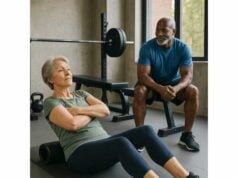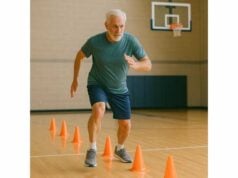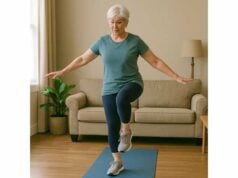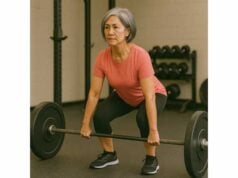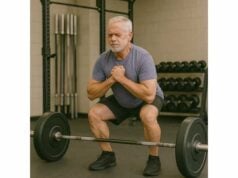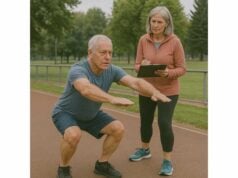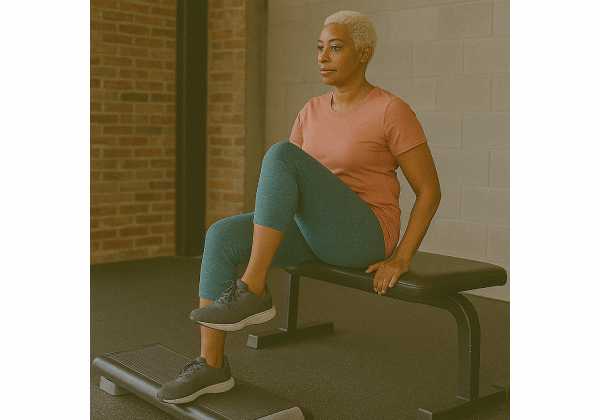
Knees and hips need regular loading to stay strong, useful, and resilient with age. The trick is choosing the right version of each movement instead of forcing painful ranges, skipping lower-body training, or treating every ache like damage. Joint-friendly training keeps the main benefits of exercise—muscle, balance, bone stimulus, walking capacity, and confidence—while lowering the irritation that comes from poor setup, rushed progressions, and mismatched exercises.
Aging joints usually respond best to steady practice, moderate effort, and small progressions. A knee that dislikes deep squats still needs strong quadriceps, hamstrings, calves, and hips. A hip that feels pinchy in deep flexion still needs strong glutes, adductors, and trunk muscles. The best plan keeps you moving today while building more options for tomorrow: better range, stronger muscles, smoother gait, and fewer flare-ups after ordinary life.
Table of Contents
- Why Joint-Friendly Training Works
- Pain Rules, Flare-Ups, and Red Flags
- Warm-Up and Setup Changes That Protect the Session
- Strength Modifications for Knees and Hips
- Conditioning Without Joint Irritation
- Mobility, Balance, and Power Without Overstress
- Weekly Programming and Progression
- Troubleshooting Common Knee and Hip Problems
Why Joint-Friendly Training Works
Joint-friendly training works because it changes the dose, angle, range, speed, and recovery of movement while keeping the body strong. Painful joints rarely need total rest for long. They usually need better loading: enough work to stimulate strength and tissue tolerance, but not so much that swelling, limping, or next-day pain take over.
Knees and hips sit in the middle of nearly every daily task. Standing from a chair, climbing stairs, getting out of a car, carrying groceries, walking downhill, and recovering from a stumble all ask the lower body to absorb force. Avoiding lower-body training shrinks that reserve. Over time, the same stairs feel steeper because the muscles around the joints have less capacity.
A joint-friendly plan protects three things at once:
- Muscle strength: Strong quadriceps, hamstrings, glutes, calves, and trunk muscles spread load more evenly.
- Movement confidence: Repeated pain-free practice teaches the nervous system that bending, stepping, and lifting are safe again.
- Cardiometabolic fitness: Walking, cycling, swimming, and other low-impact options support heart health without requiring pounding impact.
The word “modification” does not mean making exercise easy forever. It means selecting the version that fits today’s joint tolerance. A box squat, leg press, step-up, or hip thrust all train useful strength. The best option is the one that lets you work with control, repeat the session next week, and gradually improve.
This matters more with age because recovery speed changes. Tendons, cartilage, bone, and muscle still adapt, but they respond better to repeated, planned doses than to weekend surges. A 58-year-old who trains twice per week for 40 weeks usually gains more durable function than someone who alternates between pain-free inactivity and heroic comeback workouts.
Pain Rules, Flare-Ups, and Red Flags
Pain during exercise needs a simple traffic-light system. The goal is not to chase zero sensation at all times. The goal is to avoid pain patterns that predict a flare-up, swelling, limping, or lost function the next day.
Use a 0–10 scale, where 0 is no pain and 10 is the worst pain you can imagine.
| Signal | What it usually means | Training choice |
|---|---|---|
| 0–2 out of 10 | Mild awareness or stiffness that does not change your form | Continue and monitor the next 24 hours |
| 3 out of 10 | Acceptable discomfort if it stays stable and settles after training | Continue with controlled tempo and no extra volume |
| 4–5 out of 10 | The joint is reaching its current limit | Reduce range, load, speed, or sets |
| 6+ out of 10 | Too much irritation for that exercise today | Stop that movement and switch to an easier option |
| Swelling, heat, limping, or worse pain the next day | The total dose exceeded recovery | Reduce the next lower-body session by 20–50% |
A useful rule: discomfort that settles within 24 hours and does not alter your gait is usually manageable. Pain that climbs set after set, changes your movement, or causes a next-day limp needs a change.
Flare-ups are dose feedback, not failure
A flare-up means the joint received more stress than it tolerated that week. The cause is often total load, not one “bad” exercise. A new hill walk, more stairs, a deeper squat, heavier leg press, poor sleep, and a long car ride all add up.
During a flare-up, keep the body moving without forcing the painful pattern. Good options include easy cycling, short flat walks, pool walking, upper-body training, gentle range of motion, and isometric holds. Isometrics are muscle contractions without joint movement, such as pushing the knee gently into a towel or holding a wall sit at a comfortable angle.
Return to normal training when walking feels close to baseline, morning stiffness settles quickly, and the joint no longer reacts strongly to ordinary tasks.
Red flags need medical attention
Exercise modification is not the right answer for every symptom. Get professional care promptly for:
- A fall, twist, or impact followed by inability to bear weight
- Rapid swelling after injury
- Fever, redness, severe warmth, or unexplained illness with joint pain
- Calf swelling, calf pain, shortness of breath, or chest pain
- Locking that prevents normal bending or straightening
- New numbness, weakness, or loss of bladder or bowel control
- Night pain that does not change with position
- Unexplained weight loss or a history of cancer with new deep bone pain
Long-lasting pain also deserves assessment. If knee or hip symptoms limit walking, stairs, sleep, or training for more than a few weeks despite sensible changes, a physical therapist or clinician helps clarify the cause and build a safer progression.
Warm-Up and Setup Changes That Protect the Session
A good warm-up makes the first working set feel smoother. It raises temperature, improves joint lubrication, wakes up the muscles around the hips and knees, and gives you time to notice how the body feels that day.
A practical warm-up lasts 8–12 minutes. It should feel useful, not exhausting. Longer warm-ups help on cold mornings, during flare-prone periods, and before heavier strength work. A joint-friendly warm-up works best when it includes easy circulation, range of motion, activation, and rehearsal of the first lift.
Try this structure:
- Easy circulation for 3–5 minutes: bike, treadmill walk, marching, rowing, or step-touch.
- Joint range for 2–3 minutes: ankle rocks, gentle knee bends, hip circles, and slow bodyweight hinges.
- Muscle activation for 2–4 minutes: glute bridges, side steps with a band, calf raises, or wall sits.
- Movement rehearsal for 2–3 sets: lighter versions of the first exercise, using the exact range you plan to train.
Setup matters because small position changes shift stress. A squat with feet slightly wider and toes turned out feels better for some hips. A step-up with a lower box spares a cranky knee. A hip hinge with a soft knee bend loads the hamstrings and glutes without asking the hip to fold deeply.
Footwear, surfaces, and equipment
Supportive shoes often help when training on hard floors, especially for step-ups, lunges, treadmill walking, and loaded carries. Barefoot training is fine for people who tolerate it, but it adds demand to the feet and calves. Introduce it slowly.
Surfaces also matter. Downhill walking, cambered roads, uneven trails, and long stair descents stress knees more than flat walking. Soft grass feels pleasant but challenges balance. A track, treadmill, level path, or gym floor gives more control during rebuilding phases.
Equipment is not cheating. A box, bench, rail, suspension trainer, wedge, resistance band, or sled lets you train the target muscles with less joint irritation. Holding a rail during split squats reduces balance demand so the knee and hip receive a cleaner strength stimulus.
Strength Modifications for Knees and Hips
Strength training is the centerpiece of knee and hip friendly exercise. It builds the muscle reserve that protects walking, stairs, balance reactions, and independence. The best lower-body program includes a squat pattern, hinge pattern, single-leg or split-stance pattern, calf work, and hip stabilizer work. The exact exercises should match the joint, not someone else’s ideal form.
For detailed lifting patterns, squat and hinge technique provides a useful base. With sensitive knees or hips, start with the easiest version that trains the pattern cleanly.
| Movement pattern | If knees complain | If hips complain | Progression target |
|---|---|---|---|
| Squat | Box squat, sit-to-stand, goblet squat to a box, leg press with controlled depth | Wider stance box squat, reduced depth, goblet squat with toes slightly out | Deeper range or more load without next-day irritation |
| Hinge | Romanian deadlift, cable pull-through, hip thrust | Short-range Romanian deadlift, elevated kettlebell deadlift, bridge | More hip control and hamstring strength |
| Split stance | Supported split squat, reverse lunge, low step-up | Shorter stance split squat, supported step-up, lateral step-up only if comfortable | Better stair strength and side-to-side control |
| Knee extension | Short-arc quad, wall sit, Spanish squat hold, light leg extension | Usually tolerated; adjust seat and hip angle | Stronger quadriceps without joint swelling |
| Hip stabilizers | Side steps, clamshells, hip hikes, lateral step-downs | Start with small range and avoid sharp pinching | Less knee cave, better pelvic control, smoother gait |
| Calves | Seated calf raise, standing calf raise with support | Usually tolerated | Better push-off and stair control |
Knee-friendly squat options
The squat is easy to modify. Start by controlling depth. A box squat gives a clear stopping point and reduces fear of dropping too low. Choose a box height that keeps pain at 0–3 out of 10. Over time, lower the box by a small amount or add load.
Next, adjust shin angle. Some sore knees prefer a more vertical shin, which shifts more work to the hips. Sit back slightly, keep the whole foot on the floor, and avoid relaxing at the bottom. Other knees tolerate forward knee travel well when the load is light and the heel stays grounded. The right version is the one that feels controlled and repeats well.
Tempo helps. A 3-second lowering phase, brief pause, and steady rise reduce bouncing. Most joint-sensitive lifters do better with smooth reps than with fast, loose reps.
Hip-friendly squat and hinge options
Hip irritation often shows up as groin pinching, deep ache, or discomfort in deep flexion. Reduce the depth first. Use a box, limit the range, and avoid forcing knees toward the chest.
A wider stance with toes slightly turned out gives the hip more room. The exact angle varies. Move the feet until the descent feels smoother. Do not force a textbook stance if your hip structure dislikes it.
Hinges are valuable because they train the glutes and hamstrings without deep knee bend. Start with a dowel hip hinge, cable pull-through, elevated kettlebell deadlift, or Romanian deadlift. Keep the spine long, push the hips back, and stop before the pelvis tucks under.
Hip thrusts and glute bridges build hip extension strength with limited joint travel. They work well when deep squats feel pinchy. Add load only after you control the top position without arching the lower back.
Single-leg work without the wobble tax
Single-leg training improves stairs, walking, balance recovery, and side-to-side control. It also irritates joints when balance demands exceed strength. Use support. A hand on a rail, wall, rack, or countertop is not a regression; it lets you train the leg instead of fighting not to fall.
Start with:
- Low step-ups, 10–20 cm high
- Supported split squats
- Reverse lunges with a short step
- Lateral weight shifts
- Sit-to-stand with more weight through one leg
For knee sensitivity, keep the step low and control the lowering phase. For hip sensitivity, avoid twisting and keep the pelvis level. A step-up should look like stepping, not launching from the back foot.
Isolation work deserves a place
Older training advice often treats leg extensions, hamstring curls, hip abduction machines, and calf raises as less “functional.” For painful joints, these exercises are often useful because they strengthen weak links with less coordination demand.
Leg extensions train the quadriceps directly. Use light-to-moderate load, slow reps, and a pain-free range. Hamstring curls support knee control and gait. Hip abduction work helps pelvic control and reduces side-to-side collapse. Calf raises support push-off, balance, and stair descent.
A strong program uses both compound lifts and targeted assistance work. Compound lifts train coordination. Isolation work fills gaps.
Conditioning Without Joint Irritation
Aerobic training supports healthy aging because it improves the heart, blood vessels, muscles, mitochondria, glucose handling, mood, and daily stamina. Joint-friendly conditioning keeps that benefit without relying on high-impact running or long painful walks.
Adults generally need a mix of moderate aerobic work and muscle-strengthening activity each week. For joint-sensitive knees and hips, the best aerobic mode is the one that lets breathing and heart rate rise while joint symptoms stay calm.
Good options include:
- Stationary cycling
- Outdoor cycling on safe, flat routes
- Elliptical training
- Incline treadmill walking if tolerated
- Flat outdoor walking broken into shorter bouts
- Pool walking or swimming
- Rowing with careful hip position
- Sled push or pull on a smooth surface
- Step-ups in small doses
Cycling often works well for knee and hip discomfort because it reduces impact and controls range. Seat height matters. A seat that is too low increases knee bend and hip flexion. Raise the seat until the knee stays slightly bent at the bottom of the pedal stroke. If the hip pinches at the top, raise the seat a little more or reduce resistance.
Walking remains valuable, but dose it honestly. A joint that handles three 10-minute walks better than one 30-minute walk is giving useful information. Split walks still count. Flat routes beat hills during flare-prone phases. Downhill walking is the part that often bothers knees most, so plan routes with gentle descents.
For steady aerobic work, Zone 2 training pairs well with joint-friendly modes. The effort should feel like you are working but still able to speak in short sentences. Start with 10–20 minutes, 2–4 times per week, and add time gradually.
Intervals also fit, but they need careful selection. Choose low-impact intervals before running sprints or jump circuits. A bike interval of 30 seconds brisk and 90 seconds easy gives a strong stimulus without pounding. Keep the first few weeks conservative. The lungs and legs adapt faster than irritated joints.
Mobility, Balance, and Power Without Overstress
Mobility should create usable range, not provoke end-range pain. Aging hips and knees benefit from regular motion through tolerable arcs: bending, straightening, rotating slightly, stepping sideways, and extending the hip behind the body. Aggressive stretching into sharp joint pain usually backfires.
A short daily mobility menu works better than rare long sessions. Choose 4–6 drills and spend 5–10 minutes total. Good choices include heel slides, hip flexor rocks, gentle 90/90 hip switches, ankle rocks, cat-cow, supported deep-breathing squat holds above painful depth, and glute bridges. A broader hip, shoulder, and ankle mobility routine helps when stiffness in one area shifts load to the knees or hips.
Balance training deserves the same respect as strength work. Falls often happen during transitions: turning, stepping off a curb, carrying objects, walking in dim light, or reacting to a pet underfoot. Balance improves with practice, but the practice must be safe. Stand near a wall, counter, or rail.
Useful balance drills include:
- Tandem stance, with one foot in front of the other
- Single-leg stance with fingertip support
- Slow marching
- Step-and-hold in different directions
- Heel-to-toe walking near a wall
- Sit-to-stand without using the hands, if tolerated
For a fuller progression, balance and fall prevention drills pair well with lower-body strength work.
Power training means producing force quickly. It helps with stair climbing, catching yourself from a trip, and moving with confidence. Joint-friendly power starts with low-impact choices, not jumping. Use fast intent with safe movements: brisk sit-to-stands, light sled pushes, medicine ball throws, quick step-ups to a low box, or cycling accelerations.
The rule for power is simple: crisp reps only. Stop before form slows down. Power work belongs early in a session after the warm-up, using low volume. Two to four sets of 3–6 quality reps is enough for beginners.
Weekly Programming and Progression
A knee and hip friendly week needs enough strength to build capacity, enough aerobic work to support health, enough mobility to maintain usable range, and enough recovery to repeat it. The exact schedule changes with fitness level, symptoms, and life stress, but the pattern stays consistent.
A good starting point:
- Strength: 2 sessions per week
- Aerobic work: 2–4 sessions per week
- Mobility: 5–10 minutes most days
- Balance: 3–5 short practices per week
- Hard lower-body days: separated by at least 48 hours at first
Use RPE to control effort. RPE means rating of perceived exertion. On a 1–10 scale, 1 feels very easy and 10 is maximal. Most joint-friendly strength work belongs around RPE 6–8. That means the set feels challenging, but you finish with 2–4 good reps left in reserve.
A plan built around sets, reps, tempo, and RPE prevents the common mistake of making every session a test. Training should create adaptation, not constant proof.
| Day | Session | Joint-friendly focus |
|---|---|---|
| Monday | Lower-body strength | Box squat, Romanian deadlift, supported split squat, calf raise, side steps |
| Tuesday | Easy aerobic | 20–30 minutes cycling or flat walking |
| Wednesday | Mobility and balance | 10 minutes mobility plus step-and-hold drills |
| Thursday | Full-body strength | Hip thrust, low step-up, hamstring curl, upper-body push and pull |
| Friday | Easy aerobic | Short intervals on bike or steady pool walking |
| Saturday | Longer easy movement | Flat walk, light hike, gardening, or recreational activity |
| Sunday | Recovery | Gentle mobility, relaxed walk, or rest |
Progress one variable at a time. Add 1–2 reps per set, a small amount of weight, one extra set, slightly deeper range, or a few more minutes of aerobic work. Do not add all of them in the same week.
The 10% rule is useful for walking and conditioning: increase total weekly time or distance by about 5–10% when symptoms stay calm. Strength work often progresses better in smaller jumps. Add the smallest available weight and keep the same range and tempo for a week or two.
A structured weekly strength plan helps you build consistency without guessing every session. Every 4–8 weeks, use a lighter week if joints feel more reactive, sleep has been poor, or motivation drops. Planned active recovery and deloads keep training sustainable.
How to know the plan is working
Progress is not only heavier weights. Joint-friendly success includes:
- Less stiffness after sitting
- Easier stairs
- Better walking pace
- More confidence on uneven ground
- Fewer next-day flare-ups
- Better sit-to-stand control
- More training options than you had a month ago
Track two or three simple markers. Sit-to-stand reps in 30 seconds, comfortable walking time, step-up height, and pain the morning after training all give useful feedback. Formal simple field tests help when you want clearer benchmarks.
Troubleshooting Common Knee and Hip Problems
Most joint-friendly training problems come from a mismatch between the exercise and the current tolerance of the joint. The answer is usually a small change, not a complete program overhaul.
| Problem | Common triggers | Helpful modifications |
|---|---|---|
| Front knee pain during squats | Too much depth, fast descent, high volume, too many stairs | Use a box, slow the lowering phase, reduce depth, add hip hinges and quad isometrics |
| Inside knee ache after walking | Long routes, cambered roads, sudden mileage jump, poor recovery | Split walks, choose flat routes, reduce weekly volume, add hip and calf strengthening |
| Knee pain on step-downs | Step too high, weak eccentric control, knee collapsing inward | Use a lower step, hold support, slow the descent, train side steps and calf raises |
| Hip pinching in squats | Deep hip flexion, narrow stance, forced upright torso | Widen stance, turn toes slightly out, use a box, emphasize hip thrusts and hinges |
| Outer hip pain during side-lying work | Too much pressure on tender tissue, too many reps, poor pelvis position | Switch to standing band work, reduce range, use fewer reps, add supported step-ups |
| Hip ache after long sitting | Prolonged flexion, low chairs, sudden standing effort | Stand every 30–45 minutes, use a higher chair, add gentle hip extension drills |
When squats always hurt
If every squat version hurts, train the same muscles through different patterns for a while. Use leg press to comfortable depth, wall sits, short-arc quad work, hip thrusts, Romanian deadlifts, and sled pushes. Reintroduce squats later with a high box and light load.
A painful squat does not mean the knee is fragile. It means that squat version exceeds current tolerance. Build the pieces, then return to the pattern.
When walking flares the hip or knee
Walking is healthy, but it is still loading. Long walks, fast walks, hills, uneven ground, and hard surfaces all raise joint demand. If walking causes flares, reduce the dose rather than quitting.
Use this sequence:
- Choose flat ground.
- Cut the walk into shorter bouts.
- Slow the pace slightly.
- Avoid hills for 2–3 weeks.
- Add cycling or pool work to keep aerobic fitness.
- Increase total walking time only after morning-after symptoms improve.
Some people tolerate frequency better than duration. Three 8-minute walks spread across the day often beat one 24-minute walk.
When one side keeps taking over
A painful joint often teaches the body to shift away from that side. Over time, the stronger side keeps getting stronger, and the sensitive side loses capacity. Mirrors, video, and slow tempo help reveal this pattern.
Use exercises that make side-to-side effort clearer: step-ups, split squats with support, single-leg leg press, suitcase carries, and marching drills. Start with the weaker or more sensitive side. Match the same reps on the stronger side instead of letting it do extra.
When stiffness dominates more than pain
Stiffness often responds to frequent, gentle motion. Use short movement snacks: 2–5 minutes of easy joint motion every few hours. Good choices include sit-to-stands from a high chair, heel slides, supported hip hinges, calf raises, and short walks.
Morning stiffness that improves after movement often benefits from a warm shower, easy cycling, or gentle range work before heavier exercise. Stiffness that worsens with more movement needs a lower training dose and professional assessment if it persists.
Common mistakes that slow progress
Several patterns keep joint-sensitive adults stuck:
- Waiting for perfect pain relief before strengthening. Capacity improves through tolerable loading, not endless waiting.
- Changing exercises every session. Joints and muscles adapt better when the plan stays consistent long enough to measure.
- Adding depth and weight together. Progress range or load, not both at once.
- Doing only stretching. Mobility helps, but strength gives the joint more support during real tasks.
- Skipping calves and hips. Weak calves and hip stabilizers shift more demand to the knee.
- Training hard after every good day. A good day is a chance to repeat the plan, not double it.
- Ignoring sleep and recovery. Poor sleep raises pain sensitivity and lowers training tolerance.
Joint-friendly training is a long game. The body does not need perfect joints to get stronger. It needs clear signals, repeatable sessions, and progressions small enough to absorb. With the right modifications, knees and hips often tolerate more movement than expected—and daily life starts to feel less negotiated.
References
- Exercise for osteoarthritis of the knee 2024 (Systematic Review)
- The Effects of Resistance Training on Pain, Strength, and Function in Osteoarthritis: Systematic Review and Meta-Analysis 2024 (Systematic Review)
- Effect of exercise therapy in patients with hip osteoarthritis: A systematic review and cumulative meta-analysis 2023 (Systematic Review)
- Recommendations for the management of hip and knee osteoarthritis: A systematic review of clinical practice guidelines 2023 (Systematic Review)
- WHO guidelines on physical activity and sedentary behaviour 2020 (Guideline)
Disclaimer
This article is educational and does not replace evaluation, diagnosis, or treatment from a qualified health professional. Knee or hip pain that follows injury, causes swelling or limping, disrupts sleep, or limits daily function deserves individualized care. People with joint replacements, inflammatory arthritis, osteoporosis, neurological symptoms, or major medical conditions should get professional guidance before changing training intensity.