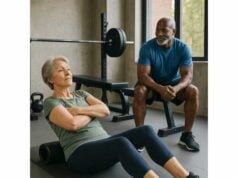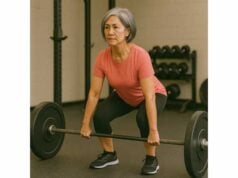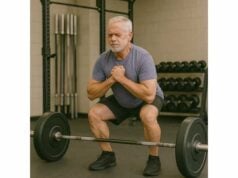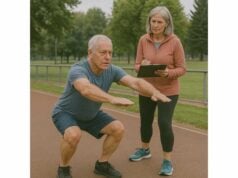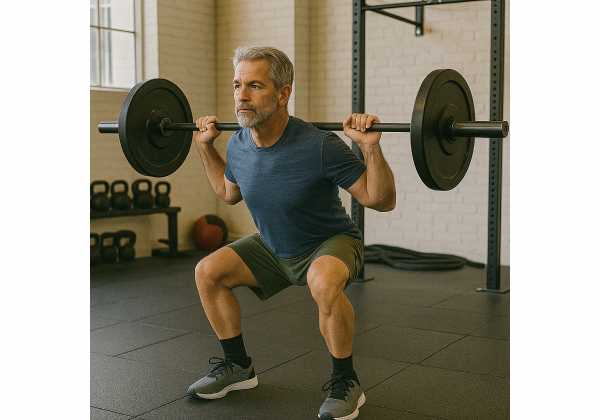
Strong lifting technique makes strength training safer, more repeatable, and more useful for everyday life. The squat teaches you to rise from chairs and stairs with control. The hinge teaches you to pick things up without folding through the low back. Pushes build the strength to get up from the floor, move objects, and protect the shoulders. Pulls support posture, grip, climbing, carrying, and upper-back resilience.
Longevity lifting does not require perfect powerlifting form or heavy weights at any cost. It requires consistent positions, smooth force, full attention, and enough load to build strength without turning every session into a strain test. The best technique is stable, joint-friendly, and adjustable to your body. Small changes in stance, range of motion, grip, tempo, and equipment turn the same movement pattern into many safe options.
Table of Contents
- Why Technique Drives Longevity Strength
- Universal Lifting Principles
- Squat Pattern: Sit Down, Stand Up, Stay Stacked
- Hinge Pattern: Load the Hips, Protect the Spine
- Push Pattern: Press with Ribs, Shoulders, and Wrists Organized
- Pull Pattern: Build the Back, Grip, and Shoulder Blades
- Progressions and Regressions That Keep Training Productive
- Common Errors and Fixes
Why Technique Drives Longevity Strength
Technique turns exercise into a usable skill. A stronger squat means more than stronger thighs; it means better control when standing from a low chair, stepping out of a car, climbing stairs, and catching balance after a stumble. A stronger hinge means more confidence picking up groceries, lifting a suitcase, gardening, or moving a box without rounding and twisting under load.
The four patterns—squat, hinge, push, and pull—cover most daily strength demands. Add carries, gait work, balance, and conditioning, and you have a broad movement base for aging well. These lifts train muscle, tendon, bone, coordination, and confidence at the same time.
Good technique also makes progression measurable. If a lift changes every set, the load on the body changes too. One week the squat stresses the hips, the next week it stresses the knees, and the next week the low back does the work. A repeatable pattern lets you add weight, reps, range, or tempo while knowing what improved.
For healthspan, the priority is not chasing the hardest version of every lift. The priority is owning a version that trains the intended muscles, respects joint history, and leaves enough recovery for the rest of life. A goblet squat to a box, Romanian deadlift with dumbbells, incline push-up, and chest-supported row build serious strength when performed well and progressed over months.
Technique also reduces fear. Many adults avoid resistance training because they think lifting is dangerous, painful, or only for younger athletes. In reality, the risk often rises when people skip the basics: poor setup, rushed reps, loads that exceed skill, and no plan for progression. A steady approach pairs well with a broader weekly strength plan because each movement has a clear role and a sensible dose.
Universal Lifting Principles
Every lift has its own details, but the same principles show up across the squat, hinge, push, and pull. Learn these first, and each exercise becomes easier to understand.
Stack the body before you move
A stacked position means the ribs, pelvis, and spine are organized before the rep starts. You do not need a rigid military posture. You need a torso that feels long, balanced, and ready to transfer force.
Use this simple sequence before most strength reps:
- Set your feet or hands in the position you plan to use.
- Exhale gently enough to bring the ribs down without slumping.
- Inhale low into the trunk, not just into the upper chest.
- Brace as if preparing to be nudged from the side.
- Move without losing that trunk shape.
Bracing is not breath-holding for every person and every set. Heavy sets often use a brief brace and controlled breath. Lighter sets work well with a natural rhythm: inhale during the lowering phase, exhale through the hard part. For a deeper explanation, bracing and breathing for lifting deserves dedicated practice.
Use the whole foot
For standing lifts, the foot is your base. Think “tripod foot”: heel, base of the big toe, and base of the little toe stay connected to the floor. This keeps the arch active and helps the hip, knee, and ankle share force.
The knee does not need to stay frozen behind the toes. In squats and lunges, the knee often travels forward. That is normal when the heel stays down and the knee tracks in line with the toes. The bigger issue is uncontrolled collapse inward, heel lift that you did not intend, or shifting all your weight to one side.
Control the lowering phase
The lowering phase teaches strength and position. A 2- to 3-second descent works well for most longevity lifting because it gives the joints time to organize. Fast drops hide weak positions and often lead to bouncing through the bottom.
Control does not mean moving slowly forever. Power and speed have value, especially for healthy aging, but speed belongs on top of skill. Build the pattern first. Add faster intent later with lighter loads, throws, step-ups, or low-impact jumps.
Train useful range, not forced range
A useful range of motion is the deepest or longest range you control without pain, compensation, or loss of tension. For some people, that means a deep squat. For others, it means a box squat slightly above parallel while mobility and strength improve.
More range is not automatically better. Less range is not automatically safer. The best range trains the target pattern while keeping the body organized. Use props without shame: boxes, benches, wedges, handles, straps, landmines, cables, and machines all help match the lift to the lifter.
Stop sets before form falls apart
Most working sets should end with 1 to 3 good reps left in reserve. That means you could perform another rep or two with the same technique, but you stop before grinding. This keeps practice clean and recovery manageable.
Hard sets have a place. Failed reps rarely need a place in longevity lifting. When technique breaks, the last rep trains a different movement than the first rep. For long-term progress, cleaner sets beat dramatic sets.
Squat Pattern: Sit Down, Stand Up, Stay Stacked
The squat trains knee and hip strength together. It builds the muscles used for standing, stair climbing, kneeling, gardening, and getting down to the floor. The best squat for longevity is the one you perform with stable feet, controlled knees, an organized trunk, and a range you can repeat.
Set up the squat
Start with feet around hip to shoulder width. Turn the toes out slightly if that helps the hips feel open and the knees track comfortably. Some people squat best with toes almost straight; others need 15 to 30 degrees of turn-out. Your stance should let the knees follow the toes without pinching at the hips or ankles.
Before the descent, stand tall without locking the knees hard. Feel the ribs over the pelvis. Brace lightly. Keep the eyes forward or slightly down, not cranked upward.
Then bend the knees and hips together. Imagine lowering between the feet rather than falling backward. The torso leans forward enough to balance the movement, but the spine stays long. The heels stay heavy. The knees move in the same direction as the toes.
At the bottom, pause for a moment. You should feel loaded, not collapsed. Stand by pushing the floor away and keeping the chest and hips rising together.
Choose the right squat variation
| Variation | Best use | Technique focus |
|---|---|---|
| Box squat | Building confidence, controlling depth, reducing knee irritation | Touch the box lightly; do not relax at the bottom |
| Goblet squat | Learning torso position and balanced depth | Hold the weight close; elbows point down |
| Split squat | Training each leg, balance, and hip control | Lower straight down; keep the front foot rooted |
| Front squat | More upright torso and strong core demand | Keep elbows lifted and ribs controlled |
| Leg press | Loading the legs with less balance demand | Keep pelvis stable and avoid bouncing into deep flexion |
The goblet squat is often the best first loaded squat. The weight in front acts as a counterbalance, making it easier to sit down between the hips. A box squat works well when the person needs a clear target or has knee or hip sensitivity. A split squat adds a balance challenge and exposes side-to-side differences.
People with cranky knees or hips should not force a single squat model. Stance width, depth, tempo, and equipment matter. A slightly higher box, slower descent, shorter stride, or heel wedge often turns a painful squat into a useful one. For more options, knee- and hip-friendly training modifications help keep lower-body work consistent.
Squat cues that work
Useful squat cues are short and physical:
- “Whole foot.”
- “Knees follow toes.”
- “Lower between the hips.”
- “Stay tall through the crown of the head.”
- “Stand up by pushing the floor away.”
Avoid over-cueing. One or two cues per set usually work better than five corrections at once. Film from the front and side if you train alone. Watch whether the knees track, the hips shift, the heels rise, or the torso collapses near the bottom.
Hinge Pattern: Load the Hips, Protect the Spine
The hinge trains the posterior chain: glutes, hamstrings, spinal erectors, upper back, and grip. It is the pattern behind deadlifts, Romanian deadlifts, hip thrusts, kettlebell swings, and many daily lifting tasks.
A hinge is not a squat with less knee bend. It is a hip-dominant movement. The hips travel back, the torso inclines forward, and the shins stay more vertical than they do in most squats. The spine stays long while the hips do the folding.
Learn the hinge before loading it
Stand about a foot away from a wall with your back facing it. Soften the knees. Push the hips back until the glutes touch the wall. Keep the ribs and pelvis organized. You should feel a stretch in the hamstrings, not a pinch in the low back.
Next, use a dowel or broomstick along the spine. It should touch the back of the head, upper back, and tailbone. Hinge while keeping all three points in contact. If the stick loses contact at the head, you are craning the neck or rounding. If it loses contact at the tailbone, the low back is flexing.
Once the pattern feels clear, load it lightly. Dumbbell Romanian deadlifts, kettlebell deadlifts from blocks, and trap-bar deadlifts often work better than straight-bar deadlifts for general longevity training. They let the load stay closer to the body and reduce the mobility barrier.
Set up the deadlift family
For a deadlift from the floor or blocks, place the weight close enough that you do not reach forward. Hinge down, bend the knees only as much as needed, and grip the implement. Draw the shoulders gently back and down without trying to pinch the shoulder blades hard. Brace. Push through the floor and stand tall.
At the top, finish with the glutes, not the low back. The body should become straight, not leaned backward. Overextending the spine at lockout adds stress without adding useful training.
For Romanian deadlifts, start from the top. Hold dumbbells, a bar, or a kettlebell. Hinge down until the hamstrings limit the movement or the weights reach mid-shin. Keep the weights close to the legs. Stand by driving the hips forward and keeping the torso stiff.
The hinge pairs naturally with spine-smart training because it teaches hip motion while the trunk resists unwanted flexion and rotation.
Hinge depth depends on hamstrings and control
A good hinge does not require the weights to touch the floor. Many adults get more benefit from stopping just below the knees or at mid-shin while maintaining perfect control. If the low back rounds at the bottom, shorten the range, raise the handles, or bend the knees slightly more.
Use this rule: the hips decide the depth, not the floor. When the hamstrings reach their strong stretch and the pelvis wants to tuck under, the rep has gone far enough.
Push Pattern: Press with Ribs, Shoulders, and Wrists Organized
Pushing strength supports getting up from the ground, catching yourself during a trip, moving furniture, lifting objects onto shelves, and maintaining upper-body muscle. Pushes include push-ups, bench presses, dumbbell presses, landmine presses, overhead presses, and machine presses.
Good pushing technique starts before the arms move. The ribs stay controlled. The shoulder blades move in a way that matches the exercise. The wrists stay stacked rather than bent back under load.
Push-up fundamentals
The push-up is a moving plank. Hands sit slightly wider than shoulder width. Fingers spread. The body forms a long line from head to heels or head to knees, depending on the variation. Lower under control. The elbows travel about 30 to 60 degrees from the body, not pinned tightly and not flared straight out.
At the bottom, the chest approaches the floor or the elevated surface. Press the floor away until the elbows straighten. At the top, allow the shoulder blades to wrap slightly around the ribs. This last reach trains serratus anterior, a muscle that helps the shoulder blade move smoothly.
Most adults should master incline push-ups before floor push-ups. A counter, bench, Smith machine bar, or sturdy table lets you choose the right angle. Lower the angle over time as strength improves.
Bench and dumbbell press fundamentals
For a bench press or dumbbell press, place the feet firmly on the floor. Keep the upper back broad and stable on the bench. Lower the weight with control until the upper arm is roughly in line with the torso or slightly below, depending on shoulder comfort.
Dumbbells give each shoulder more freedom than a barbell. A neutral grip, where the palms face each other, often feels better for older shoulders. The landmine press also works well because it uses a diagonal path instead of a strict overhead path.
Overhead pressing requires enough shoulder mobility, rib control, and upper-back movement. If the ribs flare or the low back arches hard to finish the rep, switch to a landmine press, high-incline dumbbell press, or half-kneeling cable press. For people with shoulder history, shoulder health and overhead options help choose the right pressing path.
Pressing cues that protect the shoulders
Use these cues for most pushes:
- “Wrists over elbows.”
- “Ribs down, reach long.”
- “Lower with control.”
- “Press the floor or handle away.”
- “No shrugging into the ears.”
The shoulder should not feel jammed at the front. A mild muscle burn in the chest, shoulders, or triceps is normal. Sharp pain, pinching, numbness, or a catching sensation calls for a different variation and, when persistent, professional assessment.
Pull Pattern: Build the Back, Grip, and Shoulder Blades
Pulling balances pressing and trains the muscles that support posture, shoulder function, grip, and carrying. Rows, pulldowns, assisted pull-ups, cable rows, band pulls, and loaded carries all contribute.
Modern life gives many people more forward-reaching than backward-pulling. Pulling exercises strengthen the mid-back, lats, rear shoulders, arms, and hands. They also teach the shoulder blades to move and stabilize under load.
Row fundamentals
A row starts with the body supported enough to let the back work. Chest-supported rows are excellent because they reduce low-back demand. Cable rows let you adjust the handle and torso angle. One-arm dumbbell rows train each side and reveal asymmetry.
Begin each rep with the arm long and the shoulder blade reaching slightly forward. Pull the elbow back toward the hip or ribs, depending on the row angle. Stop when the upper arm reaches the body; do not twist the torso to fake more range. Lower slowly and let the shoulder blade glide forward again.
A common mistake is turning every row into a shrug. The neck should stay quiet. The shoulder blade moves back and slightly down, not up into the ear.
Pulldown and pull-up fundamentals
Pulldowns train vertical pulling without requiring full bodyweight strength. Use a grip that lets the elbows travel down comfortably. Pull the bar or handles toward the upper chest while keeping the ribs controlled. Avoid yanking behind the neck. Let the arms lengthen at the top without losing shoulder control.
Assisted pull-ups work well when the assistance is enough to keep reps smooth. Grinding half reps with the chin craned forward does less for longevity than controlled pulldowns through a useful range.
Grip belongs in the pull pattern
Grip strength supports daily function: opening jars, carrying bags, holding railings, using tools, and preventing slips during lifting. Rows, deadlifts, carries, and hangs all train the hands. Add direct grip work when needed, but do not let grip limit every back exercise. Straps are useful for Romanian deadlifts or rows when the target is the back and hips rather than the hands.
A complete pulling plan often includes one horizontal pull, one vertical pull, and one carry or grip drill each week. For tracking, grip strength tests and tools make progress visible without turning every session into a max effort.
Progressions and Regressions That Keep Training Productive
A lift is productive when the challenge matches the lifter. Too easy, and the body has little reason to adapt. Too hard, and technique breaks or recovery suffers. The art of longevity training is adjusting the lift before it becomes a problem.
Progression does not only mean adding weight. You can progress by adding reps, adding sets, increasing range of motion, slowing the lowering phase, pausing in harder positions, reducing assistance, or choosing a more demanding variation.
Regression does not mean failure. It means choosing the version that trains the intended pattern today.
| Pattern | Regress | Progress |
|---|---|---|
| Squat | Box squat, assisted squat, leg press | Goblet squat, split squat, front squat, deeper range |
| Hinge | Wall hinge, raised kettlebell deadlift, hip thrust | Romanian deadlift, trap-bar deadlift, single-leg hinge |
| Push | Wall push-up, incline push-up, machine press | Lower incline, floor push-up, dumbbell press, landmine press |
| Pull | Band row, chest-supported row, light pulldown | Heavier row, one-arm row, assisted pull-up, carry |
Use a simple rep range for most work: 6 to 12 reps for main strength lifts, 8 to 15 reps for accessory lifts, and 20 to 40 seconds for carries or holds. Begin with 2 to 3 sets per movement. Add load only when all reps look similar from start to finish.
Tempo is a powerful tool. A 3-second descent and 1-second pause can make a light goblet squat, dumbbell Romanian deadlift, or incline push-up challenging without adding heavy load. This is especially useful during travel, home training, return from illness, or periods of joint sensitivity.
Warm-ups also affect technique. Five to ten minutes of easy movement, joint preparation, and pattern rehearsal often improves the first working sets. A good warm-up for lifting should make the exercise feel cleaner, not drain energy before the workout starts.
Progress slowly when returning after illness, injury, poor sleep, or a long break. Start with fewer sets, lighter loads, and more reps in reserve for the first 1 to 2 weeks. The body regains skill quickly when you leave room for adaptation.
Session design matters too. Placing the most technical lifts early, pairing non-competing movements, and limiting total hard sets keeps quality high. A clear sets, reps, tempo, and RPE structure prevents random effort from replacing planned progress.
Common Errors and Fixes
Technique errors are information. They show where the movement needs a better setup, lighter load, more mobility, more strength, or a different variation. Fix the cause rather than forcing the body into a shape it cannot own.
| Problem | Likely cause | Useful fix |
|---|---|---|
| Heels lift in the squat | Limited ankle motion, stance mismatch, rushing depth | Use a box, widen stance slightly, add a small heel wedge, slow down |
| Knees collapse inward | Foot collapse, hip weakness, load too heavy | Use tripod foot, reduce load, add split squats or lateral band walks |
| Low back rounds in hinge | Range too deep, poor hip motion, load too far away | Raise the weight, shorten range, keep load close, practice wall hinges |
| Neck strains during pressing | Shrugging, poor rib control, load too heavy | Use incline push-ups or dumbbells, lower the load, exhale through the press |
| Rows turn into torso twisting | Too much weight, weak trunk control, chasing range | Use chest support, pause at the top, stop the elbow at the ribs |
| Every set feels different | No setup routine, fatigue, changing stance | Use the same setup sequence and film one set from the front and side |
Pain needs context. Muscle effort, mild soreness, and a sense of challenge are normal. Sharp joint pain, nerve symptoms, swelling, repeated catching, or pain that worsens from set to set is not a cue to push harder. Change the variation, reduce the range, lower the load, or stop the movement for the day.
Mobility work helps when it improves the lift you are trying to perform. Ankle mobility can improve squat depth. Hip mobility can make hinges and split squats feel smoother. Thoracic spine and shoulder mobility can improve pressing and pulling. A short hips, shoulders, and ankles routine works best when paired with strength practice, not used as a substitute for it.
A useful self-check is the “same-rep rule.” Your last good rep should look close to your first good rep. It can be slower, but it should not become a different exercise. If your squat turns into a good morning, your hinge turns into a rounded-back reach, your push-up turns into a sagging plank, or your row turns into a twist, the set is finished.
Longevity lifting rewards patience. Spend more time practicing the basic patterns than searching for novelty. Rotate variations when your joints need it, but keep the movement categories stable. Squat, hinge, push, and pull every week in forms you control. Add load when the movement earns it. Over months and years, that approach builds strength you feel in the gym and use everywhere else.
References
- WHO guidelines on physical activity and sedentary behaviour 2020 (Guideline)
- Resistance Training for Older Adults: Position Statement From the National Strength and Conditioning Association 2019 (Position Statement)
- Effects of Resistance Training Volume on Physical Function, Lean Body Mass and Lower-Body Muscle Hypertrophy and Strength in Older Adults: A Systematic Review and Network Meta-analysis of 151 Randomised Trials 2025 (Systematic Review)
- A Biomechanical Review of the Squat Exercise: Implications for Clinical Practice 2024 (Review)
- Low Back Biomechanics during Repetitive Deadlifts: A Narrative Review 2022 (Review)
- Resistance Training and Mortality Risk: A Systematic Review and Meta-Analysis 2022 (Systematic Review)
Disclaimer
This article is educational and does not replace personal guidance from a qualified clinician, physical therapist, or certified fitness professional. Get professional assessment before lifting if you have chest pain, unexplained shortness of breath, fainting, new neurological symptoms, recent surgery, severe osteoporosis, or persistent joint or back pain. Stop any exercise that causes sharp pain, numbness, swelling, or worsening symptoms.