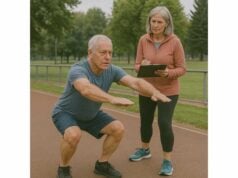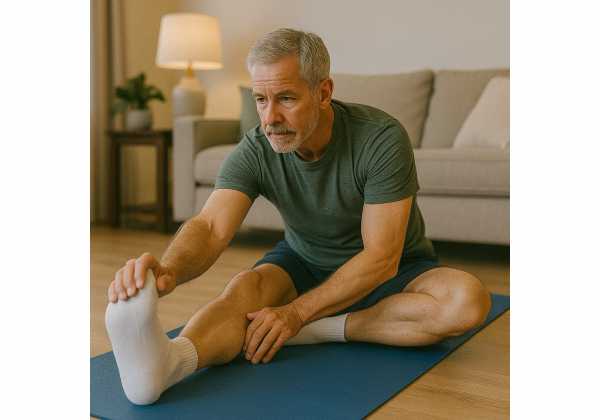
Stretching earns its place in a longevity fitness plan when it helps you move well enough to train, walk, climb stairs, get off the floor, reach overhead, and recover without turning every stiff joint into a project. It does not replace strength training, aerobic work, balance practice, or daily movement. It supports them by improving usable range of motion, reducing the feeling of tightness, and making movement feel less guarded.
Dynamic, static, and PNF stretching each solve a different problem. Dynamic stretching prepares the body for movement. Static stretching builds and maintains range over time. PNF uses brief muscle contractions to help stubborn areas relax into a deeper position. The best routine is not the longest one. It is the one you repeat, place at the right time, and match to the joints that limit real life or training.
Table of Contents
- Why Stretching Matters for Healthspan
- Dynamic, Static, and PNF Compared
- Dynamic Stretching Before Training
- Static Stretching for Long-Term Range
- PNF Stretching for Stubborn Limits
- A Weekly Stretching Plan That Fits Real Life
- Safety, Progress, and Common Mistakes
Why Stretching Matters for Healthspan
Stretching matters when it protects movement options. Healthy aging is not only about living longer. It is about keeping enough physical capacity to do daily tasks without strain: turning your head while driving, tying shoes, squatting to a low shelf, stepping over obstacles, reaching a top cabinet, and walking with a smooth stride.
Flexibility is the ability of a joint to move through a range. Mobility is the ability to control that range with strength, balance, and coordination. Stretching mainly improves flexibility and stretch tolerance. Strength training, skill practice, and loaded movement turn that range into useful mobility.
That distinction matters. A person with stiff ankles might stretch the calves and gain dorsiflexion, which is the shin moving closer to the foot. But if the knees cave in during squats or the hips lack control, the extra ankle range will not fix the whole pattern. The same principle applies to shoulders, hips, spine, and hamstrings. Stretching opens the door; strength and practice teach the body to use the room.
Stretching supports longevity training in five practical ways:
- It helps positions feel less restricted during lifting, walking, cycling, swimming, and floor work.
- It offsets long periods of sitting by moving hips, spine, shoulders, and ankles through ranges they rarely use at a desk.
- It improves confidence in end ranges, which helps people move with less guarding.
- It gives a low-fatigue recovery option on rest days.
- It helps separate true joint limitation from weakness, pain, or poor technique.
Stretching does not need to become a second workout. Ten focused minutes often beats a long routine done once and forgotten. The best targets are the areas that limit what you actually do: calves for walking and squatting, hip flexors for stride length, hamstrings for hip hinging, pecs and lats for overhead reach, and thoracic spine for posture and breathing.
A complete longevity plan still needs strength, aerobic conditioning, balance, and power. Stretching works best beside those pieces. If a movement test shows poor sit-to-stand ability, slow gait speed, or low grip strength, stretching alone will not solve the larger issue. Pair it with progressive strength work and simple function checks such as gait speed and sit-to-stand tests.
Dynamic, Static, and PNF Compared
Dynamic, static, and PNF stretching differ by timing, purpose, and intensity. The right choice depends on whether you are preparing to move, building long-term range, or working through a specific restriction.
| Method | What it is | Best time to use it | Typical dose | Main caution |
|---|---|---|---|---|
| Dynamic stretching | Controlled movement through a useful range | Before training, walking, lifting, sports, or balance work | 5–10 minutes, 6–12 reps per movement | Do not turn it into fast, uncontrolled swinging |
| Static stretching | Holding a stretch position without bouncing | After training, separate mobility sessions, evenings, or recovery days | 20–60 seconds per hold, 1–4 rounds | Long holds right before maximal strength or power work may reduce performance |
| PNF stretching | Stretch, contract the target muscle, relax, then stretch again | Separate flexibility work or after easy training | 1–3 cycles per target area | Use low-to-moderate contractions, especially with older joints or irritated tendons |
Dynamic stretching is movement-based. Examples include leg swings, walking lunges, arm circles, ankle rocks, hip circles, and squat-to-stand patterns. It raises temperature, rehearses positions, and wakes up the nervous system. It fits naturally inside a warm-up. For more structure, a dedicated joint prep and activation warm-up pairs dynamic range with light strength drills.
Static stretching is position-based. You move into a stretch, stop before pain, and hold. Examples include a calf stretch against a wall, a half-kneeling hip flexor stretch, a doorway chest stretch, and a seated hamstring stretch. Static stretching is the easiest method to repeat at home because it needs little equipment.
PNF stands for proprioceptive neuromuscular facilitation. The name sounds clinical, but the basic method is simple: move into a stretch, gently contract the stretched muscle for a few seconds, relax, then move slightly deeper. A hamstring example: lie on your back with one leg raised, gently press the heel into a strap or your hands for 5–10 seconds, relax, then ease the leg closer.
Ballistic stretching deserves a separate warning. It uses bouncing or momentum at end range. Athletes sometimes use it under supervision, but most adults do better with controlled dynamic work. Bouncing into end range adds speed before the body has enough control.
Dynamic Stretching Before Training
Dynamic stretching belongs before activity because it prepares joints and muscles without making the body feel sleepy or loose in the wrong way. Before a strength session, brisk walk, hike, tennis match, or balance practice, dynamic work should make movement feel smoother within 5–10 minutes.
A good dynamic warm-up moves from general to specific. Start with low-intensity whole-body movement for 2–3 minutes. Brisk walking, easy cycling, marching, or step-ups work well. Then choose 4–6 movements that match the session.
For lower-body training or long walks, use:
- Ankle rocks: 8–12 reps per side
- Leg swings forward and back: 8–10 controlled reps per side
- Hip circles: 6–8 reps each direction
- Bodyweight good mornings: 8–10 reps
- Reverse lunges or split squats: 6–8 reps per side
- Calf raises: 10–15 reps
For upper-body training, use:
- Arm circles: 8–12 reps each direction
- Wall slides: 8–10 reps
- Band pull-aparts: 10–15 reps
- Scapular push-ups: 8–12 reps
- Thoracic rotations: 6–8 reps per side
- Light rows or presses: 8–10 reps
Dynamic stretching works best when the movement stays controlled. The first reps should feel small and easy. The later reps gradually reach more range. For longevity training, smoothness beats speed. A 60-year-old preparing for squats does not need a dramatic leg swing. They need ankles, hips, knees, trunk, and breath working together.
Match dynamic drills to the task. Before hill walking, spend extra time on ankles, calves, hips, and stride. Before overhead pressing, prepare the upper back, shoulder blades, lats, and rotator cuff. If overhead motion feels restricted or pinchy, pair dynamic warm-ups with scapular control and shoulder-friendly overhead options instead of forcing range.
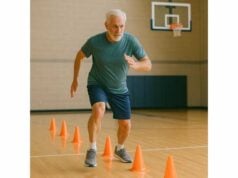
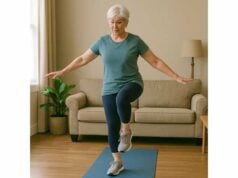
Dynamic stretching also helps balance and agility because it asks the body to control motion while standing, stepping, and shifting weight. A simple sequence of marching, heel-to-toe walking, lateral stepping, and controlled lunges prepares the feet and hips for the small corrections that prevent stumbles. For people worried about falls, dynamic mobility belongs beside daily balance and fall-prevention drills.
Keep dynamic stretching short before high-effort training. It should leave you warmer and more coordinated, not tired. If your warm-up becomes a workout, reduce the number of movements or reps.
Static Stretching for Long-Term Range
Static stretching is the simplest way to improve and maintain range of motion. The useful dose is smaller than most people think. A practical target is 30–60 seconds per muscle group, repeated 2–4 days per week. People with a clear limitation often do better with 2–3 rounds for that area, giving 60–180 seconds of total time.
Use static stretching after training, later in the day, or on recovery days. It is not forbidden before exercise, but long static holds before maximal lifting, sprinting, jumping, or explosive sport are poorly timed. Before those sessions, use dynamic movement first. Save longer holds for after.
Static stretching should feel like steady tension, not sharp pain. A good intensity is 3–5 out of 10: clear stretch, calm breathing, no grimacing, no numbness, no joint pinch. If you need to hold your breath, back off. If the stretch sensation fades after 20–30 seconds, gently move a few millimeters deeper without bouncing.
High-return areas for adults over 40
The most useful stretches often target joints that lose range during sedentary days.
The calves and ankles affect walking stride, stair climbing, squatting, and balance. Try a wall calf stretch with the back knee straight for the gastrocnemius and bent for the soleus. Hold 30–45 seconds each.
The hip flexors affect stride length, pelvic position, and lower-back comfort. Use a half-kneeling stretch with the glute of the back leg gently squeezed. Avoid arching the lower back.
The hamstrings affect hip hinging and floor reach. Use a strap-assisted lying hamstring stretch or a supported standing hinge. Keep the spine long.
The chest and front shoulders affect posture, breathing space, and overhead reach. Use a doorway stretch with the arm below shoulder height if higher positions irritate the shoulder.
The lats and upper back affect reaching, pressing, and posture. Use a bench lat stretch or child’s pose variation, but keep the ribs from flaring.
Static stretching helps most when it supports movement practice. After a hamstring stretch, perform 6–8 slow hip hinges. After a hip flexor stretch, walk for one minute and notice stride length. After a calf stretch, do 10 controlled calf raises. This tells the nervous system, “Use this range.”
Static stretching also fits into recovery days. A gentle 10-minute session with calves, hip flexors, hamstrings, chest, and upper back pairs well with easy walking. On hard training weeks, it becomes part of active recovery and deload planning, not another stressor.
PNF Stretching for Stubborn Limits
PNF stretching is useful when a normal static stretch stops producing change or when a muscle guards strongly at end range. It uses a brief contraction to alter the stretch sensation and improve tolerance. It should feel controlled, not aggressive.
The most common version is contract-relax:
- Move into a comfortable stretch.
- Contract the stretched muscle at 20–50% effort for 5–10 seconds.
- Relax fully for 2–3 seconds.
- Move gently into the new range.
- Hold 15–30 seconds.
- Repeat 1–3 cycles.
A hamstring PNF stretch works well with a strap. Lie on your back and raise one leg. Hold the strap behind the thigh or around the foot. Once you feel a stretch, press the leg down gently against the strap without letting it move. Hold that contraction for 5–10 seconds. Relax. Ease the leg slightly closer. The change should feel small and smooth.
For hip flexors, set up in a half-kneeling stretch. Squeeze the glute of the back leg and gently drag the back knee forward against the floor without moving it. Relax, then shift slightly forward while keeping the ribs down.
For chest and shoulders, use caution. A doorway PNF stretch with a hard contraction irritates some shoulders. Keep the arm lower, use light pressure, and stop if the front of the shoulder pinches. The shoulder prefers control and strength as much as range.
PNF is not needed everywhere. Use it for one or two target areas, not the whole body. Because it includes contractions at longer muscle lengths, it creates more local demand than passive static stretching. Two to three sessions per week is enough for most stubborn areas.
PNF should not replace strength through range. If the hips feel tight in a squat, PNF for adductors or hip flexors might help, but technique and strength still matter. Pair it with a sensible weekly strength plan and progression so the new range becomes stable.
Avoid intense PNF when a tendon is irritated, a muscle is strained, a joint feels unstable, or pain travels down the limb. In those cases, gentle range, isometrics, walking, and professional guidance are safer starting points.
A Weekly Stretching Plan That Fits Real Life
A useful stretching plan has three layers: dynamic work before training, short static work after or away from training, and targeted PNF for one or two stubborn restrictions. This structure keeps stretching consistent without stealing time from strength, cardio, or daily movement.
The 10-minute daily reset
Use this on non-training days, evenings, or after long sitting.
- Calf stretch: 30 seconds per side with knee straight, then 30 seconds with knee bent.
- Half-kneeling hip flexor stretch: 45 seconds per side.
- Lying hamstring stretch: 45 seconds per side.
- Doorway chest stretch: 45 seconds per side.
- Bench lat stretch or child’s pose reach: 60 seconds.
- Slow squat-to-stand or hip hinge: 8 reps.
This routine covers the areas most affected by sitting and walking mechanics. It is short enough to repeat and broad enough to maintain range.
The pre-workout dynamic sequence
Use this before strength training, brisk walking, rucking, cycling, or sport.
- Brisk walk, march, or easy bike: 2 minutes.
- Ankle rocks: 10 per side.
- Hip circles: 8 per side.
- Bodyweight squats to a comfortable depth: 8 reps.
- Reverse lunges: 6 per side.
- Arm circles and wall slides: 8 each.
- One light set of the first exercise you plan to train.
This sequence prepares the body without draining it. For lower-body sessions, add calf raises and lateral steps. For upper-body sessions, add band rows, scapular push-ups, and thoracic rotations.
The targeted flexibility session
Use this 2–3 times per week when one area clearly limits training or daily life.
Choose one lower-body target and one upper-body target. For each target, complete:
- Static stretch: 45–60 seconds
- PNF cycle: 5–10 second gentle contraction, relax, then 20–30 second hold
- Control drill: 6–10 slow reps using the new range
Examples:
- Tight calves: wall calf stretch, gentle calf contraction into the floor, then slow calf raises.
- Tight hip flexors: half-kneeling stretch, gentle knee-drag contraction, then split squat holds.
- Tight hamstrings: strap stretch, gentle heel press, then slow hip hinges.
- Tight chest: doorway stretch, gentle arm press, then band rows or wall slides.
Stretching also works well inside a larger mobility session. If hips, shoulders, and ankles all feel restricted, use a structured hips, shoulders, and ankles mobility routine rather than collecting random stretches.
The weekly target does not need to be complicated:
| Day type | Stretching focus | Time needed |
|---|---|---|
| Strength days | Dynamic warm-up before; short static stretches after if desired | 5–10 minutes before, 3–6 minutes after |
| Cardio or walking days | Dynamic ankles, calves, hips before; calf and hip flexor holds after | 5 minutes before, 5 minutes after |
| Recovery days | Static stretching and easy range work | 10–15 minutes |
| Targeted flexibility days | PNF for one or two stubborn areas | 8–12 minutes |
This amount is enough to maintain range for most adults and improve the areas that receive focused work.
Safety, Progress, and Common Mistakes
Stretching should leave the body feeling freer, not irritated. Discomfort from a stretch is normal. Pain, tingling, numbness, joint pinching, or symptoms that linger into the next day are warning signs. Older adults, people with joint replacements, hypermobility, osteoporosis, inflammatory arthritis, nerve symptoms, or recent injuries should use smaller ranges and slower progressions.
The safest stretch is specific, supported, and repeatable. Use the floor, wall, chair, strap, or bench so you do not fight for balance while trying to relax. A wobbly stretch often becomes a guarding exercise.
How to measure progress
Track range with simple repeatable tests every 2–4 weeks. Do not test daily; normal stiffness changes with sleep, stress, temperature, hydration, and training fatigue.
Useful checks include:
- Ankle knee-to-wall distance
- Sit-and-reach or fingertip-to-floor distance
- Comfortable squat depth with heels down
- Shoulder wall slide quality
- Overhead reach without rib flare
- Step length during walking
- Ease of getting down to and up from the floor
Progress does not always mean a bigger number. Better progress signs include smoother movement, less warm-up time, fewer compensations, easier breathing in a position, and more confidence at end range.
Common mistakes
The first mistake is stretching everything equally. Stretch what limits your life or training. A stiff ankle that changes your walking deserves more attention than a stretch you simply enjoy.
The second mistake is using static stretching as a full warm-up. A few short holds are not a disaster, but dynamic movement prepares the body better for strength, speed, balance, and coordination.
The third mistake is chasing pain. More intensity does not mean more progress. Most adults improve with moderate tension and consistent practice.
The fourth mistake is ignoring strength. If you gain hip range but never strengthen split squats, hinges, or step-ups, the new range remains fragile. If knees or hips feel cranky, combine gentle stretching with joint-friendly training modifications rather than forcing deeper positions.
The fifth mistake is stretching nerves instead of muscles. A hamstring stretch that creates tingling, burning, or electric sensations behind the knee or into the foot is not a normal muscle stretch. Back off, bend the knee, reduce ankle tension, or seek clinical help.
The sixth mistake is assuming soreness means stretching is needed. Delayed soreness after hard training usually responds better to walking, sleep, food, fluids, and light movement. Gentle stretching is fine if it feels good, but aggressive holds on sore tissue often add irritation.
A good stretching routine is calm, targeted, and boring in the best sense. It repeats the positions your body needs, uses enough time to create change, and stops before the work becomes another source of stress.
References
- Optimising the Dose of Static Stretching to Improve Flexibility: A Systematic Review, Meta-analysis and Multivariate Meta-regression 2025 (Systematic Review)
- Chronic effects of stretching on range of motion with consideration of potential moderating variables: A systematic review with meta-analysis 2024 (Systematic Review)
- Acute Effects of Various Stretching Techniques on Range of Motion: A Systematic Review with Meta-Analysis 2023 (Systematic Review)
- Chronic Effects of Static Stretching Exercises on Skeletal Muscle Hypertrophy in Healthy Individuals: A Systematic Review and Multilevel Meta-Analysis 2024 (Systematic Review)
- Revisiting the stretch-induced force deficit: A systematic review with multilevel meta-analysis of acute effects 2024 (Systematic Review)
- Muscle Stretching: Exploring the Impact of Different Modalities on Maximal Range of Motion and Strength with Practical Recommendations 2025 (Review)
Disclaimer
This article is educational and does not replace care from a qualified clinician, physical therapist, or certified fitness professional. Stop any stretch that causes sharp pain, numbness, tingling, dizziness, joint instability, or symptoms that worsen after the session. People with recent injury, surgery, osteoporosis, joint replacement, nerve symptoms, or complex medical conditions should get individualized guidance before starting a new stretching plan.