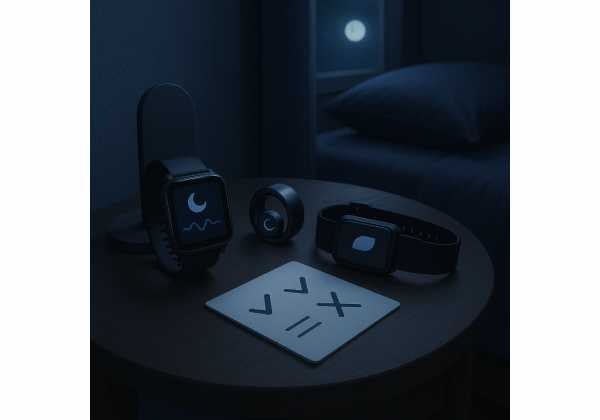
Sleep tracking has moved from sleep labs into watches, rings, phones, mats, and smart beds. That is useful, but it also creates a trap: the numbers look precise even when the device is only making an estimate. A wearable is best used as a pattern detector, not a judge of whether last night was “good” or “bad.”
For longevity, sleep data becomes useful when it helps you protect three things: enough sleep, a steady sleep schedule, and recovery that supports daytime energy, blood pressure, glucose control, mood, and training. The strongest signals are usually simple: bedtime, wake time, total sleep window, resting heart rate, and long-term changes. The weakest signals are often the ones that look most exciting, especially exact minutes of deep sleep and REM.
Used well, a sleep wearable turns vague sleep habits into visible patterns. Used poorly, it turns normal night-to-night variation into stress.
Table of Contents
- What Sleep Wearables Actually Measure
- The Sleep Metrics Worth Trusting
- The Sleep Metrics to Treat With Caution
- Sleep Signals That Matter for Longevity
- Why Wearables Get Sleep Wrong
- How to Use Sleep Data Without Overreacting
- When a Wearable Is Not Enough
- A Simple Sleep Tracking Plan
What Sleep Wearables Actually Measure
Most sleep wearables do not measure sleep directly. They estimate sleep from indirect signals.
A sleep lab uses polysomnography, often called PSG. PSG records brain waves, eye movements, muscle tone, breathing, oxygen levels, heart rhythm, body position, and limb movement. That is why it remains the standard test for many sleep disorders.
A watch or ring usually relies on a smaller set of signals:
- Movement from an accelerometer
- Heart rate from optical sensors
- Heart rate variability, or the variation in time between heartbeats
- Skin temperature or temperature change
- Blood oxygen estimates in some devices
- Breathing rate estimates
- Light exposure or phone use in some systems
The device then feeds these signals into an algorithm. The algorithm compares your movement, pulse, and other patterns with data collected from people who also had sleep-lab testing. It then labels each part of the night as awake, light sleep, deep sleep, or REM sleep.
That sounds technical, but the basic point is simple: your wearable is guessing from body signals, not reading your brain.
This is why sleep wearables usually perform better for broad patterns than for fine details. Many devices detect the main sleep period fairly well, especially in healthy adults with regular schedules. They often struggle more with quiet wakefulness, short awakenings, naps, unusual schedules, illness, alcohol, certain medications, and sleep disorders.
A wearable is most useful when it answers questions such as:
- Did I spend enough time in bed?
- Did I go to sleep and wake up at steady times?
- Did my sleep change after alcohol, late caffeine, travel, stress, illness, or hard training?
- Is my resting heart rate higher than normal overnight?
- Is my HRV lower than my usual baseline?
- Do I wake up feeling worse even when the device reports enough sleep?
It is less useful when it tries to answer:
- Did I get exactly 72 minutes of deep sleep?
- Was my sleep score of 83 truly better than 78?
- Did last night’s REM number explain my whole mood today?
- Do I have sleep apnea?
- Am I recovered enough for a personal record workout?
Sleep tracking works best when you treat it like a home thermometer for habits. It gives a useful reading, but it does not replace clinical judgment, symptoms, or a proper test when a real health problem is possible.
The Sleep Metrics Worth Trusting
The most trustworthy wearable metrics are the ones based on broad patterns and repeated measurements. They do not need perfect sleep-stage accuracy to help.
Total sleep time and time in bed
Total sleep time is one of the most useful metrics, but read it as an estimate. Devices often do a reasonable job identifying the main sleep period, especially when your schedule is regular. They struggle more when you lie still awake, read in bed, watch a show without moving, or wake up quietly during the night.
For adults, the usual sleep-duration target is about 7 to 9 hours. Adults over 65 often do well around 7 to 8 hours. Some people function well outside those ranges, but chronic sleep below 6 hours deserves attention, especially when paired with sleepiness, low mood, high blood pressure, weight gain, glucose swings, or heavy caffeine use.
Do not chase one perfect number every night. Look at your 7-day and 30-day averages. One short night is normal. A month of short nights is a pattern.
A useful rule: if your wearable says you slept 6 hours but you spent only 6 hours and 20 minutes in bed, the first problem is not sleep architecture. It is opportunity. You cannot recover from insufficient sleep if the sleep window is too small.
Sleep timing and regularity
Sleep regularity is one of the strongest reasons to use a wearable. Bedtime, wake time, and day-to-day variation are easier to measure than sleep stages and often more useful.
A stable wake time anchors the body clock. Large swings between weekdays and weekends create a mild form of circadian disruption, often called social jet lag. The pattern is common: short sleep during the workweek, late nights on weekends, sleeping in, then difficulty falling asleep on Sunday.
For longevity, regularity matters because the circadian system affects blood pressure, glucose handling, appetite hormones, body temperature, mood, alertness, and recovery. A steady schedule also makes it easier to interpret other metrics. If bedtime moves by three hours every few nights, HRV, resting heart rate, glucose, hunger, and training readiness become harder to compare.
A practical target is a wake time within the same 30 to 60 minutes on most days. Bedtime has more flexibility, but a consistent wind-down window helps.
For people working on metabolic health, sleep timing also connects with meal timing. Late dinners, alcohol, and short sleep often raise overnight heart rate and worsen next-day cravings. Pairing sleep tracking with meal timing habits works well alongside chrononutrition for sleep.
Resting heart rate during sleep
Overnight resting heart rate is one of the better recovery signals. It is not a sleep-stage measurement. It is a stress-load measurement.
A higher-than-usual overnight heart rate often shows up after:
- Alcohol
- Late heavy meals
- Fever or infection
- Dehydration
- Heat exposure
- Hard training
- Psychological stress
- Poor sleep timing
- Travel
- Some medications
The number matters less than the change from your baseline. A person whose usual sleeping heart rate is 54 beats per minute should pay attention if several nights rise to 62–66 without an obvious reason. A person whose usual number is 72 should interpret 76 differently.
Resting heart rate also belongs in a wider cardiovascular picture. It should not distract from proper blood pressure measurement, lipid markers, glucose markers, and fitness. If sleep data raises concern about nighttime cardiovascular strain, pairing it with home blood pressure tracking gives a more grounded view.
Heart rate variability trends
Heart rate variability, or HRV, reflects how flexibly the nervous system regulates heart rhythm. Higher HRV often lines up with better recovery, fitness, and lower stress, but only when compared with your own baseline.
HRV varies by age, sex, genetics, fitness, menstrual cycle phase, sleep timing, illness, alcohol, mental stress, and measurement method. One low night does not mean failure. A downward trend over several days, especially with higher resting heart rate and worse mood or performance, deserves attention.
For sleep and longevity, HRV is useful because it often shows strain before you fully feel it. It helps you notice patterns:
- Alcohol lowers HRV and raises heart rate.
- Late meals often worsen overnight recovery.
- Hard intervals late in the evening disturb sleep in some people.
- Illness often shows as a low-HRV, high-heart-rate pattern.
- Relaxation routines improve trends in some users.
HRV becomes more useful when you combine wearable data with how you feel. A good next step is learning how resting heart rate and HRV fit into broader healthy-aging tracking.
The Sleep Metrics to Treat With Caution
The most seductive sleep metrics are often the least reliable. They look medical, precise, and important, but they are usually algorithmic estimates.
Exact deep sleep and REM minutes
Deep sleep and REM sleep matter. The problem is not the biology. The problem is the measurement.
A wearable does not record the brain waves needed to stage sleep the way a sleep lab does. It infers stages from movement, heart rate, and other signals. That means the device might correctly detect your main sleep period but mislabel parts of that sleep.
Use sleep-stage graphs as rough pattern hints, not nightly grades. A sharp drop in estimated REM or deep sleep over several weeks might suggest stress, alcohol, illness, pain, schedule disruption, or a device-fit issue. But a single “low deep sleep” night is not a diagnosis and does not need a supplement, cold plunge, or panic search.
A better question is: “Do I wake restored, think clearly, and have stable energy?” If the answer is yes, do not let a low stage estimate ruin your morning.
For a deeper look at sleep architecture without overinterpreting consumer graphs, connect wearable trends with the basics of deep sleep, REM, and recovery targets.
Sleep scores
Sleep scores are convenience labels. They combine several metrics into one number, often using a formula the company does not fully disclose.
The score has value if it helps you notice patterns. For example, it might fall after alcohol, travel, late work, or short sleep. It becomes harmful when you treat it as a verdict on your body.
A sleep score of 91 does not guarantee excellent recovery. A score of 68 does not guarantee a bad day. Normal sleep includes awakenings, stage shifts, and variation. The body is not a phone battery.
Sleep scores also differ across brands. One device might reward long sleep. Another might reward regular timing. Another might weight HRV heavily. Switching devices often changes the score without changing your health.
Use the score as a dashboard light, not the engine diagnosis.
Readiness and recovery scores
Readiness scores mix sleep, HRV, resting heart rate, activity, and sometimes temperature. They work best as a prompt for reflection: “Is my body carrying extra load?”
They do not know your full context. They do not know whether today is emotionally important, whether you are tapering for a race, whether your child woke you twice, whether you are adapting to a new training block, or whether a low score came from a loose strap.
A low readiness score should lead to a check-in, not automatic avoidance. Ask:
- Did I sleep enough?
- Is my resting heart rate higher than normal?
- Is HRV lower for more than one night?
- Do I feel sick, sore, flat, or unusually irritable?
- Is today’s hard session necessary, or would Zone 2, mobility, or a walk fit better?
This is especially helpful when training for longevity, where consistency beats hero workouts. A wearable should support sustainable training, not make you afraid of movement.
Blood oxygen from wearables
Some devices estimate overnight blood oxygen saturation. This looks clinical, but consumer readings are sensitive to sensor fit, skin temperature, motion, circulation, nail polish, device position, and algorithm choices.
A normal-looking oxygen graph does not rule out sleep apnea. A scary dip does not prove sleep apnea. Repeated dips, loud snoring, witnessed pauses, morning headaches, high blood pressure, or heavy daytime sleepiness require medical evaluation.
Treat oxygen data as a reason to ask better questions, not as a home diagnosis.
Sleep Signals That Matter for Longevity
Sleep supports longevity through several connected pathways: cardiovascular regulation, glucose control, appetite, immune balance, brain health, mood, pain sensitivity, and physical recovery. Wearables help when they make those pathways visible enough to improve habits.
| Signal | How useful it is | How to use it |
|---|---|---|
| Sleep duration trend | High | Track 7-day and 30-day averages, not one night. |
| Wake time regularity | High | Keep most wake times within a 30- to 60-minute window. |
| Overnight resting heart rate | High | Watch for sustained rises from personal baseline. |
| HRV trend | Moderate to high | Use multi-day trends alongside mood, soreness, and energy. |
| Estimated awakenings | Moderate | Look for patterns with alcohol, stress, pain, heat, or apnea symptoms. |
| Sleep score | Moderate | Use as a quick prompt, not a medical-grade result. |
| Deep sleep and REM minutes | Low to moderate | Use only as rough trends over weeks. |
| Single-night readiness score | Low | Do not let one score control the day. |
Cardiometabolic health
Short, irregular, or fragmented sleep often travels with higher blood pressure, insulin resistance, weight gain, more cravings, and poorer lipid patterns. Wearables cannot prove cause and effect in your own life, but they help identify triggers that repeatedly disturb sleep.
Common patterns include:
- Alcohol raises overnight heart rate and worsens sleep continuity.
- Late large meals increase body temperature and heart rate.
- Short sleep increases next-day hunger and snacking.
- Irregular sleep timing makes glucose and appetite harder to stabilize.
- Low activity during the day often delays sleep pressure at night.
People using a continuous glucose monitor often notice that short sleep and late meals worsen next-day glucose control. Sleep tracking pairs well with continuous glucose monitoring when the goal is to connect behavior with metabolic patterns rather than chase perfect numbers.
Brain aging and emotional regulation
Sleep helps memory, attention, emotional control, and brain waste-clearance systems. Poor sleep also worsens anxiety, rumination, pain sensitivity, and impulse control. These effects matter because long-term healthspan depends on decisions repeated for decades: food choices, movement, relationships, work stress, and medical follow-through.
Wearables help by showing the cost of “invisible” sleep debt. Many people feel normal after years of short sleep because they have adapted to feeling under-recovered. The device does not solve the problem, but it makes the pattern harder to deny.
Sleep quality also interacts with cognitive aging. If memory, attention, or mood has changed, sleep deserves a serious look, especially when snoring, apnea risk, medication effects, depression, anxiety, or restless legs are present. Healthy sleep habits support the broader goals covered in sleep and brain aging.
Training adaptation and injury risk
Exercise improves sleep, and sleep improves training adaptation. The relationship becomes important in midlife and beyond because recovery capacity changes with stress load, illness, travel, menopause, and work demands.
A wearable helps you spot when the total load is too high. The classic pattern is:
- Training intensity rises.
- Sleep duration shrinks.
- Overnight heart rate rises.
- HRV falls.
- Motivation drops.
- Aches increase.
- Performance stalls.
The answer is not always rest. Sometimes it is better meal timing, more daylight, easier Zone 2, a deload week, less evening intensity, or a stricter bedtime. The goal is not to avoid stress. The goal is to recover from it.
This connects well with longevity training because progress depends on cycles of stress and repair. Sleep data is a useful input for deciding when to push, maintain, or back off.
Why Wearables Get Sleep Wrong
Wearables fail in predictable ways. Knowing those limits prevents overreaction.
Quiet wakefulness looks like sleep
If you lie still with a calm heart rate, the device often marks that time as sleep. This happens during insomnia, early morning awakenings, meditation, reading, or resting in bed.
That creates a mismatch: the app reports 7 hours of sleep, but you feel as if you slept 5. Your body might be right. The device likely missed quiet wake time.
This is common in people with insomnia. That is why sleep diaries still matter. A wearable gives objective pattern data, but a diary captures perception, stress, awakenings, caffeine, alcohol, naps, and how the night felt. For insomnia, structured behavioral treatment beats chasing device scores. A practical approach starts with CBT-I strategies for insomnia.
Movement is not the same as wakefulness
The opposite error also happens. Restless sleep, position changes, a partner moving the bed, or a loose device might be marked as wake time. Some people move more during normal sleep than others.
The result is an app that reports poor sleep even when daytime energy is fine. If you feel well and the only problem is a restless-looking graph, do not treat the graph as a disease.
Algorithms change
Consumer devices update software. A new algorithm can change sleep stages, scores, or HRV calculations even though your sleep did not change. This matters when you compare old data with new data.
Do not treat a sudden shift after an app update as a biological event unless symptoms changed too.
Device fit changes the data
Rings fit differently with temperature, hydration, salt intake, exercise, and body weight changes. Watches shift on the wrist. Loose straps reduce signal quality. Tattoos, darker skin pigmentation, cold hands, poor circulation, and sensor position can affect optical readings.
Good data requires boring consistency:
- Wear the device in the same position.
- Keep it snug but comfortable.
- Clean sensors regularly.
- Charge it before bedtime.
- Avoid switching devices during an experiment.
- Note travel, illness, alcohol, hard workouts, and medication changes.
Population averages do not equal your body
The algorithm is trained on groups. You are one person. Your normal sleep may differ from the model. A healthy older adult, a shift worker, a peri-menopausal woman with hot flashes, an endurance athlete, a person with chronic pain, and a new parent do not produce the same signals.
This is why personal baseline matters more than comparison with strangers. Your wearable becomes useful after several weeks of consistent use. Before then, it is mostly learning your routine.
How to Use Sleep Data Without Overreacting
Sleep tracking should reduce uncertainty, not create a new source of stress. The goal is to make better choices with less drama.
Use trends, not single nights
Single-night sleep data is noisy. A stressful day, a late dinner, room temperature, a poor sensor fit, or one bathroom trip can change the graph.
Use these time windows instead:
- 3 nights: useful for illness, acute stress, travel, and hard training blocks
- 7 nights: useful for weekly sleep debt and schedule drift
- 30 nights: useful for habit change, medication discussions, and seasonal patterns
- 90 nights: useful for long-term recovery, training, and healthspan planning
When a number looks bad, ask whether it is a one-night event or a pattern. Patterns deserve action. One-night noise deserves patience.
Track experiments for at least one to two weeks
Wearables are useful for small self-experiments. Do not change five things at once. Pick one lever and give it enough time.
Good sleep experiments include:
- No alcohol for 14 days
- Caffeine cutoff at 10 a.m. or noon for 14 days
- Morning outdoor light for 10–20 minutes daily
- Dinner finished 3 hours before bed
- Bedroom temperature lowered
- Same wake time every day for 2 weeks
- A 20-minute wind-down routine
- Evening screen dimming and brighter morning light
- Earlier workout timing
- Short nap cutoff before mid-afternoon
Measure the result with both data and lived experience. Useful outcomes include faster sleep onset, fewer awakenings, better morning energy, steadier mood, lower overnight heart rate, improved HRV trend, and less caffeine need.
Good sleep experiments resemble broader N of 1 experiments for longevity: one clear question, one change, a defined time window, and a decision at the end.
Use a short sleep diary
A simple diary makes wearable data far more useful. It takes less than one minute in the morning.
Track:
- Bedtime
- Estimated time to fall asleep
- Wake time
- Alcohol
- Late caffeine
- Late heavy meal
- Exercise timing
- Nap timing
- Stress level
- Pain or hot flashes
- Morning energy from 1 to 5
This creates context. Without context, a low HRV score becomes a mystery. With context, it becomes obvious: late meal, two drinks, stressful call, warm room.
Avoid orthosomnia
Orthosomnia means sleep tracking becomes so intense that the pursuit of perfect sleep worsens sleep. The pattern is easy to recognize: checking the app immediately on waking, feeling anxious after a low score, canceling normal activities because of a graph, or lying in bed trying to force deep sleep.
Better rules:
- Do not check the app before noticing how you feel.
- Hide sleep stages if they make you anxious.
- Review data weekly rather than every morning.
- Use the same two or three metrics consistently.
- Stop tracking for a few weeks if tracking worsens sleep.
Sleep improves when the nervous system feels safe. Obsessive monitoring often sends the opposite signal.
When a Wearable Is Not Enough
A sleep wearable is not a diagnostic tool. It cannot rule out sleep apnea, periodic limb movement disorder, narcolepsy, parasomnias, seizures, medication-related sleep disruption, or significant insomnia.
Professional evaluation matters when symptoms point to a treatable disorder. This is especially important because sleep disorders affect cardiovascular risk, cognition, mood, driving safety, and metabolic health.
Signs of possible sleep apnea
Sleep apnea is common and often missed. It deserves attention because treatment can improve sleepiness, blood pressure, oxygenation, and quality of life.
Seek medical guidance when any of these are present:
- Loud regular snoring
- Witnessed pauses in breathing
- Gasping or choking during sleep
- Morning headaches
- Dry mouth on waking
- High blood pressure, especially resistant hypertension
- Atrial fibrillation
- Excessive daytime sleepiness
- Falling asleep while reading, watching TV, or driving
- Large neck circumference or weight gain
- Waking unrefreshed despite enough time in bed
A normal wearable oxygen reading does not rule this out. A home sleep apnea test or lab sleep study is the right tool when risk is meaningful. The basics are covered in sleep apnea testing and treatment.
Insomnia that lasts
Occasional poor sleep is normal. Insomnia becomes more important when it occurs at least 3 nights per week and lasts for several months, especially when it causes distress or daytime impairment.
Wearables often make insomnia more confusing because they overestimate sleep during quiet wakefulness. In this case, the person’s experience matters. If you spend long periods awake, dread bedtime, or depend on sleep aids, do not let a reassuring app score delay proper help.
Restless legs and limb movements
Restless legs syndrome causes an urge to move the legs, often worse in the evening and relieved by movement. Periodic limb movements happen during sleep and may fragment rest. Wearables may show restlessness or awakenings, but they do not diagnose the cause.
Iron status, kidney disease, medications, neuropathy, and other factors can contribute. This is one reason a sleep complaint sometimes belongs in a broader medical review, not a gadget upgrade.
Sudden major changes
A sudden shift in sleep can reflect illness, medication effects, pain, mood changes, hormonal changes, alcohol use, thyroid problems, caregiving stress, grief, or major schedule disruption. Wearables show the change but rarely explain it.
Seek professional help when sleep changes arrive with chest pain, shortness of breath, fainting, severe depression, suicidal thoughts, confusion, new neurological symptoms, dangerous sleepiness, or unsafe nighttime behaviors.
A Simple Sleep Tracking Plan
A good sleep tracking plan is small enough to continue. More metrics do not mean better decisions.
Start with a 14-day baseline. Do not change anything at first. Wear the device consistently and collect your usual pattern. Then review:
- Average sleep duration
- Average bedtime
- Average wake time
- Bedtime and wake-time variation
- Overnight resting heart rate trend
- HRV trend
- Number of nights below 6.5 hours
- How often you woke unrefreshed
- Alcohol, late caffeine, late meals, naps, and evening exercise
After the baseline, choose one priority.
If sleep duration is short, expand the sleep window first. Move bedtime earlier by 15 to 30 minutes or protect wake time by reducing late-night tasks. Many people try supplements before fixing the math. A 6-hour sleep window will not produce 8 hours of sleep.
If sleep timing is irregular, anchor wake time first. Morning light, consistent meals, and exercise earlier in the day make this easier. A regular wake time usually improves bedtime over time.
If overnight heart rate is high, inspect alcohol, late meals, room temperature, illness, dehydration, and training load. These often explain the pattern faster than sleep-stage data.
If HRV is falling, reduce total stress load for several days. Keep movement, but shift toward easier training, walks, mobility, and earlier bedtime. Watch whether HRV and resting heart rate return to baseline.
If you wake unrefreshed despite enough sleep, look beyond duration. Snoring, apnea risk, pain, hot flashes, medications, restless legs, depression, anxiety, and alcohol all deserve attention.
A simple weekly review works better than daily score-checking. Ask three questions:
- Did I give myself enough time to sleep?
- Was my schedule steady enough for my body clock?
- Did my recovery signals match how I felt?
Then choose one adjustment for the next week.
What to buy, upgrade, or skip
The best device is the one you will wear consistently. A ring works well for people who dislike sleeping with a watch. A watch works well for people who already wear one and want broader health tracking. A mattress sensor works for those who hate wearables, though it may struggle when two people share the bed.
Do not upgrade only for a new sleep-stage graph. Upgrade when the device improves comfort, battery life, sensor consistency, data export, or integration with metrics you already use.
Useful features include:
- Reliable sleep and wake detection
- Comfortable overnight wear
- Long battery life
- Resting heart rate trend
- HRV trend
- Temperature trend
- Clear weekly and monthly summaries
- Notes or tagging for alcohol, caffeine, illness, and training
- Easy data export if you work with a clinician or coach
Less important features include:
- Highly detailed sleep-stage animations
- Overly precise readiness scores
- Gamified badges
- Social comparison
- Claims that the device diagnoses sleep disorders
- Expensive upgrades without validation data
The device should make better habits easier. It should not become the habit.
References
- Accuracy of 11 Wearable, Nearable, and Airable Consumer Sleep Trackers: Prospective Multicenter Validation Study 2023 (Validation Study)
- Accuracy of Three Commercial Wearable Devices for Sleep Tracking in Healthy Adults 2024 (Validation Study)
- Sleep patterns and risk of chronic disease as measured by long-term monitoring with commercial wearable devices in the All of Us Research Program 2024 (Cohort Study)
- Sleep regularity is a stronger predictor of mortality risk than sleep duration: A prospective cohort study 2024 (Cohort Study)
- Consumer Sleep Technology: An American Academy of Sleep Medicine Position Statement 2018 (Position Statement)
- National Sleep Foundation’s updated sleep duration recommendations: final report 2015 (Consensus Recommendation)
Disclaimer
This article is educational and does not replace care from a qualified health professional. Sleep wearables do not diagnose sleep apnea, insomnia, movement disorders, heart rhythm problems, or other medical conditions. Seek professional guidance for loud snoring, breathing pauses, severe daytime sleepiness, persistent insomnia, concerning oxygen readings, or sudden changes in sleep and health.