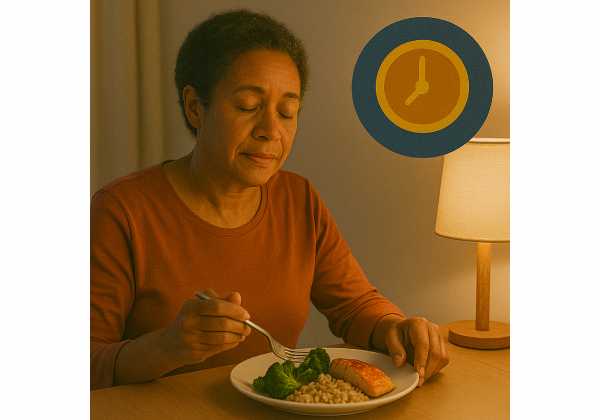
Chrononutrition connects two daily rhythms that shape healthy aging: when you eat and when you sleep. Meals do more than deliver calories and nutrients. They also act as time signals for the liver, gut, pancreas, muscles, and fat tissue. Sleep, in turn, affects hunger hormones, glucose control, cravings, digestion, and the ability to make steady food choices the next day.
A strong meal-timing routine usually starts with daytime eating, a consistent breakfast or first meal, enough protein and fiber earlier in the day, and a lighter evening pattern that leaves the body time to digest before bed. The aim is not rigid fasting or perfect meal times. It is a repeatable rhythm that protects sleep, supports metabolic health, and still fits real life. For healthy aging, the best schedule is one that improves recovery without causing under-eating, late-night hunger, social isolation, or stress around food.
Table of Contents
- How Meal Timing Talks to the Body Clock
- Why Late Eating Disrupts Sleep and Metabolism
- The Best Daily Meal Rhythm for Healthy Aging
- Dinner, Evening Snacks, and Night Waking
- Time-Restricted Eating Without Sleep Tradeoffs
- Special Situations: Shift Work, Travel, and Older Age
- How to Track Your Own Meal-Timing Response
How Meal Timing Talks to the Body Clock
Chrononutrition means matching food timing with the body’s 24-hour rhythm. The brain’s central clock responds strongly to light and darkness. The rest of the body also has clocks, especially in the liver, gut, pancreas, muscles, and fat tissue. Food is one of the strongest signals for those peripheral clocks.
This is why the same meal has different effects at different times of day. A large bowl of pasta at 1 p.m. and the same bowl at 10 p.m. do not land in the same biology. In the evening, melatonin rises, insulin sensitivity drops, digestion slows, and body temperature starts moving toward sleep mode. Eating a large meal during that window asks the body to digest and regulate blood sugar when it is preparing to rest.
Sleep also feeds back into food timing. Short sleep raises hunger, increases evening cravings, reduces impulse control, and often pushes breakfast later. A few nights of poor sleep create a pattern: more caffeine, later meals, larger dinners, and less stable glucose the next day. For a deeper foundation on circadian timing beyond meals, see resetting your body clock.
Meal timing affects healthy aging through several linked pathways:
- Glucose control: Late meals often produce higher and longer glucose rises than earlier meals.
- Digestive comfort: A full stomach near bedtime increases reflux, bloating, and sleep disruption.
- Sleep depth: Heavy digestion, alcohol, and late sugar intake raise body activation when sleep needs calm.
- Appetite rhythm: Skipping food early often shifts calories into the evening.
- Consistency: Irregular meal times blur time signals for the gut and metabolic tissues.
Older adults need special attention because aging often changes appetite, sleep timing, medication schedules, oral health, meal preparation, and social eating. Later breakfast or a shrinking eating window sometimes reflects fatigue, depression, dental problems, poor sleep, or reduced mobility rather than a deliberate wellness plan. In that case, the schedule is a clue, not a moral failure.
A useful chrononutrition routine gives the body repeated daytime cues: morning light, movement, food, hydration, and evening darkness. Morning light deserves its own place because it anchors the central clock that coordinates hunger, alertness, and sleep timing; practical steps are covered in morning light and evening darkness habits.
Why Late Eating Disrupts Sleep and Metabolism
Late eating affects sleep because digestion, blood sugar, body temperature, and the nervous system stay more active after food. A small snack is not the same as a large, fatty dinner, and a 6 p.m. meal is not the same as a 10 p.m. meal. Dose and timing both count.
The most sleep-disruptive pattern is a large meal within 1–2 hours of bed, especially when it includes alcohol, spicy foods, fried foods, high sugar desserts, or several drinks of fluid. This pattern raises the chance of reflux, night urination, overheating, and restless sleep. People often blame “insomnia” when the first fix is moving dinner earlier or reducing the size of the late meal.
Digestion raises internal workload
After a meal, the stomach stretches, digestive hormones rise, blood flow shifts toward the gut, and the body begins processing glucose, amino acids, and fats. This is normal during the day. Near bedtime, it competes with sleep onset.
Large high-fat meals are especially slow to leave the stomach. They also increase reflux risk because the stomach remains fuller for longer. Lying down soon after eating makes that worse. A regular pattern of late heavy dinners often shows up as coughing, throat clearing, sour taste, chest burning, or waking around 2–4 a.m. with discomfort.
Late carbohydrates and glucose swings
Carbohydrates are not “bad for sleep.” Some people sleep better with a balanced dinner that includes smart carbohydrates such as potatoes, oats, beans, lentils, fruit, or whole grains. The problem is usually timing, portion size, and food quality.
Late high-glycemic snacks, sweet drinks, and dessert-heavy evenings raise glucose when insulin sensitivity is lower. The body clears that glucose less smoothly at night. Some people then experience a glucose drop later, which feels like waking with hunger, sweating, anxiety, or a racing mind. A short walk after dinner and a smaller dessert portion often help more than removing carbohydrates completely. For broader food strategies, see food habits that flatten blood sugar spikes.
Alcohol makes late meals worse
Alcohol often feels sedating at first, but it fragments the second half of sleep. It also relaxes the airway and the lower esophageal sphincter, which increases snoring and reflux risk. When alcohol is paired with a late dinner, the combined effect is stronger: more body heat, more awakenings, more dehydration, and poorer recovery.
Caffeine also matters. A person who drinks coffee late to compensate for poor sleep often pushes dinner later and bedtime later, creating a loop. The relationship between stimulants, alcohol, and meal timing is covered more fully in timing rules for caffeine, alcohol, and late meals.
The Best Daily Meal Rhythm for Healthy Aging
A strong daily rhythm places most eating during the active part of the day and leaves a calm buffer before sleep. For many adults, that means breakfast or a first meal within 1–2 hours of waking, lunch at a steady time, dinner 3–4 hours before bed, and little or no grazing afterward.
This does not require extreme fasting. In healthy aging, aggressive eating windows often create new problems: low protein intake, under-fueling exercise, medication conflicts, social strain, or sleep-disrupting hunger. The better target is a consistent 10–12 hour eating window for most adults, adjusted for appetite, training, medical needs, and sleep quality.
| Timing habit | Useful target | Why it helps |
|---|---|---|
| First meal | Within 1–2 hours of waking for most people | Anchors the daytime rhythm and reduces late-night calorie shifting |
| Protein distribution | 25–40 g protein at 2–3 meals | Supports muscle maintenance and steadier appetite |
| Eating window | Usually 10–12 hours | Gives digestion a nightly rest without forcing under-eating |
| Dinner timing | Finish 3–4 hours before bed when possible | Reduces reflux, heat, and glucose disruption during sleep |
| Post-dinner movement | 10–20 minutes easy walking | Improves glucose handling and helps the nervous system downshift |
Breakfast timing deserves special attention. A protein-forward first meal reduces the chance of a low-protein morning, snack-heavy afternoon, and oversized dinner. Good options include Greek yogurt with berries and nuts, eggs with vegetables and whole-grain toast, tofu scramble with beans, or oatmeal with protein added. More detailed breakfast structure is covered in breakfast timing and composition.
Lunch should carry enough energy to prevent evening compensation. Many people eat a small lunch and then feel “undisciplined” at night. The body is often asking for the calories, protein, and fiber it missed earlier. A longevity-focused lunch usually includes protein, high-fiber plants, slow carbohydrates, and healthy fat.
Dinner should be satisfying but not sleep-heavy. A good plate includes protein, cooked or raw vegetables, and a moderate portion of carbohydrates if they fit the person’s activity and glucose response. For example, salmon, roasted vegetables, and potatoes usually support sleep better than a late pizza, fried meal, or large dessert bowl.
Protein timing matters more with age because older muscle becomes less responsive to small protein doses. A pattern of tea and toast for breakfast, salad for lunch, and most protein at dinner is common but not ideal. Adults in midlife and beyond usually do better with protein spread across the day. For more detail, see protein distribution for healthy aging.
Dinner, Evening Snacks, and Night Waking
Dinner timing is the most actionable part of chrononutrition for sleep. A meal does not need to be tiny, bland, or carbohydrate-free. It needs enough time to digest before bed.
A practical dinner pattern is simple: finish the main meal 3–4 hours before bedtime, then keep any later food small and intentional. For a 10:30 p.m. bedtime, dinner around 6:30–7:30 p.m. works well for many people. For an earlier bedtime, dinner needs to move earlier too.
When an evening snack helps
Some people sleep worse when they go to bed hungry. This is more common in active adults, people who eat very early dinners, older adults with low intake, and people who are reducing calories too aggressively. In these cases, a small snack 60–90 minutes before bed is reasonable.
Good sleep-friendly snacks are modest, protein-containing, and easy to digest:
- Plain Greek yogurt with kiwi
- Cottage cheese with berries
- Warm milk or fortified soy milk
- A small bowl of oats
- A banana with a spoon of peanut butter
- A boiled egg with a piece of fruit
The snack should solve hunger, not become a second dinner. For more options, see evening nutrition for sleep in aging.
When an evening snack hurts
A snack hurts sleep when it is large, sugary, greasy, spicy, or eaten while scrolling in bed. The most common troublemakers are ice cream, chocolate late at night, chips, fried leftovers, pastries, large bowls of cereal, and alcohol-containing “nightcaps.”
Chocolate deserves a special mention. Dark chocolate contains caffeine and theobromine, both of which are stimulating for sensitive sleepers. It fits better earlier in the day.
Night waking patterns and likely food triggers
Night waking gives useful clues. Food is not the only cause, but the timing of symptoms helps narrow the pattern.
| Sleep pattern | Possible meal-timing link | First adjustment to try |
|---|---|---|
| Trouble falling asleep | Late caffeine, large dinner, late intense eating | Move dinner earlier and stop caffeine earlier |
| Waking with reflux or coughing | Large, fatty, spicy, or acidic dinner close to bed | Finish dinner 4 hours before bed and elevate the head of the bed if needed |
| Waking hot or sweaty | Alcohol, large meal, heavy dessert, spicy foods | Remove alcohol near bedtime and reduce late meal size |
| Waking hungry | Under-eating earlier, too little protein, overly long fasting window | Add protein at breakfast and lunch; use a small planned snack |
| Frequent urination | Large fluid intake, alcohol, late salty foods | Front-load fluids earlier and reduce late salt-heavy snacks |
Persistent snoring, gasping, morning headaches, or daytime sleepiness need evaluation because late meals are not the whole story. Sleep apnea becomes more common with age and deserves direct attention; practical signs and testing options are covered in sleep apnea and longevity basics.
Time-Restricted Eating Without Sleep Tradeoffs
Time-restricted eating means limiting food intake to a daily window, often 8–12 hours. It works well for some adults because it reduces late-night grazing and creates a clearer routine. It backfires when the window is too short, too late, or too rigid.
For sleep and aging, earlier time-restricted eating usually makes more biological sense than late time-restricted eating. An eating window from 8 a.m. to 6 p.m. fits the body clock better than noon to 8 p.m. for many people. The first pattern places more fuel in daylight; the second often preserves late dinners and skips morning food.
Still, the right window must support total nutrition. Older adults, people doing resistance training, and anyone trying to preserve muscle need enough protein and calories. A narrow 6–8 hour window makes that harder. Missing protein early in the day also makes it harder to reach muscle-supportive intake without a heavy dinner.
A reasonable progression looks like this:
- Stop random after-dinner eating first. Keep dinner satisfying, then close the kitchen unless true hunger appears.
- Create a 12-hour overnight fast. For example, finish at 7 p.m. and eat breakfast at 7 a.m.
- Move toward 10–11 hours only if sleep improves. Watch energy, training quality, mood, and hunger.
- Avoid pushing the first meal too late. Late first meals often shift the whole eating midpoint later.
- Keep protein distributed. Two small meals and a huge dinner are not ideal for aging muscle.
Time-restricted eating is not appropriate for everyone. People with a history of eating disorders, frailty, unintended weight loss, pregnancy, certain diabetes medication regimens, or complex medical conditions need professional guidance. Anyone using insulin or glucose-lowering drugs should not change fasting length without medical input. For a metabolic health view of eating windows, see time-restricted eating and circadian metabolism.
The sleep test is straightforward: a meal-timing plan should make bedtime calmer, not more tense. If fasting leads to bedtime hunger, early-morning waking, irritability, binge-like evening eating, or worse training recovery, the plan needs more food or a wider window.
Special Situations: Shift Work, Travel, and Older Age
Chrononutrition advice is easiest for people with predictable daytime schedules. Real life includes night shifts, caregiving, travel, medications, appetite changes, and social meals. The strategy should bend without breaking.
Shift work
Night shift work creates a conflict between the work clock and the biological clock. Eating a large meal at 2 a.m. often worsens sleep and glucose control, yet working through the night without food is not realistic for many people.
A better approach is to keep the largest meal before the shift or early in the shift, then use smaller protein-rich foods overnight. Examples include yogurt, eggs, soup, tofu, chicken, hummus, fruit, or a small sandwich. Heavy fried foods, large sweets, and energy drinks in the second half of the shift make daytime sleep harder.
After a night shift, keep the pre-sleep meal small. A light breakfast-style meal before daytime sleep works better than a huge “dinner” at sunrise. More complete scheduling strategies are covered in shift work, jet lag, and social jet lag strategies.
Travel and social jet lag
Travel disrupts light exposure, meals, caffeine, alcohol, and sleep timing at the same time. Meals help reset the rhythm, but light is still the stronger signal. On the first day in a new time zone, eat meals on the local daytime schedule as soon as practical, keep late meals lighter, and avoid using alcohol as a sleep tool.
Social jet lag happens when weekday and weekend schedules differ sharply. A person wakes at 6:30 a.m. during the week, sleeps until 10 a.m. on weekends, skips breakfast, eats late brunch, then has dinner at 9:30 p.m. Sunday sleep suffers, and Monday starts with fatigue. Keeping wake time and first meal within about 1–2 hours of the usual schedule reduces the swing.
Older age and reduced appetite
In later life, the priority is not fasting. The priority is enough food, enough protein, stable routines, and sleep that supports recovery. Appetite often drops with age, and several factors contribute: medications, dry mouth, dental problems, loneliness, constipation, reduced smell and taste, depression, and lower activity.
Later meals in older adults sometimes reflect low morning appetite, poor sleep, fatigue, or difficulty preparing food. A simple breakfast routine helps: Greek yogurt, eggs, fortified milk, overnight oats, or leftovers from dinner. Soft, protein-rich foods are useful when chewing is difficult.
Caregivers should watch for meal timing changes that come with weight loss, skipped meals, or new sleep problems. A delayed breakfast pattern that appears suddenly deserves attention, especially if it comes with low mood, confusion, dental pain, or reduced strength.
How to Track Your Own Meal-Timing Response
A personal meal-timing experiment should be simple enough to run for two weeks. The aim is to find the smallest timing change that improves sleep and daytime energy.
Start with a baseline for 3–4 days. Record wake time, first meal, dinner time, last calories, alcohol, caffeine cutoff, bedtime, night waking, reflux, and morning energy. A wearable is optional. If you use one, focus on consistent trends rather than exact sleep-stage labels. Consumer devices estimate sleep; they do not measure it with the accuracy of a sleep lab. For realistic tracking, see what to track and what to ignore in sleep wearables.
Then choose one change for 10–14 days. Do not change everything at once. Good first experiments include:
- Finish dinner 3 hours before bed.
- Move breakfast 30–60 minutes earlier.
- Add 25–35 g protein to breakfast.
- Replace after-dinner grazing with a planned small snack.
- Move alcohol earlier or skip it on weeknights.
- Walk 10 minutes after dinner.
- Keep weekend first meal within 1–2 hours of weekday timing.
Track the outcome that matters most: sleep onset, night waking, reflux, morning glucose, morning mood, or evening cravings. A continuous glucose monitor adds useful information for some people, but it is not required. If glucose data creates anxiety or obsessive checking, stop using it or review it with a clinician.
Use this simple scoring system each morning:
| Morning question | Score |
|---|---|
| How rested do I feel? | 1 poor to 5 excellent |
| How many times did I wake? | 0, 1, 2, 3+ |
| Any reflux, coughing, or sour taste? | Yes or no |
| How strong were evening cravings yesterday? | 1 low to 5 intense |
| Did I finish dinner at least 3 hours before bed? | Yes or no |
After two weeks, keep the habit if sleep, digestion, or energy improved without a downside. If nothing changed, test a different lever. If sleep worsened, widen the eating window, add more daytime food, or move the snack earlier.
Several mistakes are common. The first is treating chrononutrition as punishment. Meal timing should reduce friction, not create fear of food after sunset. The second is ignoring total intake. A perfect eating window with too little protein and fiber is not a healthy aging plan. The third is forcing an early schedule on a true evening chronotype without using morning light, activity, and gradual changes. The fourth is overlooking medical sleep problems. Meal timing helps recovery, but it does not replace evaluation for insomnia, restless legs, reflux disease, medication side effects, or sleep apnea.
A strong routine often looks ordinary: morning light, breakfast with protein, a real lunch, dinner early enough to digest, a short walk, dimmer evenings, and consistent sleep. Repeated daily, those habits give the body clear time signals. Clear signals make sleep easier, appetite steadier, and aging physiology less chaotic.
References
- Chronobiological perspectives: Association between meal timing and sleep quality 2024 (Observational Study)
- The effects of time-restricted eating on sleep in adults: a systematic review of randomized controlled trials 2024 (Systematic Review)
- Chrono-nutrition and sleep: lessons from the temporal feature of eating patterns in human studies – A systematic scoping review 2024 (Systematic Review)
- Meal timing trajectories in older adults and their associations with morbidity, genetic profiles, and mortality 2025 (Cohort Study)
- Time-Restricted Eating and Sleep, Mood, and Quality of Life in Adults With Overweight or Obesity: A Secondary Analysis of a Randomized Clinical Trial 2025 (RCT)
- Time-restricted eating improves health because of energy deficit and circadian rhythm: A systematic review and meta-analysis 2024 (Systematic Review)
Disclaimer
This article is educational and does not replace medical nutrition advice, sleep medicine care, or guidance from a qualified clinician. People with diabetes, reflux disease, eating disorder history, frailty, unintended weight loss, pregnancy, or medication schedules affected by food timing should get individualized guidance before changing fasting length or meal timing.