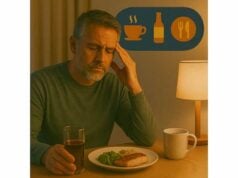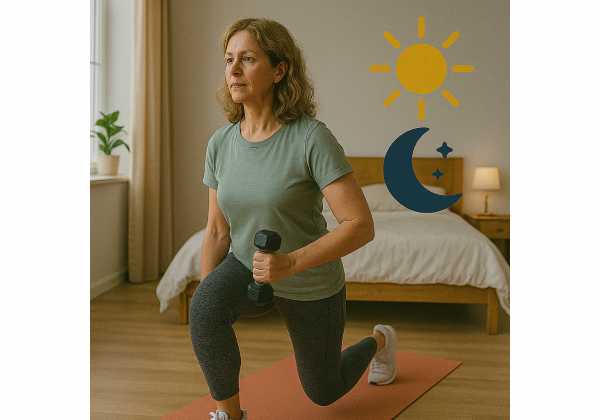
In midlife, exercise timing starts to feel less like a scheduling detail and more like a recovery tool. A hard workout that felt harmless at 28 can leave you wired at 48, especially when work stress, hormonal shifts, pain, alcohol, caffeine, late dinners, and family demands already compete with sleep. Morning exercise often supports steadier circadian rhythm, better consistency, and easier sleep onset at night. Evening exercise still works well when the session is light to moderate, ends early enough, and includes a real cooldown. The problem is not “evening exercise” as a category. The problem is high strain too close to bedtime.
The best timing is the one that lets you train regularly and sleep deeply. For most midlife adults, that means placing intense sessions earlier in the day, saving evenings for lower-strain movement, and tracking how sleep, resting heart rate, mood, and next-day energy respond.
Table of Contents
- Morning vs Evening Exercise: The Useful Answer
- Why Exercise Timing Changes Sleep and Recovery
- Morning Exercise: Best for Rhythm, Consistency, and Calmer Nights
- Evening Exercise: Helpful When Strain Stays Low Enough
- Match Workout Type to the Clock
- A Midlife Recovery Plan for Real Schedules
- How to Track Your Response Without Overreacting
- Common Mistakes That Ruin Sleep After Exercise
Morning vs Evening Exercise: The Useful Answer
Morning exercise is usually the safest choice for sleep in midlife, especially for intervals, heavy lifting, long runs, hard cycling, competitive sports, and any session that leaves your heart rate elevated for hours. It places the biggest physical stress far away from bedtime, helps anchor your daily rhythm, and reduces the chance that training will collide with late meals, screens, alcohol, or work spillover.
Evening exercise is still a good option when it fits your life and does not push your nervous system too close to sleep. Light strength work, mobility, yoga, walking, easy cycling, gentle swimming, and short bodyweight breaks work well for many adults after work. Vigorous exercise late at night creates more trouble when it ends within about 1–2 hours of bedtime, lasts a long time, or combines high intensity with emotional arousal, bright light, loud music, competition, or caffeine.
A simple rule works well:
| Workout timing | Best use | Sleep risk |
|---|---|---|
| Morning | Hard intervals, strength training, longer endurance, skill practice | Lowest risk for most people |
| Midday or afternoon | Most training types, especially higher strain sessions | Low to moderate risk |
| Early evening | Moderate cardio, resistance training, sport, classes | Works best when finished 3–4 hours before bed |
| Last 1–2 hours before bed | Walking, mobility, stretching, easy breathing, gentle bodyweight breaks | Higher risk if intense, long, competitive, or overheated |
Midlife adds another layer: recovery capacity is not fixed. Poor sleep makes workouts feel harder, and hard workouts too late make sleep lighter. This loop matters for muscle, glucose control, blood pressure, mood, and joint comfort. A schedule that protects sleep produces better training than a heroic plan that repeatedly steals from it.
Use timing as a lever, not a moral rule. A 7 a.m. workout that shortens sleep to five hours is not better than a 6 p.m. workout followed by a full night of rest. Sleep duration, sleep regularity, and recovery all count. Adults who train for long-term health usually do best when they protect a stable wake time, get regular daylight, and reserve the hardest sessions for the part of the day that least disrupts sleep.
Why Exercise Timing Changes Sleep and Recovery
Exercise affects sleep through body temperature, stress chemistry, circadian timing, muscle repair, glucose handling, and the autonomic nervous system. The autonomic nervous system controls the balance between “revved up” sympathetic activity and “rest-and-digest” parasympathetic recovery. Sleep needs the second state to take over. Hard training delays that shift when the session lands too close to bedtime.
During and after a demanding workout, heart rate rises, breathing increases, adrenaline and noradrenaline rise, and body temperature stays elevated. That is useful during training. At night, the body needs the opposite pattern: a gradual drop in core temperature, a slower heart rate, and lower mental alertness. When exercise strain stays high late into the evening, the body enters bed physiologically awake even when the mind feels tired.
This is why two evening workouts with the same clock time affect sleep differently. A relaxed 30-minute walk after dinner usually helps. A late 75-minute interval class under bright lights, followed by a hot shower, a large meal, and work email, often delays sleep.
Intensity and duration combine into strain
Intensity alone does not tell the whole story. A brief hard effort and a long moderate session both stress the body, but in different ways. For sleep, the combined load matters: how hard, how long, how late, and how fit you are.
A fitter person usually recovers faster from the same session than someone restarting after months away. A person under high work stress, in perimenopause, caring for family, or sleeping poorly starts the evening with less recovery room. The same workout then creates a larger total load.
Useful signals of high strain include:
- You need more than 30–45 minutes for breathing and heart rate to feel normal.
- You feel wired, hungry, chilled, overheated, or mentally alert after training.
- Your resting heart rate runs higher than usual during the night.
- Your sleep feels lighter even if total time in bed looks normal.
- Your legs feel heavy or mood feels flat the next morning.
This is where heart rate variability and recovery data sometimes help. A lower-than-usual overnight HRV after a hard evening session does not automatically mean something is wrong. It often means the body is still processing the training load. The pattern matters more than one night.
Sleep pressure and circadian rhythm work together
Two systems shape sleep: sleep pressure and circadian rhythm. Sleep pressure builds the longer you stay awake. Circadian rhythm sets the daily timing of alertness, temperature, melatonin, digestion, and sleep tendency. Morning light, meals, movement, and darkness all help set this rhythm.
Exercise acts as a time cue. Morning and daytime movement often strengthen daytime alertness and make the night feel more distinct. Late intense exercise sometimes shifts the body toward a later schedule, especially when paired with bright gym lighting and screens. People who already lean toward late nights often notice this more.
A healthy rhythm does not require a perfect life. It requires repeated signals. Morning light, daytime activity, regular meals, dimmer evenings, and a consistent wake time work together. For a deeper rhythm reset, circadian rhythm habits matter as much as workout timing.
Morning Exercise: Best for Rhythm, Consistency, and Calmer Nights
Morning exercise works well because it puts the strongest arousal signal early. It tells the body that daytime has started, raises body temperature when alertness should rise, and leaves many hours for the nervous system to settle before bed. This timing is especially useful for midlife adults whose evenings are already crowded with dinner, caregiving, work catch-up, and screen exposure.
Morning training also improves consistency. Fewer meetings, errands, and social events land at 6:30 a.m. than at 6:30 p.m. Consistency matters more than perfect timing because sleep benefits usually come from repeated training over weeks, not one ideal session.
Morning exercise fits especially well for:
- Vigorous intervals
- Heavy compound lifts
- Long endurance sessions
- Power training, hill sprints, and sport drills
- Workouts that leave you hungry or wired
- People with insomnia, hot flashes, anxiety, reflux, or late-night rumination
Morning does have one major risk: stealing sleep. Waking at 5:00 a.m. for training after a midnight bedtime is not recovery-minded. A morning workout helps sleep only when bedtime supports it. If early training cuts sleep below your normal need, move the workout later or shorten it.
For many midlife adults, the best morning session lasts 30–60 minutes. That is enough time for strength, Zone 2 cardio, intervals, or a mixed session without turning the whole morning into a stress event. A longer weekend session is fine when recovery stays solid.
Morning light makes exercise timing stronger
Outdoor movement gives a double signal: light plus activity. A brisk walk, easy run, ruck, bike commute, or outdoor mobility session gives the brain a clear daytime cue. Even cloudy daylight is far brighter than indoor lighting. This helps regulate melatonin timing later at night.
A strong morning routine does not need to be elaborate. Try this sequence:
- Wake at a consistent time.
- Get outdoor light within the first hour.
- Move for 10–45 minutes, depending on the day.
- Eat a protein-rich breakfast or post-workout meal when appetite allows.
- Keep caffeine earlier rather than letting it drift into the afternoon.
People with winter darkness, shift work, or early indoor starts need a more deliberate plan. Pairing morning light and evening darkness with a realistic exercise schedule often improves sleep more than changing workouts alone.
Morning strength training and recovery
Some people feel stiff in the morning. That does not rule out strength training; it means warm-ups matter. Midlife joints and tendons often prefer a slower ramp.
Use 8–12 minutes for joint prep, light cardio, and warm-up sets. Start with controlled movements before heavy loading. Keep the first hard set at a manageable effort rather than jumping from sleep to maximum output. A good longevity-focused warm-up raises temperature without draining the session.
Morning lifting also helps people who sleep poorly after evening strength work. Heavy squats, deadlifts, presses, and high-volume leg sessions create a strong nervous system and muscle-repair signal. Moving them earlier often improves sleep without reducing training quality.
Evening Exercise: Helpful When Strain Stays Low Enough
Evening exercise is not the enemy of sleep. It often helps people release stress, reduce sitting time, improve glucose handling after dinner, and create a transition between work and home. The right evening session feels like a downshift, not another deadline.
The strongest problem pattern is late high-strain exercise. That means the session ends close to bedtime and includes high heart-rate work, long duration, heavy effort, or competition. In real life, the strain also includes the environment: bright lights, loud music, intense coaching, social excitement, a hot room, and a rushed drive home.
Evening exercise works best when it ends at least 3–4 hours before bedtime if it is hard. Moderate sessions often fit well when they end at least 90 minutes before bed and include a cooldown. Light sessions usually fit near bedtime.
Good evening options include:
- 20–45 minutes of walking
- Easy cycling or swimming
- Light-to-moderate resistance training with longer rests
- Mobility work
- Yoga that does not feel competitive
- Gentle Pilates
- Short bodyweight movement breaks during TV time
- Relaxed stretching plus slow breathing
Evening movement also helps people who sit most of the day. Long sitting leaves the body restless while the mind feels tired. Short activity breaks reduce that mismatch. A few minutes of calf raises, sit-to-stands, wall push-ups, and easy step-ups every 30 minutes during the evening creates movement without creating a late workout.
When evening workouts backfire
Evening training deserves adjustment when sleep repeatedly shows these patterns:
- Sleep onset shifts later by 30 minutes or more after hard sessions.
- You wake hot, thirsty, or with a pounding heartbeat.
- Resting heart rate is higher than usual for much of the night.
- You get enough hours in bed but wake unrefreshed.
- Your appetite surges late and pushes dinner or snacks too close to bed.
- You need extra caffeine the next day, then repeat the cycle.
The fix is usually not quitting evening exercise. First reduce strain. Finish earlier, cut intervals, shorten the session, lower load, extend rests, and add a proper cooldown. Replace late competition with skill practice. Move one hard workout to the morning or weekend. Keep the evening habit but change its physiological effect.
Evening cooldowns need more respect
A cooldown is not wasted time. It is the bridge from training to sleep. After evening exercise, spend 10–20 minutes lowering arousal before you re-enter normal life.
A good cooldown includes easy movement, nasal breathing if comfortable, low light, and a clear endpoint. Avoid turning the cooldown into more work. Do not add “just one more” conditioning finisher at 8:45 p.m. and expect deep sleep at 10:15 p.m.
A practical evening cooldown:
- Walk or cycle easily for 5–10 minutes.
- Stretch only to mild tension, not pain.
- Breathe slowly for 2–5 minutes.
- Take a warm shower, then let the body cool in a dim room.
- Keep the post-workout meal simple and not overly large.
Evening recovery pairs well with calming practices. Slow breathing, mindfulness, and HRV biofeedback all help some people shift out of a revved-up state. A simple breathwork routine for sleep and stress works best when repeated nightly rather than saved only for bad nights.
Match Workout Type to the Clock
The right timing changes by workout type. A gentle walk and a high-intensity interval session do not belong in the same sleep category. In midlife, the smartest plan puts high-output work where recovery time is generous and places restorative work near the evening.
| Workout type | Best timing | Why it works |
|---|---|---|
| Zone 2 cardio | Morning, midday, or early evening | Steady and repeatable; usually low sleep risk when not too late or too long |
| Intervals or HIIT | Morning to afternoon | High arousal needs a longer runway before bed |
| Heavy strength training | Morning to early evening | Large muscle and nervous system load needs recovery time |
| Moderate resistance training | Morning, afternoon, or early evening | Works well when volume and effort stay controlled |
| Mobility and stretching | Any time, including evening | Low strain; helps reduce stiffness and transition toward rest |
| Walking after dinner | Evening | Supports digestion, glucose control, and stress relief with low arousal |
| Competitive sport | Earlier when possible | Physical strain plus emotional arousal often delays sleep |
Zone 2 training is the most flexible. It should feel conversational, steady, and repeatable. Late Zone 2 becomes a problem when it turns into hidden intensity or lasts so long that dinner and bedtime get pushed later. A clear Zone 2 training plan helps keep easy days truly easy.
Strength training has more range. A short, moderate lift after work often works fine. A high-volume lower-body session close to bedtime often does not. Midlife adults need strength work for muscle, bone, glucose control, and function, but the schedule should support the adaptation. The muscles grow and repair during recovery, not during the set itself. A sustainable weekly strength plan should leave you sleeping better, not fighting bedtime alertness.
Intervals deserve the most caution. They are efficient and powerful, but they create a strong stress signal. Most people need only 1–2 true interval sessions per week for health-focused fitness. Placing them in the morning, lunch hour, or mid-afternoon protects sleep and improves session quality.
Walking is the evening winner. A 10–20 minute walk after dinner lowers the intensity bar while still giving meaningful benefits. It helps digestion, reduces the urge to snack, and gives the brain a clean break from screens and work. It is also easier to repeat than a formal workout.
A Midlife Recovery Plan for Real Schedules
A good timing plan starts with your bedtime, not your workout. Decide when you need to sleep, then place training so the body has enough time to come down. For many adults, that means a stable bedtime within a 30–60 minute range most nights and a wake time that does not swing wildly between weekdays and weekends.
Use this hierarchy:
- Protect enough sleep opportunity.
- Place hard workouts away from bedtime.
- Use evening movement to unwind, not prove fitness.
- Adjust training load during high-stress weeks.
- Track patterns across two weeks before making big changes.
A midlife training week does not need daily intensity. It needs enough load to maintain muscle, cardiovascular fitness, mobility, and metabolic health while leaving room for sleep.
A balanced week might look like this:
- Monday morning: strength training, 45 minutes
- Tuesday evening: 30-minute walk plus mobility
- Wednesday lunch: Zone 2 cardio, 40 minutes
- Thursday morning: intervals, 20–30 minutes including warm-up and cooldown
- Friday evening: easy strength or Pilates, 30 minutes
- Saturday morning: longer walk, hike, ride, swim, or ruck
- Sunday: active recovery, stretching, or rest
This structure keeps the hardest sessions away from bedtime and preserves the evening exercise habit. It also gives joints and connective tissue time to recover. Adults in their 40s, 50s, and 60s often improve faster when they stop stacking hard days on poor sleep.
When mornings are impossible
Not everyone has a peaceful morning. Shift work, caregiving, school runs, long commutes, and early meetings change the options. In that case, make evening exercise sleep-friendly rather than forcing a morning plan that fails.
Choose one of these evening templates:
- Early-evening hard stop: Train hard right after work, finish 3–4 hours before bed, then eat and dim the evening.
- Moderate evening session: Train for 30–45 minutes, avoid all-out intervals, finish at least 90 minutes before bed.
- Late light session: Walk, stretch, do mobility, or perform gentle bodyweight work close to bedtime.
- Split session: Do 10–20 minutes in the morning and 20–30 minutes after work instead of one large evening block.
Split sessions work especially well in midlife. A short morning walk plus a moderate evening lift often beats a single late high-strain workout. It also lowers the mental barrier to exercise.
Hormones, heat, and sleep disruption
Midlife sleep changes often interact with training. Perimenopause and menopause bring hot flashes, night sweats, mood changes, and more frequent awakenings for many women. Andropause-related changes in body composition, alcohol tolerance, stress resilience, and recovery also affect sleep in men. Training helps, but poorly timed intensity sometimes adds heat and arousal to an already fragile night.
If hot flashes or night sweats are active, late intense exercise deserves extra caution. Finish hard sessions earlier, cool down longer, keep the bedroom cool, and avoid large late meals and alcohol. If sleep disruption clusters around hormonal symptoms, review menopause, andropause, and sleep strategies alongside training changes.
Pain also shifts the equation. Exercise improves pain tolerance and function over time, yet a late session that aggravates hips, knees, back, shoulders, or restless legs will fragment sleep. Use joint-friendly programming, better warm-ups, and earlier timing for sessions that flare symptoms.
How to Track Your Response Without Overreacting
Track sleep response for patterns, not perfection. Wearables, sleep scores, resting heart rate, HRV, and perceived recovery all have noise. A device that reports less deep sleep after one evening workout is not enough evidence to change your whole plan. Three or four similar nights across two weeks tells a stronger story.
The most useful tracking combines objective and subjective signs:
- Bedtime and wake time
- Workout start time and end time
- Workout type, duration, and effort
- Alcohol, caffeine, and late meal timing
- Time to fall asleep
- Number of awakenings
- Morning energy
- Resting heart rate and HRV trends, when available
- Mood, soreness, and desire to train
Wearables are better at showing sleep timing and consistency than perfect sleep stages. Deep sleep and REM estimates vary by device and person. Use them as rough signals. For more grounded tracking, focus on bedtime regularity, total sleep time, wake after sleep onset, resting heart rate, and how you feel in the first two hours after waking. A clear guide to sleep wearables in aging helps separate useful trends from noisy metrics.
A two-week experiment
Run a simple experiment before changing everything. Keep your workouts similar, but move the timing.
Week 1: Place your hardest workout at your usual time. Track sleep and recovery.
Week 2: Move that same workout earlier by at least 3–4 hours, or shift it to the morning. Keep caffeine, alcohol, dinner, and bedtime as similar as possible.
Compare:
- Time to fall asleep
- Nighttime awakenings
- Resting heart rate
- HRV trend
- Morning energy
- Soreness
- Workout performance
If sleep improves with earlier training, keep the change for your highest-strain sessions. If nothing changes, your evening timing is likely fine. If morning training worsens sleep because you wake too early, adjust bedtime or choose midday and early evening instead.
Red flags deserve more than timing tweaks
Exercise timing cannot fix every sleep problem. Loud snoring, gasping, morning headaches, high blood pressure, irregular heartbeat, severe restless legs, frequent urination, depression, panic, chronic pain, and insomnia lasting more than a few weeks deserve proper evaluation. Midlife is a common time for sleep apnea, medication effects, alcohol-related sleep disruption, and hormone-related sleep changes to become more obvious.
Also watch for overtraining patterns: falling performance, irritability, persistent soreness, low motivation, elevated resting heart rate, frequent illness, or sleep that worsens despite fatigue. The answer is usually less strain, more recovery, and better distribution across the week.
Common Mistakes That Ruin Sleep After Exercise
Many people blame workout timing when the real problem is the cluster of habits around the workout. The late session is only one piece. Fixing the surrounding routine often saves evening exercise.
Using caffeine to make late workouts happen
Caffeine before a 6 p.m. workout often lingers into bedtime. Midlife adults frequently notice stronger caffeine effects than they did years earlier. Cutoff time matters. Many people sleep better when caffeine ends by late morning or early afternoon. Late caffeine also hides fatigue, which encourages higher evening intensity than the body is ready to absorb. A review of caffeine, alcohol, and late meals gives useful timing rules for nights when sleep is the priority.
Eating the largest meal too close to bed
Post-workout hunger is real. A huge late dinner, especially with alcohol, spicy food, or heavy fat, increases reflux risk and raises overnight body temperature. The better pattern is a normal dinner after early-evening training or a lighter protein-rich meal after late training.
For late workouts, aim for simple options: Greek yogurt and fruit, eggs and toast, tofu and rice, cottage cheese, soup, or a modest protein smoothie. The goal is recovery without turning digestion into another overnight job.
Skipping the cooldown
Stopping a hard workout and jumping into email, chores, or bright screens keeps the nervous system activated. A cooldown gives the body a clear signal that effort is over. This is especially important after evening classes, indoor cycling, racquet sports, heavy lifting, and heated workouts.
Turning every workout into a test
Midlife recovery improves when training has different gears. Easy days should feel easy. Strength days do not always need personal records. Cardio does not always need a leaderboard. Sleep suffers when every session becomes a performance event.
Use hard work sparingly and deliberately. Most weekly movement should build capacity without draining the next day. This is the same logic behind active recovery and deloads: progress comes from alternating stress and repair.
Ignoring light and screens after evening training
Bright light after a late workout pushes alertness later. Gym lights, phone screens, emails, and streaming all add to the signal. Dim the home environment after evening training. Use warmer, lower light. Keep the phone away from the bed. A calmer light environment makes the workout less likely to shift bedtime.
Training hard on already-short sleep
A poor night does not always mean canceling exercise. It does mean changing the dose. After a short or fragmented night, choose walking, mobility, easy Zone 2, technique work, or a shorter lift. Save intervals and max-effort lifting for a better-recovered day.
This protects both sleep and fitness. A single modified session does not erase progress. Repeated hard sessions on poor sleep create the larger problem.
References
- Dose-response relationship between evening exercise and sleep 2025 (Cohort Study)
- Effects of exercise timing and intensity on physiological circadian rhythm and sleep quality: a systematic review 2023 (Systematic Review)
- Evening regular activity breaks extend subsequent free-living sleep time in healthy adults: a randomised crossover trial 2024 (RCT)
- The effects of evening high-intensity exercise on sleep in healthy adults: A systematic review and meta-analysis 2021 (Systematic Review)
- Optimal exercise dose and type for improving sleep quality: a systematic review and network meta-analysis of RCTs 2024 (Systematic Review)
- Recommended Amount of Sleep for a Healthy Adult: A Joint Consensus Statement of the American Academy of Sleep Medicine and Sleep Research Society 2015 (Consensus Statement)
Disclaimer
This article is educational and does not replace care from a qualified health professional. Speak with a clinician if you have persistent insomnia, loud snoring, breathing pauses during sleep, chest pain, dizziness during exercise, uncontrolled blood pressure, or a medical condition that affects safe training. Adjust exercise intensity and timing gradually, especially after illness, injury, or a long break from training.