Blue light gets blamed for bad sleep, but the real problem is broader: bright, stimulating light at the wrong time. Phones, tablets, TVs, laptops, overhead LEDs, bathroom lights, and bedroom glow all send the brain a daytime signal when the body should be shifting into repair mode. That signal affects melatonin timing, alertness, body temperature, heart rate, glucose control, and the depth and continuity of sleep.
Aging raises the stakes. Sleep often becomes lighter with age, circadian rhythms lose some strength, and many adults spend more time indoors during the day and under artificial light at night. Better screen hygiene does not require a perfect digital detox. It requires stronger daytime light, dimmer evenings, fewer activating inputs near bed, and a bedroom that stays dark after sleep begins. The best plan is simple enough to repeat, even during busy weeks.
Table of Contents
- Blue Light Is Only Part of the Problem
- Why Night Light Matters More With Age
- The Evening Screen Hygiene Plan
- Settings, Glasses, and Filters
- Bedroom Lighting That Protects Sleep
- Special Situations and Real-Life Fixes
- Troubleshooting Common Mistakes
- A Seven-Day Reset
Blue Light Is Only Part of the Problem
Blue light is short-wavelength visible light, roughly in the 400–500 nanometer range. The eye uses it for vision, but the brain also uses it as a time signal. Special light-sensitive cells in the retina contain melanopsin, a pigment that strongly responds to blue-cyan light. These cells help tell the brain’s master clock when it is daytime and when night has arrived.
That master clock sits in a brain region called the suprachiasmatic nucleus. It helps coordinate sleep timing, body temperature, hormone rhythms, digestion, blood pressure, alertness, and many other daily patterns. Evening light does not simply “wake up the eyes.” It sends a biological timing message.
Still, blue wavelength is not the only factor. Four features decide how disruptive evening light becomes:
- Brightness: A bright bathroom or kitchen light usually affects the body more than a very dim phone.
- Timing: Light in the final 2–3 hours before bed carries a stronger sleep-timing signal than the same light at 4 p.m.
- Duration: Ten minutes of dim light differs from two hours of scrolling.
- Content: A stressful email, argument, news feed, gambling app, or cliffhanger show raises alertness even when the screen is warm and dim.
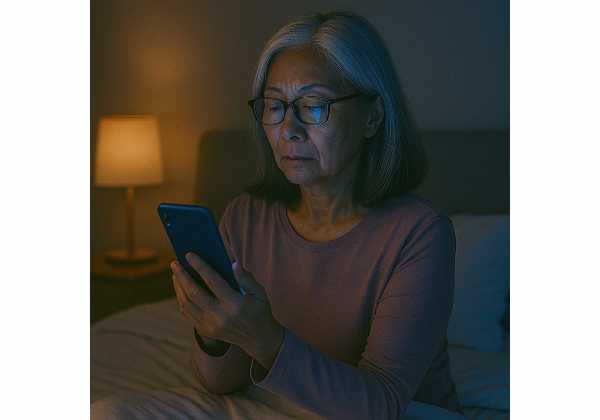
This is why “blue light” advice often feels confusing. A phone in night mode still keeps you awake if it pulls you into work, social comparison, conflict, shopping, or autoplay. A television across the room creates less direct eye exposure than a phone held near the face, but it still delays bedtime if one episode becomes three. A tablet with a blue-light filter still adds mental stimulation if used in bed.
Light also works in contrast. People who get weak daytime light often feel worse at night under ordinary indoor light. A dim office day followed by bright evening screens creates a flattened light rhythm: not bright enough during the day, not dark enough at night. That pattern blurs the body’s clock. Morning outdoor light and evening dimness work together. A stronger daytime signal makes nighttime darkness easier for the brain to interpret.
This connects closely with circadian rhythm health. The body does best with a clear daily contrast: bright days, soft evenings, dark nights, and consistent timing.
Why Night Light Matters More With Age
Aging does not make sleep less important. It makes sleep more vulnerable to disruption. Many adults over 40 notice earlier sleepiness, earlier waking, more nighttime awakenings, lighter sleep, or less tolerance for late meals, late alcohol, or late stress. Light timing sits in the same category: the same screen habit that felt harmless at 28 often feels more costly at 55.
Several age-related changes explain this shift.
The circadian signal often becomes less robust. The brain still runs a daily clock, but the rhythm can lose amplitude. A weaker rhythm means the body receives a less forceful “day” and “night” pattern. This makes regular light exposure more valuable.
Daytime light exposure often falls. Many adults spend mornings indoors, commute by car, work under moderate indoor lighting, and exercise indoors after work. Even a bright indoor room is usually much dimmer than outdoor light. Outdoor daylight commonly reaches thousands of lux, even on cloudy days. Typical home lighting often sits far below that.
The eyes also change. Aging lenses transmit less short-wavelength light, and cataracts reduce retinal light exposure further. Older adults often need more daytime light for alertness and rhythm strength, yet they also need protection from glare and fall risk. The answer is not a dark house all day. It is bright, safe daytime lighting and soft, low evening lighting.
Sleep pressure also changes. Many people nap more, move less, or spend longer in bed as sleep becomes lighter. Evening screen use then fills the extra time. The bed slowly becomes a place for reading messages, watching videos, and checking tomorrow’s problems. The brain learns that bed means alertness.
Night light also interacts with cardiometabolic aging. Research on light during sleep has linked moderate nighttime light exposure with higher nighttime heart rate and worse next-morning insulin resistance in controlled settings. Large observational studies have also linked brighter nighttime light patterns with higher risk of type 2 diabetes. Observational findings do not prove that light alone causes disease, but they fit with a larger pattern: circadian disruption affects glucose regulation, blood pressure, appetite, and recovery.
Sleep supports memory, emotional regulation, immune function, tissue repair, metabolic control, and brain cleanup processes. For people focused on sleep and brain aging, nighttime darkness is one of the lowest-cost recovery tools available.
The Evening Screen Hygiene Plan
Screen hygiene works best when it starts before willpower is exhausted. The strongest plan changes the environment, not just the intention. Use the final 2–3 hours before bed as a light-down period, then make the final 30–60 minutes screen-free when sleep is fragile.
Three hours before bed: start the dimming curve
Three hours before your usual bedtime, reduce bright overhead light. This does not mean sitting in darkness. It means changing the room from “day mode” to “evening mode.”
Use lamps instead of ceiling lights. Choose warm bulbs, ideally around 2200–2700 K. Put light beside or behind you rather than above your eyes. Avoid bright white bathroom mirrors, kitchen spotlights, and high-output LEDs during this window.
At the same time, reduce screen brightness. Set phones, tablets, and laptops to automatic night settings, warm color temperature, dark mode, and lower brightness. These tools do not erase the effect of screen use, but they reduce the light dose.
One hour before bed: remove the most activating inputs
The final hour before bed should protect mental quiet. Work email, online arguments, intense news, financial decisions, action games, and rapid social feeds keep the nervous system alert. They also create “open loops,” which are unfinished thoughts the brain keeps rehearsing after the device is down.
Replace high-stimulation screen use with lower-stimulation options:
- Read a paper book or e-reader without a bright backlight.
- Listen to calm audio with the screen locked.
- Stretch, shower, prepare clothes, or write tomorrow’s first task.
- Use a warm lamp and keep the room quiet.
- Charge the phone outside the bedroom or across the room.
People with insomnia, early waking, or racing thoughts usually need the full 60-minute buffer. People who fall asleep easily and sleep deeply might do well with 30 minutes. Start with 60 minutes for two weeks, then adjust.
Bedtime: keep the bed separate from the feed
The bed should cue sleep, intimacy, or rest. It should not cue scrolling. When the brain links bed with alert content, sleep becomes more effortful.
Use a simple rule: no handheld screens in bed. This single change solves several problems at once. It reduces light near the eyes, limits stimulation, prevents accidental late nights, and protects the bed-sleep association. It also removes the common “I woke up and checked the time, then checked messages” spiral.
For a stronger system, create a charging station outside the bedroom. Use a basic alarm clock with dim red or amber digits, turned away from the face. People who track sleep with a wearable should sync the device in the morning rather than opening the app at night. For tracking choices, sleep wearables are most useful when they guide habits without creating bedtime anxiety.
Settings, Glasses, and Filters
Night mode helps, but it is not a sleep guarantee. Blue-light settings shift the screen toward warmer colors and reduce short-wavelength output. They are worth using because they are free and easy. They work best when paired with lower brightness, shorter use, and less stimulating content.
Use this order of importance:
| Change | Why it helps | Best use |
|---|---|---|
| Lower brightness | Reduces total light entering the eyes | Start 2–3 hours before bed |
| Warm color setting | Reduces short-wavelength light | Keep it automatic every evening |
| Dark mode | Reduces bright backgrounds | Useful for reading and messaging |
| Grayscale | Makes apps less rewarding | Use for social media and shopping apps |
| App limits | Stops accidental overuse | Set blocks 60 minutes before bed |
| Screen outside bedroom | Protects the bed-sleep association | Use nightly, especially with insomnia |
Blue-light blocking glasses deserve nuance. Strong amber or orange lenses that block much of the blue range are different from clear “computer glasses” with a small blue filter. Clear lenses often make big marketing claims, but clinical evidence does not show reliable benefits for eye strain or sleep in the general adult population. Stronger evening lenses have mixed but more plausible evidence, especially for people with insomnia, delayed sleep timing, or unavoidable evening light exposure.
Use blue-blocking glasses as a backup tool, not the main plan. They work only when the rest of the evening supports sleep. Wearing orange lenses while answering stressful emails in bed is still poor screen hygiene.
When glasses make sense:
- You must work under bright screens or lights at night.
- You have delayed sleep timing and need stronger evening darkness.
- You are a shift worker trying to protect daytime sleep.
- Your home lighting is difficult to change.
- You are testing a structured sleep plan for 2–3 weeks.
Choose lenses with published transmission data when possible. Fashion labels such as “blue defense” or “digital protection” tell you little. True evening lenses visibly change color perception. Do not drive at night with dark amber or red lenses unless the product is specifically safe for that use.
Also avoid using blue-blocking products during the morning. Daytime blue-enriched light supports alertness and circadian timing. Blocking morning light while living under dim indoor conditions works against the rhythm you are trying to strengthen.
Bedroom Lighting That Protects Sleep
The sleeping room should be dark enough that you would not read comfortably. Darkness during sleep is separate from screen hygiene before bed. Even after the phone is away, light from windows, chargers, clocks, hallway gaps, TVs, and bathroom fixtures can reach the eyes through closed eyelids and disturb the night signal.
Start with the easiest fixes:
- Cover or remove tiny LED lights.
- Turn alarm clocks away from the bed.
- Use blackout curtains or a sleep mask if outdoor light enters the room.
- Keep TVs and laptops out of the bedroom or fully powered down.
- Close doors that leak hallway light.
- Use dim red or amber night lights for safe walking.
A bedroom does not need to become unsafe. Falls matter, especially with aging, pain, pets, medications, or nighttime bathroom trips. The best compromise is low, warm, floor-level light that turns on only when needed. Motion-activated amber lights in the hallway or bathroom protect safety without flooding the eyes.
Bathroom lighting deserves special attention. Many people avoid screens but then switch on a bright mirror light at 2 a.m. That can create a strong alerting signal. Use a dim plug-in night light, a low-watt amber bulb, or a motion light near the floor. Avoid looking directly at the light.
Evening darkness also pairs with daytime brightness. A person who sits in dim indoor light all day often feels sleepy in the afternoon and wired at night. Morning outdoor light helps anchor the rhythm. Aim for 10–30 minutes of outdoor light soon after waking. Cloudy weather still provides useful light. Sitting near a window helps less than going outside because glass and indoor distance reduce the signal.
For a practical rhythm, combine bright mornings with the habits in morning light and evening darkness. The pattern is simple: daylight early, normal activity during the day, softer light after dinner, near-darkness during sleep.
Special Situations and Real-Life Fixes
Perfect screen hygiene is easy on paper and harder in real life. Caregiving, shift work, pain, menopause symptoms, travel, apartment lighting, and shared bedrooms all change the plan. The answer is to protect the strongest levers first.
If you work at night
Night work requires a different light strategy. During the work shift, bright light supports alertness and safety. After the shift, reduce light exposure on the way home. Sunglasses can help during a bright morning commute. Keep the phone dim, avoid errands in strong daylight, and make the sleep room dark, cool, and quiet.
Use the same “dark before sleep” principle, even if sleep starts at 8 a.m. Blackout curtains, eye masks, and a protected wind-down period matter more for shift workers than for most daytime workers. Meal timing also affects circadian signals, so late-night eating patterns deserve attention. Pairing light strategy with sleep-focused meal timing often improves the routine.
If you wake during the night
Middle-of-the-night awakenings are common. The mistake is turning a normal waking into a full alertness event. Do not check the phone. Do not check email. Do not open sleep data. Do not calculate how many hours are left.
Keep the room dim. If you need the bathroom, use low amber light. If you stay awake more than about 20–30 minutes and feel frustrated, leave the bed and sit somewhere quiet with very low light. Read something calm on paper. Return when sleepy. This supports the bed-sleep connection used in cognitive behavioral therapy for insomnia.
If you share a room
A partner’s light habits can disrupt sleep even when your habits are solid. Use practical boundaries rather than blame. Try headphones, a sleep mask, a bedside lamp with a narrow beam, or an agreed screen cutoff. If one person reads at night, a small warm book light aimed at the page is better than a bright lamp aimed across the room.
If snoring, gasping, restless legs, or repeated awakenings drive nighttime screen use, screen hygiene alone will not solve the cause. Loud snoring and daytime sleepiness deserve evaluation for sleep apnea. Leg discomfort, pain, reflux, hot flashes, and anxiety also need direct attention.
If anxiety drives scrolling
Many people use screens at night to avoid anxious thoughts. Removing the phone without replacing the coping strategy often fails. Create a short shutdown ritual before the screen cutoff:
- Write tomorrow’s first three tasks.
- Put one worry on paper with the next action, even if the action is “discuss Monday.”
- Set the phone to charge away from the bed.
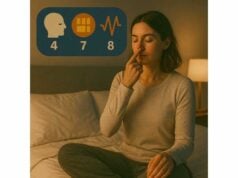
- Do five slow breaths with longer exhales.
- Move to a quiet, repeated cue such as reading or stretching.
The point is not to force calm. It is to show the brain that the day is closed. This works well alongside broader stress resilience habits.
Troubleshooting Common Mistakes
Most screen hygiene failures come from small mismatches. The person changes screen color but keeps brightness high. They stop phone use but watch tense shows. They make the bedroom dark but turn on a bright bathroom light. They dim evenings but spend the whole day indoors.
Use the table below to find the weak link.
| Problem | Likely cause | Better fix |
|---|---|---|
| You feel sleepy on the couch but alert in bed | Phone use, bright bathroom light, or mental activation right before bed | Move hygiene tasks earlier; keep bathroom light dim; no phone in bed |
| You wake at 3 a.m. and stay awake | Checking time, sleep data, messages, or bright lights | Turn clocks away; use amber night light; no phone checks |
| Night mode does not help | Brightness, duration, or content remains too stimulating | Lower brightness, add app limits, stop high-stimulation content 60 minutes before bed |
| You fall asleep late every night | Delayed rhythm, weak morning light, bright evenings | Outdoor morning light daily; dim 3 hours before bed; consistent wake time |
| You wake too early | Early rhythm, stress, alcohol, temperature, or sleep apnea | Keep evenings dim but not too early; strengthen daytime activity; screen for other sleep disruptors |
| You feel worse after strict screen rules | Rules create stress or remove needed connection | Use a softer plan: audio calls, warm light, fixed end time, calming content |
Do not turn sleep into another performance score. Over-monitoring creates a feedback loop: you check the sleep app, feel concerned, search for fixes, stay up later, then wake up more focused on the number. Use sleep trackers for trends, not nightly judgment. The most useful signals are consistent bedtime, wake time, nighttime awakenings, daytime energy, resting heart rate, and how you feel during training or work.
Screen hygiene also fails when the rest of the evening works against sleep. Caffeine after lunch, alcohol near bed, intense late exercise, large late meals, overheating, and unresolved stress all reduce sleep quality. Light is one lever. It is powerful because it is daily and environmental, but it still belongs inside a larger sleep hygiene plan.
A Seven-Day Reset
A short reset helps you test screen hygiene without turning your life upside down. Keep the plan simple and repeatable.
Day 1: Measure the light leaks. Walk through your home at night. Look for overhead lights, bright bathroom fixtures, charger LEDs, streetlight gaps, glowing clocks, and screens used in bed. Fix two obvious leaks immediately.
Day 2: Set automatic dimming. Turn on night mode, dark mode, and app limits on every evening device. Set the schedule to begin 3 hours before bed. Reduce screen brightness manually if automatic settings stay too bright.
Day 3: Move charging out of reach. Put the phone across the room or outside the bedroom. Use a separate alarm if needed. This is often the single most effective change.
Day 4: Create a 30-minute non-screen landing zone. Choose one repeatable activity: paper reading, stretching, showering, calm music, breathing, or preparing tomorrow’s clothes. Keep it boring enough that the brain recognizes the day is ending.
Day 5: Add morning outdoor light. Get outside soon after waking for 10–30 minutes. Do not wear blue-blocking glasses during this time. Morning light makes evening sleep timing easier.
Day 6: Protect night awakenings. Place a dim amber light where you need safety. Turn clocks away. Decide in advance that the phone stays untouched until morning.
Day 7: Review without overthinking. Look at simple outcomes: time to fall asleep, number of awakenings, how you felt on waking, afternoon energy, cravings, and evening alertness. Keep the changes that gave clear benefit. Make the next week slightly easier, not more complicated.
For many adults, the best long-term version looks like this:
- Outdoor light most mornings.
- Bright indoor spaces during the day.
- Warm lamps after dinner.
- Screens dimmed 2–3 hours before bed.
- No high-stimulation content in the final hour.
- No handheld screens in bed.
- A dark room during sleep.
- Dim amber light only for nighttime safety.
This plan works because it respects biology and behavior at the same time. It does not ask you to hate technology. It asks technology to leave the nervous system alone when the body is preparing for repair.
References
- The impact of screen use on sleep health across the lifespan: A National Sleep Foundation consensus statement 2024 (Consensus Statement)
- Blue-light filtering spectacle lenses for visual performance, sleep, and macular health in adults 2023 (Systematic Review)
- Recommendations for daytime, evening, and nighttime indoor light exposure to best support physiology, sleep, and wakefulness in healthy adults 2022 (Consensus Recommendations)
- Light exposure during sleep impairs cardiometabolic function 2022 (Controlled Laboratory Study)
- Personal light exposure patterns and incidence of type 2 diabetes: analysis of 13 million hours of light sensor data and 670,000 person-years of prospective observation 2024 (Prospective Cohort Study)
Disclaimer
This article is educational and does not replace care from a qualified health professional. Speak with a clinician if sleep problems are severe, persistent, linked with snoring or breathing pauses, or worsened by mood symptoms, medications, pain, restless legs, or shift work. People with bipolar disorder, retinal disease, or major eye conditions should get personalized guidance before using strong light therapy or strict light-blocking routines.