Sleep apnea is one of the most overlooked threats to healthy aging because it damages recovery during the hours meant to restore it. Repeated breathing pauses can fragment sleep, lower oxygen levels, raise nighttime blood pressure, and keep the nervous system on alert. Over time, untreated sleep apnea is linked with hypertension, atrial fibrillation, insulin resistance, stroke risk, mood problems, memory complaints, and daytime accidents.
The tricky part is that sleep apnea does not always look dramatic. Some people snore loudly and wake up gasping. Others simply feel tired, foggy, irritable, or unusually sleepy after a “full” night in bed. Bed partners often notice the problem first. Testing is straightforward, and treatment has improved far beyond the old image of a loud, bulky CPAP machine. The right approach depends on severity, anatomy, body weight, sleep position, comfort, and follow-up.
Table of Contents
- What Sleep Apnea Does to Aging
- Signs That Deserve Testing
- Who Has Higher Risk
- How Sleep Apnea Testing Works
- Treatment Options That Work
- How to Make PAP Therapy Easier
- Tracking Progress and When to Follow Up
What Sleep Apnea Does to Aging
Sleep apnea means breathing repeatedly becomes too shallow or stops during sleep. In obstructive sleep apnea, the most common form, the throat narrows or collapses while the brain is still trying to breathe. Airflow drops, oxygen falls, carbon dioxide rises, and the brain briefly wakes the body enough to reopen the airway. These arousals often last only seconds, so the person rarely remembers them.
A single night of untreated sleep apnea can contain dozens or hundreds of breathing disruptions. The damage comes from repetition: oxygen dips, pressure surges, poor sleep depth, and repeated bursts of stress hormones.
The most used severity score is the apnea-hypopnea index, or AHI. It counts breathing events per hour of sleep:
| AHI result | Severity category | Plain-language meaning |
|---|---|---|
| Fewer than 5 events/hour | Usually normal | Breathing events are not frequent enough for typical obstructive sleep apnea diagnosis. |
| 5 to 14.9 events/hour | Mild | Symptoms and oxygen drops still matter, especially with sleepiness or blood pressure issues. |
| 15 to 29.9 events/hour | Moderate | Health risks rise, and active treatment is usually recommended. |
| 30 or more events/hour | Severe | Breathing disruption is frequent and deserves prompt treatment and follow-up. |
AHI is useful, but it does not tell the whole story. A person with fewer events and deeper oxygen drops may feel worse than someone with more frequent but shorter events. Sleep specialists also look at oxygen saturation, time spent below 90% oxygen, heart rhythm, sleep position, REM sleep effects, symptoms, medical history, and safety risks such as drowsy driving.
For longevity, the main concern is not snoring itself. The concern is repeated stress on systems that matter for healthspan: the blood vessels, heart rhythm, brain, glucose control, mood regulation, and overnight recovery. People who track recovery with heart rate or HRV often notice that untreated sleep apnea keeps nighttime heart rate elevated and recovery scores low. Wearables do not diagnose apnea, but they often reveal patterns worth discussing; sleep tracking in aging works best when it prompts better questions rather than self-diagnosis.
Sleep apnea also interacts with other sleep problems. Insomnia, restless legs, pain, menopause symptoms, alcohol use, nasal congestion, and late meals all reduce sleep quality. Treating apnea often improves the foundation, but it does not automatically solve every sleep issue.
Signs That Deserve Testing
Loud snoring plus witnessed pauses in breathing is the classic pattern. Testing also makes sense when symptoms are quieter but persistent. Many adults with sleep apnea do not wake up gasping every night. They wake up unrefreshed, need more caffeine, lose focus in the afternoon, or feel older than their age.
Common signs include:
- Loud, frequent snoring, especially with choking, gasping, or pauses
- Morning headaches, dry mouth, or sore throat
- Waking to urinate two or more times per night without another clear reason
- Daytime sleepiness, dozing during reading or TV, or drowsiness while driving
- Brain fog, poor concentration, low motivation, or irritability
- High blood pressure, especially morning or resistant hypertension
- Worse sleep after alcohol or sedating medications
- Restless sleep, night sweats, or frequent position changes
A bed partner’s report carries real weight. People with apnea often underestimate their breathing disruptions because the brain wakes just enough to restart breathing but not enough to form a clear memory.
Snoring alone does not prove sleep apnea. Some people snore because of nasal congestion, sleep position, anatomy, alcohol, or aging-related airway changes. Still, loud habitual snoring deserves attention, especially when it comes with fatigue, hypertension, or witnessed pauses. If breathing pauses are absent and daytime energy is strong, snoring without apnea still has fixable causes worth addressing.
Daytime sleepiness is not the only clue
Some people with moderate or severe sleep apnea deny daytime sleepiness. They may have adapted to feeling tired or may run on stress hormones and caffeine. Others feel wired rather than sleepy. In midlife and later life, symptoms often show up as blood pressure, arrhythmias, mood changes, nighttime urination, or cognitive complaints rather than obvious sleepiness.
Sleep apnea also overlaps with insomnia. A person may think, “I wake up because I have insomnia,” when repeated breathing events are causing the awakenings. Treating apnea does not replace cognitive behavioral therapy for insomnia when insomnia is present, but it often reduces the number of awakenings that make insomnia harder to manage.
Red flags need prompt medical attention
Seek medical guidance quickly if sleep symptoms come with severe daytime sleepiness, drowsy driving, chest pain, fainting, new irregular heartbeat, worsening shortness of breath, or oxygen levels that appear low during sleep. Drowsy driving deserves the same seriousness as drunk driving. Pull over, change drivers, or use other transport rather than pushing through.
Who Has Higher Risk
Sleep apnea risk rises when the upper airway narrows, the muscles supporting the airway relax too much, or the body has less room around the throat during sleep. Body weight matters, but it is not the whole story. Lean people develop sleep apnea too, especially with certain jaw, airway, nasal, or neuromuscular traits.
Risk factors include:
- Higher body weight or increased neck circumference
- Weight gain around the abdomen, chest, or neck
- Older age, especially after midlife
- Male sex, though risk in women rises after menopause
- Family history of sleep apnea
- Small or recessed jaw, crowded teeth, large tongue, enlarged tonsils, or narrow palate
- Chronic nasal blockage, allergies, or deviated septum
- Alcohol in the evening, sedatives, opioids, or some sleep medications
- Sleeping mostly on the back
- Hypothyroidism, acromegaly, heart failure, stroke history, or neuromuscular disease
Women are underdiagnosed because their symptoms often look less “classic.” They may report insomnia, fatigue, mood changes, headaches, or poor sleep quality instead of loud snoring. After menopause, falling estrogen and progesterone levels can affect airway stability, body fat distribution, and sleep continuity. Hot flashes and apnea also overlap, creating a confusing pattern of awakenings and night sweats.
Metabolic health deserves special attention. Sleep apnea and insulin resistance often reinforce each other through fragmented sleep, sympathetic nervous system activation, inflammation, and weight changes. People with rising fasting glucose, A1c, waist size, triglycerides, or blood pressure should treat sleep apnea risk as part of the broader metabolic picture. Pairing sleep evaluation with glucose and insulin testing gives a more complete view of cardiometabolic aging.
Nasal breathing also matters, but it is easy to overstate. A blocked nose does not usually cause moderate or severe obstructive sleep apnea by itself, yet it makes snoring and PAP therapy harder. Nasal congestion, mouth breathing, and dry mouth deserve treatment, especially before experimenting with mouth taping. People with suspected apnea should not tape the mouth until a clinician confirms that nighttime breathing is safe; nasal health for sleep comes first.
How Sleep Apnea Testing Works
Sleep apnea requires objective testing. Symptoms and questionnaires help decide who needs testing, but they do not confirm the diagnosis. The two main options are a home sleep apnea test and an in-lab sleep study, also called polysomnography.
A home sleep apnea test is simpler. It usually measures airflow, breathing effort, oxygen saturation, pulse, and body position. Many adults with a high likelihood of moderate to severe obstructive sleep apnea qualify for this option. It works well when the main question is straightforward obstructive apnea.
An in-lab sleep study records more information. It tracks brain waves, sleep stages, eye movement, muscle tone, breathing, oxygen, heart rhythm, limb movements, and body position. It is better when the case is complex, when another sleep disorder is likely, when a previous home test was negative despite strong symptoms, or when medical conditions raise concern.
| Testing option | Best fit | Main limitation |
|---|---|---|
| Home sleep apnea test | Adults with strong signs of uncomplicated obstructive sleep apnea | Less detail; may miss milder apnea or other sleep disorders |
| In-lab polysomnography | Complex symptoms, heart or lung disease, suspected central apnea, severe insomnia, movement disorders, or unclear home test results | More expensive and less convenient |
What the report usually shows
A sleep report often includes AHI, oxygen saturation, lowest oxygen level, time below 90% oxygen, sleep position, REM-related breathing changes, snoring, pulse patterns, and sometimes central apnea events. Central sleep apnea means the brain’s breathing drive drops during sleep rather than the airway simply collapsing. Treatment differs, so the distinction matters.
Mild apnea still deserves attention when symptoms or health risks are present. AHI of 8 with severe daytime sleepiness, morning headaches, and hypertension is not “nothing.” On the other hand, a borderline result without symptoms may lead to a lighter plan focused on sleep position, nasal breathing, alcohol timing, and weight stability.
Why a negative home test does not always end the search
Home tests usually estimate breathing events across recording time rather than true sleep time. If someone lies awake for long stretches, the test can dilute the event rate. Home testing also captures less detail about REM sleep, arousals, and movement. When symptoms remain strong after a negative home test, an in-lab study is often the next step.
Testing also helps avoid guessing. Fatigue has many causes: insufficient sleep, anemia, thyroid disease, depression, medication effects, pain, low fitness, circadian disruption, and chronic stress. A clear result prevents months of trial-and-error.
Treatment Options That Work
Treatment aims to keep the airway open, protect oxygen levels, reduce arousals, and improve daytime function. The best plan matches the person’s anatomy, severity, preferences, medical risks, and ability to use the treatment consistently.
PAP therapy
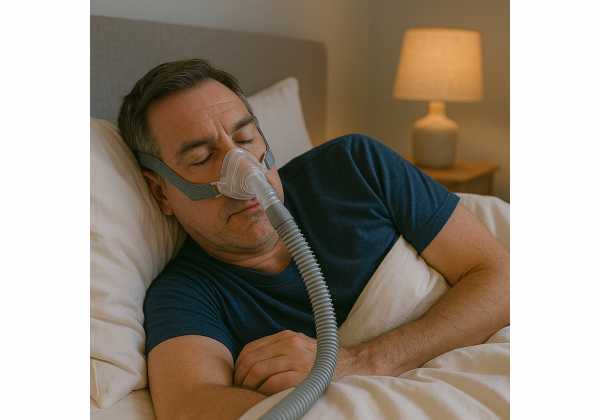
Positive airway pressure, or PAP, is the main treatment for moderate to severe obstructive sleep apnea. A PAP device sends pressurized air through a mask to splint the airway open. CPAP delivers one steady pressure. APAP adjusts pressure through the night. Bilevel PAP uses different pressures for inhaling and exhaling and is reserved for selected situations.
PAP works quickly when the mask, pressure, and humidity are right. Many people notice fewer headaches, less nighttime urination, better alertness, and improved morning energy within days to weeks. Blood pressure improvements are often modest but meaningful, especially in people with hypertension and good nightly use.
PAP does not work sitting in a drawer. Consistent use matters. A practical target is use during the entire sleep period, not only the first few hours. Many insurance systems use 4 hours per night as a compliance threshold, but health benefits usually rise with longer use.
Oral appliance therapy
A custom mandibular advancement device moves the lower jaw forward to reduce airway collapse. It is often used for mild to moderate obstructive sleep apnea, for people who cannot tolerate PAP, or for travel. A trained dentist should fit and monitor it because jaw discomfort, bite changes, tooth movement, and gum issues can occur.
Oral appliances are usually less powerful than PAP for lowering AHI, but some people use them more consistently. The right comparison is not only “which lowers AHI more in a lab,” but “which treatment produces better real-world control for this person.”
Weight management and medication
Weight loss often improves obstructive sleep apnea when excess body fat contributes to airway narrowing. Even a 5% to 10% weight reduction can reduce severity in some people, while larger losses produce larger changes. Weight loss should not be treated as a reason to delay PAP when apnea is moderate or severe. The airway needs protection while body composition changes.
In adults with obesity and moderate to severe obstructive sleep apnea, tirzepatide became an FDA-approved option in 2024 when used with reduced-calorie eating and increased physical activity. It is not a replacement for individualized sleep care, and it carries medication-specific risks and side effects. It is most relevant when obesity is a major driver of apnea and cardiometabolic risk.
Body composition matters more than scale weight alone. Resistance training, adequate protein, and waist reduction help preserve muscle while reducing fat mass. People working on weight-related apnea often benefit from tracking body composition changes instead of relying only on pounds lost.
Position therapy
Some people have positional sleep apnea, meaning events occur mostly when they sleep on their back. Side-sleeping devices, pillows, or vibration trainers can reduce events in this group. Position therapy works best when a sleep report confirms a strong positional pattern. It is less reliable for severe apnea that occurs in every position.
Surgery and airway procedures
Surgery aims to correct anatomy that contributes to airway collapse. Options include nasal surgery to improve airflow, tonsillectomy when tonsils are enlarged, palate procedures, jaw advancement surgery, bariatric surgery in eligible patients, and hypoglossal nerve stimulation for selected adults.
Surgery is not one procedure with one success rate. Results depend on anatomy, BMI, apnea pattern, surgeon experience, and the selected operation. Referral to a sleep surgeon is especially reasonable when PAP fails despite troubleshooting, when an obvious anatomic blockage exists, or when BMI and airway findings match an established procedure.
Lifestyle changes that support treatment
Lifestyle changes rarely replace treatment for moderate or severe apnea, but they often improve results:
- Avoid alcohol within 3 to 4 hours of bedtime, since it relaxes airway muscles and worsens oxygen dips.
- Review sedatives, opioids, and sleep aids with a clinician; some worsen breathing during sleep.
- Treat nasal congestion with evidence-based allergy care, saline rinses, or clinician-guided nasal therapy.
- Keep a consistent sleep schedule to reduce sleep deprivation, which worsens airway collapsibility.
- Use exercise to improve cardiometabolic health, even before major weight loss occurs.
- Elevate the head of the bed or sleep on the side when positional apnea or reflux contributes.
Sleep duration still matters after apnea treatment. PAP fixes breathing disruption, but it does not create enough sleep time by itself. Adults generally need 7 or more hours of sleep, and people recovering from sleep debt may need a temporary extension. A realistic sleep duration target supports the treatment plan.
How to Make PAP Therapy Easier
Most PAP problems are solvable. People often quit because the first mask, first pressure setting, or first week feels wrong. That does not mean PAP has failed. It usually means the setup needs adjustment.
Common problems and fixes include:
| Problem | Likely cause | Useful fix |
|---|---|---|
| Dry mouth | Mouth leak, low humidity, nasal blockage | Heated humidifier, nasal care, chin strap, different mask style |
| Mask leak | Poor fit, wrong size, overtightening, worn cushion | Refit mask, replace cushion, try nasal pillows or full-face mask |
| Pressure feels too strong | Ramp setting, pressure range, anxiety, exhalation discomfort | Adjust ramp, use expiratory relief, review APAP range with clinician |
| Claustrophobia | Mask size, panic response, rushed start | Practice while awake, start with minimal mask, gradual desensitization |
| Skin irritation | Strap pressure, cushion material, cleaning residue | Mask liner, different cushion, gentler cleaning, strap adjustment |
| Air swallowing | High pressure, reflux tendency, pressure swings | Pressure review, bilevel evaluation in selected cases, reflux management |
Mask choice matters. Nasal pillows sit at the nostrils and feel minimal. Nasal masks cover the nose. Full-face masks cover the nose and mouth and help some mouth breathers, though they may leak more at higher pressures. The smallest mask that works comfortably is often the best starting point.
Cleaning should be simple. Daily emptying of the humidifier chamber, regular cushion cleaning, and scheduled filter changes do more than expensive ozone or ultraviolet cleaning devices. Some cleaning devices damage PAP materials or create respiratory irritants, so follow the device manufacturer’s instructions.
The first month shapes long-term success
Early follow-up improves adherence. The first week reveals mask leaks, pressure discomfort, dry mouth, and anxiety. The first month shows whether the residual AHI is controlled and whether sleepiness improves. Remote monitoring often helps clinicians adjust treatment quickly.
Good PAP care includes:
- Review the sleep study and understand the reason for treatment.
- Fit the mask while lying down, not only while sitting upright.
- Use the device during a quiet awake period to reduce pressure anxiety.
- Wear it every time sleep occurs, including naps.
- Report leaks, dryness, pressure discomfort, or panic early.
- Check objective data, not just how the night felt.
PAP should make sleep safer and more restorative, not miserable. A person who feels worse after starting therapy needs troubleshooting, not blame. Pressure settings, mask type, humidification, nasal obstruction, insomnia, and treatment-emergent central events all deserve review.
Tracking Progress and When to Follow Up
Improvement should show up in both data and daily life. The most important signs are fewer breathing events, better oxygen stability, fewer awakenings, safer alertness, and improved morning function.
Useful follow-up markers include:
- Device-reported residual AHI, leak, pressure, and nightly use
- Morning headaches, dry mouth, and nighttime urination frequency
- Daytime sleepiness, concentration, mood, and driving alertness
- Blood pressure, especially morning readings
- Weight, waist circumference, and cardiometabolic labs when relevant
- Bed partner reports of snoring, gasping, or restless sleep
Home blood pressure tracking is especially useful because sleep apnea often raises nighttime and morning blood pressure. Proper cuff size, seated rest, and repeated readings matter. People with apnea and hypertension should treat home blood pressure measurement as part of the sleep recovery plan.
Wearables add context but do not replace sleep testing or PAP data. A ring or watch might show better resting heart rate, fewer oxygen dips, or improved sleep continuity after treatment. It might also misread sleep stages or overreact to a rough night. Trends over weeks matter more than single-night scores. HRV is similar: it reflects recovery load, alcohol, illness, stress, exercise, and sleep quality together. heart rate variability helps most when interpreted alongside symptoms and behavior.
Follow up with a sleep clinician when:
- Residual AHI stays high despite regular PAP use.
- Large leaks persist after mask adjustment.
- Sleepiness remains severe after several weeks of controlled breathing.
- New central apnea events appear on therapy reports.
- Pressure feels intolerable despite comfort adjustments.
- Major weight loss, weight gain, surgery, pregnancy, or medication changes occur.
- Snoring or witnessed pauses return after initial improvement.
Retesting is sometimes needed. A person who loses substantial weight, has airway surgery, starts an oral appliance, or has persistent symptoms despite treatment may need a repeat sleep test. Oral appliance therapy in particular should be verified with objective testing, because comfort alone does not prove the airway is fully controlled.
Sleep apnea care works best as a long-term adjustment rather than a one-time device prescription. The airway, body weight, medications, hormones, nasal health, and sleep position change across life. Treatment should adapt.
The strongest longevity move is to stop ignoring repeated breathing disruption. Testing turns vague fatigue into measurable information. Treatment turns nights from stress events into recovery windows. When breathing stays stable during sleep, the heart, brain, metabolism, and nervous system get a better chance to repair.
References
- International Consensus Statement on Obstructive Sleep Apnea 2023 (Consensus Statement)
- Clinical Practice Guideline for Diagnostic Testing for Adult Obstructive Sleep Apnea: An American Academy of Sleep Medicine Clinical Practice Guideline 2017 (Guideline)
- Treatment of Adult Obstructive Sleep Apnea with Positive Airway Pressure: An American Academy of Sleep Medicine Clinical Practice Guideline 2019 (Guideline)
- Referral of adults with obstructive sleep apnea for surgical consultation: an American Academy of Sleep Medicine clinical practice guideline 2021 (Guideline)
- Tirzepatide for the Treatment of Obstructive Sleep Apnea and Obesity 2024 (RCT)
- FDA Approves First Medication for Obstructive Sleep Apnea 2024 (Official Page)
Disclaimer
This article is educational and does not replace care from a qualified clinician. Sleep apnea diagnosis and treatment require objective testing and individualized medical guidance, especially for people with heart disease, lung disease, severe sleepiness, pregnancy, opioid use, or complex sleep symptoms. Seek urgent help for drowsy driving, chest pain, fainting, severe shortness of breath, or new irregular heartbeat.