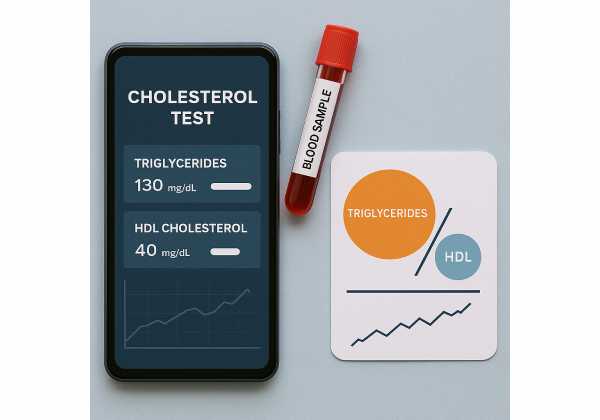
The triglycerides to HDL ratio is a quick signal of how well your body handles fat, carbohydrates, insulin, and stored energy. It is not a diagnosis by itself, but it often rises when triglycerides climb, HDL cholesterol falls, visceral fat increases, or insulin resistance develops. That makes it useful for spotting a metabolic pattern that standard cholesterol numbers sometimes hide.
The ratio is easy to calculate from a standard lipid panel: divide triglycerides by HDL cholesterol, using the same units. In U.S. labs, a triglyceride level of 120 mg/dL and HDL cholesterol of 50 mg/dL gives a TG/HDL ratio of 2.4. Lower is usually better. Higher values deserve a closer look at waist size, fasting glucose, A1c, fasting insulin, blood pressure, liver enzymes, ApoB, and lifestyle patterns. The ratio works best as a trend, not a single verdict.
Table of Contents
- What the Triglycerides to HDL Ratio Shows
- How to Calculate the TG/HDL Ratio Correctly
- How to Interpret Your Number Without Overreacting
- Why the Ratio Rises
- How It Fits With Other Longevity Biomarkers
- How to Improve the TG/HDL Ratio
- Tracking, Retesting, and Red Flags
- Common Mistakes When Using the TG/HDL Ratio
What the Triglycerides to HDL Ratio Shows
The triglycerides to HDL ratio compares two lipid-panel values that often move in opposite directions during metabolic strain.
Triglycerides are fat molecules carried in the blood. They rise after meals, especially after large meals rich in refined carbohydrates, sugar, alcohol, or excess calories. Fasting triglycerides also rise when the liver packages excess energy into triglyceride-rich particles.
HDL cholesterol is cholesterol carried inside high-density lipoprotein particles. HDL is often called “good cholesterol,” but the number on a lab report does not measure everything HDL does. It is still useful because low HDL cholesterol often travels with insulin resistance, abdominal fat, high triglycerides, high blood pressure, and fatty liver.
The ratio matters because a high triglyceride level plus a low HDL level often points toward atherogenic dyslipidemia. That means the blood contains more triglyceride-rich particles, more remnant particles, and often more small dense LDL particles. This pattern appears often in metabolic syndrome and type 2 diabetes risk.
A high ratio often suggests:
- Reduced insulin sensitivity
- Higher visceral fat burden
- Higher liver fat risk
- Higher post-meal triglyceride exposure
- Lower cardiometabolic resilience
- A need to look beyond LDL cholesterol alone
The ratio is not a replacement for LDL cholesterol, non-HDL cholesterol, or ApoB. For long-term cardiovascular risk, particle burden still matters. ApoB and non-HDL cholesterol give a more direct view of the number of atherogenic particles, which is why they deserve priority in a complete lipid-risk review. A useful next step is understanding ApoB and non-HDL cholesterol alongside the TG/HDL ratio.
The TG/HDL ratio is best viewed as a metabolic pattern marker. It says, “Look more closely at insulin resistance, visceral fat, liver fat, diet quality, alcohol intake, sleep, and movement.”
How to Calculate the TG/HDL Ratio Correctly
The calculation is simple:
TG/HDL ratio = triglycerides ÷ HDL cholesterol
Use values from the same lipid panel and the same unit system.
If your lipid panel uses mg/dL, common in the United States:
- Triglycerides: 150 mg/dL
- HDL cholesterol: 50 mg/dL
- TG/HDL ratio: 150 ÷ 50 = 3.0
If your lipid panel uses mmol/L, common in many countries:
- Triglycerides: 1.7 mmol/L
- HDL cholesterol: 1.3 mmol/L
- TG/HDL ratio: 1.7 ÷ 1.3 = 1.3
Do not compare mg/dL cutoffs directly with mmol/L cutoffs. The ratio changes because triglycerides and cholesterol use different conversion factors. A TG/HDL ratio of 3.0 in mg/dL is not the same as 3.0 in mmol/L.
Fasting vs nonfasting results
A fasting lipid panel gives the cleanest TG/HDL ratio because triglycerides change after eating. Many routine lipid panels are now drawn nonfasting, and that is acceptable for broad cardiovascular screening. For the TG/HDL ratio, fasting is more useful when you want a metabolic signal rather than a general screening result.
A practical fasting setup:
- Fast for 8 to 12 hours.
- Drink water as usual.
- Avoid alcohol for 24 to 72 hours before the test.
- Avoid unusually hard exercise the day before.
- Do not test during an acute illness.
- Repeat abnormal values before making major conclusions.
One odd result after a vacation, illness, holiday meal, or heavy drinking week says less than two or three consistent results over time.
Example calculations
| Triglycerides | HDL cholesterol | Calculation | Ratio | Plain-language read |
|---|---|---|---|---|
| 80 mg/dL | 60 mg/dL | 80 ÷ 60 | 1.3 | Generally favorable |
| 120 mg/dL | 45 mg/dL | 120 ÷ 45 | 2.7 | Worth watching |
| 180 mg/dL | 40 mg/dL | 180 ÷ 40 | 4.5 | Suggests metabolic strain |
| 250 mg/dL | 35 mg/dL | 250 ÷ 35 | 7.1 | Needs medical review |
The ratio is easy to track in a spreadsheet. Keep the original triglyceride and HDL values beside it. The separate numbers matter because the same ratio can come from different patterns. A ratio of 3.0 from triglycerides of 150 and HDL of 50 is not the same situation as triglycerides of 90 and HDL of 30.
How to Interpret Your Number Without Overreacting
There is no single universal TG/HDL cutoff that applies perfectly to every person. Sex, ancestry, age, body composition, diabetes status, medications, and lab conditions all influence the ratio. Still, the ratio gives a useful first pass.
For mg/dL-based ratios, many clinicians and researchers use a loose pattern like this:
| Ratio | General interpretation | Useful next step |
|---|---|---|
| Below 2.0 | Often metabolically favorable | Confirm with waist, glucose, blood pressure, and ApoB |
| 2.0 to 3.0 | Borderline or mixed signal | Look at trend, fasting status, diet, alcohol, and activity |
| Above 3.0 | Often linked with insulin resistance patterns | Check fasting insulin, A1c, waist, liver markers, and ApoB |
| Above 5.0 | Stronger metabolic warning sign | Review with a clinician, especially with high TG or other risk factors |
These ranges are not diagnostic thresholds. They are pattern-recognition ranges. A lean endurance athlete, a postmenopausal woman, a person with diabetes, and a person with genetic lipid differences need different interpretation.
A low ratio is reassuring only when the rest of the risk picture also looks good. For example, a person with low triglycerides and high HDL can still have high LDL particle number, high lipoprotein(a), high blood pressure, smoking exposure, kidney disease, or coronary calcium. The TG/HDL ratio does not erase those risks.
A high ratio deserves attention because it often appears before fasting glucose or A1c becomes clearly abnormal. Insulin resistance often starts with higher insulin output, higher post-meal glucose and triglyceride exposure, rising waist size, and lower HDL. Fasting glucose can still look “normal” during this stage. That is why pairing the ratio with A1c, fasting glucose, and fasting insulin gives a better metabolic picture.
Metabolic syndrome cutoffs give useful context
Metabolic syndrome is diagnosed when several risk factors cluster together. Common criteria include triglycerides of 150 mg/dL or higher, low HDL cholesterol, elevated waist circumference, elevated fasting glucose, and elevated blood pressure. The TG/HDL ratio combines two of those lipid-related clues into one number.
The ratio becomes more meaningful when paired with:
- Waist circumference or waist-to-height ratio
- Blood pressure
- Fasting glucose and A1c
- Fasting insulin or HOMA-IR
- ALT, AST, and liver-fat screening when appropriate
- ApoB or non-HDL cholesterol
- Family history and smoking status
One abnormal marker matters. A cluster matters more.
Why the Ratio Rises
The TG/HDL ratio rises when triglycerides increase, HDL falls, or both happen together. The most common driver is not dietary fat by itself. The common driver is a mismatch between energy intake, carbohydrate tolerance, liver handling of fuel, muscle activity, sleep quality, alcohol exposure, and visceral fat storage.
Insulin resistance
Insulin helps move glucose into muscle and helps regulate fat release from fat tissue. When muscle and liver cells become less responsive to insulin, the body often compensates by making more insulin. Over time, the liver receives more fatty acids and produces more triglyceride-rich VLDL particles.
That pattern tends to raise fasting triglycerides and lower HDL cholesterol. The ratio rises before a person always meets diabetes criteria.
Common signs that a high TG/HDL ratio reflects insulin resistance include:
- Increasing waist size
- Higher fasting insulin
- A1c drifting upward
- Glucose spikes after meals
- Blood pressure rising
- Fatty liver markers
- Afternoon sleepiness after high-carbohydrate meals
Visceral fat and liver fat
Visceral fat sits deep in the abdomen around organs. It is more metabolically active than subcutaneous fat under the skin. A larger waist often signals more visceral fat and greater fatty-acid flow to the liver.
The liver responds by making more triglyceride-rich particles. Over time, this pattern overlaps with metabolic dysfunction-associated steatotic liver disease, still often called fatty liver in everyday conversation. If ALT, AST, GGT, fasting insulin, waist size, and TG/HDL ratio are all rising together, liver fat deserves attention. A deeper review of NAFLD screening markers helps place those numbers in context.
Refined carbohydrates, sugar, and alcohol
Triglycerides often respond strongly to refined starches, added sugar, fruit juice, sweet drinks, desserts, and alcohol. This does not mean all carbohydrates are harmful. Beans, lentils, intact whole grains, vegetables, fruit, and higher-fiber meals have different effects from sugar-sweetened drinks and ultra-processed snacks.
Alcohol deserves special attention. Even moderate alcohol intake raises triglycerides in some people, especially when paired with late meals, excess calories, poor sleep, or insulin resistance. A triglyceride result can look much worse after a weekend of drinking than it does after two alcohol-free weeks.
Low muscle activity
Muscle is a major glucose sink. Active muscle pulls glucose and fatty acids out of circulation and improves insulin sensitivity. Low step counts, long sitting blocks, low strength, and low cardiorespiratory fitness all make the TG/HDL pattern worse.
This is why post-meal walking helps. A 10- to 20-minute walk after meals lowers the glucose and insulin burden of that meal and often improves triglyceride patterns over time.
Sleep, stress, and circadian timing
Short sleep, sleep apnea, shift work, and late-night eating push metabolism in the wrong direction. Poor sleep raises appetite, worsens glucose control, and increases stress-hormone signaling. Late meals also leave less time for triglyceride clearance before sleep.
Someone with a rising TG/HDL ratio and loud snoring, morning headaches, daytime sleepiness, or resistant blood pressure should consider sleep apnea screening.
How It Fits With Other Longevity Biomarkers
The TG/HDL ratio becomes more useful when it sits inside a wider cardiometabolic panel. It should not stand alone.
Lipid markers
A standard lipid panel includes total cholesterol, LDL cholesterol, HDL cholesterol, and triglycerides. From those, you can calculate non-HDL cholesterol by subtracting HDL from total cholesterol.
For cardiovascular prevention, ApoB and non-HDL cholesterol often give more direct information than TG/HDL ratio because they estimate the burden of atherogenic particles. A person can have a good TG/HDL ratio and still have high ApoB. That means plaque risk can remain high even when metabolic markers look favorable.
A useful lipid review includes:
- LDL cholesterol
- Non-HDL cholesterol
- ApoB
- Lipoprotein(a), at least once in adulthood
- Triglycerides
- HDL cholesterol
- TG/HDL ratio
The 2026 dyslipidemia guideline emphasis on triglyceride-rich remnant particles, ApoB, lipoprotein(a), LDL cholesterol, and non-HDL cholesterol fits this broader view.
Glucose and insulin markers
The TG/HDL ratio often works as an early clue, while glucose and insulin tests help confirm the metabolic pattern.
Useful tests include:
- Fasting glucose
- A1c
- Fasting insulin
- HOMA-IR when fasting insulin and glucose are available
- Oral glucose tolerance test in selected cases
- Continuous glucose monitoring for short-term pattern discovery
A continuous glucose monitor does not measure insulin or triglycerides, but it shows how meals, sleep, stress, and exercise affect glucose. That makes it useful when TG/HDL ratio, waist size, and A1c send mixed signals. A structured trial of continuous glucose monitoring works best when it leads to specific meal, walking, sleep, or training changes.
Body composition and waist markers
Weight alone misses the metabolic story. Waist circumference and waist-to-height ratio often track visceral fat better than body mass index. A waist-to-height ratio below 0.5 is a common practical target, though age, sex, and body frame affect interpretation.
For home tracking, waist-to-height ratio and waist circumference pair well with TG/HDL ratio because both respond to changes in visceral fat and insulin sensitivity.
Blood pressure, kidney, and inflammation markers
A rising TG/HDL ratio often clusters with high blood pressure, kidney stress, and inflammation. A complete healthspan-oriented review often includes:
- Home blood pressure averages
- eGFR and urine albumin-to-creatinine ratio
- hs-CRP when inflammation risk is unclear
- ALT, AST, and GGT
- Uric acid
- Thyroid testing when triglycerides rise without an obvious reason
This wider view prevents a common mistake: treating the ratio as a cholesterol problem only. It is often a whole-metabolism problem.
How to Improve the TG/HDL Ratio
The fastest improvements usually come from lowering triglycerides. HDL often changes more slowly. A good plan focuses on the behaviors that improve insulin sensitivity, liver fat, muscle glucose uptake, and post-meal triglyceride handling.
Start with the highest-return food changes
Most people do not need a complicated diet. They need fewer triglyceride-raising inputs and more meals that support satiety, muscle, and stable glucose.
High-return changes include:
- Replace sugary drinks with water, sparkling water, unsweetened tea, or coffee.
- Reduce desserts, candy, refined breakfast cereals, pastries, and snack foods.
- Build meals around protein, vegetables, legumes, intact grains, fruit, nuts, seeds, olive oil, yogurt, eggs, fish, tofu, or lean meats.
- Choose high-fiber carbohydrates instead of refined starches.
- Keep alcohol low or pause it for two to four weeks before retesting high triglycerides.
- Avoid late-night calorie-heavy meals.
For triglycerides, the combination of excess calories, refined carbohydrates, and alcohol is often more important than one isolated food. A practical plate pattern is protein plus produce plus a high-fiber carbohydrate or healthy fat. Meals built this way reduce hunger and often improve post-meal glucose.
If blood sugar swings are part of the pattern, food habits that flatten glucose spikes also support a better TG/HDL ratio.
Use protein and fiber as anchors
Protein supports muscle maintenance and satiety. Fiber slows digestion, feeds gut microbes, improves LDL and non-HDL cholesterol patterns, and helps reduce post-meal glucose and triglyceride excursions.
Strong daily targets for many adults:
- Protein: often 1.2 to 1.6 g/kg/day, adjusted for kidney disease, training, body size, and clinical context
- Fiber: about 25 to 38 g/day from food, increased gradually
- Added sugar: as low as practical, especially from drinks and desserts
- Alcohol: minimal when triglycerides are high
The goal is not perfection. It is a repeatable food pattern that lowers triglyceride pressure most days of the week.
Walk after meals
Post-meal movement is one of the simplest ways to improve metabolic handling. A 10-minute walk after lunch and dinner often beats one vague promise to “exercise more.” Muscle contraction moves glucose into muscle without needing as much insulin.
Useful options:
- 10 to 20 minutes of walking after meals
- Easy cycling after dinner
- Light chores after eating
- Stairs at an easy pace
- A short walk during work breaks
This habit is especially useful for people with high fasting insulin, high TG/HDL ratio, or glucose spikes after carbohydrate-rich meals.
Train muscle and aerobic capacity
Strength training improves glucose disposal because more active muscle means more storage space for glycogen. Aerobic training improves mitochondrial function and fat oxidation.
A strong weekly plan includes:
- Two to four strength sessions weekly
- 150 to 300 minutes of moderate aerobic work weekly, or a smaller amount of vigorous work
- Daily walking or other low-intensity movement
- Less uninterrupted sitting
Zone 2 training supports insulin sensitivity and triglyceride handling when performed consistently. Pairing it with resistance training works better than relying on either one alone. A structured guide to Zone 2 and insulin sensitivity helps translate the idea into weekly training.
Lose visceral fat without crash dieting
For people carrying excess visceral fat, even 5% to 10% weight loss can improve triglycerides, insulin sensitivity, blood pressure, and liver fat. The target is not rapid weight loss. The target is waist reduction while preserving muscle.
The best pattern combines:
- Adequate protein
- Strength training
- Calorie awareness
- High-fiber foods
- Sleep consistency
- Daily steps
- Limited alcohol
Crash dieting can lower weight quickly while worsening fatigue, muscle loss, and rebound hunger. A longevity-focused plan protects lean mass.
Review medications and medical causes
Some high TG/HDL patterns need medical review. Triglycerides can rise from uncontrolled diabetes, hypothyroidism, kidney disease, liver disease, pregnancy, genetic lipid disorders, and several medications. These include some beta blockers, diuretics, steroids, oral estrogens, antipsychotics, HIV medications, and immunosuppressants.
Do not stop prescribed medication on your own. Use the lab pattern as a reason to ask for a review.
Tracking, Retesting, and Red Flags
Retest under similar conditions so the trend means something. Fasting morning labs are best when tracking TG/HDL ratio over time. Keep alcohol intake, exercise, illness, and major diet changes in mind when comparing results.
A practical tracking rhythm:
| Situation | Retesting rhythm | Why it helps |
|---|---|---|
| Normal ratio and low risk | Every 1 to 3 years, or with routine labs | Confirms stability |
| Borderline ratio | Every 3 to 6 months after lifestyle changes | Shows whether the pattern is improving |
| High triglycerides or high ratio | Repeat fasting test in weeks to months | Confirms the abnormal result |
| Medication change | Often 4 to 12 weeks after starting or changing therapy | Checks response and adherence |
Seek medical guidance promptly when triglycerides are 500 mg/dL or higher, and urgently when they approach or exceed 1,000 mg/dL. At those levels, pancreatitis risk becomes a major concern, especially with abdominal pain, nausea, vomiting, uncontrolled diabetes, or heavy alcohol intake.
Also discuss results with a clinician when a high TG/HDL ratio appears with:
- Chest pain, shortness of breath, or exertional symptoms
- Diabetes or prediabetes
- High blood pressure
- Known cardiovascular disease
- Kidney disease
- Fatty liver disease
- Strong family history of early heart disease
- Very high LDL cholesterol or ApoB
- Elevated lipoprotein(a)
- Rapid unexplained triglyceride increase
A high ratio is not an emergency by itself. Severe triglyceride elevation, symptoms, or a high-risk medical context changes the urgency.
Common Mistakes When Using the TG/HDL Ratio
Mistake 1: Treating the ratio as a diagnosis
The TG/HDL ratio is a signal, not a disease label. It does not diagnose insulin resistance, diabetes, fatty liver, or heart disease by itself. It helps decide what to check next.
A high ratio should lead to a better workup, not panic.
Mistake 2: Ignoring ApoB and non-HDL cholesterol
A favorable TG/HDL ratio does not guarantee low plaque risk. If ApoB is high, atherogenic particle number is high. That still matters. Use TG/HDL for metabolic context and ApoB or non-HDL cholesterol for particle burden.
Mistake 3: Comparing ratios across unit systems
A ratio calculated from mg/dL values differs from a ratio calculated from mmol/L values. Always interpret your result using the unit system used by your lab and your clinician.
Mistake 4: Blaming one nutrient
High triglycerides rarely come from one food alone. The larger pattern matters: excess calories, low activity, low muscle mass, alcohol, refined carbohydrates, poor sleep, insulin resistance, and genetic tendency.
A person eating a high-carbohydrate diet based on legumes, vegetables, fruit, and intact grains can have excellent triglycerides. Another person eating frequent refined starches, sweets, and alcohol can have high triglycerides even with moderate fat intake.
Mistake 5: Trying to raise HDL directly
Higher HDL cholesterol is not automatically better when forced upward by medication or supplements. The more useful goal is improving the metabolic environment that usually raises HDL naturally: better insulin sensitivity, regular exercise, less smoking exposure, better body composition, and lower triglycerides.
Mistake 6: Testing after unusual behavior
A lipid panel after a holiday, illness, heavy alcohol intake, sleep deprivation, or intense training block can distort triglycerides. Retest during a normal week before making big decisions.
Mistake 7: Missing the opportunity
The biggest mistake is ignoring a rising ratio because LDL cholesterol looks “fine.” A rising TG/HDL ratio often gives an early warning that metabolism is losing flexibility. That is the moment to act: improve food quality, reduce alcohol, walk after meals, build muscle, sleep better, and check the deeper markers.
Small changes often move triglycerides within weeks. HDL usually changes more slowly. Waist size, fasting insulin, blood pressure, and post-meal glucose patterns often improve along the way. That makes the TG/HDL ratio a simple but useful healthspan signal: easy to calculate, easy to track, and powerful when combined with the rest of the metabolic picture.
References
- The Triglyceride/HDL Ratio as a Surrogate Biomarker for Insulin Resistance 2024 (Systematic Review)
- The Triglyceride/High-Density Lipoprotein Cholesterol (TG/HDL-C) Ratio as a Risk Marker for Metabolic Syndrome and Cardiovascular Disease 2023 (Review)
- ACC Consensus on ASCVD Risk Reduction in Hypertriglyceridemia: Key Points 2021 (Guideline Summary)
- 2026 Guideline on the Management of Dyslipidemia 2026 (Guideline)
- Metabolic Syndrome 2024 (Review)
Disclaimer
This article is educational and does not replace care from a qualified healthcare professional. Lipid results, glucose markers, insulin resistance, cardiovascular risk, and high triglycerides need individualized interpretation, especially if you have diabetes, kidney disease, liver disease, cardiovascular disease, pregnancy, symptoms, or take medications. Seek medical guidance promptly for very high triglycerides or concerning symptoms.