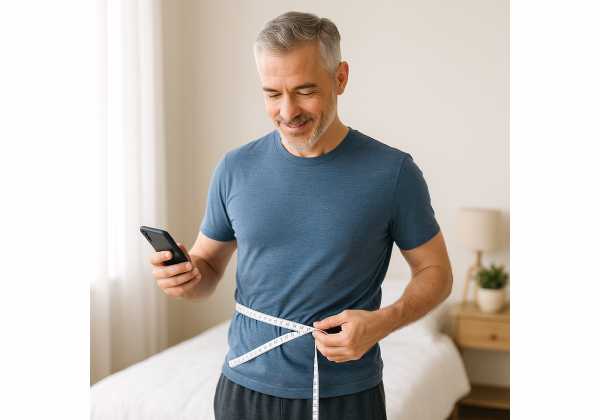
A tape measure gives you one of the most useful home signals for metabolic health: how much fat you carry around the middle. Waist circumference and waist-to-height ratio do not diagnose disease, but they show body fat distribution in a way body weight alone misses. Two people with the same weight or BMI can have very different waist measurements, and the person with more central fat often has higher risk for insulin resistance, high blood pressure, fatty liver, and cardiovascular disease.
The simplest rule is easy to remember: aim to keep your waist less than half your height. Waist circumference is also useful because it tracks change over time. A waist that shrinks while weight stays stable often means fat is coming down and muscle is being preserved. Used correctly, these measurements turn a vague goal like “get healthier” into a practical number you can measure at home.
Table of Contents
- Why Waist Measurements Matter
- Waist-to-Height Ratio Explained
- How to Measure Your Waist Correctly
- How to Interpret Your Results
- Waist Circumference vs BMI
- How Often to Track
- What Improves Waist Measurements
- Common Mistakes and Limits
Why Waist Measurements Matter
Your waist measurement is a simple proxy for central adiposity, which means fat stored around the abdomen. This matters because abdominal fat is more closely tied to metabolic strain than fat stored under the skin around the hips, thighs, or arms.
The concern is not appearance. The concern is biology. A larger waist often reflects more visceral fat, the deeper abdominal fat stored around internal organs. Visceral fat is active tissue. It releases inflammatory signals, affects insulin sensitivity, and relates closely to blood pressure, blood lipids, blood sugar, and fatty liver risk.
Waist circumference and waist-to-height ratio help answer a practical question that weight alone cannot answer: where is body mass being carried?
A person who gains 4 kg mostly around the waist has a different risk pattern than a person who gains 4 kg through muscle and lower-body fat. The bathroom scale treats those changes the same. A tape measure does not.
These metrics work especially well because they are:
- Cheap: no lab, scanner, subscription, or wearable required.
- Repeatable: the same person can track the same site over time.
- Actionable: changes often respond to nutrition, walking, resistance training, sleep, alcohol intake, and overall energy balance.
- Easy to combine with other markers: waist data becomes more useful when viewed with glucose, blood pressure, lipids, liver enzymes, and fitness markers.
Waist measurements also help identify “normal-weight central adiposity.” This means a person’s BMI sits in the normal range, but the waist is high relative to height. That pattern matters because BMI can look reassuring while abdominal fat still signals higher metabolic risk.
For longevity tracking, the best use is not panic over one reading. The best use is pattern recognition. A rising waist over several months often signals a need to adjust habits before blood work worsens. A falling waist, especially when strength stays stable, usually points in the right direction.
Waist-to-Height Ratio Explained
Waist-to-height ratio compares your waist size with your height. It adjusts waist measurement for body size, so it is often easier to interpret across short, average-height, and tall adults than waist circumference alone.
The formula is simple:
Waist-to-height ratio = waist circumference ÷ height
Use the same unit for both measurements. Centimeters divided by centimeters works. Inches divided by inches works. Do not mix centimeters and inches.
Example:
- Waist: 88 cm
- Height: 176 cm
- 88 ÷ 176 = 0.50
Another example:
- Waist: 34 inches
- Height: 68 inches
- 34 ÷ 68 = 0.50
The common adult target is below 0.5, often phrased as “keep your waist less than half your height.” A ratio of 0.5 means the waist is exactly half the height. A ratio above 0.5 suggests increased central adiposity. A ratio of 0.6 or higher suggests a higher level of central adiposity.
| Height | Waist at 0.5 ratio | Waist at 0.6 ratio |
|---|---|---|
| 160 cm | 80 cm | 96 cm |
| 170 cm | 85 cm | 102 cm |
| 180 cm | 90 cm | 108 cm |
| 5 ft 4 in | 32 in | 38.4 in |
| 5 ft 8 in | 34 in | 40.8 in |
| 6 ft 0 in | 36 in | 43.2 in |
Waist-to-height ratio is useful because it keeps the target personal. A 90 cm waist does not mean the same thing for a person who is 150 cm tall as it does for a person who is 190 cm tall. The ratio adds context.
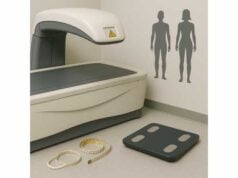
Still, treat the number as a screening signal, not a diagnosis. A high ratio points toward higher risk and deserves attention. It does not identify the exact amount of visceral fat, and it does not replace lab work or clinical assessment. For a more detailed view of fat, lean mass, and regional body composition, body composition testing gives information a tape measure cannot.
How to Measure Your Waist Correctly
The measurement method matters. A difference of 2–4 cm often comes from technique, not real body change. Use the same method every time so your trend stays meaningful.
You need a flexible tape measure, a mirror if available, and a place to stand upright. A soft tailoring tape works best. A metal construction tape is too stiff and uncomfortable.
Use this sequence:
- Stand upright with feet about hip-width apart.
- Relax your abdomen. Do not suck in or push out.
- Find the bottom of your ribs and the top of your hip bones.
- Place the tape midway between those two points, usually slightly above the belly button.
- Keep the tape level all the way around your body.
- Pull the tape snug, but not tight enough to press into the skin.
- Breathe out normally, then read the number.
- Measure twice. If the numbers differ by more than 1 cm or half an inch, measure again.
Record the number to the nearest 0.5 cm or quarter inch. More precision looks scientific but adds noise. A home waist measurement does not need decimal-level tracking.
The best time is usually morning, after using the bathroom and before eating. Evening measurements often run higher because of meals, fluids, sodium, bowel contents, and normal abdominal expansion through the day. That does not mean the evening number is “wrong.” It simply makes comparisons harder.
For consistent tracking, keep these details the same:
- Same measuring site
- Same time of day
- Same tape
- Same posture
- Same breathing pattern
- Same clothing state, ideally against skin or over very thin clothing
Do not measure at the narrowest part of the torso unless that is also your chosen consistent site. Many people naturally narrow above the belly button, while the central fat pattern sits lower. For health tracking, the midpoint between the lower ribs and top of the hips gives a more standardized number.
If you carry more abdominal fat below the belly button, you can also record a second “navel waist” measurement. Keep it separate. Do not mix midpoint waist and navel waist in the same trend line.
How to Interpret Your Results
Waist-to-height ratio is the simplest home interpretation tool. For most adults, the main target is a ratio below 0.5. Values above that line suggest higher cardiometabolic risk, especially when they rise alongside high blood pressure, elevated triglycerides, high fasting glucose, insulin resistance, fatty liver markers, or low fitness.
| Waist-to-height ratio | Plain meaning | Practical response |
|---|---|---|
| Below 0.4 | Low central fat, but interpret with body size, nutrition, and muscle status | Check that weight loss, low appetite, or low muscle is not the reason |
| 0.4 to 0.49 | Generally healthy central adiposity range | Maintain habits and track the trend |
| 0.5 to 0.59 | Increased central adiposity | Review nutrition, activity, blood pressure, glucose, and lipids |
| 0.6 or higher | Higher central adiposity | Prioritize medical risk assessment and a structured plan |
Waist circumference cutoffs also provide useful context. Commonly used risk thresholds are around 94 cm for men and 80 cm for women for increased risk, with higher-risk thresholds around 102 cm for men and 88 cm for women. These cutoffs are not perfect across all ethnic groups, body builds, and ages, but they remain useful as broad screening numbers.
Ethnicity matters. Some populations develop metabolic risk at lower BMI and waist levels, especially South Asian, Chinese, other Asian, Middle Eastern, Black African, and African-Caribbean groups. A “not too high” BMI does not always mean low risk in these groups, which is another reason waist and metabolic markers matter.
Age also changes interpretation. Older adults face two competing issues: excess central fat and loss of muscle. A shrinking waist is usually positive when strength, walking speed, appetite, and weight stability are preserved. A shrinking waist plus falling strength, fatigue, poor appetite, or unplanned weight loss deserves medical attention.
Waist measurements become far more useful when paired with basic cardiometabolic checks. Good companion markers include A1c, fasting glucose, and fasting insulin, home blood pressure, triglycerides, HDL cholesterol, ApoB, liver enzymes, and fitness tests. If the waist is rising and these markers are worsening, the signal is stronger than either one alone.
Waist Circumference vs BMI
BMI estimates body size. Waist estimates fat distribution. They answer different questions, so the best approach is often to use both.
BMI is calculated from weight and height. It works reasonably well for population screening, but it does not show whether body mass is fat, muscle, water, or bone. It also does not show where fat is stored.
Waist circumference fills that gap. It does not measure total body fat precisely, but it gives a practical signal for central fat. This is why a person with a “normal” BMI and a high waist deserves more attention than BMI alone suggests.
Here are common patterns:
| Pattern | What it often means | Next step |
|---|---|---|
| Normal BMI, high waist | Central fat risk hidden by body weight | Check glucose, blood pressure, lipids, liver markers, and activity habits |
| High BMI, normal waist | Higher body mass with less central fat; often seen in muscular builds | Assess strength, body composition, blood pressure, and lipids before assuming high fat risk |
| High BMI, high waist | Higher total body mass plus central fat | Use waist trend, labs, and fitness markers to guide priorities |
| Falling weight, unchanged waist | Possible muscle loss, water loss, or inconsistent measurement | Review protein intake, resistance training, and measurement technique |
| Stable weight, falling waist | Often a favorable recomposition pattern | Keep tracking strength, waist, and energy level |
The stable-weight, falling-waist pattern is especially important. Many people abandon a useful plan because scale weight changes slowly. If the waist is dropping, clothes fit better, and strength is stable or improving, the plan is probably working.
The opposite pattern also matters. If weight stays stable but waist rises over months, body composition could be shifting in the wrong direction. This often happens when activity drops, sleep worsens, alcohol intake increases, protein falls, or strength training stops.
BMI still has a place. It gives a quick body-size estimate, and very high BMI levels often correlate with increased mechanical and metabolic strain. But BMI becomes more informative when waist, strength, fitness, blood pressure, and metabolic labs are included. For cardiovascular risk, ApoB and non-HDL cholesterol often add more direct information about atherosclerotic risk than body size does.
How Often to Track
Measure often enough to see the trend, not so often that normal variation becomes noise. For most adults, once every 2–4 weeks works well. Weekly tracking is useful during active fat-loss phases, but daily waist measurement is usually too noisy.
Waist size changes from day to day for reasons that have little to do with fat. A salty meal, a late dinner, constipation, menstrual cycle phase, high stress, hard training, poor sleep, or extra carbohydrates can shift the number temporarily. That is why monthly trends beat single readings.
A simple tracking setup works best:
- Date
- Waist measurement
- Height, if needed for ratio
- Waist-to-height ratio
- Body weight
- Notes on training, sleep, travel, illness, or menstrual cycle
- Optional: blood pressure, fasting glucose, or resting heart rate
Use a 3-reading average if you want cleaner data. For example, measure on Monday, Wednesday, and Friday morning, then average the three numbers. This works well for people who fluctuate a lot.
Look for meaningful change. A 0.5 cm difference is usually noise. A 2–3 cm change over several months is more meaningful. A 5 cm change is large enough that clothes, belt holes, and photos often confirm it.
For longevity tracking, combine waist measurement with performance and health markers. A smaller waist is not automatically better if it comes with muscle loss, poor sleep, low mood, low libido, declining strength, or persistent fatigue. The goal is better healthspan, not simply a smaller number.
A useful quarterly review includes:
- Waist-to-height ratio
- Waist circumference trend
- Body weight trend
- Strength or functional test trend
- Blood pressure
- Glucose markers
- Lipids
- Liver markers when relevant
If waist-to-height ratio stays above 0.5 and other markers are abnormal, consider a more complete metabolic review. Fatty liver risk is especially relevant when waist is high alongside elevated triglycerides, insulin resistance, or liver enzyme changes; fatty liver screening explains how labs and imaging fit together.
What Improves Waist Measurements
The waist usually improves when total energy balance, muscle-preserving training, food quality, sleep, and daily movement improve together. There is no special exercise that selectively burns belly fat. Sit-ups strengthen abdominal muscles, but they do not remove fat from that area on command.
The most reliable approach is boring in the best way: repeatable habits that reduce visceral and abdominal fat while protecting muscle.
Start with food structure. Most people do better with meals built around protein, high-fiber plants, minimally processed carbohydrates, and healthy fats. This improves fullness and reduces the need to rely on willpower at night. Protein also protects lean mass during fat loss. If you are unsure how much protein is enough, daily and per-meal protein targets give a practical starting point.
Fiber matters too. Legumes, vegetables, berries, oats, barley, chia, flax, nuts, and intact whole grains help appetite, gut health, LDL cholesterol, and glucose control. They also make meals more filling per calorie.
Alcohol deserves special attention. Regular alcohol intake often raises waist size through extra calories, poorer sleep, lower training quality, late-night eating, and liver fat pathways. The effect differs by person, but a 4-week reduction often gives clear feedback.
Movement works through several channels. Brisk walking, cycling, swimming, hills, and other aerobic work improve insulin sensitivity and energy expenditure. Zone 2 training is useful because it is sustainable and pairs well with strength training. Short walks after meals also help blunt post-meal glucose rises.
Strength training protects the result. Fat loss without resistance training often includes muscle loss, especially in midlife and later life. A consistent strength training plan helps preserve or build muscle while waist size comes down. That combination is better than simply losing weight.
Sleep and stress affect the waist indirectly. Poor sleep increases hunger, cravings, late-night eating, blood pressure, and glucose variability. Chronic stress pushes many people toward more snacking, more alcohol, and less movement. Stress does not create abdominal fat by magic, but it changes the behaviors and hormones that make fat gain easier.
A practical waist-focused week looks like this:
- Strength training 2–4 days
- Brisk walking or cycling most days
- Protein at each meal
- High-fiber plants daily
- Alcohol-free or low-alcohol weekdays
- A consistent sleep window
- Waist tracking every 2–4 weeks
- Blood pressure and glucose checks when risk is elevated
The best plan is the one that lowers waist size while keeping life workable. Extreme cuts often shrink the waist quickly, then rebound. A slower plan that preserves strength and keeps hunger controlled usually wins over 6–12 months.
Common Mistakes and Limits
Waist measurements are useful, but they are not perfect. They work best when you avoid common technique errors and interpret the number in context.
The biggest mistake is pulling the tape too tight. The tape should touch the skin without compressing it. If the skin bulges above or below the tape, the tape is too tight. Another common mistake is sucking in the abdomen. That turns the measurement into a performance, not a health marker.
Other common errors include:
- Measuring over thick clothing
- Measuring after a large meal
- Changing the measurement site each time
- Letting the tape slope upward or downward
- Measuring during bloating and treating it as fat gain
- Comparing your waist to someone with a different height and build
- Ignoring strength, appetite, and function in older age
- Treating one reading as more important than the trend
Waist-to-height ratio also has limits. It does not show liver fat directly. It does not distinguish visceral fat from subcutaneous abdominal fat. It does not measure muscle. It does not diagnose diabetes, hypertension, cardiovascular disease, or fatty liver disease.
Pregnancy, recent abdominal surgery, ascites, large hernias, severe bloating, body shape differences, scoliosis, and some medical conditions make waist readings harder to interpret. In these cases, a clinician’s assessment is more useful than a home ratio.
Very low ratios also need context. A smaller waist is not always a better health signal. In older adults, unplanned weight loss, low appetite, shrinking limb circumference, weakness, and slower walking speed can point toward muscle loss or illness. Longevity is not served by becoming lighter but frailer.
The strongest interpretation comes from combining waist data with how you function and what your biomarkers show. A waist-to-height ratio moving from 0.56 to 0.51 over six months is encouraging, especially if blood pressure improves, fasting insulin drops, triglycerides fall, and strength stays steady. A ratio stuck at 0.58 with rising glucose and blood pressure suggests it is time to act more deliberately.
Use the tape measure as an early signal. It is not a verdict. It is a low-cost way to notice central fat trends before they become harder to reverse.
References
- Identifying and assessing overweight, obesity and central adiposity 2025 (Guideline)
- Waist circumference and waist-hip ratio: report of a WHO expert consultation 2011 (Meeting Report)
- Waist to height ratio as a simple tool for predicting mortality: a systematic review and meta-analysis 2023 (Systematic Review)
- Diagnostic Accuracy of Waist-to-Height Ratio, Waist Circumference, and Body Mass Index in Identifying Metabolic Syndrome and Its Components in Older Adults: A Systematic Review and Meta-Analysis 2024 (Systematic Review)
- Waist-to-Height Ratio, Waist Circumference, and Body Mass Index in Relation to Full Cardiometabolic Risk in an Adult Population from Medellin, Colombia 2025 (Study)
- Abdominal Visceral Adipose Tissue and All-Cause Mortality: A Systematic Review 2022 (Systematic Review)
Disclaimer
This article is educational and does not replace care from a qualified health professional. Waist circumference and waist-to-height ratio are screening and tracking tools, not diagnostic tests. Seek professional guidance if your measurements are high, rising, or paired with abnormal blood pressure, glucose, lipid, liver, or weight-change patterns.