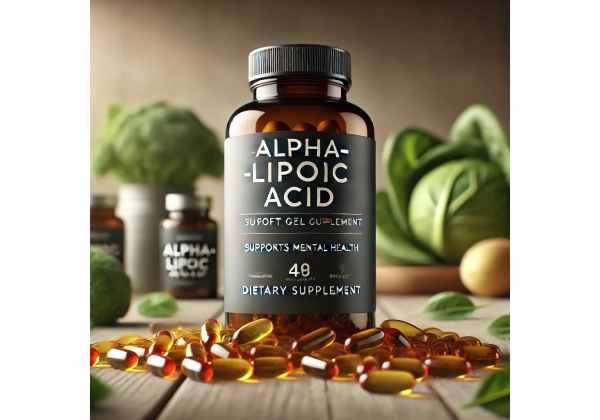
Alpha-lipoic acid, often shortened to ALA, sits at an interesting crossroads between nutrition, metabolism, and brain health. Your body makes small amounts of it in mitochondria, and supplement makers often position it as an antioxidant that may help with energy production, inflammation, and nerve support. That sounds appealing, especially for people thinking about brain fog, mood, aging, or cognitive resilience. But the real picture is more nuanced. ALA has plausible mechanisms and a few promising human studies, yet the clinical evidence for sharper thinking or better mental wellness is still limited and mixed. In other words, it is more than hype, but not a proven cure-all. This article explains what alpha-lipoic acid does, how it may affect the brain, what human studies actually show, who may benefit most, how dosing is usually approached, and where safety, side effects, and interactions deserve real attention.
Table of Contents
- What alpha-lipoic acid is
- Brain and mood benefits
- How it may work
- Who might consider it
- Dosage, forms, and timing
- Safety, side effects, and interactions
What alpha-lipoic acid is
Alpha-lipoic acid is a sulfur-containing compound your body produces in small amounts, mainly inside mitochondria. There, it helps key enzyme systems convert nutrients into usable energy. That basic role matters for the brain because the brain is energy-hungry tissue. Neurons do not store much fuel, so anything connected to mitochondrial function quickly gets attention in discussions about aging, cognition, mental stamina, and neuroprotection. ALA is also unusual because both it and its reduced form, dihydrolipoic acid, participate in antioxidant defense. That gives it a broader biochemical profile than many supplements that work in only one environment or one pathway.
Another reason ALA gets so much interest is that it is both water- and fat-soluble. In plain terms, that means it can move through different parts of the body more easily than some antioxidants. Review data also note that it can cross the blood-brain barrier, which is one reason researchers keep studying it in neurological and psychiatric settings. On top of that, ALA may help recycle other antioxidants such as vitamins C and E and support glutathione-related defenses. This does not prove a clinical benefit on its own, but it explains why ALA keeps showing up in research on oxidative stress, inflammation, neuropathy, and metabolic strain.
You can get small amounts of alpha-lipoic acid from foods such as red meat, spinach, broccoli, potatoes, carrots, and other vegetables. Still, dietary exposure is much lower than the amounts used in supplements and trials. Most supplements provide 200, 300, or 600 mg per serving, which is far beyond what a normal diet supplies. People who are interested in mitochondrial support often compare ALA with compounds such as CoQ10, but these supplements are not interchangeable and do not have the same clinical track record.
It also helps to know that supplement labels are not all describing the same thing. Some products contain the common racemic form, which includes both R and S isomers. Others highlight R-alpha-lipoic acid, the naturally occurring isomer. That sounds straightforward, but the evidence does not clearly show that one form is always the best choice for every person or every goal. In fact, recent reviews note that the superiority of R-ALA versus common racemic products has not been firmly established for routine supplement use. For most readers, the bigger questions are less about chemistry and more about evidence, dose, tolerance, and whether the intended use actually matches what human trials support.
Brain and mood benefits
The most honest way to describe alpha-lipoic acid for brain health is this: the theory is stronger than the proof. Researchers have several reasons to think ALA could help the brain. It supports mitochondrial function, may dampen oxidative stress, and appears to influence inflammatory signaling. Those are all processes linked with cognitive aging, depression, vascular disease, and neurodegeneration. But when you move from mechanism to real human outcomes, the evidence becomes much less impressive.
For cognition itself, the data remain thin. A recent pilot study in older adults without diagnosed Alzheimer disease or cognitive impairment found no significant improvement in cognitive function, executive function, or mood after ALA supplementation. That does not prove ALA never helps anyone, but it is an important reality check. A supplement can have biologically interesting effects without producing noticeable improvements in memory, attention, or mood in real people. If your main goal is sharper thinking, faster recall, or better day-to-day focus, ALA is not one of the best-supported first choices.
Mood findings are slightly more encouraging, but they are still limited. In one 12-week randomized trial in adults with type 2 diabetes and coronary heart disease, 600 mg per day of ALA improved depression scores and some inflammatory and oxidative stress markers, though it did not significantly improve anxiety or sleep scores. Another randomized trial in women with episodic migraine reported benefits in oxidative, inflammatory, and mood-related measures over three months. These studies suggest that ALA may be more useful when mood symptoms are tied to metabolic stress, inflammation, or chronic disease than when it is used as a general mental wellness supplement in otherwise healthy people.
A key point many articles miss is that ALA’s strongest clinical history is not in nootropic use at all. It has been studied far more for diabetic neuropathy than for memory, attention, or depression. Even there, the picture is mixed. A recent Cochrane review concluded that ALA probably has little or no effect on neuropathy symptoms or adverse events at six months. That does not erase earlier shorter-term studies, but it does mean readers should be cautious about inflated claims. In practice, ALA looks more like a targeted adjunct than a proven brain enhancer. Anyone looking for durable cognitive protection will usually get more return from sleep, exercise, blood sugar control, hearing protection, and other brain-protective habits than from relying on one supplement.
How it may work
Alpha-lipoic acid is appealing because it may act through several pathways that matter for brain function. First, it is tied directly to mitochondrial energy metabolism. Mitochondria are central to how cells turn carbohydrates, fats, and amino acids into usable energy, and brain cells are especially dependent on steady mitochondrial output. When researchers talk about ALA and the brain, they are often starting from this energy angle rather than from a simple “antioxidant supplement” idea.
Second, ALA appears to influence oxidative stress. Oxidative stress is not just a vague wellness term. It refers to an imbalance between reactive molecules and the systems that neutralize them. In the brain, too much oxidative stress can affect cell membranes, proteins, mitochondria, and signaling pathways involved in memory and mood. ALA and its reduced form can neutralize certain reactive species directly and may also help restore antioxidant capacity through effects on compounds such as glutathione and vitamins C and E. That is one reason ALA is often discussed in the same broader conversation as inflammation and brain fog.
Third, ALA may affect inflammatory signaling. Review data describe inhibition of NF-kB-related pathways and shifts in inflammatory mediators. For brain health, that matters because chronic low-grade inflammation is linked with vascular dysfunction, fatigue, depressive symptoms, and cognitive decline. ALA may also influence endothelial function and microcirculation, which could be relevant when poor metabolic health is part of the problem. That is one reason trials showing mood benefit often involve people with diabetes, coronary disease, or migraine rather than healthy adults looking for a productivity boost.
A fourth possible pathway is glucose regulation. ALA can lower blood sugar and may improve insulin sensitivity in some settings. That has obvious value for metabolic conditions, but it may also matter indirectly for the brain because unstable blood sugar can affect attention, irritability, fatigue, and mental clarity. This does not make ALA a universal answer for “brain fog,” since many people with brain fog actually have sleep problems, anxiety, thyroid disease, medication effects, anemia, or other causes. Still, if someone’s mental slowdown overlaps with metabolic stress, ALA has a more plausible rationale than it does for a healthy person simply chasing better concentration.
Put together, these mechanisms explain why ALA remains scientifically interesting. They do not guarantee a noticeable benefit. That distinction matters. Biological plausibility can justify further research, but symptom relief and cognitive gains must still be shown in human trials, ideally in the exact kind of person who wants to use the supplement.
Who might consider it
Alpha-lipoic acid makes the most sense for people whose mental or neurological concerns overlap with metabolic strain, oxidative stress, or nerve symptoms. That includes adults discussing diabetic neuropathy with a clinician, some people with migraine who are exploring adjunctive nutritional strategies, and some patients with diabetes or cardiovascular risk factors who also have low mood. In these settings, ALA is not a magic fix, but it at least has a reasoned clinical context.
It makes less sense as a casual “brain booster” for otherwise healthy people who want faster focus, better studying, or immediate mood elevation. The best human study we have in a nonclinical older sample did not show meaningful improvement in cognition or mood, and there is no strong evidence that ALA works like a stimulant, a classic nootropic, or an antidepressant. That does not mean it is useless. It means the likely payoff depends a lot on why you are taking it. A person with insulin resistance, neuropathic symptoms, or inflammatory burden may have a more rational use case than someone simply hoping to feel mentally sharper by next week.
ALA may also be worth discussing when brain symptoms seem to travel with unstable blood sugar. Some people notice that poor glucose control comes with fatigue, irritability, mental slowing, or difficulty concentrating. In that setting, the more important goal is still fixing the underlying pattern through diet, medication, exercise, sleep, and medical care. A supplement can only be secondary. If this sounds familiar, it is often more useful to understand the broader pattern of blood sugar swings and mood than to expect one capsule to solve the problem.
There are also people who should be more careful. Those with diabetes need to think about blood sugar lowering. People with thyroid disorders, thiamine deficiency, heavy alcohol use, or liver disease should not treat ALA like an automatic wellness add-on. Pregnancy and breastfeeding require individualized medical advice because safety data for routine self-directed use are limited. Children should not use it casually. And anyone with significant depression, panic symptoms, cognitive decline, or new neurological changes should not delay proper evaluation while experimenting with supplements. ALA is best viewed as a possible adjunct, not a replacement for diagnosis, therapy, medication, nutrition, or foundational lifestyle treatment.
Dosage, forms, and timing
In real-world supplement use, the most common oral doses are 300 to 600 mg per day. Many products are built around those numbers, and several clinical trials also use them. In the trial involving adults with type 2 diabetes and coronary heart disease, the dose was 600 mg daily for 12 weeks. Studies and clinical references also describe higher doses, but that does not automatically make higher dosing better. Once you move above standard ranges, the chance of gastrointestinal side effects and poor tolerance rises, while the evidence for extra brain or mood benefit does not become especially convincing.
A practical approach is to start conservatively rather than jumping straight to a high dose. Many adults who try ALA do well with a lower starting dose and only increase if they tolerate it and have a clear reason to continue. That matters because some people stop quickly due to nausea, heartburn, or headache. If you and your clinician are using ALA for a specific purpose, it is usually better to pick one dose, one product, and one monitoring window than to change several variables at once.
Timing also matters. Review data indicate that food can reduce ALA absorption and that an empty stomach may improve uptake. For that reason, many people take it away from meals. Still, perfect absorption is not the only goal. If taking ALA on an empty stomach causes enough stomach upset that you stop using it, the theoretical advantage disappears. Consistency and tolerance matter more than chasing the most ideal pharmacokinetic scenario.
As for forms, most over-the-counter products use a racemic mixture unless the label specifically says R-alpha-lipoic acid. The natural R form sounds attractive, but recent review literature does not clearly establish that R-ALA, sodium R-ALA, or common racemic ALA is always the superior routine choice. What matters more is buying a clearly labeled product from a reputable company with third-party quality testing, avoiding proprietary blends, and matching the form to your budget and tolerance. If you are also considering other “mitochondrial” or “brain support” supplements such as acetyl-l-carnitine, it is smarter to introduce them one at a time so you can tell what is helping and what is causing side effects.
Finally, give the experiment a realistic time frame. ALA is not a same-day focus aid. Trials that report benefits usually run for weeks, not hours. If there is no meaningful improvement after a reasonable monitored period, especially if your main goal is cognition or mood, that is a sign to reassess rather than escalate.
Safety, side effects, and interactions
For most adults, alpha-lipoic acid appears to be fairly well tolerated at common supplemental doses. The typical side effects are not exotic. They are mostly the kinds of problems people see with many supplements: nausea, heartburn, vomiting, abdominal discomfort, dizziness, and headache. Systematic review data suggest that ALA supplementation is not associated with an increased risk of treatment-emergent adverse events overall, which is reassuring. Even so, “generally safe” is not the same thing as “risk free,” especially when the dose climbs or the person taking it has underlying medical issues.
The biggest everyday precaution is blood sugar. ALA can lower glucose, so people taking insulin or other diabetes medications should use it carefully and monitor for low blood sugar. That matters for the brain as well as the body because hypoglycemia can cause shakiness, sweating, confusion, anxiety, palpitations, and poor concentration. What looks like a supplement causing “brain fog relief” in one person can look like a supplement causing dangerous lows in another.
Thiamine deficiency deserves special attention. Clinical sources note that high doses of ALA may cause dangerous side effects, including seizures, in people with vitamin B1 deficiency, and heavy alcohol use is one reason that deficiency can develop. This means people with alcohol misuse, malnutrition, unexplained weight loss, or other deficiency risk should not casually self-prescribe high-dose ALA.
There are also rarer concerns. Thyroid disorder is listed as a precaution in clinical reviews. Case reports and reviews have also linked ALA to insulin autoimmune syndrome, a rare cause of hypoglycemia involving insulin autoantibodies. This complication is uncommon, but it is worth knowing about because it reminds us that even “natural” supplements can trigger serious effects in susceptible people. Large overdoses can be far more dangerous and have been associated with severe toxicity, including seizures, metabolic acidosis, rhabdomyolysis, coma, multiorgan failure, and death.
The bottom line on safety is simple. ALA is not an especially scary supplement when used thoughtfully, but it should still be handled like a bioactive compound, not like a harmless vitamin candy. Stop and get medical advice if you develop rash, severe vomiting, fainting, confusion, or symptoms of low blood sugar. And if your interest in ALA comes from broad curiosity about cognitive enhancers, it is worth stepping back and reading more generally about nootropics and evidence before building a large supplement stack around uncertain benefits.
References
- Alpha-Lipoic Acid: Biological Mechanisms and Health Benefits 2024 (Review)
- Alpha-lipoic acid for diabetic peripheral neuropathy 2024 (Systematic Review)
- Cognitive and Mood Effect of Alpha-Lipoic Acid Supplementation in a Nonclinical Elder Sample: An Open-Label Pilot Study 2023 (Clinical Study)
- Alpha-lipoic acid administration affects psychological status and markers of inflammation and oxidative damage in patients with type 2 diabetes and coronary heart disease 2022 (RCT)
- Safety Evaluation of α-Lipoic Acid Supplementation: A Systematic Review and Meta-Analysis of Randomized Placebo-Controlled Clinical Studies 2020 (Systematic Review)
Disclaimer
This article is for educational purposes only and is not medical advice. Alpha-lipoic acid can affect blood sugar and may not be appropriate for everyone, especially people with diabetes, thyroid disorders, heavy alcohol use, nutrient deficiencies, pregnancy, breastfeeding, or complex medical conditions. Supplements should not replace diagnosis, prescribed treatment, psychotherapy, or urgent medical care. Speak with a qualified clinician before starting alpha-lipoic acid if you take medications, have ongoing neurological or mental health symptoms, or are considering high doses.
If you found this article useful, please share it on Facebook, X, or your preferred platform.