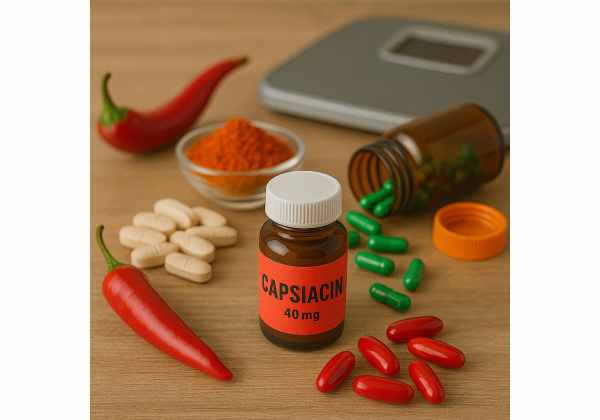
Capsaicin and capsiate are often marketed as “fat-burning” ingredients, but the evidence in humans is more restrained than the sales pitch. They may slightly increase energy expenditure, modestly affect appetite in some people, and fit into a weight-loss plan as a small adjunct. They do not reliably produce major fat loss on their own, and tolerance is a real limitation, especially with pungent capsaicin products.
The practical question is not whether these compounds do anything at all. It is whether the effect is large enough, tolerable enough, and consistent enough to matter for you. That depends on the form you use, your digestive sensitivity, your expectations, and whether the rest of your plan already creates a sustainable calorie deficit.
Table of Contents
- What capsaicin and capsiate are
- What the human studies actually show
- Why thermogenesis and appetite may change
- Dose, forms, timing and tolerance
- Side effects, interactions and precautions
- How to use them in a real plan
- When they may be worth trying
What capsaicin and capsiate are
Capsaicin is the pungent compound in chili peppers that creates the familiar burn. Capsiate is a closely related, non-pungent or far less pungent analog found in certain sweet pepper varieties and used in some supplement products as a way to pursue similar metabolic effects with better comfort.
Both compounds are discussed in weight-loss circles because they appear to activate pathways linked to heat production and fat oxidation. The most important practical difference, though, is not chemistry. It is usability. Capsaicin can be hard to take consistently if it causes burning, nausea, stomach discomfort, or food aversion. Capsiate is often positioned as the “tolerance-friendly” version for people who want the thermogenic concept without the oral burn.
| Feature | Capsaicin | Capsiate |
|---|---|---|
| Main source | Hot chili peppers | Non-pungent sweet pepper varieties and supplement extracts |
| Taste and sensation | Noticeably hot and burning | Little to no oral burn |
| Main weight-loss interest | Thermogenesis, satiety, lower intake in some trials | Thermogenesis and fat oxidation with better tolerance |
| Common limitation | Digestive irritation and poor adherence | Smaller evidence base and still modest effects |
| Best way to think about it | Possible small helper, not a primary strategy | Possible alternative if pungency is the main barrier |
In real-world terms, neither belongs in the same category as a well-structured nutrition plan, higher protein intake, regular activity, or effective obesity medications. They are better viewed as optional fine-tuning tools. That framing matters because disappointment usually comes from expecting a supplement-sized effect to behave like a medication-sized effect.
Another reason the topic gets confusing is that studies use different forms: whole chili, red pepper added to meals, purified capsaicinoids, capsinoids, capsiate, or proprietary blends. That means results do not always transfer neatly from one product to another. A spicy meal is not identical to a standardized capsule, and a capsiate product is not the same experience as taking a capsaicin-heavy “fat burner.”
What the human studies actually show
The fairest summary of the human evidence is this: capsaicin and related compounds can produce measurable metabolic effects, but the average weight-loss benefit is small.
That distinction matters. A compound can “work” in a laboratory sense and still not change body weight very much in practice. Human weight loss is influenced by appetite, adherence, food environment, sleep, activity, stress, and how long the intervention lasts. A mild thermogenic effect can easily disappear inside normal day-to-day variation.
The more encouraging findings usually involve short-term changes such as:
- slightly higher energy expenditure
- somewhat greater fat oxidation
- reduced hunger or lower ad libitum intake in some settings
- modest reductions in waist measurements or body weight in pooled analyses
The less encouraging findings are just as important:
- many trials are short
- dose and formulation vary a lot
- some benefits are too small to notice without careful measurement
- digestive discomfort may reduce appetite for the “wrong” reason
- overall body-weight change is often limited
A practical way to interpret the research is to separate “physiologic signal” from “clinically meaningful result.” There is enough evidence to say the physiologic signal is real. There is not enough to call capsaicin or capsiate a reliable stand-alone weight-loss solution.
That is why it helps to read supplement claims carefully. A product can truthfully say it supports thermogenesis and still leave the impression that it will create obvious fat loss. Those are not the same thing. This is also why articles on spotting misleading weight-loss claims are so useful: small effects are often stretched into big promises.
The best current consumer takeaway is straightforward:
- Expect modest benefit at best.
- Judge success by adherence and overall progress, not by the supplement alone.
- Do not let a thermogenic supplement distract from the bigger drivers of fat loss, especially a sustainable calorie deficit.
Capsiate deserves its own note here. Some people assume the non-pungent version must be weaker or ineffective. The data are more nuanced. Capsiate and capsinoids may still influence energy expenditure and body composition markers, but the overall effect remains modest and not consistently significant across studies. Better tolerance is useful, yet better tolerance does not automatically mean better results.
If your goal is to lose a substantial amount of weight, capsaicin and capsiate sit in the “maybe helpful around the edges” category, not the “centerpiece of the plan” category. That is the most honest reading of the evidence.
Why thermogenesis and appetite may change
The appeal of capsaicin and capsiate comes from a simple idea: make the body burn a bit more energy and perhaps make eating slightly less feel easier. The biology is more complex, but that is the practical goal.
Capsaicin interacts with TRPV1 receptors, which are involved in heat and sensory signaling. This appears to trigger sympathetic nervous system activity and may increase thermogenesis, meaning the body dissipates a little more energy as heat. Some studies also suggest an increase in fat oxidation, especially at higher doses or in specific settings.
What “thermogenesis” really means here
In supplement marketing, thermogenesis is often presented as dramatic. In real life, the increase is usually modest. Think in terms of a small metabolic nudge, not a furnace being switched on. For some people that nudge may slightly reinforce a diet plan. For others, it will be too small to matter.
Appetite effects are real but inconsistent
Capsaicin may influence appetite in two different ways, and this is where interpretation gets tricky.
The first is the desired mechanism: shifts in fullness, satiety, or eating behavior that lower intake a bit. The second is less appealing: people sometimes eat less because the product causes burning, nausea, bloating, or mild gastrointestinal distress. From a weight-management perspective, those are not equivalent. An effect you cannot comfortably tolerate is not a good long-term tool.
That is one reason capsiate gets attention. By reducing the oral burn, it may preserve at least some metabolic effects without making the experience unpleasant enough to sabotage adherence.
Why results differ so much between people
Several factors can change the outcome:
- usual spicy-food intake and tolerance
- whether the compound is taken in food or capsule form
- dose size
- body size and baseline metabolic rate
- whether the person is already dieting
- study duration
- whether appetite is measured in a lab meal or during real-life eating
There is also a behavioral catch. When people believe they are taking a fat-burning product, some unconsciously loosen up elsewhere by moving less or eating more later. That compensation can erase a small thermogenic gain. It is similar to what happens when people overestimate calories burned during exercise and accidentally eat them back.
So the mechanism is plausible, and the lab effects are often directionally positive. The limitation is scale. These are subtle levers, not dominant ones.
Dose, forms, timing and tolerance
Dose matters, but so do form and tolerability. A dose that looks impressive on a label is not automatically better if it makes you miserable or if the product hides the actual amount inside a proprietary blend.
Common forms include:
- chili powder or spicy food added to meals
- capsaicin or capsaicinoid capsules
- capsinoid or capsiate capsules
- multi-ingredient thermogenic blends
Food-based use is the simplest and often the most honest starting point. You can see how your body responds to spicy meals before spending money on supplements. The downside is inconsistency. The capsaicin content of foods varies, and the amount that feels tolerable at dinner may be too low to replicate what some trials used.
Standardized supplements are more precise, but they require better label scrutiny. This is where reading supplement labels carefully matters. You want to know the exact active form, the dose per serving, how many servings are expected per day, and whether the product adds caffeine or other stimulants that muddy both the effects and the side-effect profile.
How to approach timing
Many people take these products with or before meals because appetite effects are one of the main reasons to use them. That can make sense, especially if your main challenge is portion control. But taking a pungent product on an empty stomach is more likely to be uncomfortable.
A practical approach is:
- Start with the lowest labeled dose.
- Take it with food rather than fasting.
- Keep everything else stable for at least one to two weeks.
- Track hunger, meal size, digestive comfort, and body-weight trend.
- Stop if the product mainly produces discomfort rather than useful appetite control.
Why tolerance decides whether it is usable
Tolerance is not a minor side issue. It is often the deciding factor. A supplement that raises energy expenditure a little but causes burning, cramps, reflux, or nausea is unlikely to stay in your routine long enough to matter.
For that reason, capsiate or capsinoid products may be the better fit for people who like the idea of a thermogenic aid but do not tolerate spicy foods well. Even then, expectations should stay modest. Better tolerance improves the odds of adherence, not the odds of dramatic weight loss.
When buying a supplement, quality control matters at least as much as the ingredient itself. Look for transparent labeling and, ideally, third-party testing. That does not prove the product will work, but it improves the odds that the capsule contains what the label claims.
Side effects, interactions and precautions
The main downside of capsaicin-based products is not mystery danger. It is ordinary intolerance. Common problems include oral burning, stomach discomfort, nausea, bloating, abdominal pain, loose stools, and reflux-like symptoms. In some people, those effects are mild and temporary. In others, they make the supplement not worth using.
People who are more likely to struggle include those with:
- frequent heartburn or reflux
- sensitive stomachs
- irritable bowel symptoms
- a history of spicy foods triggering abdominal pain or diarrhea
- hemorrhoids or anal irritation that spicy foods tend to worsen
Capsiate may reduce the mouth-burn problem, but “non-pungent” does not guarantee zero digestive symptoms. Gut sensitivity still matters.
Stacking is where side effects can escalate
Capsaicin is often sold in products that also contain caffeine, green tea extract, synephrine, yohimbine, or other stimulants. At that point, you are no longer evaluating capsaicin alone. You are evaluating a stimulant stack, and the side-effect picture changes. Jitters, palpitations, anxiety, sweating, and sleep disruption can become the bigger issue, especially if you already use a lot of coffee or pre-workout supplements.
If you are comparing options, it helps to separate capsaicin-only products from combination formulas and to understand how they overlap with articles about caffeine for weight loss. Many bad supplement experiences come from the stack, not the chili-derived ingredient itself.
Who should be more cautious
You should be careful or get medical guidance first if you:
- take multiple medications
- have chronic gastrointestinal disease
- have chest pain, arrhythmia concerns, or uncontrolled high blood pressure and are considering a stimulant blend
- are pregnant or breastfeeding
- are trying to manage diabetes or blood sugar swings and want to add a multi-ingredient supplement
- have a history of strong reactions to spicy foods
This is also a reasonable area to discuss with a clinician if you are already dealing with obesity, reflux, medication side effects, or a history of unsuccessful supplement use. A brief conversation may save a lot of trial and error, especially if you are already considering a broader plan that includes medical guidance before weight loss efforts.
One more practical warning: if a product makes you feel too uncomfortable to eat normally, that is not a sign it is “working better.” It is a sign the tolerance cost is too high. Weight management should be sustainable. Anything that turns meals into a battle is unlikely to help for long.
How to use them in a real plan
If you decide to try capsaicin or capsiate, the best use case is as a small helper inside a larger system that already works. That means it should support habits you would want even without the supplement.
A realistic foundation looks like this:
- a calorie intake you can sustain
- enough protein to preserve lean mass and improve fullness
- high-fiber foods that help control appetite
- regular activity
- sleep and stress habits that do not constantly push hunger upward
In other words, a thermogenic supplement makes more sense once the basics are already in place. It is a finishing touch, not a first move.
Two of the most useful non-supplement levers are adequate protein intake and higher daily fiber. If those are not dialed in, capsaicin is unlikely to compensate. Protein and fiber routinely produce more noticeable satiety benefits than a mild thermogenic aid.
A sensible four-week trial
Treat it like an experiment, not a commitment.
- Pick one product only, preferably not a crowded stimulant blend.
- Start low and take it with meals.
- Keep your eating plan, step count, and caffeine intake steady.
- Track hunger, cravings, digestive symptoms, and average weekly body weight.
- Continue only if the benefit is noticeable and the side effects are minor.
What counts as “noticeable”? Not a dramatic drop on the scale in three days. Better signs are:
- slightly easier portion control
- less desire to keep eating once a meal is done
- no meaningful GI distress
- a steadier weekly weight trend, not just one lower weigh-in
If none of that shows up after a fair trial, there is little reason to keep spending money on it. The most useful supplements are the ones that create an obvious practical advantage, not just a theoretical one.
When they may be worth trying
Capsaicin or capsiate may be worth trying when your expectations are realistic and your tolerance is good. They can make sense if you already have a solid plan, want a small appetite or thermogenesis assist, and are choosing between relatively low-risk, low-drama options.
They are less worth trying when you are hoping for major fat loss from a single ingredient, when spicy foods regularly upset your stomach, or when you are being pulled toward flashy multi-ingredient “fat burner” products that promise more than the research supports.
Capsiate is usually the more sensible option for people who dislike or cannot tolerate pungency. Capsaicin may still be fine for people who already enjoy spicy foods and notice that those meals naturally help them feel satisfied with less. The key is whether the effect is helpful enough to repeat consistently.
For people with obesity who need more substantial results, it is often better to spend time and money on higher-impact strategies instead of chasing marginal ones. That might mean structured nutrition coaching, better adherence systems, or learning more about weight-loss medications if you meet criteria and need more than lifestyle changes alone can provide.
The bottom line is simple: capsaicin and capsiate are not useless, but they are not game-changers. They belong in the “optional, modest, sometimes helpful” tier. If you tolerate them well and they make your plan a bit easier, that is a reasonable win. If they cause discomfort or do not change your eating behavior, you are probably better off putting your effort elsewhere.
References
- The effects of capsaicin intake on weight loss among overweight and obese subjects: a systematic review and meta-analysis of randomised controlled trials 2023 (Systematic Review and Meta-Analysis)
- The effects of capsinoids supplementation on body composition and anthropometric measures: A systematic review and dose-response meta-analysis of randomized controlled trials 2022 (Systematic Review and Meta-Analysis)
- Dietary Supplements for Weight Loss – Health Professional Fact Sheet 2022 (Official Fact Sheet)
- Capsaicin and Its Effects on Body Weight 2022 (Review)
- The effects of capsaicin and capsiate on energy balance: critical review and meta-analyses of studies in humans 2012 (Critical Review and Meta-Analysis)
Disclaimer
This article is for general educational purposes only. Capsaicin and capsiate supplements can cause digestive side effects and may not be appropriate for everyone, especially if you have gastrointestinal symptoms, use stimulant-heavy products, or have a medical condition. It is not a substitute for professional medical advice, diagnosis, or treatment.
If this article helped, please share it on Facebook, X, or any platform your audience uses most.