• Home
  • Health Topics
  • Human Body
  • Diagnostics
  • Conditions
  • Treatments
  • Foods
  • Herbs
  • Supplements
  • Weight Loss
  • Longevity
Search
VitaLibrary
  • Home
  • Health Topics
  • Human Body
  • Diagnostics
  • Conditions
  • Treatments
  • Foods
  • Herbs
  • Supplements
  • Weight Loss
  • Longevity
  • Blood Tests and Blood Biomarkers
  • Brain, Cognitive, and Mental Health Tests and Diagnostics
  • Genetic and Molecular Biomarkers
  • Hormone Tests
  • Inflammation and Immune Markers
  • Tumor Markers
  • Urine Tests and Kidney Markers
    Latest
    • Latest
    • Featured posts
    • Most popular
    • 7 days popular
    • By review score
    • Random
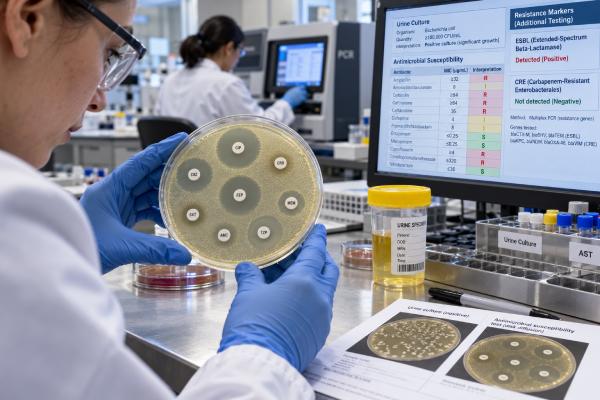
    Learn how antibiotic-resistant UTI testing identifies ESBL, CRE, resistance genes, and antibiotic susceptibility, and how culture results guide treatment and follow-up.

    Antibiotic-Resistant UTI Test: ESBL, CRE, Resistance Markers, and Culture Meaning

    Learn what asymptomatic bacteriuria means, how a positive urine culture without UTI symptoms is interpreted, and when screening, treatment, or follow-up matters.

    Asymptomatic Bacteriuria Test: Positive Culture Without Symptoms and When It Matters

    Learn how bacteria in urine are interpreted using urinalysis, culture, colony count, symptoms, and sample quality, including when contamination or follow-up testing matters.

    Bacteria in Urine Test: UTI, Contamination, Colony Count, and Culture Follow-Up

    Learn how a catheter urine culture helps diagnose catheter-associated UTI, how samples are collected, and what colony counts, pyuria, resistance, and positive results mean.

    Catheter Urine Culture Test: Catheter-Associated UTI and Culture Meaning

    Learn how a chlamydia and gonorrhea urine NAAT works, how to collect first-catch urine, what positive or negative results mean, and when follow-up testing is needed.

    Chlamydia and Gonorrhea Urine NAAT Test: STI Screening, Positive Result, and Meaning

    Learn how to collect a clean-catch urine culture, reduce contamination, handle the sample correctly, and understand mixed flora, colony counts, repeat testing, and accurate results.

    Clean-Catch Urine Culture Test: Sample Collection, Contamination, and Accurate Results

    Diagnostics

    Home Diagnostics Page 107
    Understand the serum osmolality test normal range, what high and low results mean, how osmolal gap is calculated, and when abnormal results need follow-up.

    Serum Osmolality Test Normal Range: Reference Values and Meaning

    Learn how sodium and serum osmolality help interpret fluid balance, dehydration, hyponatremia, hypernatremia, glucose effects, osmolal gap, and safe follow-up.

    Sodium and Osmolality: Interpreting Fluid Balance Without Overdoing It

    Learn the sodium blood test normal range, what low and high sodium mean, common causes, symptoms, urgent warning signs, and how doctors interpret results with kidney and electrolyte markers.

    Sodium Blood Test Normal Range: Reference Values and Meaning

    Learn what the SDMA blood test measures, what high SDMA can mean for kidney function, typical normal ranges, units, causes, follow-up tests, and when results may be urgent.

    Symmetric Dimethylarginine (SDMA) Test: High SDMA, Kidney Function Marker, Normal Range,...

    Understand the urea blood test normal range, BUN conversion, high and low urea causes, kidney function links, preparation, follow-up tests, and urgent warning signs.

    Urea Blood Test Normal Range: Reference Values and Meaning

    Learn the uric acid blood test normal range, what high and low results mean, how uric acid relates to gout and kidney stones, and when follow-up testing matters.

    Uric Acid Blood Test Normal Range: Reference Values and Meaning

    Learn how vitamin D blood tests relate to kidney function, calcium, phosphorus, PTH, CKD-mineral bone disorder, deficiency, toxicity, and follow-up results.

    Vitamin D and Kidney Function Blood Test: Deficiency, Calcium Balance, CKD,...

    Learn what the 1,25-dihydroxy vitamin D test measures, the normal calcitriol range, and what high or low results mean for calcium, PTH, kidney function, and vitamin D metabolism.

    1,25-Dihydroxy Vitamin D Test Normal Range: Calcitriol Levels and Meaning

    Understand the 25-hydroxy vitamin D test, including normal and optimal ranges, low and high vitamin D meanings, toxicity risk, preparation, and follow-up tests.

    25-Hydroxy Vitamin D Test Normal and Optimal Range: Vitamin D Levels...

    Learn what an alkaline phosphatase isoenzyme test shows, how liver and bone ALP fractions are interpreted, what high ALP can mean, and which follow-up tests help identify the cause.

    Alkaline Phosphatase Isoenzyme Test: Bone Fraction, Liver Fraction, High ALP, and...

    Learn what a beta-carotene blood test measures, what low or high beta-carotene means, how normal ranges vary, and how results relate to vitamin A status, diet, absorption, and supplements.

    Beta-Carotene Blood Test: Low Beta-Carotene, Normal Range, Vitamin A Status, and...

    Learn what the BSAP blood test measures, what high bone-specific alkaline phosphatase means, common causes, normal ranges, related bone markers, and follow-up steps.

    Bone-Specific Alkaline Phosphatase (BSAP) Test: High BSAP, Bone Turnover, Bone Health,...

    Learn the normal calcium blood test range, what high and low calcium mean, how albumin and ionized calcium affect results, and when follow-up is urgent.

    Calcium Blood Test Normal Range: Reference Values and Meaning

    Learn the ceruloplasmin blood test normal range, what low or high ceruloplasmin means, and how doctors use it with copper, urine copper, and liver tests.

    Ceruloplasmin Blood Test Normal Range: Reference Values and Meaning

    Learn what chromium blood test normal ranges mean, why serum and whole-blood reference values differ, and how high or low chromium results are interpreted.

    Chromium Blood Test Normal Range: Reference Values and Meaning

    Learn the cobalt blood test normal range, what high and low cobalt levels mean, how specimen type changes interpretation, and when implant or exposure follow-up matters.

    Cobalt Blood Test Normal Range: Reference Values and Meaning

    1...106107108...137Page 107 of 137
    • Disclaimer
    • Privacy Policy
    • About Us
    © 2026 Vita Library. All rights reserved.
    Contact us: contact@vitalibrary.com