• Home
  • Health Topics
  • Human Body
  • Diagnostics
  • Conditions
  • Treatments
  • Foods
  • Herbs
  • Supplements
  • Weight Loss
  • Longevity
Search
VitaLibrary
  • Home
  • Health Topics
  • Human Body
  • Diagnostics
  • Conditions
  • Treatments
  • Foods
  • Herbs
  • Supplements
  • Weight Loss
  • Longevity
  • Blood Tests and Blood Biomarkers
  • Brain, Cognitive, and Mental Health Tests and Diagnostics
  • Genetic and Molecular Biomarkers
  • Hormone Tests
  • Inflammation and Immune Markers
  • Tumor Markers
  • Urine Tests and Kidney Markers
    Latest
    • Latest
    • Featured posts
    • Most popular
    • 7 days popular
    • By review score
    • Random
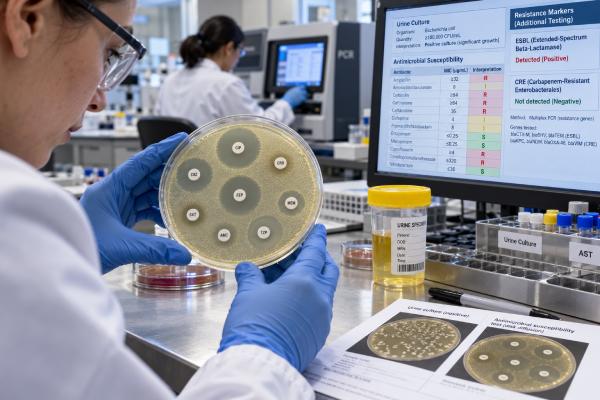
    Learn how antibiotic-resistant UTI testing identifies ESBL, CRE, resistance genes, and antibiotic susceptibility, and how culture results guide treatment and follow-up.

    Antibiotic-Resistant UTI Test: ESBL, CRE, Resistance Markers, and Culture Meaning

    Learn what asymptomatic bacteriuria means, how a positive urine culture without UTI symptoms is interpreted, and when screening, treatment, or follow-up matters.

    Asymptomatic Bacteriuria Test: Positive Culture Without Symptoms and When It Matters

    Learn how bacteria in urine are interpreted using urinalysis, culture, colony count, symptoms, and sample quality, including when contamination or follow-up testing matters.

    Bacteria in Urine Test: UTI, Contamination, Colony Count, and Culture Follow-Up

    Learn how a catheter urine culture helps diagnose catheter-associated UTI, how samples are collected, and what colony counts, pyuria, resistance, and positive results mean.

    Catheter Urine Culture Test: Catheter-Associated UTI and Culture Meaning

    Learn how a chlamydia and gonorrhea urine NAAT works, how to collect first-catch urine, what positive or negative results mean, and when follow-up testing is needed.

    Chlamydia and Gonorrhea Urine NAAT Test: STI Screening, Positive Result, and Meaning

    Learn how to collect a clean-catch urine culture, reduce contamination, handle the sample correctly, and understand mixed flora, colony counts, repeat testing, and accurate results.

    Clean-Catch Urine Culture Test: Sample Collection, Contamination, and Accurate Results

    Diagnostics

    Home Diagnostics Page 110
    High vitamin B12 blood test results can come from supplements, injections, liver disease, kidney disease, inflammation, or blood disorders. Learn what high B12 means and what to check next.

    High Vitamin B12 Blood Test: Causes, Supplements, Liver Disease, and Meaning

    High vitamin E blood test results usually come from supplements. Learn what high alpha-tocopherol means, normal ranges, bleeding risk, causes, and follow-up steps.

    High Vitamin E (Alpha-Tocopherol) Test: Causes, Excess Intake, Bleeding Risk, and...

    High zinc blood test results can come from supplements, denture adhesive, exposure, or lab error. Learn how high zinc affects copper, anemia, toxicity symptoms, and follow-up testing.

    High Zinc Blood Test: Causes, Toxicity, Copper Deficiency, and Meaning

    Learn what the holotranscobalamin test measures, how active B12 results are interpreted, what low levels mean, and when MMA, homocysteine, or treatment may be needed.

    Holotranscobalamin Test: Active Vitamin B12, Low Levels, Deficiency, and Results

    Understand homocysteine and MMA blood tests, including how they relate to B12, folate, methylation, anemia, kidney function, and common abnormal result patterns.

    Homocysteine and MMA: Interpreting B12, Folate, and Methylation Markers

    Learn what a homocysteine blood test measures, what high homocysteine means, how B12, folate, B6, kidney function, and heart risk affect results, and what follow-up tests may help.

    Homocysteine Blood Test: High Homocysteine, B Vitamin Deficiency, Heart Risk, and...

    Learn what an iodine blood test measures, common serum iodine normal ranges, what low or high iodine may mean, and how blood iodine compares with urine iodine and thyroid tests.

    Iodine Blood Test Normal Range: Reference Values and Meaning

    Learn how to interpret an iron panel, including ferritin, serum iron, TIBC, transferrin saturation, iron deficiency patterns, inflammation effects, and high iron results.

    Iron Panel Test: Ferritin, Serum Iron, TIBC, Transferrin Saturation, Iron Deficiency,...

    Learn what a low 1,25-dihydroxy vitamin D test means, including kidney disease, PTH, phosphorus, calcium balance, symptoms, follow-up tests, and treatment context.

    Low 1,25-Dihydroxy Vitamin D Test: Causes, Kidney Disease, Calcium Balance, and...

    Learn what a low 25-hydroxy vitamin D test means, including deficiency ranges, symptoms, causes, related blood tests, treatment options, and when to seek medical care.

    Low 25-Hydroxy Vitamin D Test: Causes, Deficiency, Symptoms, and Meaning

    Low calcium blood test results can mean hypocalcemia, low albumin, vitamin D deficiency, parathyroid problems, kidney disease, or medication effects. Learn symptoms, causes, follow-up tests, and when low calcium is urgent.

    Low Calcium Blood Test: Causes, Symptoms, Hypocalcemia, and Meaning

    Low ceruloplasmin can mean copper deficiency, Wilson disease, protein loss, liver disease, or a rare inherited copper disorder. Learn how serum copper, urine copper, symptoms, and follow-up tests clarify the result.

    Low Ceruloplasmin Blood Test: Causes, Copper Deficiency, Wilson Disease, and Meaning

    Learn what a low chromium blood test can mean, why true deficiency is rare, how chromium relates to blood sugar, and when follow-up testing or treatment matters.

    Low Chromium Blood Test: Causes, Deficiency, Blood Sugar, and Meaning

    Low cobalt blood test results usually mean low metal exposure, not B12 deficiency. Learn causes, ranges, B12 status testing, symptoms, and next steps.

    Low Cobalt Blood Test: Causes, Deficiency, B12 Status, and Meaning

    Low copper blood test results can signal copper deficiency, anemia, neutropenia, zinc excess, malabsorption, bariatric surgery complications, or Wilson disease patterns. Learn causes, symptoms, follow-up tests, and treatment basics.

    Low Copper Blood Test: Causes, Deficiency, Anemia, and Meaning

    Low ferritin usually means low iron stores and may appear before anemia. Learn common causes, symptoms, ferritin cutoffs, follow-up tests, and treatment options.

    Low Ferritin Blood Test: Causes, Iron Deficiency, Anemia, and Meaning

    1...109110111...137Page 110 of 137
    • Disclaimer
    • Privacy Policy
    • About Us
    © 2026 Vita Library. All rights reserved.
    Contact us: contact@vitalibrary.com