• Home
  • Health Topics
  • Human Body
  • Diagnostics
  • Conditions
  • Treatments
  • Foods
  • Herbs
  • Supplements
  • Weight Loss
  • Longevity
Search
VitaLibrary
  • Home
  • Health Topics
  • Human Body
  • Diagnostics
  • Conditions
  • Treatments
  • Foods
  • Herbs
  • Supplements
  • Weight Loss
  • Longevity
  • Blood Tests and Blood Biomarkers
  • Brain, Cognitive, and Mental Health Tests and Diagnostics
  • Genetic and Molecular Biomarkers
  • Hormone Tests
  • Inflammation and Immune Markers
  • Tumor Markers
    Latest
    • Latest
    • Featured posts
    • Most popular
    • 7 days popular
    • By review score
    • Random
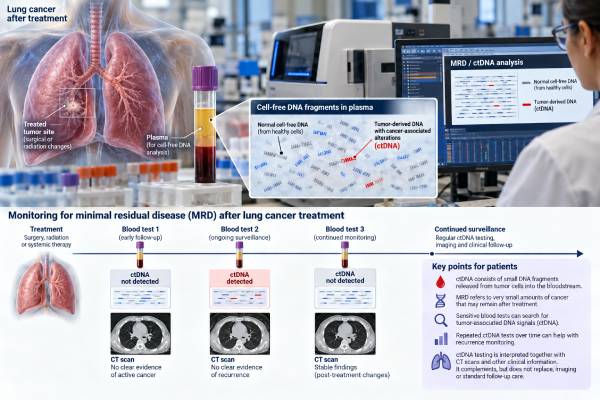
    Learn how lung cancer MRD ctDNA testing detects molecular residual disease, what positive and negative results mean, how it can precede recurrence on scans, and why treatment decisions still require clinical context.

    Minimal Residual Disease ctDNA Test for Lung Cancer: Recurrence Monitoring, MRD, and Tumor DNA

    Learn what MSI testing means in lung cancer, how MSI-H, MSS, dMMR, and pMMR results differ, how NGS, PCR, and IHC are used, and why this rare biomarker can matter for immunotherapy and hereditary evaluation.

    MSI Test for Lung Cancer: Microsatellite Instability, Mismatch Repair, and Result Meaning

    Learn how Napsin A IHC supports lung adenocarcinoma diagnosis, what positive granular cytoplasmic staining means, why negative results do not exclude lung cancer, and when other tumor origins must be considered.

    Napsin A IHC Test for Lung Cancer: Adenocarcinoma Marker, Tumor Origin, and Positive...

    Understand NSCLC biomarker testing for driver mutations, gene fusions, PD-L1 TPS, molecular profiling, liquid biopsy, negative results, resistance testing, and treatment-related next steps.

    Non-Small Cell Lung Cancer Biomarker Test: Driver Mutations, PD-L1, and Molecular Profile

    Learn what an NSE blood test means in small cell lung cancer, why levels can be high, how hemolysis causes false elevations, and how serial NSE trends may support treatment and recurrence monitoring.

    NSE Test for Lung Cancer: Small Cell Lung Cancer Marker, High Levels, and...

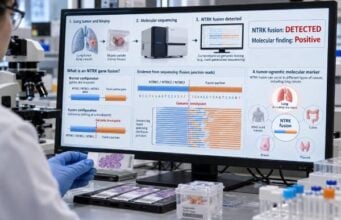
    Understand NTRK fusion testing in lung cancer, including tumor-agnostic meaning, RNA NGS, pan-TRK IHC, positive results, negative-result limits, and next steps.

    NTRK Fusion Test for Lung Cancer: Gene Fusion, Tumor-Agnostic Marker, and Molecular Meaning

    Diagnostics

    Home Diagnostics Page 79
    Learn the factor IX activity test normal range, what low and high results mean, how hemophilia B severity is classified, and which follow-up tests help explain abnormal results.

    Factor IX Activity Test Normal Range: Reference Values and Meaning

    Learn what the factor V activity test measures, the normal range, what low or high results mean, and how factor V differs from factor V Leiden testing.

    Factor V Activity Test Normal Range: Reference Values and Meaning

    Learn what the factor VII activity test measures, normal adult and pediatric ranges, causes of low or high results, PT/INR patterns, bleeding risk, and follow-up testing.

    Factor VII Activity Test Normal Range: Reference Values and Meaning

    Learn what the factor VIII activity test normal range means, how low and high results are interpreted, and how factor VIII relates to hemophilia A, von Willebrand disease, bleeding risk, and clot risk.

    Factor VIII Activity Test Normal Range: Reference Values and Meaning

    Understand factor VIII and von Willebrand factor test results, including low VWF, hemophilia A patterns, von Willebrand disease, high factor VIII, bleeding risk, clot risk, and follow-up testing.

    Factor VIII and von Willebrand Factor: Interpreting Bleeding and Clot Risk

    Learn what the factor X activity test measures, the usual normal range, what low or high results mean, and how doctors interpret abnormal factor X levels with PT, aPTT, bleeding risk, medications, vitamin K status, and liver health.

    Factor X Activity Test Normal Range: Reference Values and Meaning

    Learn the factor XI activity test normal range, what low or high results mean, why bleeding risk varies, and what follow-up testing is commonly used.

    Factor XI Activity Test Normal Range: Reference Values and Meaning

    Learn what a factor XII activity test measures, the normal adult reference range, why low factor XII prolongs aPTT, and what abnormal results usually mean.

    Factor XII Activity Test Normal Range: Reference Values and Meaning

    Learn what a factor XIII activity test measures, what low factor XIII means, normal range guidance, bleeding risks, symptoms, causes, and follow-up testing.

    Factor XIII Activity Test: Low Factor XIII, Bleeding Risk, Normal Range,...

    Understand the FDP blood test, high FDP causes, DIC patterns, clot breakdown, normal ranges, FDP vs D-dimer, follow-up testing, and urgent warning signs.

    Fibrin Degradation Products (FDP) Test: High FDP, DIC, Blood Clot Breakdown,...

    Learn how fibrinogen and FDP patterns help identify DIC, including low fibrinogen, high FDP, platelet changes, PT/aPTT results, causes, and urgent warning signs.

    Fibrinogen and FDP: Interpreting DIC Blood Test Patterns

    Learn the normal fibrinogen blood test range, what high and low fibrinogen levels mean, and how doctors interpret results with PT, INR, aPTT, platelets, and D-dimer.

    Fibrinogen Blood Test Normal Range: Reference Values and Meaning

    High aPTT means blood is taking longer than expected to clot. Learn common causes, bleeding risk, lupus anticoagulant, heparin effect, mixing studies, and follow-up tests.

    High Activated Partial Thromboplastin Time (aPTT) Test: Causes, Bleeding Risk, and...

    Learn what a high anti-Xa test result means, including heparin and enoxaparin ranges, common causes, sample timing errors, bleeding risk, and dose follow-up.

    High Anti-Xa Test Result: Causes, Heparin Dose, Bleeding Risk, and Meaning

    High D-dimer with normal results can mean recent clot breakdown, inflammation, age, infection, surgery, pregnancy, or other causes. Learn when it needs urgent follow-up.

    High D-Dimer With Normal Results: What This Blood Test Pattern Can...

    Learn what high factor II activity means, including normal ranges, causes, prothrombin mutation links, clotting risk, related tests, and when to seek urgent care.

    High Factor II (Prothrombin) Activity Test: Causes, Clotting Risk, and Meaning

    Learn what high factor IX activity means, how it relates to clotting risk, common causes, when symptoms need urgent care, and how doctors interpret results with other coagulation tests.

    High Factor IX Activity Test: Causes, Clotting Risk, and Meaning

    Learn what a high factor V activity test means, how it differs from factor V Leiden, possible causes, clotting risk, follow-up tests, and when to seek care.

    High Factor V Activity Test: Causes, Clotting Risk, and Meaning

    Learn what a high factor VII activity test means, including common causes, clotting risk, normal ranges, follow-up tests, and when urgent care is needed.

    High Factor VII Activity Test: Causes, Clotting Risk, and Meaning

    Learn what a high factor VIII activity test means, including common causes, inflammation links, von Willebrand factor, clot risk, repeat testing, and follow-up steps.

    High Factor VIII Activity Test: Causes, Clot Risk, Inflammation, and Meaning

    1...787980...92Page 79 of 92

    • Disclaimer
    • Privacy Policy
    • About Us
    © 2026 Vita Library. All rights reserved.
    Contact us: contact@vitalibrary.com