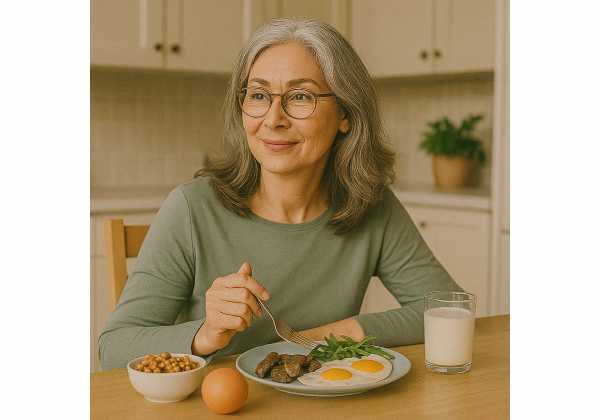
Choline does quiet, essential work in the body. It builds cell membranes, supports the neurotransmitter acetylcholine for memory and attention, and donates methyl groups that help manage homocysteine and gene expression. Many adults fall short of recommended intakes, especially women, older adults, and people who avoid animal foods. The result can show up as low energy, brain fog, and—over time—greater risk for fatty liver and cognitive decline. This guide translates the science into practical choices: which foods deliver the most choline, how to hit daily targets, when needs rise, and how to balance benefits with concerns like TMAO or very high doses. For pattern-level context that pairs well with choline planning, see our overview of longevity-focused nutrition fundamentals. Use this article to build a choline-smart plate that fits your preferences, culture, and budget.
Table of Contents
- Why Choline Matters for Brain and Liver Health
- Top Choline Sources: Eggs, Liver, Fish, and Others
- Daily Intake Targets and Per Meal Ideas
- Methylation, Homocysteine, and Cognitive Links
- Who Needs More Choline and When to Be Cautious
- Simple Recipes and Smart Swaps
- How to Track Benefits and Tolerance
Why Choline Matters for Brain and Liver Health
Choline is an essential nutrient, meaning the body cannot make enough to meet demand. Three roles explain why it matters for healthy aging. First, choline is the backbone of phosphatidylcholine and sphingomyelin—phospholipids that form cell membranes. Your brain, liver, and muscles all depend on steady membrane turnover. Second, choline is a precursor to acetylcholine, a neurotransmitter central to memory encoding, attention, and neuromuscular control. When dietary choline is chronically low, the brain must work harder to maintain acetylcholine synthesis, which can show up as slower recall or mental fatigue under stress. Third, choline is oxidized to betaine, a methyl donor that helps recycle homocysteine back to methionine. Balanced methylation supports vascular health and may help preserve white matter integrity over time.
The liver is especially sensitive to choline status. Phosphatidylcholine is needed to assemble and export very-low-density lipoproteins (VLDL). Without enough, fat accumulates in hepatocytes, and nonalcoholic fatty liver disease (NAFLD) risk rises. Classic depletion–repletion studies in humans show rapid development of liver fat on low-choline diets, reversed by reintroducing choline. This isn’t just a laboratory detail; older adults, people with estrogen decline (e.g., postmenopause), individuals on long-term parenteral nutrition, and some with specific genetic variants in PEMT, MTHFD1, or CHDH may be more vulnerable to low-choline intake and liver dysfunction.
On the cognitive side, observational cohorts link higher dietary choline—particularly phosphatidylcholine—to slower decline on global cognition tests over many years. Mechanistic work supports these findings: membranes rich in phosphatidylcholine influence synaptic plasticity, and acetylcholine availability directly affects attention and memory circuits. Choline’s methyl-donor role also intersects with one-carbon metabolism, which influences myelination and neurochemical balance. The practical takeaway is straightforward: consistent, food-based choline helps maintain brain and liver resilience, especially alongside a pattern rich in vegetables, omega-3s, and adequate protein.
Finally, choline lives in a wider ecosystem. Gut microbes can convert excess choline to trimethylamine (TMA), later oxidized to TMAO in the liver. Elevated TMAO has been associated with cardiometabolic risk in some studies. The nuance: habitual diet quality, fiber intake, and microbiome profile all shape that pathway. Most people can meet choline needs through whole foods without pushing TMAO to extremes, especially when meals include fiber-rich plants that foster a diverse microbiome.
Top Choline Sources: Eggs, Liver, Fish, and Others
Food sources differ by both choline content and chemical form. Lipid-soluble forms (phosphatidylcholine, sphingomyelin) dominate in animal foods, while water-soluble forms (free choline, glycerophosphocholine, phosphocholine) appear more in plant foods and dairy. All contribute to total intake, but concentrations vary widely.
Eggs
One large egg provides roughly 125–150 mg choline, mostly as phosphatidylcholine. Two eggs at breakfast can cover about half of many women’s daily target. Eggs are inexpensive, easy to prepare, and well tolerated by most people. If cholesterol is a concern, note that overall dietary pattern and metabolic context matter more than single foods for lipid management.
Liver and organ meats
Beef or chicken liver is exceptionally dense: ~300–350 mg choline per 3 oz (85 g) cooked. A small serving once or twice weekly can shore up intake quickly. Because liver is also rich in vitamin A and other micronutrients, moderate portions are best for routine use.
Fish and seafood
Cod, salmon, and tuna offer ~60–100 mg per 3 oz cooked, with the bonus of omega-3s. Shellfish vary but often provide helpful amounts. Including fish two to three times weekly supports both choline status and brain-friendly fats. For more ways to obtain marine omega-3s alongside choline, see food sources of omega-3s.
Poultry and meats
Chicken, turkey, and lean beef typically supply ~70–120 mg per 3 oz. Rotating cuts and cooking methods keeps meals interesting while delivering steady choline.
Dairy and fermented dairy
Milk and yogurt provide modest choline per serving (~35–45 mg per cup), but their frequency can add up. Fermented dairy (e.g., kefir, yogurt) may help gut comfort for some and contributes small, regular amounts.
Plant sources
Soybeans (including tofu and tempeh), legumes, quinoa, wheat germ, potatoes (with skin), Brussels sprouts, and broccoli supply smaller amounts (~30–110 mg per typical serving), but they’re valuable when eaten daily. Glycerophosphocholine in plants is highly bioavailable. A plant-forward plate with tofu, beans, and whole grains can approach 300–400 mg choline without animal foods.
Fortified foods and lecithin
Some cereals and nutritional yeasts add small amounts. Lecithin (rich in phosphatidylcholine) appears as an emulsifier in many products; contributions vary and labels rarely list choline. If you use lecithin granules at home, check standardized content.
Supplements
Common forms include choline bitartrate, phosphatidylcholine (often from soy or sunflower lecithin), citicoline (CDP-choline), and alpha-GPC. Supplements can help in special circumstances—late pregnancy, documented deficiency, or when medical diets limit food choices—but most healthy adults can reach targets with food. If you supplement, start low (e.g., 100–250 mg/day) and assess tolerance.
Budget and access tips
Use eggs, canned fish, legumes, and frozen vegetables to build choline-reliable meals without raising cost. For those who avoid meat for cultural or ethical reasons, pair soy foods, beans, and potatoes across the week, and consider a small, targeted supplement if your typical intake runs low.
Daily Intake Targets and Per Meal Ideas
Choline guidance in adults is expressed as Adequate Intake (AI) rather than RDA because available data support population-level adequacy but not a precise requirement for nearly all individuals. Commonly used AIs are ~550 mg/day for adult men and ~425 mg/day for adult women, with higher suggested intakes in pregnancy (~450–480 mg/day depending on authority) and lactation (~520–550 mg/day). Real-world intakes are often below these values, especially in women and older adults. Because needs vary with genetics (e.g., PEMT variants), hormones (estrogen status), and diet (folate/B12 sufficiency), think of the AI as a floor, not a ceiling.
A practical way to hit targets is to spread sources across meals rather than relying on a single food. Here are mix-and-match ideas with approximate choline contributions (mg):
- Breakfast (150–300 mg):
- Two eggs with sautéed spinach and mushrooms (~250–300)
- Greek yogurt parfait with oats and kiwi (~60–90)
- Tofu scramble with black beans and potatoes (~180–230)
- Lunch (120–250 mg):
- Tuna salad on whole-grain bread with arugula (~120–180)
- Grain bowl: quinoa, roasted soybeans/edamame, broccoli, tahini (~180–220)
- Chicken breast, roasted potatoes, Brussels sprouts (~150–200)
- Dinner (150–300 mg):
- Baked salmon, lentils, and greens (~180–240)
- Beef liver (2–3 oz) with onions and roasted carrots (~250–350)
- Tempeh stir-fry with brown rice and cashews (~160–220)
- Snack (30–80 mg):
- Milk or kefir, 1 cup (~35–45)
- Roasted soy nuts, ¼ cup (~50–70)
- Whole-grain toast with peanut butter (~20–35)
Two simple patterns work well:
- Egg-anchored mornings: two eggs at breakfast plus balanced lunch and dinner.
- Plant-forward + fish: tofu/tempeh or beans at lunch, fish at dinner, and a dairy snack.
If you struggle to reach 400–550 mg with food, consider a modest supplement. Phosphatidylcholine and alpha-GPC are often well tolerated. Start with 100–250 mg/day and reassess. People extremely sensitive to fishy burps or GI upset can trial smaller doses or different forms. Ensure B-vitamin sufficiency—folate, B12, and B6 support one-carbon metabolism. For broader context on meal-level protein that pairs well with choline planning, see even protein spacing.
Finally, remember that more is not always better. The Tolerable Upper Intake Level (UL) for choline in adults is often cited as 3,500 mg/day due to risks like hypotension, fishy body odor, sweating, and GI symptoms at very high intakes. Most people won’t approach that with food, but concentrated supplements can. Keep daily totals within a sensible range, and focus on steady intake over perfection.
Methylation, Homocysteine, and Cognitive Links
Choline sits inside one-carbon metabolism, the biochemical network that moves single-carbon units between molecules to support DNA methylation, neurotransmitter synthesis, and detox pathways. After oxidation to betaine, choline donates a methyl group to homocysteine via the betaine-homocysteine methyltransferase (BHMT) pathway, regenerating methionine and replenishing S-adenosylmethionine (SAM). Folate and B12 operate in a parallel remethylation pathway. When any of these inputs run low, homocysteine tends to rise and methylation capacity can suffer. Elevated homocysteine is associated with vascular issues and poorer cognitive trajectories, especially alongside hypertension, diabetes, or smoking.
What does this mean in practice? First, adequate choline may help keep homocysteine in check, particularly when folate intake is marginal or genetic variants (e.g., MTHFR 677C>T) limit folate-dependent remethylation. Second, balance matters: choline alone cannot compensate for severe B12 deficiency, and very high betaine intakes from supplements can nudge LDL cholesterol upward in some individuals. Third, cognitive outcomes depend on more than a single nutrient. Trials using choline donors (e.g., citicoline, alpha-GPC) show mixed but promising signals for attention or memory in certain contexts, while multi-nutrient combinations (e.g., choline with DHA and uridine) may support membrane synthesis and synaptic function. Effects tend to be larger when baseline intakes are low or metabolic risk is high.
From a food perspective, pairing choline with leafy greens, legumes, and fortified grains (for folate), plus dairy, fish, or fortified alternatives (for B12) makes metabolic sense. If you track homocysteine, aim for ≤10–12 µmol/L as a practical target; discuss interpretation with your clinician because lab methods and personal baselines vary. For people with a history of stroke, carotid disease, or cognitive impairment, your care team may prioritize folate/B12 first; choline-rich foods can still play a supportive role.
Finally, the microbiome links back to cognition via TMAO, inflammation, and vascular health. Diets rich in plants, polyphenols, and fiber generally produce more favorable TMAO responses to choline-containing meals. That, combined with regular activity and sleep hygiene, creates an environment where choline’s neurometabolic roles can help rather than hinder.
Who Needs More Choline and When to Be Cautious
Life stages and physiology
- Pregnancy: Choline supports fetal brain development, placental function, and methylation. Many prenatal vitamins include little or no choline, so food planning matters. Eggs, dairy, fish, and legumes help; some individuals add a modest supplement (e.g., 100–350 mg/day) under clinician guidance.
- Lactation: Needs remain higher due to choline in human milk. Appetite changes and limited time can reduce intake; quick options like hard-boiled eggs, kefir smoothies, and canned salmon help.
- Postmenopause: Lower estrogen reduces PEMT activity, often lifting choline needs. This partly explains higher NAFLD risk with age.
- Older adults (60+): Lower energy intake and appetite can push choline below targets, while cognitive and liver health become higher priorities. A routine that includes eggs, fish, legumes, and dairy improves odds of adequacy.
Diet patterns
- Vegetarian/vegan: It’s possible to meet needs with soy foods, legumes, potatoes, and whole grains, but the margin is tight. Consider tracking a week of intake and, if frequently below 400–450 mg/day, use fortified foods or a small supplement.
- Very low-fat or elimination diets: Restrictive patterns can unintentionally cut choline; plan accordingly.
- Alcohol use: Higher alcohol intake stresses the liver; pair moderation with reliable choline sources and adequate folate.
Medical contexts
- Parenteral or restrictive enteral feeding: Long-term formulas without choline can precipitate fatty liver; medical teams usually address this.
- Liver disease: Adequate choline supports lipoprotein export; coordinate with hepatology and clinical dietetics.
- Malabsorption and bariatric surgery: Work with your team to ensure adequate intake from foods you tolerate.
When to be cautious
- High-dose supplements: Large doses can cause hypotension, sweating, fishy odor, and GI distress. Keep supplemental choline conservative unless directed by a clinician.
- TMAO concerns: If you have established atherosclerotic disease or chronic kidney disease and elevated TMAO, emphasize plant-forward meals, add fermented foods, and avoid megadoses of choline salts. Most people eating mixed diets can meet needs without problematic TMAO levels. For broader gut-supportive strategies that pair well with choline planning, see gut-friendly nutrition.
- Drug interactions: Rare, but always disclose supplements to your clinician, especially with anticoagulants or anticholinergic medications.
Equity and access
Eggs, canned fish, dried beans, potatoes, and frozen vegetables form a low-cost choline foundation. Community programs that improve access to these staples can meaningfully raise choline intake in older adults and pregnant people.
Simple Recipes and Smart Swaps
You don’t need specialty ingredients to build a choline-smart week. Lean on easy prep, repeatable formulas, and freezer-friendly batches.
Breakfasts (10 minutes or less)
- Two-egg veggie scramble: Sauté onions, peppers, and spinach; add two eggs. Serve with whole-grain toast. (~250–300 mg choline)
- Tofu breakfast skillet: Crumble firm tofu with turmeric, black pepper, and garlic; fold in diced potatoes and peas. (~180–220 mg)
- Kefir-oat parfait: Kefir, quick oats, walnuts, and berries layered in a jar. (~60–100 mg)
Lunches (make-ahead bowls)
- Salmon-lentil bowl: Cook green lentils with bay leaf; top with flaked canned salmon, cherry tomatoes, and lemon-olive oil dressing. (~200–260 mg)
- Soy-sesame power bowl: Roasted soybeans or edamame, brown rice, shredded cabbage, carrots, scallions, and a tahini-soy drizzle. (~170–230 mg)
- Chicken-potato salad: Roast chicken breast and baby potatoes; toss with yogurt-mustard dressing and parsley. (~160–220 mg)
Dinners (30 minutes)
- Liver with onions (small portion): Sauté sliced onions; add 2–3 oz liver and cook lightly. Plate with roasted carrots and greens. (~250–350 mg)
- Cod with bean-herb mash: Simmer white beans with garlic and olive oil; mash and top with baked cod and lemon zest. (~160–220 mg)
- Tempeh-broccoli stir-fry: Stir-fry tempeh, broccoli, and bell pepper; finish with ginger-garlic sauce. Serve over rice. (~160–220 mg)
Smart swaps
- Swap cold cereal for two eggs twice weekly.
- Replace one red-meat dinner with fish; keep another as a small portion of liver or chicken.
- Trade a low-protein snack for kefir or soy-yogurt.
- Add potatoes with skin or roasted soy nuts to plant-based meals.
- If you use lecithin granules in baking or smoothies, check standardized choline content to track contributions.
Meal-prep workflow
- Batch-cook proteins (eggs, baked tofu, chicken) and starchy sides (potatoes, rice, lentils) on one day.
- Prep “building blocks”: chopped onions, frozen vegetables, lemon wedges, and yogurt-based sauces.
- Assemble in 10 minutes on weekdays. For more time-saving structure, see batch-cooking strategies.
Flavor and tolerance tips
- Acid (lemon, vinegar) brightens liver and fish.
- Add fiber (vegetables, legumes) to moderate post-meal glycemia and support the microbiome.
- If rich foods cause reflux at night, schedule larger choline-dense meals earlier and keep late dinners lighter.
How to Track Benefits and Tolerance
Most people don’t need lab testing to benefit from choline-aware eating. A simple two-week self-audit can reveal whether changes help cognition, energy, and appetite.
1) Baseline check (Days 1–3)
- Log meals and estimate choline (roughly) using the food lists above.
- Note sleep quality, morning alertness, and mid-afternoon focus.
- Record GI comfort and any reflux episodes.
2) Targeted changes (Days 4–10)
- Aim for 425–550 mg/day, with 150–250 mg at breakfast and lunch.
- Use one egg-based breakfast plus a fish or tempeh dinner on alternating days.
- Keep B-vitamin partners in place: leafy greens/legumes (folate) and dairy or fortified alternatives (B12).
- If you add a supplement, keep the dose modest (e.g., 100–250 mg/day of phosphatidylcholine or alpha-GPC). Adjust one variable at a time.
3) Outcome review (Days 11–14)
- Re-rate focus (work blocks, reading), word-finding ease, and task switching.
- Check for fewer late-night cravings or 3 a.m. awakenings, which sometimes reflect better evening satiety and methylation balance.
- Track GI comfort. If burping or nausea appears after starting a supplement, reduce dose or switch form.
Optional labs (with clinician guidance)
- Homocysteine: a practical marker of one-carbon strain; many aim for ≤10–12 µmol/L.
- B12 and folate: ensure partners are sufficient before chasing choline alone.
- Liver enzymes or imaging: if you’ve had NAFLD, ensure overall diet quality, activity, and weight management are the main levers—choline helps but isn’t a standalone fix.
When to scale back
- You experience fishy body odor, excessive sweating, or worsened reflux with high-dose supplements.
- You have known cardiovascular disease and markedly elevated TMAO; emphasize food-based choline with plenty of fiber rather than large choline salts.
Sustaining the habit
Anchor two or three high-choline meals across the week, rotate plant and animal sources, and keep preparation simple. Pair these with walking after meals, consistent sleep, and hydration. The cognitive and hepatic benefits arrive as part of that larger daily rhythm.
References
- Choline – Health Professional Fact Sheet (2022) (Guideline/Fact Sheet)
- Choline – a scoping review for Nordic Nutrition Recommendations 2023 (2023) (Systematic Review)
- Dietary Choline Intake Is Beneficial for Cognitive Function and Delays Cognitive Decline: A 22-Year Large-Scale Prospective Cohort Study (2024) (Prospective Cohort)
- Dietary choline intake is necessary to prevent systems-level dysregulation of hepatic lipid metabolism and inflammation (2023) (Review)
- Choline During Pregnancy and Child Neurodevelopment (2025) (Systematic Review)
Disclaimer
This article is educational and does not replace personalized medical advice, diagnosis, or treatment. Nutrient needs vary with health status, medications, and life stage. Consult your clinician or a registered dietitian before making significant changes to your diet or starting supplements.
If this guide helped you, please consider sharing it on Facebook, X (formerly Twitter), or your preferred platform, and follow us for future updates. Your support helps us continue creating practical, evidence-based content.