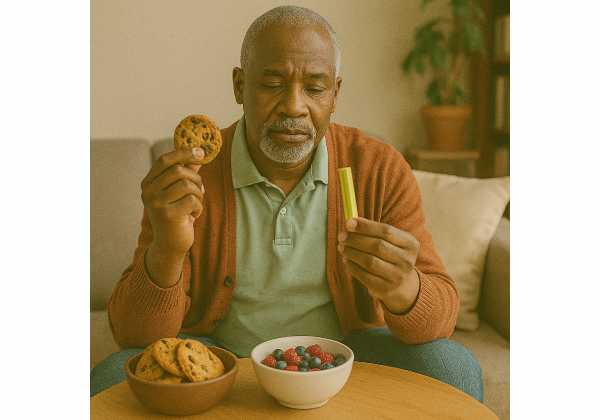
Cravings feel simple in the moment: the cookie, chips, bread basket, or late-night snack seems to call your name. Underneath, cravings usually reflect a mix of biology and habit. In midlife and later life, muscle loss, lower activity, poor sleep, stress, medications, and irregular meals all shape appetite signals. A craving is not a character flaw. It is information.
The most reliable anti-craving pattern is steady and practical: eat enough protein, add fiber-rich plants and whole foods, keep meals on a repeatable rhythm, and make your environment easier to navigate. These strategies support muscle, blood sugar, gut health, and weight stability without turning eating into a strict rulebook. The aim is not perfect control. It is fewer sharp hunger swings, fewer snack attacks, and more meals that leave you satisfied for hours.
Table of Contents
- Why Cravings Change With Age
- Protein-First Meals Keep Hunger Steadier
- Fiber Slows the Craving Cycle
- Routine Reduces Appetite Chaos
- Craving-Resistant Snacks and Plates
- Food Environment and Triggers
- In-the-Moment Craving Tools
- Special Situations and Safety
Why Cravings Change With Age
Cravings often rise when the body receives mixed signals. A light breakfast, a low-protein lunch, a stressful afternoon, and a poor night of sleep set up the classic evening raid on crackers, sweets, or leftovers. The craving feels sudden, but the setup started hours earlier.
Healthy aging changes this picture in several ways. Muscle slowly declines without enough protein and resistance training. Lower muscle mass reduces the body’s “storage space” for glucose, so meals with refined starch or sugar produce sharper energy swings. Sleep also becomes more fragile with age, and short sleep increases hunger and snack desire the next day. Pain, loneliness, boredom, grief, and anxiety add another layer because food gives quick comfort and sensory reward.
Cravings also become more common when meals lose structure. Skipping meals, grazing all day, eating late at night, or relying on soft snack foods trains the brain to expect fast calories at random times. Ultra-processed foods intensify this because they often combine refined starch, sugar, salt, fat, flavorings, and easy chewing. That combination encourages faster eating and weaker fullness signals than a slower meal built from recognizable foods.
A useful craving check starts with four questions:
- Did I eat at least 25–35 grams of protein at my last meal?
- Did that meal include a high-fiber food such as beans, vegetables, oats, berries, or whole grains?
- Have I gone more than 4–5 hours without a real meal?
- Am I tired, stressed, thirsty, or looking for relief rather than food?
The answer usually points to the next move. A person who keeps craving sweets at 4 p.m. often needs a stronger lunch, not more willpower. A person who snacks every night after dinner often needs a firmer evening routine, a better dinner, or a sleep plan. Food choices matter, but timing and context matter too.
For people tracking metabolic health, cravings that follow high-carbohydrate meals can pair with post-meal glucose swings. A simple pattern of protein, plants, and slow carbohydrates often works well alongside broader blood sugar habits that flatten spikes.
Protein-First Meals Keep Hunger Steadier
Protein is the strongest meal anchor for cravings because it supports fullness, muscle maintenance, and stable energy. A low-protein day often produces a subtle “keep eating” signal, especially when calories come mostly from bread, crackers, sweets, cereal, or snack foods.
For many adults in midlife and later life, a practical daily protein range is about 1.0–1.6 grams per kilogram of body weight, adjusted for body size, training, weight loss, kidney health, and clinical needs. A 70 kg adult lands around 70–112 grams per day. Many people do better by spreading that across 3 meals instead of saving most protein for dinner.
A simple per-meal target works well:
- Smaller adults: about 25–30 grams protein per meal
- Larger adults or strength-training adults: about 30–45 grams per meal
- Protein-focused snack: about 10–20 grams when needed
This pattern also supports aging muscle. Muscle tissue becomes less responsive to small protein doses with age, a change often called anabolic resistance. That does not mean every meal needs to be huge. It means a toast-and-jam breakfast or salad-only lunch often leaves the body under-supplied.
Good protein anchors include eggs, Greek yogurt, cottage cheese, fish, chicken, turkey, lean meat, tofu, tempeh, edamame, lentils, beans, and protein-rich soups. Protein powder is not required, but it helps some people who struggle with breakfast, chewing, cooking, or appetite. Whole foods bring more texture, micronutrients, and fullness, so use powders as a bridge rather than the center of the diet.
A protein-first breakfast reduces the common morning-to-afternoon craving slide. Compare these two breakfasts:
- Coffee and toast with jam: quick energy, low protein, low fiber
- Greek yogurt with berries, chia, and walnuts: protein, fiber, fat, texture, and slower digestion
The second breakfast gives the appetite system more information. It takes longer to eat, takes longer to digest, and leaves fewer gaps. Eggs with vegetables and beans, tofu scramble, cottage cheese with fruit, or oats cooked with milk and topped with nuts work the same way.
Lunch deserves equal attention. A large bowl of vegetables without enough protein often looks “healthy” but fails by 3 p.m. Add salmon, chicken, tofu, beans, lentils, eggs, or cottage cheese. For a deeper guide to targets, per-meal protein, and leucine-rich foods, see daily protein targets for longevity.
Protein mistakes that trigger cravings
The most common mistake is eating protein too late. A dinner with 60 grams of protein does not fully fix a breakfast with 6 grams and a lunch with 12 grams. Even distribution works better for appetite and muscle.
The second mistake is using “light” foods that lack staying power. A low-fat sweetened yogurt, plain rice cakes, or a dry cereal bar often leaves hunger untouched. Add real protein and fiber rather than only cutting calories.
The third mistake is ignoring texture. Soft foods go down fast. Chewy proteins, crunchy vegetables, beans, nuts, and whole grains slow the meal and give fullness time to register.
Fiber Slows the Craving Cycle
Fiber reduces cravings by slowing digestion, adding volume, feeding gut microbes, and improving the meal’s staying power. It does not work like a stimulant appetite suppressant. It works like a brake.
Most adults benefit from moving toward roughly 25–38 grams of fiber per day, depending on sex, calorie intake, tolerance, and digestive health. Many people eat far less. A jump from 12 grams to 35 grams overnight often causes gas, cramps, or loose stools, so increase slowly over 2–4 weeks and drink enough fluid.
Fiber comes in different forms. Soluble fiber, found in oats, barley, beans, lentils, apples, citrus, chia, and psyllium, thickens in the gut and helps slow absorption. Insoluble fiber, found in vegetables, wheat bran, nuts, seeds, and many whole grains, adds bulk and helps bowel regularity. Fermentable fibers, found in beans, onions, garlic, asparagus, green bananas, oats, and cooled potatoes or rice, feed microbes that produce short-chain fatty acids. Those compounds support gut barrier health and metabolic signaling.
The easiest way to use fiber against cravings is to place it at the meals where cravings usually start later. If night cravings are the problem, build fiber into dinner. If afternoon cravings are the issue, improve lunch. If breakfast leaves you hungry by 10 a.m., add berries, oats, chia, beans, or vegetables.
High-fiber staples that work well for aging adults include:
- Oats or barley for breakfast bowls and soups
- Beans and lentils in salads, stews, bowls, and dips
- Berries, apples, pears, oranges, and kiwi
- Leafy greens, carrots, peppers, broccoli, and cabbage
- Chia, ground flax, pumpkin seeds, and walnuts
- Whole grains such as farro, rye, buckwheat, and brown rice
- Cooled potatoes or rice for resistant starch
A strong anti-craving lunch might be lentil soup with vegetables and Greek yogurt on the side, or a bean-and-salmon salad with olive oil dressing. For practical targets and food lists, use fiber grams and food sources as a reference point.
Fiber needs fluid and patience
Fiber absorbs water. Without enough fluid, it causes bloating or constipation instead of comfort. Add one extra glass of water when adding beans, chia, psyllium, or bran. People prone to constipation often need a steady mix of fiber, fluids, movement, and meal timing.
Start with one upgrade per day. Add berries to breakfast. Add half a cup of beans to lunch. Add vegetables to dinner. After a week, add another. This approach builds tolerance and makes the habit stick.
Routine Reduces Appetite Chaos
A steady eating rhythm lowers cravings because the brain and gut learn when nourishment is coming. Random eating creates random hunger. Long gaps often lead to rebound eating, while constant grazing keeps appetite cues noisy.
A simple rhythm works for most adults: breakfast or first meal within a consistent window, lunch at a predictable time, dinner early enough to digest before bed, and planned snacks only when they serve a purpose. This does not require rigid fasting. It requires fewer surprises.
Meal timing also interacts with the body clock. Insulin sensitivity and digestion tend to work better earlier in the day than late at night. Heavy late dinners, nighttime snacks, and alcohol close to bedtime often worsen sleep and increase next-day cravings. A consistent pattern supports circadian rhythm, glucose control, and appetite regulation. For a broader meal-timing framework, see chrononutrition for longevity.
Breakfast deserves special attention for people who crave in the afternoon or evening. A protein-rich breakfast often reduces the “I was fine all day, then lost control at night” pattern. That breakfast does not need to be large. It needs enough protein and fiber to count as a real meal. For examples, breakfast timing and composition connects morning choices with steadier metabolism.
A useful daily rhythm looks like this:
| Time of day | Main job | Example |
|---|---|---|
| Morning | Start with protein and fiber | Eggs with vegetables and beans, or Greek yogurt with berries and chia |
| Midday | Prevent afternoon cravings | Lentil bowl with chicken, tofu, or fish plus olive oil dressing |
| Afternoon | Use a planned snack if dinner is far away | Cottage cheese and fruit, edamame, or hummus with vegetables |
| Evening | Eat enough dinner without making it heavy | Salmon, potatoes, greens, and yogurt sauce |
| Night | Protect sleep cues | Tea, brushing teeth, dim light, and a repeatable wind-down routine |
A routine also reduces decision fatigue. When every meal is a fresh decision, cravings win more often. Keep 2–3 repeatable breakfasts, 2–3 lunches, and a few dinner templates. This gives structure without boredom.
Craving-Resistant Snacks and Plates
A craving-resistant plate contains four parts: protein, high-fiber plants, slow carbohydrates when needed, and satisfying fat. Remove one part and the meal often weakens. A plain bowl of pasta lacks protein and fiber. A chicken breast without plants or carbs leaves many people searching for something sweet. A low-calorie salad without fat feels virtuous at noon and inadequate by three.
Use this plate template:
- Protein: fish, poultry, eggs, Greek yogurt, cottage cheese, tofu, tempeh, beans, lentils, or lean meat
- Fiber-rich plants: vegetables, berries, beans, lentils, whole grains, seeds
- Slow carbohydrate: potatoes, oats, barley, brown rice, rye, fruit, or legumes
- Fat and flavor: olive oil, avocado, nuts, seeds, tahini, olives, herbs, spices, vinegar, lemon
Aging adults often undereat early in the day and over-snack later. Planned snacks solve this when meals sit far apart. They should look like mini-meals, not random bites. The best snacks contain protein plus fiber or protein plus produce.
Strong snack options include:
- Greek yogurt with berries
- Cottage cheese with sliced tomato or fruit
- Hummus with carrots, peppers, or whole-grain crackers
- Edamame with sea salt
- Apple with peanut butter
- Boiled eggs with fruit
- Tuna or salmon on rye crispbread
- Kefir with chia
- Lentil or bean soup in a mug
Sweet cravings deserve special handling. A sweet taste after meals is not automatically a problem. The problem is a sweet snack that starts a second dinner. Pair dessert with protein or fiber, and keep portions visible. Dark chocolate with berries, Greek yogurt with cinnamon, baked apple with walnuts, or chia pudding works better than eating sweets straight from the package. For more ideas, see smart dessert strategies.
Use the “add before subtract” rule
When cravings rise, start by adding what is missing. Add protein to breakfast. Add beans to lunch. Add vegetables and potatoes to dinner. Add a planned snack before the long commute home. Removing sweets without filling the nutrition gap often backfires.
This rule also protects joy. Food should still taste good. Herbs, spices, garlic, citrus, vinegar, mustard, salsa, yogurt sauces, tahini, and olive oil improve satisfaction without relying only on sugar, salt, or fried textures.
Food Environment and Triggers
Cravings become easier when the home, workday, and shopping routine stop pushing against you. Most people overestimate willpower and underestimate cues. Visible candy, open snack bags, late-night screen time, and “emergency” pastries on the counter keep the brain alert to quick reward.
Design the environment so the default choice is easier. Keep protein and fiber foods visible and ready. Put fruit in a bowl, washed vegetables at eye level, Greek yogurt in the front of the fridge, and cooked beans or lentils in clear containers. Store trigger foods out of sight or buy single portions instead of large packages. This is not restriction. It is friction.
Meal prep helps because cravings thrive in unplanned gaps. A prepared soup, cooked protein, roasted vegetables, washed greens, and a satisfying sauce turn dinner from a negotiation into a quick assembly. For simple systems, batch cooking and freezer staples keeps the routine realistic.
Shopping also matters. Do not shop hungry. Build the cart around meals before snacks. Buy produce, protein, and slow carbohydrates first. If a snack food regularly leads to overeating, choose a smaller size, a less triggering version, or a planned serving that pairs with a real meal.
Ultra-processed foods deserve a clear but balanced approach. Some packaged foods are useful: plain Greek yogurt, canned beans, frozen vegetables, tinned fish, tofu, whole-grain bread, and unsweetened oatmeal all make healthy eating easier. The problem foods are usually hyper-palatable combinations: chips, cookies, candy, sweet drinks, pastries, fast-food sides, and snack bars that act like dessert. These foods are easy to chew, quick to finish, and weak at producing fullness.
Eating out requires a different strategy. Choose the protein first, add vegetables, and decide whether the starch or dessert is more worth it. A restaurant meal with grilled fish, potatoes, vegetables, olive oil, and fruit leaves a different appetite signal than bread, fries, dessert, and alcohol. For travel and restaurants, eating out strategies help keep cravings from turning into an all-day pattern.
The most overlooked environment is the evening. Dim the lights, close the kitchen, brush teeth, and move away from the food zone. A short walk after dinner also helps digestion and separates dinner from snack time.
In-the-Moment Craving Tools
A craving rises, peaks, and fades. It feels permanent only when attention locks onto it. The first move is to pause long enough to identify the type of craving.
Use a 30-second check:
- Physical hunger: empty stomach, low energy, shakiness, long gap since meal
- Taste craving: desire for a specific flavor or texture
- Emotional craving: stress, loneliness, anger, sadness, boredom
- Habit craving: same chair, same show, same time, same snack
- Restriction craving: rebound from eating too little or banning foods too harshly
Physical hunger needs food. Choose a protein-and-fiber snack or a proper meal. Emotional or habit cravings need a small interruption before a choice. That interruption does not need to be dramatic.
Try the 10-minute reset:
- Drink water or tea.
- Step away from the food cue.
- Do one short action: walk outside, stretch, shower, call someone, breathe slowly, tidy the kitchen, or brush teeth.
- Recheck the craving.
- If you still want the food, plate a portion and sit down to eat it.
This works because it breaks automatic eating. It does not require denying the food forever. It creates space between urge and action.
Another useful tool is the “protein first” response. If you want sweets at 9 p.m. and dinner was light, eat a small protein option first: yogurt, cottage cheese, egg, tofu, turkey slices, or kefir. If the sweet craving fades, hunger was part of the signal. If you still want something sweet, choose a portion and enjoy it without turning it into a long grazing session.
Movement helps too. A 10–15 minute walk lowers stress, changes scenery, and supports post-meal glucose control. It is especially useful after dinner or during the late-afternoon slump. Strength training also improves appetite regulation over time because it helps preserve muscle and insulin sensitivity.
Sleep is the quiet anti-craving tool. Short or broken sleep raises the desire for quick energy. Protect a consistent bedtime, keep caffeine earlier in the day, avoid alcohol as a sleep aid, and finish heavy meals several hours before bed. When sleep improves, cravings often soften before any other diet change.
Special Situations and Safety
Anti-craving advice should never push older adults into under-eating. In later life, poor appetite, dental problems, swallowing trouble, grief, medications, and illness raise the risk of unintentional weight loss. For someone losing weight without trying, the priority shifts from “control cravings” to “eat enough nourishing food.” Protein, calorie-dense healthy fats, softer textures, and social meals become more important.
People using GLP-1 medications or other appetite-lowering drugs also need care. Low appetite makes it easy to miss protein, fiber, fluids, and micronutrients. Smaller meals with clear protein anchors work better than forcing large portions. Constipation is common, so fiber should increase gradually with fluids and movement.
People with kidney disease, advanced liver disease, active cancer treatment, diabetes medication, eating disorder history, or major digestive disease need personalized guidance. Higher protein or higher fiber advice needs adjustment in those settings. Anyone with frequent binge episodes, purging, severe food guilt, or rapid weight change should work with a qualified clinician or registered dietitian.
Weight maintenance is a valid healthy aging outcome. Not everyone needs fat loss. Some people need steadier meals, better muscle support, and fewer cravings while keeping weight stable. Others need slow fat loss while protecting lean mass. A gentle calorie deficit with enough protein and strength training works better than aggressive restriction. For a broader view, calorie awareness without obsession fits this stage well.
A practical weekly check keeps the plan grounded:
- Did most meals include a clear protein source?
- Did I eat beans, lentils, oats, berries, vegetables, or whole grains most days?
- Did I go too long without meals?
- Did poor sleep drive more cravings?
- Which food cue caused the most automatic eating?
- What one change would make next week easier?
Small changes work because cravings are pattern-based. Add protein to breakfast. Build a higher-fiber lunch. Plan the afternoon snack. Move sweets out of sight. Walk after dinner. Repeat the routine until it becomes ordinary.
The best anti-craving strategy is not a stricter personality. It is a better-fed body, a steadier day, and an environment that stops asking for constant resistance.
References
- Enhanced protein intake on maintaining muscle mass, strength, and physical function in adults with overweight/obesity: A systematic review and meta-analysis 2024 (Systematic Review)
- Cereal Fibers and Satiety: A Systematic Review 2026 (Systematic Review)
- Chrononutrition and Energy Balance: How Meal Timing and Circadian Rhythms Shape Weight Regulation and Metabolic Health 2025 (Review)
- Ultra-processed foods cause weight gain and increased energy intake associated with reduced chewing frequency: A randomized, open-label, crossover study 2024 (RCT)
- Ultraprocessed or minimally processed diets following healthy dietary guidelines on weight and cardiometabolic health: a randomized, crossover trial 2025 (RCT)
- Protein “requirements” beyond the RDA: implications for optimizing health 2016 (Review)
Disclaimer
This article is educational and does not replace care from a qualified healthcare professional. People with kidney disease, diabetes treated with glucose-lowering medication, digestive disorders, eating disorder history, unintentional weight loss, or major changes in appetite should seek individualized guidance before changing protein, fiber, or meal timing.