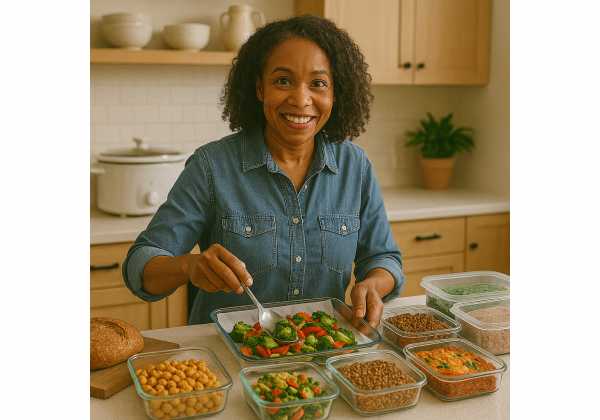
Meal prep works best when it removes friction from the meals that protect health over time: protein-rich breakfasts, fiber-heavy lunches, vegetables at dinner, beans, fish, whole grains, fermented foods, herbs, olive oil, and fruit. A stocked freezer and a few batch-cooked staples turn those foods into realistic weekday choices instead of good intentions.
Longevity-focused meal prep does not require a Sunday marathon or identical containers lined up for five days. It works better as a flexible system: cook a few building blocks, freeze what will not be eaten within a few days, and keep quick add-ons ready for flavor, texture, and nutrition. The strongest plan protects muscle, steadies blood sugar, supports gut health, and lowers reliance on ultra-processed convenience food. It also respects time, appetite, budget, food safety, and the fact that people get tired of eating the same meal.
Table of Contents
- Why Meal Prep Supports Longevity
- Build Meals Around Protein, Plants, and Healthy Fats
- Batch Cooking That Stays Flexible
- Freezer Staples That Make Healthy Meals Easy
- Food Safety, Storage, and Reheating
- Sample Weekly Prep Plan
- Common Meal Prep Mistakes
- Make the System Fit Real Life
Why Meal Prep Supports Longevity
Meal prep supports longevity because it makes the protective choice the easy choice. Most people do not struggle because they lack nutrition knowledge. They struggle because dinner arrives after a long day, the vegetables are unwashed, the beans are still dry, the fish is frozen solid, and the quickest option is takeout or toast.
A good prep system changes that moment. Cooked lentils, roasted vegetables, frozen salmon, washed greens, Greek yogurt, berries, and a jar of tahini-lemon sauce create a meal in minutes. That matters because the daily pattern, repeated for years, shapes metabolic health, muscle retention, blood pressure, lipids, gut function, and body composition.
Longevity-focused prep has four priorities:
- Preserve muscle. Meals need enough protein, spread across the day, because aging muscle responds less strongly to small protein doses.
- Feed the gut. Beans, oats, barley, vegetables, fruit, nuts, seeds, and cooled starches bring fiber and resistant starch.
- Lower cardiometabolic strain. Olive oil, fish, legumes, nuts, produce, and minimally processed carbohydrates support better glucose, lipid, and blood pressure patterns.
- Reduce decision fatigue. A prepared base meal beats a last-minute snack dinner that leaves protein, vegetables, and fiber behind.
Meal prep also helps with portion awareness without turning food into math. A container of soup with lentils, vegetables, and chicken gives a clearer sense of a meal than grazing from crackers, cheese, sweets, and leftovers. Structure helps appetite signals work better.
The best plans stay modular. Instead of cooking five identical chicken-and-rice containers, prepare ingredients that combine in different ways: a pot of beans, a tray of vegetables, a protein, a grain, a sauce, and two freezer backups. This supports variety, which improves nutrient coverage and makes the plan easier to repeat.
Build Meals Around Protein, Plants, and Healthy Fats
A longevity meal prep plan starts with the plate, not the recipe. Most meals should include a clear protein source, a large plant portion, a smart carbohydrate or legume, and a healthy fat. This structure works for bowls, soups, stews, salads, omelets, wraps, pasta dishes, and freezer meals.
Protein anchors the meal
Protein helps preserve lean mass, supports immune function, and makes meals more satisfying. Older adults often need more attention to protein quality and meal timing because muscle protein synthesis becomes less responsive with age. A practical target for many adults is 25–40 g protein per main meal, adjusted for body size, training, appetite, kidney status, and clinical needs.
Good batch-cooking proteins include:
- Chicken thighs, turkey meatballs, lean beef, eggs, Greek yogurt, cottage cheese, and fish
- Lentils, chickpeas, black beans, edamame, tofu, tempeh, and soy milk
- Freezer-ready options such as cooked shredded chicken, salmon portions, bean chili, tofu cubes, and lentil soup
For a deeper look at daily and per-meal amounts, use protein targets for longevity as a companion to meal planning. People who train, lose weight, recover from illness, or notice declining strength often need a more deliberate protein routine.
Plants carry fiber, potassium, magnesium, and polyphenols
Vegetables, fruit, legumes, whole grains, herbs, spices, coffee, tea, cocoa, nuts, and seeds supply compounds that packaged convenience meals often miss. Fiber supports bowel regularity, cholesterol metabolism, glycemic control, and gut microbial activity. Polyphenols are plant compounds that help explain why berries, cocoa, coffee, tea, herbs, olive oil, and colorful produce show up again and again in healthy dietary patterns.
A prep-friendly plant target is simple: include at least two plant categories at most meals. Examples include beans plus greens, oats plus berries, lentils plus carrots, yogurt plus walnuts and cherries, or salmon with broccoli and sweet potato.
The most useful prep vegetables are the ones that survive several days or freeze well:
- Roasted carrots, onions, peppers, cabbage, cauliflower, broccoli, mushrooms, and winter squash
- Washed greens, shredded cabbage, chopped romaine, cucumbers, tomatoes, and herbs for fresh contrast
- Frozen spinach, peas, edamame, green beans, mixed vegetables, berries, cherries, and mango
Fiber rises quickly when meals include beans, intact grains, seeds, and vegetables. For planning help, fiber-rich food sources give clearer direction than counting every gram.
Healthy fats make prepared food taste better
Meal prep fails when food tastes dry, flat, or punishing. Healthy fats solve much of that problem. Extra-virgin olive oil, avocado, tahini, nuts, seeds, pesto, olives, and oily fish improve texture and flavor while supporting a Mediterranean-style eating pattern.
Cook with enough fat to make vegetables satisfying, but add delicate oils and nuts after reheating when possible. A bowl of lentils, greens, and brown rice tastes completely different with a spoon of olive oil, lemon, parsley, and toasted walnuts.
A strong default formula is:
- Protein: lentils, fish, poultry, tofu, eggs, yogurt, or beans
- Plants: cooked vegetables plus fresh herbs or greens
- Carbohydrate: beans, oats, barley, farro, potatoes, sweet potatoes, or brown rice
- Fat: olive oil, nuts, seeds, avocado, tahini, or olives
This formula fits many traditional cuisines. It does not lock the reader into one “health food” style.
Batch Cooking That Stays Flexible
Batch cooking works best when it produces components, not a week of finished meals that all taste the same. Components let you assemble food based on appetite, schedule, and what needs using first.
Cook one protein, one legume, one starch, and two vegetables
A balanced prep session only needs four to six items. For example:
- Turkey meatballs with herbs
- Green lentils with bay leaf and garlic
- Farro or brown rice
- Roasted broccoli and carrots
- Washed greens
- Yogurt-tahini sauce
Those foods become a grain bowl, soup, salad, wrap, omelet filling, or freezer backup. Add different sauces to change direction: tomato-basil, tahini-lemon, salsa verde, miso-ginger, yogurt-dill, or olive oil with vinegar and herbs.
Meal prep should include at least one “no-chop rescue” meal. Examples include frozen vegetable soup, canned sardines with whole-grain toast and salad, Greek yogurt with berries and walnuts, or lentil chili from the freezer. This protects the plan when the week gets messy.
Cook grains and starches for texture
Whole grains and starches become more useful when cooked slightly firm. Overcooked rice, pasta, and barley turn mushy after storage. Cook grains until just tender, cool them quickly, and reheat with a splash of water or broth.
Good batch starches include:
- Barley and farro: sturdy texture for bowls and soups
- Brown rice: useful for stir-fries, freezer meals, and bean bowls
- Potatoes and sweet potatoes: filling, potassium-rich, and easy to reheat
- Oats: reliable for breakfast jars, baked oatmeal, and freezer oat cups
Cooked and cooled potatoes, rice, and pasta contain more resistant starch than the same foods served hot immediately after cooking. Resistant starch behaves partly like fiber and feeds gut bacteria. Reheating does not erase all of that benefit, so a batch of cooled potatoes or rice works well in practical longevity meals.
Make sauces that do the heavy lifting
Sauces keep meal prep from feeling repetitive. They also add polyphenols, herbs, garlic, acidity, and healthy fats.
Keep two sauces ready each week:
| Sauce | Best With | Longevity-Friendly Additions |
|---|---|---|
| Tahini-lemon | Beans, roasted vegetables, chicken, grain bowls | Garlic, parsley, cumin, lemon zest |
| Tomato-herb | Fish, eggs, lentils, whole-grain pasta | Olive oil, oregano, basil, chili flakes |
| Miso-ginger | Tofu, salmon, cabbage, rice, edamame | Ginger, rice vinegar, sesame seeds |
| Yogurt-dill | Potatoes, salmon, turkey, cucumber bowls | Dill, garlic, lemon, black pepper |
| Olive oil vinaigrette | Salads, lentils, roasted peppers, greens | Mustard, vinegar, shallot, herbs |
Store sauces separately. Reheated food tastes fresher when the bright, acidic, creamy, or crunchy elements go on after warming.
Freezer Staples That Make Healthy Meals Easy
The freezer is the difference between “I should cook” and “dinner is almost ready.” It protects against skipped meals, poor takeout choices, food waste, and the pressure to shop constantly.
Best freezer staples for longevity meals
A useful freezer has ingredients and finished meals. Ingredients allow fast cooking; finished meals save the night when cooking is not happening.
| Freezer Staple | How to Use It | Why It Helps |
|---|---|---|
| Frozen berries | Yogurt, oats, smoothies, chia pudding | Polyphenols, fiber, low prep time |
| Frozen spinach or kale | Soups, eggs, pasta, stews | Easy greens with little waste |
| Frozen edamame | Bowls, salads, stir-fries | Plant protein and fiber |
| Frozen fish portions | Sheet-pan meals, tacos, rice bowls | Protein and omega-3 fats |
| Lentil soup or bean chili | Lunches, emergency dinners | Fiber, protein, minerals |
| Cooked grains | Bowls, fried rice, soups | Fast base for balanced meals |
| Turkey or tofu meatballs | Pasta, soups, bowls, wraps | Convenient protein anchor |
| Roasted vegetables | Omelets, bowls, soups | Adds volume and nutrients quickly |
Frozen produce is not a compromise. Plain frozen vegetables and fruit are usually picked, processed, and frozen quickly. They are often more reliable than fresh produce that sits in the refrigerator until it wilts. Choose plain versions most often, then season them yourself to control salt, sugar, and sauces.
Frozen fish also deserves a regular place. Individually wrapped salmon, sardines, cod, trout, or shrimp make seafood more realistic on busy weeks. Thaw overnight in the refrigerator or cook from frozen when the package instructions allow it.
Freeze in useful portions
Freezing a whole pot of stew in one giant container creates a future problem. Freeze in portions that match real meals:
- 1-cup portions of cooked beans or lentils
- 1- to 2-cup portions of soup or chili
- Single-serving cooked grains
- Two-serving family meal containers
- Flat freezer bags of sauces, stews, or shredded chicken
Flat bags freeze quickly, thaw quickly, and stack like files. Label each package with the food name and date. A freezer inventory on the door prevents mystery containers from aging into ice-covered bricks.
A simple freezer rule works well: add two, use two. Each week, freeze two portions and use two older portions. This keeps the freezer moving.
Food Safety, Storage, and Reheating
Food safety is part of longevity meal prep, not a separate concern. Prepared food helps health only when it is cooled, stored, thawed, and reheated safely.
Refrigerators should stay at or below 40°F (4°C), and freezers should stay at 0°F (-18°C). Use an appliance thermometer rather than trusting the dial. Cooked leftovers belong in the refrigerator within 2 hours, or within 1 hour when the surrounding temperature is above 90°F (32°C). Shallow containers cool faster than deep pots.
Most cooked leftovers should be eaten within 3–4 days. Freeze anything that will not be eaten in that window. Freezing keeps food safe longer, but quality declines over time, especially when food is poorly wrapped or stored with too much air.
Use this practical storage guide:
| Food | Refrigerator | Freezer for Best Quality |
|---|---|---|
| Cooked poultry or meat | 3–4 days | 2–6 months |
| Soups and stews | 3–4 days | 2–3 months |
| Cooked grains | 3–4 days | 1–2 months for best texture |
| Cooked beans or lentils | 3–4 days | 2–3 months |
| Cooked vegetables | 3–4 days | 2–3 months |
| Sauces with yogurt or fresh herbs | 2–4 days | Often better fresh |
Reheat leftovers until steaming hot. For mixed leftovers, casseroles, soups, meat, poultry, and reheated meal-prep containers, 165°F (74°C) is the safest target. Stir microwaved food halfway through heating because microwaves leave cold spots. Let the food stand briefly after heating so heat spreads through the container.
Thaw frozen food in the refrigerator when possible. Cold-water thawing works when food is sealed in a leak-proof bag and the water is changed every 30 minutes. Avoid thawing meat, poultry, seafood, soups, and cooked meals on the counter.
Food safety deserves extra care for adults over 65, pregnant people, immunocompromised people, and anyone with serious chronic illness. A more detailed routine belongs in food safety for older adults, especially for people preparing meals for a parent, partner, or patient.
Sample Weekly Prep Plan
A good weekly prep plan fits into 90 minutes, creates variety, and avoids filling the fridge with too many fragile foods. This sample plan creates breakfasts, lunches, dinners, and freezer backups without requiring restaurant-level cooking.
The 90-minute prep session
- Start lentil soup. Simmer lentils with onions, carrots, celery, garlic, tomatoes, herbs, and broth. Add spinach near the end.
- Roast vegetables. Put broccoli, cauliflower, carrots, onions, and peppers on two sheet pans with olive oil and spices.
- Cook a grain. Make barley, farro, quinoa, or brown rice. Cool it on a tray before storing.
- Prepare protein. Bake salmon, cook tofu cubes, roast chicken thighs, or make turkey meatballs.
- Make one sauce. Blend tahini, lemon juice, garlic, water, and parsley, or mix yogurt with dill, lemon, and black pepper.
- Set up breakfasts. Portion oats, chia, Greek yogurt, berries, walnuts, or boiled eggs.
- Freeze extras. Freeze two portions of soup and one portion of grain before they get forgotten.
This session creates a strong base for high-fiber lunches and quick dinners. It also keeps enough fresh items available for texture: greens, herbs, cucumbers, tomatoes, citrus, apples, and fermented vegetables.
Five meals from one prep session
Here is how the same ingredients turn into different meals:
- Breakfast: Greek yogurt with frozen berries, walnuts, cinnamon, and chia seeds.
- Lunch bowl: Farro, lentils, roasted vegetables, greens, tahini-lemon sauce, and pumpkin seeds.
- Dinner: Salmon with roasted broccoli, sweet potato, and yogurt-dill sauce.
- Soup meal: Lentil-vegetable soup with olive oil, herbs, and a side of whole-grain toast.
- Fast stir-fry: Brown rice, frozen edamame, frozen spinach, tofu, ginger, garlic, and a small amount of low-sodium soy sauce.
Protein remains visible in each meal. Plants appear in several forms. Healthy fats improve taste. Frozen foods make the system easier rather than less nutritious.
A freezer-first backup menu
Keep three complete backup meals available at all times:
- Bean chili: black beans, kidney beans, tomatoes, peppers, onions, spices, and optional turkey or tofu
- Mediterranean lentil soup: lentils, greens, carrots, tomatoes, olive oil, and herbs
- Fish-and-vegetable kit: frozen fish, frozen vegetables, cooked grain, and a sauce cube or pesto portion
These backups help during illness, travel recovery, busy workweeks, and bad weather. They also protect appetite. People often eat less protein and produce when they feel tired; prepared food keeps the floor higher.
Common Meal Prep Mistakes
Most meal prep problems come from making the system too rigid, too bland, or too large. A longevity plan should make eating well easier, not turn Sunday into unpaid kitchen labor.
Cooking too much for the refrigerator
A full week of refrigerated meals creates safety and quality problems. By day five or six, texture declines and food safety becomes a concern. Cook for 3–4 refrigerator days and freeze the rest right away. This one habit improves both taste and safety.
Forgetting protein at breakfast and lunch
A dinner-heavy protein pattern leaves the day uneven. Coffee and toast for breakfast, salad for lunch, and a large protein dinner does not support muscle as well as spreading protein across meals. Prep breakfasts and lunches with clear protein: Greek yogurt, eggs, tofu scramble, cottage cheese, tuna, salmon, lentils, beans, edamame, chicken, or tempeh. protein distribution for healthy aging gives this idea more structure.
Relying on dry starch and lean protein
Plain chicken breast, rice, and broccoli gets old fast. It also lacks the fats, acids, herbs, and textures that make food satisfying. Add sauces, roasted garlic, lemon, vinegar, olives, nuts, seeds, herbs, yogurt, salsa, avocado, or olive oil. Enjoyment improves consistency.
Leaving vegetables as an afterthought
Vegetables need prep time. Wash greens, roast sturdy vegetables, shred cabbage, or buy frozen vegetables before the week starts. A vegetable that takes 20 minutes to clean on Tuesday night often loses to bread or snacks.
Ignoring sodium
Meal prep improves sodium intake when it replaces takeout, but sauces, broths, canned foods, cheeses, deli meats, and condiments add up. Use low-sodium broth, rinse canned beans, flavor with vinegar and citrus, and add salt with intention. Potassium-rich foods such as beans, lentils, potatoes, leafy greens, yogurt, bananas, and squash also belong in the plan.
Using containers that fight the routine
Good containers matter. Choose clear, stackable containers in sizes you actually use. Wide, shallow containers cool food faster. Freezer-safe jars need headspace because liquids expand. A few divided containers help with texture, but many meals taste better when sauce, greens, nuts, and herbs stay separate until serving.
Make the System Fit Real Life
The best meal prep system matches the person’s life. A single adult, a caregiver, a shift worker, a couple with different appetites, and an older adult living alone need different systems. The principles stay the same, but the setup changes.
For one person, freezer portions matter more than large casseroles. Cook once, eat twice, freeze twice. Buy frozen vegetables and fish to avoid waste. Keep shelf-stable proteins ready: canned salmon, sardines, tuna, beans, lentils, and boxed tofu.
For families, build “assembly meals.” Put out a grain, protein, vegetables, sauce, and toppings. One person makes a bowl, another makes tacos, another adds the same ingredients to greens. This reduces the need to cook separate meals.
For people with low appetite, smaller high-quality meals work better than large containers. Use protein-rich snacks: yogurt with berries, cottage cheese with fruit, hummus with vegetables, boiled eggs, soup with beans, or a smoothie with Greek yogurt. Keep flavors bright with citrus, herbs, pickles, ginger, and spices.
For people watching blood sugar, batch meals should combine protein, fiber, fat, and slower carbohydrates. Beans, lentils, barley, oats, non-starchy vegetables, yogurt, nuts, and fish help build steadier meals than refined starch alone. For more specific food strategies, food habits that flatten glucose spikes pair well with meal prep.
For people who dislike leftovers, prep ingredients instead of finished meals. Marinate proteins, wash greens, chop vegetables, cook grains, freeze soups, and keep sauces ready. Fresh assembly keeps meals from tasting reheated.
A simple weekly rhythm keeps the system alive:
- One planning moment: choose two proteins, two vegetables, one legume, one grain, and one sauce.
- One prep session: cook enough for 3–4 days and freeze extra portions immediately.
- One midweek refresh: wash greens, make a new sauce, thaw a freezer meal, or roast another vegetable.
- One freezer check: use older portions before adding new ones.
Longevity nutrition becomes easier when the kitchen contains ready paths to good meals. Batch cooking supplies the base. Freezer staples supply the backup. Sauces, herbs, and fresh produce supply the pleasure. The result is not a perfect diet; it is a repeatable pattern that protects the meals most likely to shape health over decades.
References
- Protein and Aging: Practicalities and Practice 2025 (Review)
- Mediterranean Dietary Pattern for Healthy and Active Aging: A Narrative Review of an Integrative and Sustainable Approach 2024 (Review)
- Nutrition and Healthy Aging: A Review 2023 (Review)
- Definitions and Assessment Methods of ‘Home Cooking’ in Studies with Dietary Variables: A Scoping Review 2022 (Scoping Review)
- Are You Storing Food Safely? 2023 (Official Guidance)
- Cold Food Storage Chart 2023 (Official Guidance)
Disclaimer
This article is educational and does not replace personal medical or nutrition advice. People with kidney disease, diabetes, immune suppression, swallowing problems, food allergies, recent unintentional weight loss, or a medically prescribed diet should work with a qualified clinician or registered dietitian before changing protein intake, meal timing, or food storage routines.