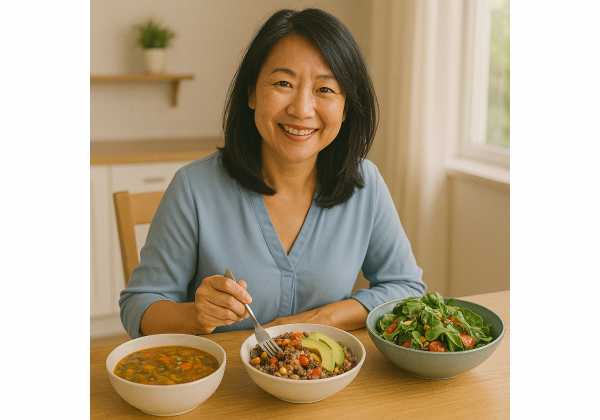
A high-fiber lunch does more than keep digestion regular. It steadies afternoon energy, supports healthier cholesterol and blood pressure, feeds beneficial gut bacteria, and makes plant-rich meals easier to repeat. For healthy aging, lunch is an ideal place to build fiber because it sits in the middle of the day, when many people need food that is filling but not heavy.
The best high-fiber lunches are simple: beans, lentils, whole grains, vegetables, fruit, nuts, seeds, and a protein source arranged into a bowl, soup, or salad. These meals work because they combine volume, texture, color, and slow-digesting carbohydrates. A strong lunch often delivers 10 to 16 g of fiber, which moves most adults much closer to a useful daily range without relying on powders or bars. The most reliable approach is not one perfect recipe. It is a repeatable lunch formula that tastes good, digests well, and fits the week.
Table of Contents
- Why Fiber Belongs at Lunch
- The High-Fiber Lunch Formula
- Bowls That Stay Filling
- Soups That Deliver Fiber with Comfort
- Salads That Eat Like a Meal
- How to Increase Fiber Without Discomfort
- Meal Prep for a Week of High-Fiber Lunches
- Common Mistakes That Weaken a High-Fiber Lunch
Why Fiber Belongs at Lunch
A fiber-rich lunch helps healthy aging because it turns an ordinary midday meal into support for digestion, metabolism, heart health, and appetite control. Fiber is the part of plant foods that resists digestion in the small intestine. Some types hold water and form a gel. Some add bulk to stool. Some reach the colon, where gut bacteria ferment them into short-chain fatty acids, compounds involved in gut barrier function and metabolic signaling.
Most adults fall short of fiber targets. Common daily targets are about 21 g for women over 50 and 30 g for men over 50, with higher needs for adults who eat more calories. A lunch with 10 to 16 g of fiber covers a large part of that gap. That amount is realistic from food: ½ cup lentils, ½ cup barley, 1 cup vegetables, and a tablespoon of seeds already gets close.
Fiber works best as part of a meal pattern, not as a single isolated ingredient. A bowl of lentil soup, a chickpea salad, or a farro vegetable bowl provides fiber along with potassium, magnesium, polyphenols, and slow-digesting carbohydrate. That combination matters more than chasing a single fiber number. For a deeper look at daily targets and food sources, the broader fiber for longevity guide explains how to build intake across the full day.
Lunch also has a timing advantage. A low-fiber lunch built around refined bread, chips, and a sweet drink often digests quickly, leaving hunger, cravings, or sleepiness later. A high-fiber lunch slows the meal down. Chewing takes longer. The stomach empties more gradually. Glucose enters the bloodstream at a steadier pace, especially when fiber appears with protein and healthy fat.
For aging adults, this matters in practical ways. A better lunch supports a more stable afternoon, which makes walking, strength training, errands, or focused work easier. It also reduces the need to “make up” nutrition at dinner, when appetite, digestion, or sleep timing may limit meal size.
The High-Fiber Lunch Formula
A good high-fiber lunch has four parts: a fiber base, a protein anchor, colorful plants, and a flavorful fat or sauce. This formula works for bowls, soups, and salads because it balances fullness, texture, and nutrition.
Aim for 10 to 16 g of fiber at lunch when digestion tolerates it. Start closer to 6 to 8 g if your usual intake is low, then increase over 2 to 4 weeks. Fiber feels better when the gut has time to adapt.
The four-part plate
Use this structure for most lunches:
- Fiber base: beans, lentils, chickpeas, quinoa, oats, barley, bulgur, brown rice, cooled potatoes, sweet potatoes, or whole-grain pasta.
- Protein anchor: fish, poultry, eggs, tofu, tempeh, Greek yogurt, cottage cheese, beans, lentils, or a bean-and-grain combination.
- Colorful plants: leafy greens, cabbage, tomatoes, peppers, carrots, mushrooms, squash, broccoli, herbs, berries, apples, citrus, or roasted vegetables.
- Flavorful fat: extra-virgin olive oil, avocado, tahini, nuts, seeds, olives, pesto, or yogurt-based dressing.
Protein deserves special attention in healthy aging because muscle becomes harder to maintain with age. A fiber-rich lunch that lacks protein can feel filling at first but still leave the meal incomplete. Most adults do well with roughly 25 to 35 g of protein at lunch, adjusted for body size, activity, medical needs, and total daily intake. The article on protein targets for longevity gives more detail on daily and per-meal planning.
| Food | Practical serving | Approximate fiber | Best use |
|---|---|---|---|
| Lentils | ½ cup cooked | 8 g | Bowls, soups, warm salads |
| Black beans | ½ cup cooked | 7–8 g | Mexican-style bowls, chili, salads |
| Chickpeas | ½ cup cooked | 6 g | Mediterranean bowls, chopped salads, soups |
| Barley | ½ cup cooked | 3 g | Soups, grain bowls |
| Quinoa | ½ cup cooked | 2–3 g | Fast bowls, salad bases |
| Raspberries | ½ cup | 4 g | Side fruit, yogurt bowls, salad topping |
| Avocado | ½ medium | 5 g | Bowls, salads, soup topping |
| Chia seeds | 1 tablespoon | 4–5 g | Dressings, yogurt sides, toppings |
| Ground flaxseed | 1 tablespoon | 2 g | Dressings, soups, spreads |
| Broccoli | 1 cup cooked | 5 g | Bowls, soups, warm salads |
The strongest lunches use several modest fiber sources instead of one huge serving. A bowl with ½ cup lentils, ½ cup roasted vegetables, a handful of greens, and a tablespoon of seeds digests more comfortably than a giant serving of beans alone.
Flavor also matters. Fiber-rich foods become repeatable when they taste satisfying. Use acid, herbs, spices, and healthy fats generously. Lemon juice, vinegar, garlic, cumin, smoked paprika, dill, parsley, basil, tahini, and olive oil turn simple ingredients into meals people want again. A small amount of fat also helps absorb fat-soluble compounds from vegetables. The guide to healthy fats for longevity explains how olive oil, nuts, seeds, and avocado fit into a long-term eating pattern.
Bowls That Stay Filling
High-fiber bowls work because they combine cooked ingredients, raw crunch, protein, and sauce in one meal. They are easy to batch cook and easy to adjust for appetite. A bowl also gives you a clear way to control portions: choose the base, add protein, fill the rest with vegetables, then finish with flavor.
A balanced bowl usually includes ½ cup cooked legumes or whole grains, 1 to 2 cups vegetables, and a protein source. For a lighter lunch, use greens as the base and legumes as the starch. For a more active day, use a whole grain or potato base and add legumes as part of the topping.
Mediterranean chickpea bowl
Start with chopped romaine, cucumber, tomato, parsley, and roasted red pepper. Add ½ cup chickpeas, ½ cup cooked farro or quinoa, and grilled chicken, tuna, tofu, or a boiled egg. Finish with olive oil, lemon juice, oregano, and a spoon of plain Greek yogurt or hummus.
This bowl provides fiber from chickpeas, vegetables, herbs, and whole grains. It also fits well with Mediterranean-style eating, which emphasizes legumes, vegetables, olive oil, nuts, fish, and whole grains. The Mediterranean eating starter guide offers a wider framework for turning this style into everyday meals.
Black bean and sweet potato bowl
Use ½ cup black beans, roasted sweet potato cubes, cabbage slaw, salsa, avocado, and pumpkin seeds. Add chicken, turkey, tofu, tempeh, or extra beans for protein. Season with cumin, lime, cilantro, and a little hot sauce.
This bowl is especially useful when afternoon cravings are a problem. Beans and sweet potatoes provide slow-digesting carbohydrate, while avocado and seeds add staying power. Cabbage adds crunch and holds up well for meal prep.
Lentil barley power bowl
Combine ½ cup cooked lentils, ½ cup cooked barley, roasted mushrooms, carrots, spinach, and a mustard-tahini dressing. Add salmon, sardines, tofu, chicken, or cottage cheese on the side.
Lentils and barley make this bowl dense in fiber without feeling dry. Barley contains beta-glucan, a soluble fiber also found in oats. Soluble fibers help create a thicker texture in the gut and are linked with cholesterol support. Mushrooms add savory depth, which makes the bowl feel more substantial.
Resistant starch lunch bowl
Cook potatoes or rice, chill them overnight, then use them in a lunch bowl with beans, vegetables, and protein. Cooling cooked starch increases resistant starch, a type of carbohydrate that resists digestion and behaves more like fiber. Reheating is fine; some resistant starch remains.
A simple version uses cooled roasted potatoes, green beans, arugula, tuna or white beans, olives, and a lemon-olive oil dressing. Another version uses cooled brown rice, edamame, carrots, cucumber, cabbage, sesame seeds, and tofu. The full resistant starch guide explains how cooling methods work with potatoes, rice, and other starches.
Bowls also solve a common problem: leftover vegetables. Roasted broccoli, sautéed greens, cooked carrots, grilled zucchini, and raw slaw all fit. Keep one sauce ready, and the bowl takes minutes.
Soups That Deliver Fiber with Comfort
Soup is one of the easiest high-fiber lunches for healthy aging because it softens legumes, grains, and vegetables. That helps people who dislike large salads, struggle with chewing raw vegetables, or prefer warm meals. Soup also supports hydration, which matters when fiber intake rises.
A strong lunch soup contains at least one high-fiber ingredient and one protein source. Brothy vegetable soup alone often lacks staying power. Add beans, lentils, split peas, barley, chicken, fish, tofu, or yogurt on the side to make it a meal.
Lentil vegetable soup
Simmer lentils with onion, carrot, celery, tomatoes, garlic, spinach, and herbs. Red lentils cook quickly and create a creamy texture. Brown or green lentils stay firmer and work well in batch cooking. Add lemon juice at the end to brighten the flavor.
One large bowl often provides 10 g or more of fiber, depending on the lentil portion. Add a side of plain yogurt, cottage cheese, eggs, or fish if the soup is low in protein.
Bean and greens soup
Use cannellini beans, chickpeas, or kidney beans with kale, chard, cabbage, escarole, or spinach. Add tomatoes, rosemary, thyme, garlic, and olive oil. For a heartier version, add barley or whole-grain pasta.
Canned beans make this soup realistic on busy weeks. Rinse them well to lower sodium. Choose low-sodium broth when possible, then adjust salt yourself. This is especially important for people watching blood pressure. For a broader food strategy, the article on dietary patterns for blood pressure and healthy aging covers sodium, potassium, and meal structure.
Split pea soup with vegetables
Split peas create a thick soup without cream. Cook them with onion, carrots, celery, bay leaf, and smoked paprika. Add diced turkey, chicken, tofu, or tempeh if desired. Serve with a side salad or fruit.
This soup freezes well and delivers a large fiber dose, so portion size matters. If your gut is not used to legumes, start with a smaller bowl and pair it with lower-fiber protein and cooked vegetables.
Vegetable minestrone
Minestrone is useful because it accepts almost any vegetable. Use beans, tomatoes, zucchini, carrots, greens, herbs, and a small amount of whole-grain pasta or barley. A spoon of pesto or grated cheese adds flavor.
The best minestrone tastes better on day two, making it ideal for batch cooking. It also lets you use frozen vegetables without sacrificing nutrition. Frozen spinach, peas, carrots, green beans, and mixed vegetables work well.
| Soup type | Add for fiber | Add for protein | Flavor finish |
|---|---|---|---|
| Tomato soup | White beans, lentils, vegetables | Greek yogurt, tofu, chicken | Basil, olive oil, black pepper |
| Chicken soup | Barley, beans, carrots, greens | Chicken, white beans | Dill, lemon, parsley |
| Vegetable soup | Lentils, chickpeas, cabbage | Beans, tofu, turkey | Garlic, vinegar, smoked paprika |
| Miso soup | Mushrooms, greens, edamame | Tofu, edamame, fish | Scallions, sesame, ginger |
| Squash soup | Red lentils, carrots, pumpkin seeds | Greek yogurt, lentils, chicken | Curry, chili flakes, lime |
Soups also work for appetite changes. Some older adults feel less hungry at lunch but still need protein and fiber. A smaller bowl of lentil soup with Greek yogurt or a soft egg often feels easier than a large plate of food. Others need more calories; olive oil, avocado, nuts, seeds, and whole-grain bread help raise energy without relying on sweets.
Salads That Eat Like a Meal
A high-fiber salad should eat like a meal, not a side dish. Lettuce alone is not enough. The salad needs legumes, grains, sturdy vegetables, protein, and dressing. When those pieces are present, salad becomes one of the most flexible high-fiber lunches.
The most reliable meal salads use sturdy greens: kale, cabbage, romaine, arugula, spinach, radicchio, or chopped mixed greens. Tender greens work well when eaten right away. Cabbage and kale hold dressing for several days, which helps meal prep.
Chopped chickpea salad
Combine chickpeas, cucumber, tomato, bell pepper, red onion, parsley, olives, and feta or tofu. Dress with olive oil, lemon juice, oregano, and black pepper. Add tuna, chicken, eggs, or extra chickpeas for more protein.
This salad is crunchy, high in fiber, and easy to pack. It also avoids the soggy-lettuce problem because the main ingredients are sturdy.
Kale lentil salad
Massage chopped kale with olive oil and lemon juice until it softens. Add lentils, roasted carrots, toasted walnuts, and a mustard vinaigrette. Add salmon, tempeh, chicken, or a boiled egg.
Massaging kale sounds fussy, but it changes the texture quickly. It breaks down toughness, improves flavor, and makes a large volume of greens easier to eat.
Broccoli apple slaw
Use shredded broccoli stems, cabbage, carrots, apple, pumpkin seeds, and a yogurt-tahini dressing. Add chicken, chickpeas, tofu, or cottage cheese on the side.
This salad combines soluble and insoluble fibers with sweetness, crunch, and protein. It also holds well for 2 to 3 days, making it useful for lunches away from home.
Bean and grain salad
Mix black beans, quinoa or barley, corn, tomatoes, peppers, cilantro, avocado, and lime. Add shrimp, chicken, tofu, or extra beans. This salad works cold or room temperature, which makes it practical for travel days and office lunches.
For blood sugar steadiness, salads with beans, grains, protein, and fat usually work better than salads with only greens plus a sweet dressing. The guide to food habits that flatten glucose spikes explains why meal order, fiber, protein, and post-meal movement all matter.
Dressing deserves attention. Fat-free dressings often lean on sugar, starch, or salt and leave the meal less satisfying. A better dressing uses olive oil, vinegar or citrus, mustard, herbs, and a creamy element when desired. Tahini, avocado, Greek yogurt, or hummus all work. Keep portions reasonable, but do not fear dressing. It helps vegetables taste good enough to eat often.
How to Increase Fiber Without Discomfort
Fiber works best when it rises gradually. A sudden jump from low-fiber meals to large bean bowls, bran cereal, and raw salads can cause bloating, gas, cramps, or urgent bowel movements. The gut adapts better when intake increases in steps.
Add 3 to 5 g of fiber per day for a week, then increase again if digestion feels comfortable. That looks like adding ½ cup berries, 1 tablespoon chia seeds, ½ cup cooked vegetables, or ¼ to ½ cup beans. Small additions become meaningful quickly.
Hydration matters because fiber holds water. A high-fiber lunch pairs well with water, unsweetened tea, broth-based soup, or fruit and vegetables with high water content. Dry fiber without enough fluid can worsen constipation in some people.
Texture also changes tolerance. Cooked vegetables often digest more easily than large raw salads. Lentil soup often feels gentler than a cold three-bean salad. Canned beans are often easier than undercooked dried beans, especially when rinsed well. Red lentils, split peas, and tofu are useful stepping stones for people who struggle with whole beans.
Use these adjustments if high-fiber lunches cause discomfort:
- Choose cooked vegetables instead of raw cruciferous vegetables for a few weeks.
- Start with ¼ cup beans or lentils, then build to ½ cup.
- Rinse canned beans until the water runs clear.
- Use smaller servings of onion, garlic, and wheat if they trigger bloating.
- Try sourdough whole-grain bread, oats, rice, potatoes, or quinoa if wheat-heavy lunches bother you.
- Spread fiber across breakfast, lunch, and dinner instead of loading one meal.
Some people need a more careful plan. Irritable bowel syndrome, inflammatory bowel disease flares, recent bowel surgery, gastroparesis, swallowing problems, kidney disease, and certain medication regimens change what is appropriate. A clinician or registered dietitian can help match fiber type and amount to the condition.
Constipation also needs more than fiber. Fluids, regular meals, walking, bathroom routine, magnesium intake from foods, and medication review all matter. The anti-constipation nutrition guide covers fiber, fluids, and timing in more detail.
Meal Prep for a Week of High-Fiber Lunches
High-fiber lunches become easy when the ingredients are ready before hunger hits. Batch cooking does not need to mean five identical containers. A better approach is to prep flexible parts: one legume, one grain or starch, two vegetables, one protein, and one sauce.
A 60-minute prep session can cover most weekday lunches:
- Cook lentils, beans, chickpeas, or edamame, or rinse canned beans.
- Cook barley, quinoa, brown rice, farro, or potatoes.
- Roast a sheet pan of vegetables, such as broccoli, carrots, peppers, onions, mushrooms, or squash.
- Wash and chop greens, cabbage, herbs, cucumbers, or peppers.
- Prepare one protein, such as chicken, tofu, salmon, boiled eggs, or Greek yogurt dip.
- Make one dressing or sauce, such as lemon-tahini, yogurt-herb, salsa-lime, or olive oil vinaigrette.
This method gives you variety without starting from zero each day. Monday can be a bowl, Tuesday a soup with added beans, Wednesday a chopped salad, Thursday a warm lentil bowl, and Friday a grain salad. For more planning ideas, the meal prep for longevity guide explains batch cooking, freezer staples, and practical kitchen rhythm.
| Lunch | Fast assembly | Estimated fiber range |
|---|---|---|
| Chickpea quinoa bowl | Chickpeas, quinoa, roasted vegetables, greens, tahini-lemon sauce | 11–15 g |
| Lentil vegetable soup | Lentils, broth, frozen spinach, carrots, tomatoes, herbs | 10–16 g |
| Black bean salad | Black beans, cabbage, avocado, salsa, pumpkin seeds, protein | 12–18 g |
| Barley greens bowl | Barley, white beans, mushrooms, kale, olive oil vinaigrette | 10–14 g |
| Broccoli apple slaw | Broccoli, cabbage, apple, walnuts, yogurt-tahini dressing, chicken or tofu | 8–12 g |
Storage matters for both safety and texture. Cool cooked grains, beans, and soups promptly, then refrigerate in shallow containers. Use most refrigerated cooked ingredients within 3 to 4 days. Freeze extra soup, beans, and grains in single-meal portions. Keep dressings separate from delicate greens until serving.
Freezer staples make high-fiber lunches easier. Keep frozen vegetables, edamame, berries, cooked lentils, soup portions, and whole-grain bread available. Pantry staples help too: canned beans, canned fish, oats, barley, quinoa, tomatoes, broth, nut butter, tahini, vinegar, spices, and olive oil.
Common Mistakes That Weaken a High-Fiber Lunch
A high-fiber lunch should be satisfying, digestible, and repeatable. Several common mistakes make it harder than it needs to be.
Mistake 1: Counting lettuce as the main fiber source. Lettuce adds volume and freshness, but most leafy salads need beans, lentils, whole grains, seeds, fruit, or sturdy vegetables to become genuinely high fiber.
Mistake 2: Skipping protein. Fiber helps fullness, but protein protects the meal from becoming too light. Add fish, poultry, eggs, tofu, tempeh, Greek yogurt, cottage cheese, lentils, beans, or a combination.
Mistake 3: Adding too much fiber too quickly. More is not always better on day one. Build gradually and choose cooked foods if the gut feels sensitive.
Mistake 4: Forgetting flavor. Plain beans and dry grains get old quickly. Acid, herbs, spices, and sauces make high-fiber lunches sustainable.
Mistake 5: Relying on ultra-processed “high-fiber” products. Some bars, wraps, cereals, and snacks add isolated fibers but still contain lots of sweeteners, refined starches, or additives. They have a place in emergencies, but whole foods should carry most of the fiber load.
Mistake 6: Ignoring sodium. Canned soups, deli meats, sauces, and restaurant bowls can turn a healthy-looking lunch into a very salty meal. Rinse canned beans, choose low-sodium broth, and balance salty toppings such as olives, cheese, pickles, and sauces.
Mistake 7: Making lunch too low in energy. A giant raw salad with no starch, no fat, and little protein often backfires. Older adults who struggle to maintain weight or muscle need enough calories, not just fiber. Olive oil, avocado, nuts, seeds, whole grains, potatoes, yogurt, eggs, fish, tofu, and legumes all help.
The easiest correction is to use a quick checklist before eating: Do I have a legume, whole grain, or starchy plant? Do I have at least one cup of vegetables? Do I have protein? Do I have a flavorful fat or dressing? Do I have water or another unsweetened drink nearby?
A strong high-fiber lunch is not complicated. It is a bowl with lentils and vegetables, a soup with beans and greens, or a salad with chickpeas and protein. Repeat those patterns often enough, and fiber becomes part of the day instead of another nutrition task to track.
References
- The Role of Dietary Fiber in Health Promotion and Disease Prevention: A Practical Guide for Clinicians 2025 (Review)
- The impact of dietary fiber consumption on human health: An umbrella review of evidence from 17,155,277 individuals 2025 (Umbrella Review)
- Dietary Carbohydrate Intake, Carbohydrate Quality, and Healthy Aging in Women 2025 (Cohort Study)
- Dietary fibre in hypertension and cardiovascular disease management: systematic review and meta-analyses 2022 (Systematic Review)
- Dietary Fiber Intake and Gut Microbiota in Human Health 2022 (Review)
- Dietary Guidelines for Americans 2025 – 2030 2026 (Official Medical Encyclopedia)
Disclaimer
This article is educational and does not replace care from a qualified health professional. People with digestive disorders, kidney disease, swallowing problems, recent gastrointestinal surgery, or medically prescribed diets should ask a clinician or registered dietitian how much fiber and which fiber sources fit their needs. Seek medical guidance for persistent constipation, unexplained weight loss, blood in stool, severe abdominal pain, or major bowel habit changes.