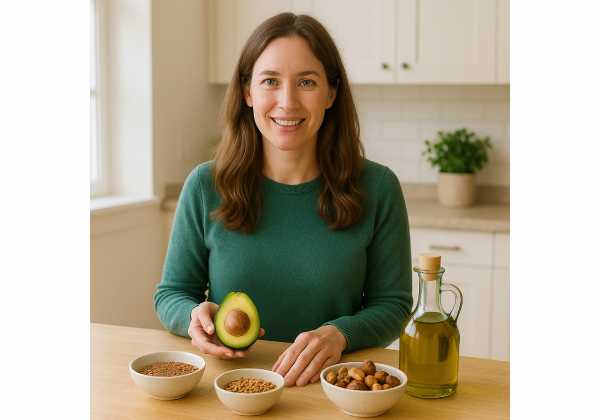
Healthy fats support longevity best when they replace less helpful fats and refined starches, not when they simply add extra calories to an already crowded plate. Olive oil, nuts, seeds, and avocado bring unsaturated fats together with fiber, minerals, plant sterols, and polyphenols that help explain their strong fit in long-term eating patterns. These foods work especially well in meals built around vegetables, legumes, whole grains, fish, yogurt, herbs, and fruit.
The strongest evidence does not point to one miracle fat. It points to a steady pattern: use extra virgin olive oil as a main culinary fat, eat nuts most days in modest portions, add seeds for fiber and texture, and use avocado where it improves meal quality. This approach supports heart, metabolic, brain, and gut health while keeping meals satisfying enough to repeat for years.
Table of Contents
- Why Healthy Fats Support Longevity
- Olive Oil: The Daily Cooking Fat With the Strongest Track Record
- Nuts: Small Portions, Big Nutrition
- Seeds: The Overlooked Fiber and Mineral Boost
- Avocado: Creamy Fat With Fiber and Potassium
- How to Use Healthy Fats Without Overdoing Calories
- Choosing, Storing, and Cooking With Healthy Fats
- Simple Ways to Build Healthy-Fat Meals
Why Healthy Fats Support Longevity
Healthy fats support longevity because they improve the quality of the whole diet. Olive oil, nuts, seeds, and avocado tend to replace butter-heavy cooking, processed snacks, creamy sauces, refined carbohydrates, and deep-fried foods. That swap changes more than the fat profile. It also raises fiber, magnesium, potassium, vitamin E, plant sterols, and polyphenols.
Dietary fat falls into several broad types. Unsaturated fats are mostly liquid at room temperature and include monounsaturated fats and polyunsaturated fats. Olive oil and avocado are rich in monounsaturated fat. Walnuts, flaxseed, chia seeds, hemp seeds, and many other nuts and seeds provide polyunsaturated fats, including omega-3 and omega-6 fatty acids. Saturated fat is found in higher amounts in butter, fatty meats, coconut oil, palm oil, and many baked goods. Trans fats, once common in partially hydrogenated oils, are the most harmful type and should stay as close to zero as possible.
The most useful nutrition question is not “Is fat good or bad?” It is “What is this fat replacing?” Replacing saturated fat with unsaturated fat tends to improve LDL cholesterol, a major driver of atherosclerosis. Replacing saturated fat with sugar, white bread, or other refined starches does not bring the same benefit. That distinction explains why low-fat cookies and refined breakfast cereals never became a true health upgrade.
Healthy fats also make nutrient-dense foods easier to eat. A salad with olive oil, nuts, or avocado tastes better and helps absorb fat-soluble carotenoids from vegetables. A bowl of lentils with tahini or extra virgin olive oil feels like a meal rather than a punishment. A small handful of walnuts with fruit keeps hunger steadier than fruit alone.
Longevity-focused eating works best when fat quality, protein, fiber, and food timing support each other. Meals that combine protein, produce, high-fiber carbohydrates, and healthy fats tend to improve satiety and post-meal glucose control. For a broader foundation, protein plus produce plus healthy fat meals offer a simple way to turn nutrition science into a repeatable plate.
A useful daily pattern looks like this:
- Use extra virgin olive oil as the main added fat.
- Eat about 1 ounce, or 28–30 g, of nuts on most days.
- Add 1–2 tablespoons of seeds to meals for fiber, minerals, and texture.
- Use avocado in portions that fit the meal, often one-quarter to one-half fruit.
- Limit butter, cream, processed meats, pastries, and fried fast foods rather than obsessing over every gram of fat.
This structure leaves room for pleasure. It does not require eating dry salads or measuring every teaspoon of oil forever. It simply makes the default fat sources work in favor of long-term cardiovascular, metabolic, and digestive health.
Olive Oil: The Daily Cooking Fat With the Strongest Track Record
Olive oil has the strongest track record among culinary fats because it anchors Mediterranean-style eating and has been studied in large cohorts and clinical trials. Extra virgin olive oil deserves special attention because it is mechanically extracted, less refined, and richer in polyphenols than regular refined olive oil.
The main fat in olive oil is oleic acid, a monounsaturated fat. The more distinctive part of extra virgin olive oil is its polyphenol content. These plant compounds contribute bitterness, peppery throat warmth, and some of the oil’s antioxidant and anti-inflammatory activity. A very mild, bland olive oil still provides monounsaturated fat, but a fresh, peppery extra virgin oil usually brings more polyphenols.
Olive oil works best as a food, not as a shot. Taking tablespoons of oil on an empty stomach adds calories without the full benefit of a better meal pattern. Using olive oil to cook vegetables, dress beans, finish fish, or replace creamy sauces gives the body a better overall package. Readers who want a deeper buying guide can use high-polyphenol olive oil as a more focused topic, but the everyday habit matters most.
A practical target is 1–3 tablespoons per day, depending on calorie needs, activity level, and the rest of the diet. One tablespoon of olive oil has about 120 calories. That amount fits easily when it replaces butter, mayonnaise, creamy dressing, or less nutritious snack foods. It becomes a problem when it gets poured freely on top of an already high-calorie diet.
Extra virgin, virgin, light, and refined olive oil
Extra virgin olive oil is the best default for salads, finishing, low-to-medium heat cooking, beans, soups, and roasted vegetables. Virgin olive oil is also mechanically extracted but allows slightly more sensory defects than extra virgin. Refined olive oil has a milder flavor, fewer polyphenols, and a higher tolerance for neutral-tasting cooking. “Light” olive oil does not mean lower calorie. It means lighter flavor and color.
| Type | Best use | What to know |
|---|---|---|
| Extra virgin olive oil | Salads, vegetables, beans, fish, finishing, most home cooking | Best balance of flavor, polyphenols, and everyday practicality |
| Virgin olive oil | General cooking where available | Less common; still minimally processed |
| Refined olive oil | Higher-heat cooking when a neutral taste is preferred | Lower in polyphenols than extra virgin |
| “Light” olive oil | Neutral cooking | Not lower in calories; the word refers to taste and color |
Cooking with olive oil
Extra virgin olive oil is stable enough for normal home cooking, including sautéing and roasting. Avoid burning any oil. Smoke, harsh smells, and dark residue signal that the oil or food has overheated. For most kitchens, medium heat is enough. Vegetables soften, onions brown, and fish cooks well without pushing oil to its limit.
Olive oil also helps people eat more vegetables. A tray of roasted carrots, peppers, onions, and cauliflower with olive oil and herbs is more appealing than steamed vegetables served plain. This matters because healthy eating fails when meals feel joyless. Flavor is not a luxury; it supports consistency.
Good uses include:
- Whisking olive oil with lemon juice, mustard, and herbs for salad dressing.
- Adding a spoonful to lentil soup or minestrone after cooking.
- Cooking garlic, tomatoes, and greens in olive oil for pasta or beans.
- Brushing vegetables before roasting.
- Replacing butter on bread with olive oil, tomato, herbs, or mashed avocado.
Olive oil is not the only healthy fat, but it is the easiest one to use daily. It fits breakfast eggs, lunch salads, bean dishes, fish, chicken, roasted vegetables, and simple dinners. That flexibility explains why it remains central to Mediterranean eating for longevity.
Nuts: Small Portions, Big Nutrition
Nuts support longevity because they combine unsaturated fat with protein, fiber, minerals, vitamin E, and plant sterols in a compact food. They are calorie-dense, but they are not empty calories. A small portion has enough richness to make a meal or snack more satisfying.
A standard serving is about 1 ounce, or 28–30 g. In hand portions, that usually means a small handful. The exact count varies by nut: about 23 almonds, 14 walnut halves, 18 cashews, 49 pistachios, or 28 peanuts. Peanuts are technically legumes, but nutritionally they behave much like nuts and fit well in this group.
Nuts are strongly linked with better cardiovascular outcomes in long-term research. Clinical trials also show that nuts improve LDL cholesterol, especially when they replace refined snacks or saturated-fat-rich foods. They do not need to be exotic or expensive. Almonds, walnuts, peanuts, pistachios, and hazelnuts all bring useful benefits.
Which nuts should you choose?
The best nut is the one you enjoy in a portion you can repeat. Variety adds nutritional range, but there is no need to chase a perfect nut ranking.
- Walnuts stand out for alpha-linolenic acid, a plant omega-3 fat, along with polyphenols.
- Almonds provide vitamin E, magnesium, fiber, and a firm crunch that works well in yogurt or salads.
- Pistachios offer potassium, carotenoids, and a slower eating pace when bought in the shell.
- Hazelnuts pair well with oats, fruit, and dark chocolate flavors.
- Peanuts are affordable, protein-rich, and practical for daily eating.
- Cashews are creamy and useful in sauces, though slightly lower in fiber than almonds or pistachios.
- Brazil nuts are extremely high in selenium, so one or two nuts is enough. Eating large handfuls often is not wise.
Nuts work well as replacements for chips, crackers, candy bars, pastries, and processed snack packs. They also upgrade meals that need texture. Sprinkle chopped walnuts on oatmeal, add pistachios to a grain bowl, mix almonds into yogurt, or use peanut butter in a sauce for tofu and vegetables.
People trying to improve LDL cholesterol or ApoB should pay attention to the whole pattern: nuts help most when they displace butter, cheese-heavy snacks, processed meats, and refined desserts. Food changes that improve lipoproteins are covered more fully in food strategies for better blood lipids.
Nut butters count, with two cautions
Nut butters count as healthy-fat foods when the ingredient list stays simple. Peanut butter, almond butter, tahini, and cashew butter work well in oatmeal, yogurt, sauces, smoothies, and whole-grain toast. The serving is usually 1–2 tablespoons.
The first caution is calorie creep. It is easy to turn a spoonful into several hundred calories. The second caution is added sugar and hardened oils. Choose nut butters made mostly from nuts, with salt if desired. A little sweetness in a recipe is different from buying a jar that tastes like frosting.
For appetite control, pair nuts with produce or protein. Try apple slices with peanut butter, Greek yogurt with walnuts, carrots with tahini sauce, or a boiled egg with pistachios. The combination keeps snacks more stable than nuts eaten straight from a large bag.
Seeds: The Overlooked Fiber and Mineral Boost
Seeds deserve more attention because they add healthy fats, fiber, minerals, and plant compounds in very small amounts. They are easier than nuts to sprinkle into meals, and they often cost less per serving. Many seeds also help with texture, which makes high-fiber meals more enjoyable.
A typical serving is 1–2 tablespoons. That small amount makes a difference when used daily. Seeds fit oatmeal, yogurt, salads, soups, roasted vegetables, smoothies, bean dishes, and whole-grain bowls. They are especially useful for people who struggle to reach fiber targets through vegetables and legumes alone. For a broader food-source guide, daily fiber for longevity connects seeds with beans, grains, vegetables, and fruit.
Different seeds bring different strengths:
| Seed | Main strengths | Easy use |
|---|---|---|
| Ground flaxseed | Plant omega-3 fat, lignans, soluble fiber | Stir into oatmeal, yogurt, smoothies, or pancake batter |
| Chia seeds | Soluble fiber, plant omega-3 fat, gel-forming texture | Use in chia pudding, overnight oats, or yogurt |
| Hemp seeds | Protein, magnesium, soft texture | Sprinkle on salads, bowls, soups, or eggs |
| Pumpkin seeds | Magnesium, zinc, crunch | Add to salads, soups, trail mix, or roasted vegetables |
| Sesame seeds and tahini | Unsaturated fat, minerals, savory flavor | Use tahini in sauces, hummus, dressings, or grain bowls |
| Sunflower seeds | Vitamin E, selenium, affordability | Add to salads, yogurt, slaws, or homemade seed mixes |
Flax and chia need fluid
Flax and chia absorb water. That can be helpful for stool regularity and satiety, but it also means they should be eaten with enough fluid. Chia pudding, overnight oats, yogurt bowls, and smoothies solve this naturally. Dry spoonfuls of chia are a bad idea because the seeds swell.
Ground flaxseed is usually better than whole flaxseed because whole seeds often pass through the gut without releasing much nutrition. Buy ground flaxseed in small amounts, or grind whole seeds at home. Store ground flax in the refrigerator or freezer to protect the oils from oxidation.
Seeds are not a complete omega-3 solution
Flax, chia, hemp, and walnuts provide alpha-linolenic acid, or ALA. The body converts only a small amount of ALA into EPA and DHA, the long-chain omega-3 fats found in fish and algae. Seeds still support a healthy pattern, but they do not fully replace seafood or algae-based omega-3 sources for people who need more EPA and DHA. The food-based options are covered in more detail in omega-3 foods for healthy aging.
Seeds also make plant-forward meals more satisfying. A bean soup finished with pumpkin seeds, a salad dressed with tahini, or roasted vegetables topped with sesame seeds feels more complete. That matters for people shifting away from meat-heavy or cheese-heavy meals. The food should still feel abundant.
Avocado: Creamy Fat With Fiber and Potassium
Avocado supports longevity-style eating because it brings creamy texture, monounsaturated fat, fiber, potassium, and carotenoids without added sugar or refined starch. It is not essential, but it is a useful replacement for butter, mayonnaise, sour cream, creamy dips, and cheese-heavy toppings.
One medium avocado usually contains about 240 calories, depending on size. A practical serving is one-quarter to one-half avocado. That portion gives enough creaminess for toast, tacos, salads, eggs, grain bowls, or bean dishes without turning the meal into a calorie bomb.
Avocado is especially helpful when it improves the meal around it. Guacamole with vegetables and beans is a different food experience from guacamole with a large basket of fried chips. Avocado on whole-grain toast with eggs, tomatoes, and herbs is more balanced than avocado spread on refined toast with no protein. A salad with avocado, lentils, greens, and pumpkin seeds is more useful than avocado added to an already heavy restaurant sandwich.
Where avocado fits best
Avocado works best in meals that need moisture and richness. Use it to reduce less helpful fats rather than to add fat on top of fat.
Good swaps include:
- Mashed avocado instead of butter on toast.
- Avocado slices instead of cheese in a sandwich.
- Guacamole instead of sour cream on beans or chili.
- Avocado blended into a yogurt-herb sauce instead of mayonnaise-based dressing.
- Avocado cubes in a grain bowl instead of a creamy bottled sauce.
Avocado also pairs well with high-fiber carbohydrates. Beans, lentils, corn, whole-grain toast, brown rice, quinoa, and vegetables all benefit from its texture. The combination slows eating and makes plant-forward meals more satisfying.
When avocado deserves limits
Avocado is healthy, but portions still count. People with smaller bodies, lower activity levels, or weight-loss goals often do better with one-quarter avocado at a time. People with high energy needs, active jobs, or endurance training may use larger portions comfortably.
Restaurant avocado dishes deserve a closer look. Avocado toast can be a balanced meal, or it can be oversized bread with too little protein. Guacamole can be a nutrient-dense side, or it can become a high-calorie chip delivery system. The difference is the plate around it.
Avocado also browns quickly. Lime or lemon juice slows browning, and storing it tightly covered with the pit can help for a short time. Frozen avocado works for smoothies and sauces, though not for fresh slices.
How to Use Healthy Fats Without Overdoing Calories
Healthy fats are valuable, but they are energy-dense. Each gram of fat provides 9 calories, compared with 4 calories per gram for carbohydrate or protein. That does not make fat bad. It means portions deserve attention, especially for people trying to maintain or reduce body weight in midlife and beyond.
The easiest way to control portions is to assign each meal one main healthy-fat source. A lunch salad might use olive oil dressing. A breakfast bowl might use walnuts and ground flax. A dinner bowl might use tahini sauce. A taco meal might use avocado. Problems start when the same meal includes generous olive oil, nuts, seeds, avocado, cheese, and creamy dressing all at once.
A simple portion guide:
| Food | Typical portion | Best way to use it |
|---|---|---|
| Extra virgin olive oil | 1 tablespoon | Dressing, sautéing, roasting, finishing soups or beans |
| Nuts | 1 ounce, or 28–30 g | Snack, yogurt topping, salad crunch, oatmeal topping |
| Nut butter | 1–2 tablespoons | Toast, oatmeal, sauces, fruit pairing |
| Seeds | 1–2 tablespoons | Oats, yogurt, salads, soups, bowls |
| Tahini | 1 tablespoon | Lemon-garlic sauce, hummus, grain bowls |
| Avocado | One-quarter to one-half fruit | Toast, salads, tacos, bowls, sauces |
For weight maintenance, healthy fats work best with protein and fiber. A snack of almonds alone is easy to overeat. Almonds with plain yogurt and berries are more filling. Olive oil on pasta alone adds calories. Olive oil with pasta, beans, vegetables, and tuna creates a more complete meal.
Midlife adults often need fewer calories than they did in their 20s, while protein, fiber, and micronutrient needs remain important. That shift makes food quality more important. Instead of cutting fat aggressively, reduce low-value calories first: sugary drinks, frequent desserts, refined snack foods, oversized restaurant portions, and alcohol. For people who prefer a structured but non-obsessive approach, calorie awareness for healthy aging helps place portions in context.
Use replacement rules
Replacement rules keep healthy fats from becoming “bonus calories.” Try these practical swaps:
- Use olive oil vinaigrette instead of creamy bottled dressing.
- Use nuts instead of chips as the crunchy side.
- Use tahini-lemon sauce instead of mayonnaise-heavy sauce.
- Use avocado instead of butter or cheese on toast.
- Use seeds instead of croutons for salad crunch.
- Use peanut butter with fruit instead of cookies for an afternoon snack.
This approach keeps the diet satisfying while improving fat quality. It also avoids the common mistake of adding healthy fats to meals that already contain plenty of less helpful fats.
Choosing, Storing, and Cooking With Healthy Fats
Healthy fats stay healthier when they are fresh, protected from heat and light, and used with cooking methods that avoid burning. Unsaturated fats are valuable, but many are also more prone to oxidation than saturated fats. Rancid oils, stale nuts, and old ground seeds taste bitter, paint-like, or musty. They should not be eaten just because they are technically “healthy.”
Buy oils in containers you can finish within a few months. Dark glass or tins protect olive oil from light. Store oil away from the stove, not beside it. Heat from the stove shortens shelf life. Keep the cap closed tightly.
Nuts and seeds last longer when stored cool. If you use them quickly, a pantry is fine for many whole nuts. For slower use, store nuts, ground flaxseed, chia, hemp hearts, and walnuts in the refrigerator or freezer. Ground seeds spoil faster than whole seeds because more surface area is exposed to oxygen.
Salted, roasted, raw, and flavored options
Raw nuts are not automatically better than roasted nuts. Dry-roasted or lightly oil-roasted nuts can fit well. Roasting improves flavor and crunch, which helps some people eat nuts instead of ultra-processed snacks. Avoid nuts with thick candy coatings, heavy sugar glazes, or frequent large portions of honey-roasted varieties.
Salted nuts can fit when the rest of the diet is not sodium-heavy. People with hypertension, kidney disease, heart failure, or sodium-sensitive blood pressure should choose unsalted or lightly salted versions more often. Nuts are easy to season at home with smoked paprika, cinnamon, cumin, rosemary, chili, or black pepper.
Seed crackers and nut-based snack bars need label reading. Some are mostly refined starch, added oils, and salt with a few seeds sprinkled in. Others are genuinely simple. The ingredient list tells the truth.
Cooking methods matter
Healthy fats cannot fully rescue unhealthy cooking methods. Deep-frying vegetables in a healthy oil still creates a high-calorie fried food. Charring fatty meats and eating them with a token salad does not become a longevity meal because olive oil appears somewhere on the plate.
Better cooking methods include roasting, sautéing, steaming and dressing, baking, poaching, grilling without heavy charring, and pressure cooking beans or stews. Olive oil, nuts, seeds, and avocado fit naturally into these methods. They add flavor after cooking or during gentle cooking rather than relying on repeated high-heat frying.
Practical examples:
- Roast broccoli with olive oil, then finish with lemon and sesame seeds.
- Cook lentils with tomatoes and herbs, then add olive oil at the table.
- Top baked salmon with crushed pistachios and herbs.
- Add avocado to black bean soup instead of sour cream.
- Use tahini, lemon, garlic, and water as a creamy sauce for vegetables.
Food safety also matters. Discard nuts or seeds that smell stale, sour, or chemical-like. Moldy nuts should be thrown away, not sorted through. People with nut allergies need strict avoidance and should use safe alternatives guided by their clinician or allergist.
Simple Ways to Build Healthy-Fat Meals
Healthy fats become easiest to sustain when they are attached to meals you already eat. Instead of designing a brand-new diet, upgrade breakfast, lunch, dinner, and snacks with better fat sources.
Breakfast ideas
Breakfast benefits from healthy fats when they join protein and fiber. Oatmeal with walnuts and ground flax is more filling than plain oats. Greek yogurt with berries, chia, and almonds gives protein, fiber, and crunch. Eggs cooked in olive oil with tomatoes and greens create a savory option that avoids processed breakfast meats.
Try these combinations:
- Oats with ground flaxseed, walnuts, berries, and cinnamon.
- Plain Greek yogurt with chia seeds, almonds, and sliced fruit.
- Whole-grain toast with avocado, egg, tomato, and black pepper.
- Cottage cheese with pumpkin seeds, cucumber, herbs, and olive oil.
- Smoothie with kefir, berries, ground flax, and peanut butter.
Lunch ideas
Lunch often fails when it is too light, too refined, or too dependent on convenience foods. Healthy fats help build lunches that hold appetite steady through the afternoon.
Good options include:
- Lentil salad with olive oil, lemon, parsley, cucumber, tomatoes, and feta if desired.
- Grain bowl with quinoa, chickpeas, roasted vegetables, tahini sauce, and pumpkin seeds.
- Whole-grain wrap with hummus, vegetables, chicken or tofu, and avocado.
- Big salad with salmon, beans, olive oil vinaigrette, and walnuts.
- Vegetable soup with beans, a drizzle of olive oil, and a side of fruit plus nuts.
The best lunch formula is simple: protein, plants, high-fiber carbohydrate, and one healthy fat. This formula also helps flatten post-meal glucose spikes. People tracking glucose responses often notice that refined carbohydrates eaten alone behave very differently from carbohydrates eaten with protein, fiber, and fat. Food strategies for steadier glucose are covered in food habits that flatten blood sugar spikes.
Dinner ideas
Dinner is the easiest place to use olive oil well. Cook vegetables generously, add beans or whole grains, include a protein source, and finish with nuts, seeds, or avocado when they fit.
Try:
- Salmon with olive-oil-roasted vegetables and a walnut-herb relish.
- Chickpea and vegetable stew finished with extra virgin olive oil.
- Turkey or tofu chili topped with avocado and pumpkin seeds.
- Whole-grain pasta with tomatoes, greens, sardines, olive oil, and capers.
- Brown rice bowl with black beans, peppers, salsa, avocado, and hemp seeds.
A useful dinner rule is to choose either oil-rich cooking or fatty toppings, then keep the rest balanced. Roasted vegetables with olive oil may not need avocado and tahini. A tahini bowl may need less added oil. A salmon dinner may not need a large handful of nuts. This is not restriction; it is balance.
Snack ideas
Healthy-fat snacks work best when portioned before eating. Avoid eating nuts directly from a large bag or nut butter straight from the jar.
Better snacks include:
- A small handful of almonds with an orange.
- Apple slices with 1 tablespoon peanut butter.
- Plain yogurt with chia and berries.
- Carrots and peppers with hummus or tahini-yogurt dip.
- A boiled egg with pistachios.
- Whole-grain toast with avocado and tomato.
A simple weekly rhythm
A realistic week might include olive oil daily, nuts five or more days, seeds most mornings, and avocado two or three times. That is enough. Healthy fats do not need to appear in every meal.
A balanced weekly pattern could look like this:
- Daily: extra virgin olive oil for cooking, dressing, or finishing.
- Most days: one small handful of nuts.
- Most breakfasts: 1 tablespoon ground flax, chia, or hemp seeds.
- A few meals weekly: avocado as a swap for cheese, butter, or creamy sauces.
- Weekly: fatty fish or algae-based omega-3 options when appropriate.
This pattern supports the bigger picture: a diet rich in plants, adequate protein, high-fiber carbohydrates, and unsaturated fats. It also leaves room for cultural foods. Olive oil is common in Mediterranean meals, tahini in Middle Eastern dishes, peanuts in West African and Southeast Asian cooking, sesame in East Asian meals, pumpkin seeds in Mexican-inspired dishes, and avocado across Latin American and modern mixed cuisines.
Healthy fats for longevity are not a trend. They are a practical way to make nutrient-dense meals taste better, improve fat quality, and replace foods that work against long-term health. Start with one change that touches daily life: buy a good olive oil, portion nuts into small containers, add ground flax to breakfast, or use avocado instead of butter. Repeated small choices build the pattern.
References
- 2026 Dietary Guidance to Improve Cardiovascular Health: A Scientific Statement From the American Heart Association 2026 (Scientific Statement)
- Olive oil intake and cardiovascular disease, cancer, and all-cause mortality: a systematic review and dose-response meta-analysis of prospective cohort studies 2024 (Systematic Review)
- Nuts and seeds consumption and risk of cardiovascular disease, type 2 diabetes and their risk factors: a systematic review and meta-analysis 2023 (Systematic Review)
- Nut consumption and risk of cardiovascular disease events and all-cause mortality: A systematic review and dose-response meta-analysis of prospective cohort studies 2025 (Systematic Review)
- Avocado Consumption and Cardiometabolic Health: A Systematic Review and Meta-Analysis 2024 (Systematic Review)
- Effects of Avocado Products on Cardiovascular Risk Factors in Adults: A GRADE-Assessed Systematic Review and Meta-Analysis 2025 (Systematic Review)
Disclaimer
This article is educational and does not replace care from a qualified health professional. People with heart disease, kidney disease, diabetes, food allergies, digestive disorders, or prescribed dietary restrictions should personalize fat choices and portions with their clinician or registered dietitian. Seek urgent medical care for symptoms such as chest pain, sudden weakness, severe shortness of breath, or signs of stroke.