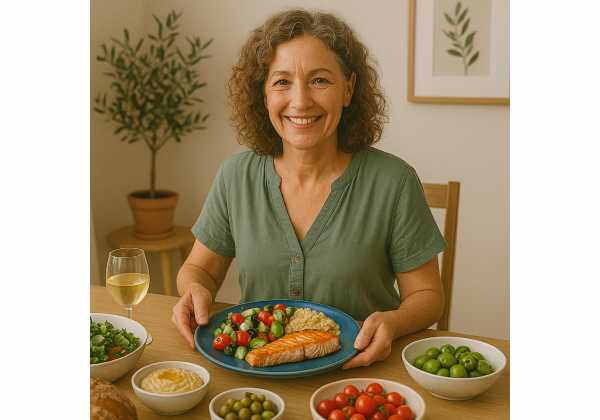
Mediterranean eating gives healthy aging a simple food structure: more plants, more olive oil, more beans, more fish, more nuts, and fewer ultra-processed foods. It does not require a strict menu from Greece, Italy, or Spain. It works because it turns everyday meals into a steady pattern of fiber, unsaturated fats, minerals, protein, and polyphenols, the protective plant compounds found in foods such as berries, herbs, cocoa, olives, coffee, tea, and colorful vegetables.
The strongest version is practical, not perfect. A bowl of lentil soup with olive oil, a sardine salad, yogurt with walnuts, or roasted vegetables with chickpeas all fit. The pattern supports heart health, steadier blood sugar, better gut function, healthy body weight, and lower chronic inflammation. It also leaves room for culture, budget, appetite, and family meals, which makes it easier to keep for years.
Table of Contents
- What Mediterranean Eating Means
- The Longevity Plate
- Foods to Build Around
- How This Pattern Supports Healthy Aging
- Starter Meals and Portions
- Adapting the Pattern to Your Needs
- Shopping, Cooking, and Meal Prep
- Mistakes to Avoid and Progress to Track
What Mediterranean Eating Means
Mediterranean eating is a pattern, not a single diet plan. The daily base is vegetables, fruit, legumes, whole grains, extra-virgin olive oil, nuts, seeds, herbs, and spices. Fish and seafood appear regularly. Yogurt, cheese, eggs, and poultry fit in moderate amounts. Red meat, processed meat, sweets, refined grains, and sugary drinks stay occasional.
The pattern grew from traditional food habits in Mediterranean regions, but the useful part is the structure. You do not need imported foods or restaurant-style dishes. A Mediterranean-style meal in any culture starts with plants, adds a satisfying protein, uses an unsaturated fat, and limits heavily processed extras.
A simple way to recognize the pattern is to look at a week instead of one meal. Over seven days, the plate should include several servings of beans or lentils, fish at least once or twice, vegetables every day, fruit most days, nuts several times, and olive oil or another unsaturated fat as the main added fat. That weekly view matters because longevity nutrition works through repeated exposure, not one perfect dinner.
Mediterranean eating also includes how food is prepared. It favors simmering, baking, sautéing, stewing, and dressing foods with olive oil, lemon, vinegar, herbs, garlic, onions, and spices. These methods make vegetables, legumes, and fish taste good without relying on heavy cream, deep frying, or large amounts of salt.
Alcohol deserves a careful update. Older Mediterranean descriptions often included wine with meals, but wine is not required for the benefits of the pattern. If you do not drink, do not start for longevity. If you drink, keep it modest and place alcohol inside a broader health context, especially if you have sleep problems, reflux, high blood pressure, liver concerns, cancer risk, or a history of alcohol misuse.
The Longevity Plate
A Mediterranean longevity plate is easy to build: half plants, one quarter protein, one quarter smart carbohydrates, plus a small amount of healthy fat. This framework works for breakfast, lunch, dinner, and leftovers.
For lunch or dinner, fill half the plate with non-starchy vegetables such as leafy greens, tomatoes, peppers, broccoli, zucchini, eggplant, mushrooms, cabbage, or green beans. Add a protein food such as fish, chicken, Greek yogurt, eggs, lentils, beans, tofu, tempeh, or seafood. Add a slow-digesting carbohydrate such as oats, barley, farro, brown rice, potatoes, sweet potatoes, beans, lentils, or whole-grain bread. Finish with extra-virgin olive oil, nuts, seeds, avocado, olives, tahini, or a yogurt-based sauce.
Breakfast follows the same idea. A bowl of plain Greek yogurt with berries, walnuts, and oats fits. So does an omelet with spinach and tomatoes, served with fruit and whole-grain toast. For a savory plant-based option, try hummus, cucumbers, tomatoes, olives, and a slice of dense whole-grain bread.
The plate works because it handles the three problems that derail many healthy eating plans: hunger, glucose swings, and bland food. Protein helps preserve muscle and keeps meals filling. Fiber slows digestion and feeds gut bacteria. Healthy fats carry flavor and help absorb fat-soluble compounds from vegetables. Herbs, acids, and spices make the food enjoyable enough to repeat.
For deeper planning around muscle preservation, pair this pattern with steady daily protein targets. Mediterranean eating is often described as plant-forward, but it should not become low-protein by accident, especially in midlife and later life.
Foods to Build Around
Mediterranean eating becomes much easier when your kitchen has the right defaults. The foods below cover most meals without requiring complicated recipes.
| Food group | Best starter choices | Simple uses |
|---|---|---|
| Vegetables | Leafy greens, tomatoes, peppers, zucchini, broccoli, carrots, onions, mushrooms | Salads, soups, roasted trays, omelets, grain bowls, pasta add-ins |
| Fruit | Berries, citrus, apples, pears, grapes, cherries, pomegranate | Breakfast bowls, snacks, desserts, salad toppings |
| Legumes | Lentils, chickpeas, white beans, black beans, peas, hummus | Soups, stews, salads, dips, wraps, pasta sauces |
| Whole grains and starches | Oats, barley, farro, bulgur, brown rice, potatoes, sweet potatoes, whole-grain bread | Breakfast, bowls, side dishes, soups, post-workout meals |
| Protein foods | Sardines, salmon, trout, tuna, eggs, yogurt, poultry, tofu, tempeh, beans | Main meals, salads, quick lunches, protein-rich snacks |
| Fats | Extra-virgin olive oil, walnuts, almonds, pistachios, chia, flax, sesame, avocado | Dressings, sauces, toppings, snacks, cooking fat |
| Flavor builders | Garlic, herbs, spices, lemon, vinegar, mustard, capers, olives | Marinades, dressings, sauces, soups, vegetable dishes |
Extra-virgin olive oil deserves special attention. It supplies mostly monounsaturated fat and also contains polyphenols, especially when fresh, well stored, and bitter or peppery in taste. Use it for salad dressing, vegetable finishing, bean dishes, and gentle cooking. A practical range is 1–3 tablespoons per day, adjusted for total calorie needs. People trying to lose weight should measure it for a few weeks, because healthy fat still adds energy quickly.
Nuts also help. A small handful, about 28 g, gives unsaturated fat, magnesium, plant sterols, and fiber. Walnuts provide alpha-linolenic acid, a plant omega-3 fat. Almonds and pistachios work well for snacks. Pair nuts with fruit or yogurt instead of eating from the bag, which keeps portions clear.
Legumes are the quiet powerhouse of Mediterranean eating. Beans, chickpeas, lentils, and peas bring protein, iron, potassium, magnesium, resistant starch, and soluble fiber. If beans cause gas, start with 2–4 tablespoons daily, rinse canned beans, and build slowly. Lentils and split peas often feel easier than larger beans.
Fish and seafood add protein, iodine, selenium, and omega-3 fats. Fatty fish such as sardines, salmon, trout, herring, and mackerel are especially useful. Canned sardines or salmon often cost less than fresh fish and need no cooking. For people who avoid fish, algae-based omega-3 options and a thoughtful plant-forward plan deserve attention, but food choices still need to cover protein, iodine, zinc, iron, calcium, and vitamin B12.
Vegetables and fruit should bring color and variety. Dark greens, orange vegetables, tomatoes, berries, citrus, onions, herbs, and cruciferous vegetables each offer different plant compounds. Aiming for 30 different plant foods per week sounds ambitious, but herbs, spices, nuts, seeds, beans, vegetables, fruit, whole grains, coffee, and tea all count. For a more focused look at plant compounds, use polyphenol-rich foods as a guide.
How This Pattern Supports Healthy Aging
Mediterranean eating supports longevity through several linked pathways. It is not one magic food. The pattern improves the food environment around blood vessels, muscle, liver, gut bacteria, and post-meal metabolism.
Heart and blood vessel support
The strongest evidence for Mediterranean eating sits in cardiovascular health. The pattern replaces saturated fat from processed meats, butter-heavy foods, and many packaged snacks with unsaturated fats from olive oil, nuts, seeds, and fish. It also increases potassium, magnesium, nitrate-rich vegetables, and soluble fiber. Together, these shifts support healthier blood pressure, blood lipids, endothelial function, and vascular aging.
The practical version is straightforward: use olive oil instead of butter most of the time, eat fish regularly, swap processed meat for beans or poultry, and add vegetables to every lunch and dinner. People tracking cholesterol or ApoB often need more than diet alone, but food still shapes the baseline. For a food-first approach to lipids, connect Mediterranean meals with food moves that improve blood lipids.
Blood sugar and insulin sensitivity
Mediterranean eating improves glucose control by changing the whole meal. Carbohydrates come packaged with fiber, protein, fat, and minerals. Beans, lentils, intact grains, vegetables, fruit, yogurt, nuts, and olive oil digest differently from white bread, sweet drinks, pastries, and large refined grain portions.
A good Mediterranean plate does not need to be very low in carbohydrate. It needs the right carbohydrate dose for the person and the activity level. A long walk, strength training session, or physically demanding day handles more starch than an inactive evening. People with prediabetes, diabetes, fatty liver, or large glucose swings often do better with smaller portions of grains and larger portions of legumes, vegetables, fish, poultry, eggs, tofu, or yogurt. For extra support, combine this pattern with food habits that flatten glucose spikes.
Inflammation, oxidative stress, and polyphenols
Chronic low-grade inflammation rises with visceral fat, poor sleep, smoking, inactivity, gum disease, untreated metabolic disease, and diets high in ultra-processed foods. Mediterranean eating does not erase those causes, but it improves the daily intake of foods linked with lower inflammatory burden.
Extra-virgin olive oil, berries, leafy greens, tomatoes, coffee, tea, herbs, spices, nuts, cocoa, and legumes deliver polyphenols and other phytochemicals. These compounds interact with antioxidant defense systems, gut bacteria, and cell signaling. The body does not need megadoses from extracts to benefit. Regular, varied food exposure is the safer and more sustainable route.
Gut and immune resilience
The gut microbiome responds quickly to fiber, resistant starch, polyphenols, and fermented foods. Mediterranean eating raises all four. Beans, oats, barley, onions, garlic, asparagus, apples, lentils, cooled potatoes, and whole grains feed beneficial bacteria. Yogurt, kefir, fermented vegetables, and miso add fermented food options when tolerated.
Gut-friendly eating matters for aging because the gut barrier, immune system, and metabolism communicate constantly. Constipation, low fiber intake, and poor diet variety often show up together. A Mediterranean pattern improves stool regularity for many people because it raises fiber and fluid-rich foods at the same time. Increase fiber gradually and drink enough fluid, especially when adding beans, bran, chia, or flax.
Muscle, bone, and body composition
Longevity nutrition must protect lean tissue. Mediterranean eating supports this when it includes enough protein, calcium-rich foods, vitamin K-rich greens, vitamin D sources, and resistance training. A plate of vegetables and olive oil alone is not enough for aging muscles.
Most adults in midlife and later life benefit from spreading protein across meals. A common practical target is 25–40 g protein per meal, depending on body size, training, appetite, and medical needs. Greek yogurt, eggs, fish, poultry, tofu, tempeh, lentils, beans, cottage cheese, and seafood all fit. For older adults with low appetite, protein at breakfast becomes especially useful because it prevents the day from ending with a shortfall.
Starter Meals and Portions
Mediterranean eating starts faster when you repeat a few reliable meal templates. Pick two breakfasts, two lunches, two dinners, and two snacks. Rotate them until shopping and cooking feel automatic.
Breakfast ideas
Try plain Greek yogurt with berries, oats, walnuts, cinnamon, and a drizzle of olive oil or tahini if you like a richer bowl. For a higher-protein option, add cottage cheese or use strained yogurt. Another choice is eggs with spinach, tomatoes, mushrooms, and onions, served with fruit and whole-grain toast. Oatmeal also works well when topped with chia, ground flax, nuts, berries, and yogurt.
People who wake up hungry or train in the morning usually do better with a full breakfast. People who prefer a later first meal should still cover protein, fiber, and produce when they eat. Skipping breakfast and then grazing on crackers, sweets, or coffee drinks does not match the pattern.
Lunch ideas
Build lunches around leftovers, bowls, soups, and salads. A chickpea salad with cucumbers, tomatoes, parsley, olive oil, lemon, and tuna takes minutes. Lentil soup with greens and a side of yogurt keeps well for several days. A grain bowl with farro, roasted vegetables, chicken or tofu, olives, and tahini-lemon sauce works hot or cold.
For office meals, keep shelf-stable backups: canned fish, microwaveable brown rice, roasted chickpeas, whole-grain crackers, olive packs, and nuts. Add fresh produce from home or a nearby store. This prevents the common trap of waiting too long, getting too hungry, and buying a refined, low-protein lunch.
Dinner ideas
Dinner should feel abundant without being heavy. Roast a tray of vegetables and add salmon, chicken thighs, tofu, or chickpeas. Make whole-grain pasta with tomato sauce, sardines, capers, spinach, and olive oil. Simmer white beans with garlic, onions, tomatoes, rosemary, and greens. Prepare a large salad with grilled fish, potatoes, olives, herbs, and yogurt dressing.
A useful dinner rhythm is protein plus produce plus healthy fat, with starch adjusted to activity. After a training day, add potatoes, whole grains, beans, or fruit. On a sedentary evening, keep starch smaller and increase non-starchy vegetables. This approach connects well with constellation meals, where protein, plants, and fat work together.
Snack and dessert ideas
Good snacks solve hunger without turning into a second dessert. Try fruit with nuts, yogurt with berries, hummus with vegetables, a boiled egg with tomatoes, roasted chickpeas, or whole-grain toast with avocado. For dessert, choose fruit, yogurt, baked apples, or a small portion of dark chocolate. Sweet foods fit best after a balanced meal, not alone on an empty stomach.
Portions need some flexibility, but starter ranges help:
- Vegetables: 2 or more cups at lunch and dinner
- Fruit: 1–3 servings daily
- Legumes: ½–1 cup most days, or at least 3–4 times per week
- Fish or seafood: 1–3 times per week, with fatty fish often
- Nuts: about 28 g on most days
- Olive oil: 1–3 tablespoons daily, adjusted for energy needs
- Protein: commonly 25–40 g per meal for adults focused on muscle maintenance
- Whole grains or starchy foods: ½–1 cup cooked per meal, adjusted for glucose response and activity
Adapting the Pattern to Your Needs
Mediterranean eating works best when it respects the person using it. Age, appetite, blood pressure, glucose tolerance, kidney function, food budget, chewing ability, cooking skill, and culture all shape the best version.
For blood pressure, emphasize potassium-rich foods such as beans, lentils, potatoes, greens, tomatoes, yogurt, fruit, and fish while reducing high-sodium packaged foods. Canned beans, tuna, olives, capers, feta, and soups add convenience but also sodium. Rinse canned beans, compare labels, and use salty ingredients as accents rather than main ingredients. Lemon, vinegar, garlic, herbs, smoked paprika, cumin, and chili flakes help food taste bright with less salt.
For blood sugar concerns, prioritize legumes over large grain portions. Beans and lentils bring carbohydrate, but they digest slowly and deliver protein and fiber. Keep bread and pasta portions moderate, choose dense whole-grain versions, and pair them with protein and vegetables. A 10–20 minute walk after meals often improves post-meal glucose more than another round of food rules.
For weight maintenance or fat loss, measure calorie-dense healthy foods for a short period. Olive oil, nuts, tahini, avocado, cheese, and whole grains are nutritious, but portions still matter. A salad with 4 tablespoons of oil, a large handful of nuts, cheese, and bread becomes energy-dense quickly. Keep the foods, tighten the amounts, and increase vegetables and lean protein.
For low appetite, use smaller, protein-rich meals. Older adults, people under stress, and those recovering from illness often struggle with large plates. Greek yogurt, eggs, fish, soups with beans, soft tofu, cottage cheese, and smoothies with yogurt and berries help. Add olive oil to vegetables and soups for energy when weight loss is unwanted.
For vegetarian or mostly plant-based eating, Mediterranean meals adapt well. Use lentils, chickpeas, beans, tofu, tempeh, edamame, yogurt, eggs, nuts, and seeds. Pay attention to vitamin B12, iron, zinc, iodine, calcium, vitamin D, and omega-3 fats. A plant-forward Mediterranean diet should still be protein-aware, especially during midlife and later life.
For reflux, keep dinner lighter and earlier, reduce large fatty meals at night, and watch personal triggers such as tomato sauce, citrus, chocolate, mint, alcohol, coffee, onions, garlic, and spicy foods. The pattern still works with adjustments: grilled fish, rice, cooked greens, zucchini, oatmeal, yogurt, bananas, and olive oil in moderate portions often feel gentler.
For family meals, avoid turning Mediterranean eating into a separate “health plate.” Serve familiar dishes with better defaults. Add lentils to meat sauce, use olive oil in cooking, serve chopped salad with dinner, swap some processed meat for grilled chicken or fish, add beans to soups, and keep fruit visible. The most durable changes usually happen through repeated household defaults.
Shopping, Cooking, and Meal Prep
A Mediterranean kitchen should make the better choice the easy choice. Stock foods that become meals quickly, then cook a few building blocks each week.
Keep these pantry staples:
- Extra-virgin olive oil
- Vinegar, mustard, tomato paste, canned tomatoes
- Canned chickpeas, lentils, white beans, black beans
- Canned sardines, salmon, tuna, or mussels
- Oats, barley, brown rice, bulgur, farro, whole-grain pasta
- Nuts, seeds, tahini, peanut or almond butter
- Herbs and spices such as oregano, cumin, cinnamon, paprika, turmeric, black pepper, and chili flakes
Keep these fridge and freezer staples:
- Plain Greek yogurt or kefir
- Eggs
- Leafy greens and pre-washed salad
- Frozen berries
- Frozen vegetables
- Fish or shrimp
- Hummus
- Lemons
- Fresh herbs when available
Batch cooking does not need to mean a full Sunday production. Cook one pot of beans or lentils, one tray of vegetables, one grain or potato option, and one protein. Add two sauces: a lemon-olive oil dressing and a yogurt-herb sauce. Those pieces become bowls, salads, wraps, soups, and dinners across the week.
Use flavor formulas instead of complicated recipes. Olive oil plus lemon plus garlic plus parsley works with fish, beans, potatoes, and vegetables. Tomato plus onion plus garlic plus oregano works with beans, eggs, fish, and whole-grain pasta. Yogurt plus cucumber plus dill plus lemon works as a sauce for chicken, chickpeas, potatoes, and roasted vegetables.
Cooking methods matter. Gentle sautéing, roasting, steaming, stewing, and poaching protect food quality and keep meals repeatable. Charring and deep frying should stay occasional. When grilling, avoid burning the food, marinate first, use herbs and acids, and serve with plenty of vegetables. For more detail on heat and food quality, connect this pattern with healthier cooking methods.
Budget versions work well. Frozen vegetables, cabbage, carrots, onions, canned tomatoes, dried lentils, oats, potatoes, canned fish, eggs, and bulk beans deliver a strong Mediterranean pattern at low cost. Use olive oil where it adds the most flavor, such as dressings and finishing, and rely on affordable staples for volume. A low-cost meal of lentil soup, cabbage salad, olive oil dressing, and fruit fits the pattern better than an expensive “Mediterranean” snack box.
Eating out also fits when you order by structure. Choose grilled fish, chicken, bean dishes, salads, vegetable sides, soups, yogurt sauces, rice, potatoes, or whole-grain options when available. Ask for dressing on the side if portions are large. Split fried appetizers or skip them. A restaurant meal does not need to be perfect; it should keep the same direction.
Mistakes to Avoid and Progress to Track
The most common mistake is adding olive oil, nuts, and avocado without reducing less useful foods. Mediterranean eating works through substitution. Olive oil replaces butter or creamy dressings. Nuts replace chips or sweets. Beans replace some processed meat or refined starch. Fish replaces some red meat. Fruit replaces dessert more often than it joins dessert.
Another mistake is treating pasta, bread, cheese, and wine as the center of the diet. These foods exist in Mediterranean food cultures, but the longevity pattern leans much harder on vegetables, legumes, fish, olive oil, nuts, fruit, and minimally processed staples. A plate of white pasta with cheese and wine is not the same as a bean-and-vegetable stew with olive oil and herbs.
A third mistake is going too light on protein. Many people shift toward salads and vegetables, feel hungry, snack at night, and assume the pattern failed. Add fish, Greek yogurt, eggs, poultry, tofu, tempeh, lentils, beans, or seafood at meals. Muscle is a longevity organ, and food should support it.
A fourth mistake is changing everything at once. Start with a two-week starter plan:
- Use olive oil as the main added fat.
- Eat one fruit and two vegetable servings daily.
- Add beans or lentils at least four times per week.
- Eat fish once or twice per week.
- Replace one refined snack with nuts, yogurt, fruit, hummus, or eggs.
- Cook one simple meal in bulk each week.
After two weeks, add another layer: more vegetables at lunch, a higher-protein breakfast, more fermented foods, or a post-meal walk. For people who prefer structure, batch cooking and freezer staples make the pattern much easier to repeat.
Progress should show up in daily life before it shows up in lab work. Track energy after meals, hunger between meals, bowel regularity, sleep quality, cravings, waist size, blood pressure, and training recovery. Lab markers worth discussing with a clinician include A1c, fasting glucose, fasting insulin, ApoB or non-HDL cholesterol, triglycerides, liver enzymes, kidney function, iron status when relevant, B12 for low-animal-food diets, and vitamin D when risk is present.
Use a simple weekly score instead of perfection:
| Habit | Weekly target |
|---|---|
| Vegetables | At least 2 servings daily |
| Fruit | Most days |
| Legumes | At least 3–4 meals |
| Fish or seafood | At least 1–2 meals |
| Nuts or seeds | Most days, portion-aware |
| Olive oil or unsaturated fats | Main added fat |
| Ultra-processed sweets, snacks, and meats | Occasional, not daily defaults |
A score of five strong habits each week is enough to build momentum. Raise the score gradually. The real longevity advantage comes from a pattern that survives busy weeks, travel, family meals, and changing appetite.
References
- 2026 Dietary Guidance to Improve Cardiovascular Health: A Scientific Statement From the American Heart Association 2026 (Position Statement)
- Mediterranean Diet Adherence and Risk of All-Cause Mortality in Women 2024 (Cohort Study)
- Mediterranean Diet in Older Adults: Cardiovascular Outcomes and Mortality from Observational and Interventional Studies-A Systematic Review and Meta-Analysis 2024 (Systematic Review)
- Mediterranean Diet for Primary and Secondary Prevention of Cardiovascular Disease and Mortality: An Updated Systematic Review 2023 (Systematic Review)
- Mediterranean Dietary Pattern for Healthy and Active Aging: A Narrative Review of an Integrative and Sustainable Approach 2024 (Review)
- Primary Prevention of Cardiovascular Disease with a Mediterranean Diet Supplemented with Extra-Virgin Olive Oil or Nuts 2018 (RCT)
Disclaimer
This article is educational and does not replace care from a qualified clinician, registered dietitian, or other licensed health professional. People with diabetes, kidney disease, heart failure, food allergies, eating disorder history, swallowing problems, or major medication changes should get personalized guidance before making large diet changes. Seek medical care for unexplained weight loss, persistent digestive symptoms, chest pain, severe fatigue, or sudden changes in blood pressure or blood sugar.