Cooking changes food in ways that affect flavor, texture, safety, and long-term health. Browning a steak, crisping potatoes, or toasting bread creates appealing aromas through the Maillard reaction, the same chemistry that also forms advanced glycation end products, usually called AGEs. These compounds rise fastest when foods rich in protein or fat meet dry, high heat. They are not the only concern in cooking: heavy charring and smoke from grilled meat also create heterocyclic amines and polycyclic aromatic hydrocarbons, two separate groups of compounds linked to cancer biology.
Healthier cooking does not require bland food or avoiding heat altogether. It means using moisture, acidity, temperature control, shorter cooking times, and smart grilling habits. Steaming fish, braising meat, simmering beans, roasting vegetables gently, marinating before grilling, and cutting away char all lower exposure while keeping meals satisfying.
Table of Contents
- What AGEs Are and Why Cooking Changes Them
- Why AGEs Matter for Aging and Metabolic Health
- Cooking Methods Ranked from Lower to Higher AGE Formation
- Grilling, Smoke, and Char: How to Lower the Risk
- Healthier Techniques That Preserve Flavor
- Food-by-Food Guide to Lower-AGE Cooking
- A Practical Weekly Rhythm for Lower-AGE Meals
- Common Mistakes and Smarter Swaps
What AGEs Are and Why Cooking Changes Them
Advanced glycation end products are compounds formed when sugars react with proteins, fats, or nucleic acids. This reaction happens inside the body over time, especially when blood glucose stays high, oxidative stress rises, kidney function declines, or tobacco smoke adds extra chemical stress. It also happens in food during cooking and processing.
The familiar browning of roasted meat, toasted bread, baked cookies, fried chicken, and grilled cheese comes from Maillard chemistry. That browning creates flavor, aroma, and color, but it also raises AGE levels. The same food produces very different AGE loads depending on how it is cooked.
Three cooking conditions drive AGE formation:
- Dry heat: grilling, broiling, roasting, baking, frying, air frying, and searing.
- High temperature: especially direct contact with hot metal, flame, or very hot air.
- Long cooking time: extended browning, repeated reheating, and cooking until dark crust or char forms.
Moist cooking reduces AGE formation because water keeps the cooking environment closer to 100°C or 212°F until most moisture evaporates. Boiling, steaming, poaching, stewing, pressure cooking, and braising keep food hotter than raw but cooler than a grill surface, broiler, or frying pan. That temperature difference matters.
AGEs are not one single compound. Common examples include carboxymethyllysine, often shortened to CML, methylglyoxal-derived hydroimidazolone, known as MG-H1, and pentosidine. These names sound technical, but the practical message is simple: darker, drier, hotter cooking generally forms more AGEs, especially in foods rich in animal protein and fat.
Food type also matters. Meat, poultry skin, cheese, butter, cream, high-fat processed meats, and fried foods tend to start higher and rise more during high-heat cooking. Vegetables, fruit, legumes, intact whole grains, and soups usually contribute less. A grilled chicken thigh with browned skin, a fried egg cooked until crisp at the edges, and a broiled cheese topping carry a different AGE burden than lentil soup, steamed fish, or a bean-and-vegetable stew.
This does not make browning “toxic” in every bite. Cooking improves food safety, digestibility, and pleasure. A sustainable approach keeps the benefits of cooking while lowering the most avoidable exposure: frequent dry-heat cooking of fatty animal foods until dark brown or charred.
Why AGEs Matter for Aging and Metabolic Health
AGEs matter because they interact with several aging-related systems at once. Inside the body, AGEs bind to long-lived proteins such as collagen. Collagen gives structure to blood vessels, skin, tendons, cartilage, and the lens of the eye. When AGE cross-links build up, tissues become stiffer and less flexible.
That stiffness helps explain why AGEs appear in discussions of vascular aging, kidney disease, diabetes complications, skin aging, joint function, and eye health. AGEs also interact with a cell receptor called RAGE, short for receptor for advanced glycation end products. AGE-RAGE signaling promotes oxidative stress and inflammatory pathways. Occasional exposure from food is only one part of the picture, but frequent high-AGE meals add to an internal environment already shaped by blood sugar, smoking, sleep, kidney health, and body composition.
Dietary AGEs do not act like an instant poison. The body absorbs only part of what is eaten, and people vary in absorption, gut handling, kidney clearance, and baseline metabolic health. Still, human trials and reviews suggest that lowering dietary AGE exposure improves some cardiometabolic markers, especially insulin resistance and blood lipids, in certain groups. The strongest signal is not that everyone must eat a “zero AGE” diet. The better lesson is that cooking method joins food quality as part of a healthy aging pattern.
Blood sugar control plays a major role because high glucose speeds internal glycation. Someone eating grilled food occasionally within a fiber-rich, minimally processed pattern faces a different situation than someone with frequent glucose spikes, smoking exposure, kidney disease, and daily fried or charred foods. For everyday meals, pairing lower-AGE cooking with food habits that flatten glucose spikes gives the body fewer glycation pressures from both the plate and the bloodstream.
AGEs also overlap with inflammation. A dry-heat, ultra-processed, high-fat pattern often supplies AGEs alongside excess sodium, refined starch, low fiber, oxidized fats, and few protective plant compounds. A Mediterranean-style pattern does the opposite: it leans on legumes, vegetables, fish, extra-virgin olive oil, nuts, fruit, herbs, and stews. This pattern supplies fiber and polyphenols while using many naturally lower-AGE cooking methods. That is one reason Mediterranean eating for longevity remains a useful framework rather than a rigid cuisine.
The most AGE-sensitive groups include people with diabetes, chronic kidney disease, cardiovascular risk, high intake of fried or grilled meats, heavy tobacco exposure, and older adults with low muscle mass who rely on processed meats or browned convenience foods for protein. These groups do not need fear-based rules. They benefit from repeatable swaps: stew instead of fry, steam then season, marinate before grilling, cook gently most days, and save heavy browning for occasional meals.
Cooking Methods Ranked from Lower to Higher AGE Formation
Cooking methods fall on a spectrum. The lowest-AGE methods use moisture and moderate temperatures. The highest-AGE methods use dry heat, direct contact, flame, smoke, or extended browning. The table below compares common methods for practical use.
| Cooking method | Typical AGE formation | Best uses | Smarter technique |
|---|---|---|---|
| Steaming | Low | Fish, vegetables, dumplings, eggs | Finish with herbs, lemon, yogurt sauce, or olive oil after cooking |
| Boiling and simmering | Low | Beans, lentils, soups, oats, potatoes, eggs | Keep a gentle simmer instead of a rolling boil when texture matters |
| Poaching | Low | Fish, chicken breast, eggs, fruit | Use broth, aromatics, garlic, bay leaf, citrus, or tomato |
| Braising and stewing | Low to moderate | Tougher cuts, poultry, legumes, vegetables | Brown lightly if desired, then cook mostly in liquid |
| Pressure cooking | Low to moderate | Beans, whole grains, stews, tougher meats | Use liquid-based recipes and avoid post-cooking heavy browning |
| Roasting | Moderate to high | Vegetables, poultry, fish, meat | Use moderate heat, avoid dark crust, add moisture or sauce |
| Baking | Moderate to high | Breads, casseroles, fish, chicken, desserts | Keep pale-golden rather than deeply browned; avoid repeated reheating |
| Sautéing | Moderate to high | Vegetables, tofu, eggs, small pieces of meat | Add a splash of water, broth, or tomato once browning starts |
| Frying and air frying | High | Occasional crispy foods | Use less often, avoid very dark surfaces, pair with vegetables |
| Broiling and grilling | High | Occasional meat, fish, vegetables | Marinate, flip often, prevent flare-ups, cut away char |
Boiling, steaming, poaching, and stewing look plain on paper, but they create excellent meals when seasoning is handled well. A poached salmon fillet with dill, mustard, lemon, and olive oil tastes bright rather than bland. Lentils simmered with tomato, onion, garlic, cumin, and greens deliver protein, fiber, and minerals without a browned crust. Chicken braised with mushrooms, onions, thyme, and broth gives the deep flavor people often seek from roasting.
Dry heat earns its place in the kitchen because it creates texture and satisfaction. The mistake is using it as the default for nearly every protein: grilled chicken at lunch, roasted meat at dinner, fried eggs in the morning, cheese browned on snacks, and air-fried convenience foods at night. A lower-AGE pattern uses a simple rotation: moist cooking most days, moderate roasting sometimes, heavy browning and charring rarely.
Air frying deserves special attention. It uses less oil than deep frying, which helps calorie control and fat quality. But it is still dry, high-heat cooking. Air-fried chicken wings, sausages, bacon, breaded cheese, and browned potatoes still form heat-related compounds. Air frying vegetables or chickpeas at moderate temperatures until lightly crisp is different from cooking fatty meats until deeply browned.
Microwaving is often misunderstood. It heats water molecules efficiently and usually produces less browning than frying, grilling, or broiling. Microwaving meat briefly before grilling also shortens high-heat exposure. The main caution is texture: overcooking lean protein in a microwave makes it dry, which then encourages people to add heavy sauces or re-brown it. Use the microwave for reheating soups, steaming vegetables, softening potatoes, or partially cooking meat before a short finish on the grill.
Grilling, Smoke, and Char: How to Lower the Risk
Grilling adds two concerns beyond AGEs. The first is heterocyclic amines, or HCAs. These form when amino acids, sugars, and creatine or creatinine in muscle meats react at high temperatures. Meat, poultry, and fish contain the needed building blocks; vegetables and fruit do not form HCAs in the same way.
The second concern is polycyclic aromatic hydrocarbons, or PAHs. These form when fat and juices drip onto flame or hot coals, creating smoke that deposits compounds back onto food. PAHs also come from smoke-heavy cooking and charred surfaces.
Grilling risk rises with high heat, long cooking, direct flame, smoke, flare-ups, and a well-done or charred finish. Processed meats add another layer because hot dogs, sausages, bacon, and many cured meats already carry stronger cancer concerns than unprocessed poultry, fish, or legumes.
A healthier grilling routine keeps the social pleasure while reducing the most avoidable chemistry:
- Marinate for at least 30 minutes. Use vinegar, lemon juice, wine, yogurt, herbs, garlic, onion, ginger, mustard, spices, or olive oil. Acidic, herb-rich marinades reduce surface browning chemistry and improve flavor.
- Use smaller or thinner pieces. Kebabs, sliced chicken, fish fillets, and flattened poultry cook faster than thick steaks or large bone-in pieces.
- Pre-cook when useful. Microwave, steam, or bake meat partially, then grill briefly for flavor. Discard juices released during pre-cooking rather than pouring them onto the flame.
- Use indirect heat. Keep food away from direct flame and close the lid for oven-like cooking.
- Flip often. Frequent turning reduces prolonged high-heat contact on one surface.
- Prevent flare-ups. Trim excess fat, keep a spray bottle nearby, move food away from flames, and avoid letting oil-heavy marinades drip directly onto coals.
- Stop before char. Golden-brown grill marks are different from blackened surfaces. Cut away black char before eating.
- Grill more plants. Zucchini, peppers, onions, mushrooms, corn, peaches, pineapple, and tofu help shift the meal away from a meat-centered plate.
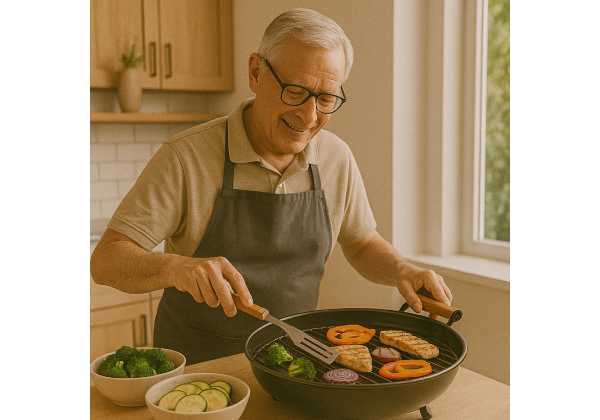
Grilling vegetables is not risk-free if they are burned black, but it avoids HCA formation from muscle-meat chemistry. Keep vegetables lightly browned, not carbonized. Brush with a little oil after preheating, grill over medium heat, and remove pieces as soon as they soften and color.
Fish needs gentle handling. Fatty fish supplies EPA and DHA omega-3 fats, but its fat also oxidizes under harsh heat. Use a cedar plank, foil packet, grill basket, or indirect heat. Finish with lemon, herbs, and extra-virgin olive oil after cooking rather than charring the surface. For people who eat fish for healthy aging, omega-3-rich foods work best when the cooking method protects the fat.
A cookout plate becomes more longevity-friendly when the grilled item is not the whole meal. Pair a modest portion of grilled protein with bean salad, tomato-cucumber salad, grilled vegetables, yogurt sauce, fruit, and water or unsweetened tea. The pattern lowers AGE density and adds fiber, potassium, polyphenols, and volume.
Healthier Techniques That Preserve Flavor
Lower-AGE cooking succeeds when flavor comes from aromatics, acids, herbs, spices, umami-rich ingredients, and good fat instead of heavy browning. The aim is not pale hospital food. It is flavorful food with less harsh heat.
Use acid before or after heat
Acid slows some browning reactions and brightens finished dishes. Lemon juice, vinegar, tomato, wine, yogurt, kefir, pomegranate molasses, and citrus zest all help. A yogurt-herb marinade works well for chicken. Tomato-based braising works well for beans, fish, turkey, and tougher cuts of meat. Lemon and vinegar wake up steamed vegetables, soups, and lentils.
For a simple marinade, combine:
- 2 tablespoons lemon juice or vinegar
- 1 tablespoon extra-virgin olive oil
- 1–2 minced garlic cloves
- 1 teaspoon mustard or tomato paste
- Herbs or spices such as rosemary, oregano, paprika, cumin, black pepper, or thyme
Use it on poultry, fish, tofu, mushrooms, or vegetables. Keep raw meat marinades refrigerated and discard used marinade unless it is boiled thoroughly.
Build flavor in liquid
Simmering sounds mild, but the cooking liquid can carry intense flavor. Use broth, tomato, onions, garlic, celery, carrots, bay leaves, spices, mushrooms, seaweed, miso added after boiling, or a small Parmesan rind. Beans and lentils absorb these flavors well.
A good stew often tastes better the next day because flavors diffuse through the dish. Reheat gently with a splash of water instead of reducing it repeatedly until thick and sticky. That small habit lowers repeated dry heating.
Brown lightly, then add moisture
Some dishes benefit from a short, controlled browning step. The healthier method is brief browning followed by moist cooking. Sear meat or tofu lightly, then add tomatoes, broth, wine, or vegetables and simmer. This creates flavor without spending the whole cook time in dry heat.
The same trick works for sautéed vegetables. Start onions or mushrooms in a small amount of oil, then add water, broth, tomato, or leafy greens once the pan dries. This “steam-sauté” method keeps flavor while lowering the temperature of the pan.
Choose fats that tolerate the job
Fat quality matters alongside cooking method. Extra-virgin olive oil, avocado oil, and high-oleic oils work well for most home cooking. Butter browns quickly because its milk solids participate in browning reactions. Save butter for small flavor accents rather than repeated high-heat frying.
Extra-virgin olive oil fits especially well with lower-AGE cooking because it pairs with vegetables, legumes, fish, and herbs. Its polyphenols support the broader Mediterranean pattern, and it works beautifully as a finishing fat after steaming, poaching, or simmering. A guide to choosing and using olive oil helps make this habit practical.
Use herbs, spices, and alliums generously
Rosemary, thyme, oregano, sage, turmeric, ginger, cinnamon, cloves, garlic, onion, scallion, and black pepper bring flavor without sugar or heavy charring. Many herbs and spices also supply polyphenols and antioxidant compounds. They do not cancel out burned meat, but they improve the overall meal and make gentler cooking more satisfying.
A lower-AGE kitchen benefits from a few default flavor combinations:
- Lemon, dill, garlic, and olive oil for fish or potatoes
- Tomato, oregano, onion, and capers for chicken or beans
- Yogurt, cumin, coriander, paprika, and garlic for poultry or tofu
- Ginger, scallion, garlic, and low-sodium soy sauce for steamed fish or vegetables
- Rosemary, mushrooms, thyme, and broth for turkey, lentils, or beef stew
These combinations reduce the need for dark crust as the main flavor source.
Food-by-Food Guide to Lower-AGE Cooking
Different foods need different strategies. The best method protects the food’s nutrients while keeping meals enjoyable enough to repeat.
Meat and poultry
Meat and poultry form AGEs readily during dry, high-heat cooking. Skin, visible fat, processed meats, and dark crust raise the load. Choose moist methods often: braising, stewing, poaching, pressure cooking, or slow cooking with liquid. Poultry breast works well poached and sliced into salads, soups, grain bowls, or wraps. Thighs and tougher cuts work well braised with tomatoes, mushrooms, onions, and herbs.
When grilling or roasting, use smaller portions and marinades. Cook to safe internal temperatures, but do not push every piece to a dry, heavily browned finish. Let meat rest so juices redistribute instead of cooking longer for texture. Processed meats such as bacon, hot dogs, sausages, and cured deli meats deserve a smaller role because they combine AGE concerns with sodium, preservatives, and stronger cancer-related evidence.
Protein remains essential with aging, especially for preserving muscle. Lower-AGE cooking should not lead to under-eating protein. It should shift the preparation style. People working on muscle maintenance can pair this approach with daily protein and per-meal targets rather than relying on grilled or fried protein at every meal.
Fish and seafood
Fish cooks quickly, so it does not need harsh heat. Steam, poach, bake covered, cook in parchment, or use foil packets with lemon, herbs, and vegetables. Canned sardines, salmon, trout, and mussels are convenient lower-browning options. If you grill fish, use indirect heat and remove it as soon as it flakes.
Avoid blackened fish as a routine choice. “Blackened” seasoning often means intense dry heat on the surface. A spice crust is fine when cooked gently; a burnt crust is not the goal.
Eggs and dairy
Eggs are best cooked gently: boiled, poached, softly scrambled, or baked into moist dishes. Crisp, browned egg edges taste good but raise heat exposure. Cheese becomes AGE-dense when broiled or baked until browned, especially on pizza, casseroles, and toasted sandwiches. Use smaller amounts of strong-flavored cheese, add it after cooking when possible, or melt it gently rather than browning it.
Yogurt, kefir, cottage cheese, and ricotta offer protein without high-heat browning. They also work in sauces, marinades, dips, and breakfasts.
Legumes, whole grains, and starchy foods
Beans, lentils, chickpeas, intact oats, barley, farro, brown rice, and quinoa fit lower-AGE cooking naturally because they are usually boiled or simmered. They also bring fiber, magnesium, potassium, and slow-digesting carbohydrate.
Starchy foods create different heat-related compounds when cooked until very dark. Toast, roasted potatoes, fries, chips, crackers, and baked goods can form acrylamide, especially when browned deeply. The practical rule is similar: aim for golden, not dark brown. Boil or steam potatoes often, then cool them for salads or reheat gently. Cooling cooked potatoes, rice, and pasta also increases resistant starch, which supports gut-friendly eating.
Vegetables and fruit
Vegetables are generally lower in AGEs and rich in protective compounds. Steam, sauté with water, roast lightly, grill gently, or add to soups and stews. Do not judge vegetables only by raw versus cooked. Cooking improves the availability of some nutrients, such as lycopene from tomatoes and carotenoids from carrots. Add olive oil or tahini to improve absorption of fat-soluble compounds.
Roasting vegetables at moderate heat until tender and lightly browned is reasonable. Burning Brussels sprouts, broccoli, onions, or peppers until black should not become the default. For more protective plant variety, build meals around polyphenol-rich foods such as berries, cocoa, coffee, tea, herbs, spices, legumes, and colorful vegetables.
Convenience foods and leftovers
Many convenience foods are already baked, fried, roasted, extruded, or dried before reaching the kitchen. Reheating them with more dry heat compounds the issue. Pizza, nuggets, fries, crispy snacks, browned pastries, and breaded meats often become darker during reheating.
Use moist reheating when possible. Add a splash of water to grains, stews, and leftovers. Reheat soups and beans on the stove or in the microwave. Use the oven to restore texture only when needed, and avoid pushing leftovers to a second dark crust.
A Practical Weekly Rhythm for Lower-AGE Meals
Lower-AGE cooking works best as a rhythm, not a strict rule. Most households need speed, leftovers, texture, and variety. A realistic weekly pattern uses moist cooking as the base and dry heat as an accent.
A simple week might look like this:
- Two soup or stew meals: lentil soup, turkey chili, fish stew, bean-and-greens soup, or chicken vegetable soup.
- Two steamed or poached protein meals: salmon in parchment, poached eggs over vegetables, steamed tofu with ginger-scallion sauce, or chicken breast sliced into bowls.
- One braised meal: chicken cacciatore, beef and mushroom stew, braised beans, or tomato-braised cod.
- One moderate roasting meal: vegetables and fish, lightly roasted chicken, or tofu with a sauce added after cooking.
- One grill or sear meal: marinated protein, plenty of vegetables, no charring, and a fiber-rich side.
Batch cooking helps. Cook beans, lentils, broth-based soups, rice, quinoa, or potatoes in advance. Prepare sauces that make gentle food taste finished: tahini-lemon sauce, yogurt-herb sauce, salsa verde, tomato-olive sauce, chimichurri, miso-ginger dressing, or olive oil with herbs and vinegar. Good sauces prevent the common fallback of frying or broiling food just to make it exciting.
A lower-AGE meal template is easy to remember:
- Start with a moist or gently cooked protein.
- Add a high-fiber plant food such as beans, lentils, vegetables, or intact grains.
- Finish with healthy fat, acid, herbs, and crunch from nuts, seeds, or raw vegetables.
- Use dry browning as a small accent rather than the main cooking method.
This template overlaps with protein plus produce plus healthy fat meals, a useful structure for satiety and nutrient density. It also supports appetite control because high-fiber, protein-rich meals are filling without relying on fried textures.
Kitchen equipment helps but does not need to be expensive. A pot with a lid, steamer basket, sheet pan, pressure cooker, slow cooker, and instant-read thermometer cover most needs. The thermometer matters because it lets you cook meat safely without overcooking it into a dry, dark surface.
When eating out, choose dishes described as steamed, poached, simmered, stewed, braised, or grilled without char. Ask for sauces on the side, choose tomato- or yogurt-based sauces more often than browned cheese or cream reductions, and leave blackened edges behind. Restaurant portions of grilled and fried meat often exceed home portions, so splitting the protein and adding soup, salad, beans, or vegetables improves the meal quickly.
Common Mistakes and Smarter Swaps
Many people try to improve cooking methods but accidentally trade one problem for another. The fixes are usually simple.
| Mistake | Why it backfires | Smarter swap |
|---|---|---|
| Replacing deep frying with daily air-fried processed meats | Less oil, but still dry high heat and often high sodium | Use air frying for vegetables or chickpeas; cook meats moist more often |
| Grilling until blackened for flavor | Raises AGEs, HCAs, PAHs, and bitter char compounds | Marinate, grill over indirect heat, and stop at light browning |
| Broiling cheese-heavy meals often | Browned cheese is AGE-dense and calorie-dense | Add smaller amounts of stronger cheese after cooking or melt gently |
| Cooking lean protein until dry | Longer heat exposure increases browning and reduces enjoyment | Use a thermometer, poach, braise, or cook in parchment |
| Assuming “plant-based” always means low AGE | Fried plant foods, chips, crackers, and browned pastries still form heat compounds | Choose beans, lentils, tofu, tempeh, soups, stews, and lightly cooked vegetables |
| Reheating leftovers until crisp every time | Repeated dry heating adds more browning | Reheat with moisture; crisp only small portions when needed |
Another mistake is focusing only on AGEs while ignoring the rest of the meal. A lightly steamed meal built around refined starch and little protein is not automatically better than a balanced meal with some browning. The whole pattern matters: protein adequacy, fiber, unsaturated fat, sodium, potassium, polyphenols, alcohol intake, and glucose response all shape aging biology.
The most useful changes are the ones that repeat:
- Cook beans or lentils once or twice each week.
- Use soup, stew, or braise as a default dinner format.
- Keep lemon, vinegar, herbs, garlic, and yogurt available for fast sauces.
- Grill less often, and grill smarter when you do.
- Save blackened, fried, and heavily browned foods for occasional enjoyment.
- Pair any charred or seared food with a large plant-rich side.
This approach also reduces ultra-processed food reliance. Many ultra-processed meals gain flavor from industrial baking, frying, extrusion, drying, and browning. Home cooking with moist heat gives more control over salt, fat quality, protein portions, and plant variety. For households that struggle with time, batch cooking and freezer staples make lower-AGE choices easier on busy days.
A healthy aging kitchen does not need perfection. Browning has culinary value, and shared meals matter. The best strategy is proportion: mostly moist and moderate cooking, plenty of plants, enough protein, careful grilling, and less blackened or repeatedly crisped food. Those habits lower avoidable AGE exposure while keeping food enjoyable enough to live with.
References
- Cooking methods affect advanced glycation end products and lipid profiles: A randomized cross-over study in healthy subjects 2025 (RCT)
- The Impact of Low Advanced Glycation End Products Diet on Metabolic Risk Factors: A Systematic Review and Meta-Analysis of Randomized Controlled Trials 2021 (Systematic Review)
- Effect of dietary advanced glycation end-products restriction on type 2 diabetes mellitus control: a systematic review 2022 (Systematic Review)
- The Effects of Dietary Advanced Glycation End-Products on Neurocognitive and Mental Disorders 2022 (Review)
- Chemicals in Meat Cooked at High Temperatures and Cancer Risk 2017 (Official Fact Sheet)
- Advanced Glycation End Products in Foods and a Practical Guide to Their Reduction in the Diet 2010 (Review)
Disclaimer
This article is educational and is not a substitute for medical nutrition therapy or personal guidance from a qualified health professional. People with diabetes, kidney disease, cancer history, swallowing problems, unintentional weight loss, or major dietary restrictions should discuss cooking changes and protein targets with a clinician or registered dietitian. Food safety still matters: cook meat, poultry, seafood, and eggs to safe temperatures even when using gentler methods.