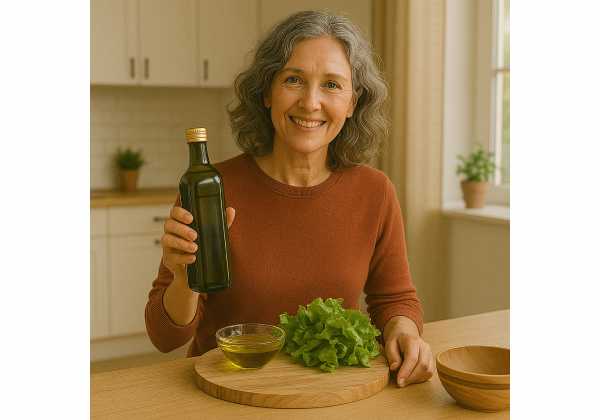
Extra virgin olive oil has earned its place in longevity nutrition because it improves the quality of the whole plate. It replaces butter, cream, and refined fats with mostly monounsaturated fat, carries bitter and peppery plant compounds, and helps vegetables, legumes, fish, and whole grains taste better enough to eat often. The strongest evidence sits inside the larger Mediterranean pattern, where olive oil is a daily staple rather than a rare supplement.
High polyphenol olive oil adds another layer. Its phenolic compounds, especially hydroxytyrosol and related molecules, help protect blood lipids from oxidative stress and contribute to the oil’s sharp, fresh flavor. The right bottle should taste alive: fruity, grassy, bitter, and peppery at the back of the throat. The wrong bottle tastes flat, greasy, waxy, or rancid. Choosing well, storing it properly, and using it generously but intelligently turns olive oil into a simple daily longevity habit.
Table of Contents
- Why Olive Oil Fits Longevity Nutrition
- What High Polyphenol Olive Oil Means
- How to Choose a Good Bottle
- How Much to Use and Where It Fits
- Cooking, Storage, and Polyphenol Retention
- Best Food Pairings for Longevity
- Common Mistakes That Waste Good Olive Oil
- Who Should Be More Careful
Why Olive Oil Fits Longevity Nutrition
Olive oil supports healthy aging best when it replaces less helpful fats and makes nutrient-dense meals easier to repeat. A tablespoon of extra virgin olive oil is not a magic shield against disease. It is a practical upgrade to the fat pattern of the diet.
Most olive oil fat comes from oleic acid, a monounsaturated fat. Diets that replace saturated fats with unsaturated fats tend to improve LDL cholesterol, especially when the swap is consistent. That means olive oil works best in meals where it takes the place of butter on bread, cream-based sauces, shortening, coconut oil, fatty processed meats, or heavy cheese portions.
Extra virgin olive oil also contains hundreds of minor compounds that refined oils largely lose during processing. These include phenolic compounds, tocopherols, pigments, and aromatic molecules. They influence flavor, oxidative stability, and biological activity. This is why extra virgin olive oil deserves a separate place from generic “olive oil,” “light olive oil,” or refined vegetable oils.
The broader longevity value comes from the meals olive oil helps build. It belongs naturally with lentils, beans, tomatoes, peppers, leafy greens, onions, herbs, sardines, salmon, yogurt sauces, whole grains, and nuts. Those foods bring fiber, potassium, magnesium, plant protein, omega-3 fats, and many polyphenols beyond olive oil itself. For a complete food-pattern view, Mediterranean eating for longevity gives the strongest context for why olive oil works better as part of a plate than as a stand-alone “superfood.”
Olive oil also helps with adherence. People stick with healthy meals when those meals taste good. A bowl of chickpeas, roasted vegetables, lemon, herbs, and a peppery olive oil feels abundant, not restrictive. That sensory satisfaction matters because longevity nutrition rewards consistency more than perfection.
What High Polyphenol Olive Oil Means
High polyphenol olive oil contains a larger amount of naturally occurring phenolic compounds from olives. These compounds concentrate most strongly in fresh, well-made extra virgin olive oil, especially from olives harvested earlier in the season and processed quickly after picking.
Polyphenols are plant defense compounds. In olive oil, the main families include hydroxytyrosol, tyrosol, oleuropein derivatives, ligstroside derivatives, and oleocanthal. Hydroxytyrosol and its derivatives receive the most regulatory attention because they help protect blood lipids from oxidative stress. Oleocanthal contributes to the peppery throat sting that many people notice in fresh extra virgin olive oil.
The European Union permits a specific health claim for olive oils that provide at least 5 mg of hydroxytyrosol and its derivatives per 20 g of olive oil. In practical label language, that translates to roughly 250 mg/kg of qualifying phenolic compounds, though testing methods and reporting formats vary. Many “high phenolic” oils report total polyphenols above 300 mg/kg, and some early-harvest oils test above 500 mg/kg or higher.
Higher is not automatically better. A very high number on a certificate does not guarantee freshness, good taste, or a better health outcome for every person. Polyphenol levels decline with time, heat, oxygen, and light. A bottle that tested high after harvest loses strength if it spends a year in a clear bottle under warm store lights.
How high polyphenol oil tastes
The flavor tells part of the story. High polyphenol extra virgin olive oil often tastes:
- Fruity, grassy, green, tomato-leaf-like, artichoke-like, or herbal
- Bitter on the tongue
- Peppery in the throat
- Clean and fresh rather than heavy or greasy
Bitterness and pungency are not defects. They are often signs of fresh phenolic compounds. Defects taste different: crayons, stale nuts, old peanuts, putty, vinegar, wine, mold, muddy olives, or a greasy flatness that coats the mouth without brightness.
What the numbers do and do not prove
A lab report gives useful information when it is recent, batch-specific, and easy to match to the bottle. It does not turn olive oil into medicine. Human trials show signals for oxidative stress, HDL function, blood pressure, inflammation markers, and lipid measures, but benefits vary by dose, baseline diet, health status, and the specific oil used.
Use the numbers as a quality clue, not as a promise. For daily eating, a fresh extra virgin olive oil with clear harvest information, good packaging, and a lively bitter-peppery taste beats an expensive “high polyphenol” bottle that is old, poorly stored, or unpleasant enough that you avoid using it.
How to Choose a Good Bottle
A good olive oil purchase starts with freshness and category. Choose extra virgin olive oil, not “pure,” “light,” or “olive oil” when polyphenols and flavor are priorities. Extra virgin means the oil meets chemical and sensory standards, including no sensory defects and free acidity no higher than 0.8%. Free acidity does not measure taste directly, but it helps classify quality.
Look for a harvest date. “Best by” dates help less because producers set them differently. A harvest date tells you how old the oil is. In the Northern Hemisphere, olives are usually harvested in autumn and early winter. In the Southern Hemisphere, harvest often occurs around spring to early summer. Buy from the most recent harvest you can find.
Choose dark glass, tins, or bag-in-box packaging. Clear glass is a warning sign unless the store protects bottles from light and the oil moves quickly. Light damages olive oil and speeds quality loss.
A strong label or producer website often includes the region, cultivar, harvest year, milling date, polyphenol testing, free acidity, peroxide value, and sensory notes. You do not need every detail for a good everyday oil, but transparency usually signals care.
| Label or sensory clue | Why it helps | How to use it |
|---|---|---|
| Extra virgin | Highest common grade, unrefined, no sensory defects | Choose this for daily longevity use |
| Harvest date | Freshness strongly affects flavor and phenolics | Prefer the newest harvest available |
| Dark bottle, tin, or box | Protects against light damage | Avoid clear bottles on bright shelves |
| Bitter and peppery taste | Often reflects phenolic compounds | Use for finishing, dressings, beans, greens, and soups |
| Recent lab report | Supports polyphenol and quality claims | Match the report to the harvest year or lot number |
| Flat or rancid flavor | Signals oxidation or poor quality | Do not save it for “health”; replace it |
Polyphenol labels worth understanding
Some bottles list “total polyphenols,” often in mg/kg or ppm. These terms are commonly used as similar numbers, though testing methods differ. Others list hydroxytyrosol and tyrosol derivatives tied to the EU health claim. A bottle above 250 mg/kg has a meaningful phenolic level if the test is recent and the oil has been stored well.
Very high numbers, such as 800–1,200 mg/kg, usually mean a sharper, more bitter oil. Some people love that style. Others find it too intense. A practical approach is to keep one robust oil for finishing and one milder extra virgin oil for cooking.
Cultivar and harvest style
Certain cultivars often produce bolder, more phenolic oils. Examples include Koroneiki, Picual, Coratina, Moraiolo, and some early-harvest Arbequina blends. Region and cultivar matter, but producer skill matters more. Olives must be healthy, harvested at the right time, crushed quickly, and stored under low-oxygen conditions.
Early-harvest oils often taste greener and more bitter because underripe olives carry more phenolic compounds. They also yield less oil per kilogram of olives, which raises price. That price makes sense for finishing oil. It makes less sense if the bottle sits unused because it feels too precious.
For a broader fat-quality framework, healthy fats for longevity places olive oil beside nuts, seeds, avocado, and seafood fats without turning one food into a cure-all.
How Much to Use and Where It Fits
A useful daily range is about 1–3 tablespoons of extra virgin olive oil, or roughly 15–45 ml. The EU polyphenol health-claim serving uses 20 g, close to 1.5 tablespoons. Mediterranean diet trials often used generous olive oil intake, but that does not mean everyone should add large amounts on top of their current diet.
Use olive oil as a replacement first. Swap it for butter on toast, creamy dressings, heavy sauces, processed spreads, or refined oils used for routine cooking. If weight maintenance is difficult, measure for two weeks to reset your eye. One tablespoon contains about 120 calories. Pouring freely from a wide-spout bottle easily turns one tablespoon into three.
A good daily pattern looks like this:
- 1 teaspoon to cook eggs, greens, or vegetables
- 1 tablespoon in a lunch salad, bean bowl, or lentil soup
- 1 teaspoon to 1 tablespoon over dinner vegetables, fish, or whole grains
People with higher calorie needs, active lifestyles, or low intake of other fats often use more. People trying to reduce body fat usually do better with measured amounts while keeping the food quality high. Olive oil supports weight maintenance in healthy aging when it improves meal satisfaction without quietly pushing total energy intake too high.
Use it around protein and plants
Olive oil shines in meals that combine protein, colorful plants, and fiber-rich carbohydrates. That combination supports muscle, metabolic health, and appetite control. For example:
- Greek-style lentils with olive oil, vinegar, onions, carrots, and herbs
- Sardines or salmon with greens, potatoes, lemon, and olive oil
- Chickpea salad with cucumber, tomatoes, parsley, feta, and olive oil
- Tofu or white beans with roasted peppers, arugula, olives, and olive oil
- Yogurt-tahini sauce finished with olive oil over grilled vegetables
These meals work because the oil carries flavor and helps absorb fat-soluble compounds such as carotenoids from vegetables. It also slows the dry, bland feeling that makes high-fiber meals less appealing.
Do not use olive oil as a supplement shot
Taking olive oil by the spoonful before bed or first thing in the morning adds calories without improving the rest of the diet. Some people use it for constipation, but fiber, fluids, fruit, legumes, and regular meals solve the root problem more reliably. Olive oil belongs in food, where it improves the meal and replaces less helpful fats.
Cooking, Storage, and Polyphenol Retention
Extra virgin olive oil is suitable for most home cooking. Its high monounsaturated fat content and natural antioxidants make it more stable than many people assume. Smoke point alone is a poor way to judge cooking safety because oxidative stability also depends on fatty acid profile, antioxidants, refining, freshness, and cooking time.
Use extra virgin olive oil for sautéing, roasting, simmering, baking savory dishes, and pan cooking at normal home temperatures. Avoid repeatedly deep-frying with expensive high-polyphenol oil. Long high-heat exposure reduces phenolic compounds and wastes the best flavor. For very intense heat or repeated frying, choose a more economical oil designed for that use, or change the cooking method.
Heating reduces some phenolics, but it does not erase olive oil’s value. A tomato sauce simmered with extra virgin olive oil still delivers a better fat profile and better flavor than the same sauce made with butter or refined low-quality fat. Cooking vegetables in olive oil also helps people eat more vegetables, which matters more than preserving every molecule.
Storage rules that protect the bottle
Olive oil has four enemies: oxygen, light, heat, and time. Store it like a fresh food, not like vinegar.
- Keep it in a cool, dark cabinet away from the stove.
- Close the cap immediately after pouring.
- Use small bottles if you cook for one or two people.
- Finish opened bottles within 6–10 weeks when possible.
- Buy tins or bag-in-box containers for larger volumes only if you use them steadily.
- Do not keep a decorative clear bottle near a sunny window.
Refrigeration is not usually needed for daily oil and causes cloudiness or partial solidification. That cloudiness reverses at room temperature, but repeated temperature swings are not ideal. A cool pantry works best.
Use two-bottle strategy
A two-bottle strategy gives the best mix of health, taste, and cost. Keep a robust high-polyphenol oil for finishing salads, beans, soups, vegetables, and fish. Keep a milder, less expensive extra virgin olive oil for cooking. This prevents the “too good to use” problem and keeps fresh oil moving through the kitchen.
This approach also improves cooking habits. When olive oil is within reach, vegetables become easier: broccoli with garlic and olive oil, carrots roasted with cumin, zucchini sautéed with herbs, cabbage softened with onions, or tomato sauce enriched with lentils. For more on reducing harmful cooking byproducts while keeping food enjoyable, healthier cooking methods for aging pairs naturally with olive oil use.
Best Food Pairings for Longevity
Olive oil does its best work with fiber-rich and polyphenol-rich foods. The longevity pattern is not olive oil alone; it is olive oil plus plants, seafood, legumes, herbs, and fermented foods.
Pair olive oil with tomatoes, peppers, carrots, pumpkin, leafy greens, and herbs. These foods bring carotenoids and other phytochemicals. Fat helps absorb carotenoids, so olive oil improves both flavor and nutrient delivery.
Use it with legumes several times per week. Lentils, chickpeas, white beans, black beans, and split peas become more satisfying with olive oil, vinegar or lemon, garlic, herbs, and crunchy vegetables. Legumes also bring soluble fiber, resistant starch, magnesium, potassium, and plant protein. A bean dish finished with peppery oil often feels more satisfying than a meat-heavy meal with fewer plants.
Olive oil also fits seafood. Sardines, anchovies, trout, salmon, mussels, and cod pair naturally with olive oil, lemon, parsley, tomatoes, and greens. This combination joins monounsaturated fat with marine omega-3 fats. For readers building meals around fish rather than supplements, omega-3 foods for healthy aging helps round out the pattern.
Polyphenol stacking without overthinking
A high-polyphenol meal does not require exotic foods. It often looks simple:
- Extra virgin olive oil
- Beans or lentils
- Herbs such as parsley, oregano, rosemary, or basil
- Colorful vegetables
- Coffee, tea, berries, or cocoa elsewhere in the day
This style spreads polyphenols across meals instead of relying on one expensive bottle. Olive oil becomes one part of a wider plant-chemical pattern. For a broader list of food sources, polyphenol-rich foods for longevity gives practical options beyond olive oil.
Simple meal templates
Try these templates for repeatable meals:
| Meal | How to build it | Where the olive oil goes |
|---|---|---|
| Breakfast | Eggs or tofu with spinach, tomatoes, herbs, and whole-grain toast | Cook the greens and finish with a small drizzle |
| Lunch | Lentil salad with cucumber, peppers, onions, parsley, and vinegar | Use in the dressing with lemon or vinegar |
| Snack | Whole-grain toast with tomato, sardines, or white bean spread | Drizzle over the topping just before eating |
| Dinner | Fish or beans with roasted vegetables and potatoes | Roast with a milder oil; finish with the robust oil |
| Soup | Minestrone, chickpea soup, or tomato-lentil soup | Add a peppery teaspoon to each bowl |
Olive oil also supports gut-friendly eating when it helps carry vegetables, legumes, herbs, and fermented sides into the diet. That combination fits well with gut-friendly nutrition for longevity, especially when meals include both polyphenols and fermentable fibers.
Common Mistakes That Waste Good Olive Oil
The most common mistake is buying a beautiful bottle and saving it too long. Olive oil is not wine. It does not improve with age after bottling. A fresh, moderately priced oil used daily beats a rare bottle that sits open for months.
Another mistake is chasing the highest polyphenol number without tasting the oil. If the oil is so bitter that you avoid it, it fails as a daily habit. Choose an intensity you enjoy. A slightly lower phenolic oil used every day beats an extreme oil used twice and forgotten.
Many people also misunderstand “light olive oil.” Light refers to color or flavor, not calories. Light olive oil is usually refined and has fewer phenolic compounds than extra virgin olive oil. It still supplies mostly monounsaturated fat, but it does not offer the same flavor or polyphenol profile.
Do not judge quality by color. Green oil looks attractive, but color varies by olive variety, harvest timing, and chlorophyll content. Professional tasters use blue glasses so color does not bias them. Taste and freshness matter more.
Avoid these wasteful habits:
- Storing oil beside the stove
- Buying large containers that take six months to finish
- Leaving the cap loose
- Pouring high-polyphenol oil into a hot pan for long frying when a finishing drizzle would preserve more flavor
- Assuming all imported oil is better than all local oil
- Assuming cloudy oil is always fresher or healthier
- Ignoring rancid flavors because the label says “extra virgin”
How to taste olive oil at home
Pour a teaspoon into a small cup. Warm the cup in your hand for a moment, then smell it. Fresh oil smells like olives, grass, herbs, green tomatoes, apples, almonds, or artichokes. Sip a little, spread it over the tongue, and notice bitterness. Swallow and notice pepper in the throat.
A cough from pungent oil is common and often prized. A stale nut, crayon, greasy, fermented, moldy, or vinegar note means the oil is flawed or old. Once you recognize rancidity, you notice it quickly.
How to make a strong oil easier to use
If your oil tastes too bitter, pair it with acidity, starch, and protein. Lemon, vinegar, tomatoes, beans, potatoes, sourdough, yogurt, and fish soften the intensity. A peppery oil that feels harsh alone often tastes excellent on lentil soup or roasted carrots.
For people improving cardiometabolic habits, olive oil also helps replace less favorable foods without creating a sense of deprivation. It fits naturally with heart-healthy eating for longevity and with food strategies that improve blood lipids through daily meals.
Who Should Be More Careful
Olive oil is safe for most adults as a regular food, but portion size and medical context still matter. Anyone managing weight loss, reflux, gallbladder symptoms, pancreatic disease, or fat-malabsorption issues should pay closer attention to dose and tolerance.
People with reflux sometimes notice symptoms after large, fatty meals. Olive oil is not uniquely harmful, but a heavy pour at dinner can slow stomach emptying and worsen nighttime discomfort. Smaller amounts spread earlier in the day often work better.
People with gallbladder disease or a history of pancreatitis need individualized guidance on fat intake. The issue is not that olive oil is “bad”; it is that total fat load can trigger symptoms in certain conditions.
Those taking blood pressure or glucose-lowering medications should not treat olive oil as a drug. Improving diet quality can improve numbers over time, so regular monitoring still matters. If home blood pressure, LDL cholesterol, ApoB, fasting glucose, or A1c shifts, medication decisions belong with a qualified clinician.
Olive oil allergy is uncommon but possible. Stop using it and seek medical advice if it causes hives, swelling, wheezing, or repeated digestive reactions.
The most balanced approach is simple: use extra virgin olive oil daily if you enjoy it, keep the dose appropriate for your energy needs, choose fresh bottles, and build meals around plants and protein. High polyphenol oil offers its best return when it helps you eat more vegetables, legumes, fish, herbs, and minimally processed foods with pleasure. That pattern, repeated for years, is where olive oil earns its longevity reputation.
References
- Olive Oil Polyphenols Improve HDL Cholesterol and Promote Maintenance of Lipid Metabolism: A Systematic Review and Meta-Analysis of Randomized Controlled Trials 2023 (Systematic Review)
- Cardiovascular and Metabolic Benefits of Extra Virgin Olive Oil Phenolic Compounds: Mechanistic Insights from In Vivo Studies 2024 (Review)
- Exploring the Benefits of Extra Virgin Olive Oil on Cardiovascular Health Enhancement and Disease Prevention: A Systematic Review 2025 (Systematic Review)
- Effects of daily extra virgin olive oil consumption on biomarkers of inflammation and oxidative stress: a systematic review and meta-analysis 2026 (Systematic Review)
- Phenolic compounds naturally present in olive oil and lowering of blood LDL-cholesterol and systolic blood pressure, therefore reducing the risk of coronary heart disease: Evaluation of a health claim pursuant to Article 14 of Regulation (EC) No 1924/2006 2025 (Scientific Opinion)
- Food and Feed Information Portal Database | FIP 2012 (Official Register)
Disclaimer
This article is educational and does not replace care from a qualified health professional. Olive oil is a food, not a treatment for cardiovascular disease, diabetes, inflammatory conditions, or cognitive decline. People with gallbladder disease, pancreatitis history, fat-malabsorption problems, reflux, medication changes, or medically prescribed diets should discuss fat intake with their clinician.