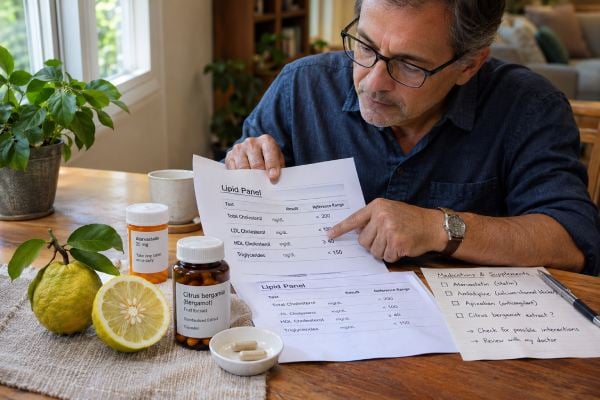
Citrus bergamot supplements may lower LDL cholesterol and triglycerides, but the evidence is not strong enough to treat them as a replacement for statins or other proven lipid-lowering medication. Bergamot, a citrus fruit grown mainly in southern Italy, contains flavonoids and polyphenols that may affect cholesterol synthesis, bile-acid metabolism, oxidative stress, and glucose regulation. Small clinical trials and meta-analyses have reported meaningful improvements in lipid levels, but many studies are short, use proprietary extracts, include few participants, or have a high risk of bias. A 2026 systematic review rated the overall certainty of evidence low to very low.
For people with mild dyslipidemia who want to discuss a nutraceutical option, a standardized bergamot extract may be reasonable as an adjunct to diet and medical care. The important details are product quality, dose, baseline cardiovascular risk, and medication interactions. Anyone with established cardiovascular disease, very high LDL, familial hypercholesterolemia, diabetes with high risk, or prior heart attack or stroke should not delay evidence-based treatment while experimenting with supplements.
Table of Contents
- What Citrus Bergamot Is
- How Much It May Lower Cholesterol
- Dose and How to Take It
- Who Might Consider Bergamot?
- Medication Interactions and Safety
- How to Choose a Supplement
- How to Tell If It Is Working
- Common Questions About Bergamot for Cholesterol
What Citrus Bergamot Is
Bergamot, or Citrus bergamia, is a small citrus fruit best known for the oil that flavors Earl Grey tea. Cholesterol supplements usually do not use the essential oil. They use extracts from the fruit juice, peel, or polyphenol-rich fraction.
The main compounds studied include flavanones and related polyphenols such as naringin, neohesperidin, and neoeriocitrin. Some bergamot compounds have structures that have been proposed to influence HMG-CoA reductase, the same cholesterol-synthesis pathway targeted by statins, although the supplement effect is much less predictable and the mechanism is not equivalent to a prescription statin.
Laboratory and animal studies suggest several possible actions: reduced cholesterol production, increased bile-acid excretion, improved LDL-receptor activity, reduced lipid oxidation, and changes in glucose metabolism. Human studies are most convincing for changes in standard lipid markers rather than hard outcomes such as heart attacks or strokes.
That distinction is essential. Lowering LDL is beneficial when achieved with therapies proven to reduce atherosclerotic events. With bergamot, we have evidence that some formulations change the lab number, but we do not have large cardiovascular-outcomes trials showing fewer heart attacks.
If you are deciding how aggressively to treat LDL, start with the causes and treatment options for high LDL cholesterol rather than choosing a supplement solely from an advertisement.
How Much It May Lower Cholesterol
Results vary widely among studies. A 2022 systematic review and meta-analysis of randomized trials reported large average reductions in total cholesterol, LDL cholesterol, and triglycerides, but the authors emphasized inconsistency and the need for higher-quality research. A newer 2026 meta-analysis of nine randomized trials involving 615 participants found that bergamot was associated with reductions of roughly 40 mg/dL in LDL and 52 mg/dL in triglycerides on average. However, six of the nine trials were rated poor quality, and certainty was low to very low.
Those pooled numbers should not be interpreted as a guaranteed response. Some modern trials using standardized extracts report LDL reductions closer to 10–20% over six to twelve weeks. Product formulation matters, and several studies tested combination supplements rather than bergamot alone.
A 2023 placebo-controlled trial of a standardized bergamot phytocomplex reported about a 17.7% LDL reduction and 16.6% triglyceride reduction in the higher-dose group after 12 weeks. A 2024 randomized placebo-controlled study of Citrus bergamia extract also found improvement in lipid measures. These are encouraging but still relatively small and short trials.
For perspective, moderate- and high-intensity statins commonly lower LDL by roughly 30–49% and 50% or more, respectively, and they have extensive evidence for reducing cardiovascular events. Bergamot should not be portrayed as an equivalent “natural statin.”
The most useful interpretation is that a standardized product may modestly improve lipids in some people, especially with mild to moderate dyslipidemia, but the magnitude is uncertain.
Dose and How to Take It
There is no universally established clinical dose because products differ in concentration and standardization. Research has used a broad range, often around 500–1,000 mg per day of bergamot extract or polyphenolic fraction. Some proprietary formulations use lower milligram amounts because they are concentrated or combined with other ingredients.
Do not compare products by milligrams alone. A 500 mg whole-fruit powder and a 500 mg standardized polyphenol extract are not equivalent.
A practical clinician-guided approach is:
- Choose a single-ingredient or clearly standardized product.
- Use the manufacturer’s studied dose rather than doubling it because cholesterol remains high.
- Take it consistently for about 8–12 weeks.
- Keep diet and medications stable during the trial when possible.
- Repeat a lipid panel to measure the actual response.
If the product causes stomach upset, taking it with food may improve tolerability. There is no strong evidence that morning versus evening dosing changes the lipid effect.
The supplement should be judged by objective results. If LDL is unchanged after an adequate trial, continuing indefinitely based on theoretical antioxidant benefits is hard to justify.
Who Might Consider Bergamot?
Bergamot is most defensible as an adjunct in people with mild to moderate lipid abnormalities and relatively low short-term cardiovascular risk who are already addressing diet, exercise, weight, smoking, blood pressure, and diabetes risk.
Potential candidates include people who:
- Have mildly elevated LDL and want to try a monitored nutraceutical strategy.
- Are using lifestyle therapy and want an additional modest lipid-lowering effect.
- Have partial statin intolerance and are working with a clinician on a broader treatment plan.
- Prefer to test one supplement at a time with repeat labs rather than taking a multi-ingredient “cholesterol support” blend.
Bergamot is less appropriate as the main treatment when LDL is very high, especially around 190 mg/dL or above, when familial hypercholesterolemia is suspected, or when a person already has coronary, cerebrovascular, or peripheral artery disease. In those situations, the absolute benefit from proven LDL-lowering medication is much larger.
If medication side effects are the concern, review evidence-based statin alternatives for high LDL cholesterol. Options with cardiovascular-outcomes data should generally take priority over supplements.
Medication Interactions and Safety
Bergamot supplements appear generally well tolerated in short trials, but long-term safety data are limited. Reported side effects include stomach discomfort, nausea, muscle cramps, and headache. Product purity and dose can influence tolerability.
Do not assume that a citrus supplement has the same interaction profile as grapefruit—or that it has none. Grapefruit contains furanocoumarins that inhibit intestinal CYP3A4 and can substantially increase levels of certain medications. Bergamot contains some related compounds, and commercial extracts vary. Because direct interaction studies are limited, caution is reasonable with drugs that have narrow therapeutic windows or known grapefruit warnings.
Important medication categories to discuss with a pharmacist or clinician include:
- Statins, especially simvastatin, lovastatin, and atorvastatin.
- Calcium-channel blockers metabolized by CYP3A4.
- Certain antiarrhythmic drugs.
- Immunosuppressants such as cyclosporine or tacrolimus.
- Some anticoagulants and antiplatelet drugs.
- Diabetes medications if the supplement also lowers glucose.
If you take a statin, do not add bergamot simply to “boost” the effect without discussing it. Some small studies combined bergamot with statins, but that does not establish universal safety or the right dose for every statin.
Bergamot essential oil is a different product and can be phototoxic on skin because of furocoumarins. Oral cholesterol studies generally use extracts, not essential oil. Do not ingest essential oil as a substitute for a standardized supplement.
Pregnancy and breastfeeding safety data are insufficient. People with liver or kidney disease should also seek professional guidance before using concentrated extracts.
How to Choose a Supplement
Supplement labels can make comparison difficult. Look for transparency rather than dramatic claims.
A better product label should identify the botanical species, plant part, extract amount, and ideally a standardized polyphenol content. It should not hide bergamot inside a proprietary blend that prevents you from knowing the dose.
Third-party quality testing is valuable because dietary supplements do not undergo the same premarket effectiveness and manufacturing review as prescription medicines. Look for independent verification of identity and contaminants where available.
Avoid products that combine bergamot with red yeast rice unless a clinician specifically recommends the combination. Red yeast rice can contain monacolin K, which is chemically identical to lovastatin, so a “natural” blend may expose you to statin-like effects and interactions without a predictable dose. If you are considering it, read red yeast rice safety warnings separately.
Be skeptical of claims such as “cleans arteries,” “reverses plaque,” or “works better than statins.” Lipid lowering is measurable; artery cleaning is a marketing phrase.
How to Tell If It Is Working
Measure before and after. At minimum, obtain a baseline lipid panel and repeat it after about 8–12 weeks of consistent use. Depending on risk, apoB or non-HDL cholesterol may provide additional information about atherogenic particle burden.
Track:
- LDL cholesterol.
- Non-HDL cholesterol.
- Triglycerides.
- HDL cholesterol.
- ApoB when clinically appropriate.
- Side effects and adherence.
Do not celebrate a lower triglyceride level while ignoring persistently high LDL or apoB. Cardiovascular risk is driven by the total pattern and by your baseline risk factors.
If LDL falls meaningfully and the supplement is well tolerated, a clinician can help decide whether continuing makes sense. If the reduction is small and your treatment goal remains unmet, add or switch to therapies with stronger evidence rather than stacking more supplements.
Diet still matters. Soluble fiber, replacing saturated fat with unsaturated fats, weight loss when appropriate, exercise, and reduced excess alcohol can improve the lipid profile without medication interactions. Soluble fiber for lowering LDL is one of the better-supported food-based strategies.
The central question is not whether bergamot is “natural.” It is whether it safely moves your risk markers enough to matter and fits into a plan that actually lowers cardiovascular risk.
Common Questions About Bergamot for Cholesterol
Because supplement marketing often runs ahead of the evidence, a few distinctions are especially useful.
Is bergamot the same as grapefruit?
No. Bergamot and grapefruit are different citrus species with different chemical profiles. They can share some classes of compounds, including furanocoumarins, which is why interaction caution is reasonable. A medicine label that warns against grapefruit does not automatically prove bergamot will create the same interaction, but it is a signal to ask a pharmacist before using a concentrated extract.
Can bergamot replace a statin if your LDL is only mildly high?
That depends on absolute cardiovascular risk, not LDL alone. A 45-year-old with LDL 145 mg/dL and no other major risks is a different situation from a 70-year-old with the same LDL plus diabetes and smoking. The higher-risk patient has more to lose by choosing a supplement with uncertain outcome data instead of a proven therapy.
If risk is low and a clinician agrees that a monitored lifestyle-first approach is appropriate, bergamot can be discussed as an adjunct. Repeat the lipid panel rather than assuming it works.
Does bergamot lower apoB?
Some combination-product trials report reductions in apoB, but data for bergamot alone are limited. Because apoB reflects the number of atherogenic particles, it can be more informative than LDL cholesterol in people with high triglycerides, diabetes, or metabolic syndrome.
If apoB is your treatment target, measure it before and after rather than inferring a change from LDL.
How long should you try it?
Most clinical studies lasted about six to twelve weeks, with some extending longer. An eight- to twelve-week trial is long enough to see whether a stable dose materially changes the lipid panel. If the effect is negligible, there is little rationale for indefinite use.
After a successful trial, periodic lipid monitoring is still needed because weight, diet, hormones, medications, and aging can change cholesterol over time.
What side effect should make you stop?
Persistent gastrointestinal symptoms, rash, unusual muscle symptoms, or any sign of a medication interaction should prompt discontinuation and review. If you are combining bergamot with a statin and develop significant muscle pain or weakness, contact the prescriber rather than assuming the supplement will protect you.
Is bergamot juice equivalent to a supplement?
No. Clinical trials generally use concentrated, standardized extracts. The amount of active polyphenols in juice varies and may be much lower. Juice can also contain sugar and is not a practical way to reproduce a studied extract dose.
Earl Grey tea is flavored with bergamot oil and likewise does not deliver the standardized polyphenol fraction used in lipid trials.
Can bergamot lower triglycerides as well as LDL?
Several trials and meta-analyses report triglyceride reductions, sometimes substantial. The certainty is limited by small studies and product differences. If triglycerides are high, first address the common drivers: excess alcohol, added sugar and refined starch, diabetes control, excess weight, hypothyroidism, and certain medications.
Very high triglycerides can raise pancreatitis risk and require medical treatment. A supplement should not delay that care.
How does bergamot compare with soluble fiber or plant sterols?
Soluble fiber and plant sterols have more standardized food-based evidence and fewer concerns about drug-metabolism interactions. Their LDL reductions are usually modest but predictable. Bergamot may produce larger reductions in some trials, but the certainty is lower and product variability is greater.
For a low-risk person seeking nonprescription strategies, using proven dietary changes first can be simpler. Bergamot can then be added one variable at a time if there is a clear reason.
What would make a bergamot trial worthwhile?
Define a measurable target in advance. For example: “I will take a standardized extract for 10 weeks while keeping diet stable, then repeat LDL and non-HDL cholesterol.” If the target is not reached, do not keep adding products blindly. Reassess cardiovascular risk and choose a stronger evidence-based strategy.
A practical decision example
Suppose your LDL is 155 mg/dL, triglycerides are mildly elevated, and your overall short-term cardiovascular risk is low. You have already improved diet and activity and want to avoid adding several supplements at once. A reasonable plan is to discuss a single standardized bergamot extract, establish a baseline lipid panel, use the same dose for about 10 weeks, and repeat the panel. If LDL falls to 130 mg/dL but your clinician thinks your actual target should be below 100 mg/dL, the experiment has provided useful information: bergamot had an effect, but not enough to meet the goal.
Now change the scenario. If you have LDL 210 mg/dL, a parent who had a heart attack at 48, and a CAC score showing plaque, relying on bergamot first is a poor tradeoff. Your lifetime exposure to atherogenic particles is already high, and delaying potent therapy carries more risk. A supplement could still be discussed later, but it should not occupy the role of primary treatment.
This is why the same product can be reasonable for one person and inadequate for another. The question is not “Does bergamot work?” in isolation. The useful question is “Does the likely effect of this specific product match the amount of LDL reduction I need, with acceptable safety and without delaying treatment proven to reduce events?”
References
- Bergamot (Citrus bergamia) Supplementation and Cardiovascular Disease Risk Factors: A Systematic Review and Meta-Analysis 2026 (Systematic Review)
- The effect of bergamot (KoksalGarry) supplementation on lipid profiles: A systematic review and meta-analysis of randomized controlled trials 2022 (Systematic Review)
- Metabolic and vascular effect of a new standardized bergamot phytocomplex: a three-arm, placebocontrolled, double-blind clinical trial 2023 (RCT)
- Citrus bergamia Extract, a Natural Approach for Cholesterol and Lipid Metabolism Management: A Randomized, Double-Blind Placebo-Controlled Clinical Trial 2024 (RCT)
- Lipid-Lowering Nutraceuticals for an Integrative Approach to Dyslipidemia 2023 (Review)
Disclaimer
This article is for general education and does not replace individualized lipid treatment. Talk with a clinician or pharmacist before combining bergamot with prescription medication, especially statins, cardiovascular drugs, anticoagulants, or diabetes treatment. Do not delay evidence-based therapy for severe hypercholesterolemia or established cardiovascular disease while trying a supplement.