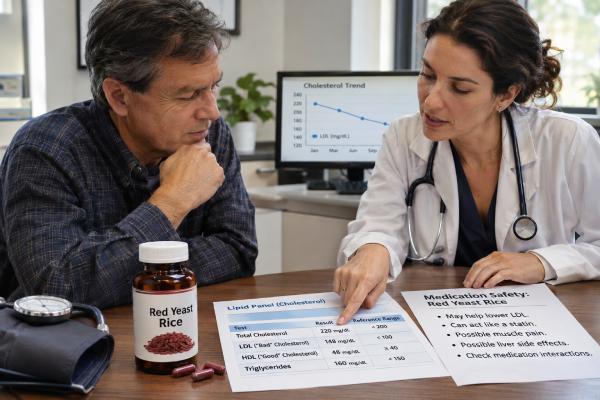
Red yeast rice can lower LDL cholesterol, but the reason it works is also the reason it needs caution. Some products contain monacolin K, a compound chemically identical to lovastatin, a prescription statin. In clinical trials, red yeast rice products that supplied meaningful amounts of monacolin K often lowered LDL cholesterol by roughly 20% to 30%, although results vary with the product, dose, starting cholesterol level, and study design. The problem is that supplements can differ greatly in monacolin content, and labels may not tell you how much you are getting. That makes both effectiveness and side effects harder to predict. Red yeast rice can cause muscle symptoms, liver problems, and drug interactions similar to statins, and some products may contain citrinin, a kidney-toxic contaminant. It is not a harmless “natural” alternative to medication. If you are considering it for high cholesterol, the safest approach is to review your cardiovascular risk, medications, liver and kidney health, and follow-up testing with a clinician first.
Table of Contents
- What Red Yeast Rice Is and Why It Lowers Cholesterol
- How Much Red Yeast Rice Can Lower LDL
- Side Effects and Warning Signs
- Drug Interactions and Who Should Avoid It
- Quality, Citrinin, and Label Problems
- How to Use Red Yeast Rice More Safely
- Better-Proven Options for Lowering LDL
What Red Yeast Rice Is and Why It Lowers Cholesterol
Red yeast rice is rice fermented with species of Monascus yeast. During fermentation, the product can develop several compounds called monacolins. The best known is monacolin K.
Monacolin K matters because it is chemically identical to lovastatin. Like prescription statins, it inhibits HMG-CoA reductase, an enzyme the liver uses to make cholesterol. When liver cholesterol production falls, the liver generally increases LDL receptors on its surface and removes more LDL particles from the bloodstream. That is why a red yeast rice product with enough monacolin K can lower LDL cholesterol.
This mechanism also explains a common misunderstanding: red yeast rice is not fundamentally different from a statin simply because it comes from a fermented food. If a product contains a pharmacologically active amount of monacolin K, the body is being exposed to a statin-like drug effect.
In the United States, the regulatory situation is unusual. The Food and Drug Administration has determined that red yeast rice products containing more than trace amounts of monacolin K cannot legally be marketed as dietary supplements because lovastatin was approved as a drug. Products sold as supplements may therefore contain little monacolin K, undisclosed amounts, or variable amounts from batch to batch. A supplement that contains too little may do very little for cholesterol; one with more may act more like a low-dose statin.
That uncertainty is important when you are trying to treat high LDL cholesterol. With a prescription medication, the active dose is standardized. With red yeast rice, the milligrams of “red yeast rice” on the label do not reliably tell you the amount of active monacolin K.
How Much Red Yeast Rice Can Lower LDL
Red yeast rice can produce a meaningful LDL reduction when it contains enough monacolin K. Recent reviews of randomized trials generally find reductions in LDL and total cholesterol, but the size of the effect differs substantially among studies.
A 2024 systematic review of monacolin K trials included 12 randomized trials with 769 adults. Doses ranged from 2 mg to 10 mg of monacolin K per day, and treatment lasted up to 12 weeks. The studies reported reductions in LDL and total cholesterol, including evidence that even 3 mg daily can have an effect. Another 2024 systematic review and meta-analysis of red yeast rice extract trials found an average LDL reduction of about 36 mg/dL and an average total cholesterol reduction of about 37 mg/dL over interventions lasting 4 to 24 weeks.
Those averages should not be treated as a promise. Your result depends on at least four factors:
- How much active monacolin the product actually contains. This can vary far more than the front-label supplement dose suggests.
- Your starting LDL level. A percentage reduction produces a larger absolute change when baseline LDL is higher.
- Adherence. Taking a product inconsistently reduces the expected effect.
- Other changes happening at the same time. Diet, body weight, exercise, alcohol intake, and other medications can all shift lipid levels.
A practical way to think about the expected effect is by percentage rather than by a single mg/dL number. Trials of adequately active red yeast rice products often show LDL reductions in the range expected from low-intensity or sometimes moderate low-dose statin therapy. A 20% reduction would lower an LDL of 160 mg/dL to about 128 mg/dL; a 30% reduction would lower it to about 112 mg/dL.
That may sound substantial, but LDL lowering is only one part of treatment. What matters clinically is whether the therapy is proven, reliable, safe for you, and strong enough for your cardiovascular risk level. People with known atherosclerotic cardiovascular disease, very high LDL, diabetes with elevated risk, or certain other high-risk conditions often need a predictable medication plan rather than an unstandardized supplement.
If you want to know whether a change is working, repeat lipids after a reasonable interval rather than judging by how you feel. High cholesterol usually causes no symptoms. A clinician may recheck a lipid panel after roughly 4 to 12 weeks when starting or changing lipid-lowering therapy, depending on the treatment and individual situation.
Side Effects and Warning Signs
The side effects of red yeast rice largely mirror those of lovastatin because monacolin K is lovastatin. Many people tolerate it, but “natural” does not mean side-effect free.
The most discussed problem is muscle symptoms. These may include new aching, soreness, weakness, cramps, or unusual fatigue. Mild muscle symptoms can have many causes, so they do not automatically mean the supplement is injuring muscle. However, severe muscle pain or weakness—especially with dark or cola-colored urine—requires urgent medical evaluation because rare cases of serious muscle breakdown can damage the kidneys.
Red yeast rice may also raise liver enzymes. Stop the product and seek medical advice if you develop symptoms that could suggest liver injury, such as yellowing of the skin or eyes, dark urine, marked loss of appetite, persistent nausea, or pain in the upper right abdomen.
Possible adverse effects include:
- Muscle aches, cramps, or weakness
- Headache or dizziness
- Digestive symptoms such as nausea, gas, abdominal discomfort, or diarrhea
- Elevated liver enzymes
- Rare but serious muscle injury
- Kidney risk if the product is contaminated with citrinin
Reviews of clinical trials often report relatively low overall rates of serious adverse events. That finding is reassuring but incomplete. Trials are usually short, use selected products, and may exclude higher-risk participants. Supplement-market products can also differ from the preparations used in studies. A short trial showing few problems does not prove that any red yeast rice product is safe for long-term self-treatment.
If muscle symptoms occur, do not simply add another supplement to “counteract” them and keep taking red yeast rice. First identify whether monacolin exposure, another drug, intense exercise, hypothyroidism, illness, or another factor could be contributing. The same logic applies to creatine kinase testing when statin-like muscle injury is suspected: the test is most useful in the right clinical context, not as a routine number to chase.
Drug Interactions and Who Should Avoid It
Red yeast rice can interact with medicines that also affect statin metabolism, muscle risk, or the liver. If you take prescription drugs, a pharmacist or clinician should review the combination before you start the supplement.
The clearest rule is to avoid “stacking” red yeast rice with a prescription statin unless the prescriber explicitly directs it. Combining two sources of HMG-CoA reductase inhibition may increase the risk of muscle and liver side effects without providing a controlled, evidence-based dose.
Other interactions may involve medicines that raise lovastatin exposure by inhibiting the CYP3A4 enzyme. Examples can include certain macrolide antibiotics, azole antifungals, HIV protease inhibitors, and some other strong enzyme inhibitors. Grapefruit can also increase exposure to lovastatin in relevant amounts. The exact risk depends on the drug, dose, and timing, so a medication review matters more than memorizing a short interaction list.
Use extra caution or avoid red yeast rice if you:
- Are pregnant, trying to become pregnant, or breastfeeding
- Have active liver disease or unexplained persistent liver-test abnormalities
- Have a history of serious statin-associated muscle injury
- Have significant kidney disease, especially if contamination risk is uncertain
- Take a statin, fibrate, cyclosporine, or other medicine that can increase muscle toxicity risk
- Take multiple medications with important CYP3A4 interactions
- Drink substantial amounts of alcohol or have other factors that increase liver risk
Pregnancy deserves special emphasis. Cholesterol synthesis is important to fetal development, and statin-like compounds are not appropriate for routine cholesterol self-treatment during pregnancy. Red yeast rice should not be viewed as a “natural workaround.”
People who stopped a prescription statin because of muscle symptoms should also be careful. Switching to red yeast rice may simply re-expose the body to a statin compound, but with less dose certainty. There are several structured approaches to statin-associated muscle symptoms, including changing the statin, lowering the dose, using intermittent dosing in selected cases, or adding nonstatin therapy.
Quality, Citrinin, and Label Problems
The biggest practical problem with red yeast rice is product variability. Two bottles with similar front labels can contain very different amounts of active monacolins.
That creates a dilemma. A product with little monacolin K may be safer from statin-like effects but also may not lower LDL. A product with a larger amount may work better but can also produce the same adverse effects and interactions expected from lovastatin.
There is a second quality issue: citrinin. Citrinin is a mycotoxin that can be produced during fermentation and is toxic to the kidneys in experimental models. Good manufacturing controls can reduce contamination, but consumers cannot reliably assess it by appearance, taste, or the amount of red yeast rice listed on the bottle.
For a more detailed buying and safety framework, see the guide to red yeast rice quality, citrinin, and label problems. The most useful label and quality questions are simple:
| Question | Why it matters |
|---|---|
| Is monacolin K content disclosed? | Without it, the pharmacologic dose is difficult to estimate. |
| Is there independent quality testing? | Third-party testing can improve confidence in identity and contamination control, though it does not guarantee clinical effectiveness. |
| Does the company test for citrinin? | Citrinin contamination adds avoidable kidney risk. |
| Are there multiple “cholesterol” ingredients? | Combination formulas make it harder to identify which ingredient caused a benefit or side effect. |
| Are bold cholesterol claims made without an active-dose disclosure? | Marketing language cannot substitute for a standardized dose. |
A “citrinin-free” claim can be useful, but it does not solve the monacolin problem. Purity and dose standardization are separate issues.
How to Use Red Yeast Rice More Safely
If you and your clinician decide that red yeast rice is reasonable, treat it with the same respect you would give a cholesterol-lowering medicine.
Start by confirming what problem you are trying to solve. A single elevated LDL value does not always tell the whole story. Review the full lipid panel, family history, blood pressure, diabetes status, smoking, age, and any known cardiovascular disease. In some people, additional measures such as non-HDL cholesterol, ApoB, or lipoprotein(a) can refine risk.
Then review medications and supplements. Bring the actual bottles or a complete list, including occasional medicines. This is especially important if you take antibiotics, antifungals, immune-suppressing drugs, lipid-lowering drugs, or products that can affect the liver.
A practical monitoring plan may include:
- Get a baseline lipid panel. This gives you a real starting point.
- Consider baseline liver tests when clinically appropriate. People with liver disease, heavy alcohol use, symptoms, or interacting medications may need more careful assessment.
- Choose one product and avoid unnecessary combination formulas. Changing brands mid-course makes the effect harder to interpret.
- Watch for muscle and liver warning signs. Do not push through severe symptoms.
- Recheck cholesterol after several weeks. A repeat panel around 4 to 12 weeks can show whether LDL is actually responding.
- Reassess the plan if the effect is small or side effects occur. Do not keep escalating an uncertain supplement indefinitely.
Routine creatine kinase testing is not necessary for everyone, but it can be appropriate when significant muscle symptoms develop. Similarly, liver tests are guided by symptoms, baseline risk, and clinical judgment rather than by a one-size-fits-all schedule.
Most importantly, do not let supplement use delay proven treatment when your risk is high. A person who has already had a heart attack, stroke, coronary stent, or other atherosclerotic event generally needs therapies with strong outcome evidence and dependable dosing.
Better-Proven Options for Lowering LDL
For most people, the strongest starting point is a combination of heart-healthy eating, physical activity, weight management when needed, and medication when cardiovascular risk justifies it.
Diet can make a meaningful difference. Replacing saturated fats with unsaturated fats, increasing soluble fiber, and choosing minimally processed plant foods can lower LDL without the dose uncertainty of red yeast rice. Oats, barley, beans, lentils, fruit, vegetables, nuts, seeds, and foods with plant sterols can all contribute. A structured approach to soluble fiber for LDL lowering is especially useful because the dose can be increased gradually and tracked.
Prescription statins remain first-line therapy for many people because their doses, expected LDL reductions, safety monitoring, and cardiovascular outcome benefits are well established. If a statin is not tolerated or does not lower LDL enough, options include ezetimibe, bempedoic acid, PCSK9-targeting therapies, and combinations chosen for the person’s risk and LDL goal. A clinician can also help distinguish true statin intolerance from a symptom that happened to occur during statin use.
Red yeast rice occupies an awkward middle ground: the ingredient that makes it effective is a statin, but the supplement may not provide a standardized statin dose. For someone seeking a predictable LDL reduction, that uncertainty is a major disadvantage.
The decision should therefore be based on more than whether red yeast rice is “natural.” Ask three questions: How much LDL reduction do I need? How reliable is the product? And is there a better-studied option that gives the same or greater benefit with clearer dosing and monitoring? Those questions usually lead to a safer long-term plan.
References
- Monacolin K supplementation in patients with hypercholesterolemia: A systematic review of clinical trials 2024 (Systematic Review)
- Safety and Efficacy of the Consumption of the Nutraceutical “Red Yeast Rice Extract” for the Reduction of Hypercholesterolemia in Humans: A Systematic Review and Meta-Analysis 2024 (Systematic Review)
- The Impact of Red Yeast Rice Extract Use on the Occurrence of Muscle Symptoms and Liver Dysfunction: An Update from the Adverse Event Reporting Systems and Available Meta-Analyses 2024 (Review)
- High Cholesterol and Natural Products 2024
- Alternative lipid lowering strategies: State-of-the-art review of red yeast rice 2023 (Review)
- Red Yeast Rice: What You Need To Know 2022
Disclaimer
Red yeast rice can act like a statin and may cause important drug interactions, muscle injury, liver problems, or exposure to contaminants. Do not use it to replace prescribed cholesterol treatment without discussing your cardiovascular risk and medications with a qualified clinician. Seek urgent care for severe muscle weakness with dark urine, jaundice, or other serious symptoms.