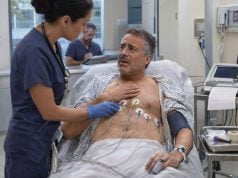
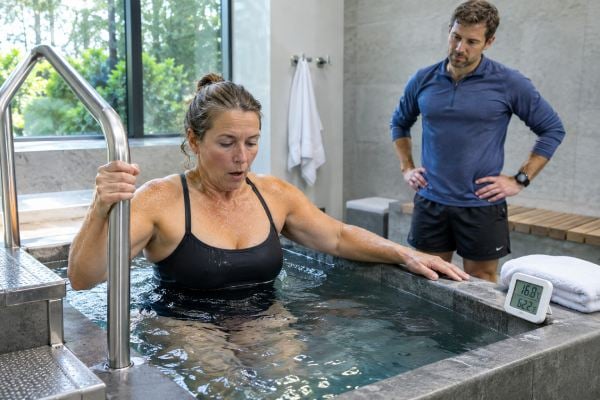
A cold plunge creates an immediate cardiovascular stress response. Within seconds of entering very cold water, blood vessels in the skin constrict, blood pressure rises, breathing can become rapid and difficult to control, and heart rate may surge. At the same time, immersion and facial cooling can activate reflexes that slow the heart. That combination of sympathetic “fight-or-flight” stimulation and vagal activity is one reason cold water can provoke palpitations or rhythm disturbances in susceptible people.
For a healthy adult, brief cold-water immersion may be tolerated, but it should not be treated as a harmless wellness practice. Evidence for long-term heart benefits is still limited, while the short-term hemodynamic effects are clear. People with uncontrolled hypertension, coronary artery disease, heart failure, certain arrhythmias, inherited rhythm disorders, or a history of fainting need more caution and should discuss plunging with a clinician. Water temperature, duration, how quickly you enter, and whether you are alone all change the risk.
Table of Contents
- What Cold Water Does to the Heart
- Blood Pressure Effects
- Arrhythmias and the Cold-Shock Response
- Who Should Avoid a Cold Plunge or Get Medical Clearance?
- Safer Cold-Plunge Practices
- Heart-Health Claims vs Evidence
- When Symptoms Need Medical Care
- Practical Cold-Plunge Questions
What Cold Water Does to the Heart
Sudden cold-water immersion triggers what physiologists call the cold-shock response. Cold receptors in the skin rapidly activate the sympathetic nervous system. You may gasp, breathe faster, feel a surge of adrenaline, and notice your heart pounding.
Peripheral blood vessels constrict to reduce heat loss. That shifts blood toward the chest and raises systemic vascular resistance. The heart is suddenly pumping against a higher pressure while central blood volume increases. This is very different from simply feeling cold in a cool room.
Immersion itself also changes circulation. Water pressure around the legs and abdomen pushes blood back toward the chest. Facial cooling and breath-holding can activate the diving reflex, which tends to slow heart rate through the parasympathetic nervous system. When these opposing autonomic signals occur together—sympathetic activation pushing heart rate up while vagal activation pushes it down—the heart can become electrically unstable in vulnerable people.
A 2024 systematic review and meta-analysis of cold exposure studies in healthy adults found that cold exposure slightly increased mean blood pressure and changed autonomic measures while lowering heart rate after exposure. These average findings should not be mistaken for individual safety. The first seconds to minutes of a plunge can produce much larger transient changes than a group average measured across a session.
The colder the water, the greater the initial stress. A 10°C/50°F plunge is not physiologically equivalent to a 20°C/68°F swim. Head and face immersion, breath-holding, and exertion add further autonomic load.
Blood Pressure Effects
Cold water tends to raise blood pressure acutely because small arteries constrict. For someone with normal blood pressure and healthy arteries, that rise is usually brief. For someone starting with severe hypertension or significant vascular disease, the same response can create a much larger workload on the heart.
Blood pressure during a plunge is also hard to measure accurately, so people often underestimate the magnitude of the response. The absence of symptoms does not prove that pressure stayed normal.
The concern is not that one brief rise automatically causes damage. Blood pressure naturally rises during exercise and stress. The issue is the speed of the increase, the cold-induced vasoconstriction, and the possibility of combining it with an already high baseline pressure.
If your pressure is poorly controlled, deal with that first. Knowing what your blood pressure numbers mean and tracking them outside the clinic is more important for long-term cardiovascular health than adding cold exposure.
Cold exposure can also alter arterial stiffness and vascular resistance after the session. A study of swimming in cooler water found an acute increase in arterial stiffness after 25°C swimming compared with warmer water. That does not prove a short plunge is harmful, but it reinforces that “cold improves circulation” is an oversimplification.
People taking blood-pressure medication should not assume treatment eliminates risk. Beta-blockers, vasodilators, and other cardiovascular drugs can change heart-rate and blood-pressure responses. A clinician who knows your diagnosis and medications can give more useful advice than a generic temperature chart.
Arrhythmias and the Cold-Shock Response
Cold water can cause palpitations even in healthy people. Most are benign premature beats, but the combination of abrupt sympathetic activation, breath-holding, and vagal stimulation can create conditions that favor more significant arrhythmias.
A 2024 systematic review on habituation to cold shock notes that immersion can increase cardiac arrhythmias and that repeated exposure can blunt some aspects of the cold-shock response. Habituation is not immunity. A person who feels calmer after several plunges can still experience cardiovascular stress.
Recent field data are somewhat reassuring for selected healthy participants. A 2026 study that continuously monitored 20 middle-aged recreational athletes during multiple immersions in 7°C water found a large average heart-rate rise during immersion but a low burden of clinically important arrhythmias. That study was small, involved screened recreational athletes, and does not establish safety for people with heart disease.
Risk may be higher with:
- Known atrial fibrillation or other tachyarrhythmias.
- Long QT syndrome or another inherited electrical disorder.
- Significant coronary artery disease.
- Cardiomyopathy or heart failure.
- A history of unexplained fainting.
- Heavy alcohol use before immersion.
- Breath-holding contests or prolonged underwater swimming.
- Strenuous exercise immediately before or during cold immersion.
If you have recurring skipped beats or racing episodes, review common causes and warning signs of heart palpitations before using cold exposure as a wellness experiment.
Who Should Avoid a Cold Plunge or Get Medical Clearance?
Cold plunging is an optional practice, not a necessary component of cardiovascular fitness. If your risk is uncertain, there is no health penalty for choosing not to do it.
Medical clearance is especially sensible for people with:
- Uncontrolled or severe hypertension.
- Prior heart attack, known coronary artery disease, angina, or coronary stents.
- Heart failure or cardiomyopathy.
- Atrial fibrillation with poor rate control, ventricular arrhythmias, or frequent symptomatic ectopy.
- Long QT syndrome, Brugada syndrome, or another inherited channelopathy.
- Moderate or severe valve disease.
- A pacemaker or defibrillator when cold-water activity has not been discussed with the treating cardiology team.
- A history of syncope, especially during exercise or swimming.
- Raynaud phenomenon severe enough to cause injury, or other vascular disease aggravated by cold.
People with active chest pain, a recent cardiac event, acute illness, or significant shortness of breath should not attempt a plunge.
There is also a noncardiac danger: drowning. The initial gasp and hyperventilation can make it difficult to control breathing. If your face is submerged unexpectedly, inhaling water is possible. That is why solo plunging, locking yourself into a chest freezer conversion, or using alcohol or sedatives beforehand is unsafe.
Safer Cold-Plunge Practices
If you are a healthy adult who chooses to cold plunge, reduce the intensity rather than chasing the coldest possible temperature.
Start with cool, not extreme, water. Many benefits claimed for cold exposure have not been shown to require near-freezing temperatures. A short exposure around 15–20°C/59–68°F is a more conservative starting point than 5–10°C/41–50°F.
Enter gradually. Sudden full-body immersion maximizes the cold-shock response. Step in slowly, keep your head above water, and focus on controlled breathing. Avoid deliberate hyperventilation before entry and avoid long breath holds in the water.
Keep early sessions brief. One to three minutes is plenty for an initial trial. Longer is not automatically better, and there is no established heart-health dose that requires prolonged immersion.
Use a buddy or supervised setting. Someone should be able to help if you become confused, weak, dizzy, or unable to get out. Outdoor cold-water swimming adds currents, waves, distance from shore, and hypothermia risk, so it is more hazardous than a controlled tub.
Warm up gradually afterward with dry clothes and a warm environment. Extremely hot water immediately after severe cold exposure can create another abrupt circulatory shift.
Do not combine cold plunging with alcohol, recreational drugs, stimulant-heavy pre-workout products, or sleep deprivation. These can impair judgment or add cardiovascular stress.
Heart-Health Claims vs Evidence
Cold plunges are often promoted as a way to “train the cardiovascular system,” lower inflammation, improve circulation, boost metabolism, or increase heart-rate variability. Some short-term physiological changes are real, but long-term clinical benefits are much less certain.
Cold exposure can alter heart-rate variability after a session, and repeated exposure can blunt the gasp and tachycardia of cold shock. Those are physiological adaptations. They do not prove fewer heart attacks, lower chronic blood pressure, or longer life.
Evidence is also often drawn from cold-water swimmers rather than controlled plunge studies. Regular swimmers may differ from non-swimmers in fitness, body composition, social connection, outdoor activity, and lifestyle. Their outcomes cannot be attributed solely to cold water.
For heart health, interventions with much stronger evidence include regular aerobic and resistance exercise, controlling LDL cholesterol, treating hypertension, avoiding smoking, getting adequate sleep, and managing diabetes. If you enjoy a cold plunge and can do it safely, it can be a personal wellness practice. It should not replace these proven measures.
When Symptoms Need Medical Care
Stop the exposure and get out of the water if you develop chest pain, severe shortness of breath, marked dizziness, weakness, confusion, or sustained rapid palpitations. Do not try to “push through” a frightening cardiovascular response.
Call emergency services for chest pressure that persists, fainting, severe breathing difficulty, new neurologic symptoms, or a sustained fast or irregular rhythm with weakness or chest discomfort. Cold exposure can coincide with serious events, and symptoms should not be dismissed as normal cold shock.
If brief palpitations recur only with cold exposure, avoid further plunges until you have been assessed. A clinician may consider an ECG, ambulatory monitor, exercise testing, or other evaluation depending on your age and risk factors.
The safest framing is simple: a cold plunge is a stressor. Healthy people may tolerate that stressor well, while certain cardiovascular conditions make it less predictable. The goal should never be to prove toughness at the expense of safety.
Practical Cold-Plunge Questions
Cold-water enthusiasts often focus on temperature and minutes, but cardiovascular risk also depends on how exposure begins, what you do in the water, and what health conditions you bring to it.
Is 10°C/50°F safer if you are used to cold plunging?
Habituation can reduce the gasp, hyperventilation, and heart-rate surge after repeated exposure. That may make the experience more controlled, but it does not make very cold water inherently safe. Blood-vessel constriction and central blood-volume shifts still occur. Underlying coronary disease or an electrical disorder is not “trained away.”
A habituated person may actually stay in longer because the water feels easier, creating more cooling and hypothermia risk. Comfort should not be used as the only safety marker.
Is a colder plunge more beneficial?
There is no established cardiovascular dose-response showing that 5°C water is better than 15°C water. Extreme cold produces a stronger physiological stress response, but stronger is not the same as healthier. If the goal is alertness, mood, or personal challenge, a milder temperature may provide the desired experience with less abrupt cardiovascular load.
What is the safest breathing pattern?
Normal, controlled breathing is safest. Avoid deliberate hyperventilation before or during immersion. Hyperventilation lowers carbon dioxide, can cause lightheadedness, and can extend breath-hold time without increasing oxygen stores, which creates drowning risk.
Do not combine breath-hold training with cold-water immersion unless it is part of a professionally supervised program. Keeping the face above water during initial exposure reduces the diving-reflex component and makes breathing easier to control.
Can a cold plunge lower blood pressure later?
Some studies measure autonomic changes after cold exposure, but there is not enough evidence to prescribe cold plunges as hypertension treatment. The immediate effect is generally a rise in vascular resistance and blood pressure. Any later reduction does not cancel the initial stress or replace proven hypertension therapy.
If lowering blood pressure is your goal, regular exercise, sodium reduction, adequate sleep, weight management, limited alcohol, and prescribed medication have much stronger evidence.
Should you plunge immediately after a workout?
Post-exercise cold immersion is common in sports recovery, but the heart is already responding to exercise, body temperature, dehydration, and catecholamines. Jumping directly into very cold water adds another abrupt autonomic stimulus. For people with cardiac risk factors or palpitations, allowing heart rate and breathing to settle first is more conservative.
Cold immersion immediately after resistance training may also affect some muscle-adaptation signals, so recovery goals and cardiovascular safety are separate issues.
What about sauna-to-cold-plunge cycles?
Alternating heat and extreme cold creates repeated vasodilation and vasoconstriction. Healthy experienced users may tolerate this, but the rapid blood-pressure swings can be substantial. People with unstable coronary disease, severe hypertension, heart failure, or arrhythmia should not assume contrast therapy is safe because each component is popular on its own.
If you use both, make transitions gradual, hydrate, avoid alcohol, and stop for dizziness, chest discomfort, or palpitations.
Can a smartwatch tell you whether a plunge is safe?
A watch can show heart rate and sometimes record a single-lead ECG, but it cannot measure the full cardiovascular stress of immersion or rule out dangerous disease. Water, motion, cold skin, and poor contact can also reduce signal quality.
Use wearable data to document symptoms, not to provide clearance. A normal-looking heart-rate trace does not mean blood pressure stayed safe or coronary blood flow was adequate.
What is a sensible beginner progression?
A cautious progression starts with cool showers or brief lower-body immersion, then moves to short whole-body exposure at moderate cold. Increase either duration or cold intensity gradually, not both at the same time. Keep sessions supervised until you know how you respond.
If a moderate exposure reliably causes uncontrolled gasping, dizziness, chest discomfort, or sustained palpitations, that is a reason to stop—not a sign you need to “adapt harder.”
How to decide whether the risk is worth it
Because cold plunging is optional, the risk-benefit calculation should be stricter than for a necessary treatment. If you have no cardiovascular disease, tolerate moderate cold well, use a supervised setup, and enjoy the practice, the residual risk may be acceptable to you. If you have known coronary disease or an arrhythmia and the only expected benefit is feeling energized, there are safer ways to achieve that goal.
Do not let social pressure redefine warning signs. Shaking, gasping, numbness, or feeling unable to get out of the water are not badges of adaptation. They indicate a strong cold load. Likewise, chest pressure or a sustained irregular rhythm is not a normal part of “pushing through.”
A conservative rule is to use the warmest temperature and shortest duration that gives the effect you want. Avoid competitive time targets. If you need progressively colder water to feel that a session “counts,” the practice is drifting away from a health goal and toward stress exposure for its own sake.
People with cardiovascular conditions should ask a specific question when seeking medical advice: “Given my diagnosis, medications, and usual blood pressure, is brief cold-water immersion reasonable, and are there temperature or duration limits you recommend?” That produces more useful guidance than asking whether cold plunges are generally good for the heart.
References
- The effects of cold exposure (cold water immersion, whole- and partial- body cryostimulation) on cardiovascular and cardiac autonomic control responses in healthy individuals: A systematic review, meta-analysis and meta-regression 2024 (Systematic Review)
- Habituation of the cold shock response: A systematic review and meta-analysis 2024 (Systematic Review)
- Cardiac arrhythmia during cold-water immersion: a self-controlled field study with extended rhythm monitoring 2026 (Clinical Study)
- Cardiovascular and mood responses to an acute bout of cold water immersion 2023 (Clinical Study)
- Acute increase in arterial stiffness after swimming in cooler water 2021 (Clinical Study)
Disclaimer
This article is for education and is not medical clearance for cold-water immersion. People with cardiovascular disease, uncontrolled blood pressure, arrhythmias, fainting, or significant medication concerns should discuss cold exposure with a qualified clinician. Seek emergency care for chest pain, fainting, severe shortness of breath, or sustained symptomatic arrhythmia.