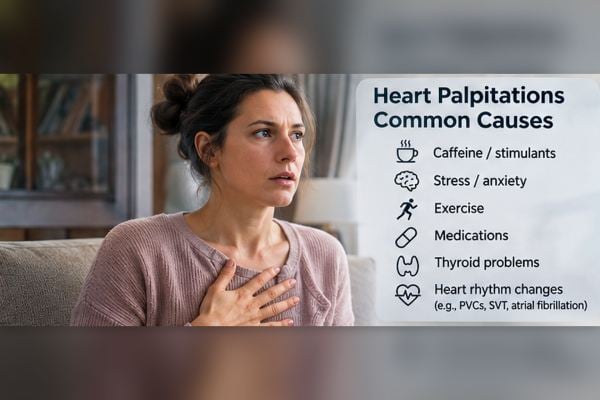
Heart palpitations are the feeling that your heartbeat has suddenly become unusually noticeable. You may sense pounding, fluttering, racing, skipping, or a brief “flip-flop” in your chest or throat. Most palpitations are not dangerous, especially when they are brief and tied to an obvious trigger such as stress, caffeine, dehydration, or exercise. Still, the same symptom can sometimes occur with an abnormal heart rhythm, thyroid disease, anemia, medication effects, or another condition that deserves medical attention.
The key is not to judge palpitations by how dramatic they feel. A forceful but normal heartbeat can feel alarming, while some significant rhythm problems cause only mild symptoms. What matters more is the pattern: when the episodes happen, how long they last, whether the rhythm feels regular or irregular, what your pulse is doing, and whether symptoms such as chest pain, fainting, or shortness of breath occur at the same time. Those details help determine whether simple monitoring is enough or testing is needed.
Table of Contents
- What Heart Palpitations Feel Like
- Common Causes and Triggers
- When Palpitations Need Urgent Care
- When to Schedule a Medical Check
- How Palpitations Are Evaluated
- What You Can Do at Home
- How Treatment Depends on the Cause
What Heart Palpitations Feel Like
Palpitations are a symptom, not a diagnosis. They describe your awareness of your heartbeat. People use very different words for the same experience, including “racing,” “thumping,” “fluttering,” “skipping,” or “beating in my neck.” The sensation may last one or two beats, continue for several minutes, or come and go for hours.
A palpitation can happen while the heart is beating normally. For example, after a sudden scare, adrenaline can make each beat stronger and faster. It can also occur when an early beat—often a premature atrial contraction or premature ventricular contraction—briefly interrupts the usual rhythm. The pause after that early beat allows the next beat to fill with more blood, which can make the following contraction feel unusually forceful. This is why a “skipped beat” often feels like a pause followed by a thump rather than the heart literally stopping.
Other patterns can feel different. A very fast, regular rhythm that starts and stops suddenly can occur with supraventricular tachycardia. Atrial fibrillation often produces an irregular, chaotic pulse, although not everyone can recognize the irregularity by feel. If you want a deeper explanation of irregular extra beats, see causes and warning signs of skipped beats and PVCs.
The sensation alone cannot reliably identify the rhythm. Two people with the same arrhythmia may describe it differently, and one person may have several different sensations from benign and clinically important causes. That is why timing, associated symptoms, and an electrocardiogram are more useful than the description by itself.
A few pattern clues can still help organize the conversation with a clinician. A single hard beat followed by normal rhythm often points toward a premature beat. A rapid rhythm that switches on and off almost like a light switch can suggest a re-entrant tachycardia. A fast rhythm that gradually speeds up during activity and gradually slows with rest is more typical of normal sinus tachycardia. These clues are not diagnostic, but they can help determine which monitor or test is most likely to capture the problem.
Common Causes and Triggers
The most common causes fall into a few broad groups: normal body responses, stimulants and medications, medical conditions outside the heart, and heart rhythm problems. More than one factor can be present at the same time.
Everyday triggers
Stress and strong emotion are frequent causes. Anxiety, anger, pain, excitement, and panic can increase adrenaline, which raises heart rate and makes the heartbeat feel more forceful. Lack of sleep and physical exhaustion can amplify the same response. Anxiety should not automatically be assumed to be the cause, however, especially when palpitations are new, recurrent, or accompanied by other symptoms.
Exercise normally increases heart rate. Palpitations during a hard workout may simply reflect exertion, but a sudden rhythm change, dizziness, fainting, chest pressure, or a heart rate that stays unexpectedly high after stopping deserves attention. For context, normal resting and exercise heart-rate ranges can help you understand what is typical, although individual values vary.
Dehydration can contribute by reducing circulating blood volume and making the heart work harder to maintain blood pressure. Fever, heat exposure, vomiting, diarrhea, and heavy sweating may have a similar effect. Low blood sugar can also trigger adrenaline symptoms such as shakiness, sweating, and a pounding heartbeat.
Caffeine, alcohol, nicotine, and other stimulants
Caffeine affects people differently. Moderate coffee intake does not appear to cause arrhythmias in most adults, but sensitive people may notice palpitations after coffee, energy drinks, pre-workout products, tea, or large amounts of chocolate. If symptoms consistently occur after caffeine, reducing the dose is a practical test. The relationship between coffee, palpitations, and atrial fibrillation is more nuanced than simply labeling all caffeine unsafe.
Nicotine can raise heart rate and blood pressure. Alcohol can trigger palpitations during drinking or later, particularly after heavier intake. Recreational stimulants such as cocaine and methamphetamine can provoke dangerous arrhythmias and require urgent medical attention when symptoms occur.
Many common medicines and supplements can also stimulate the heart. Examples include decongestants containing pseudoephedrine or phenylephrine, some asthma inhalers, thyroid hormone taken at too high a dose, ADHD stimulants, certain weight-loss products, and some “energy” or pre-workout supplements. Never stop a prescription medicine abruptly without medical guidance, but bring a complete medication and supplement list to an evaluation.
Medical causes outside the heart
An overactive thyroid can cause a fast heartbeat, tremor, heat intolerance, weight loss, and anxiety-like symptoms. Anemia can force the heart to pump faster to deliver enough oxygen. Electrolyte disturbances involving potassium, magnesium, or calcium may affect cardiac electrical activity. Infection, fever, pregnancy, menopause-related symptoms, low blood volume, and poorly controlled diabetes can also increase awareness of the heartbeat.
Some people develop palpitations when standing because the heart rate rises excessively with upright posture. Postural orthostatic tachycardia syndrome is one possible cause, but dehydration, medication effects, anemia, and other conditions can produce similar symptoms and must be considered first.
Pregnancy can also make the heartbeat more noticeable because blood volume and cardiac output rise. Most pregnancy-related palpitations are benign, but persistent rapid heart rate, fainting, chest pain, severe breathlessness, or a known heart condition should be assessed promptly. Hormonal changes around perimenopause may also coincide with palpitations, but new symptoms should not automatically be attributed to hormones without considering other causes.
Heart rhythm and structural causes
Arrhythmias include premature beats, supraventricular tachycardia, atrial fibrillation, atrial flutter, and less commonly dangerous ventricular rhythms. Structural heart disease, previous heart attack, cardiomyopathy, valve disease, or heart failure can increase concern because palpitations in those settings have a higher chance of reflecting a significant rhythm problem.
Atrial fibrillation may cause a racing or irregular heartbeat, fatigue, breathlessness, dizziness, or no symptoms at all. If your pulse repeatedly feels irregular for minutes or hours, atrial fibrillation symptoms and warning signs are worth reviewing and discussing with a clinician.
When Palpitations Need Urgent Care
Seek emergency care when palpitations occur with symptoms that could indicate reduced blood flow to the heart or brain, a dangerous rhythm, or another acute problem. Do not drive yourself if you feel faint, severely short of breath, or unstable.
Urgent warning signs include:
- Chest pressure, squeezing, heaviness, or pain, especially if it lasts more than a few minutes or spreads to the arm, jaw, back, or shoulder.
- Fainting, near-fainting, new confusion, or severe weakness.
- Severe or rapidly worsening shortness of breath.
- A sustained very fast heartbeat with dizziness, weakness, or chest discomfort.
- Palpitations after stimulant drug use or a suspected medication overdose.
- Palpitations with new neurologic symptoms such as facial droop, one-sided weakness, or trouble speaking.
Chest pain is not something to “watch and see” when it could represent a heart attack. Guidance on when chest pain needs emergency evaluation can help clarify the major red flags.
A brief flutter without other symptoms is usually less urgent. The important distinction is whether circulation seems affected. Fainting during exertion, for example, is particularly concerning because it can accompany serious rhythm or structural heart problems.
People with known heart disease, a prior heart attack, heart failure, a cardiomyopathy, significant valve disease, or a personal history of dangerous arrhythmia should use a lower threshold for urgent assessment. The same applies when there is a family history of sudden unexplained death or inherited rhythm disorders, particularly at a young age.
When to Schedule a Medical Check
Even without emergency symptoms, arrange a medical assessment if palpitations are new, recurrent, increasing, prolonged, or difficult to explain. A check is especially reasonable when episodes last several minutes, occur frequently, wake you from sleep, happen with exercise, or interfere with normal activities.
You should also consider an appointment if your resting pulse is repeatedly much faster than usual, feels persistently irregular, or symptoms occur after starting or changing a medication. If you already know you have high blood pressure, thyroid disease, anemia, diabetes, sleep apnea, or heart disease, tell the clinician because those conditions may affect the workup.
One isolated palpitation after poor sleep or too much caffeine may not require testing. A pattern that repeats over days or weeks is different. Medical evaluation is not only about finding dangerous arrhythmias; it can also identify treatable causes such as iron deficiency, thyroid disease, dehydration, or a medication side effect.
Age also changes the context. In younger adults without structural heart disease, brief premature beats and sinus tachycardia from stress or stimulants are common. With increasing age, atrial fibrillation and other arrhythmias become more likely, so a new irregular pulse deserves more attention. The threshold for evaluation is also lower when palpitations begin after a recent infection, after surgery, or during treatment with medicines known to affect the heart rhythm.
Keep in mind that a normal pulse between episodes does not rule out an intermittent rhythm problem. Many arrhythmias come and go. The goal of evaluation is often to record the heart rhythm while symptoms are actually happening.
How Palpitations Are Evaluated
Evaluation usually starts with a detailed history, physical examination, and a 12-lead electrocardiogram, or ECG. These steps can identify many causes or reveal clues that determine which test should come next.
A clinician will typically ask about onset, duration, frequency, triggers, pulse speed, whether the rhythm seems regular, and associated symptoms. They may ask whether episodes begin and end suddenly, occur while standing, happen during exercise, or follow caffeine, alcohol, illness, or medication use. Family history matters, especially sudden death, cardiomyopathy, or inherited arrhythmias.
Blood tests are chosen based on the situation. Common examples include a complete blood count for anemia, thyroid testing, electrolytes, kidney function, and sometimes glucose. These are not required for every person but are useful when the history suggests a non-cardiac trigger.
Choosing the right rhythm monitor
A standard ECG records only a few seconds. If palpitations are intermittent, longer monitoring may be needed. The best device depends largely on how often symptoms occur.
| Symptom pattern | A monitoring approach that may be considered |
|---|---|
| Symptoms happen daily | 24- to 48-hour Holter monitor |
| Symptoms happen every few days to weeks | Multi-day patch monitor or event monitor |
| Symptoms are infrequent but concerning | Longer external monitoring or, in selected cases, an implantable loop recorder |
| Symptoms occur during exercise | Exercise testing may help reproduce symptoms and assess heart response |
An echocardiogram may be ordered when the examination, ECG, symptoms, or medical history raise concern for structural heart disease. Stress testing can be appropriate when exertional symptoms suggest ischemia or when exercise reliably triggers the problem.
The frequency of symptoms should guide monitor choice. A 24-hour monitor is much less useful when an episode occurs only once every three weeks. In that situation, a longer patch or event recorder has a better chance of matching symptoms with the rhythm. Conversely, if symptoms occur every day, short-term monitoring may provide an answer quickly. This symptom-rhythm correlation is important because finding an isolated premature beat on a monitor does not prove that it caused every episode a person feels.
Smartwatches and portable ECG devices can sometimes capture useful rhythm strips, but they are not a substitute for clinical assessment. Optical heart-rate sensors can be wrong because of motion, poor skin contact, or signal noise. Even a device that labels a rhythm “normal” or “atrial fibrillation” can misclassify recordings. Save tracings that coincide with symptoms and show them to your clinician rather than treating the app result as a final diagnosis.
What You Can Do at Home
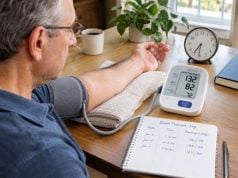
If palpitations are mild and you have no red-flag symptoms, a simple symptom log can make a future medical visit much more useful. Record the time, what you were doing, how long the episode lasted, what the rhythm felt like, and any possible trigger. If you can safely check your pulse, note the approximate rate and whether it seems regular or irregular.
Useful details include:
- Caffeine, alcohol, nicotine, or energy-product intake in the previous several hours.
- New medicines, dose changes, decongestants, inhalers, or supplements.
- Recent illness, fever, vomiting, diarrhea, or unusually heavy sweating.
- Sleep duration and major stress.
- Whether symptoms occurred lying down, sitting, standing, or exercising.
- Associated chest discomfort, breathlessness, lightheadedness, or fainting.
Hydrate normally, get adequate sleep, and avoid obvious triggers that repeatedly provoke symptoms. If caffeine appears responsible, reduce it gradually rather than assuming you must eliminate every source. Avoid unregulated stimulants and high-dose “fat burner” or pre-workout mixtures, especially if the ingredient list is unclear.
Do not repeatedly check your pulse every few minutes when you feel well. Excessive monitoring can increase anxiety and make normal variations feel threatening. Instead, collect enough information to identify a pattern. If you use a wearable, focus on recordings during symptoms and on longer-term trends rather than every isolated number.
Vagal maneuvers are sometimes used for specific supraventricular tachycardias, but they should be learned from a healthcare professional if you have been diagnosed with that type of rhythm. Do not perform carotid massage on yourself.
How Treatment Depends on the Cause
There is no single treatment for palpitations because the correct treatment depends on what is producing them. For benign premature beats with a normal heart, reassurance, sleep, hydration, and trigger reduction may be all that is needed. Symptoms caused by anemia or thyroid disease improve by treating the underlying condition. Medication-related palpitations may require adjusting the drug or dose with the prescriber.
Some arrhythmias respond to medicines that slow conduction or control heart rate. Others can be treated with catheter ablation, which targets the small area of heart tissue responsible for an abnormal electrical circuit. Atrial fibrillation may require a combination of rate or rhythm treatment and an assessment of stroke risk; management is individualized rather than based only on how strong the palpitations feel.
The most useful question is therefore not “How do I stop palpitations?” but “What rhythm or condition is causing them?” In many people, the answer is reassuring. In others, capturing the rhythm early leads to treatment that reduces symptoms and prevents complications.
If episodes are brief, infrequent, and clearly linked to a harmless trigger, careful observation may be reasonable. If they are recurrent, unexplained, or associated with concerning symptoms, getting the rhythm documented is the next practical step.
References
- Cardiovascular Signs and Symptoms: Palpitations and Monitoring 2026 (Review)
- Palpitations: Evaluation, Management, and Wearable Smart Devices 2024 (Review)
- Gender and Age Differences in the Evaluation and Clinical Outcomes of Patients with Palpitations 2024
- Biobehavioral approach to distinguishing panic symptoms from medical illness 2024 (Review)
- Recognizing postural orthostatic tachycardia syndrome in primary care 2023 (Review)
- 2023 ACC/AHA/ACCP/HRS Guideline for the Diagnosis and Management of Atrial Fibrillation: A Report of the American College of Cardiology/American Heart Association Joint Committee on Clinical Practice Guidelines 2024 (Guideline)
Disclaimer
This article is for general educational purposes and is not a diagnosis or a substitute for individualized medical care. Seek emergency help for palpitations with chest pain, fainting, severe shortness of breath, new neurologic symptoms, or severe weakness. If palpitations are recurrent or unexplained, discuss them with a qualified healthcare professional.