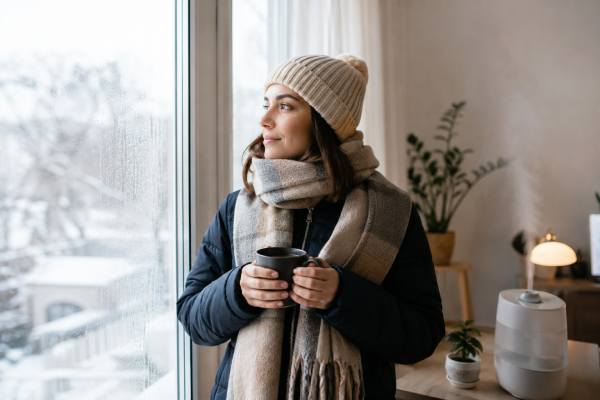
People often say they “caught a cold from being cold,” but that phrase hides several different ideas. Does cold weather itself weaken immunity? Does winter air change the way the nose and airways defend you? Or is the real issue that people spend more time indoors, breathe drier air, and share more viruses in closed spaces? The short answer is that cold weather is not a simple off-switch for the immune system. Still, winter conditions can make respiratory infections more likely through a mix of local airway effects, viral survival, indoor crowding, and behavior.
That distinction matters because the most useful prevention steps are not the old myths. You do not need to fear every trip outdoors, but it does help to understand what dry heated air does to the nose, why ventilation matters more than most people realize, and why sleep, stress, hydration, and close indoor contact often matter more than temperature alone. Once those pieces are separated, winter illness starts to look less mysterious and more manageable.
Essential Insights
- Cold weather does not simply shut down immunity, but winter conditions can make respiratory infections easier to catch and easier to spread.
- Dry indoor air can impair mucosal defenses by drying the nose and throat and reducing how well mucus and cilia clear irritants and viruses.
- Real winter risk factors include crowded indoor time, lower ventilation, poor sleep, stress, and contact with people who are already sick.
- Humidifiers can help some people, but too much humidity can promote mold, dust mites, and other indoor air problems.
- A practical target is to keep indoor humidity around 40% to 50% during heating season while improving ventilation and avoiding sustained humidity above 60%.
Table of Contents
- The Big Myth About Cold Weather
- What Dry Air Does to Airways
- Winter Behavior Matters More
- Who Feels Winter Effects Most
- What Actually Helps in Winter
- When Cold Weather Is Not the Real Problem
The Big Myth About Cold Weather
The oldest winter myth is that low temperature by itself makes you sick. That is too simple. Viruses cause colds, flu, RSV, and many other respiratory infections. Walking outside on a cold day does not create those viruses, and it does not guarantee they will beat your immune system. Many people spend time outdoors in winter and stay perfectly well. At the same time, it is also not accurate to say temperature plays no role at all. Cold weather influences the environment in which viruses spread and the conditions in which the nose, mouth, and airways are trying to defend you.
That difference is important. The immune system is not a single switch that flips from “strong” in summer to “weak” in winter. What tends to happen is more local and more practical. In colder months, the air is often drier, especially once outdoor air is heated indoors. People spend more time in enclosed spaces with less fresh-air exchange. Respiratory viruses circulate seasonally. Sleep often worsens around busy winter schedules, travel, holidays, and darker mornings. All of those factors can raise infection risk without requiring a dramatic whole-body collapse of immune function.
There is also a distinction between general immunity and airway defense. The nose and upper airways are part of your first-line protection. They trap particles, move mucus, maintain moisture, and help block pathogens before they spread deeper into the body. That local defense system can be affected by cold, dry conditions more readily than the public phrase “cold weather weakens immunity” suggests. In other words, the story is less about your whole immune system suddenly failing and more about the places where viruses first land becoming easier to exploit.
This is why winter illness should be thought of as a system problem, not a temperature-only problem. The weather changes. Indoor air changes. Human behavior changes. Exposure changes. The body’s mucosal defenses may also change under dry conditions. That wider view fits better with broader immune principles such as how the immune system works and what weakens it. It also explains why a person who sleeps poorly, is under high stress, commutes on crowded transport, and spends the day in dry heated air may get sick more often than someone who simply goes for a cold walk outside.
So the myth needs correction, but not in the opposite direction. Cold weather does not directly “cause colds.” Yet winter conditions can tilt the odds in favor of respiratory viruses. That is a more precise and more useful answer than either old extreme: not “cold always makes you sick,” and not “weather has nothing to do with it.”
What Dry Air Does to Airways
If there is one winter factor that deserves more attention, it is dry air. The nose, throat, and larger airways are lined with mucus and tiny hair-like structures called cilia. Together, they trap inhaled particles and help move them out before they can settle, multiply, or irritate tissue. This system works best when the airway surface stays properly hydrated. When the air is very dry, that surface can lose moisture, mucus can become thicker and less mobile, and clearance becomes less efficient.
That matters because viruses do not need a dramatic opening to gain ground. A slightly drier, more irritated airway can be enough to reduce comfort and weaken local defenses. People often notice the human version of this before they think about the science: dry nose, dry throat, cracked lips, postnasal irritation, or a stuffy feeling that is worse indoors than outside. Those symptoms are not just cosmetic annoyances. They can signal that the mucosal surfaces are under strain. This is exactly why topics like dry nose, dry eyes, and mucosal defense and mouth breathing and dry airway effects matter so much in winter.
Dry air may also affect viruses themselves. For some respiratory viruses, lower humidity appears to improve survival or transmission under certain conditions. That relationship is not identical for every pathogen, and it is not perfectly explained by one simple rule. Still, the broad pattern is convincing enough that winter humidity is taken seriously in respiratory infection research. The key point for daily life is not to memorize a virology table. It is to recognize that very dry indoor air can be bad for both the host side and the transmission side of the equation.
This is also why heated indoor spaces feel different from outdoor cold. Outdoor winter air may be cold, but once that air is heated indoors without enough moisture, relative humidity can drop sharply. Many homes, offices, and classrooms become noticeably dry during heating season. The person coughing more at work than outside may not be reacting to “winter” in general. They may be reacting to prolonged exposure to overheated, low-humidity indoor air.
None of this means people need to obsess over a hygrometer every hour. It does mean that winter respiratory health is not just about clothing and handwashing. Air moisture is part of the story. That is one reason the topic of best indoor humidity for immune health has become more practical than it once seemed. When the airways are less dry, the barrier system usually works better, and winter discomfort often becomes easier to control.
Winter Behavior Matters More
Once the weather cools, people change their routines in ways that matter far more than most winter myths admit. Windows stay shut. More time is spent in classrooms, offices, cars, buses, shops, holiday gatherings, and family homes. Air is shared for longer. Coughing and talking happen in closer quarters. The result is simple: respiratory viruses have more opportunities to move from one person to the next.
This behavioral side of winter is one of the biggest reasons cold season exists as a social reality. It is not just the temperature outside. It is the concentration of people and the quality of air inside. A person can avoid every cold breeze outdoors and still face high exposure if they spend hours in a poorly ventilated room with others. That is why better indoor air often matters more than many cleaning rituals. For a deeper look, the contrast in disinfecting versus ventilating is especially useful, because it shifts attention back to airborne risk where it belongs.
Sleep and stress also change in winter. Shorter daylight, busier schedules, travel, caregiving demands, and social strain can all push people into lighter sleep and higher stress loads. Those effects may not feel dramatic day by day, but they add up. A crowded week of late nights, work pressure, and indoor exposure can create a more realistic winter risk than stepping outside without a scarf. This is where the overlap with poor sleep and sickness risk becomes very practical.
There is also a comfort trap in winter. Because the air feels cold outside, people may assume indoors must be safer as long as it is warm. But warmth without adequate humidity and ventilation can create the exact kind of space where dry mucosal surfaces and repeated virus exposure meet. That is not an argument to keep rooms cold. It is an argument to think beyond temperature alone.
Children returning to school, holiday travel, indoor sports, shared office air, and repeated family gatherings all help explain why winter feels like infection season. None of these factors mean people should isolate every year. They simply show that the real risk factors are often social and environmental, not mystical. Once that becomes clear, prevention also becomes clearer: cleaner air, spacing when possible, better sleep, and staying home when truly sick are more rational winter tools than blaming the weather itself.
That is also why the most useful seasonal question is not “How cold is it outside?” but “What are the exposure conditions indoors?” In many cases, that question predicts risk more accurately than temperature ever could.
Who Feels Winter Effects Most
Not everyone reacts to winter in the same way. Some people can spend the season moving between outdoor cold and indoor heat with little trouble beyond dry skin. Others develop nosebleeds, dry cough, sinus irritation, asthma flare-ups, or repeated respiratory infections. The difference often comes down to baseline vulnerability more than to winter itself.
People with asthma, chronic sinus problems, allergic rhinitis, eczema, mouth breathing, or existing airway sensitivity often notice winter earlier and more intensely. Their mucosal surfaces may already be more reactive, and dry air can push them further toward irritation and symptoms. Older adults may also be more vulnerable because mucosal function, hydration regulation, and respiratory reserve are not always as robust. Infants and young children, meanwhile, spend more time in close indoor contact and can pick up viral infections quickly once school or daycare transmission begins.
People with sleep loss, chronic stress, shift work, smoking exposure, or poor indoor air quality at home are another group that often feels winter harder than average. In those settings, the issue is not only the season. It is the way winter stacks on top of other known pressures. Someone with a dry apartment, poor sleep, a long commute, and shared office air is dealing with a very different winter risk profile than someone with stable sleep, better ventilation, and fewer daily exposures.
There are also medical groups who deserve extra caution. Immunocompromised people, people with chronic lung disease, people recovering from recent illness, and those with frequent respiratory infections may need to think more actively about winter air and exposure. That does not mean every winter symptom points to immune weakness. But if someone has repeated infections that feel excessive or unusually hard to clear, it is worth learning when problems move beyond seasonal inconvenience and into the territory discussed in frequent infections and immune testing.
Dry indoor air can also hit people who rely heavily on the mouth for breathing, especially at night. Snoring, nasal obstruction, reflux, deviated septum, and chronic congestion all make this worse. In that situation, the cold weather discussion becomes partly a breathing-pattern discussion and partly an airway-moisture discussion.
One helpful way to think about it is that winter amplifies what is already fragile. If the airways are sensitive, if the schedule is draining, or if a person already lives with respiratory vulnerability, winter will often make that more obvious. That does not mean cold weather is the root cause of everything. It means winter exposes weak links more clearly than mild seasons do. For some people, the most useful winter preparation is not a supplement or a scarf. It is identifying which weak link they already have and supporting it before the season gets busy.
What Actually Helps in Winter
Once winter illness is framed correctly, prevention becomes less glamorous and much more effective. The most useful tools are not extreme. They are basic measures that improve mucosal comfort, lower indoor exposure, and reduce the small strains that make the body easier to overwhelm.
A practical winter plan includes:
- Keep indoor humidity in a reasonable range. For many homes, about 40% to 50% is a practical target during heating season. Avoid pushing humidity above 60%, because very damp air can favor mold, dust mites, and other indoor problems.
- Improve fresh-air exchange when possible. Even short periods of ventilation can help, especially when rooms are crowded.
- Consider a HEPA air purifier in the rooms where people spend the most time, particularly bedrooms or shared living areas.
- Protect sleep. A week of poor sleep often does more damage to resilience than a cold walk outside.
- Stay hydrated and manage nasal dryness early rather than waiting for cracking and irritation to become routine.
- Use masking strategically in high-risk indoor settings during waves of illness or when protecting a vulnerable household member.
This is where several related topics connect naturally. Better airflow matters, which is why cleaner indoor air deserves a place in any winter plan. So do targeted devices, though their role is narrower and more specific, as explained in what HEPA air purifiers can and cannot do. Humidity helps some people, but it is not a cure-all. A humidifier can ease dryness and may support airway comfort, yet it will not fix poor ventilation, crowded rooms, or a household where multiple people are already sick.
It is also worth remembering what does not help much. Overheating rooms does not protect immunity. Going from very cold outdoor air to very hot, dry indoor air can feel comfortable at first but may worsen dryness. Likewise, taking random immune supplements is rarely the most meaningful winter intervention if sleep, air quality, and exposure patterns are the real issue.
One good mental shift is to replace “winter immunity” with “winter respiratory conditions.” That phrase directs attention to the environment the airways are dealing with every day. If the air is excessively dry, if the room is poorly ventilated, if sleep is fragmented, and if everyone is sharing the same indoor air for hours, the solution is not to blame the season. It is to change the conditions you can actually change.
The people who get through winter best are often not the ones doing the most complicated things. They are the ones quietly doing the boring things consistently: moisture in range, air moving, sleep protected, exposures reduced when it matters, and early attention to irritation before it turns into a bigger problem.
When Cold Weather Is Not the Real Problem
Sometimes winter gets blamed for symptoms that actually reflect something else. A persistent cough may be asthma, reflux, or postnasal drip rather than “just cold air.” Constant sinus pressure may point to allergies, chronic sinusitis, or structural nasal obstruction. Repeated winter fatigue may have more to do with poor sleep, overwork, low iron, or mood changes than with temperature. In these cases, weather is the amplifier, not the root cause.
This is also true for homes. People often assume the season is making them sick when the real problem is the indoor environment. Mold, smoke exposure, gas appliance pollution, poor filtration, or very low humidity can all be felt more sharply during winter because windows stay closed longer. A house can become the hidden reason symptoms worsen each year. In that kind of setting, it can help to think beyond weather and consider issues like mold exposure and home triggers or wintertime smoke-related immune stress where relevant.
Another common misunderstanding is the idea that getting sick every winter proves someone’s immunity is failing. For many people, the explanation is exposure plus timing: school-age children, crowded work, travel, shorter sleep, dry air, and high local circulation of respiratory viruses. That pattern is frustrating, but it is not the same as pathologic immune weakness. Still, there is a line where repeated illness deserves a closer look. If infections are frequent, unusually severe, or slow to resolve, or if they come with recurrent pneumonia, thrush, or major weight loss, then winter may simply be revealing a bigger issue.
There is also a useful myth to retire about “toughening up” in the cold. Cold exposure is not automatically harmful, and it is not automatically therapeutic either. Going outside in winter can be healthy. Fresh air, movement, daylight, and less crowding may all be beneficial. But prolonged exposure that worsens asthma, causes repeated nasal irritation, or is framed as some kind of immunity test misses the point. The goal is not to prove you are stronger than the season. The goal is to create conditions in which your respiratory defenses work well.
In the end, cold weather is best understood as a context. It changes air moisture, social patterns, ventilation, and exposure. It may stress the airway surface locally, but it does not explain every winter symptom by itself. When that is kept in perspective, winter health stops being a folk mystery and becomes something much more useful: a set of identifiable risks, many of which can be reduced with ordinary, well-chosen habits.
References
- Viral respiratory infections in a rapidly changing climate: the need to prepare for the next pandemic 2023 (Review)
- Drivers of Infectious Disease Seasonality: Potential Implications for COVID-19 2021 (Review)
- Humidification of indoor air for preventing or reducing dryness symptoms or upper respiratory infections in educational settings and at the workplace 2021 (Systematic Review)
- Relative Humidity and Its Impact on the Immune System and Infections 2023 (Review)
- Low ambient humidity impairs barrier function and innate resistance against influenza infection 2019 (Seminal Mechanistic Study)
Disclaimer
This article is for educational purposes only and is not medical advice, diagnosis, or treatment. Winter respiratory symptoms can overlap with asthma, allergies, reflux, sinus disease, viral infection, and environmental exposures such as mold or smoke. If you have breathing difficulty, recurrent chest infections, persistent fever, dehydration, severe wheezing, or symptoms that keep returning each winter despite basic prevention steps, seek care from a qualified clinician. Infants, older adults, immunocompromised people, and those with chronic lung disease may need earlier evaluation.
If you found this article helpful, please consider sharing it on Facebook, X, or your preferred platform.