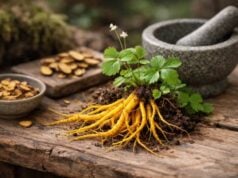
Cutleaf coneflower (Rudbeckia laciniata) is a tall, bright-yellow wildflower in the daisy family (Asteraceae), best known for its deeply lobed leaves and its ability to thrive along stream banks and moist woodland edges. In some regions it is also called “sochan,” a name often used when the young spring greens are gathered and cooked as a seasonal food. Herbal interest in cutleaf coneflower centers on two themes: its traditional topical use for minor skin irritation and burns, and its reputation as a gentle, food-first plant that may support digestion and overall resilience through its natural polyphenols.
Still, this is not a mainstream supplement with standardized extracts or strong clinical evidence. Most modern research focuses on plant chemistry, lab studies, and ecological observations rather than human trials. That makes safety, preparation, and realistic expectations especially important. This guide walks through what cutleaf coneflower is, what’s inside it, how people use it, how to dose it conservatively, and who should avoid it—so you can make a clear, cautious decision.
Quick Overview
- May offer mild antioxidant and soothing support when used as a cooked seasonal green or gentle tea.
- Traditional topical use exists, but concentrated preparations lack strong human safety data.
- Start low: 1–2 g dried leaf in 150 ml hot water, up to 1–2 times daily for short periods.
- Avoid during pregnancy and breastfeeding, and avoid if you have Asteraceae (daisy family) allergies.
- Do not use as a laxative or “detox” herb; stop if you develop rash, wheezing, or significant stomach upset.
Table of Contents
- Cutleaf coneflower overview
- Active compounds in Rudbeckia
- Does it help with anything
- Best ways to use it
- Rudbeckia laciniata dosage guide
- Who should avoid it
- How strong is the research
Cutleaf coneflower overview
Cutleaf coneflower (Rudbeckia laciniata) is a perennial plant native to parts of North America, often growing where soil stays consistently damp—near creeks, floodplains, wet meadows, and woodland margins. Mature plants can be strikingly tall (often well over a person’s height in ideal conditions), with sturdy stems, large divided leaves, and yellow flower heads made up of drooping rays around a raised central disk.
A few practical details matter if you are considering it for “herbal” use:
Common names can be confusing
“Coneflower” is a broad common-name umbrella. Cutleaf coneflower is not the same as purple coneflower (Echinacea), and it is also different from black-eyed Susan (Rudbeckia hirta). Those distinctions matter because the best-studied “coneflower” products on store shelves are usually Echinacea, not Rudbeckia laciniata. If you are buying a product, verify the Latin name on the label.
Which parts are used
- Young leaves and shoots are the main “food-first” part. They are typically cooked (not eaten raw) when harvested as spring greens.
- Roots and aerial parts appear in older traditional preparations, often as infusions or decoctions.
- Flowers are sometimes used for simple teas or topical applications, though this is less common in modern practice.
Why its ecology matters for users
In some regions outside its native range, cutleaf coneflower can spread aggressively, forming dense stands. From a practical perspective, that creates two takeaways: first, wild harvesting should be done thoughtfully and legally; second, if you cultivate it, plan for containment so it does not escape into waterways or damp natural areas.
Finally, remember that a plant can be both “edible” and still not be ideal as a concentrated supplement. Cutleaf coneflower is best approached as a seasonal food or a gentle, short-term herbal tea—not as a high-dose extract used indefinitely.
Active compounds in Rudbeckia
Cutleaf coneflower’s potential effects come from a mix of plant nutrients (when eaten as greens) and bioactive compounds (when used as a tea or extract). Research on Rudbeckia laciniata is not as deep as it is for more commercial herbs, but several compound families show up consistently in plant chemistry work and in broader reviews of the Rudbeckia genus.
Polyphenols and phenolic acids
Like many Asteraceae plants, Rudbeckia species contain polyphenols, including flavonoid glycosides and phenolic acids. These compounds are often discussed for antioxidant activity—meaning they can help neutralize reactive molecules in lab models. In real life, that does not automatically translate into a dramatic “anti-aging” or “detox” effect, but it can support a reasonable, food-like explanation for why a mild tea may feel comforting during periods of oxidative stress (such as heavy training, seasonal changes, or a low-vegetable diet).
Phenolic acids (including quinic-acid related derivatives in some analyses) can also contribute to a mildly astringent or bitter taste, which is one reason some traditional systems associate bitter herbs with digestion.
Terpenoids and bitter principles
Plants in this family often contain terpenoid compounds, and Rudbeckia is no exception. In many herbal traditions, “bitter principles” are used to stimulate digestive secretions and appetite, especially when the taste is noticeable. If cutleaf coneflower tea tastes distinctly bitter to you, that may be a clue that you are extracting more of these constituents—one reason starting with a weaker infusion is a good safety strategy.
What you get from the greens
When cutleaf coneflower is treated as a vegetable (sochan-style), the health angle shifts toward basics: plant fiber, natural pigments, and a broader spectrum of micronutrients that come with eating leafy greens. Cooking changes the texture and can reduce potential irritants, making the plant easier to tolerate.
A realistic way to think about “active ingredients”
For this herb, it is more accurate to think in terms of families of compounds rather than a single magic molecule. That matters because it sets expectations: cutleaf coneflower is more likely to offer gentle, cumulative support than a strong, immediate effect. It also explains why product quality varies—different harvest times, parts used, and preparation methods can change the final chemical profile.
Does it help with anything
People usually look up cutleaf coneflower for one of three reasons: they have heard it is edible (sochan), they have seen it mentioned in traditional Native American use, or they are searching for “coneflower benefits” and want to know what applies to Rudbeckia laciniata specifically. The most helpful way to answer is to separate plausible, low-risk uses from overstated supplement-style claims.
1) Food-first support and “greens benefits”
The most defensible benefit is simple: when used as a cooked green, cutleaf coneflower can help diversify your plant intake. In that context, the “benefit” is not a drug-like effect—it is the everyday value of leafy vegetables: fiber, phytochemicals, and replacing ultra-processed foods with something closer to whole food.
2) Gentle digestive comfort
Traditional accounts across the broader Rudbeckia genus often mention digestive complaints. Mechanistically, bitter-tasting herbs can sometimes increase salivation and digestive secretions, which may help with sluggish digestion or post-meal heaviness. If it helps, the effect is usually subtle: less bloating, a slightly easier-feeling stomach, or improved appetite in people who are under-eating due to stress.
This is not the right tool for severe reflux, persistent abdominal pain, GI bleeding, or chronic diarrhea. Those require medical evaluation.
3) Skin soothing, but with limits
Traditional topical use for minor skin irritation is often cited. A simple, low-concentration preparation (like a cooled tea used as a compress) may feel soothing, partly because cool moisture itself is soothing. The leap from that to “heals burns” or “treats infections” is too big without strong evidence. Use it only for minor irritation and only on intact skin.
4) Do not assume “coneflower” equals echinacea
A common misconception is that any “coneflower” boosts immunity the way echinacea products are marketed. Cutleaf coneflower is not echinacea, and the evidence base is not comparable. If your goal is immune support, start by learning what’s known about echinacea benefits and uses—then treat cutleaf coneflower as a separate, less-studied plant.
Bottom line: cutleaf coneflower may fit as a culinary green or mild tea for short-term comfort. It is not a proven therapy for infections, autoimmune disease, cancer, or chronic inflammatory conditions.
Best ways to use it
Because standardized products are uncommon, the safest “how to use” guidance focuses on culinary use and gentle preparations rather than concentrated extracts.
Culinary use: the safest entry point
If you are using cutleaf coneflower as a food (sochan-style), treat it like other wild greens:
- Harvest young leaves/shoots in spring when they are tender. Older leaves can be tougher and more bitter.
- Wash thoroughly (especially if gathered near waterways).
- Cook before eating: blanch, sauté, or simmer until tender. Cooking reduces harshness and improves digestibility.
- Start with a small serving the first time, even if you are experienced with wild greens.
Avoid harvesting from roadsides, sprayed areas, or ornamental plantings that may have pesticide residues.
Tea (infusion): mild and practical
A leaf or flower infusion is the simplest “herbal” preparation:
- Use hot water, steep briefly at first, and taste.
- If the tea is intensely bitter or causes stomach discomfort, reduce the herb amount or steep time.
A tea is also an easy way to make a cool compress: brew, cool completely, soak a clean cloth, and apply to intact skin for short periods.
Root decoction: less common, more caution
Roots generally extract differently than leaves. If you choose to use root, use a small amount, simmer gently, and keep it short-term. Roots can concentrate different constituents than leaves, and the human safety picture is less clear.
When to choose alternatives
If your goal is topical soothing, a well-known gentle herb may be a better starting point than an under-studied plant. For example, calendula health benefits and uses is far more commonly used for skin comfort in modern herbal practice.
Storage and quality tips
- Dry leaves away from sunlight and moisture.
- Store in airtight containers.
- Discard if the herb smells musty or shows any sign of mold.
The safest approach is to keep preparations simple, low-dose, and short-term—especially if you are experimenting for the first time.
Rudbeckia laciniata dosage guide
There is no widely accepted, clinical dosage standard for cutleaf coneflower. That means dosing should be conservative, food-first, and guided by tolerance rather than by the idea that “more is better.” The ranges below are intentionally cautious and designed for generally healthy adults.
Best default: culinary serving sizes
If you are using cutleaf coneflower as cooked greens:
- Start: 1/4 to 1/2 cup cooked greens (roughly 15–45 g cooked, depending on packing).
- Typical serving: 1/2 to 1 cup cooked greens (about 30–90 g cooked).
- Frequency: Occasionally or seasonally, not as a daily staple year-round.
Treat your first few servings like a food sensitivity test: small amount, wait, and only increase if you feel fine.
Tea (infusion) for short-term use
A gentle tea is usually the next step after culinary use:
- Dried leaf or flower: 1–2 g in 150 ml hot water
- Steep time: 10–15 minutes
- Frequency: 1–2 times daily
- Duration: 3–10 days, then reassess
If you want a familiar comparison point for herbal teas that are better studied for digestion, see peppermint digestive and respiratory benefits and note how often reputable products emphasize moderate, short-term use.
Root decoction (advanced and cautious)
Because the root may concentrate different constituents, keep dosing lower:
- Dried root: 1–3 g in 250 ml water
- Simmer: 10–15 minutes, then strain
- Frequency: up to once daily
- Duration: no more than 3–7 days without professional guidance
Capsules, tinctures, and extracts
These are harder to dose responsibly because products vary widely. If you use a commercial product:
- Follow label directions exactly.
- Prefer products that clearly state plant part, extraction ratio, and daily serving.
- Avoid high-dose extracts unless a qualified clinician is supervising.
Simple rules that prevent most problems
- Start at the low end and increase only if you tolerate it.
- Do not combine multiple new herbs at once.
- Stop if you notice rash, wheezing, swelling, or significant GI upset.
- If you take medications or have chronic conditions, treat this herb like a “maybe,” not a default.
Who should avoid it
Safety for cutleaf coneflower is mostly about uncertainty: it has a history of food and traditional use, but it does not have modern, standardized safety trials in humans. That makes “who should avoid it” especially important.
People who should avoid cutleaf coneflower
- Pregnant or breastfeeding people: Avoid use due to limited safety data and because some Asteraceae plants have historically been used in ways that are not appropriate during pregnancy.
- Children: Avoid medicinal use. Small culinary exposure is a separate question, but it should be cautious and supervised.
- People with known Asteraceae allergy: If you react to ragweed, chamomile, daisies, or related plants, the risk of a skin or respiratory reaction is higher. A practical related read is arnica health benefits and uses, which also highlights why daisy-family sensitivity matters.
- People with severe asthma or history of anaphylaxis: Avoid experimenting with new botanicals without medical guidance.
Possible side effects
Even in healthy adults, mild side effects can happen:
- GI upset: nausea, cramping, loose stools—more likely with stronger teas or unfamiliar plant material
- Headache or light dizziness: sometimes reported with bitter herbs, often dose-related
- Skin irritation: especially with topical use if you are sensitive
If a reaction occurs, stop immediately. Seek urgent care for breathing difficulty, facial swelling, hives spreading quickly, or fainting.
Interactions and practical cautions
Hard interaction data is limited, but these are reasonable precautions:
- Blood thinners and antiplatelet drugs: Many plants contain polyphenols that can influence clotting pathways in theory. If you take these medications, avoid casual supplementation.
- Diuretics and kidney conditions: Traditional use sometimes includes diuretic framing, and the plant is reported to be toxic to some animals if ingested. If you have kidney disease, do not self-experiment.
- Multiple-herb stacks: Combining several Asteraceae herbs (or multiple bitters) increases the chance of stomach upset or allergy.
A note on animal safety
Reports of toxicity in grazing animals are one reason many cautious herbalists avoid recommending concentrated preparations. Keep the plant away from pets and livestock feed, and do not assume “edible for humans” means “safe for animals.”
How strong is the research
The honest summary is that cutleaf coneflower sits in a middle ground: it has real traditional use and identifiable bioactive chemistry, but it lacks the kind of modern human research that would justify strong claims or precise medical dosing.
What we know with moderate confidence
- The Rudbeckia genus contains multiple classes of plant compounds (including flavonoids and other phenolics) that commonly show antioxidant and bioactivity signals in lab testing.
- Cutleaf coneflower has documented ecological and cultural relevance (including food and material uses), which supports the idea that people have interacted with it meaningfully for a long time.
- Outside its native range, it can behave like an invasive plant, and some sources note toxicity concerns for animals—supporting a cautious approach to ingestion and to cultivation.
What we do not know well
- Human clinical outcomes: There are no widely cited, high-quality trials showing that Rudbeckia laciniata reliably treats a disease.
- Long-term safety: Traditional use does not equal long-term safety for modern, concentrated extracts.
- Best preparation method: Food use, tea use, and extracts are not interchangeable; each changes what compounds you get.
How to use the evidence responsibly
If you choose to use cutleaf coneflower, match your method to what the evidence can reasonably support:
- Prefer cooked greens or mild tea over extracts.
- Use it short-term, and keep a “stop rule” (for example: stop at the first sign of rash or GI upset).
- Do not treat it as a replacement for proven care. If your symptoms are persistent, worsening, or severe, get medical evaluation.
A practical decision framework
Cutleaf coneflower is best for people who want a seasonal, culinary herb-with-tradition approach and who are comfortable with uncertainty. It is not a good fit for people seeking a strong supplement effect, those who need predictable dosing, or anyone in a higher-risk group (pregnancy, significant allergies, complex medication regimens). When in doubt, choose a better-studied herb for your goal—and keep cutleaf coneflower in the “food and gentle tea” category.
References
- The genus Rudbeckia: A critical review of its traditional medicinal uses, phytochemistry, and pharmacology 2022 (Review)
- A new flavonol glycoside from the aerial part of Rudbeckia laciniata 2014
- The situation of Rudbeckia laciniata in the EPPO region 2009
- Emerging scientific approaches for identifying ecologically adverse effects of air pollution 2024
- European Union herbal monograph on Species digestivae 2022 (Guideline)
Disclaimer
This article is for educational purposes only and does not provide medical advice, diagnosis, or treatment. Herbal products can cause side effects and interact with medications, and “natural” does not mean “safe for everyone.” If you are pregnant or breastfeeding, have allergies, a chronic medical condition, or take prescription medications, consult a qualified healthcare professional before using cutleaf coneflower or any herbal preparation. Seek urgent medical help for signs of a serious allergic reaction, severe symptoms, or worsening health concerns.
If you found this guide useful, consider sharing it with friends or colleagues on Facebook, X (formerly Twitter), or your preferred platform so others can make more informed, safety-first choices.