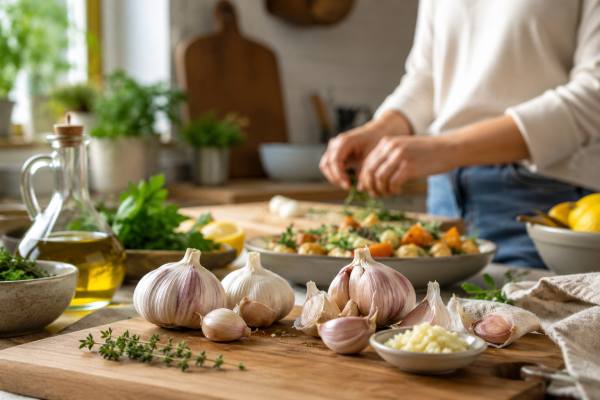
Garlic has a reputation that is almost impossible to separate from cold season. It shows up in soups, tonics, supplement aisles, and family advice passed down as if it were settled science. The truth is more interesting and more useful. Garlic does contain biologically active sulfur compounds that can influence inflammation, microbial behavior, and parts of the immune response. But that does not mean every form of garlic works the same way, or that eating more is always better.
The real questions are practical ones. Does garlic actually help you avoid getting sick? Is fresh garlic different from aged garlic extract? How much makes sense in food, and when do side effects or medication interactions matter more than any possible benefit? This guide looks closely at what the evidence supports, where the claims outrun the data, and how to use garlic in a way that is grounded, safe, and realistic.
Key Insights
- Garlic has biologically active compounds that may influence immune signaling and inflammation, but human evidence for preventing infections is still limited.
- Some supplement trials suggest garlic may reduce cold severity or symptom burden more than it reduces the number of infections.
- Raw, cooked, powdered, and aged garlic extracts are not interchangeable because their active compounds differ widely.
- Garlic supplements can cause heartburn, stomach upset, odor, and important medication interactions, especially with blood thinners.
- A practical starting point is regular culinary garlic in meals several times a week, with supplements considered only when the product is standardized and the safety fit is clear.
Table of Contents
- What Garlic Can and Cannot Do
- Why Garlic Might Affect Immunity
- Fresh Garlic vs Supplements
- How to Use Garlic Practically
- Side Effects and Interactions
- When Garlic Is Not the Main Answer
What Garlic Can and Cannot Do
Garlic is one of those foods that sits in the gray zone between everyday ingredient and health intervention. That makes it easy to overstate. In the most balanced reading of the evidence, garlic looks promising but limited. It may modestly support immune function, especially through effects on inflammation and immune-cell signaling, and some supplement studies suggest it may lessen the burden of cold symptoms. What it has not clearly proven is that it reliably prevents infection in the way people often imply.
That distinction matters. A food or supplement can affect immune markers without translating into a dramatic change in whether someone gets sick. In fact, much of the garlic literature reflects exactly that problem. Studies often show biological activity, but the real-world outcomes are mixed. A few human trials suggest fewer colds or milder cold and flu symptoms with specific garlic preparations, especially aged garlic extract or allicin-containing supplements. But the total evidence base is small, the products differ, and the findings are not strong enough to treat garlic as a dependable preventive tool.
It also helps to separate “immune support” from “immune boosting.” The second phrase sounds appealing, but it is often sloppy. A healthier immune system is not one that is permanently turned up. It is one that is regulated, responsive, and less prone to unhelpful chronic inflammation. That broader framing is much closer to what garlic may offer and fits a more careful view of immune marketing claims.
Another reason expectations should stay modest is that garlic research spans many forms:
- Fresh crushed garlic
- Garlic powder
- Garlic oil
- Aged garlic extract
- Black garlic
- Mixed herbal formulas that include garlic
These are not functionally identical. A positive study using aged garlic extract does not automatically prove that raw cloves in pasta sauce will produce the same result. Nor does a cell or animal study mean a grocery-store supplement will help a human during cold season.
That said, garlic is still worth taking seriously. It is inexpensive, familiar, and easy to include in a healthy diet. Even when its direct infection-fighting effect is uncertain, it can support meals that are richer in plants, legumes, and minimally processed foods. In that sense, garlic may contribute to better immune health partly by improving the quality and flavor of the diet around it.
The best way to think about garlic is this: it is a plausible supportive habit, not a stand-alone shield. It belongs in the conversation about immune resilience, but not at the center of it.
Why Garlic Might Affect Immunity
Garlic’s immune story starts with chemistry. When fresh garlic is chopped, crushed, or minced, enzymes help convert precursor compounds into sulfur-containing molecules, including allicin. That is one reason raw garlic smells so sharp and behaves differently from a whole intact clove. These sulfur compounds are thought to be part of garlic’s antimicrobial and immunologically active profile, but they are also unstable. Heat, time, processing, and formulation change them quickly.
Researchers are interested in garlic because several of its compounds appear capable of influencing the systems that shape immune behavior. These include oxidative stress pathways, inflammatory signaling, and the activity of certain immune cells. In simpler terms, garlic may help affect how the body responds to stressors rather than acting like an antibiotic substitute.
Potential mechanisms include:
- Modulating inflammatory messengers such as interleukins and other cytokines
- Supporting antioxidant defenses that limit oxidative stress
- Influencing natural killer cell and T-cell activity in some settings
- Affecting microbial growth or microbial balance under certain conditions
- Interacting with pathways tied to gut and barrier function
That does not mean all of these effects happen strongly in everyday life. A mechanism is not the same as a guaranteed clinical outcome. Still, the mechanisms help explain why garlic keeps turning up in immune discussions and why aged garlic extract has attracted attention in supplement trials.
One especially important point is that garlic’s immune effects may be partly indirect. Chronic low-grade inflammation tends to work against good immune balance. If a food or compound helps improve inflammatory tone, that can matter even if it does not directly “kill germs.” This is also why garlic is often grouped with broader dietary patterns rather than treated like a one-ingredient fix. If your meals are rich in plants, adequate protein, and minimally processed foods, garlic may reinforce a pattern that is already more supportive of the immune system.
There is also a gut angle. The gut is central to immune regulation, and food compounds that influence the digestive environment can have downstream immune effects. Garlic contains fructans, which are fermentable carbohydrates that may feed beneficial microbes in some people but also trigger bloating in others. That makes garlic a good example of how one food can be helpful in one context and uncomfortable in another. It also fits the larger picture of gut and immune health and the role of mucosal defenses.
The main takeaway is that garlic has biologically plausible immune activity, but the mechanism story is stronger than the outcomes story. The laboratory case is interesting. The human benefit is possible, but it is still more modest and more product-specific than many headlines suggest.
Fresh Garlic vs Supplements
One of the biggest reasons people get confused about garlic and immunity is that they talk about garlic as if it were a single thing. In practice, fresh garlic, cooked garlic, aged garlic extract, garlic powder, and odorless garlic tablets can behave quite differently. The preparation affects which compounds are present, how stable they are, and whether the product used in a study resembles what you are actually taking.
Fresh garlic is the most straightforward food form. When you crush or chop it, allicin and related sulfur compounds are formed. These compounds are part of what makes fresh garlic biologically interesting, but they are also fragile. Long cooking, high heat, and prolonged storage can reduce or change them. That does not make cooked garlic useless. It still contributes flavor and potentially helpful compounds, but it may not reproduce the chemistry of freshly crushed garlic.
Aged garlic extract is different again. It is processed over time, which reduces the harsh, unstable compounds and shifts the profile toward more stable water-soluble compounds such as S-allyl cysteine. Many of the better-known human immune studies have used aged garlic extract, not raw cloves. That matters because it means evidence from those trials applies most directly to that preparation, not necessarily to any garlic capsule on the shelf.
Here is the practical hierarchy:
- Culinary garlic makes the most sense for most people.
- Standardized aged garlic extract has the clearest supplement evidence.
- Random garlic blends and “immune shots” are much harder to judge.
- Odorless products may be convenient, but convenience does not prove effectiveness.
Food first is usually the most sensible path. Garlic fits naturally into soups, beans, roasted vegetables, marinades, stir-fries, and grain bowls. Used this way, it is not only a possible immune-supportive ingredient but also part of a broader pattern that overlaps with an anti-inflammatory diet. It can help make healthy meals more satisfying, which is not a trivial benefit.
Supplements are more complicated. They can be useful in research because the dose is standardized. In real life, though, supplement quality varies and labels do not always tell you enough about active compounds or testing. If someone wants to try a garlic supplement, the important questions are not just “How many milligrams?” but also:
- What form is it?
- Is it standardized?
- Was it third-party tested?
- Is the dose similar to what has been studied?
- Does it fit the person’s medication list and tolerance?
That is where guidance on third-party testing becomes more valuable than brand hype. Garlic is not a case where the cheapest bottle or the strongest smell tells you what will happen in the body.
If you are deciding between food and a supplement, the food version is usually the lower-risk starting point. Supplements are more relevant when someone wants a consistent preparation, knows the safety profile, and has a reason to use something more targeted than dinner seasoning.
How to Use Garlic Practically
The most useful way to use garlic for immune support is not heroic. It is steady, ordinary, and built into meals you already eat. That is especially true because the evidence is stronger for consistent use than for one-time “garlic bombs” taken the moment you feel a scratchy throat.
For food use, start with what is realistic. One to two cloves in a meal, several times a week, is a sensible pattern for many adults. Some people tolerate more, but more is not always better. Raw garlic can be sharper on the stomach and more likely to cause heartburn, burping, or nausea, so many people do better with lightly cooked garlic or with raw garlic used in smaller amounts.
If you want to preserve more of garlic’s fresh sulfur chemistry, one practical trick is to chop or crush it and let it sit briefly before cooking. That gives the enzyme reaction time to occur before heat reduces it. This is not a magic step, but it is a reasonable way to get more from culinary garlic without making the process complicated.
Simple ways to use it include:
- Sautéing minced garlic into beans, lentils, or greens
- Adding it to soups and broths near the start of cooking
- Mixing crushed garlic into yogurt-based sauces or dressings
- Roasting whole cloves for a gentler flavor
- Combining it with olive oil, herbs, and vegetables in meal prep
Garlic also works best in context. It is not a substitute for fruits, vegetables, protein, sleep, hydration, or vaccination. Think of it as one ingredient inside a pattern. If your meals are built around the best foods for immune support, garlic is a smart flavor anchor rather than a rescue measure.
Supplements require a little more caution. The practical rules are simple:
- Choose a standardized product rather than a vague proprietary blend.
- Take it with food if it tends to upset your stomach.
- Avoid stacking multiple “immune supplements” that may duplicate effects or increase interaction risk.
- Reassess after a few weeks instead of assuming longer use is always better.
- Stop and review the plan if you notice bleeding, rash, worsening reflux, or other side effects.
One common mistake is using garlic like an acute treatment. Someone feels a cold coming on and suddenly takes several capsules or eats raw cloves in large amounts. That approach is more likely to cause GI distress than meaningful benefit. Garlic seems better suited to regular background use than emergency dosing.
Another mistake is relying on it alone. When people ask how to support immunity, the honest answer still comes back to routine: sleep, stress management, adequate protein, fiber-rich plants, movement, and not overdoing alcohol. Garlic can live comfortably inside that system. It just cannot replace it.
Side Effects and Interactions
Garlic has a healthy reputation, but healthy does not mean consequence-free. Most people tolerate culinary garlic reasonably well, yet even food amounts can cause problems in sensitive stomachs. Supplements raise the stakes because they concentrate exposure and make it easier to take more than you would normally eat.
The most common side effects are familiar:
- Garlic breath and body odor
- Heartburn or reflux
- Stomach upset
- Nausea
- Burping
- Loose stools
- Skin irritation or rash in some people
These are not usually dangerous, but they matter because they affect whether a habit is sustainable. Someone with reflux may decide that a theoretically helpful supplement is not worth nightly burning or sour regurgitation. That is a perfectly rational conclusion.
Garlic can also be a digestive trigger for people who are sensitive to fermentable carbohydrates. It is high in fructans, which is one reason garlic is often limited during strict low-FODMAP elimination phases. If garlic consistently leaves you bloated, crampy, or gassy, that does not automatically mean you have an allergy or that garlic is “detoxing” you. It may simply mean your gut does not like the dose or the form.
The more important issue is interaction risk. Garlic supplements are the kind of product people often forget to mention because they are sold as food-adjacent, but they can still matter clinically. Extra caution is warranted if you take:
- Warfarin or other blood thinners
- Daily aspirin or other drugs that affect bleeding
- Blood pressure medications
- Drugs where even modest supplement interactions matter
- Multiple herbal supplements at the same time
This is where checking supplement and medication interactions matters more than chasing one more immune claim. Garlic’s possible effect on bleeding risk is the interaction most people know about, but it is not the only reason to be careful. People preparing for surgery or dental procedures should also tell their clinician about garlic supplements, not just prescription medications.
A few groups deserve added caution:
- People with a history of significant reflux or gastritis
- People with IBS-like symptoms triggered by garlic and onion
- People taking anticoagulants or antiplatelet drugs
- People who have had allergic reactions to garlic
- Children, pregnant people, and medically complex adults considering high-dose supplements
For most healthy adults, normal food use is low drama. The trouble tends to show up when garlic moves from ingredient to intervention. The larger the dose and the more concentrated the form, the more important safety becomes.
When Garlic Is Not the Main Answer
Garlic becomes less useful when it distracts from bigger drivers of immune health. If someone is sleeping five hours a night, drinking heavily on weekends, eating very little protein, and living on ultra-processed convenience foods, garlic is not the lever that will change the picture most. It may still be a good food, but it is not the main answer.
That is also true for repeated infections. If you keep getting sick, garlic is not a substitute for asking why. Recurrent sinus infections, repeated pneumonia, unusually slow recovery, weight loss, fever that keeps returning, or chronic diarrhea deserve medical attention. A clove of garlic in soup is fine. Using it as a stand-in for evaluation is not.
The same logic applies to respiratory illness prevention. Garlic does not replace vaccination, ventilation, hand hygiene, or sleep. It does not neutralize the effects of chronic stress, smoking, or excess alcohol. When people think a supplement is the shortcut around those fundamentals, they often end up disappointed. It is usually more effective to look first at what weakens immune function than at one promising food.
Garlic is also not the best choice for everyone pursuing “more” immune support. Some people would benefit far more from fixing low vitamin D, low iron, inadequate protein intake, or chronically poor sleep than from taking a garlic capsule. Others may get more value from working on meal quality, hydration, and exercise consistency. In that setting, garlic can stay in the kitchen without needing to carry the whole strategy.
A helpful way to place garlic is on a scale of importance:
- Foundational habits come first.
- Nutrient deficiencies and medical issues deserve targeted attention.
- Supportive foods like garlic can reinforce the overall pattern.
- Supplements come after safety and need are considered.
That order protects against magical thinking. Garlic can be useful, but mostly in a supporting role. It is not the cornerstone of immune health, and the evidence does not justify treating it like one.
The most balanced conclusion is simple. Garlic is a worthwhile food with plausible immune-related benefits and a small but interesting human research base. It is best used regularly, in realistic amounts, as part of a broader routine. If you want a stronger immune-health plan, start with the bigger levers and let garlic help from the side rather than trying to lead from the front. For the broader framework, keep coming back to evidence-based immune habits that hold up even when a single ingredient does not.
References
- Dietary Supplements for Immune Function and Infectious Diseases – Health Professional Fact Sheet 2025 (Fact Sheet)
- Garlic: Usefulness and Safety | NCCIH 2025 (Fact Sheet)
- Garlic bioactive substances and their therapeutic applications for improving human health: a comprehensive review 2024 (Review)
- Aged Garlic Extract Reduces IL-6: A Double-Blind Placebo-Controlled Trial in Females with a Low Risk of Cardiovascular Disease 2021 (RCT)
- Supplementation with aged garlic extract improves both NK and γδ-T cell function and reduces the severity of cold and flu symptoms: a randomized, double-blind, placebo-controlled nutrition intervention 2012 (RCT)
Disclaimer
This article is for educational purposes only and is not medical advice. Garlic may be a useful food or supplement for some people, but it is not a treatment for immune deficiency, influenza, COVID-19, recurrent infections, or any other medical condition. Garlic supplements can interact with medications and may increase bleeding risk in some situations. Talk with a qualified clinician before using concentrated garlic products if you take blood thinners, have surgery planned, are pregnant, or have significant digestive symptoms.
If this article helped you, consider sharing it on Facebook, X, or your preferred platform so others can get a clearer, more evidence-based view of garlic and immune health.